

Introduction
Chinese National Curriculum Private Schools in China are built specifically for Chinese students. The Chinese Ministry of Education creates the national curriculum. It teaches the Chinese core STEM subjects. It also covers the Chinese language, culture, and history. University entrance is part of it. Chinese private schools meet the same standards. They prepare students for the Zhongkao in junior high and the Gaokao later on. That has always been the primary purpose.
What's changing, though, is access. A growing number of these schools now open their doors to international students. Student nationality used to be a hard barrier. Today, schools are opening up more options. They ask one main question: can this student learn Chinese? Foreign students can join from primary school. They need to meet language and academic requirements.
Finding the right school is a complex process. Each institution has its own entry points. They also set language rules. Boarding policies and fee structures vary too. What works for one family may not work for another.
That's why this blog matters. It provides a clear comparison of seven private schools in China. These schools use the Chinese National Curriculum. They accept international students. You'll see what each school offers, what it costs, and what university outcomes graduates have achieved. By the end, you'll know exactly which schools deserve a closer look for your child.
Chinese National Curriculum Private Schools in China
Beijing Bowen School
- Location: Fangshan District, Beijing
- Type: Private school—international course centre
- Entry Grades: G1–G12
- APT Policy: Full Standard
- Tracks: Both
- Boarding: Yes—7-day
Overview
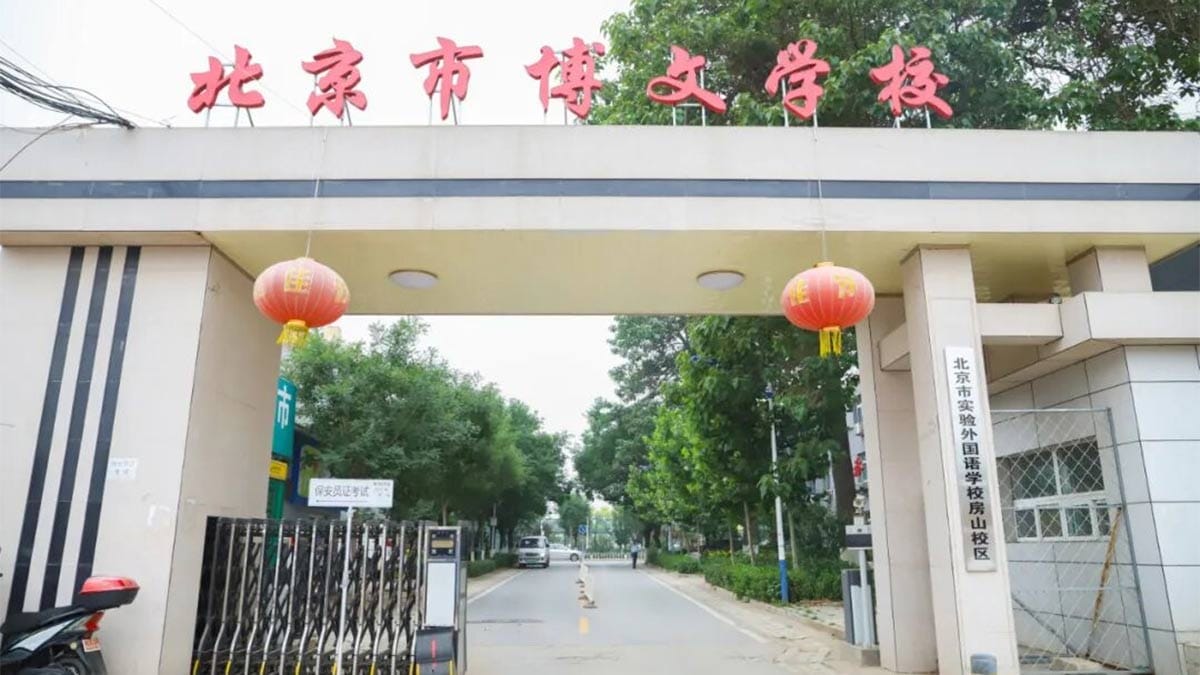
Beijing Bowen School (北京博文学校, Beijing) is a private boarding school in Fangshan District, Beijing. It was founded in 1993. It was one of the first private schools in the city. It got a formal license from the Beijing Municipal Education Commission. The campus occupies more than 300 mu (200,000 sq ft). Doudian township is near Liangxiang University Town.
It has around 1,000 students. The school operates as a K–12 fully residential institution. The school accepts foreign students. However, it does not offer a Chinese National Curriculum stream. This means there is no path for international students who want to enter Chinese universities.
The school has two main programs for seniors. One is for Chinese students. The other is for students applying to overseas universities. Families seeking a CNC pathway for foreign-passport holders should ask the admissions office. They will tell you which programs are open.
Subjects and Tracks
The school's high school division offers multiple program tracks. The domestic track follows the Beijing municipal curriculum oriented toward the Gaokao.
The international division has overseas pathways:
- Japanese University Program (fine arts, music)
- Russian Prep Program
- Singapore 2+1 A-Level
- Sino-French Elite Program
- HKDSE pathway in Hong Kong
The junior and middle school divisions follow the Beijing curriculum. This is for the Zhongkao. International students who want a CNC Chinese-curriculum pathway should check a few things:
- See if foreign-passport holders can join the domestic track.
- Check if the school gives the documents you need
- Also, see if they provide support for entry to Chinese universities.
Chinese Language Support (CAL)
Chinese language instruction is provided throughout the school's curriculum. International students needing Chinese should reach out to the admissions office. They need to confirm CAL provision. This covers HSK instruction and proficiency tests.
HSK Preparation
The school does not publicly advertise dedicated HSK preparation for foreign students. Students who need HSK certification should check exam prep. They must confirm target levels with admissions.
CSCA Preparation
The school doesn’t share details. It doesn't say how it prepares for the Chinese university entrance exam. This is for foreign students. Families preparing for CSCA should talk to the admissions office. They can ask about stream options.
University Outcomes
Graduates of the school's domestic Gaokao track progress to Chinese universities. Graduates from the international program go to universities. They study in Japan. They also study in Russia, Singapore, France, and Hong Kong. Specific named matriculation outcomes for CNC-stream international students are not publicly documented and should be confirmed with the admissions office.
Beijing Bowen School Fees
For the 2026–2027 academic year:
- Domestic Primary Tuition: RMB 43,000/year
- Domestic Junior High Tuition: RMB 53,000/year
- Domestic Senior High Tuition: RMB 53,000/year
- International Program Fees: RMB 120,000–188,000/year (Japanese Direct Entry to North American Elite)
- Domestic Boarding: RMB 6,000/year (6 students per room)
- International Boarding: RMB 9,000/year (4 students per room)
- Meals (all programs): RMB 12,000/year
Confirm current fees directly with the school.
Student Life and Parent Communication
The school is a fully residential campus with a closed boarding system. Boarding is in standard rooms with air conditioning. The campus has a 400-meter track. It has basketball courts and football pitches. There is a library and performance halls. Dance studios are available. There are calligraphy rooms, art rooms, and a garden for agriculture. Communication with international parents is structured through the admissions office.
Admission Requirements
The school accepts applications for Grades 1 to 12 all year round.
You must submit these documents:
- A completed application form
- A valid passport
- Academic transcripts
- A school health form
International program applicants sit entrance examinations (English, mathematics, and interview). Successful applicants are issued the documentation required for an X1 student visa.
What Makes This School Stand Out
Beijing Bowen School was one of the first private schools in Beijing to get a license. It has a big campus in Fangshan District. The school also offers full boarding facilities. The school offers many international options. This is rare for private schools in Beijing. Students can pick from Japanese, Russian, Singaporean, French, or Hong Kong tracks. These choices help them meet their overseas goals.
Contact
- Tel: 010-61351999 / +86-15201079455
- Address: No. 66 Baicaowa, Doudian Town, Fangshan District, Beijing
Walton-Hefei School
- Location: Hefei Economic and Technological Development Zone, Hefei, Anhui Province
- Type: Private school—international course centre
- Entry Grades: G9, G10, G11
- APT Policy: Adapted
- Tracks: Both
- Boarding: Yes—7-day
Overview
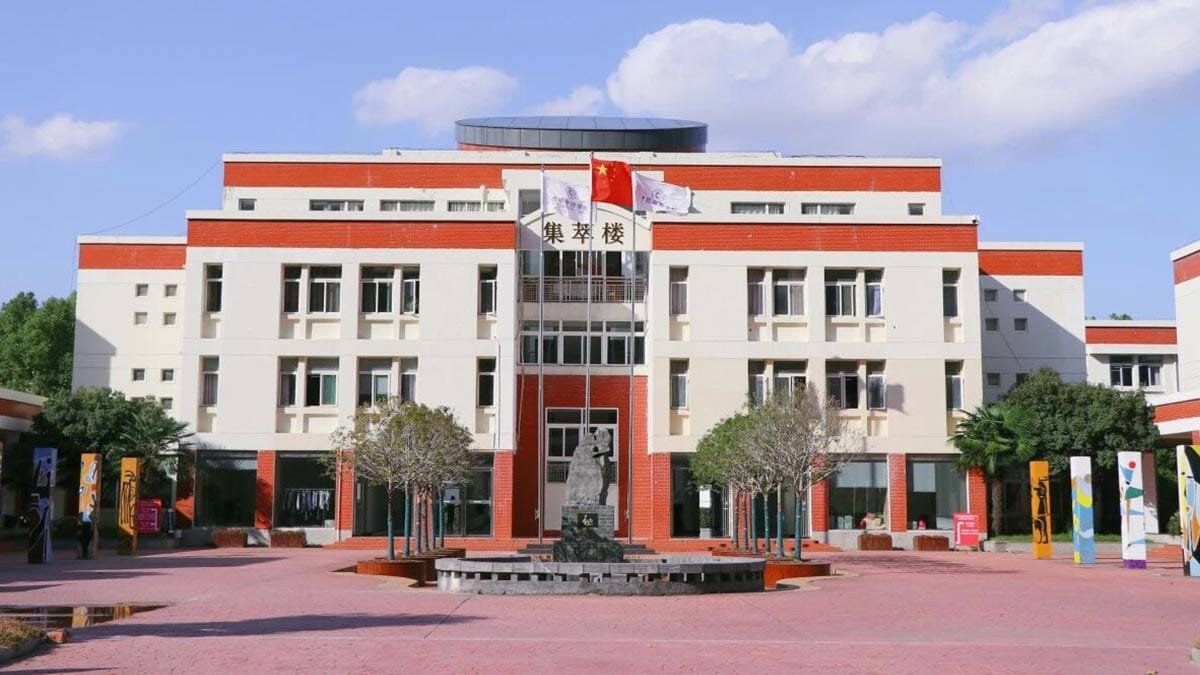
Walton-Hefei School (合肥中锐学校, Hefei) used to be called Hefei World Foreign Language School. It is a private K–12 boarding school in Hefei, Anhui Province. The school was founded in 2000 by Shanghai Zhongrui Holding Group. The campus covers 153.6 mu and has about 55,000 square meters of buildings.
It currently hosts over 3,000 students. The school can enroll foreign students. It is in Anhui Province. It is also a designated school for the children of foreign experts. It has a full Teaching Chinese as a Second Language system. Many students from other countries have joined. They come from South Korea and Japan.
They are also from the United States and Indonesia. Canada, Australia, Malaysia, and Kazakhstan are included too. The school's international division has various overseas programs. To confirm the dedicated Chinese National Curriculum for foreign passport holders, please check with the admissions office.
Subjects and Tracks
The school's international division offers three tracks:
- The A-Level Programme is for British universities.
- The Japanese study abroad program has fine arts for Japan.
- The Singapore Programme helps students enter Singapore schools.
The school has a Chinese National Curriculum program. It also offers a Gaokao option in Japanese. International students who want a CNC pathway to Chinese universities should get in touch. They need to contact the admissions office. They need to check if the program is available. The school boasts a 100% HSK pass rate for its international students. The TCSL program helps students learn Chinese at every level.
Chinese Language Support (CAL)
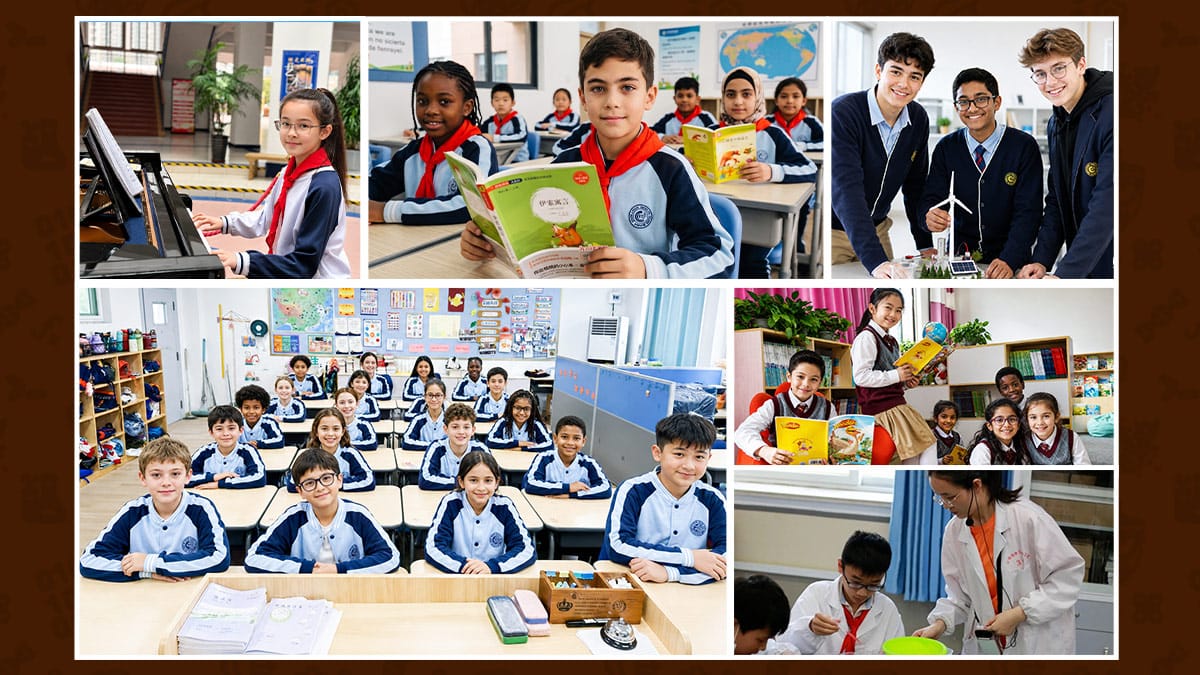
The school teaches Chinese. It uses the TCSL system. This stands for Teaching Chinese as a Second Language. All TCSL faculty have bachelor's degrees or higher. They have also taught in other countries. These include South Korea, Japan, and Thailand. The language program supports students at every level. It starts with beginners and goes to advanced levels. HSK benchmarking is part of the lessons. HSKK (spoken Chinese) preparation is available. Ask the admissions office. Confirm CAL hours. Check HSK levels for each grade. Verify pathways.
HSK Preparation
The school reports a 100% HSK pass rate among international students. HSK preparation is integrated into the TCSL curriculum. The international coordinator will confirm target levels for each grade. They will set the exam venues. They will also set the registration dates. This will happen during enrollment.
CSCA Preparation
The school's preparation for foreign-student university entrance pathways is not publicly documented. Families getting ready for CSCA should talk to the admissions office. They can ask about streams. These include humanities, trade, science, and medicine.
University Outcomes
Graduates from the school’s international division go to universities all over. They complete A-level courses and CNC High School. They also use Singapore pathways. The CNC helps foreign students. It has a 100% rate of moving on to Chinese universities.
Walton-Hefei School Fees
- Kindergarten: RMB 50,000/year
- Primary: RMB 49,200/year
- Junior High: RMB 57,200/year
- High School International Course: RMB 60,000/year
- Japanese Experimental Class: RMB 60,000/year
- English Experimental Class: RMB 69,200/year
- Boarding: RMB 1,400/semester
International student tuition for the CNC stream—contact the admissions office to confirm. Please confirm all current fees directly with the school.
Student Life and Parent Communication
The school runs as a residential campus with a closed boarding system. Boarding accommodation has two-person rooms. Each room has a private bathroom. Air conditioning keeps you cool. There are washing machines and clothes dryers. You can also get drinking water. Residential wardens and life tutors supervise students' daily welfare. The campus features extensive sports and recreational facilities. Communication with international parents is structured through the admissions office.
Admission Requirements
The school's international division accepts students who complete Grade 9. It also takes transfers from Grade 10 and Grade 11. The admissions process includes written examinations and an interview. International students who want to apply for the CNC stream should check a few things. First, find out the entry requirements. Next, gather the necessary documents. Finally, ask about visa support steps with the admissions office.
What Makes This School Stand Out
Walton-Hefei School has one of the largest private campuses in Hefei. It was among the first in Anhui Province to accept foreign students. Since 2000, the school has had a 100% HSK pass rate. It has also educated hundreds of international students. The school has a Japanese study-abroad program. It is the only one in Anhui Province. There’s also a Singapore placement pathway. Together, they provide students with unique options for studying abroad.
Contact
- Admissions email: admissions@alifaedtech.com
- Tel: 0551-63843091 / 0551-63843092
- Address: No. 286 Fanhua West Road, Hefei Economic and Technological Development Zone, Hefei 230601
Guangzhou Yinghao School
- Location: Conghua District, Guangzhou
- Type: Private school—international course centre
- Entry Grades: G9, G10, G11
- APT Policy: Full Standard
- Tracks: Both
- Boarding: Yes—7-day
Overview
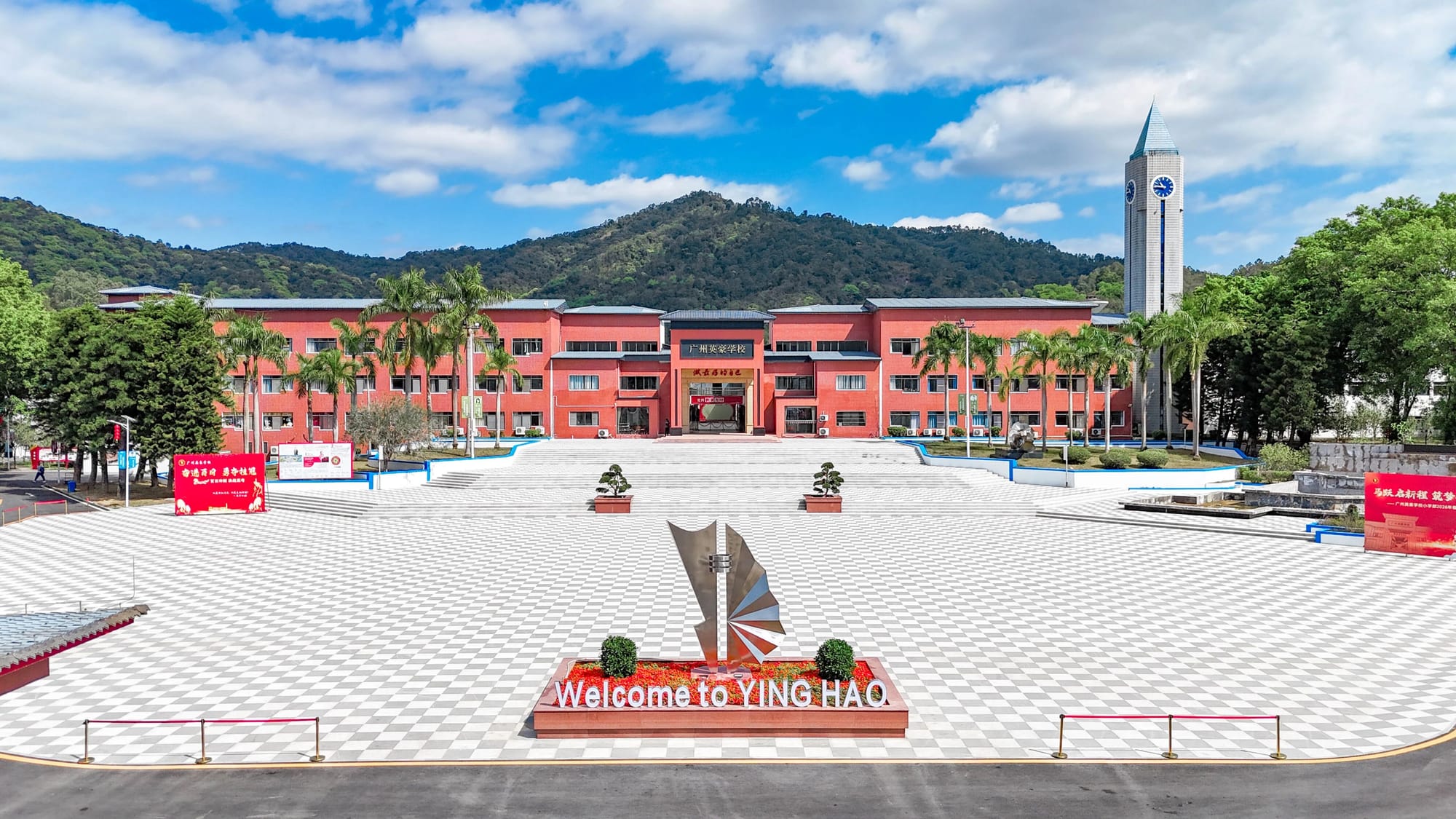
Guangzhou Yinghao School (广州英豪学校, Guangzhou) is a private K–12 boarding school. It is in Conghua District, Guangzhou. The school was founded in 1993. It sits at the Liuxi Hot Spring Tourism Resort. The campus covers 480,000 square meters. Of this, 180,000 square meters are built.
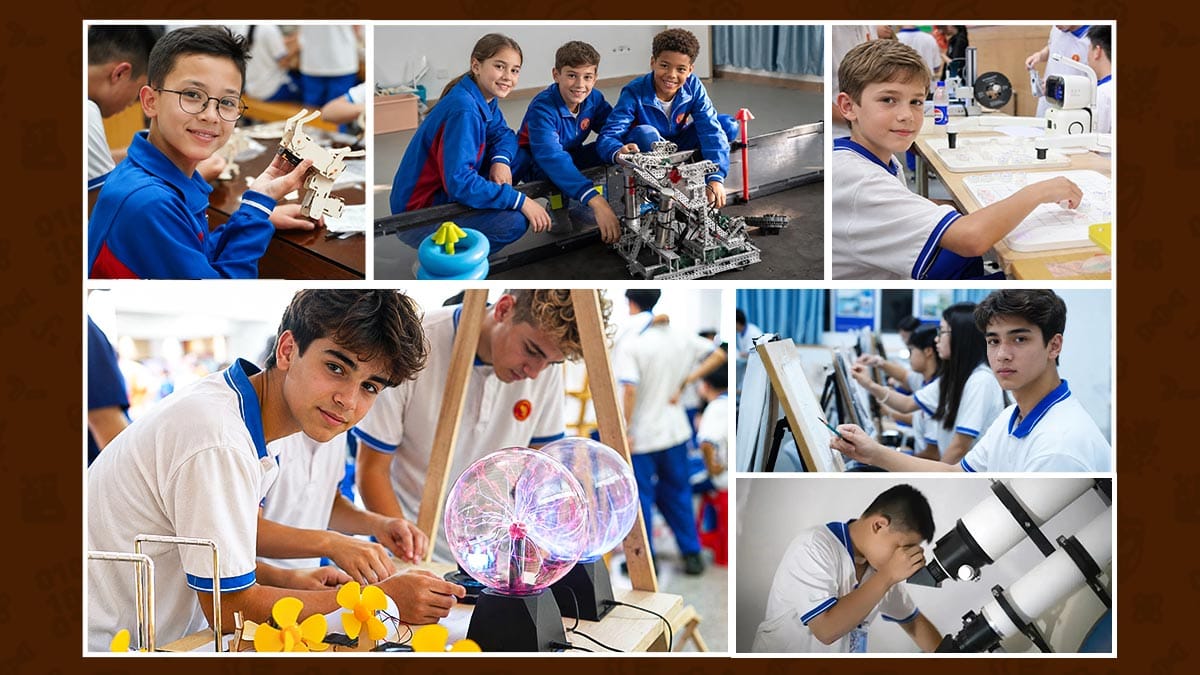
The school is a fully residential institution. IDGF is the international course center. It was Guangzhou University Affiliated Middle School. IDGF has many programs. These are AP, A-Level, and Japanese study-abroad. It also has Hong Kong DSE. There are Chinese courses too. The school helps students study abroad.
It is a national student source-based school. The international division has AP approval (Code 694183). It also has Cambridge A-Level approval (CN281). The school has no Chinese program for foreign students. The international team helps Chinese students. They get ready for schools abroad.
Subjects and Tracks
The school's international division has these tracks:
- AP program for US universities.
- A-Level Program for Britain.
- Japanese study abroad with fine arts.
- Singapore Program for Singapore schools.
- Exam Prep for Chinese students applying to China.
The school has a domestic Chinese National Curriculum program. It also offers a Gaokao option in Japanese. International students can get a CNC pathway to a Chinese university. They should ask the admissions office for help. They will say if the program is available.
Chinese Language Support (CAL)
The school teaches Chinese in its study abroad program. It also has Chinese lessons in the local curriculum. International students needing Chinese can get help. We check CAL provisions. This includes HSK lessons and skill levels. We talk to families one by one. Chinese government scholarship application support is available where applicable.
HSK Preparation
The school's international division doesn’t openly promote HSK prep. This is for foreign students. Students needing HSK certification for Chinese universities should confirm their exam prep. They must also check target levels with the admissions office.
CSCA Preparation
The school does not share its plans for foreign students. This includes the Chinese entrance exam. Families getting ready for CSCA should go to the admissions office. They will explain the streams. The choices are humanities, trade, science, and medicine.
University Outcomes
Graduates from the school's international division go to schools all over. Some go to Harvard. Others go to Oxford. Many choose Cambridge or Stanford. Some pick Imperial College London. Others select University College London. The Japanese study-abroad program has a 100% progression rate.
All students move on to universities in Japan. Between 30% and 50% go to national or public institutions. AP and A-Level graduates have received offers from QS top-100 universities. You can see the specific outcomes for the latest cohorts. Just visit the admissions office.
Guangzhou yinghao school Tuition Fees
The 2025 Guangzhou municipal admissions guide shows the following costs:
Domestic Program
- High School Tuition: RMB 22,200/semester
- Boarding: RMB 3,900/semester
- Meals: RMB 500/semester
International Program
- Japanese Study-Abroad Course: RMB 79,000/year
- AP & A-Level Courses: RMB 138,000/year
- Boarding: ~RMB 10,000/year
- Meals: RMB 5,000/semester
Boarding Facilities
- 2 students per room
- En-suite bathroom, balcony, air conditioning, washing machine & dryer
Please confirm current fees directly with the school.
Student Life and Parent Communication
The school runs as a fully residential campus with a closed boarding system. Boarding accommodation has rooms for two. Each room has a bathroom. It includes air conditioning. There are washing machines and dryers. You can also find drinking water dispensers.
Residential wardens and life tutors supervise students' daily welfare. The campus features South China's largest school observatory and a hot-spring amusement facility. Communication with parents is structured through the admissions office and academic coordinators.
Admission Requirements
The school's international division takes students who finish Grade 9. It also accepts transfers from Grade 10 and Grade 11. Applicants must take an entrance exam in Chinese, English, and mathematics. They also need to attend an interview. The domestic high school stream needs results from the Guangzhou municipality's 中考. These results must meet the school’s entry requirements.
You need to provide these documents:
- Academic transcripts.
- A filled application form.
- A valid passport or ID.
Applicants for the joint exam must be from Hong Kong, Macau, or Taiwan. They need to have the right regional identity documents. Successful applicants are issued the documentation required for student visa processing where applicable.
What Makes This School Stand Out
Guangzhou Yinghao School has one of the biggest private school campuses in Guangdong. It sits in a national tourism resort. The resort features hot springs. The IDGF international division has a Japanese study-abroad program. It is in Guangzhou. The teachers are from Waseda, Meiji, and Tokyo universities. The dual-track Japanese program helps students with two goals. They can prepare for the Japanese Gaokao. They can also aim for direct entry to Japanese universities. This flexibility is uncommon in the city’s international schools.
Contact
- Tel: 020-87841188 / 020-87841288 / 020-37500194 / 020-87841588
- Address: No. 61 Yinghao Street, Tangliao Village, Liangkou Town, Conghua District, Guangzhou
Ronghuai International School
- Location: Zhuji City, Shaoxing, Zhejiang Province
- Type: Private CNC school
- Entry Grades: G1–G12 (with HSK 4+ required for G7–G12 academic stream)
- APT Policy: Adapted
- Tracks: Both
- Boarding: Yes—7-day
Overview
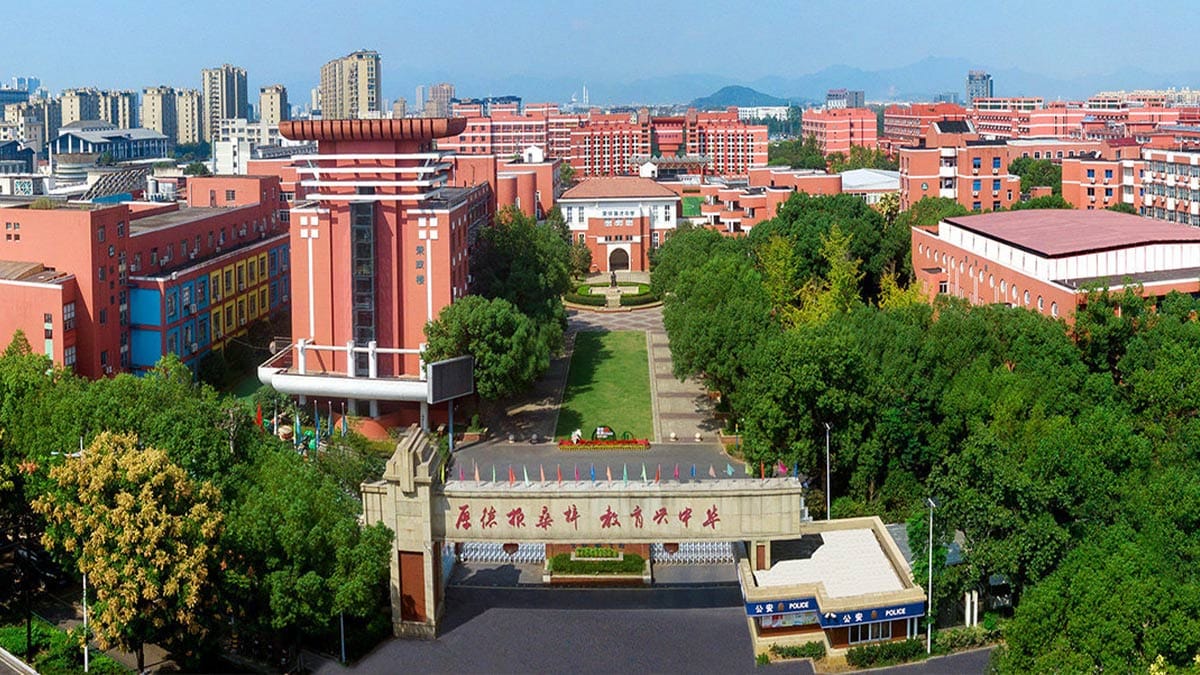
Ronghuai International School (诸暨荣怀留学生院, Zhuji) is a private boarding school. It is in Zhuji City, Zhejiang Province. The school has a Foreign Student Institute. This institute is part of the Ronghuai Education Group. The institute began in 2001. It is one of the best international student programs in China. It serves primary and secondary levels.
The campus covers over 500 mu. It has a built area of 150,000 square meters. Each year, about 250 long-term international students come from 20 countries. There are also more than 300 short-term students. The school is in the World Chinese Language Teaching Association.
It is also in the World Chinese Language Alliance. In 2023, the school won a Gold Partnership award from the World Chinese Alliance. The Foreign Student Institute helps students from other countries. It has a Chinese program. This helps them get into Chinese universities.
Subjects and Tracks
International students learn in three levels. This fits their Chinese skills. It helps them achieve their academic goals. The International Chinese Class teaches Chinese to students of all grades. It aims for students to reach HSK Level 4. Then, they can join academic or mainstream Chinese classes.
The International Elite Class (Grades 7–9 and 11–12) provides the full Chinese National Curriculum. This is for students with HSK Level 4 or above.
Subjects include:
- Chinese language
- Mathematics
- English
- Chinese culture
- Comprehensive liberal arts (Ancient Chinese, survey of China)
- Science (Physics, Chemistry, Biology)
- Music
- Art
- Physical education
- CAS activities
The aim is to achieve HSK Level 5 and gain admission to 985 universities.
The Qingbei Class (Grades 11–12) is a selective program. It helps students aiming for HSK Level 6. The class teaches Chinese. It also covers math. English is part of it. Students learn about culture. They prepare for interviews.
Liberal arts and science are included too. This prepares students for direct entry to Tsinghua or Peking University. Politics and ideological education plans are checked at enrollment. They depend on each student’s nationality and goals.
Chinese Language Support (CAL)
International students receive dedicated Chinese as an additional language instruction throughout the program. The language department has over 40 teachers. They are from China and other countries. All have an international Chinese language teacher certificate. Forty percent have a master’s degree. Half have taught in other countries.
The institute has a team focused on Chinese university entrance exam research. It also has a popular teacher studio. CAL teaching is benchmarked against HSK proficiency levels, with student progress reviewed termly. HSKK (spoken Chinese) preparation is integrated into the senior school program.
The institute was one of the first approved by the Ministry of Education. It can run an HSK internet-based test center on campus. It has hosted over 30 exam sessions. All teachers hold HSK examiner qualifications.
HSK Preparation
Students follow a clear path to higher HSK levels in the program. Here are the benchmarks for each class:
- To leave the International Chinese Class, students need HSK level 4.
- HSK Level 5 is the goal for graduating from the International Elite Class.
- HSK Level 6 is the target for the Qingbei Class.
Students with no prior Chinese achieve HSK Level 4 within one year at a 100% pass rate. HSK Level 5 is passed by 100% of graduates, with more than 50% achieving high scores on the HSKK advanced spoken test. The Qingbei Class maintains a 90%+ HSK Level 6 pass rate. Examinations are administered on campus.
CSCA Preparation
The school helps students get ready for foreign studies. It has four streams: humanities, trade, science, and medicine. Each stream covers key subjects. These include math, physics, and chemistry. The senior school curriculum matches the Chinese entrance exam. It is for international students. The institute has 30 teaching books. These help students get ready for top universities in China. Families look at stream options for this year. This occurs in senior school years.
University Outcomes
Graduates from the Foreign Student Institute go to the best universities. They get into double first-class schools and top 100 schools. Since 2001, more than 30 graduates got into Tsinghua University and Peking University. Many also joined top-10 universities in the US.
Approximately 50% of graduates receive the Chinese Government Scholarship. The institute recommends Tsinghua University. It helps students get into Fudan, Shanghai Jiao Tong, and Zhejiang. It also supports over ten other top schools. Current-year placement records are available from the admissions office.
Ronghuai International School fees
- General International Program Tuition: ~RMB 60,000–68,000/year
- Uniforms: included
- Meals: free for international students
Accommodation
- Double rooms with independent balconies and full facilities
- Residential charges billed separately from tuition
Additional Notes
- Halal dining available
- Scholarship policies reviewed case by case
- Chinese government scholarship eligibility assessed individually
Fees change annually. Please confirm current fees directly with the school.
Student Life and Parent Communication
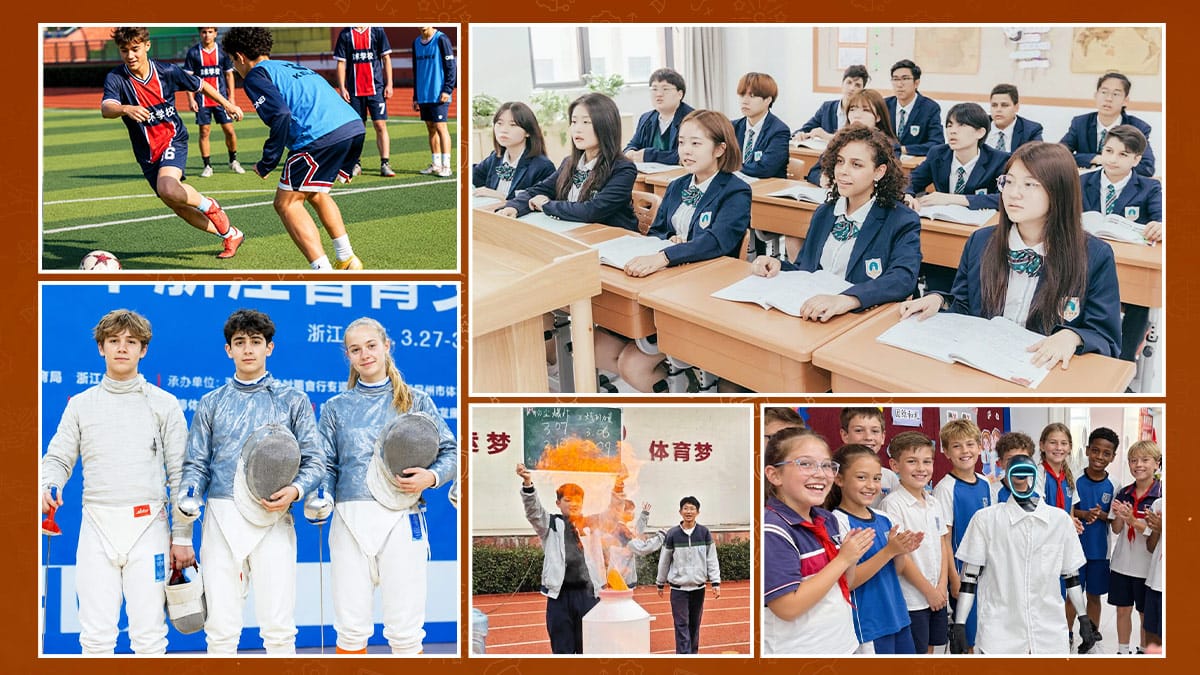
The Foreign Student Institute has around 250 long-term students. They are from 21 countries. Most are from South Korea and Thailand. Some come from Indonesia, Japan, and Spain. There are also students from other Asian and European countries. The school has a "parent-proxy" system. In this system, teachers act as acting parents. They look after students' welfare, health, and daily needs.
The campus has a dining hall for international students. It also has a halal restaurant. More than 30 school buses provide airport pickup, excursion transport, and other services. The institute holds a sports festival each year. It runs Chinese Bridge contests. It also has volunteer events. We help international parents. We make it easy for non-Chinese speakers. We check channels and languages during admissions.
Admission Requirements
International students can apply for Grades 1 to 12. Admissions are open all year. They happen on a rolling basis. Applicants for Grades 7–12 academic classes must hold HSK Level 4 or above.
Required documents include:
- A completed application form
- A valid passport for both the student and parents
- Academic transcripts
- A certificate of current education
You can submit international test results like SAT, ACT, A-Level, AP, or IB if you have them. The admissions process includes an online comprehensive examination and interview. Students under 18 need a notarized guardianship certificate.
It must name a school teacher as the guardian. The Chinese Embassy must certify it. A prepayment of RMB 5,000 is required upon acceptance. Successful applicants are issued the documentation required for an X1 student visa.
What Makes This School Stand Out
Ronghuai International School has one of the largest international student programs in China. It is also one of the oldest. The school has a 100% pass rate for HSK Level 5. It also has a 100% acceptance rate to Double First Class and world top-100 universities. It is an HSK internet-based test center.
It was one of the first approved by the Ministry of Education at the school level. This shows a unique expertise in the field. The school also has its own textbook series for the Chinese university entrance exam. This highlights its specialization. The institute is a Tsinghua University recommendation school.
It has a "parent-proxy" care system. This helps students feel supported. The location is great for transport. Hangzhou is only 20 minutes away. Shanghai is 90 minutes away. This is a special place. It’s for international students who want to go to Chinese universities.
Contact
- Admissions email: admissions@alifaedtech.com
- Tel: 0086-575-87322320 / 0086-575-87321032
- Director Zhan: (+86) 13522515549
- Address: No. 57 Chengbei Road, Jiyang Street, Zhuji City, Zhejiang Province
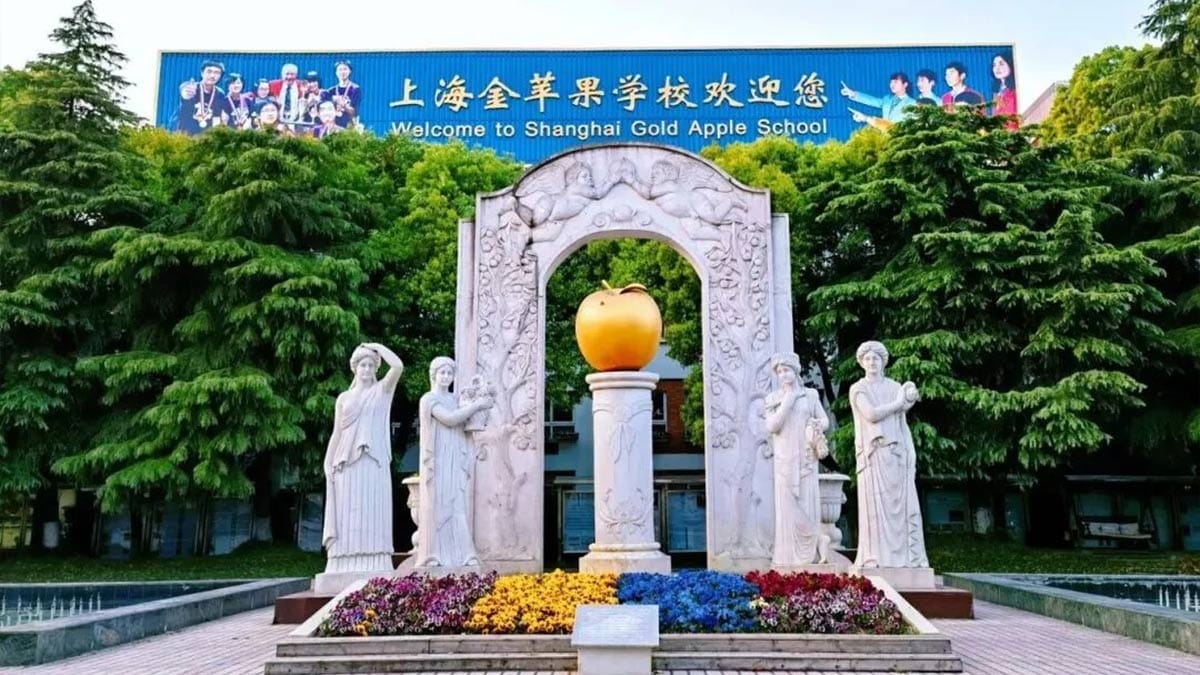
Shanghai Gold Apple Bilingual School International Department
- Location: Pudong New Area, Shanghai
- Type: Private CNC school
- Entry Grades: G1–G12
- APT Policy: Adapted
- Tracks: Both
- Boarding: Yes—7-day
Overview
Shanghai Gold Apple Bilingual School (上海金苹果学校国际部, Shanghai) is a private boarding school in Pudong, Shanghai. It started in 2000. The school is part of the Shanghai Jianping Education Group. The school covers about 200 mu and has a campus of 100,000 square meters. It serves around 3,000 students, from early childhood to Grade 12.
The International Department began in 2004. The Huawen Center opened that year. It teaches Chinese to international students. The Huawen Center is a Huawen Education Base. The Shanghai government approves it. The Shanghai Overseas Chinese Affairs Office calls it an "Outstanding Base."
The center has students from more than twenty countries. The program helps them get into Chinese universities. It also helps them go to universities abroad.
Subjects and Tracks
International students at the Huawen Center learn with a blended curriculum. It has two parts. One part is the Chinese National Curriculum. The other part is internationally accredited courses.
The core program includes:
- HSK Chinese language
- Chinese culture
- English
- Bilingual mathematics
- Bilingual science (Physics and Chemistry)
- Physical Education
- Computer studies
- Art
- Swimming
Elective courses include piano, dance, taekwondo, martial arts, and Chinese cookery. The center has two paths. Students going to Chinese universities follow the CNC pathway. They take extra classes in Chinese, mathematics, and English. Students who want to study abroad can switch to the Cambridge (IGCSE/A-Level) program.
They can also choose the American (AP) program. Both are on campus. Politics and ideological education plans for international students are checked at enrollment. They are confirmed based on each student’s nationality and future goals.
Chinese Language Support (CAL)
International students receive dedicated Chinese as an additional language instruction throughout the program. The Huawen Center has a tiered approach. Beginners learn Chinese. Intermediate students take HSK. Advanced students study in Chinese.
Teaching is delivered through small classes in an immersive Chinese-learning environment. CAL instruction is benchmarked against HSK proficiency levels, with student progress reviewed termly. HSKK (spoken Chinese) preparation is integrated into the senior school program.
Cultural elements are included in the language curriculum. These elements are calligraphy, poetry recitation, and traditional Chinese arts. By the end of grade 12, students have the Chinese skills. These skills are needed for university studies in China.
HSK Preparation
Students are guided to reach higher HSK targets in the program. Milestone benchmarks are set for grades 9, 11, and 12. The Huawen Center is a Cambridge exam center (Centre Number CN898). HSK-qualified teachers help students. They prepare for written tests. They also get ready for spoken exams. The international coordinator sets target levels for grades. They also plan exam venues. They set the registration timeline too. Each year, they review these details.
CSCA Preparation
The school helps foreign students get ready for university. It has four streams. They are humanities, trade, science, and medicine. Each stream has key subjects. These are math, physics, and chemistry. The senior school program focuses on entry to Chinese universities. Families review available streams during the senior school years.
University Outcomes
Graduates from the Huawen Center have been accepted into top Chinese universities. Some of these are:
- Shanghai Jiao Tong University
- Fudan University
- Tongji University
- Shanghai University of Finance and Economics
- East China Normal University
- Shanghai University of Traditional Chinese Medicine
- Shanghai Institute of Foreign Trade
Some senior students have joined the Cambridge course or the American course. They want to apply overseas. Current-year placement records are available from the admissions office.
Shanghai gold apple bilingual school international department school fees
Huawen Center Fees
- Tuition: RMB 27,000/semester (RMB 54,000/year)
- Program Tracks (Cambridge, American, Japanese, HKDSE): ~RMB 80,000–128,000/year
- Residential charges billed separately from tuition where boarding is offered
Please confirm current fees directly with the school.
Student Life and Parent Communication
The Huawen Center welcomes students from over twenty countries. These are in Asia, North America, and Belt and Road areas. The campus has lots of facilities. There are indoor and outdoor basketball courts. It also has a 400-meter athletics track and a football pitch. You can swim in the pool.
The campus has labs for physics, chemistry, and biology. There are music and art studios too. A library and a multifunction conference center are also available. Boarding accommodation is available. Each room has air conditioning. There’s a bathroom inside. Two students stay in each room.
The school dining hall provides both Chinese and Western meal options. We talk to international parents. This helps non-Chinese speakers. We check language and channels when they apply.
Admission Requirements
International students can apply for Grades 1 to 12. They can do this any time during the year. Applicants take an entrance exam. It includes written tests in English and math. After that, they have an interview. This checks their English skills and readiness.
You need to send some documents. They are:
- A completed application form.
- A valid passport.
- Academic transcripts.
- A school health form.
The admissions office reviews applications continuously, with placement offers issued to successful candidates. Successful applicants are issued the documentation required for an X1 student visa.
What Makes This School Stand Out
Shanghai Gold Apple Bilingual School has a unique option. Students at the Huawen Center can aim for a Chinese university through the CNC stream. They can also switch to Cambridge A-level or American AP programs when ready. This helps them study abroad.
The school is a Huawen Education Base. It is approved by the Shanghai Municipal Government. It has small Chinese classes. For twenty years, it has helped students enter top Chinese universities. This makes the program stand out in Shanghai.
Contact
- Admissions email: admissions@alifaedtech.com
- Tel: 021-51601973 / 021-69876001 / 021-68976002 / 021-68973118
- Address: No. 1555 Jufeng Road, Pudong New Area, Shanghai 201208
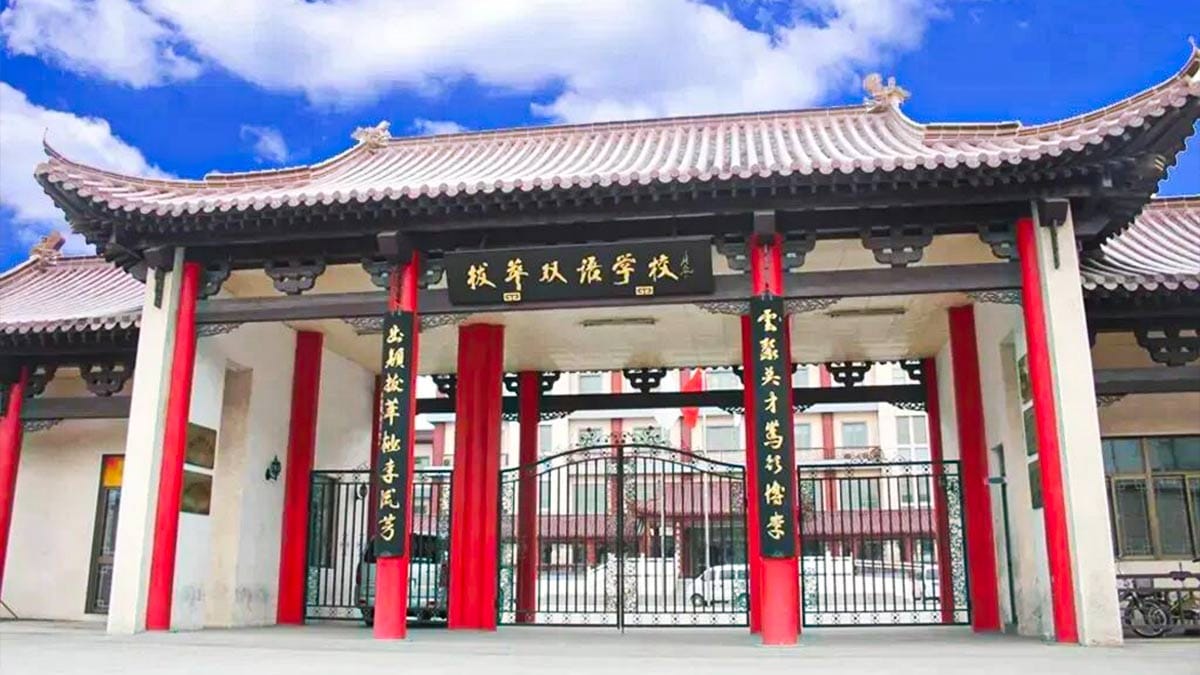
Beijing Bacui Bilingual School
- Location: Chaoyang District, Beijing
- Type: Private CNC school (Non-profit Structure)
- Entry Grades: G7, G8, G9, G10
- APT Policy: Full Standard
- Tracks: Both
- Boarding: Yes — 7-day (boarding optional)
Overview
Beijing Bacui Bilingual School (北京拔萃双语学校, Beijing) is a private boarding school in Chaoyang District. It opened in 2003. In 2004, the school was approved to take foreign students. The campus is over 140 mu. It has 80,000 square meters of Chinese-style gardens. Around 2,500 students attend.
They are in primary, junior, and senior divisions. The international department helps about 150 students. They come from over twelve countries. These are the US, South Korea, Thailand, and Kazakhstan.
The school is an HSK and YCT exam base. It was set up by the Beijing International Chinese College.
It offers three tracks for international students:
- Chinese language courses
- CNC pathway courses
- English-medium Cambridge programs
- A bilingual stream
Subjects and Tracks
International students in the CNC stream study the Chinese curriculum. They pick science. They pick humanities, too.
The core curriculum includes:
- Chinese language and literature
- Mathematics
- English
- Physics
- Chemistry
- Biology
- History
- Geography
- Music
- Fine Arts
- Physical Education
The school helps students who are strong in Chinese. They give tests to check their skills. Then, they place students in the right grade for Chinese classes. Students complete required courses and pass exams. They get a graduation certificate. This certificate comes from the Beijing education authorities. It’s the same as what Chinese students get.
Politics and ideological education plans for international students are checked at enrollment. This matches each student's nationality. It also considers their future goals. Senior school students can get help to enter Chinese universities. This prep matches the rules of top schools.
Chinese Language Support (CAL)
International students have Chinese lessons. They are for all grades. The program has levels. Beginners learn Chinese. Intermediates do YCT classes. Advanced students prepare for HSK tests. The school is an official HSK and YCT training and exam center. This lets students take their exams right on campus.
CAL teaching is benchmarked against HSK proficiency levels, with student progress reviewed regularly. HSKK (spoken Chinese) preparation is integrated into the senior school program. You can pick elective courses.
They cover cultural topics. You can study calligraphy. Ink painting is also an option. Traditional Chinese arts are available. Language classes are offered too.
HSK Preparation
Students work toward higher HSK targets in the program. The school gives exam preparation at every level. This includes YCT and advanced HSK. As an authorized examination base, the school organizes registration and testing on campus. The international coordinator sets target levels for each grade. They also decide on exam schedules and HSKK plans at enrollment. Each year, they review these details.
CSCA Preparation
The school helps foreign students get ready for university. There are four streams:
- Humanities
- Trade
- Science
- Medicine
Each one has its own subjects.
The senior school program helps students get ready. It focuses on what top Chinese universities need. Families look at stream options for this year. This takes place in the senior school years.
University Outcomes
The school's international graduates pursue further study at Chinese universities and overseas institutions. The international department partners with schools. This includes schools in the US, UK, Canada, Australia, and New Zealand. The senior school program helps students get into Chinese universities. It also helps them apply to schools abroad. You can find matriculation outcomes for the CNC stream. The latest placement records are also available. Check with the admissions office for both.
Beijing Bacui Bilingual School Fees & Facilities
Tuition
- ~RMB 40,000–100,000/year (varies by program track)
- Accommodation billed separately from tuition
Boarding Options
- Double, triple, or quad rooms
- All rooms include air conditioning, washing machine, shower, refrigerator, safe, and study desk
Campus Facilities
- 24-hour medical clinic
- International dining hall with varied dietary options
Scholarships
- Scholarship policies reviewed case by case
- Chinese government scholarship eligibility assessed individually
Please confirm current fees directly with the school.
Student Life and Parent Communication
The international department has about 150 students. They come from over ten countries. The school campus has many facilities. It has a 400-meter athletics track. There are basketball and volleyball courts. You can also find table tennis areas, a swimming pool, and an indoor sports hall.
The international student apartment building has three main rooms. There is a computer room. There is also a fitness equipment room. Finally, there is a billiards room. We help international parents who don’t speak Chinese. We check channels and languages during admissions.
Admission Requirements
International students can enter Grades 7 to 10. Each admissions cycle picks specific entry points.
You need to provide several documents:
- A completed application form
- A valid passport
- Academic transcripts from the last two years
- A graduation or enrollment certificate
- A school health form
The admissions process has an interview and a written assessment. The format is confirmed when you apply. Successful applicants get a formal admission offer. They also receive the JW202 form for an X1 student visa. Applications are reviewed all the time. You can get help from Monday to Friday.
What Makes This School Stand Out
Beijing Bacui Bilingual School has three tracks for international students.
- The first track teaches Chinese language and CNC. It helps students get into Chinese universities.
- The second track offers English Cambridge programs (CIPP through A-Level). This is for students who want to study abroad.
- The third track mixes both Chinese and English.
This flexibility, plus the school’s status as an HSK and YCT exam centre, makes it special. It’s one of the few private schools in Beijing. Here, international students can switch easily between Chinese and overseas university paths. They don’t need to change schools. The campus also has a classical Chinese garden style.
Contact
- Tel: 010-65496621 / 010-65496628
- Mobile: (+86) 13520720946
- Address: No. 1 Bacui Road, Pingfang, Chaoyang District, Beijing
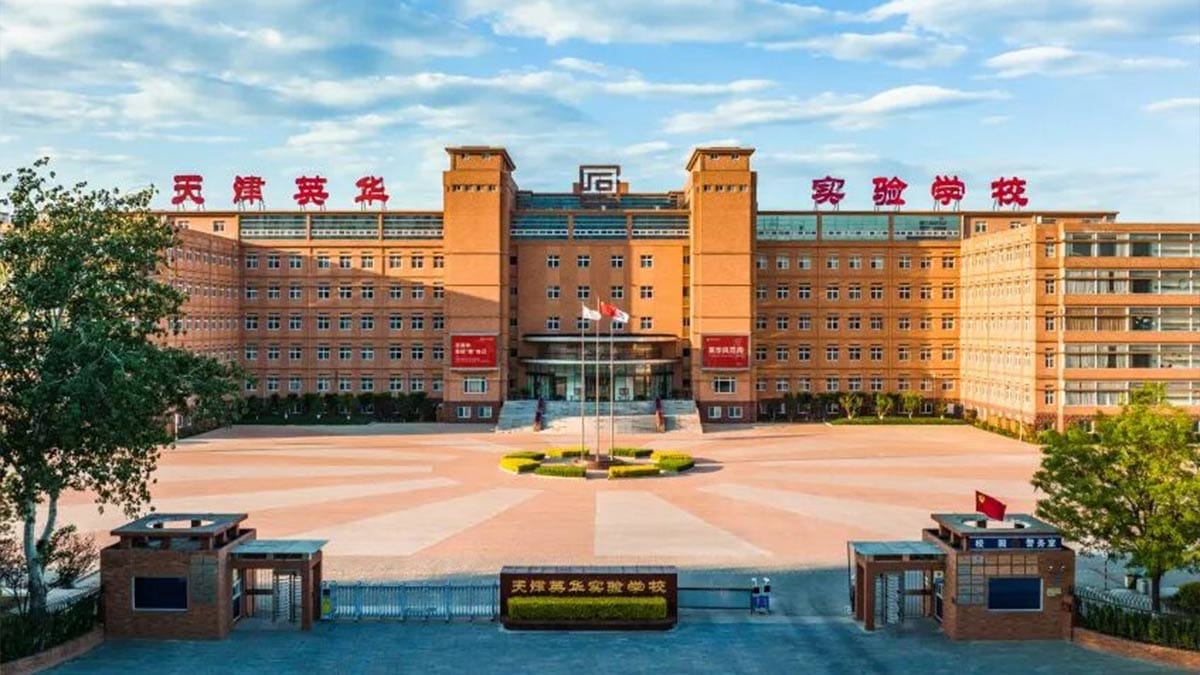
Yinghua Academy of Tianjin
- Location: Wuqing District, Tianjin
- Type: Private CNC school
- Entry Grades: G7, G8, G9, G10
- APT Policy: Adapted
- Tracks: Both
- Boarding: Yes—7-day
Overview
Yinghua Academy of Tianjin (天津英华实验学校, Tianjin) is a private K–12 school. It is in Wuqing District. The school uses the Chinese National Curriculum. It helps international students in its special department. The department started in 2005.
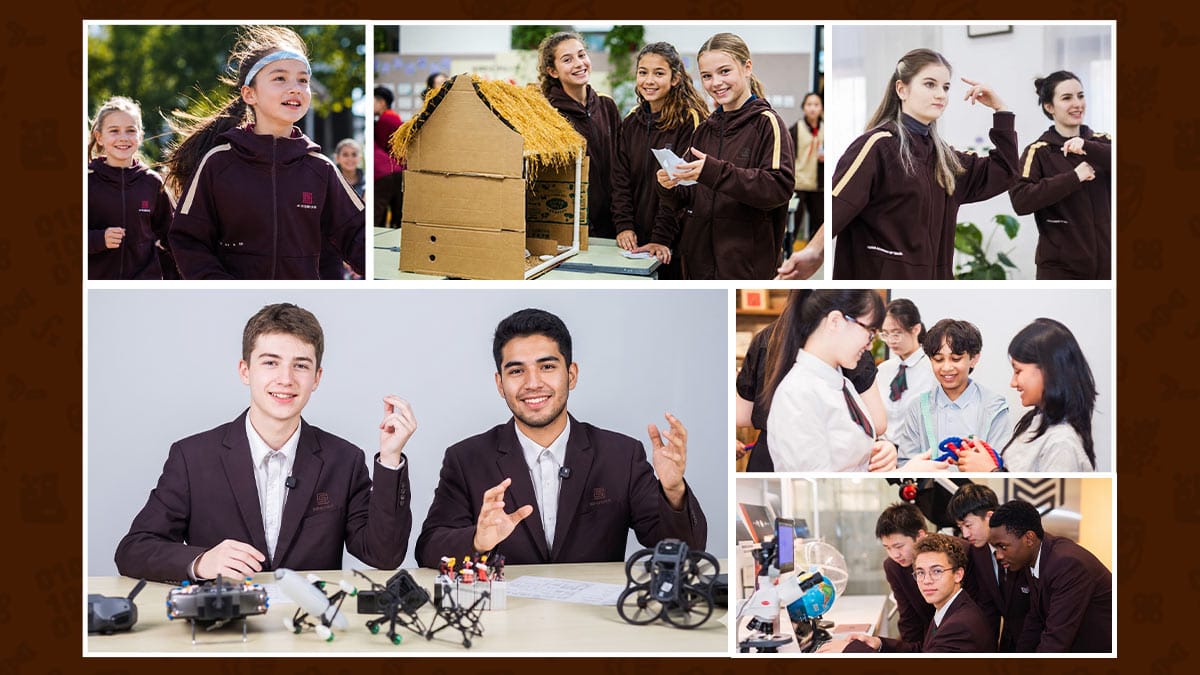
It now supports over 100 students. These students come from East Asia, Central Asia, North America, and Southeast Asia. The school is a residential campus. It welcomes international students. They have a clear path to Chinese universities.
The department has a team of coordinators. They know the documents, language, and support needed by families who are moving.
Subjects and Tracks
International students learn the Chinese curriculum. In Grade 10, they pick science or humanities. The coordinator is there to help. The core curriculum includes Chinese, literature, math, English, and science. It also covers history, geography, and PE. You can pick arts or tech classes too.
Politics and education plans for international students are checked during enrollment. Each plan fits the student’s nationality. It also matches their goals. A main feature of the program is its dual-pathway flexibility.
Students who want to go to Chinese universities stay in the CNC international stream. Those who want to study abroad can switch to the Cambridge A-Level or Canadian OSSD programs. Both are offered on the same campus.
Chinese Language Support (CAL)
International students take extra Chinese lessons in junior school. They keep these lessons in Grades 10 to 12.
CAL has three levels:
- Foundational: immersive Chinese.
- Intermediate: subject courses in Chinese.
- Senior: advanced Chinese.
The program is benchmarked against HSK proficiency levels, with student progress reviewed termly. The senior school curriculum helps students. By Grade 12, they will know enough Chinese for university in China.
HSK Preparation
Students work towards higher HSK targets during senior school. Key benchmarks are set for Grades 9, 11, and 12. The school is the only secondary HSK test center in Tianjin. It has held this status since 2011, allowing students to take exams on campus. HSKK (spoken Chinese) preparation is integrated into the senior school CAL program. The international coordinator sets targets for grades. They plan when to register. They arrange spoken tests. Each year, they check these details.
CSCA Preparation
The school helps foreign students get ready for university. There are four streams:
- Humanities
- Trade
- Science
- Medicine
Each stream includes math and science. In senior school, families look at the streams. They also see how many graduates go to Chinese universities with CSCA results.
University Outcomes
The International Students Department has built a strong track record of university placements. By 2024, the department had completed 20 cohorts and graduated more than 500 students. Each of them got into a key university.
Notable University Placements
- 12 graduates admitted to Tsinghua and Peking Universities
- Fudan, Zhejiang, and Renmin Universities
- Universities in Hong Kong, Toronto, Korea, and Seoul
For full placement records, contact the admissions office.
Yinghua Academy of Tianjin Fees
The admissions office shows fees for the International Students Department each year. You can ask for the rates. The school's fee structure separates tuition from residential charges where boarding is offered. The Silk Road Scholarship is for international students. We check award criteria. We also look at application steps with each family. Chinese government scholarship application support is also provided. Confirm current fees directly with the school.
Student Life and Parent Communication
The International Students Department welcomes students from many countries. Most are from South Korea. Some are from Japan. Others come from Thailand, Malaysia, and Russia. A few are from Uzbekistan, Tajikistan, Canada, and the US. The school has fourteen sister schools. They are in eight countries. This allows for exchange programs. It also helps with cultural projects. We help international parents who don’t speak Chinese. We confirm the channels and languages at admissions.
Admission Requirements
International students can join at junior and senior school levels. Each admissions cycle confirms the intake for Grade 7, Grade 8, Grade 9, and Grade 10.
Required documents are:
- A completed application form
- A valid passport
- Academic transcripts for the last two years
- A school health form
The admissions process has two parts. One is an interview. The other is a written assessment. You will confirm the format and language when you apply. Successful applicants are issued the documentation required for an X1 student visa. Applications are reviewed either on a rolling basis or by a fixed deadline. The admissions office confirms the details for each intake.
What Makes This School Stand Out
Yinghua Academy has a unique system. It has two pathways on one campus. International students in the CNC stream can try for Chinese university entrance. When they're ready, they can switch. They can choose the Cambridge A-level or Canadian OSSD programs to study abroad. This flexibility is important. The school is the only secondary HSK test center in Tianjin. It has a strong record. For twenty years, graduates have gone to Tsinghua and Peking University. This makes the program special in the city.
Contact
- Admissions email: admissions@alifaedtech.com
- Tel: 022-59611178 / 022-59611176
- Address: Yingyang West Road, Wuqing District, Tianjin
Frequently Asked Questions
What is the Chinese National Curriculum (CNC), and who is it originally designed for?
The CNC is established by the Chinese Ministry of Education. It was made for Chinese nationals. It focuses on core STEM subjects, Chinese language, culture, and history. It also prepares students for the Zhongkao and Gaokao. More CNC private schools are opening tracks for foreign passport holders. The core curriculum stays the same. The goal for university entrance hasn’t changed.
Can foreign passport holders actually enroll in CNC private schools?
Yes, at a number of schools. Beijing Bowen School and Walton-Hefei School take international students. Guangzhou Yinghao School and Ronghuai International School do, too. Shanghai Gold Apple Bilingual School accepts them. So does Beijing Bacui Bilingual School. Yinghua Academy of Tianjin accepts them too. Most students start in primary school or higher. Schools have different requirements. Some focus only on language and academic readiness. Others, like Ronghuai, need HSK Level 4 or higher to enter the CNC academic stream starting in Grade 7.
Do you need to already speak Chinese to apply?
No. Most schools accept complete beginners. They help students improve through a Teaching Chinese as a Second Language (TCSL) or Huawen program. Walton-Hefei has a 100% HSK pass rate for its international students. Ronghuai's International Chinese Class helps students with no Chinese reach HSK Level 4 in about a year. They also boast a 100% pass rate at that level.
How much do CNC private schools cost for international students?
Fees vary widely by school and track. The schools' 2025–2027 figures show general CNC-stream tuition. It starts at about RMB 40,000 per year at Beijing Bacui. At Guangzhou Yinghao, it goes up to RMB 138,000 per year for AP/A-Level tracks. Boarding costs are charged separately. They usually range from RMB 1,400 per semester to RMB 10,000 per year, based on the room type. All schools ask families to check current fees with the admissions office. This is important because fees change every year.
Do these schools offer boarding for international students?
Yes, all seven schools are residential campuses. They use closed boarding systems and usually operate on a 7-day cycle. Room setups vary. You can find 2-person en-suite rooms, like those at Guangzhou Yinghao and Shanghai Gold Apple. There are also 4-person international boarding options, such as at Beijing Bowen. Most include air conditioning and private bathrooms. They also have on-site wardens or "life tutors." These tutors watch over students' daily welfare.
What documents are required to apply, and is a guardian needed in China?
Standard requirements for schools include:
- A completed application form
- A valid passport
- Academic transcripts
- A school health form
Some schools also ask for:
- An entrance exam (English, Maths)
- An interview
- HSK proof at certain grade levels
Students under 18 often need a notarized guardianship in China. For example, Ronghuai needs a notarized guardianship certificate. This certificate must name a school teacher. It also needs to be certified by the Chinese Embassy. Successful applicants receive the paperwork needed for an X1 student visa.
What universities do CNC-track international students go on to?
Outcomes vary by school. Ronghuai reports over 30 graduates were admitted to Tsinghua and Peking University since 2001. Half of them got the Chinese Government Scholarship.
Shanghai Gold Apple's Huawen Center has helped graduates find jobs at:
- Shanghai Jiao Tong University
- Fudan University
- Tongji University
- East China Normal University
Some schools say they don’t always share specific matriculation data for foreign students in the CNC stream. So, it’s best to check with each admissions office to confirm this information.
How is a CNC private school different from an international school offering IB, A-Level, or AP?
CNC private schools prepare students for Chinese universities. They focus on CSCA or Gaokao pathways. The schools teach Mandarin. They also highlight Chinese culture and history. Some schools on the list include Guangzhou Yinghao, Walton-Hefei, and Beijing Bacui. They offer A-Level, AP, or Japan-track programs. Families can choose between a Chinese-university path and an overseas-university path. They can also switch without changing schools.
Conclusion
Chinese national curriculum private schools in China help Chinese students. They provide a real chance for higher education in the country. The seven schools in this blog all follow the national curriculum. They play by the rules set by Chinese authorities. Their admission practices are clear and structured. Some bring in foreign teachers. Others have made strong Chinese language programs. Their HSK pass rates prove it. A handful have placed graduates directly at Tsinghua and Peking University.
Each school is different. The best fit depends on your child's age, language level, entry grade, and long-term goals. Reading through seven schools at once can feel like a lot to process. The fee structures vary. The boarding arrangements differ. The university outcomes tell different stories. Getting this decision right takes more than a quick read.
That's where Alifa Education Services comes in. Alifa works directly with families to match students to schools that truly fit them. The team knows these campuses inside out. They understand what each school really offers beyond the brochure. They walk families through visa steps, documents, and deadlines from start to finish.
Ready to find the right school for your child? Book a free consultation with Alifa Education Services today. One conversation could change everything.
Related Articles
 Emmanuel Usang
 Emmanuel Usang


Member comments