

Introduction
Beijing Bowen School (北京博文学校) is a private K-12 boarding school in Fangshan District, Beijing, licensed in 1993. Its International High School Program takes foreign-passport students through a three-year path built around HSK Chinese proficiency and the CSCA exam. That opens the door to Peking University, Tsinghua, Fudan, and the country’s other top universities. The all-in cost runs 109,000–130,000 RMB (about USD $15,000–$18,000) per year. That is roughly a quarter of what US boarding schools charge, and well under half of Beijing’s other international programs.
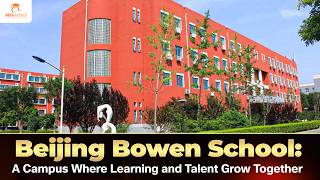
That 1993 license makes Bowen one of the capital’s first private, full-time boarding schools. The campus sits in Doudian Town, roughly 40 kilometers southwest of central Beijing. It spans 400 mu, or about 66 acres — a scale few K-12 schools in the city can match. About 41 acres are green space, with 80,000 square meters of buildings.
The school runs one continuous K-12 program. Primary, junior high, and senior high share a single campus, so students never switch schools mid-way through their education. One campus means one steady community, which removes a real worry for relocating families.
Scale is not the only draw. Bowen also offers five global university pathways for students aiming to study abroad — Japan, USA/Canada (OSSD and AP), Singapore, Hong Kong DSE, and Russia. These sit alongside the main International Program feeding into Chinese universities. Each pathway leads to a different set of universities, and each costs far less than Beijing’s top international schools.
Beijing is one of Asia’s top education cities. More families from Southeast Asia, Central Asia, the Middle East, and Latin America are looking here. They want strong teaching and real results, not brand names alone. China’s growing pull for undergraduate study is real. Cost, safety, quality of language exposure, and the weight of China’s top universities — a lot of families now recognize all of that.
Key Takeaways
109,000–130,000 RMB total per year (about USD $15,000–$18,000) — an International High School Program that pairs boarding, meals, tuition, textbooks, and uniforms in one figure.
HSK 4 → CSCA → Chinese universities pathway, with Peking University, Tsinghua, Fudan, Wuhan University, and Harbin Institute of Technology among the partner institutions.
Five outbound pathways too — Japan, USA/Canada (OSSD/AP), Singapore, Hong Kong DSE, and Russia — for students aiming beyond China.
About 66 acres — one of the largest K-12 campuses in Beijing, with full boarding from primary through senior high.
About 75% of teachers hold master’s or doctoral degrees, including 3 special-grade teachers — China’s highest teaching rank.
Zero Chinese OK on entry, basic English required; mid-semester start also possible after interview.
Guardianship service fee waived through Alifa’s partnership with the school — saving families 50,000–60,000 RMB across the three years.
Beijing Bowen School at a Glance
| Field | Details |
|---|---|
| Licensed | 1993 |
| Location | 66 Baicaowa, Doudian Town, Fangshan District — about 40 km southwest of central Beijing |
| Campus | ~66 acres (400 mu), including ~41 acres of green space; 80,000+ sqm of buildings |
| Program | Full K-12, boarding |
| Students | ~1,000 |
| Ratio | 1:10 (International Program classes ~20 students) |
| Curriculum | Chinese national curriculum, with the International High School Program running Grades 10–12 for foreign-passport students |
| Outbound Pathways | Japan, English (OSSD/AP), Singapore, Hong Kong DSE, Russia |
| Boarding | 4- or 2-person apartment-style rooms |
| Faculty | 75%+ hold master’s or doctoral degrees; 3 special-grade teachers; 15 senior teachers; 15 municipal subject leaders |
| International Program Cost | 109,000–130,000 RMB/year all-in |
| Oversight | Fangshan District Education Commission |
Beijing Bowen School Overview
Beijing Bowen School has run for over 33 years and holds full standing under the Fangshan District Education Commission. Founder Yang Guangze still leads the school today as principal, alongside a Peking University master’s degree in education. He chairs Modern Management University. He also serves as President of the Fangshan District Non-Government Education Association. He won the National Outstanding Private Education Principal Award. The China Association for Non-Government Education gave him this award.
Mu Yanxia serves as vice principal for teaching. Dr. Kang Xiaoming — a Peking University PhD, Tsinghua postdoctoral fellow, and Stanford visiting scholar — is the school’s chief expert. He leads the school’s “efficient learning method” system. Chief Advisor Li Jinchu is a National Labor Model in China’s education system. He once led the well-known Beijing No. 11 School and now advises on Bowen’s academic direction.
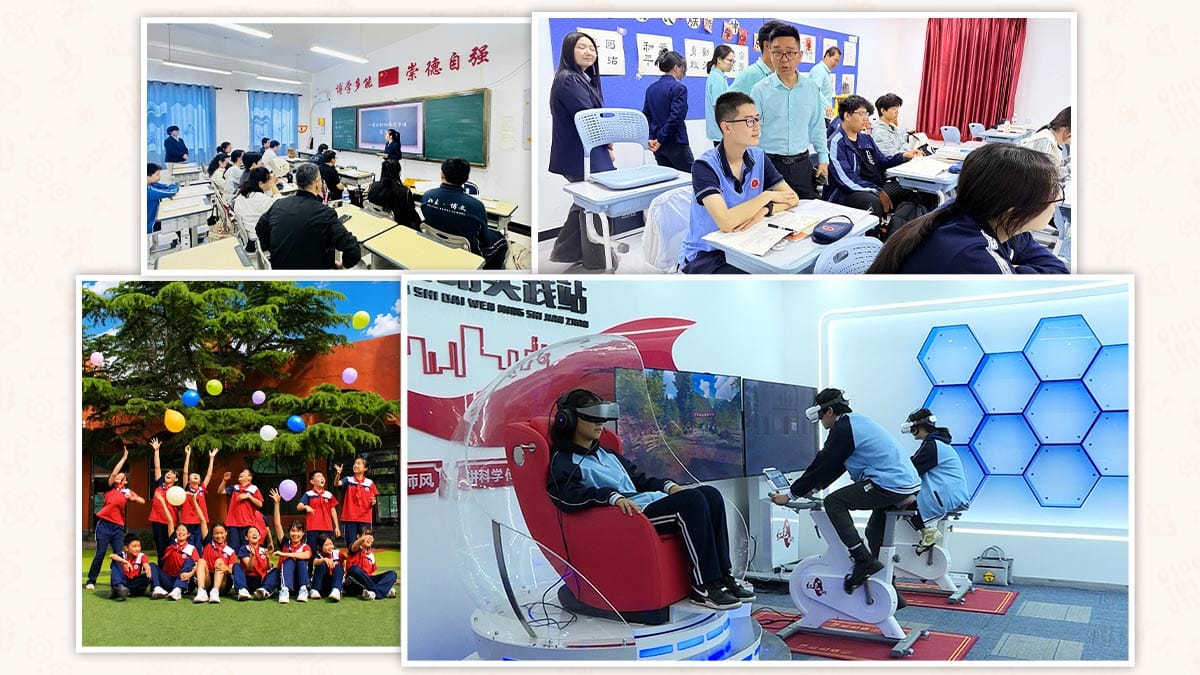
The campus itself is relatively new. Bowen moved to its current 66-acre Doudian Town site in 2022 to begin a fresh stage of development. Facilities include a 400-meter track, seven basketball courts, three football pitches, seventeen dance studios, an indoor badminton court, science labs, and smart classrooms. Few K-12 schools in Beijing offer this scale.
About 1,000 students enroll at any time. The student-teacher ratio holds at 1:10, and International Program classes stay around 20 students. Media coverage has grown in recent years, with features from China Daily and national education bodies. A private-education delegation also visited in 2025 to review the school’s teaching and student care. In 2024, Bowen started formal cooperation with Tsinghua University’s Sino-Russian Strategic Research Institute. It also signed partnerships with universities in the US, Canada, and Russia. In 2026, the school hosted a Sino-Russian youth cultural exchange camp, a sign of its growing international ties.
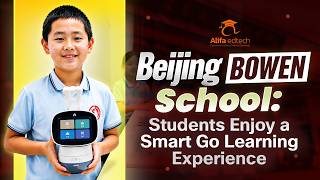
Cost Advantages of Beijing Bowen School
Beijing’s top international schools cost a lot. Harrow Beijing charges an estimated 260,000 to 400,000 RMB a year. Mid-tier international programs in Beijing, Shanghai, Guangzhou, Shenzhen, and Hangzhou run 150,000 to 300,000 RMB. Bowen’s International High School Program costs 109,000–130,000 RMB all-in. That is a real gap. Here is the full 2025–2026 breakdown.
International High School Program (foreign-passport students, all-in RMB/year)
| Item | Cost (RMB) | Notes |
|---|---|---|
| Tuition | 88,000 | Includes textbooks, school uniforms, and basic club activity fees |
| Accommodation | 9,000 (4-person) or 18,000 (2-person) | Independent bathroom, AC, underfloor heating, washing machine, hot water, self-study room on each floor |
| Meals | 12,000 | Three meals a day (school days); weekend/holiday meals extra by request |
| Insurance | 800 | Half-year option 400 |
| Total | 109,800–118,800 | Basic (4-person room) vs upgraded (2-person room); guardian fees, medical exam, visa, and travel are separate |
Guardianship for minors under 18 usually runs 1,500–2,000 RMB a month elsewhere — 50,000–60,000 RMB across three years. Alifa has negotiated with Bowen to waive the school-side guardianship fee for families placed through us.
Domestic Programs (Chinese-citizen students, tuition + boarding + meals, RMB/year)
| Program | Tuition | Boarding | Meals | Total/Year |
|---|---|---|---|---|
| Primary School | 33,000–34,980 | 6,000 | 12,000 | 51,000–53,000 |
| Junior High School | 43,000–45,100 | 6,000 | 12,000 | 61,000–63,000 |
| Senior High (Domestic) | 53,000 | 9,000 | 12,000 | 74,000 |
Outbound Global Pathways (all-inclusive, RMB/year)
These sit alongside the International Program for students aiming to study abroad instead of at Chinese universities.
| Pathway | Structure | Total/Year |
|---|---|---|
| Japan Direct Entry | 3+0 (all three years at Bowen) | 120,000 |
| USA/Canada (OSSD/AP) | 3+0 (on campus) or 2+1 | 89,000 |
| Singapore | 2+1 (two years at Bowen, one in Singapore) | 149,000 |
| Hong Kong DSE | Flexible 1–3 years | Priced within the English-system pathway — ask Alifa for the current schedule |
| Russian Preparatory | 1-year intensive | 188,000 |
Top domestic students can also win merit scholarships. The district’s top 1,000 exam scorers receive full tuition waivers for all three senior-high years.
The International High School Program: Study in China, Aim at Chinese Universities
For most international families, this is the reason to consider Bowen. The International High School Program is a three-year track for foreign-passport students that leads directly into Chinese universities.
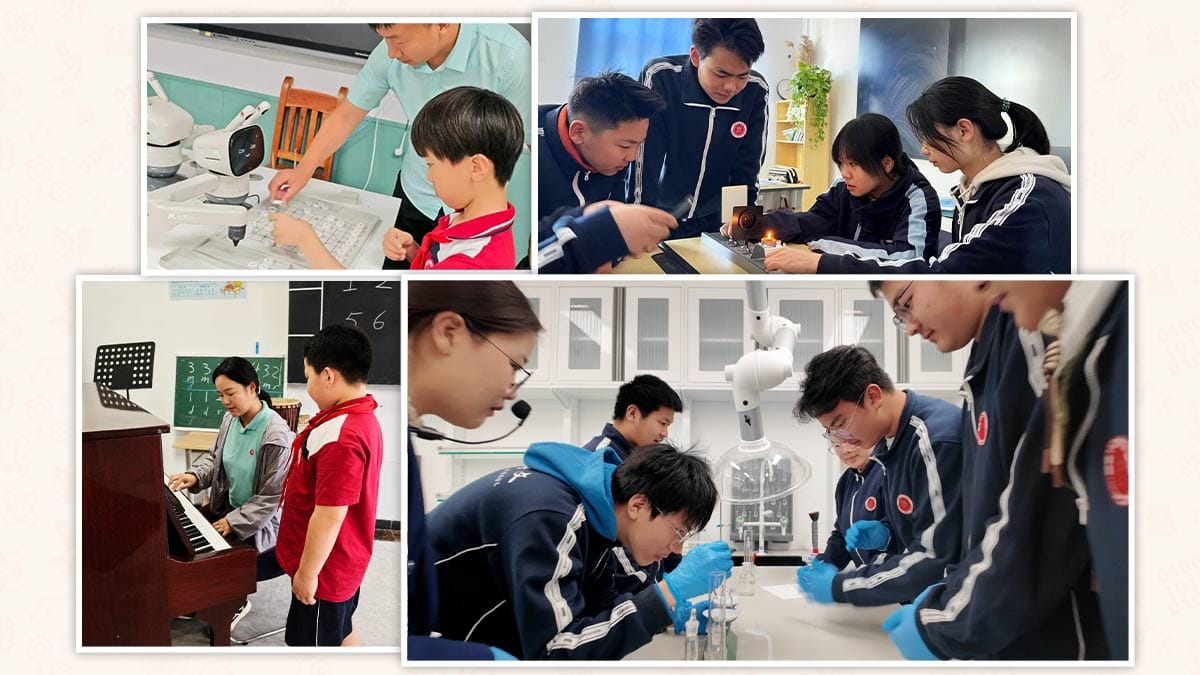
The structure moves through three stages:
Grade 10 — Adaptive Period
Intensive Chinese study, targeting HSK Level 4 — the standard threshold for undergraduate applications at Chinese universities.
Grade 11 — Improvement Period
Choose a study direction based on interests, ability, and family plans.
Grade 12 — Sprint Period
Complete final applications and sit the CSCA (China Study Abroad Undergraduate Academic Proficiency Test) — a standardized exam widely accepted by Chinese universities, offered five times a year.
The path opens more than 50 top Chinese universities to graduates. Bowen’s partner institutions include Peking University, Tsinghua, Fudan, Zhejiang, Wuhan University, and Harbin Institute of Technology. The list also includes Xi’an Jiaotong University, Beijing Foreign Studies University, Central University of Finance and Economics, and South China University of Technology.
This route works for international families because admission to Chinese universities for international students follows a different and less competitive process than the domestic gaokao. Fewer than 2% of test-takers reach Project 985 universities through the gaokao. International students apply through the CSCA and HSK, with roughly 33 CSCA-partner universities recruiting Bowen graduates directly. Chinese-taught majors that are highly competitive from the outside — medicine, engineering, AI, big data — become genuinely reachable this way.
Admission requirements are made more human-friendly. Bowen accepts foreign-passport students under 18 with zero Chinese to start, provided they have basic English. Students with existing Chinese can join mid-semester after an interview and only need to finish the required credits before graduation. On enrollment, students go into the official Beijing student status system and graduate with an official Beijing high school diploma recognized nationwide.
International students study in separate classes with Chinese-language instruction — no cross-class teaching. Optional courses mix with Chinese classmates, which is where the bilingual environment actually develops. The pass rate for graduation-required academic proficiency exams runs close to 100%.
Outbound University Pathways
For students aiming outside China, Bowen offers five global pathways. Formal cooperation with partner secondary schools in each region backs each track.
Japan Direct Entry (3+0)
All three years at Bowen, studying Japanese alongside the core curriculum. Graduates leave with both a Chinese high school diploma and Japan-track credentials, having studied Japanese from zero up to JLPT N2 or N1. Target schools include Waseda University.
USA/Canada (OSSD/AP)
Choose a 2+1 model or a full 3+0 on campus. The Ontario Secondary School Diploma (OSSD) route runs through Fort Erie International Academy in Ontario, Canada, and reports an 80% admission rate to the University of Toronto. The American AP route runs through Elite Preparatory Academy in New Jersey and links to the University of Wisconsin, Penn State, the University of Minnesota, and the University of Connecticut.
Singapore 2+1
Two years at Bowen, one in Singapore, including A-Level foundation courses. Target schools include NUS, NTU, and other top-100 universities.
Hong Kong DSE
Flexible 1-, 2-, or 3-year tracks, preparing students for Hong Kong’s eight public universities. The partner school is San Wui Commercial Society Chan Pak Sha School in Wong Chuk Hang, Hong Kong. UK and Australian universities accept DSE results too, and graduates of the eventual Hong Kong degree can apply for the IANG visa to work in Hong Kong afterward.
Russian Preparatory
A one-year intensive course feeding into Far Eastern State Transport University as a designated source school, with guidance from Tsinghua University’s Sino-Russian Strategic Research Institute. The partner university helped found the Harbin Institute of Technology, and it offers scholarships to strong students as demand for rail engineers rises.
The school also offers nearly 40 electives, from AI literacy and drone coding to Peking Opera, lion dance, and standard dance.
Faculty and Academic Excellence
Over 75% of Bowen’s teachers hold master’s or doctoral degrees. The school has 3 special-grade teachers — China’s top teaching rank — plus 15 senior teachers and 15 municipal subject leaders. In global-pathway classes, 35–40% of teachers come from other countries. All hold recognized teaching licenses and receive ongoing training.
Dr. Kang Xiaoming’s “Learning Power” framework teaches students how to study, covering seven areas such as drive, habits, and self-reflection. The framework anchors both the International Program’s exam preparation and the domestic gaokao-intensive track.
Results back this up. In 2023, one domestic student scored 615 on the gaokao. That is competitive for lower Project 985 universities — China’s top 39-school research group. It also clears the line for strong Project 211 institutions, the next tier of 100+ key universities. In 2024, students in Bowen’s gaokao-intensive track posted a 92% university admission rate, with some groups close to 100%. That track runs alongside the standard senior-high program and also serves repeat and arts-track candidates from outside the school. It’s priced separately at 63,000 RMB for the 2025 intake.
China’s Double Reduction policy limits outside private tutoring. Instead, each student gets a personal tutor at Bowen who tracks progress, builds a study plan, and helps with university applications.
Campus and Student Life
Students live in apartment-style rooms of four or two, with independent bathrooms, central air conditioning, underfloor heating, washing machines, and two storage cabinets each. Each floor has a self-study room. House parents are on duty around the clock.
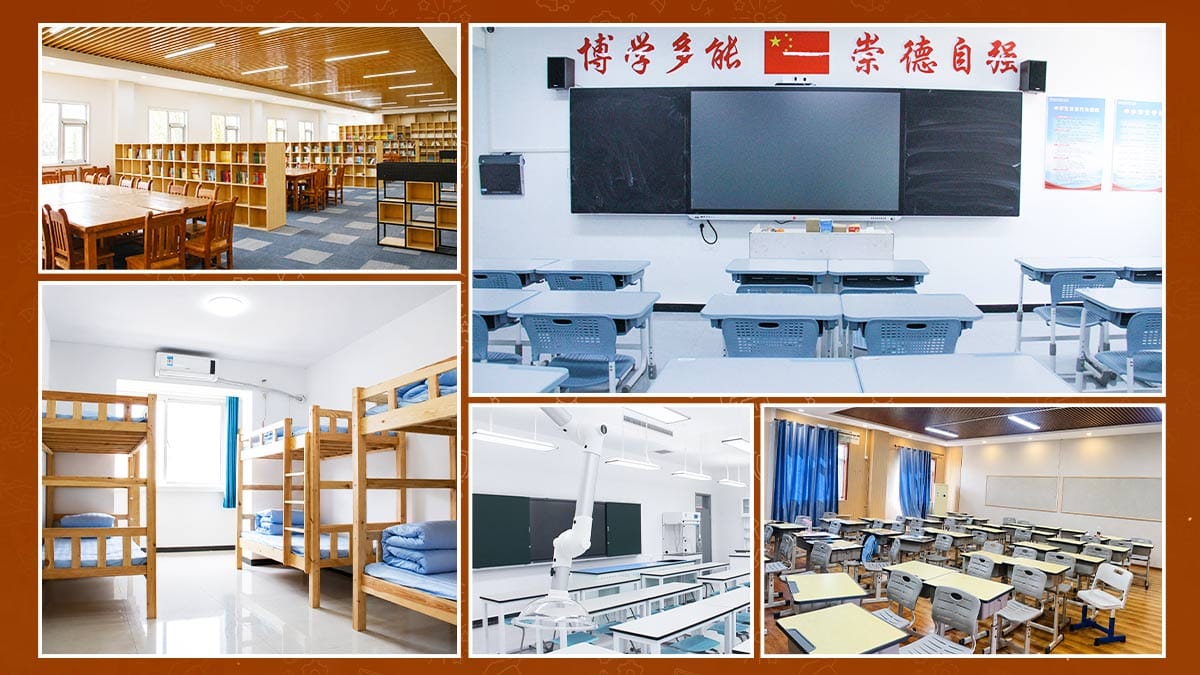
The school serves three meals and two snacks a day in a dining hall that seats 1,000. Nutritionists check every menu, and the kitchen is certified by the Beijing Municipal Administration for Market Regulation.
Bowen runs more than 20 clubs, including Model UN, robotics, drama, choir, Chinese drum, VR teaching, and football. Sports achievements in 2024 alone included the Fangshan District high-school badminton team title and a district football boys’ runner-up finish. Grade 11 student Ma Le’an also ran 100 meters in 10.88 seconds — a National Level 1 Athlete result. Bowen was also approved as a National Football Characteristic School in 2024.
International students take part in cultural exchanges too. Recent activities include a Russian Higher School of Economics Chinese Math Olympiad competition. They also include a China-Japan-Korea-Mongolia delegation. Basketball and online exchanges also run with Fort Erie International Academy in Canada.
Liangxiang University Town sits just outside the gates, home to five universities in Beijing.
Safety and Student Support
The campus runs a closed system, with guards on site day and night and cameras covering the grounds. A clinic and a counseling room support student health. The school keeps a health file for every student and reports a 100% response rate on flagged concerns.
At the national level, China ranks 3rd in the world for overall safety in Gallup’s 2025 Global Law and Order Report. Its law-and-order index scores 93, tying Iceland and Vietnam for 4th globally. And 94% of Chinese people report feeling safe walking alone at night. At the city level, Beijing consistently ranks among the world’s safest capitals, with 99.52% of residents reporting a sense of security in 2022.
Beijing also runs the SinoGuide app. The National Immigration Administration and Cyberspace Administration launched it together in November 2025. The app is in English and Chinese. It handles payments, transportation, healthcare, visa-free transit, and legal help for foreign residents in one place. Beijing Bowen School handles the visa paperwork families need and arranges guardians for minors — with the guardianship service fee waived through Alifa.
How to Apply
The application process runs through five steps:
Sign Up
Submit the Admission Application Form and a resume with academic records, awards, and any special skills. Applies to non-Chinese students under 18.
Admission Assessment
Sit a Chinese/English proficiency test (or provide IELTS or TOEFL scores), a subject foundation test, and a one-on-one interview.
Acceptance
The admission notice comes within three working days after the assessment, with enrollment requirements and payment terms.
Registration
Pay tuition and accommodation, complete student registration, and let the school assist with the study visa application.
Arrival
Register, complete the medical exam, move into the dorm, and start classes.
Application Documents Required
Who Should Choose Beijing Bowen School?
Beijing Bowen School fits some families very well — and not others.
✓ It’s a strong fit if:
→ Look elsewhere if:
Frequently Asked Questions
Conclusion
So, is Beijing Bowen School right for your child? For many international families, the answer is yes. The school brings rare strengths together. A 66-acre campus, over 33 years of history, and — for foreign-passport students — a direct path into China’s top universities. All of it at roughly a quarter of US boarding school costs. Most teachers hold advanced degrees, and class sizes stay small. The International Program treats students with zero Chinese as a starting point rather than a barrier.
Bowen suits families who want real results. The Chinese-university pathway opens doors in medicine, engineering, and AI that would be nearly impossible to reach from outside. Boarding life builds independence. And the five outbound pathways offer a safety valve if plans change.
Still, choosing a school in China is hard. The system feels unfamiliar, the options seem endless, and the paperwork looks foreign. You shouldn’t have to guess your way through it.
Alifa Education Services
Your child’s future in China deserves the right start.
That is where Alifa Education Services comes in. We work with families across Southeast Asia, Central Asia, the Middle East, and beyond. We find the right school and handle the whole process — from the first shortlist through visa, guardianship, and full enrollment.
Disclosure: Alifa Education Services is an independent education placement consultancy. We may earn a referral fee from partner schools when families enroll, at no extra cost to the family. Our recommendations are based on fit, not fee structure.


Member comments