

Introduction
Search online for fees at Shanghai Industrial & Commercial Foreign Languages School (上海市工商外国语学校) and you find one number: RMB 4,000 per year. That number is real, and it is the wrong number for your family. RMB 4,000 is what Chinese students pay. Foreign students pay RMB 40,000 per academic year.
It is the only vocational school in Shanghai allowed to accept foreign students, and the Shanghai Municipal Education Commission says so in its own 2024 report. The 2025 three-year class included students from seven countries — Russia, Kazakhstan, Kyrgyzstan, Germany, Korea, Italy and Thailand. Six of the seven nationalities are from Belt and Road corridor countries.
The school publishes its own profile in seven languages — English, German, French, Japanese, Korean, Spanish and Russian — a signal of how seriously it takes international families. In December 2025 it was named an AFS Silver School by the China Education Association for International Exchange.
This guide covers what you pay, who can apply, and what daily life is really like. It is built from the school's own admission booklet, government fee filings, and direct answers from the Director of the International Education Division.
Alifa Education checked 34 of the 41 facts on this page against primary sources and states plainly which 7 the school has not published. Checked 2026-09-19.
What is this school?
A public vocational school in Shanghai. Foreign students take a 3-year Business Chinese diploma or a 1-year certificate course.
Who is it for?
Both parents must have been foreign nationals when the student was born, and the student must never have held Chinese nationality.
What does it cost?
Tuition is RMB 40,000 per academic year, including a dormitory bed in term time. Not RMB 4,000 — that is the Chinese student rate.
What is the realistic year-one cost?
Alifa estimates RMB 53,000 to 56,000 for year one, adding uniform, books, activities, insurance and meals.
Is boarding available?
Yes — included during term time as an accommodation scholarship. The dormitory closes in the winter and summer holidays.
When must I apply?
Applications open 1 February and close 15 May each year. The school does not accept late applications.
Does my child need HSK to enter?
No. The school asks for English instead — about IELTS 5.5. HSK 5 is the graduation target.
Where is it?
35 Baise Branch Road, Xuhui District, Shanghai. The school has not published a campus transport page.
Who Can Apply to SICFLS
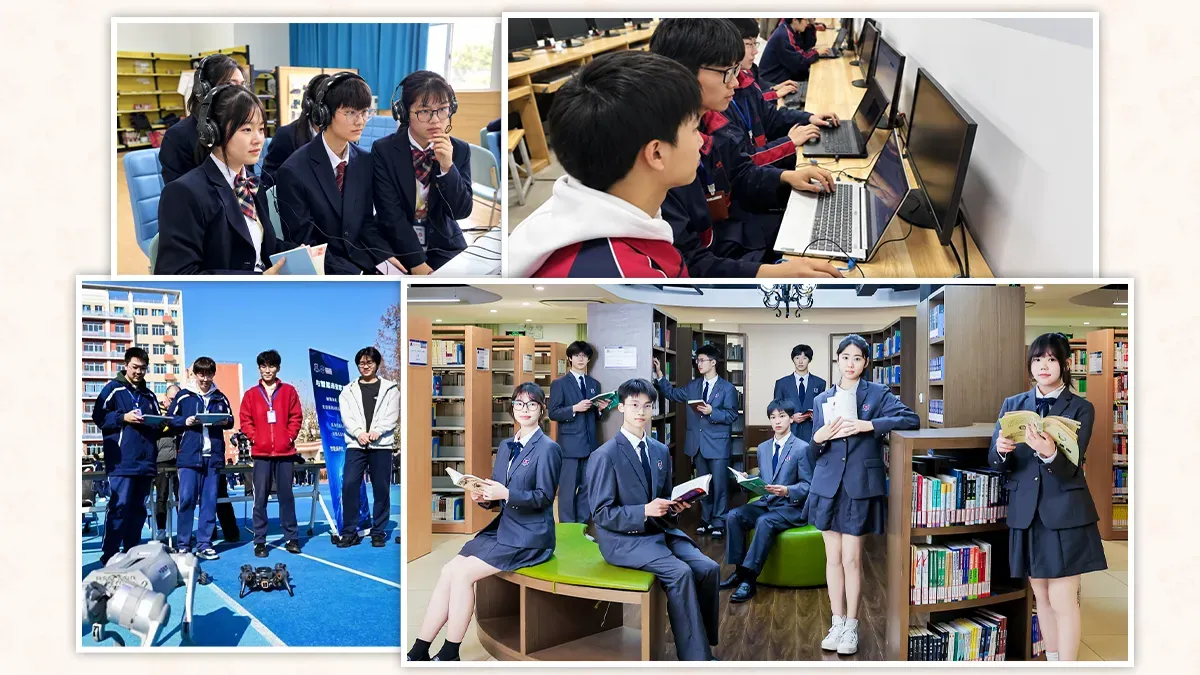
The nationality rule is strict. The school accepts a student only if both of these are true (2026 admission guide, May 2026):
- Both parents were foreign nationals when the student was born, and
- the student has never held Chinese nationality.
The original wording is: 学生出生时,父母双方都为外国籍,且学生没有过中国国籍.
This rule stops some families. A foreign passport today is not enough. If your child became a foreign national after birth, or if one parent was a Chinese national when your child was born, your child does not meet the rule as written. Check this before anything else.
Students already at the school — 2025 intake
The 2025 class had 18 international students from 7 countries: nine on the three-year diploma track and nine on the one-year certificate. The seven countries were Russia, Kazakhstan, Kyrgyzstan, Germany, Korea, Italy and Thailand. Beyond the diploma cohort, the school's short courses have hosted students from Australia, Finland, Belarus, Spain, France, Switzerland and Japan. Confirmed — school report, 2025-09-19
Age limits
| Programme | Age at entry |
|---|---|
| 3-year diploma | 15 to 17 |
| 1-year certificate | 16 to 20 |
| Either programme | Students over 20 are not accepted |
Scroll to see full table →
The Director says students who arrive very young find it hard to settle and the guardian carries more work. The upper limit exists because this is a secondary school, not a university. School-reported
Language: no HSK to enter, but you do need English
The school asks for no HSK level at entry. It asks for English instead. The Director says students need good spoken English and a base level of about IELTS 5.5. By graduation the school wants students to reach HSK 5. A student with strong Chinese but weak English may still be turned down. School-reported
School record
The student must have finished Year 9 in a K-12 school, graduated from junior middle school, or hold an equal qualification. Confirmed — admission booklet, 2025
The application window closes and does not reopen
Applications open on 1 February and close on 15 May each year. Students register in early September. The school does not accept applications after May. Because guardianship papers, notarisation and the visa all take time, start well before May rather than in the final weeks. School-reported
You send a passport scan, the school application form, a personal statement with a photo, one teacher recommendation, and a school report with contact details, signature and stamp. There is no application fee at present. School-reported
The school's Chinese-student programmes are closed to you
The school's three Chinese-student programmes are filled through the zhongkao, the Shanghai entrance exam. Sitting it needs Shanghai household registration, called hukou, or a qualifying residence permit, so foreign families cannot use those routes.
What It Costs
Tuition is RMB 40,000 per academic year, which is two semesters. This is the same for the three-year programme and the one-year programme, and it includes a dormitory bed during term time. You pay one year at a time, not three years in advance. Confirmed — admission booklet, 2025
An international school in Shanghai often charges above RMB 200,000 in tuition alone, so this school costs far less. It is still not RMB 4,000 — that is the Chinese student rate and it does not apply to your family.
What the RMB 40,000 does not include
| Cost | Amount | Notes |
|---|---|---|
| School uniform | ~RMB 1,000 | Required. Paid once. |
| School activities | ~RMB 1,200/yr | Trips, culture events, class activities. |
| Books and notebooks | ~RMB 1,000/yr | |
| Meals | RMB 15–20 per meal | All students must eat in the school canteen. |
| Dorm water and electricity | Under RMB 100/semester | Shared between roommates. |
| Insurance | From RMB 800/yr | Required. See below. |
| Flights, visa fees, notarisation | Varies | Your family pays these. |
Insurance: RMB 800 is the minimum, not the only choice
Every foreign student in China must hold insurance. The basic policy costs about RMB 800 a year and your guardianship company buys it. Without proof of cover the school refuses registration.
The Director of the International Education Division asked us to tell families clearly: you may choose a higher level of cover. A student once had an accident that the RMB 800 policy did not pay for, and then complained about the guardianship company. Ask what the basic policy actually covers before you decide. School-reported
Tuition: RMB 40,000
Uniform: ~RMB 1,000
Activities: ~RMB 1,200
Books: ~RMB 1,000
Insurance: RMB 800
Dorm utilities: ~RMB 200
Meals (~200 school days): RMB 9,000–12,000
Total: RMB 53,000 to 56,000 Alifa estimate
This excludes: flights, visa fees, passport renewal, and document notarisation costs, which vary by country.
The Course and the Diploma at SICFLS
| Three-year programme | One-year programme | |
|---|---|---|
| Type | Diploma education | Non-degree study |
| You receive | Official upper secondary education degree with diploma issued and registered by the Shanghai Municipal Commission of Education | Official school certificate |
| Age | 15 to 17 | 16 to 20 |
| Tuition | RMB 40,000 per year — includes campus dormitory school-time boarding | RMB 40,000 for the year — includes campus dormitory school-time boarding |
| Class hours | 6 to 7 class periods per day | 6 to 7 class periods per day |
Scroll to see both programmes →
Only the three-year programme gives a qualification you can use later. If your goal is a Chinese diploma, choose the three-year route.
The course is arts and business only, with no physics and no chemistry in the three years. That decides which university subjects your child can apply for later. School-reported
What students study
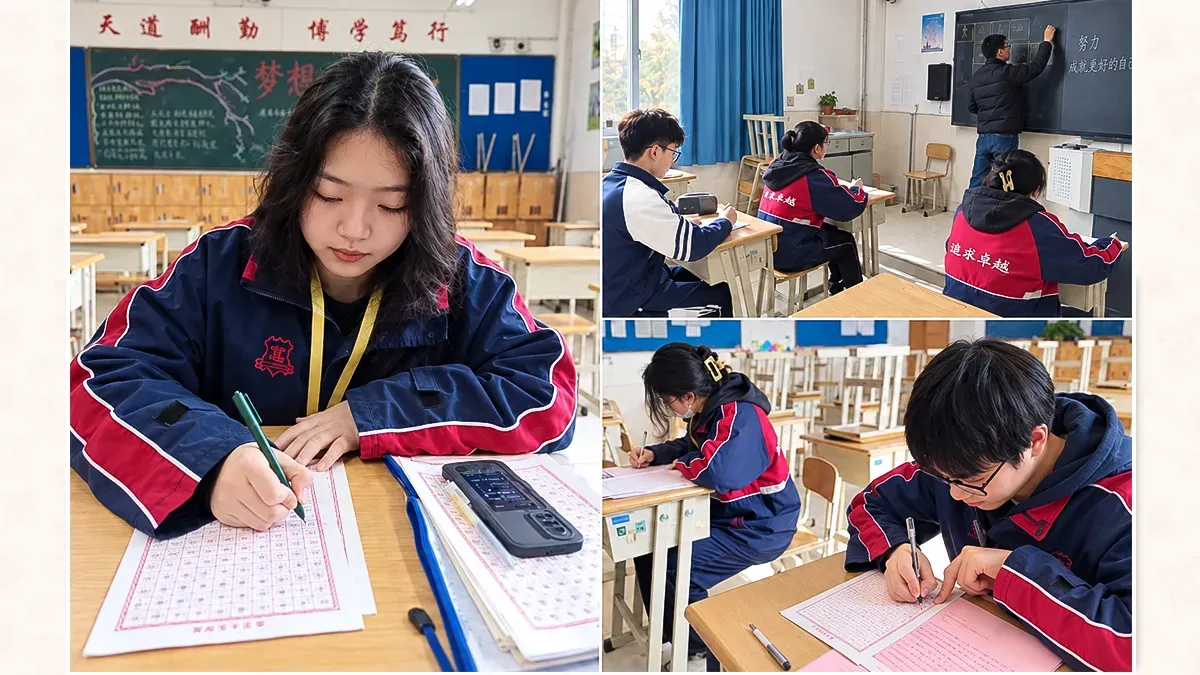
The curriculum covers Business Chinese, HSK Training, Chinese Reading and Writing, Chinese Listening and Speaking, Sports, and Local Curriculums with Chinese students. Students also take optional courses that interest them, and can join a long list of culture and art clubs. The three-year programme adds business English, marketing, international trade and cross-border e-commerce, plus maths and information technology. The final semester is workplace training. Confirmed — official admission booklet
What graduates will be able to do
The school states three graduate outcomes in its own admission booklet:
- Be proficient in Chinese language, especially business Chinese — qualified to apply for a Chinese university and work in a Chinese background company
- Be able to communicate in English on various topics in business occasions
- Have a deep understanding of Chinese culture, especially business culture, and be able to deal with various business situations
Confirmed — school admission booklet, 2025
19 partner schools in 11 countries
SICFLS runs sister-partnerships with 19 schools and universities across the United Kingdom, Switzerland, Japan, Germany, South Korea, France, Spain, Russia, Finland, Australia and Belarus. Signature international events include Shanghai Summer Camps, Young Leaders Programs, Global Youth Forums and Model United Nations. Over 300 foreign students and adults visit the school each year for these programmes. Confirmed — admission booklet
What the school has confirmed
The school's first three-year intake enrolled in 2025. The first cohort graduates in 2028. There is no placement history yet — no named university has admitted a graduate of this specific programme. The Director says many Chinese universities accept the route, but ask for names in writing before you commit. School-reported
Fast Facts About SICFLS Shanghai
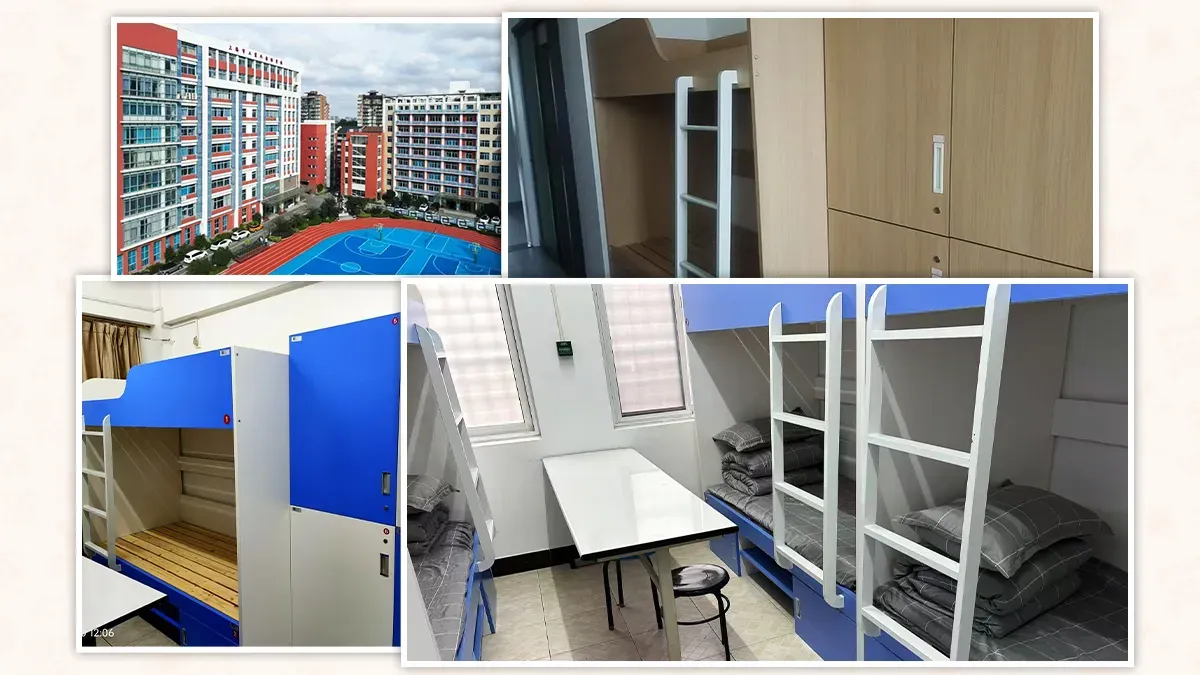
Boarding, Food and Daily Rules
Boarding is included during term time. Rooms hold 4 students each, with beds, closets, air-conditioning, a toilet and a shower cubicle. Foreign students may share a room with Chinese or other international students. Roommates share water and electricity, usually under RMB 100 per student per semester. Confirmed — official English admission booklet, 2025
The school employs boarding student advisors on duty 24 hours a day, seven days a week, alongside classroom teachers who support international students with both studies and daily life. This is a stronger boarding support system than most Chinese vocational schools publish. Confirmed — admission booklet
Two things families often miss. The school can withdraw the accommodation scholarship if a student repeatedly breaks the rules or fails the conduct review, and the family must then find housing in Shanghai. And the dormitory closes in the winter and summer holidays. Students must leave. The school prefers them to go home, and most do. Budget for those flights — they are not part of the school fee. School-reported
Chinese host families in weekends and holidays
The school says it tries to find weekend and holiday Chinese host families for international students as part of the Shanghai life experience — but it cannot always promise this. Families should treat it as a possibility, not a guarantee, and always have a plan B for school breaks. Confirmed — admission booklet
The rules are strict
Foreign students follow the same rules as Chinese students. The Director calls it 趋同管理, the same management for everyone: "This is a secondary vocational school, not a university. We manage students strictly." There are room inspections and conduct scoring. From Friday afternoon to Sunday afternoon students may leave campus in the daytime with a pass from their class teacher, but must be back in the dormitory by 8 pm. The admission booklet confirms all students must obey the regulations, conform to dormitory management, and keep school regular hours. Confirmed
Food and religion
All students eat in the school canteen, where meals cost RMB 15 to 20 each. There is a dedicated counter with no pork that the Central Asian students use. The school is clear about two limits: it cannot provide strictly Halal food, and under Chinese law no religious activities are allowed on campus. Discuss this with the school before you apply. School-reported
Nearly 30 student clubs and interest groups
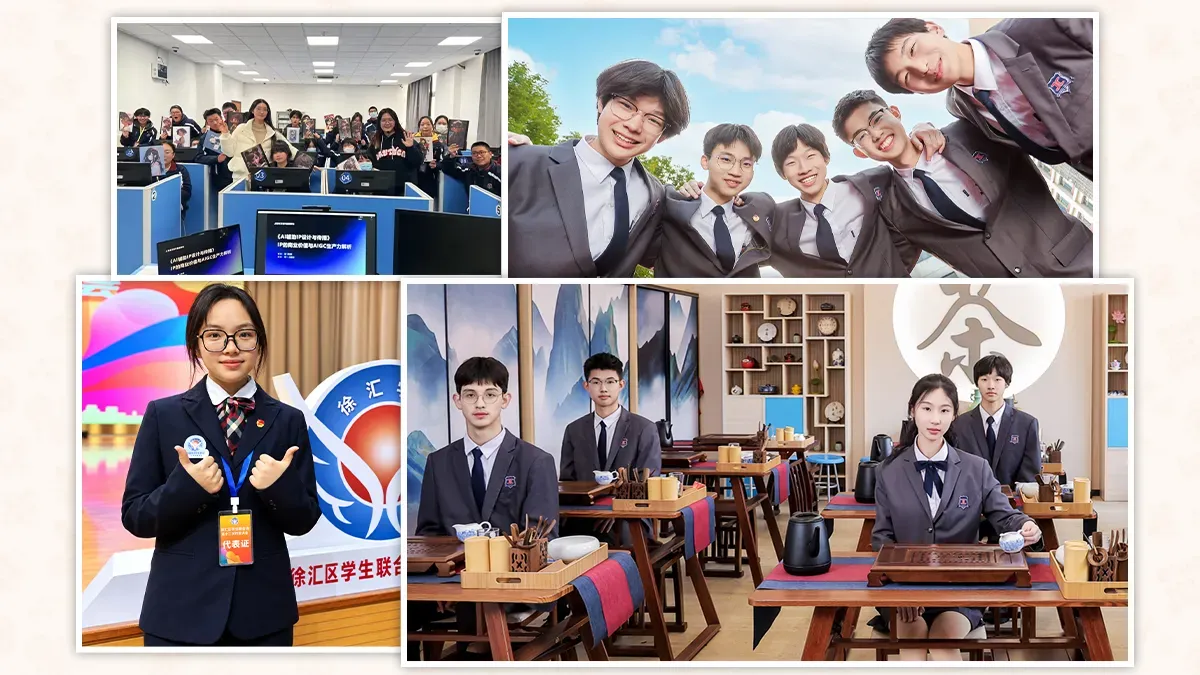
The school runs nearly 30 different student interest clubs covering culture, sport, science, art, dance, music and handcraft. International students are actively encouraged to join. The school states this is not extra-curricular decoration — it is how foreign students build Chinese friendships and develop cross-cultural communication skills. Confirmed — admission booklet
Explore Shanghai I&C Foreign Languages School
Watch the school's campus facilities, educational history, modern laboratories and international exchange environment.
Shanghai I&C Foreign Languages School – Modern Campus Facilities!
Visa and Guardianship
The school issues a confirmation form, 基础教育阶段接收留学生基本信息确认表, stamped by the Shanghai Municipal Education Commission. Only a school with that stamp may accept foreign students. You take the form to the Chinese embassy in your own country to apply for the student visa. School-reported
The school describes the student visa as an X2, which is the category for study under 180 days. A three-year programme runs longer than that, so ask the school how the visa is renewed each year before you plan travel. Not published
A guardian in China is required
Chinese rules require parents living outside China to appoint a guardian who lives in China. The paperwork depends on your child's age. See Alifa's complete guide to guardianship in China for the documents and steps.
| Document | Under 16 | 16 to 18 |
|---|---|---|
| Parents' authorisation, notarised at home | Yes | Yes |
| Hague apostille on that authorisation | Yes | Yes |
| Parents' marriage or divorce certificate, notarised | Yes | No |
| Child's birth certificate, notarised | Yes | No |
| Second guardianship notarisation, done in Shanghai | Yes | Yes |
Scroll to see full table →
The apostille route changes by country. Kazakhstan no longer handles it at the Chinese consulate; it now goes through the public service centre. Check your country's route early. School-reported
The second notarisation in Shanghai matters more than families expect. Without it the Director says the long-stay permit may be refused, the bank may refuse to open an account, and insurance becomes difficult. School-reported
The school adds one more rule. It does not accept a guardian that a family finds by itself. Guardianship must come through an approved guardianship service provider. School-reported
We benefit from this rule, so please check it yourself. Alifa Education Services is one of the approved guardianship providers for minors in Shanghai. We earn money when a family uses us, so we are telling you a rule that sends business to us. Email sicf_ie@aliyun.com or call +86 21 6476 0038 and ask the school to confirm in writing which providers they accept, before you sign with any agent including Alifa. List not published
Location and Getting There
- Campus: 35 Baise Branch Road, Xuhui District, Shanghai · 上海市徐汇区百色支路35号
- International office: Room 507, Yaohua Building, 66 Pingfu Road, Shanghai 200231 · 上海市平福路66号耀华大楼507室
- Nearest metro: the school has not published a campus transport page. Not published
- School bus: not published. Not published
Travel matters less here than at most schools, because students board on campus in term time. It becomes a question only if the accommodation scholarship is withdrawn, or during the holidays when the dormitory closes. For families moving to China for school, Xuhui District is well connected by Shanghai's metro network.
The second campus, in Minhang at 288 Wuhe Road, teaches only Aircraft Digital Manufacturing Technology, so foreign students are not based there.
University After Graduation
Graduates receive a Chinese vocational upper secondary diploma, known as a 中专 diploma, registered with the Shanghai Municipal Commission of Education. Confirmed — shmeea charter, 2024
A foreign student can use that diploma to apply to a Chinese university. The route has three parts: an HSK score, a CSCA subject test, and the diploma. School-reported
Many Chinese universities accept this route, and the Director says most universities in Shanghai accept results from this school's foreign students. A small number do not accept vocational school results at all, so it depends on the university. The school wants students at HSK 5 by graduation; universities usually ask for HSK 4 or 5, and the strongest ask for HSK 6. School-reported
Two honest limits to plan around. Subjects: the course has no physics and no chemistry, so your child applies for arts and business subjects — not medicine, engineering or the natural sciences. Track record: the three-year programme is only in its second intake. No student has finished it yet and the first group graduates in 2028. There is no placement history. Ask the school to name universities in writing before you commit. Not published
What Alifa Checked About SICFLS
| Item | What we found | Status |
|---|---|---|
| Annual tuition | RMB 40,000 per academic year for foreign students, including term-time boarding. RMB 4,000 is the Chinese-student rate and does not apply. | Confirmed — official English booklet |
| Year-one all-in cost | About RMB 53,000 to 56,000, excluding flights and visa costs | Alifa estimate |
| Eligibility | Both parents foreign at the student's birth; student never held Chinese nationality; Year 9 completed; ages 15–17 (3-year) or 16–20 (1-year); English ~IELTS 5.5; no HSK needed to enter | Confirmed |
| Application dates | 1 February to 15 May; registration in early September; no late applications | Confirmed — official booklet |
| Curriculum | Business Chinese, HSK Training, Chinese Reading/Writing, Chinese Listening/Speaking, Sports, Local Curriculums with Chinese students. 6–7 class periods per day. | Confirmed — official booklet |
| Exit diploma (3-year) | Official upper secondary education degree with diploma issued and registered by the Shanghai Municipal Commission of Education | Confirmed — official booklet |
| Boarding | 4 students per room · beds, closets, air-conditioning, private bathroom · 24/7 boarding student advisors on duty · dormitory closed in winter and summer holidays | Confirmed — official booklet |
| Meal cost | RMB 15 to 20 per meal · all students must eat in the school canteen | Confirmed — official booklet |
| Weekend host families | School tries to arrange Chinese host families for weekends and holidays but cannot always guarantee this | Confirmed — official booklet |
| Partner schools | 19 partnerships across 11 countries: UK, Switzerland, Japan, Germany, South Korea, France, Spain, Russia, Finland, Australia, Belarus | Confirmed — official booklet |
| International events | Shanghai Summer Camps, Young Leaders Programs, Global Youth Forums, Model United Nations. 300+ foreign visitors per year for short courses. | Confirmed — official booklet |
| Student clubs | Nearly 30 student interest clubs — culture, sport, science, art, dance, music, handcraft | Confirmed — official booklet |
| Licence to enrol foreign students | The only secondary vocational school in Shanghai with this licence, approved 2013 by Shanghai Municipal Commission of Education | Confirmed — 上海市教委 2024 report + booklet |
| University route | HSK + CSCA + diploma. Many universities accept it; a small number do not. First graduates in 2028, so no placement history yet. | School-reported |
Scroll to see full table →
Checked but not included
- 上海工商外国语职业学院. A separate private college in Pudong with a near-identical name. This guide does not describe it.
- The comprehensive high school division. Closed between 2015 and 2018. Pass-rate figures still online describe that closed division, so we left them out.
Ask the school before you pay a deposit
- The visa. The school describes an X2 student visa (under 180 days). Ask how it is renewed across a three-year programme, before you travel.
- Universities. Ask for names of universities that accept this school's diploma from foreign students, in writing.
- Moving up. Ask whether a one-year student can continue into the three-year diploma class.
- Insurance. Ask what the RMB 800 policy actually covers, and what a higher level of cover costs.
- Weekend host families. Ask whether one is likely to be available for your child, given nationality and gender preferences.
- Your documents. Ask for the exact notarised papers needed for your country and your child's age.
- Guardianship providers. Ask which providers the school accepts, in writing, before you sign with any agent.
- Getting there. Ask which metro station and line serve the Xuhui campus, and whether a school bus exists.
Last reviewed: 2026-09-19 by Alifa Education, using the school's own official English admission booklet (dated 21 February 2025). Fees and admission rules change — confirm with the school before making any payment.
Frequently Asked Questions About SICFLS
Because RMB 4,000 per year is the rate the Shanghai government sets for Chinese students at this school, and it appears in the school's public fee filing. Foreign students are charged on a separate schedule of RMB 40,000 per academic year, published in the school's own admission booklet for international students. Directories that copy the public filing repeat the Chinese-student figure without saying which students it applies to.
The 2025 diploma and certificate intake had 18 students from 7 countries: Russia, Kazakhstan, Kyrgyzstan, Germany, Korea, Italy and Thailand. Beyond the diploma cohorts, the school's short courses have hosted thousands of participants from Australia, Finland, Russia, Belarus, Spain, Germany, France, Switzerland, Korea and Japan over the years. The school confirms this on its own Business Chinese introduction page.
The three-year diploma programme takes students aged 15 to 17. The one-year certificate programme takes students aged 16 to 20. Students over 20 are not accepted on either programme. Students must also have finished Year 9, graduated from junior middle school, or hold an equal qualification.
No. The school asks for no HSK level at entry. It asks for English instead: good spoken English and a baseline of about IELTS 5.5. This surprises many families. A student with strong Chinese but weak English may still be turned down. By graduation the school wants students to reach HSK 5, because Chinese universities generally require HSK 4 or 5, and the strongest universities ask for HSK 6.
Yes, through a route with three parts: an HSK score, a CSCA subject test, and the school diploma. Many Chinese universities accept this, and the Director says most universities in Shanghai accept results from this school's foreign students. A small number do not accept vocational school results at all. Because the course has no physics or chemistry, your child applies for arts and business subjects. No graduate has yet applied to university because the first cohort finishes in 2028.
In December 2025 SICFLS was named an AFS Silver School by the China Education Association for International Exchange (CEAIE). The award recognises schools that host and support international exchange students. The school confirmed the honour on its International Exchange news page on 29 December 2025. It sits alongside SICFLS's PASCH partnership with the Goethe-Institut, ISO international education management certification, and French education label certification — a set of four international accreditations the school holds simultaneously.
All students eat in the school canteen, and there is a dedicated counter that serves no pork, which the Central Asian students use. However, the school states clearly that it cannot provide strictly Halal food. Under Chinese law, religious activities are also not allowed on campus. Families for whom observant practice is essential should discuss this with the school before applying.
Yes. The school publishes its official profile in seven languages: English, German, French, Japanese, Korean, Spanish and Russian. Each language version sits under the International Exchange section of sgsw.edu.cn. The English version is titled "Shanghai Industrial and Commercial Foreign Languages School" and was updated in October 2023. This seven-language reach is unusual for a Chinese vocational school and reflects SICFLS's role as Shanghai's only vocational school licensed to enrol foreign students.
They cannot stay at school. The dormitory closes to foreign students in the winter and summer holidays, and students must leave. Where they go is decided by the family and the guardian. The school prefers students to return to their home country, and most do. Budget for those flights, because they are not part of the school fee.
No, according to the Director. The school does not accept a guardian that a family arranges by itself. Guardianship must come through an approved provider. Alifa Education Services is one of those providers, so we benefit from this rule. Please confirm the list of accepted providers directly with the school at sicf_ie@aliyun.com before you sign with any agent, including us.
Alifa Education Services
Is SICFLS Right for Your Family?
It fits a child aged 15 to 17 who has held a foreign passport since birth, speaks English at about IELTS 5.5, and wants a Chinese-language business education in Shanghai at about a quarter of international school prices, aiming for a Chinese university in an arts or business subject.
It does not fit a family aiming at a Western university, a science or engineering degree, a student over 20, or a relaxed boarding environment. Alifa Education works with families across the Belt and Road region and provides the China-based guardianship the law requires for students under 18.
✉ Ask Our Consultant About This School →Disclosure: Alifa Education Services is an independent education placement consultancy. We may earn a referral fee from partner schools when families enrol, at no extra cost to the family. We are also one of the approved guardianship providers for minors in Shanghai, so we earn money from the guardianship requirement described in this guide.
Sources
- Shanghai Industrial & Commercial Foreign Languages School, International Education Division, Admission Info for International Students, 2025. Tuition, excluded costs, application dates, application materials, programme types, boarding.
- Shanghai Industrial & Commercial Foreign Languages School, Curriculum of Business Chinese, six-semester course and class hours.
- Shanghai Municipal Education Commission, 上海职业教育质量年报(2024年度), page 45, published 2025-03-13 — official PDF. The only-school-in-Shanghai statement.
- School 2026 admission guide, 2026-05-11 — admissions page. Nationality rule.
- Shanghai Municipal Education Examinations Authority, 2024年上海市中等职业学校自主招生章程, 2024-04-29 — official charter. Diploma type, campus allocation.
- Ministry of Education, 中小学接受外国学生管理暂行办法 (Order No. 4, 1999), Articles 5 and 7. Guardianship rules.
- School education fee disclosure, January 2026 — fee disclosure. Chinese-student rates.
- School report on the 2025 international intake, 2025-09-19 — WeChat permalink. The 2025 cohort.
- Statements from the Director of the International Education Division, September 2026. Age limits, language expectations, application practice, boarding, dormitory rules, canteen, visa form, guardianship, insurance, and the university route.
By John Wong, Alifa Education. Published September 2026. Last verified 2026-09-17. Fees and admission rules change — confirm with the school before making any payment.


Member comments