

Introduction
Beijing Huiwen Middle School sends graduates to Peking University and Tsinghua University. Tuition starts at RMB 68,000 a year. Most international schools in Beijing charge RMB 270,000 or more. That gap is huge. So why don't more expat families in Southeast Asia and India know about it?
Most haven't heard enough yet. But word is spreading. Huiwen has been open since 1871. Over 5,000 international students from 30-plus countries have studied here. The international student program started in 1994. Almost every graduate has gone on to a top Chinese or overseas university.
The school ranks among China's Top 100 Most Influential Primary and Secondary Schools. Few programs can match that record at this price.
What does the school offer? Who can get in? What should families think hard about before saying yes?
In this article, you'll learn what drives Huiwen's strong reputation, what the programs look like, who can apply, and what challenges to plan for before you decide.
What Makes Huiwen's 155-Year History Unique?
Huiwen was founded in 1871 during the Qing Dynasty. Few schools in China have remained in operation for so long.
The school started as Huaili Shuyuan—a private academy with missionary roots. Over time, it grew and changed names. People knew it as Jingshi Silide Huiwen Zhongxue until 1937, when it became Beiping Silide Huiwen Zhongxue. By the 1940s, people knew it as Huiwen Academy, which is also translated as Peking Academy High School.
Educator Cai Yuanpei had ties to the school's wider reform network. That link illustrates the seriousness with which Huiwen approached learning from a very early age.
The school survived war, political change, and decades of unrest. In 1952, the government changed the school's name to Beijing No. 26 Middle School. The old Huiwen name came back in 1989. From 2013 to 2019, a rebuild forced a move to a south campus site. By 2019, the school was back on its modern original site.
That history matters. When you commit to a school for three to six years abroad, you want one that won't close or shift its focus.
In 1978, Huiwen got "key school" status. This is a government designation for schools with strong staff, results, and facilities. By the early 1990s, it was the first middle school in Dongcheng District authorized to enroll foreign students.
The formal international program started in 1994. Three government bodies approved it: the Beijing Municipal Education Commission, the Overseas Chinese Affairs Office, and the Public Security Bureau.
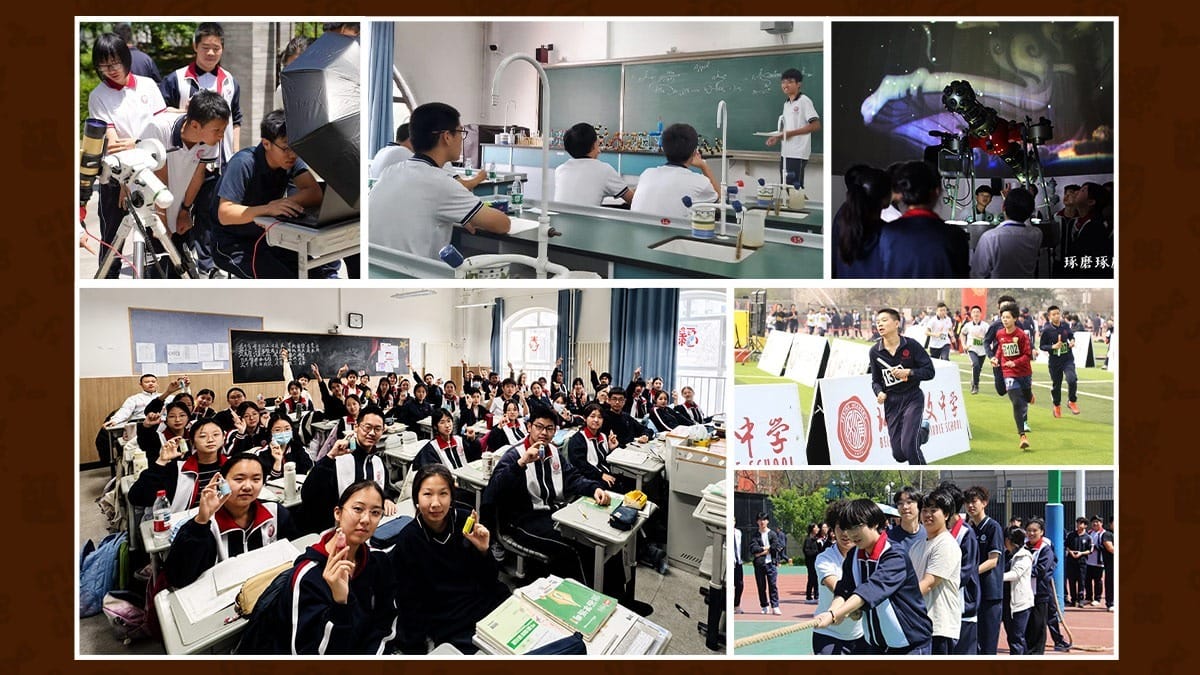
The school motto is "Wisdom, Benevolence, and Courage." Students don't study for exams. They do sports, arts, and community work. That gives new students more ways to fit in before their Chinese becomes proficient. Sports and art bridge the language barrier. Many friendships start there before they are fluent in Chinese.
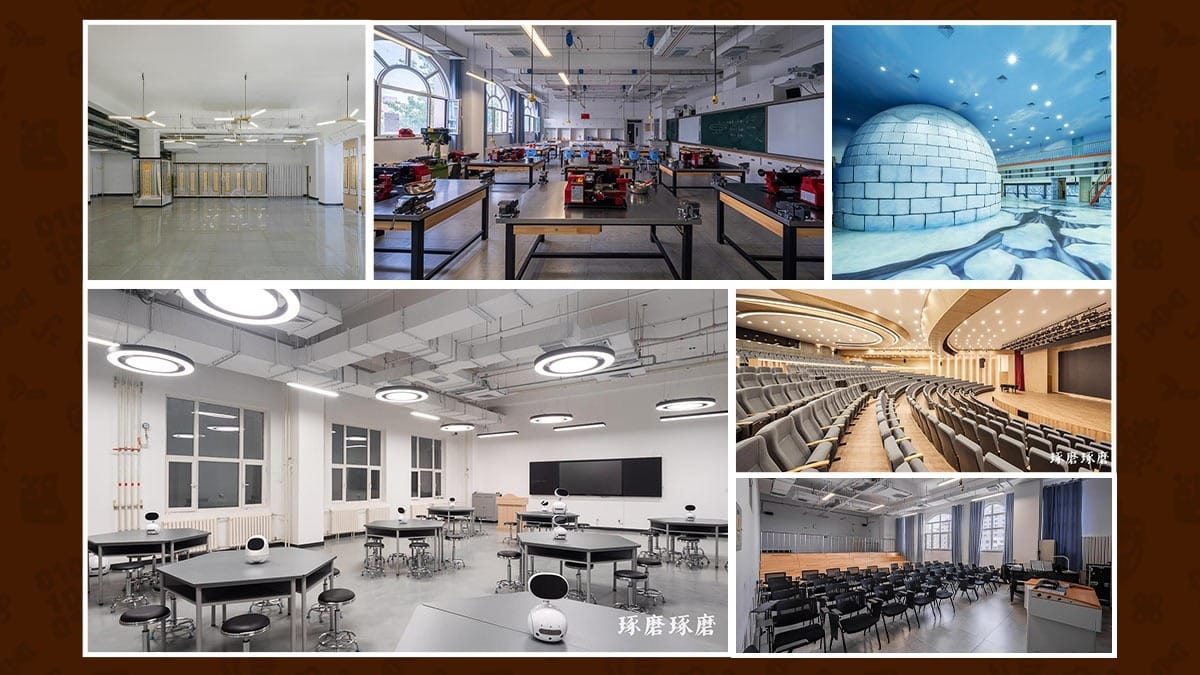
The campus sits in Dongcheng District, right near the Temple of Heaven and the historic Moat Area. The library holds around 120,000 books. There are dorms, a gym, and a full track and field on campus.
How Does Huiwen Deliver Top Results at Lower Cost?
Most parents ask this first. Beijing Huiwen is a public school. The government funds it. So the school doesn't need to match the high fees of private international schools. Yet the results outperform many schools that cost five times more.
Beijing Huiwen Middle School Fees
- Junior High School (Grades 7–9): RMB 68,000 per year
- Senior High School (Grades 10–12): RMB 68,000 per year
- Non-Degree Chinese Language Program: RMB 34,000 per year; RMB 24,000 per semester
- International Student Program: RMB 120,000–150,000 per year
- Sino-US Program (AP curriculum, mainly for Chinese nationals): Around RMB 100,000 per year, not including other fees
- One-time application fee: Around RMB 2,143 (non-refundable)
- On-campus housing: Around RMB 10,000–20,000 per year (check with the housing office)
- Monthly living costs: Around RMB 1,500–2,000 for food, transport, and personal items
How do these costs compare to other options? Top English-medium international schools in Beijing charge RMB 270,000 to RMB 330,000 a year. Bilingual schools charge RMB 110,000 to RMB 220,000. These figures show that Huiwen costs about 80% less than the most expensive international schools.
But price isn't the full story.
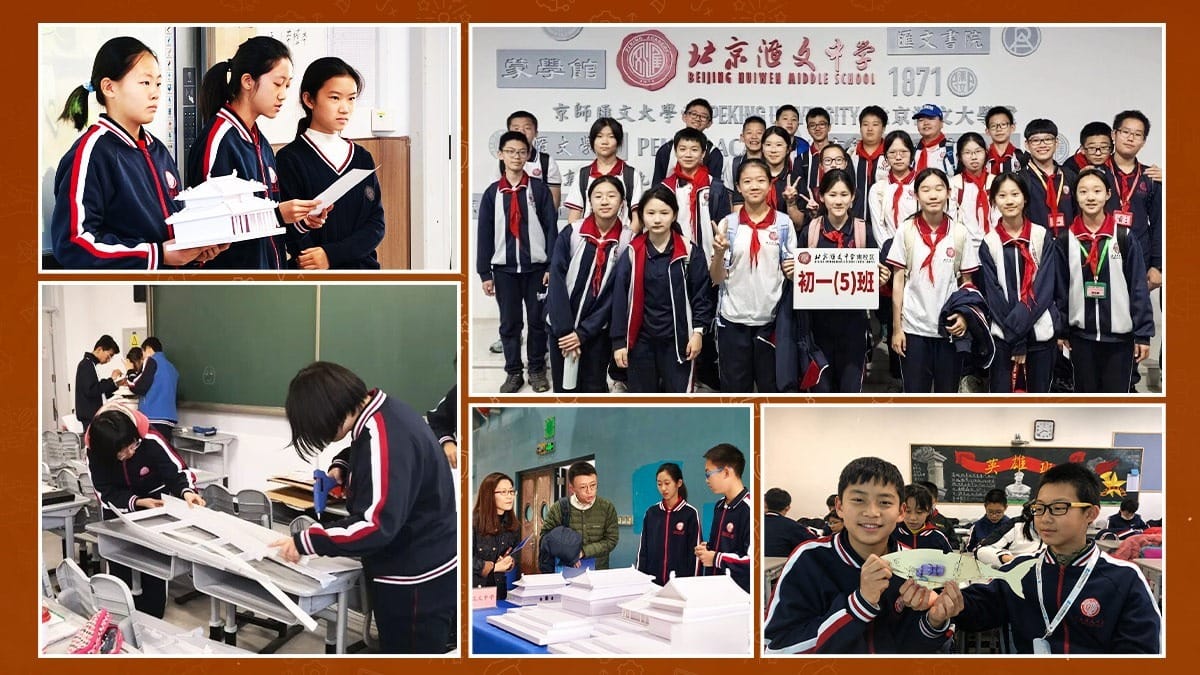
Huiwen puts international students in regular Chinese classes. They study with Chinese peers. Same lessons. Same exams. No soft "international track." This rigorous preparation drives Huiwen's top exam scores each year. There are no shortcuts, and that's exactly why it works.
In 2021, two foreign students from the international department got into Peking University. Seven more got into Tsinghua University. Others went to other top Chinese universities. That's from one year alone. The school's historical record shows 100% of graduates going to top Chinese or overseas universities.
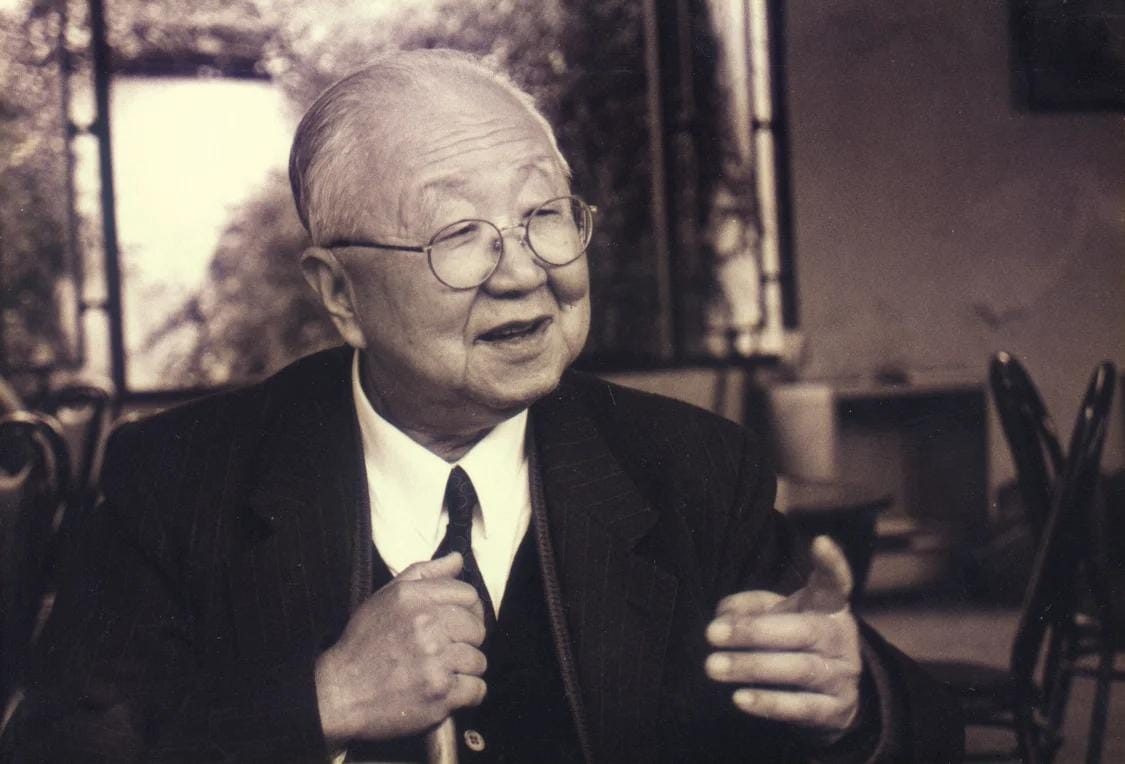
The school's alumni list backs this up. Graduates include academicians from the Chinese Academy of Sciences (CAS). Others joined the Chinese Artists Association and the Chinese Football Association. Film director Lu Chuan—known for City of Life and Death—attended Huiwen. So did Gao Fengshan and architect Liang Sicheng, one of China's most admired designers.
Huiwen also offers merit scholarships. Strong HSK scores can earn an entry award. Top students in the international cohort can get a renewal award. There are talent awards too for students who shine in the arts or sports. These awards can cut costs by a large amount. Ask the school for current details when you apply.
What Academic Programs Drive Its Strong Reputation?
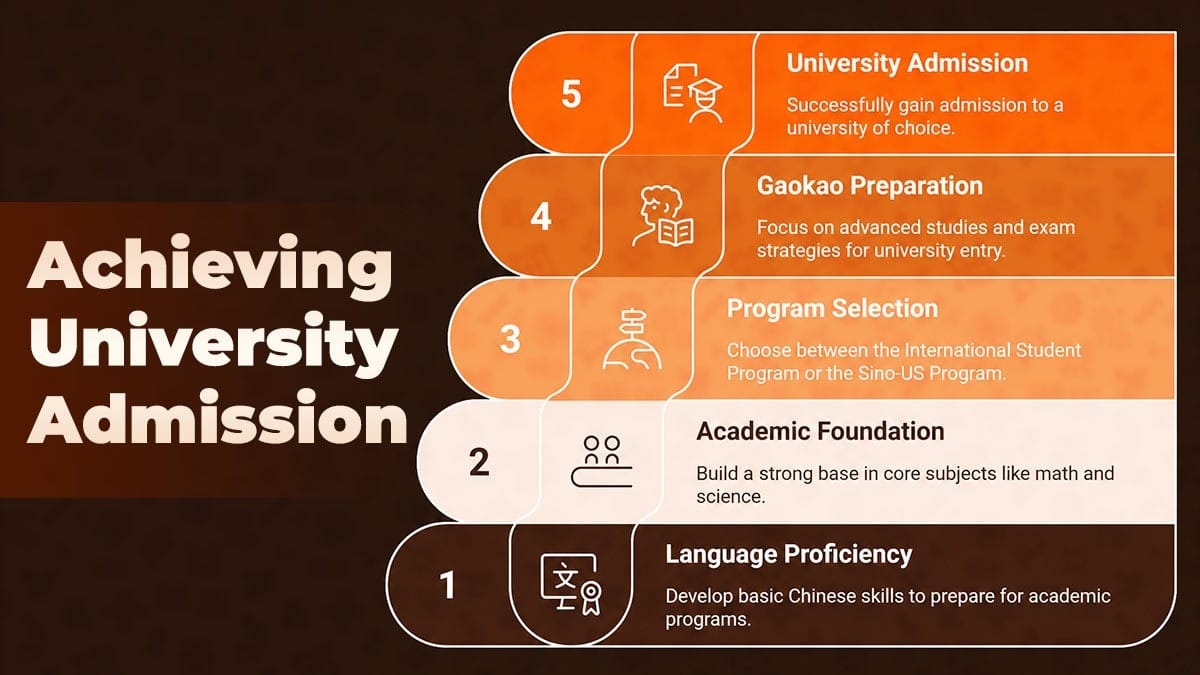
Beijing Huiwen runs programs from Grade 7 to Grade 12. The school uses a nine-year integrated curriculum for domestic students. For international students, two programs matter most.
1. The International Student Program (Foreign Student Program): Open to foreign passport holders only. Follows the full Chinese national curriculum (CNC). All classes are in Chinese. Senior high students need HSK Level 5 or above. Junior high students need a basic Chinese foundation. Foreign students sit for Beijing’s APT (Academic Proficiency Test) and CSCA (China Scholastic Competency Assessment) to enter top Chinese universities.
2. The Sino-US Program (AP Program): Mainly for Chinese nationals who are planning to go to the US for higher studies. It combines the Chinese curriculum with US AP courses and a dual diploma. Foreign passport holders should use the International Student Program, not this one.
3. Language Program: Not ready for academic classes yet? Huiwen offers a non-degree language program. One semester costs RMB 24,000. A full year costs RMB 34,000. Students get intense Chinese and HSK prep. Once they meet the language bar, they can move into the academic program.
The junior high curriculum covers Chinese, maths, English, physics, chemistry, biology, history, geography, and politics. Students also do PE, music, and fine arts. Calligraphy, Chinese painting, and craftwork are part of the schedule too.
Beyond the core academic program, Huiwen offers a strong set of student clubs. These include robotics innovation, model making, and Destination Imagination innovation thinking. The school also runs a wind orchestra and a dance team. For international students, joining a club is one of the fastest ways to make friends.
Senior high narrows down to Gaokao prep. In Grade 11, students pick one of two tracks:
- Science track: Advanced maths, physics, chemistry, and biology. Plus Chinese and English. Leads to engineering, medicine, computer science, and science degrees.
- Liberal arts track: Chinese, history, geography, and politics. Plus maths and English. Leads to law, journalism, international relations, and education.
Grade 12 is full-on exam prep. Homework is heavy. Tests come often. The pressure peaks in June. Know that before you say yes.
The school also runs university counseling for both Chinese and overseas university applications.
Who Can Apply and What Are the Key Requirements?
Only foreign passport holders can apply to the International Student Program. Chinese nationals—including those from Hong Kong, Macao, and Taiwan—cannot use this route. Contact Alifa Education consultants to help you out with the school applications.
Language requirements:
- Junior high: basic Chinese skill needed
- Senior high: HSK Level 5 or above as a rule; Level 4 may be looked at for strong STEM students
Extra requirements for senior high:
- Written entrance exam (usually maths)
- Possible interview with the school
Documents you'll need:
- Completed application form
- Application fee of around RMB 2,143
- Official school transcripts (minimum GPA 3.0/4.0 for senior high)
- Valid foreign passport
- HSK score certificate
- Health exam records
The main intake is September. The team reads applications as they come in. Earlier is better. Mid-year transfers do happen but depend on open seats and an academic review.
If you're aiming for September 2026, start HSK prep now. Language takes the most time. Everything else—paperwork, visa, booking—flows from there. Don't wait until six months before. By then, you'll be behind.
What Challenges Should Families Consider?
Huiwen isn't right for every family. Here's what to think hard about.
- All classes are in Chinese. HSK Level 4 or 5 gets you in the door. But academic language is much harder than general conversation. The first semester will be tough for most new students.
- Senior high is intense. Huiwen is not a relaxed school. Students from laid-back Western systems may find the pace a shock. That shift takes time and mental strength.
- English has limited space. Teachers teach English only as a single language subject. All core classes are in Chinese. If strong English is a must, you'll need extra help outside school.
- The culture is different. Civic and moral classes are part of the curriculum. Group norms matter more here than in many Western schools.
- Short stays don't pay off. Junior high is three years. Senior high is three years. Less than two years may not be worth the core course and language work.
Conclusion
Beijing Huiwen Middle School has a clear formula: strong results and a fair price. Over 155 years of history, 30 years with international students, and a 100% university placement rate—those are real facts.
Junior and senior high programs (grades 8-12) are open to foreign passport holders. The campus is in central Beijing. The staff knows how to work with international students. The academic bar is high.
For families ready for Chinese-medium school, the rewards are real. Top Chinese universities. True bilingual skills. A strong credential for life in Asia.
But the process is hard to manage from abroad. Language prep. Applications. Visas. School fit. Getting all that right takes local know-how.
That's where Alifa Education Services comes in. We help international families in Southeast Asia and India find the right school in China. We walk you through each step—from a shortlist to an offer to your child's first day.
Book a free consultation with Alifa Education Services today. Let's find the right school for your child.
Related Articles
 Emmanuel Usang
 Emmanuel Usang


Member comments