

Introduction
Chinese national curriculum public schools take in international students. This chance is bigger than many families realize.
For years, many parents thought only private or international schools were choices. They felt this way for their kids overseas. That's no longer true. Top public schools in Beijing, Tianjin, Shanghai, and Xiamen now accept foreign-passport students. They offer approved programs for these students.
These schools follow China’s education system. They teach key subjects. These are mathematics, science, Chinese, and English. Students get support for Chinese as an additional language (CAL). CAL starts in junior school and goes to senior school. The goal? Strong HSK scores, solid academics, and a clear path to Chinese university entry.
Why does this matter? Public schools help students get better grades. They let kids meet different cultures. Their fees are lower than private schools. Graduates got into Peking University. Some went to Tsinghua University, too.
In this article, you'll find profiles of nine carefully selected public schools. For each school, you’ll see the subjects taught. You’ll learn how to apply. You’ll know the fees and which grades are open. If you’re a parent moving with your family or a professional advising them, you'll learn what you need. This will help you make a smart school choice.
Chinese National Curriculum Public Schools in China
These schools are in China. They help foreign students learn the Chinese curriculum. China has a high literacy rate. This is due to a strong education system. It helps the schools in this directory maintain good academic quality.
Beijing No. 65 High School
Location: Dongcheng District, Beijing
Type: Public school — international department
Entry Grades: G7, G8, G9, G10
APT Policy: Full Standard
Tracks: Both
Boarding: Yes — 7-day
Overview
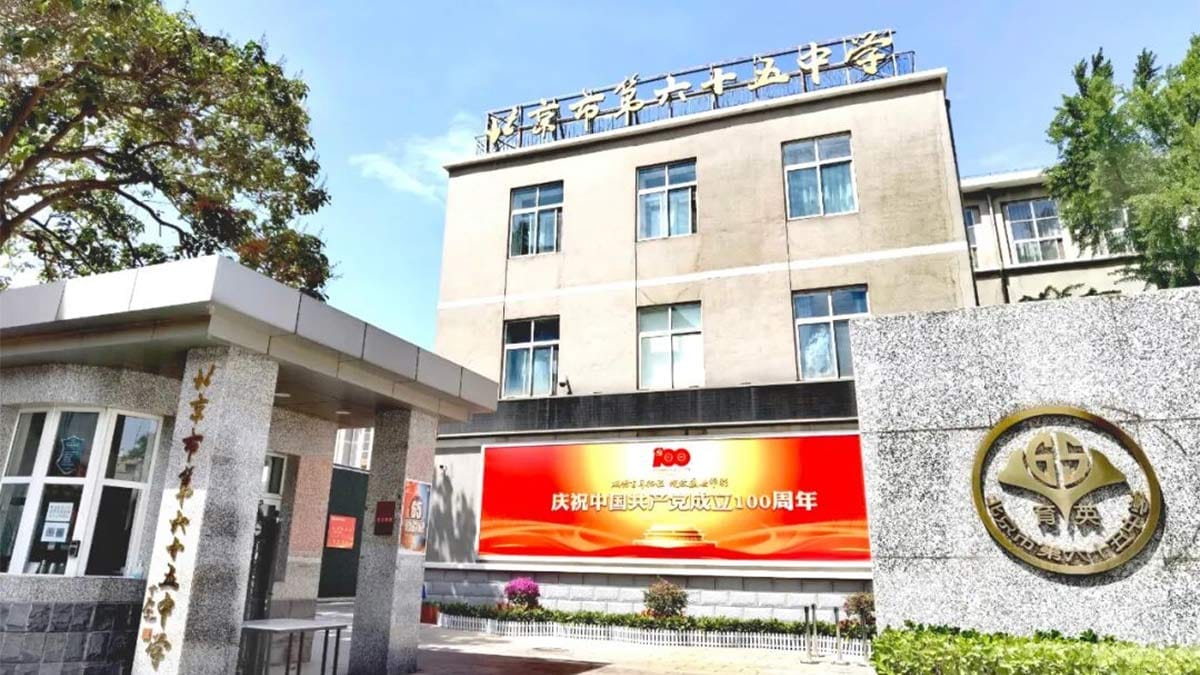
Beijing No. 65 High School (北京市第六十五中学, Beijing) is a public secondary school in Dongcheng District, Beijing. It has a rich history that goes back to 1864, when it was established as the Yu Ying School. The school originally operated as a primary school before expanding into secondary education. In 1955, the senior high division became independent. It was the first senior high school in Beijing.
The school became a municipal key school in 1962. Then, in 1968, it turned into a complete secondary school. The school changed to a complete secondary school in 1968. This was during the Cultural Revolution. Many Chinese schools were restructured at that time. The international department opened in November 2002. It let the school take in foreign students.
The school is in the Beijing UNESCO Association. It can hire foreign experts. It joins the YFU student exchange program. The school welcomes visitors from other countries. The international department is in its own building. It helps foreign passport students. They follow the Chinese National Curriculum. This helps them get into Chinese universities.
Subjects and Tracks
International students study the Chinese National Curriculum. They choose subjects in science. They also pick subjects in humanities.
The core curriculum includes:
- Chinese language and literature
- Mathematics
- English
- Physics
- Chemistry
- Biology
- History
- Geography
- Music
- Fine Arts
- Physical Education
It also features oral English instruction by foreign teachers.
Students who know Chinese well join regular classes. They study some subjects. Those still learning get help in the international department. The school also offers short-term Chinese language training courses. We check plans for international students at enrollment. We look at their nationality. We also consider their goals.
Chinese Language Support (CAL)
International students receive dedicated Chinese as an additional language instruction throughout the program. The international department has Chinese courses. They are organized. There are cultural programs. HSK teachers lead the classes. Students with stronger Chinese are integrated into mainstream classes alongside Chinese classmates. CAL teaching is benchmarked against HSK proficiency levels, with student progress reviewed termly. HSKK (spoken Chinese) preparation is integrated into the senior school program. The senior school curriculum helps students. By the end of Grade 12, they will have the Chinese skills needed for university in China.
HSK Preparation
Students are guided to higher HSK targets through the program. Milestone benchmarks are set for Grades 9, 11, and 12. The international coordinator sets grade targets. They arrange exam venues. They plan the registration timeline. Each year, they review it all.
CSCA Preparation
The school helps foreign students get ready for university. It has four streams: humanities, trade, science, and medicine. Each stream has key subjects. These are Maths, physics, and chemistry. Families check the stream options for this academic year. They also see how many graduates enter Chinese universities through CSCA results. This happens during the senior school years.
University Outcomes
Graduates from the school go to Chinese universities. Some go to Peking University. Others pick Tsinghua or Renmin University. Some choose Beijing Normal University. Fudan University is also an option. Many attend Nankai University. Others go to Beijing University of Chinese Medicine. Zhejiang University is a popular choice. The University of International Business and Economics is, too. Many students pick them. Current-year placement records are available from the admissions office.
Fees
Tuition and boarding fees are set by the admissions office each year. You can request the current rates. The school's fee structure separates tuition from residential charges where boarding is offered. Each scholarship is checked on its own. Families get help from the Chinese government for applications. Confirm current fees directly with the school.
Student Life and Parent Communication
The international department operates 4 teaching classes. The school campus covers 17,000 square meters. It has a built area of 26,000 square meters. The campus features a digital lab. It also has an ecological museum and a virtual reality lab. There are sports facilities and student dorms too. We help international parents communicate. This is for families who do not speak Chinese. We confirm channels and language options during admissions.
Admission Requirements
International students can join junior or senior school. The intake changes every year.
You need to provide these documents:
- A valid passport.
- Academic transcripts from the last two years.
- A school health form.
The admissions process has an interview and a written assessment. The format and language are confirmed when you apply. Successful applicants are issued the documentation required for an X1 student visa. Applications are reviewed in two ways. They can be rolling or have fixed deadlines. The admissions office confirms the details for each intake.
Contact
Tel: 010-65124473 / 010-65251260 / 010-65251745
Address: No. 115 Beiheyan Street, Dongcheng District, Beijing
The High School Affiliated to Beijing Normal University International Department
Location: Xicheng District, Beijing
Type: Public school — international department
Entry Grades: G7, G8, G9, G10, G11, G12
APT Policy: Full Standard
Tracks: Both
Boarding: Yes — 7-day
Overview
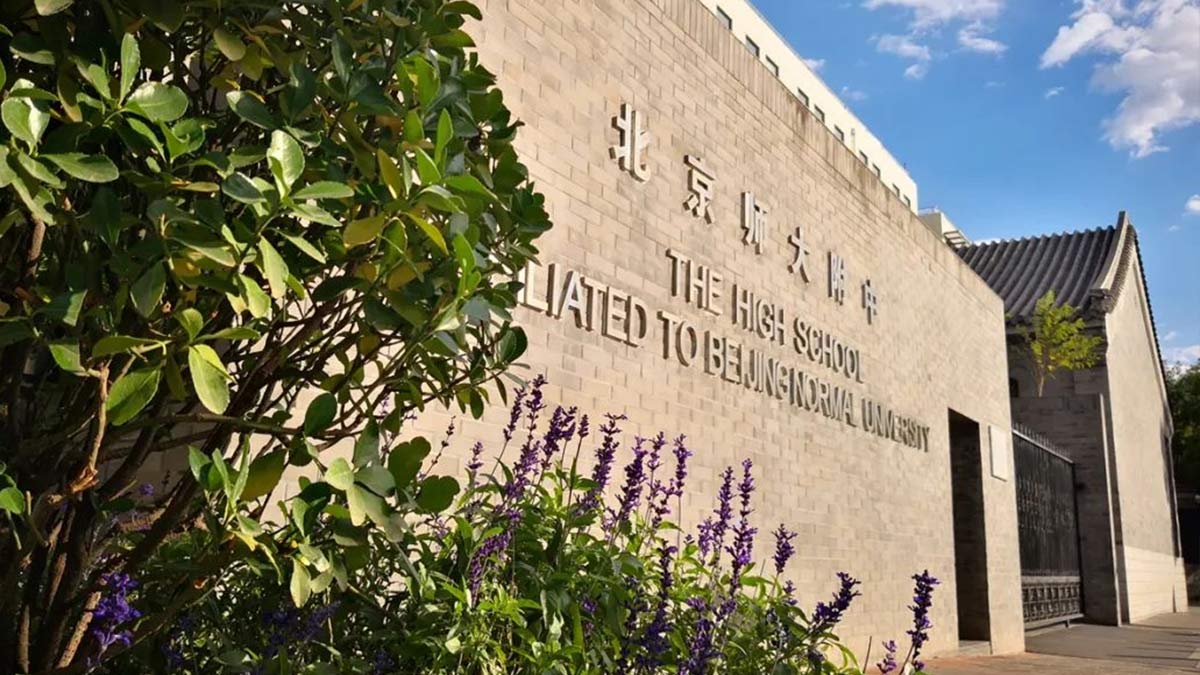
The High School Affiliated to Beijing Normal University (北京师范大学附属中学国际部, Beijing) is a public secondary school. It's also called Beijing Shi Da Fu Zhong. It’s located in Xicheng District, Beijing. Founded in 1901, it is China’s first public middle school. The school is part of China’s nine-year education system. It has junior secondary classes. It also has senior secondary classes. The school is linked to Beijing Normal University.
It was one of the first in the city to be called a key secondary school. It is also a model high school. The international student program began in 1996. It was among the first in Beijing. It got official approval to enroll foreign students. Since then, the school has welcomed around 1,000 long-term students.
They come from South Korea, Japan, and Indonesia. Others are from the US, UK, Germany, Australia, and Kazakhstan. The international department helps students with foreign passports. They follow the Chinese curriculum. The senior school gets them ready for university in China.
Subjects and Tracks
International students follow a three-track system. It helps with Chinese skills. The Language Class stream teaches intensive Chinese. It includes English, math (in Chinese), physical education, and cultural practice. Students who pass end-of-term exams can join the degree track. They can also take regular Chinese classes. The Degree Class stream teaches the Chinese national curriculum. It has small classes.
Students learn Chinese, maths, and English. They study history and geography. They also learn politics, physics, chemistry, biology, IT, and technology. Teaching matches the Beijing Academic Proficiency Test. Students prepare for HSK, IELTS, and TOEFL. Students with good Chinese skills can join the Mainstream Placement stream. Those with HSK Level 5 and 220 points or more (junior high) can take full-time classes. Senior high students with HSK Level 6 and 220 points or more can also attend full-time.
Students with HSK Level 4 and 260 points or more can do half-day placements for one or two semesters. We review politics and education for international students at enrollment. This depends on their nationality. It also looks at their future plans.
Chinese Language Support (CAL)
International students receive dedicated Chinese as an additional language instruction throughout the program. The language department has six senior faculty members. One is an international Chinese-language teacher examiner. Another has a master's in teaching Chinese as a foreign language.
A third holds a master's in applied linguistics from the UK. Four teachers taught in Germany through Hanban. The team has won many first prizes. These are from teaching competitions in Beijing. The focus is on Chinese instruction for international students. Faculty appointments follow rules in China.
International departments have extra checks. CAL teaching is benchmarked against HSK proficiency levels, with student progress reviewed termly. HSK (spoken Chinese) preparation is integrated into the senior school program. By the end of Grade 12, students know enough Chinese. They can handle university classes in China.
HSK Preparation
Students are guided to achieve higher HSK targets through the program. There are milestone benchmarks in grades 9, 11, and 12.
Specific HSK thresholds set placement options:
- HSK Level 4 at 260 points allows half-day mainstream placement.
- HSK Level 5 at 220 points permits full-time junior high placement.
- HSK Level 6 at 220 points enables full-time senior high placement.
Students without an HSK certificate may sit the school's internal HSK assessment. The international coordinator confirms the exam venue at enrollment. They also set the registration dates. They review these every year.
CSCA Preparation
The school helps foreign students prepare for university. There are four streams: Humanities, Trade, Science, and Medicine. Each stream has key subjects. They are Maths, physics, and chemistry. The senior school curriculum supports foreign students. It helps with university exams. There are extra classes in Chinese, maths, and English. Families look at specific stream options for this academic year. This happens during the senior school years.
University Outcomes
From 1999 to 2025, over 80% of international graduates from the CNC stream went on to top Chinese universities. A total of 55 graduates have been accepted at Peking University and Tsinghua University. This is about 40% of all international graduates from the program.
The 2023 graduating class has five students. They got into:
- Peking University for International Relations and Biological Engineering.
- Tsinghua University for Economics, Finance, and Management.
- Fudan University for International Politics.
- Zhejiang University for Economics.
- Beijing Institute of Technology for Management and Economics.
Notable outcomes include a 2005 graduate who won first in Beijing. This led to entry at Peking University's Guanghua School. A 2020 graduate received offers. One was from Peking University. Another was from Tsinghua University. Fudan University and Tufts University also made offers. They received all the offers at once.
Fees
Tuition for the CNC international stream is RMB 23,100 each semester for the degree class. For the mainstream placement class, it’s RMB 26,400 per semester. Boarding accommodation is RMB 10,000 per semester.
Additional charges are as follows:
- Registration fee: RMB 500
- Textbooks: about RMB 300 per semester
- Uniform: around RMB 300
- Meals: RMB 3 for breakfast, and RMB 12–15 for lunch and dinner.
All fees are settled in RMB cash or by China UnionPay card. Confirm current fees directly with the school.
Student Life and Parent Communication
The international department has welcomed students from over ten countries since 1996. You can find the current cohort details at the admissions office. The school campus covers 43,877 square meters. It has a teaching building. There’s a science lab. A student dormitory is here too. The campus also has a research building. Century Hall and sports facilities are included. Dining options for international students include Chinese, Korean, and halal cuisine. We talk to international parents. This helps families who don’t speak Chinese. We confirm language and channel choices when they apply.
Admission Requirements
International students can apply for grades 7 to 12. They can do this any time of the year. Admission depends on available spots.
Applicants must be at least 12 years old. They need a valid passport and a Chinese visa. A legal guardian in Beijing is required. Also, they must submit:
- Academic transcripts
- Graduation or enrolment certificates
- A school health form
- A notarized guardianship guarantee with the guardian's ID
- Parents' passport copies
- A birth certificate or family relationship certificate (translated into Chinese or English)
- Proof of insurance
Degree Class and Mainstream Placement applicants sit for written exams. They take tests in mathematics, Chinese, and English. An interview is also part of the process. Language class applicants are assessed by interview and review of prior academic records. Successful applicants are issued the documentation required for an X1 student visa.
What Makes This School Stand Out
The High School Affiliated with Beijing Normal University has a flexible program. It offers many choices for students. It is one of the best in Beijing. The system has three tracks: Language Class, Degree Class, and Mainstream Placement. It helps students. They can start with intensive Chinese study.
Then, they move to regular Chinese classes. Clear HSK thresholds guide each step. The school helps international students well. In the last 20 years, 55 graduates got into Peking University and Tsinghua University. It was one of the first public schools to take foreign students. This shows its skill in preparing students for Chinese universities.
Contact
- Admissions email: jlzx@bjsdfz.com
- Tel: 010-83193000-7899
- WeChat ID: larry9455
- Address: No. 18 Nanxinhua Street, Hepingmen, Xicheng District, Beijing 100052
The High School Affiliated to Renmin University of China (Zhongguancun Campus)
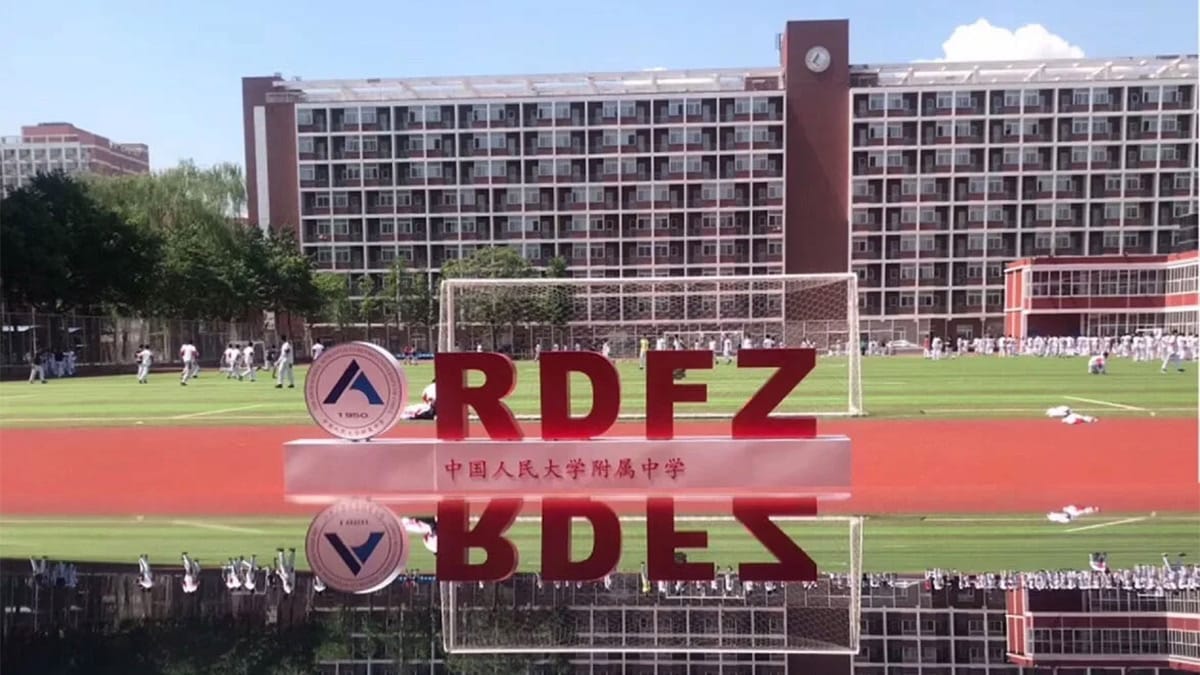
Location: Haidian District, Beijing
Type: Public school — international department
Entry Grades: G7 (language training), G10 (academic curriculum)
APT Policy: Full Standard
Tracks: Both
Boarding: Yes — 7-day
Overview
The High School Affiliated to Renmin University of China (中国人民大学附属中学(中关村校区, Beijing) is called Ren Da Fu Zhong. It is an important public secondary school. It’s located in Beijing's Haidian District. Founded in 1950, it operates under Renmin University of China. The school's international department began in 2002.
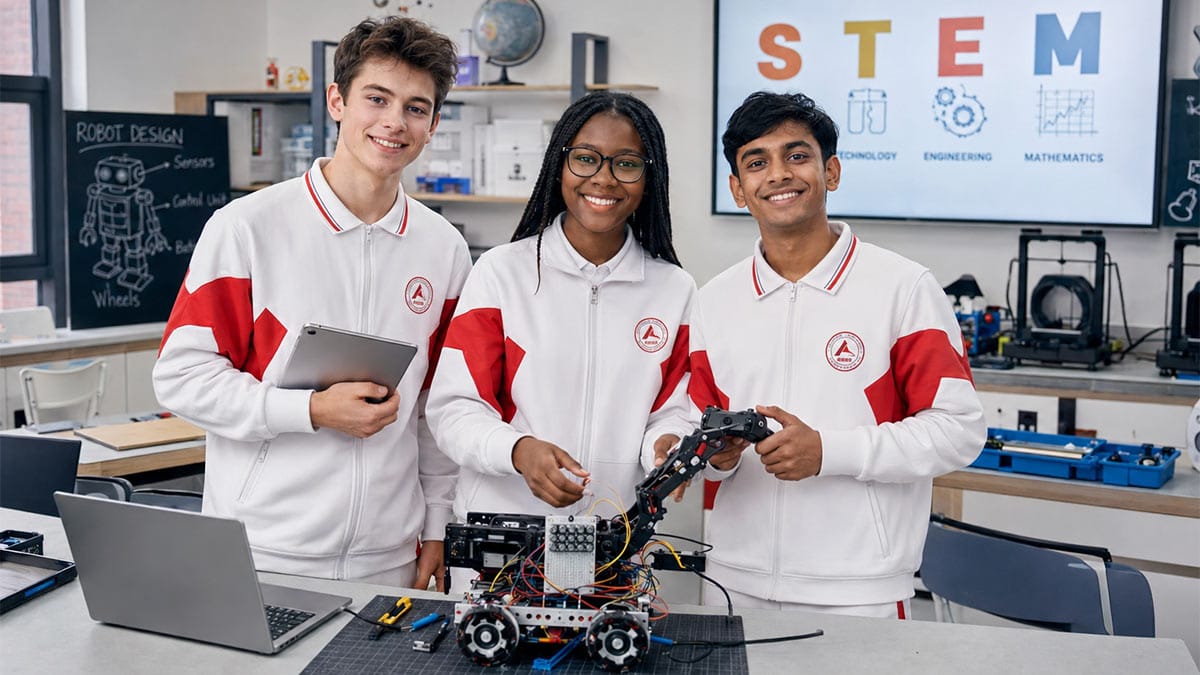
It has two programs for foreign students. One is a Chinese National Curriculum academic track. This is the main focus here. The other is a Chinese language training program. The international department helps 200 students.
They are from 20 countries. The program gets them ready for Chinese universities. A team of coordinators helps international students. They know the documents and the language. They also support families moving to a new place.
Subjects and Tracks
International students in the CNC academic stream follow the Chinese senior school curriculum. They pick subjects in science and humanities. This choice happens at the start of Grade 10. They get help from the international coordinator. Subject offerings show the ongoing changes in the national curriculum. Updated content standards are now part of how teaching is delivered.
The core curriculum includes:
- Chinese language and literature
- Mathematics
- English
- Physics
- Chemistry
- Biology
- History
- Geography
- Music
- Fine arts
- Information technology
- General technology
- Physical education
Politics and ideological education plans for international students are checked at enrollment. They are approved based on nationality. Each student’s goals are also looked at. Students who reach the required Chinese level can ask to join regular classes. They will be with their Chinese classmates. A one-semester intensive Chinese course is offered for beginners. This prepares them for the degree track.
Chinese Language Support (CAL)
International students receive dedicated Chinese as an additional language instruction throughout the program.
The language curriculum includes:
- Reading
- Writing
- Listening
- Conversation
- HSK exam prep
Classes are sorted by skill level.
CAL teaching is benchmarked against HSK proficiency levels, with student progress reviewed termly. HSKK (spoken Chinese) preparation is integrated into the senior school program. By the end of Grade 12, students have the Chinese skills needed for university in China.
HSK Preparation
Students are guided toward progressively higher HSK targets through the program. To enter senior school, students must show they can use Chinese well. Those who achieve higher HSK levels might join regular Chinese classes. The international coordinator confirms the target HSK levels for each grade. They also set up the exam venues and the registration timeline during enrolment. This gets reviewed every academic year.
CSCA Preparation
The school helps foreign students get ready for university. There are four streams: humanities, Trade, Science, and Medicine. Each stream has important subjects. These are math, physics, and chemistry. The school is one of a few public secondary schools in the country. Its international graduates often go to Peking University. They also attend Tsinghua University. Families check specific stream options for this academic year. This happens in the senior school years.
University Outcomes
CNC stream graduates have a strong matriculation rate. It is over 85% for top Chinese universities. In 2025, 35 students graduated. They were all international. Sixteen went to Peking University. Sixteen went to Tsinghua University. Three went to Renmin University. Current-year placement records are available from the admissions office.
Fees
Tuition Fees (Per Semester)
- CNC Academic Stream: RMB 25,000
- Language Training Program: RMB 21,800
Boarding Fees (Per Bed/Semester)
- Triple Room: RMB 6,200
- Double Room: RMB 9,300
Accommodation Amenities
- Private bathrooms
- Desks and wardrobes
- Air conditioning
- Self-study room
- Activities room
Scholarships & Notes
- Each scholarship application is individually reviewed
- Families receive assistance navigating Chinese scholarship options
- Always confirm current fees directly with the school
Student Life and Parent Communication
The international department currently serves approximately 200 students from more than 20 countries. The campus covers around 100,000 square meters. It has a library and science labs. There is a gym and an indoor swimming pool. You’ll find a football pitch, basketball courts, and volleyball courts too. Plus, there’s a 30,000-square-meter student apartment complex. We help international parents. We set up communication for families who don’t speak Chinese. We confirm channels and languages when they apply.
Admission Requirements
International students aged 15 to 17 can join the CNC academic stream. They need to have native-level Chinese skills. They can also enter the language training program in Grades 7–9 (ages 12–16).
Required documents are:
- A completed application form
- A valid passport and visa
- Academic transcripts from the last two years
- A guardianship guarantee (notarized, with guardian ID)
- Copies of parents' passports
- Proof of citizenship renunciation for students who once held Chinese nationality.
Senior school applicants take written exams in Chinese, maths, and English. Then, they have an interview. Language training program applicants are assessed by interview after document review. The application period typically runs from April to June. Successful applicants are issued the documentation required for an X1 student visa.
What Makes This School Stand Out
The High School Affiliated to Renmin University of China has a unique dual-pathway system. It offers two different paths for students. It’s all on one campus. International students in the CNC stream can apply to Chinese universities. The ICC center provides A-Level courses. It also has the International Baccalaureate (IB Diploma) and AP courses. These are for students who want to study abroad. International curricula and the CNC stream are offered on one campus. This makes it a great fit for international families. The program is flexible. It has a great record for placing graduates. Over 85% of CNC international students go to Peking University, Tsinghua University, or Renmin University of China. This makes the program unique.
Contact
- International department email: rdfzguojibu@163.com
- Tel: 010-62513962 / 010-62512094
- Address: No. 37 Zhongguancun Avenue, Haidian District, Beijing 100080
- Consultation hours: weekdays 08:30–11:30 and 13:30–17:00
Beijing No. 39 Middle School International Department
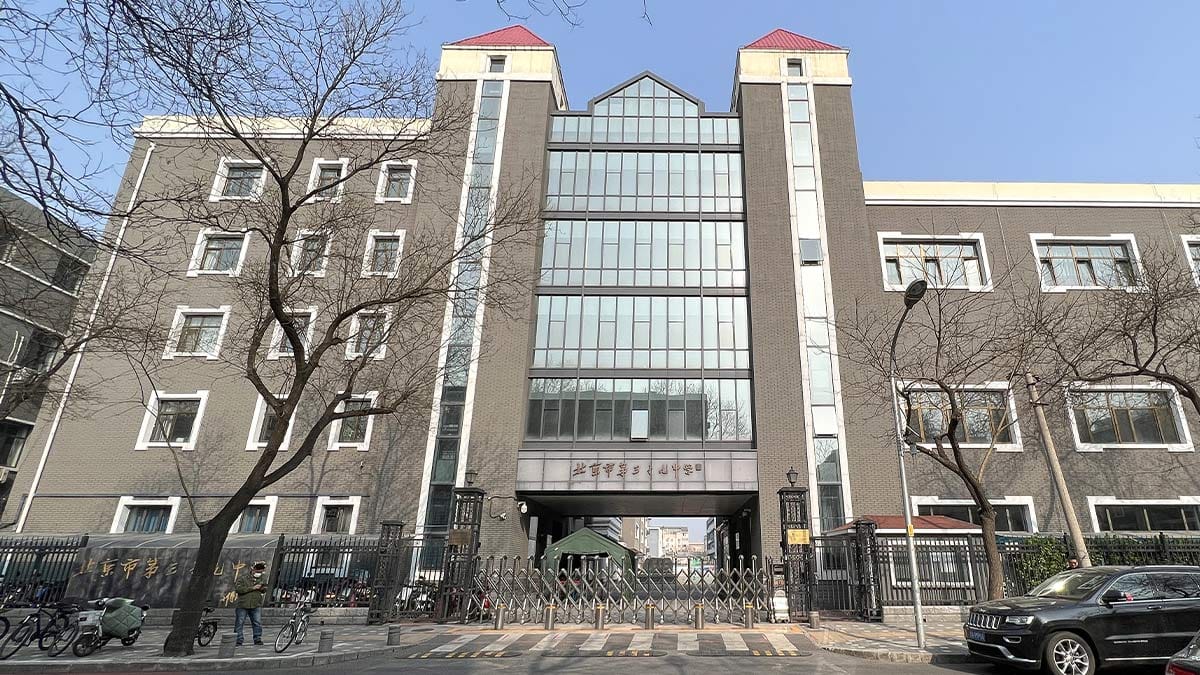
Location: Xicheng District, Beijing
Type: Public school — international department
Entry Grades: G7, G8, G9, G10
APT Policy: Full Standard
Tracks: Both
Boarding: Yes — 7-day
Overview
Beijing No. 39 Middle School (北京市第三十九中学国际部, Beijing) is a public secondary school in Xicheng District, Beijing. It has an educational history that goes back to 1904. The school started in 1952. It was formed by merging Guanghua Girls' School and Gengxin Middle School.
Now, it is a foreign-related education unit. It also promotes the Chinese language internationally and is part of the Beijing No. 4 High School Education Group. The international department began in 2002.
It has taught about 700 long-term students. They come from 28 countries. The department has 58 international students. They come from seven countries. The curriculum helps them get into Chinese universities.
Subjects and Tracks
International students follow the Chinese National Curriculum. They pick subjects in science and humanities. These choices are made with the international coordinator.
The core curriculum includes:
- Chinese language and literature
- Mathematics
- English
- Physics
- Chemistry
- Biology
- History
- Geography
- Music
- Fine Arts
- Physical Education
Politics and ideological education plans for international students are checked during enrollment. Each plan fits the student’s nationality. It also looks at their goals.
Chinese Language Support (CAL)
International students receive dedicated Chinese as an additional language instruction throughout the program. The department teaches Chinese. It is an international school. It offers language training. Culture is part of the training.
CAL teaching is benchmarked against HSK proficiency levels, with student progress reviewed termly. HSKK (spoken Chinese) preparation is integrated into the senior school program. The senior school curriculum helps students gain the Chinese skills they need by the end of Grade 12. This prepares them for university courses in China.
HSK Preparation
Students work towards higher HSK targets during senior school. Milestone benchmarks are set in Grades 9, 11, and 12. The international coordinator sets target levels for grades. They arrange exam venues. They also set registration timelines. This is done at enrollment. Each year, they review everything.
CSCA Preparation
The school helps foreign students go to university. There are four streams: Humanities, Trade, Science, and Medicine. Each one has Maths, Physics, and Chemistry. In senior school, families see stream choices. They look at how many graduates go to Chinese universities with CSCA scores.
University Outcomes
All graduates from the international department got into top schools. They were accepted in China and abroad.
Matriculation outcomes include the following:
- Tsinghua University
- Peking University
- Fudan University
- Renmin University of China
- Zhejiang University
- University of Tokyo
International graduates can study in China. Visit the admissions office for records.
Fees
The admissions office shares tuition and boarding fees for each academic year. You can request the current rates. The school's fee structure separates tuition from residential charges where boarding is offered. Scholarship policies are checked for each student. Families help with this. The Chinese government’s support is also considered. Confirm current fees directly with the school.
Student Life and Parent Communication
The international department has 58 students. They are from seven countries:
- South Korea
- Thailand
- Indonesia
- Vietnam
- Mongolia
- Syria
- Japan.
The campus is 18,000 square meters. It includes an apartment building for international students. We help international parents. We support families who don’t speak Chinese. We confirm the channel and language at admissions.
Admission Requirements
International students can join junior or senior school. The intake is decided each year. You need to provide this document: a valid passport. You also need academic transcripts from the last two years. Lastly, include a school health form. The admissions process has an interview and a written assessment. The format and language will be confirmed when you apply. Successful applicants are issued the documentation required for an X1 student visa. Applications are reviewed in two ways: rolling or fixed deadlines. The admissions office will confirm the details for each intake.
Contact
- Admissions email: admissions@alifaedtech.com
- Tel: 86-10-66152075 / 010-66175807
- Address: No. 6 Xihuangchenggen North Street, Xicheng District, Beijing
Beijing Huiwen Middle School
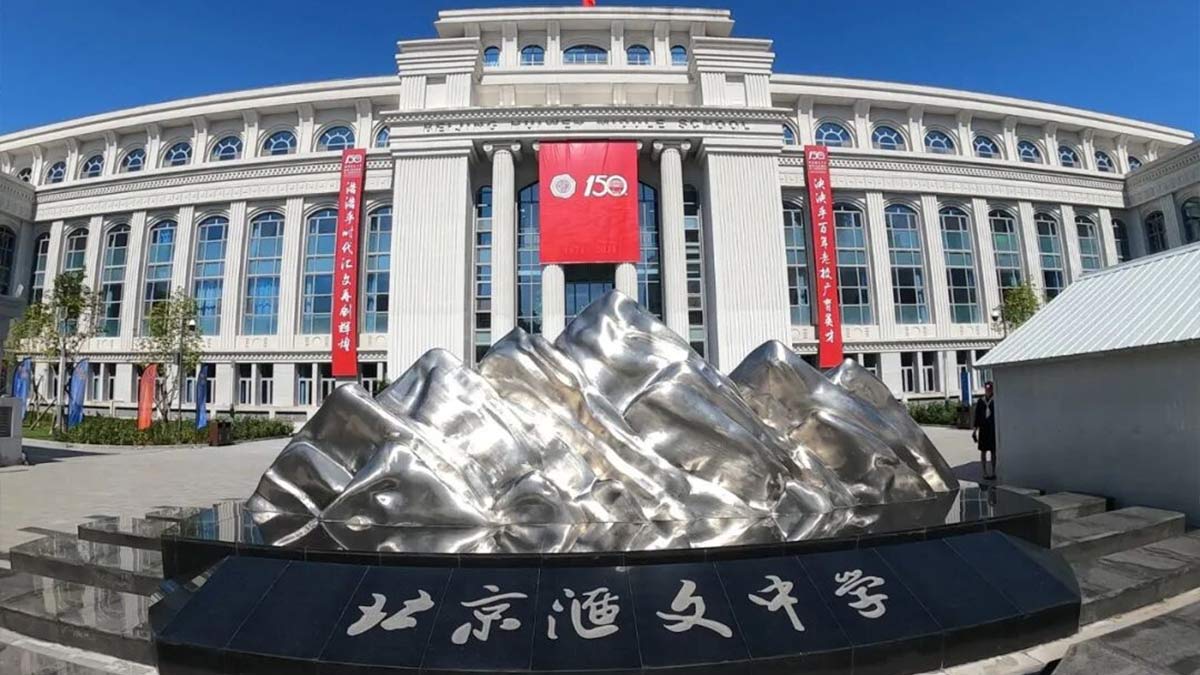
Location: Dongcheng District, Beijing
Type: Public school — international department
Entry Grades: G7, G8, G9, G10, G11
APT Policy: Full Standard
Tracks: Both
Boarding: Available (limited places)
Overview
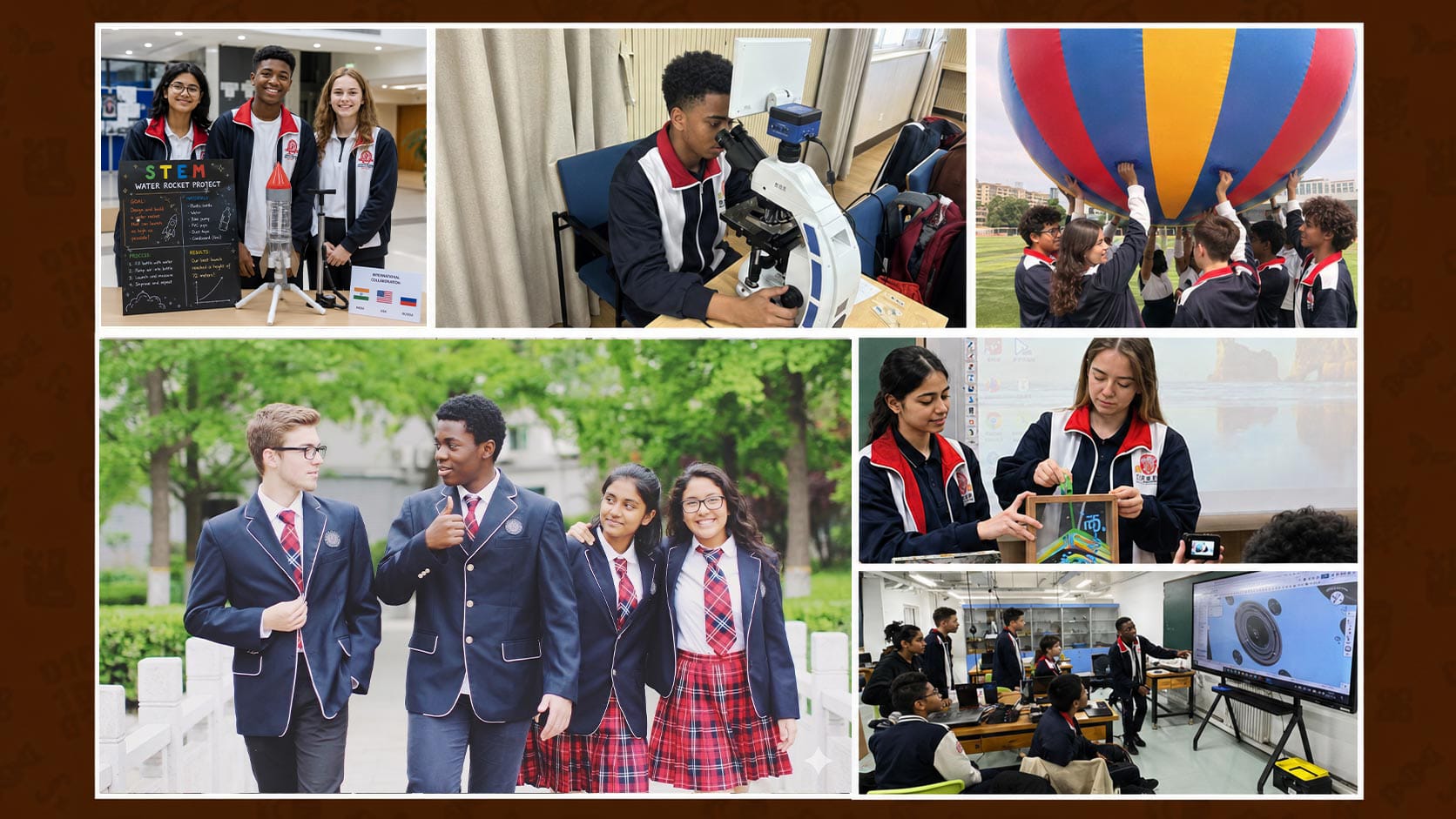
Beijing Huiwen Middle School (北京汇文中学, Beijing) is a key public secondary school. It is located in Dongcheng District. The school has a rich history that dates back to 1871. It was the first secondary school in Beijing to get approval for international students. The International Division started in 1994. It was called the Beijing Huiwen Language School. Since then, it has welcomed over 5,000 students from 30 countries.
The school's motto, "Wisdom, Benevolence, and Courage," reflects its whole-child educational philosophy. The International Division offers two main programs. One is a Chinese National Curriculum track for foreign-passport students. This is the focus here. The other is a Sino-US dual-diploma program. The CNC stream helps international students in junior school and senior school. It gets them ready for Chinese universities.
Subjects and Tracks
International students in the CNC stream learn the Chinese curriculum. They study science. They also study humanities. The junior school curriculum has Chinese, maths, English, physics, chemistry, and history. It also has special Chinese lessons. Students learn reading, listening, and writing. They prepare for the HSK too.
The senior school program includes six subjects. They are:
- Biology
- Geography
- Politics
- Information Technology
- General Technology
- Physical Education
HSK preparation continues until Grade 12.
Elective courses include Chinese painting, calligraphy, and handicrafts. Politics and education plans for international students are reviewed at enrollment. Each plan is approved based on nationality. It also looks at future goals. Students who reach HSK Level 5 or 6 can request to join regular classes. They will learn alongside Chinese classmates.
Chinese Language Support (CAL)
International students receive dedicated Chinese as an additional language instruction throughout the program.
The language curriculum has five parts. They are:
- Intensive reading
- Listening
- Conversation
- Reading and writing
- HSK exam prep
Classes are sorted by skill level.
Beginners with no Chinese can join a one-semester intensive course. Then, they can switch to the degree track. CAL teaching is benchmarked against HSK proficiency levels, with student progress reviewed termly. HSKK (spoken Chinese) preparation is integrated into the senior school program. By the end of Grade 12, students have the Chinese skills. These skills are needed for university studies in China.
HSK Preparation
Students are guided toward progressively higher HSK targets through the program. To enter senior school, students need HSK Level 4 or higher. Those with HSK Level 5–6 might join regular Chinese classes. The international coordinator sets the target HSK levels for each grade. They arrange the exam venue and the registration timeline at enrollment. Each year, they review these details.
CSCA Preparation
The school helps foreign students prepare for university. There are four streams:
- Humanities
- Trade
- Science
- Medicine
Each stream has Maths, physics, and chemistry. In senior school, families look at the streams for the year. They also see how many graduates enter Chinese universities through CSCA results.
University Outcomes
Graduates from the CNC international stream get into top universities. They all have a 100% success rate.
The class of 2025 had placements at the following:
- Peking University: 3 students
- Tsinghua University: 1 student
- Fudan University: 11 students
- Renmin University of China: 8 students
Historical placement data indicate consistent admissions to these and other key Chinese universities. Current-year placement records are available from the admissions office.
Fees
The admissions office shares the tuition and boarding fees each year. This is for the CNC international stream. You can ask for the latest rates. The school offers a limited number of boarding places, allocated according to demand. Scholarship policies are checked. Chinese support is looked at. Each family is seen on its own. Confirm current fees directly with the school.
Student Life and Parent Communication
The International Division has hosted students. They come from more than 30 countries. This has been happening since it started. The campus covers 52,137 square meters. It has a classroom building. There’s also a lab, a student dorm, and a sports field. The gym is available too. The library has over 100,000 books. We help international parents. This is for families who don’t speak Chinese. We confirm channels and languages during admissions.
Admission Requirements
International students are admitted across Grades 7 through 11. Junior school applicants need basic Chinese skills. Senior school applicants must have HSK Level 4 or higher. They also need to pass a cultural subject entrance exam. Students who achieve HSK Level 5–6 may be placed in mainstream Chinese classes. Short-term Chinese language programs (one semester) are available for beginners.
You need these documents:
- A completed application form
- A valid passport and visa
- Academic transcripts
- Graduation or enrollment certificate
- Four passport photos
- Guardian documents (notarised guarantee and ID)
- Copies of parents' passports
School uniforms are required for all students. They are part of the school's policy on student life. Application periods run from 15 September to 25 January and from 15 March to 25 August. Successful applicants are issued the documentation required for an X1 student visa.
What Makes This School Stand Out
Beijing Huiwen Middle School was the first public secondary school in the city. It was for international students. It began its program in 1994. This makes it one of the longest-running in Beijing. The policy lets HSK-proficient international students join regular classes. They study with Chinese students. This gives a great chance for integration in a historic school. The 2023 graduate outcomes show how strong the CNC stream is. Three graduates went to Peking University. One graduate went to Tsinghua University.
Contact
- Admissions email: huiwenlanguage@sina.com
- Tel: 010-67117375 / 010-67180178 / 010-67124120
- Main campus address: No. 6 Peixin Street, Dongcheng District, Beijing
Beijing No. 80 High School International Department
Location: Chaoyang District, Beijing
Type: Public school — international department
Entry Grades: G7 (junior high), G10 (senior high)
APT Policy: Full Standard
Tracks: Both
Boarding: Yes — 7-day
Overview
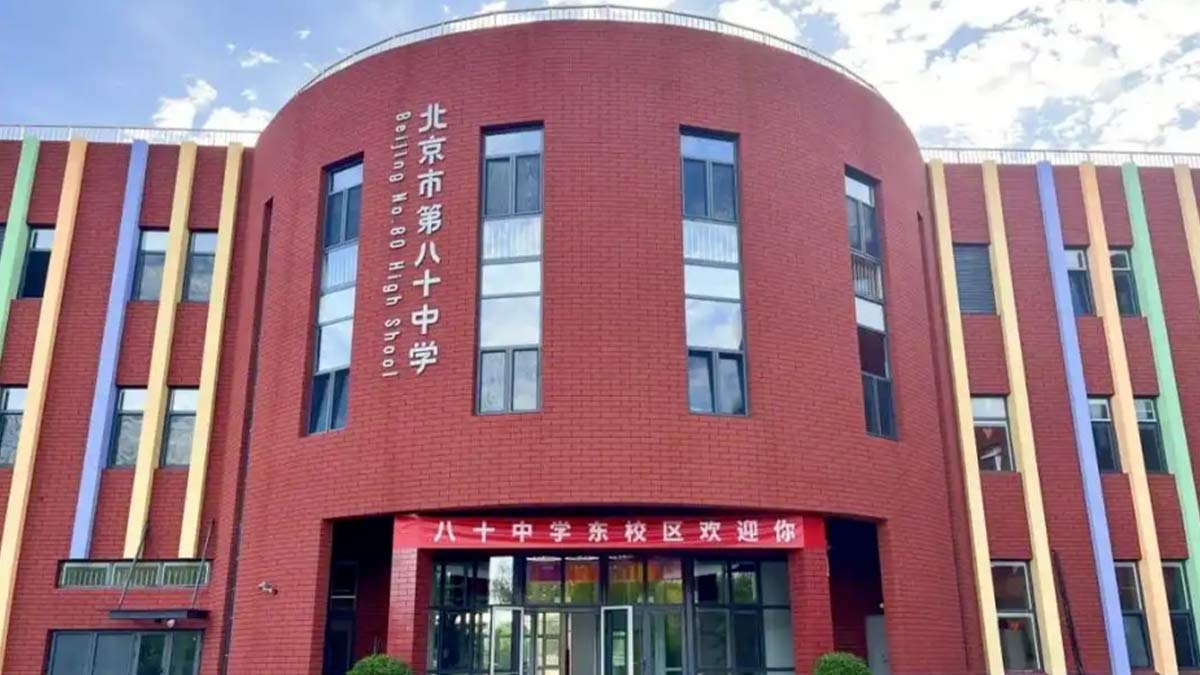
Beijing No. 80 High School (北京市第八十中学国际部, Beijing) is a key public secondary school in Beijing's Chaoyang District. It was founded in 1956 and is recognized as a Beijing Model High School. Its international department began in 2002. The next year, it became one of the first public schools in Beijing to enroll foreign students.
The school is a Beijing Chinese Language Teaching Promotion Base. It was one of the first schools in China to get AdvancED accreditation. This applies to both its Chinese and international divisions. The international department helps over 300 students from 30+ countries.
It has two tracks. One is the Chinese National Curriculum. This is for foreign students who want to study in China. The other track offers international courses. These are for students applying to schools outside China. The CNC stream is the focus of this profile.
Subjects and Tracks
CNC students follow the Chinese curriculum. In Grade 10, they choose science or humanities. The coordinator helps them. The core curriculum has Chinese, literature, and math. It includes English, physics, chemistry, and biology. History and geography are part of it. Students study physical education, art, and IT. There are also electives and hands-on courses. Politics and education plans for international students get checked at enrollment. They are approved based on nationality. Each student’s goals matter too. Students who have good Chinese skills can join classes with local classmates. Those who don’t will take international classes that go at a slower pace.
Chinese Language Support (CAL)
International students receive dedicated Chinese as an additional language instruction throughout the program. Chinese courses are available at three levels: beginner, intermediate, and advanced. They are taught by teachers who have HSK qualifications. The language program includes culture. It has calligraphy, ink painting, martial arts, tai chi, Peking opera, and tea ceremonies. These art courses are designed to deepen cultural immersion alongside language acquisition. CAL teaching is benchmarked against HSK proficiency levels, with student progress reviewed termly. HSKK (spoken Chinese) preparation is integrated into the senior school program. By the end of Grade 12, students have the Chinese skills needed for university studies in China.
HSK Preparation
Students work towards higher HSK targets during their senior years. Key benchmarks are set in Grades 9, 11, and 12. The school teaches Chinese in Beijing. It is a promotion base. HSK-qualified teachers help students with written and spoken exams. The international coordinator sets targets for each grade. They choose the exam place. They review the registration dates every year.
CSCA Preparation
The school helps foreign students get ready for university.
There are four streams:
- Humanities
- Trade
- Science
- Medicine
Each stream has main subjects. These are Maths, Physics, and Chemistry. Beijing No. 80 High School is part of Peking University's Boya Programme. It offers a guaranteed path for selected graduates. We look at stream options for this year. Families find out during senior school years.
University Outcomes
CNC international stream graduates go to top Chinese universities. All of them succeed. The 2025 cohort had 34 international graduates. Out of these, 62% were admitted to Peking University or Tsinghua University. Others also secured spots at Renmin University of China and other key schools.
Since 2012, the department has placed graduates at Peking University. They also place graduates at Tsinghua University each year. The school is a Boya Overseas Talent Program nomination school. It helps eligible graduates get into Peking University.
They have a guaranteed way to secure their places. Current-year placement records are available from the admissions office.
Fees
Tuition Fees (Per Year)
- Chinese Language Classes: RMB 40,000
- Chinese Curriculum Program: RMB 50,000
- International Courses (AP, A-Level, IB): Higher rates apply
Boarding
- Accommodation: Approximately RMB 16,000 per year
Scholarships & Awards
- Merit scholarships for international students
- Special scholarships available
- Awards for top-performing graduates
Note: Confirm current fees directly with the school
Student Life and Parent Communication
The international department has over 300 students. They come from more than 30 countries. You can get the current cohort details from the admissions office. The school has sister schools in seventeen countries. It holds more than twenty events each year. The student apartment building on the Wangjing campus has double rooms. They are air-conditioned. There is supervised care, too. We assist international parents. This helps families who don’t speak Chinese. We check channels and languages at admissions.
Admission Requirements
International students can enter at Grade 7 (junior school) or Grade 10 (senior school). The CNC stream has two tracks. One is a preparatory program for beginners. The other is a full academic program for skilled Chinese speakers.
Requirements
- Valid passport
- Academic transcripts from the last two years
- School health form
- Interview
- Written assessment (format and language confirmed upon application)
- Grade 7 applicants must register as Beijing students
- Successful applicants receive X1 student visa documentation
What Makes This School Stand Out
Beijing No. 80 High School is one of the first public schools in Beijing for foreign students. It has the oldest international program in Chaoyang District. CNC graduates can go to a top university in China. This is because CNC is part of the Peking University Boya Overseas Talent Programme. Very few public-school international departments have this honor. The dual-track structure lets students choose. They can go for the CNC stream for Chinese universities. They can also pick international courses for studying abroad. This gives them lots of options.
Contact
- Admissions email: bj80gjb@sina.com, guojibu@bj80.com
- Tel: 010-58047330 (senior high) / 010-59039174 (junior high)
- WeChat ID: larry9455
- Senior high address: No. 16 Wangjing North Road, Chaoyang District, Beijing
- Junior high address: No. 2 Baijiazhuang Xili, Chaoyang District, Beijing
Tianjin Nankai High School International Department
Location: Nankai District, Tianjin
Type: Public school — international department
Entry Grades: G7, G8, G9, G10, G11, G12 (short-term Chinese training also available)
APT Policy: Adapted
Tracks: Both
Boarding: Yes — 7-day
Overview
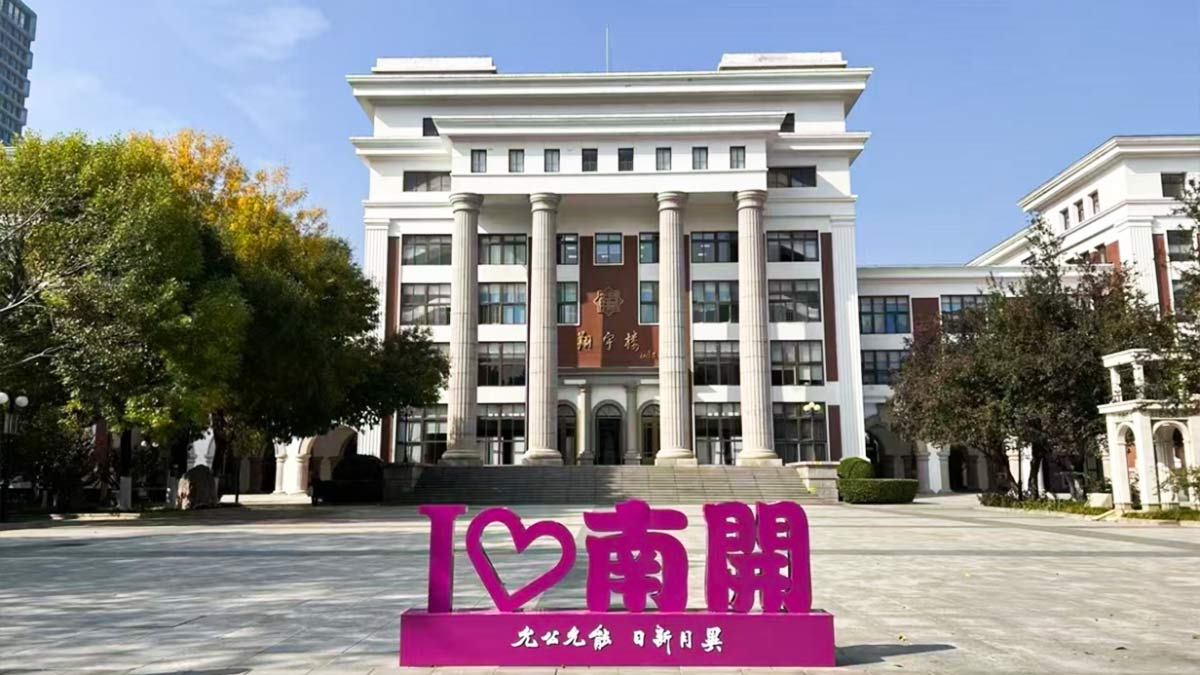
Tianjin Nankai High School (天津市南开中学国际部, Tianjin) is a public secondary school in Tianjin. It has a rich educational history that dates back to 1904. The international department has enrolled foreign students since 1987. It was the first public school in the city to be approved by Tianjin's Education Commission.
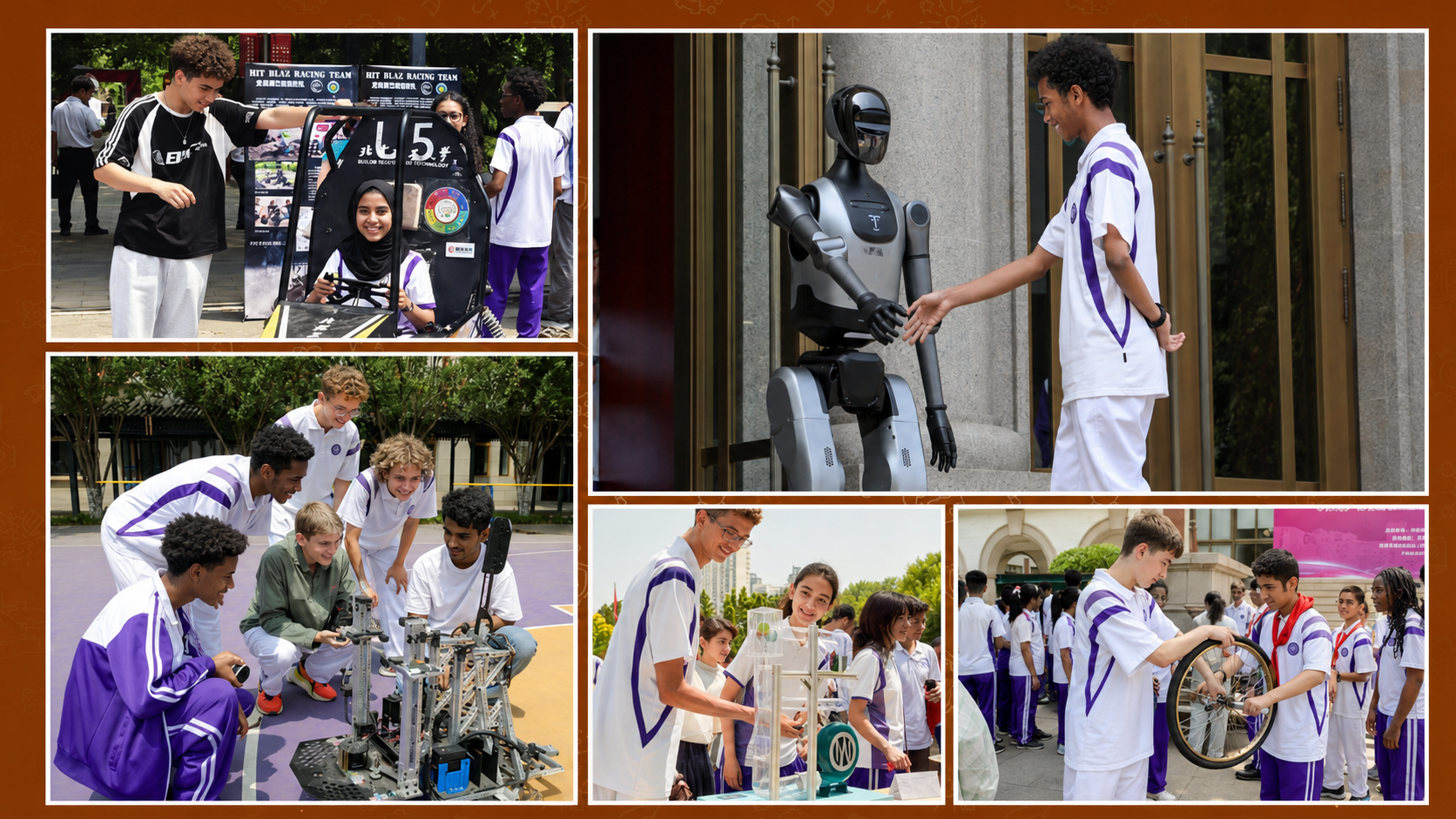
The school is a Chinese promotion base. It teaches Chinese to students from other countries. The international department helps foreign students. They follow the Chinese curriculum. The senior program gets them ready for university in China. Students who don’t choose the university path can look at vocational education.
They can do this after they finish junior school. International students have a support team. This team has coordinators and teachers. They know about paperwork and language. They also understand the needs of families moving.
Subjects and Tracks
International students follow the Chinese curriculum. They learn science and humanities. In Grade 10, they choose subjects. The coordinator helps them.
The core curriculum includes:
- Chinese language and literature
- Mathematics
- English
- Physics
- Chemistry
- Biology
- History
- Geography
- Music
- Fine arts
- Physical education
We review politics and ideological education at enrollment. This is based on each student’s nationality and future goals. Foreign teachers deliver oral English instruction. Students who have the right level of Chinese can apply to audit classes. This means they can study with Chinese classmates in some subjects.
Chinese Language Support (CAL)
International students take Chinese as an additional language. They start in junior school. Classes continue in Grades 10 and 12. Chinese classes are sorted by skill level. Beginners with no experience take a quick course. Students who know some Chinese join classes that fit their skills. CAL teaching is benchmarked against HSK proficiency levels, with student progress reviewed termly. HSKK (spoken Chinese) preparation is integrated into the senior school CAL program. The senior school curriculum helps students. By the end of Grade 12, they will have the Chinese skills needed for university in China.
HSK Preparation
Students work towards higher HSK targets during senior school. Milestone benchmarks are set in Grades 9, 11, and 12. International students take the HSK every year. Most get scores that meet entry requirements. The international coordinator sets HSK levels for each grade. They also choose the exam venue and the registration dates at enrollment. This is checked every year.
CSCA Preparation
The school helps foreign students get ready for university. It offers four streams: Humanities, Trade, Science, and Medicine. Each stream has its own subjects. International graduates can join Chinese universities in various ways. They can take exams. They can also have interviews. In senior school, families check stream options. They see how many graduates go to Chinese universities with CSCA scores.
University Outcomes
The international department started in 1987. Every graduate has gone to a top university since then.
International graduates have been admitted to several top universities. These include:
- Peking University
- Tsinghua University
- Renmin University of China
- Fudan University
- Nankai University
- Tianjin University
- Zhejiang University
They have also gained admission to:
- University of California, Berkeley
- New York University
- University of Tokyo
- Seoul National University
- Korea University
- Yonsei University
- Ewha Womans University
Since 2012, the department has sent one or two graduates each year to Peking or Tsinghua. Current-year placement records are available from the admissions office.
Tuition Fees
The admissions office shares tuition fees. They also list boarding fees for each academic year. Tuition costs between RMB 22,000 and RMB 30,000 each year. This varies by program tier and grade level. Boarding is charged separately every month. The school's fee structure separates tuition from residential charges.
Scholarship policies are reviewed for international students. Support for Chinese government scholarships is checked. Families are part of the process. Each case is handled one by one. Confirm current fees directly with the school.
Student Life and Parent Communication
The international department has around 100 students. They are in seven classes. You can get the cohort details from the admissions office. Short-term Chinese training programs are for all ages. Anyone can join. They have calligraphy, painting, and tai chi. More training sessions on language and culture are set for the academic year. They will happen throughout the year. The school maintains sister-school relationships with institutions in twenty countries across five continents. We help international parents communicate. This is for families who can’t speak Chinese. We confirm channels and languages when they apply.
Admission Requirements
International students can join junior school in Grade 7. They can also enter senior school in Grades 10–11. The intake structure is confirmed each admissions cycle.
Required documentation includes:
- A valid passport
- A photocopy of the student’s Chinese visa
- Academic transcripts for the last two years
- A graduation or enrolment certificate from the previous school
- Photocopies of parents’ passports
The admissions process has two parts: an interview and a written assessment. You will confirm the format and language when you apply. Students can enroll anytime during the year. Consultation hours are Monday to Friday, from 08:00 to 17:30. Successful applicants are issued the documentation required for an X1 student visa.
What Makes This School Stand Out
Tianjin Nankai High School was the first public school in Tianjin. It was for international students. It began this program in 1987. So, it is the oldest public school international department in the city. The school is a Chinese International Promotion Base. It helps international students. Skilled students can join regular classes with Chinese peers. This offers a great chance for integration in an old public school.
Contact
- Office address: Room 117, 1st Floor, International Department, No. 36 Nankai Sima Road, Nankai District, Tianjin 300100
- Tel: 0086-15201079455
- General school email: admissions@alifaedtech.com
- Consultation hours: Monday–Friday, 08:00–12:00 and 13:45–17:30 (excluding public holidays)
No. 2 High School of East China Normal University International Department (HSEFZ)
Location: Pudong New Area, Shanghai
Type: Public school — international department
Entry Grades: G6, G7, G8, G9, G10, G11, G12
APT Policy: Adapted
Tracks: Both
Boarding: Yes — 7-day
Overview
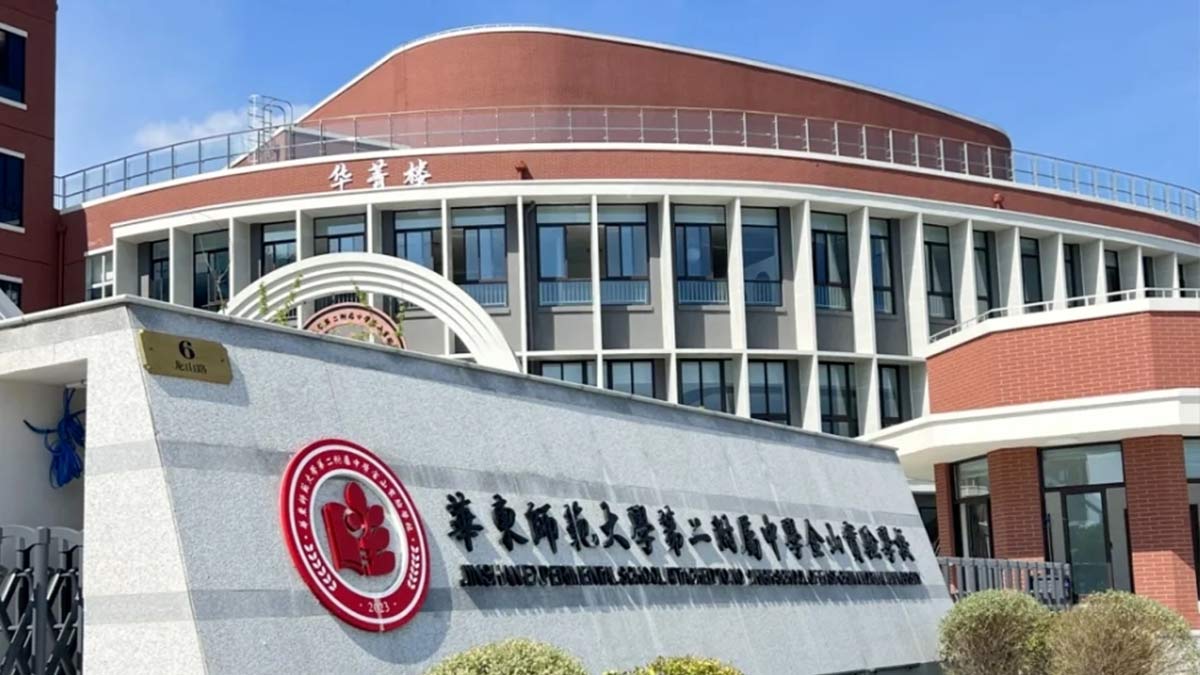
No. 2 High School of East China Normal University (华东师范大学第二附属中学国际部, Shanghai), or Hua Shi Da Er Fu Zhong, is a key public secondary school in Shanghai. It was founded in 1958 and is run by the Ministry of Education. It is the only high school in Shanghai led by the national Ministry of Education. It was one of the first schools in the city to be an experimental and demonstration high school.
The international department started in 1999. It was one of the first public-school international programs in Shanghai. It is a member of UNESCO, too. The department operates across two campuses: Zhangjiang in Pudong and Zizhu in Minhang. It enrolls international students in grades 6 to 12.
It offers a Chinese National Curriculum stream, which is the focus here. There’s also an AP program and a track for Taiwan, Hong Kong, and Macau students. A team helps international students. They know the forms. They understand the language. They support families moving here.
Subjects and Tracks
International students in the CNC stream join the "International Student Programme." They study a set curriculum. It is mostly in Chinese. The core timetable has five hours a week for Chinese, English, and maths. It also includes three hours for physical education.
The elective program offers many choices. Students can pick from:
- HSK exam prep (beginner, intermediate, advanced)
- Chinese writing
- Chinese and world history
- Political economics
- Interpersonal psychology
- Advanced mathematics, physics, and chemistry
- Computer design
- Science and environmental studies
- Geography and astronomy
- Life science, human physiology, and medical basics
- Drawing
- Music appreciation
- Piano
- SAT prep
- Japanese writing
Politics and education plans for international students are checked at enrollment. Each plan is based on nationality. It also considers future goals. Senior high students can take AP courses via the overseas direction track. This offers a dual-pathway option at the same school.
Chinese Language Support (CAL)
International students receive dedicated Chinese as an additional language instruction throughout the program. The language curriculum is in the daily timetable for five hours a week. It also has HSK-structured elective classes.
The school is an official HSK test center. It also runs a special HSK coaching program. CAL teaching is benchmarked against HSK proficiency levels, with student progress reviewed termly. HSKK (spoken Chinese) preparation is integrated into the senior school program.
By the end of Grade 12, students have the Chinese skills they need. These skills prepare them for university classes in China.
HSK Preparation
Students are guided to reach higher HSK targets in the program. Milestone benchmarks are set for grades 9, 11, and 12. The school is a national HSK test center. This lets students take exams right on campus. We have HSK elective courses. They are for beginners, intermediates, and advanced learners. We also offer coaching for the HSK exam. The international coordinator sets grade levels at enrollment. They confirm registration too. Each year, they review it all.
CSCA Preparation
The school helps foreign students for university. There are four streams: Humanities, Trade, Science, and Medicine. Each stream has key subjects. They are maths, physics, and chemistry. The senior track is for local students. International students can join if they qualify. It helps them get into Chinese universities. In senior school, families look at stream options. They also see how the school helps graduates get into Chinese universities.
University Outcomes
Graduates from the international department have a 100% acceptance rate. They get into the best universities. This is true worldwide. Many international students apply to Chinese universities. Over 90% in the CNC stream get accepted. They attend Peking, Tsinghua, Fudan, or Shanghai Jiao Tong University.
In the 2025 graduating class, all international students applied to Peking, Tsinghua, or Fudan. They were all admitted. Students from Taiwan, Hong Kong, and Macau in the domestic track go to top universities. Their admission rate is 100%. Current-year placement records are available from the admissions office.
Fees
Tuition for the 2025–2026 academic year is RMB 35,000 per semester for grades 6–8 and RMB 38,000 per semester for grades 9–12.
Additional charges are the following:
- Books and materials: about RMB 1,000 per semester
- Activity fee: around RMB 1,850 per semester
- One-time uniform fee: RMB 2,600
School uniforms are required for all students. They are included in the one-time uniform fee at enrollment. Boarding or transportation is RMB 5,000 per semester. Accommodation is in standard rooms for two to three students. Each room has air conditioning and a bathroom. Residential staff are on duty 24/7. Confirm current fees directly with the school.
Student Life and Parent Communication
The international department welcomes students from:
- South Korea
- Japan
- the United States
- Canada
- the United Kingdom
- Malaysia
- Hungary
- Kazakhstan
- Uzbekistan
- Indonesia
- Myanmar
- Thailand
- Taiwan
- Hong Kong.
All international students join clubs at school. There are many choices. They can do drama or microfilm. They can also try AI programming, Model United Nations, or drone tech. Many sports teams are available too. Extracurriculars include academics, art, and sports. They make school more fun. We talk to international parents. This helps families who don’t speak Chinese. We check channels and languages during admissions.
Admission Requirements
International students can join from Grades 6 to 12. They can start at the beginning of each semester, in September or February. Applicants must have a foreign passport. They can also have permanent residency. Alternatively, they can be from Taiwan, Hong Kong, or Macau.
Required documents are:
- A completed application form
- A valid passport
- Academic transcripts for the last two years
- A guardianship guarantee
The admissions process has written tests in Chinese, English, and maths. It also includes a detailed interview. A school bus service is available for day students. Successful applicants are issued the documentation required for an X1 student visa.
What Makes This School Stand Out
No. 2 High School of East China Normal University is the only secondary school in Shanghai. It is managed by the Ministry of Education. Its international department started in 1999. It was one of the first public school programs in the city. It is an HSK test center with coaching. This makes it special. Over 90% of CNC-stream international students get into top schools.
These are Peking University, Tsinghua University, Fudan University, and Shanghai Jiao Tong University. This success makes the program stand out. The school offers a CNC stream for Chinese university entry. It also has an AP program for overseas applications. This gives students flexible pathways.
Contact
- Admissions email: guojibu@hsefz.cn
- Tel: 021-50801890-5029 / 021-50804157
- Zhangjiang Campus: 555 Chenhui Road, Zhangjiang Hi-Tech Park, Pudong New Area, Shanghai
- Zizhu Campus: 350 Zifeng Road, Zizhu Hi-Tech Park, Minhang District, Shanghai
Xiamen Jimei Middle & High School
Location: Jimei District, Xiamen, Fujian Province
Type: Public school — international department
Entry Grades: G7, G10
APT Policy: Full Standard
Tracks: Both
Boarding: Yes — 7-day
Overview
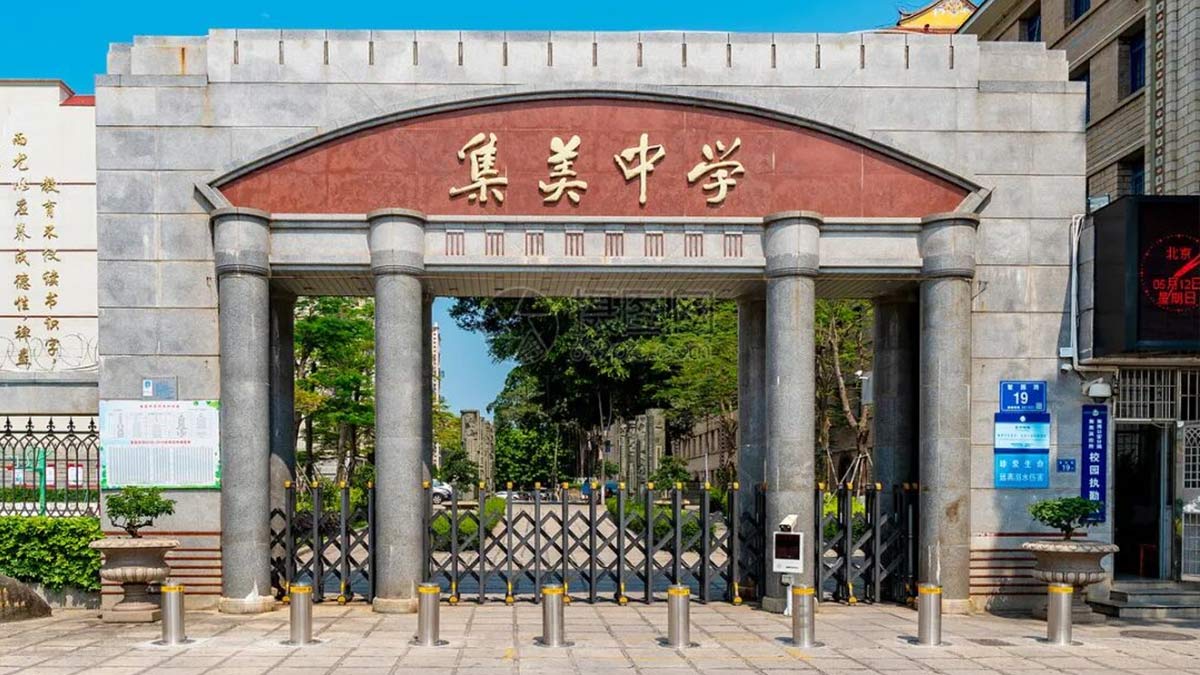
Xiamen Jimei Middle & High School (福建省厦门集美中学, Xiamen) is a public secondary school. It is located in Jimei District, Xiamen. The school was founded in 1918. Its founder was Chen Jiageng, a well-known patriotic overseas Chinese leader. The school was named a Fujian Provincial Key Middle School in 1956.
In 2001, it became a first-class demonstration high school. The school began its international student program in September 2025. It’s called the "Overseas Chinese Student Class" (侨生班). This program brings back its historic role in educating overseas Chinese students.
This tradition started in the 1950s. Back then, the school enrolled over 1,600 overseas Chinese students. They made up more than 40% of the student body. The program takes foreign students. They learn the Chinese curriculum. This helps them enter universities in China.
Subjects and Tracks
International students study the Chinese curriculum. They take science. They take humanities too. Students are placed in either mainstream Chinese classes or the "Chengyi Class." This choice depends on their Chinese skills. It also considers their academic background.
The core curriculum includes the following:
- Chinese language and literature
- Mathematics
- English
- Physics
- Chemistry
- Biology
- History
- Geography
- Music
- Fine arts
- Physical education
The school has more than just regular subjects. It offers Chinese language classes. There are also courses on Chinese culture. Students enjoy hands-on learning about the Jiageng spirit. Politics and education plans for international students are checked at enrollment. Each plan is based on nationality. They also match students’ goals.
Chinese Language Support (CAL)
International students receive dedicated Chinese as an additional language instruction throughout the program. The language program helps students at different levels. Each student has their own Chinese tutor. Chinese language courses teach skills. These skills help students join regular classes. They also prepare for university in China. CAL teaching is benchmarked against HSK proficiency levels, with student progress reviewed regularly. HSKK (spoken Chinese) preparation is integrated into the senior school program. By the end of Grade 12, students have the Chinese skills. These skills are needed for university classes in China.
HSK Preparation
Students are guided toward progressively higher HSK targets through the program. To join the junior high program, you need HSK Level 2 or higher. For the senior high program, you need HSK Level 3 or higher. The international coordinator sets HSK levels for each grade. They also pick the exam venue and the registration timeline. These details are checked each year.
CSCA Preparation
The school helps foreign students get ready for university. It has four streams: Humanities, Trade, Science, and Medicine. Each stream has important subjects. These are Maths, Physics, and Chemistry. In senior school, families check stream options for the year. They also look at how many graduates go to Chinese universities with CSCA results.
University Outcomes
The international student program is still new. The first group of overseas Chinese students started in September 2025. They are now in junior and senior school. Graduate matriculation outcomes will be published. This will occur when the first group finishes Grade 12. The school commits to recommending graduating students to leading Chinese universities. The school's domestic program has a great academic record. Most graduates go on to 985 and 211 universities.
Tuition Fees (2026 Academic Year)
- Senior High Program: RMB 20,000 per year
- Junior High Program: RMB 15,000 per year
Additional Fees
- Boarding: RMB 400 per year
- Textbooks & Materials: RMB 600 – RMB 800 per year (reimbursed)
- Dormitory supplies, insurance, uniform & study materials: RMB 2,000 per year (reimbursed)
Scholarships (Top Applicants)
- Senior High: Up to RMB 10,000 per year
- Junior High: Up to RMB 7,500 per year
Confirm current fees directly with the school.
Student Life and Parent Communication
The international department welcomes 30 students in the junior grade. It also welcomes 30 students in senior grade. The first cohort includes students from Thailand, Vietnam, and Indonesia. The school pairs each international student with a life teacher. They also get a Chinese language tutor.
This helps them adapt. The campus features historic Jiageng-style architecture and modern teaching facilities. We help international parents with communication. This is for families who don’t speak Chinese. We check channels and language options during admissions.
Admission Requirements
International students can join at two times. They can enter junior school in Grade 7, at age 13. They can also enter senior school in Grade 10, at age 15. Applicants need a foreign passport. They cannot have Chinese nationality at the same time. Children of overseas Chinese get priority. Junior high applicants require HSK Level 2 or above; senior high applicants require HSK Level 3 or above.
To apply, you need to provide the following:
- A completed application form
- A valid passport (valid until at least 15 July 2029)
- A 2-inch colour ID photo
- A notarized graduation certificate or equivalent
- Academic transcripts from the last three years
- A recommendation letter in Chinese
- A serious illness commitment form
- A birth certificate and your parents' passport or ID information
- A self-introduction in Chinese (written or video)
- Other supporting materials, like award certificates
A foreign physical examination form is needed after admission approval. This must be dated between 1 June and 15 July 2026. Applications must be submitted online at https://is.xmecs.cn/is.jsp. They are reviewed on a rolling basis until 15 May 2026. Successful applicants are issued the documentation required for an X1 student visa.
What Makes This School Stand Out
Xiamen Jimei Middle & High School is one of China's first public schools. It focuses on overseas Chinese students. The school has a rich history of over a century. This is all thanks to Chen Jiageng's vision. In 2025, the school will restart its overseas Chinese student class. It is a Fujian Provincial Key School in Jimei District.
This is where Chen Jiageng grew up. International students will get a good education. They will study in a place that is rich in history and culture. The school's motto is "Chengyi" (诚毅). It means "sincerity and perseverance." This motto focuses on values in education. It has shaped many students over the years.
Contact
- Admissions email: admissions@alifaedtech.com
- Tel: 0592-6175966 / (+86) 13522515549
- Xunjiang Campus: No. 19 Aoyuan Road, Jimei Subdistrict, Jimei District, Xiamen
- Qiaoying Campus: No. 323 Feng'an Road, Qiaoying Subdistrict, Jimei District, Xiamen
Conclusion
Chinese national curriculum public schools open doors that families once thought were closed. These public and state schools take in foreign students. They use the same educational system as Chinese learners. This system helps students prepare for the Gaokao. That’s the Higher Education Entrance Examination. From junior secondary school to senior grades, your child builds Chinese fluency. They also develop strong academics. This gives them a chance at top universities like Peking and Tsinghua.
Why pick this path? Fees stay lower than private options. Curriculum reform has changed these schools. They now teach modern subjects. These include coding and artificial intelligence. Extracurricular activities make student life better. They include sports and music. Clubs also play a role. These activities help local and foreign students connect.
But picking the right school is tricky. Each one has different entry grades, HSK targets, fees, and language support.
That's where we come in. Alifa Education Services matches your child to the right Chinese curriculum public school. Our team handles document checks, school comparisons, application timelines, and visa paperwork. We've helped families across Asia find the perfect fit.
Ready to start? Book your free consultation with Alifa Education Services today. Help your child take a smarter path to a Chinese university.
For press releases, media inquiries, and official school announcements, contact admissions@alifaedtech.com.
Related Articles
 Emmanuel Usang


Member comments