

Introduction
Qionglin School is one of the largest private K–12 schools in Guangxi, China. The campus covers 500 acres in Nanning, housing close to 7,500 students and over 800 staff members. More families in Southeast Asia and India are paying attention because of this scale.
The school opened in July 2000. Back then, it was a small private boarding school. Things changed in 2015. The Guangxi Yuxian Education Group bought the school. They put more than 500 million RMB into it. New buildings went up. Better teachers came in. Results improved. The school has won awards for its senior high graduating class every year from 2018 to 2024.
Qionglin isn't a Western-style international school. But that's not what most families in this region need. They need strong academics, safe boarding care, and fair fees. Qionglin delivers all three.
Is it the right school for your child? That's the key question. Finding out takes time. Reaching the right people at a Chinese school is not always easy from abroad.
Qionglin School: Why More Families Are Choosing It
Word spreads fast among parents. When a school delivers, people talk.
Qionglin follows the Chinese national curriculum (CNC) adapted for foreign students. International students prepare for the HSK, a CSCA subject exam—China's top university entrance exam for foreign students. But the school offers something extra. Real academic care. Full boarding support. And fees that won't drain your savings.
Every student gets a faculty mentor. That mentor tracks progress. They check in on well-being. They stay in touch with their parents. Teachers are present all day — not just during class hours.
The school also has four clear development tracks:
- Excellence-Creation — for high-achieving students
- Innovation-Creation — for students who need extra support
- Specialty-Creation — for students with arts or sports talent
- International Division — for students targeting overseas universities
Your child won't get lost in a one-size-fits-all program. That matters when you're sending a child thousands of miles from home.
- One for high achievers.
- One for students needing support.
- One for arts and sports talent.
- One for international university preparation.
Nanning's Role as China's ASEAN Gateway
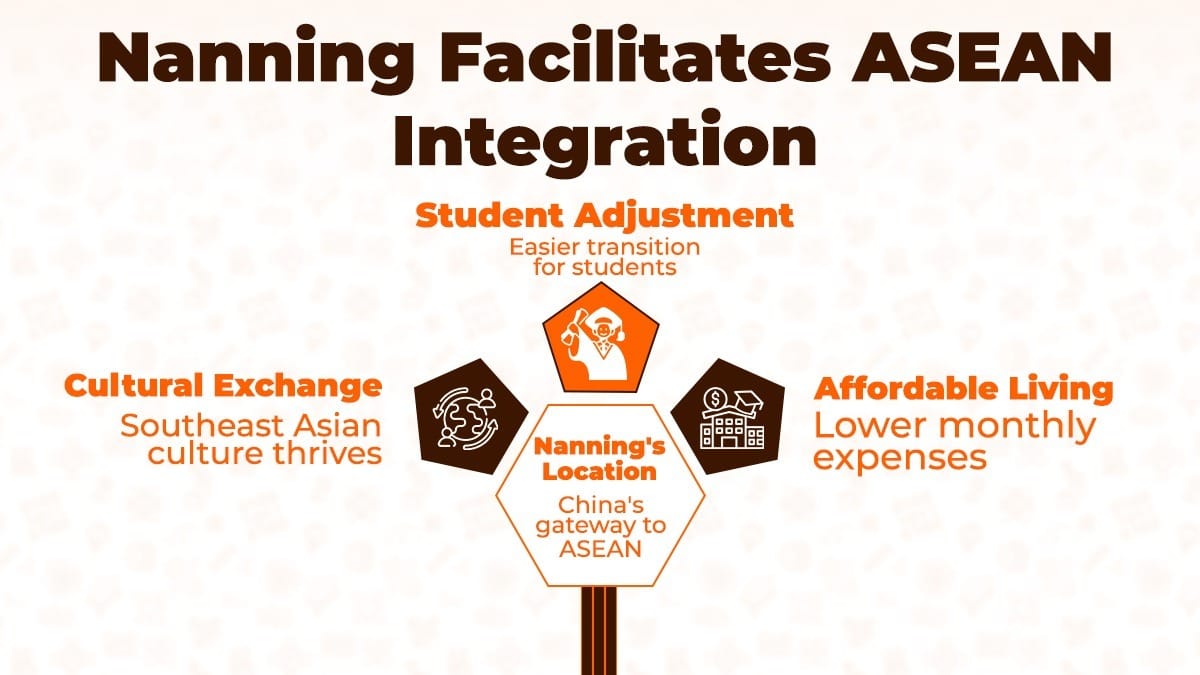
Location shapes opportunity. Nanning is the capital of Guangxi Zhuang Autonomous Region. It's China's main bridge to Southeast Asia.
The city hosts the China-ASEAN Expo every September. Seven ASEAN cities are official sister cities of Nanning. These include Khon Kaen in Thailand, Haiphong in Vietnam, and Davao City in the Philippines.
Nanning doesn't feel distant or foreign for Southeast Asian families. Southeast Asian food, language, and culture show up in daily life here. Students from Vietnam, Indonesia, Thailand, or the Philippines find it much easier to adjust here than in Beijing or Shanghai.
Living costs in Nanning are low. Monthly student expenses run between 1,000 and 2,000 RMB. That's about $140 to $280 USD per month. These figures are much lower than the high costs of living in Beijing or Shanghai.
Qionglin was one of the first private schools in Guangxi to admit ASEAN region students. The school sees international students as part of who it is—not an add-on.
Qionglin School Growth into a Premier Campus
The campus sits at the foot of Yulong Mountain in Liangqing District. From the outside, it looks like a park. From the inside, it runs like a school should.
The school calls its design a "Five-in-One" ecosystem—a school, a park, a garden, a farm, and a manor. All on one campus.
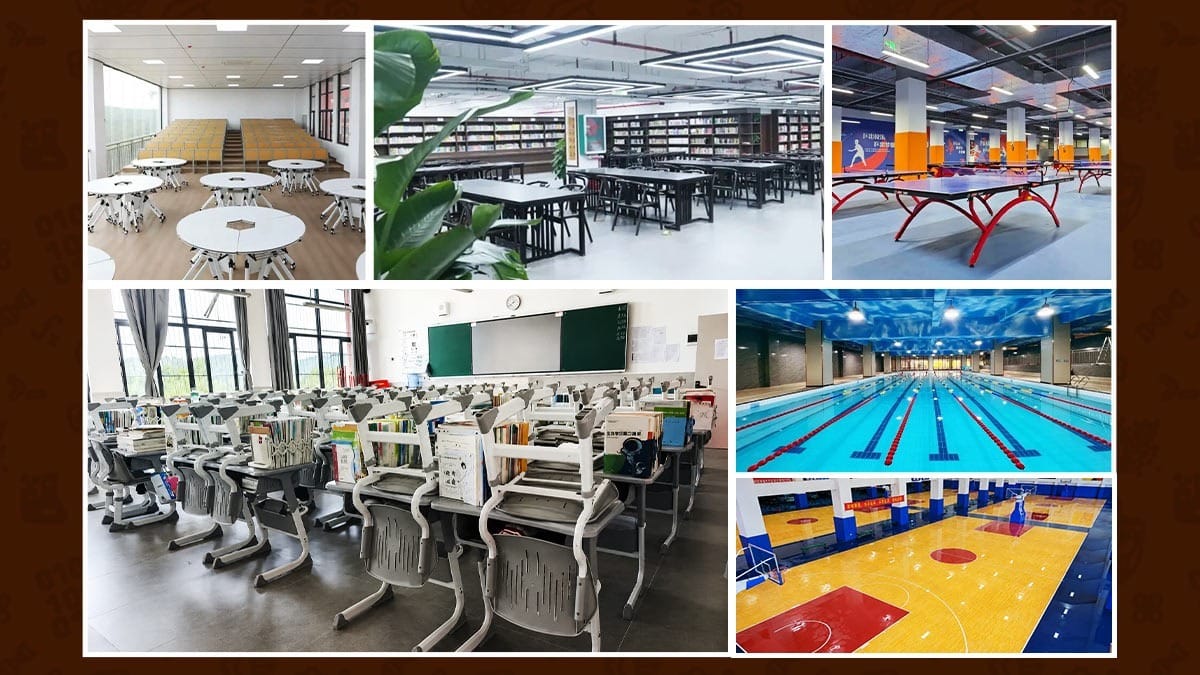
Key facilities include the following:
- Science laboratories for physics, chemistry, biology, and robotics
- Multimedia teaching equipment in every classroom, with smart boards
- A campus network with high-speed internet across all buildings
- A broadcasting station for school media and student productions
- An art center with music rooms, dance studios, and fine arts spaces
- Sports fields with an eight-lane, 400-meter rubber track
- An interest group activity room for clubs from calligraphy to coding
- A library with 170,000 books
- A heated 25-meter swimming pool
- A 120-acre farm for hands-on learning
Air-conditioned dorms include private bathrooms with constant hot water and individual balconies. Younger boarders get support from a life teacher who helps them with their daily routines. In the cafeteria, school leaders join students for three meals and two snacks every day. Furthermore, laundry services are free for all residents.
The details tell the story. This is a well-run campus.
Qionglin School Curriculum and University Pathways
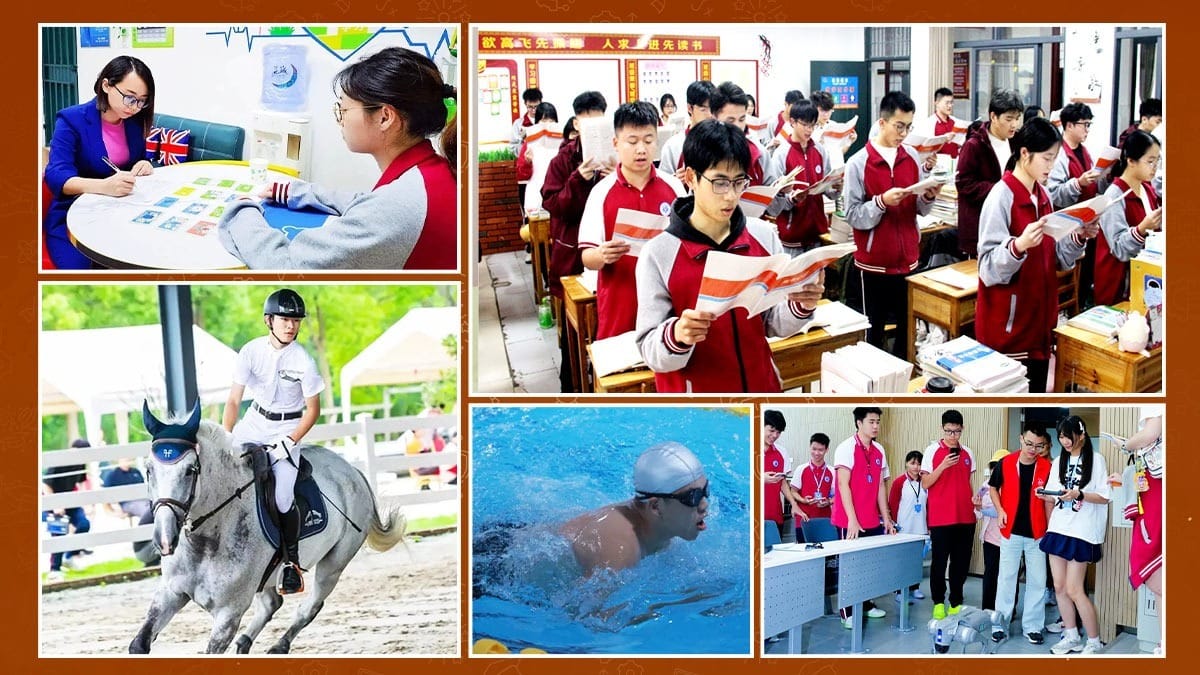
Qionglin has a structured curriculum at every level.
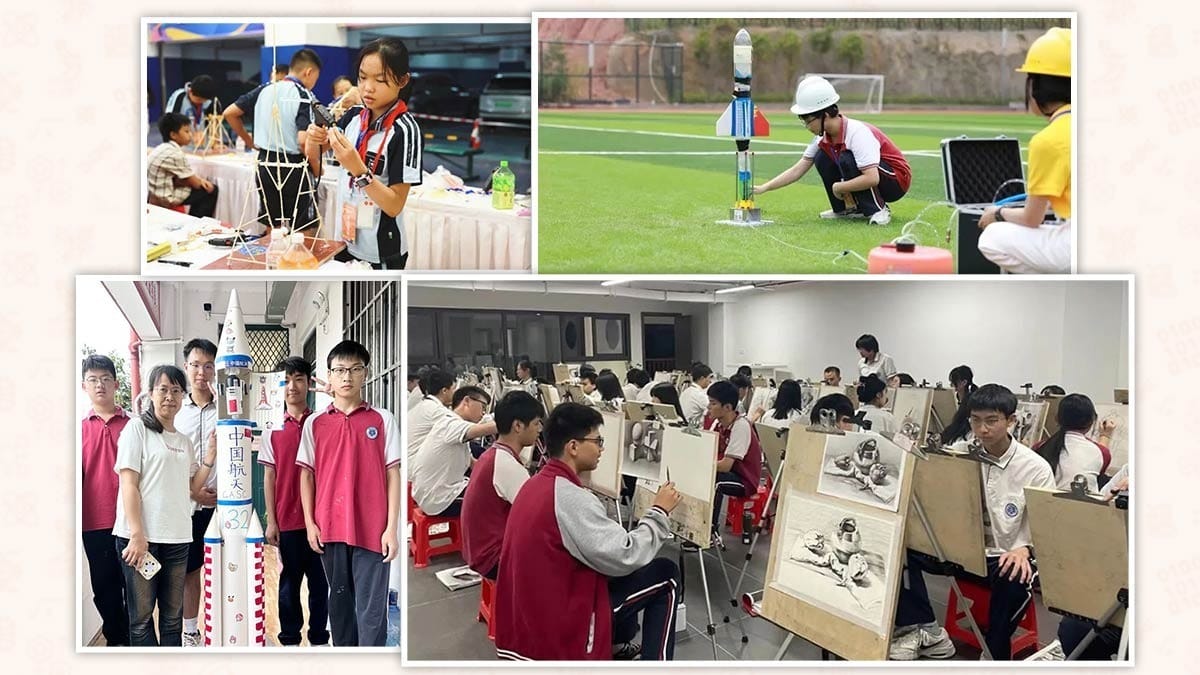
The primary school runs the "1+6+N" Jade-Carving Curriculum. Students build five core skills: arts, sports, labor, social skills, and reading. Over 40 elective courses are on offer — from farming and pet care to robotics.
Junior high blends character with academics. Students have one P.E. class and one hour of supervised study every single day.
Senior high offers three tracks:
- Gaokao track for Chinese local students aiming at top Chinese universities
- Arts and sports track for students with proven talent
- Chinese National Curriculum (CNC) adapted for foreign students
Qionglin graduates have gone to Guangxi University, Xiamen University, Jilin University, and Xidian University. These are Project 985 and Project 211 universities—China's top research universities.
The senior high division has over 5,000 students across 95 classes. Academic results remain strong year after year.
Qionglin School Faculty, Awards, and Recognition
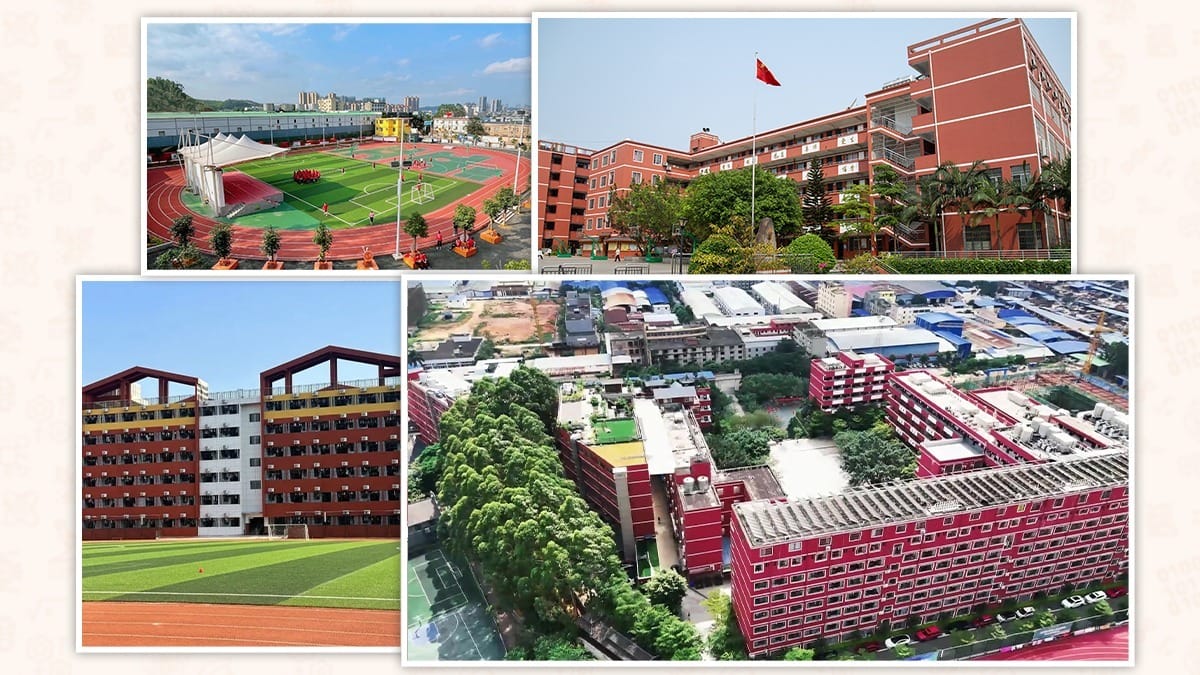
Good schools run on good teachers. Qionglin recruits from these top research universities. Most teachers have over 10 years of experience. The team includes senior-level and special-grade teachers. Some hold degrees from Peking University and Beijing Normal University.
The senior high principal is Lu Mingzhong, a National Outstanding Educator and Guangxi Special-Grade Teacher. He also trained in the elite Bagui Educator Cradle Program.
The school runs a "Mentorship Project" to help teachers grow. The school's daily rhythm includes professional development.
Awards the school has received:
- Nanning Advanced Unit for Private Education
- Guangxi Private Education Characteristic School
- Top 100 School for Comprehensive Strength in National Basic Education
- Outstanding Senior High School for Graduating Class Achievement — seven years in a row, 2018 to 2024
- Featured on CCTV's "Insights" in 2026 as a top private school in Guangxi
That CCTV feature is worth noting. The show highlights schools that prioritize academic results over mere marketing.
Qionglin School Boarding Life, Facilities, and Student Support
Qionglin is a campus that is completely closed off and serves only residential purposes. Students live here full time. That structure is deliberate.
Mobile phones are not allowed. Personal electronics stay off campus. That may sound tough. But it cuts out distraction. Students build real friendships. They engage in learning with greater intensity.
Safety is thorough:
- Security guards are on duty 24 hours a day
- CCTV covers the full campus with no gaps
- Students need four approvals to leave—from parents, teachers, dorm staff, and admin
Medical staff are on-site all day and night. Licensed counselors offer free one-on-one sessions. Students dealing with pressure or homesickness get real support.
Staff supervise weekend transport to the nearest subway. Parents are also welcome to visit.
The school has more than 20 sports clubs and over 10 arts and cultural clubs. Students have competed at the national level in football, cheerleading, athletics, and equestrian sports. One student won the National U16 Sprint Championship in 2024. Two football players joined the Chinese National Middle School Girls' Training Camp that same year.
Qionglin School Affordable Tuition, Scholarships, and How to Apply
Qionglin's fees are one of its biggest draws for international families.
Fee Structure (2024–2025 Academic Year)
Primary School
- Tuition: ~5,000 RMB per semester (~$700 USD)
- Annual tuition: ~10,000 RMB (~$1,400 USD)
- Boarding: 800 RMB per semester (~$110 USD)
Junior High School
- Tuition: ~5,500 RMB per semester (~$770 USD)
- Annual tuition: ~11,000 RMB (~$1,540 USD)
- Boarding: 800 RMB per semester (~$110 USD)
Senior High School
- Annual tuition: ~26,000 RMB (~$3,640 USD)
- Annual tuition: ~26,000 RMB (~$3,640 USD)
- Boarding: 1,000 RMB per semester (~$140 USD)
International Division
- Fees vary; please contact alifa education consultants for the exact or latest figures
The school issues separate bills for textbook fees, study materials, and meals. International student fees may differ. Always check current rates with the school.
Scholarships
The school offers the Song Xianqiong Scholarship. Senior high students with strong Zhongkao scores can receive:
- A+ or A grade: Full tuition and fee exemption
- Achieving a B+ grade grants a complete waiver for the first semester, while later semesters are reviewed based on results, which may lead to a partial waiver of up to 2,000 RMB per semester.
The authorities have awarded more than 20 million RMB in tuition reductions. Over 2,000 students have received financial help.
How to Apply
- Contact ALIFA Education Services to ask about admission availability and openings
- Gather your documents: passport, transcripts, HSK score (if you have one), health certificate, police clearance, and guardian papers
- Submit your application from March to June for September entry
- Complete an online interview if the school requests one
- Get your admission decision in July or August
- Apply for your X1 student visa using your JW202 form and admission letter
- Arrive in Nanning in late August and register
Language requirements:
- Primary school: No Chinese needed
- Junior high: HSK Level 2–3 recommended
- Senior high: HSK Level 4 required
Conclusion
Qionglin School ticks a lot of boxes. Strong faculty. Proven results. A large, well-equipped campus. Safe boarding care. And fees that are far below what most international schools charge.
The school serves primary, junior high, and senior high students. Many academic tracks are available, including a scholarship program and an International Division for students planning to study abroad after graduation.
Nanning is a smart choice too. The city is China's main link to Southeast Asia. Living costs are low. Families from the region feel at home there.
The hardest part for most international families is the process. Who do you contact first? What documents do you need? How do you know if your child is a good fit?
Alifa Education Services handles all that. We support families in Southeast Asia and India. She looks at school options, handles communication with schools in China, and walks you through each step of the application. Families receive clear advice from experts who know the system.
Don't guess. Get guidance. Book your free consultation with Alifa Education Services today and take the first step toward the right school for your child.
Related Articles
 Emmanuel Usang
 Emmanuel Usang
 Emmanuel Usang


Member comments