


Introduction
Complete School Guide · Shanghai, China · Updated September 2026
YK Pao School (包玉刚实验学校) is one of Shanghai's most respected bilingual private schools — a Year 1 to Year 12 institution spanning three campuses across the city, where Chinese and English native-speaking students are immersed equally in both languages from the first day of primary school. Named after Sir YK Pao (包玉刚), the Hong Kong shipping magnate who played a pivotal role in China's modern history, the school has been built to honour his legacy: a deep respect for Chinese culture, a genuine international outlook, and an education that develops the whole person.
Founded in 2007, YK Pao School runs a bilingual curriculum from primary through to the IB Diploma, with Cambridge IGCSE in Years 9 and 10 and the full IB Diploma Programme in Years 11 and 12. It holds accreditations from Cambridge International Education, CIS (Council of International Schools) and the IBO. The school is a non-profit institution — all fee income is used solely to operate and develop the school.
This guide covers every question parents need answered before applying: curriculum pathway, all three campus addresses, fees, admissions requirements, boarding, university counselling, accreditations, and what Alifa verified before publishing.
Quick Answers — YK Pao School (包玉刚实验学校)
✓ How Alifa verified this: Fees, curriculum, accreditations and campus addresses cross-checked against the Alifa YK Pao School profile, the official school website (ykpaoschool.cn), internationalschools.net and Cambridge International Education. All three campus addresses confirmed from the school's Contact page.
YK Pao School — Videos
Three videos published by Alifa Education, filmed at YK Pao School. Click any thumbnail to watch on YouTube.
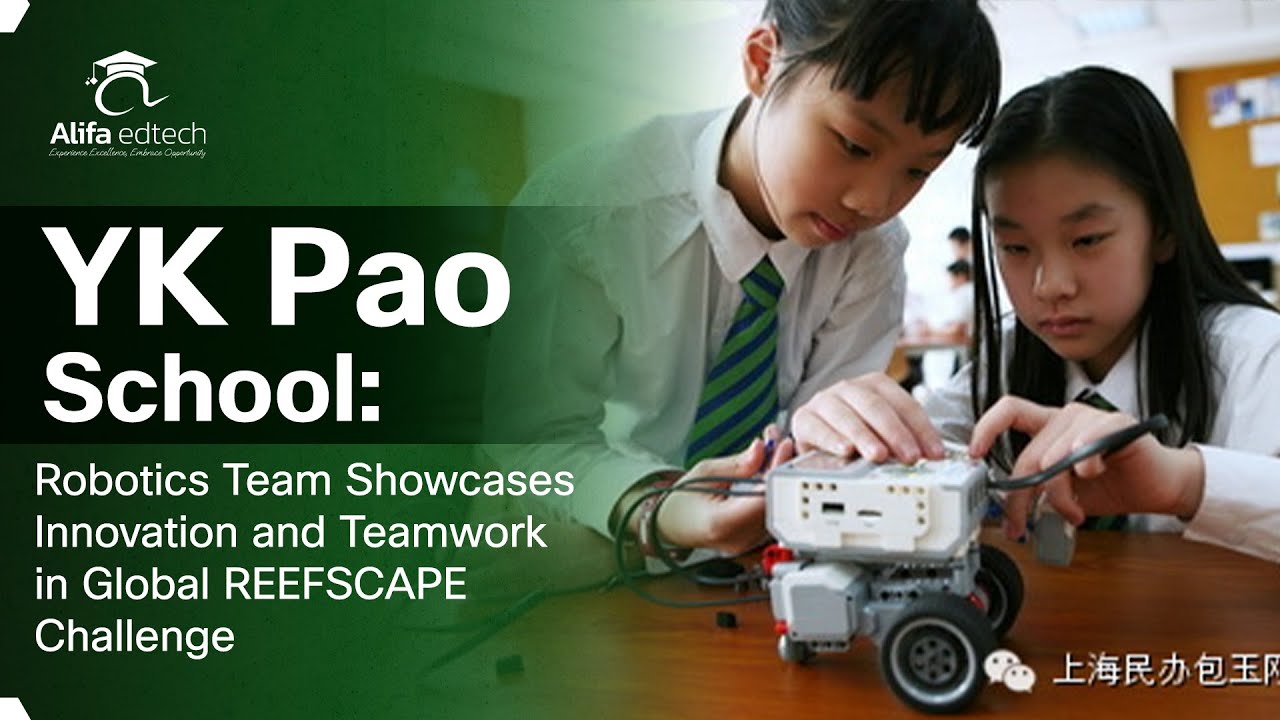
YK Pao School: Robotics at International Competition · Alifa Education · October 2025 · Click to watch on YouTube
 ▶ YouTube
Campus Experience · November 2025
 ▶ YouTube
Student Journey · October 2025
All 3 videos filmed at YK Pao School · Published by Alifa Ed-tech · 2025 · Click thumbnails to watch on YouTube
YK Pao School at a Glance
| Detail | YK Pao School (包玉刚实验学校) |
|---|---|
| English name | YK Pao School |
| Chinese name | 包玉刚实验学校 (Bāo Yùgāng Shíyàn Xuéxiào) |
| Short name | Pao School |
| Named after | Sir YK Pao (包玉刚, 1918–1991) — World Shipping Magnate |
| Founded | 2007 |
| School type | Private non-profit bilingual school |
| Year range | Year 1 through Year 12 (ages approx. 6–18) |
| Campuses | 3 campuses in Shanghai (Primary · Middle · High School) |
| Primary Campus | 20 Lane 1251 West Wuding Road, Changning District, Shanghai 200042 |
| Middle Campus | 2206 Hongqiao Road, Changning District, Shanghai 200336 |
| High School Campus | No. 1800, Lane 900 North Sanxin Road, Songjiang District, Shanghai 201620 |
| Phone (general) | +86 021 6167 1999 |
| Admissions email | admissions@ykpaoschool.cn |
| University Counselling | uco@ykpaoschool.cn |
| Admissions email | admissions@ykpaoschool.cn |
| Website | ykpaoschool.cn |
| Alifa school profile | alifaedtech.com/schools/yk-pao-school |
| Students | around 1,600 (Chinese and international students) |
| Student:teacher ratio | 1:6 |
| Language | Bilingual — English and Chinese (equal immersion) |
| Curriculum | IPC (Y1–5) → Cambridge (Y6–8) → IGCSE (Y9–10) → IB DP (Y11–12) |
| Accreditations | Cambridge International Education · CIS · IB World School |
| Fees (2026) | RMB 168,000/yr (Y1–5) · RMB 190,000/yr (Y6–9) · RMB 216,000/yr (Y10–12) — charged per semester |
| Boarding | Yes — 5-day boarding for Middle and High School |
| Mission | Developing the whole person · Passing on Chinese culture · Fostering international perspective |
↔ Scroll on small screens. Data from ykpaoschool.cn and internationalschools.net.
School Overview — Sir YK Pao, Legacy and Mission
YK Pao School was founded in 2007 in Shanghai as a tribute to the legacy of Sir YK Pao (包玉刚, 1918–1991). Sir YK Pao is one of the most consequential Chinese businessmen of the 20th century. Sir YK Pao grew up during China's civil war and World War II — a time when many around him were on the brink of starvation. Through extraordinary perseverance, including teaching himself English, he built the world's largest privately-owned shipping fleet and earned the title of World Shipping Magnate — the biggest ship owner in the world by the 1970s. He acquired major holdings in Hong Kong and Kowloon Wharf and Godown Co., became HSBC's first Chinese director and vice chairman, and co-founded Dragonair with KP Chao.
His relationship with modern China ran deeper than business. Sir YK Pao met personally with Deng Xiaoping at the Great Hall of the People on multiple occasions, contributing to the negotiations surrounding Hong Kong's return to China. His close ties with both British and Chinese governments helped lay the groundwork for the "one nation, two systems" framework.
The school he inspired carries forward his three beliefs: that education should develop the complete person, that Chinese culture deserves to be passed on with full depth and respect, and that every graduate should be equipped to operate as a genuine citizen of the world.
Three-pillar mission
- Developing the whole person — academic achievement, emotional intelligence, physical health, character and service are given equal weight. No single dimension of a student's development is sacrificed for another.
- Passing on traditions of Chinese culture — Chinese language, literature, history, philosophy and art are not electives. They are embedded throughout the curriculum at every year level, for all students regardless of nationality.
- Fostering an international perspective — students graduate with the intercultural knowledge and communication skills to address global challenges. The mixed-nationality classroom makes this aspiration concrete, not decorative.
Non-profit structure
YK Pao School operates as a non-profit institution. All income from fees is used solely for the purpose of operating and developing the school. Fees are reviewed annually and adjusted according to actual expenditures and inflation — not investor return expectations. In addition to fees, the school relies on support from its founders and donors to continue operating. This structure is materially different from for-profit international schools, where margins are extracted for shareholders.
YK Pao School Foundation (est. 2010): The school runs a charitable Foundation established in 2010 to support its long-term development. As one leader at the school has observed, major school groups across China are now seeking to replicate the Pao School model and establish bilingual institutions — recognition that the school’s founders got the formula right early.
Governance: The school's Board of Governors comprises professionals from education, business, finance and legal fields. The school has ties to the Hong Kong and Macao Affairs Office of the Shanghai Municipal Government, and Shanghai's Interpreters' Association. The Headmaster and Principals manage daily operations.
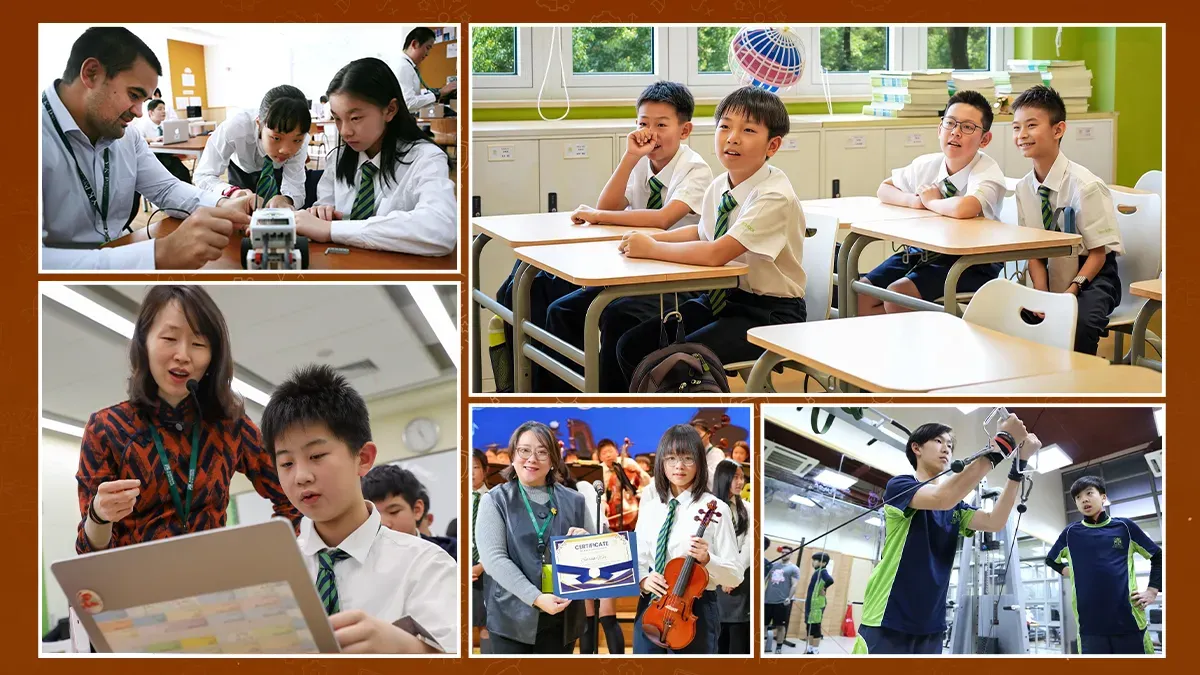
Grade Pipeline — Year 1 to Year 12 Across Three Campuses
YK Pao School educates students from Year 1 through Year 12 — a complete 12-year journey on three dedicated campuses, each designed for a specific stage of development. A student who enters in Year 1 can graduate from the IB Diploma at Year 12 without changing schools. The bilingual English-Chinese programme runs continuously throughout.
Complete grade pipeline| Stage | Years | Campus | Key details |
|---|---|---|---|
| Primary School | Years 1–5 | Changning | International Primary Curriculum (IPC) + Chinese national content. Bilingual English and Chinese from day one. Co-curricular activities (CCA), Young Pioneers programme, academic support, service learning. |
| Middle School | Years 6–8 | Changning | "Shanghai Plus" curriculum — Cambridge framework plus Chinese studies: Chinese Language & Literature, Geography, Political Science and Chinese History. Zhixing China Programme. Boarding available (5-day, +RMB 9,800/yr). |
| High School (IGCSE) | Years 9–10 | Songjiang | "International Plus" — Cambridge IGCSE alongside Chinese studies. Students sit external Cambridge IGCSE examinations at end of Year 10. Internal Zhong Kao assessment determines readiness for High School. |
| High School (IB DP) | Years 11–12 | Songjiang | Full IB Diploma Programme — 6 subjects (3 HL + 3 SL), Theory of Knowledge, Extended Essay, CAS. External IB examinations at end of Year 12. Boarding available (5-day, +RMB 13,800/yr). |
Scale and teacher ratio
Continuity from Year 1 to Year 12. YK Pao School's three campuses share the same mission, values and curriculum philosophy. A student who joins in primary school builds Chinese culture, English fluency and character depth across 12 continuous years — not three separate school cultures.
Curriculum — IPC, Cambridge IGCSE and IB Diploma
YK Pao School's curriculum is not a single framework applied across all ages — it evolves deliberately at each stage, ensuring that the academic challenge grows alongside the student. The bilingual thread is constant: English and Chinese receive equal weight and equal instructional time throughout Years 1 to 12.
Primary School (Years 1–6) — International Primary Curriculum (IPC)
The Primary School uses the International Primary Curriculum (IPC), a globally recognised framework that integrates subjects thematically and teaches language, mathematics, science, humanities and the arts in an interconnected, inquiry-led way. Chinese national curriculum standards are woven throughout, ensuring Chinese language, culture and history are developed from the earliest years.
Teachers conduct lessons in both English and Chinese, creating a rich classroom environment with students from Chinese-speaking and English-speaking families learning side by side — an immersion that is genuinely rare at primary level. The school is explicit that it is one of a very small number of schools worldwide where native speakers of both languages are present in equal measure.
Primary students also participate in Co-Curricular Activities (CCA), service learning, the Young Pioneers programme, and individualised academic support.
Middle School (Years 7–9) — "Shanghai Plus" Curriculum
The Middle School uses a "Shanghai Plus" model — a Cambridge-based academic framework supplemented by a deep Chinese studies component that includes:
- Chinese Language and Literature
- Chinese Geography
- Political Science
- Chinese History
This is not a watered-down language class — these are full academic subjects taught at the standards applied in Shanghai's mainstream school system. Middle School students also study four science areas and ICT (Information Communication and Technology), alongside geography, history and more complex humanities. The Chinese programme follows Shanghai curriculum standards, combining a Basic Course (core Chinese culture and literature), a Chinese Culture Course, Classics Reciting, and a Literature course covering works from different countries — all taught at the depth of a Shanghai mainstream school. It is what allows YK Pao graduates to understand China substantively, not superficially.
High School Years 9–10 — "International Plus" and Cambridge IGCSE
In Years 9 and 10, students move into the "International Plus" curriculum — Cambridge IGCSE subjects combined with the Chinese studies programme. All students complete the school's internal Zhong Kao assessment at the end of Year 9 to confirm they are ready to progress to the IGCSE year.
IGCSE subjects include a set of compulsory core papers plus a range of electives ("Zhi Hui" electives). For students who show outstanding ability, Extra Depth qualifications are available in subjects such as English Literature and Additional Mathematics — these require significant additional work and are offered selectively. External Cambridge IGCSE examinations are taken at the end of Year 10, awarding internationally recognised Cambridge IGCSE subject certificates.
High School Years 11–12 — IB Diploma Programme
Years 11 and 12 deliver the IB Diploma Programme (IBDP), the internationally recognised pre-university qualification. Students study six subjects (three at Higher Level, three at Standard Level) from the IB's six subject groups, alongside:
- Theory of Knowledge (TOK) — exploring the nature and limits of knowledge across disciplines
- Extended Essay (EE) — a 4,000-word independent research paper
- CAS (Creativity, Activity, Service) — structured contribution outside academics
IB Diploma examinations are taken at the end of Year 12. The IB Diploma is accepted by universities in the UK, USA, Canada, Australia, Hong Kong and mainland China.
"International Plus" is YK Pao's unique differentiator. Very few schools in China or globally run Cambridge IGCSE and IB Diploma and full Chinese studies under one unified programme. At Pao School this is not a compromise — it is a deliberate design choice that produces graduates with credentials meaningful in both Chinese and international university systems.
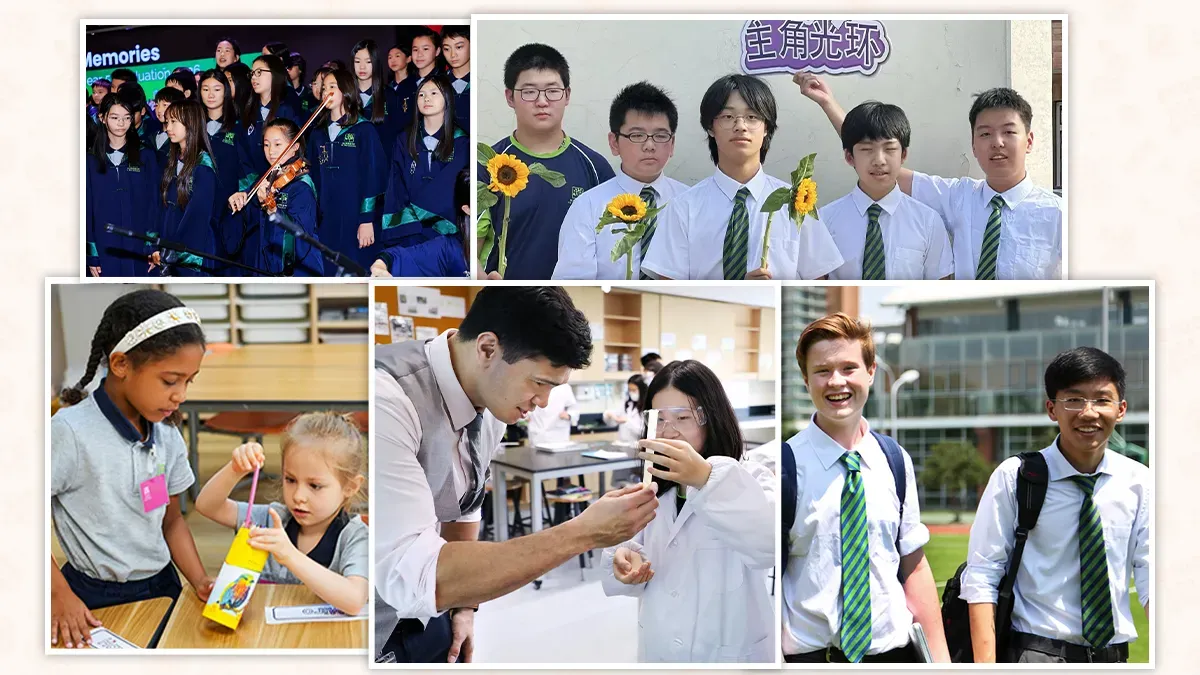
Chinese Culture Programme and Zhixing China Programme
YK Pao School treats Chinese culture not as an add-on but as a structural pillar of the curriculum. Two dedicated programmes give this concrete form: the Chinese Culture Programme, which runs through the academic timetable, and the Zhixing China Programme, which takes students out of the classroom and into China itself.
Chinese Culture Programme
The Chinese Culture Programme ensures that students develop a genuine, academically grounded understanding of China — not a tourist's familiarity but the kind of depth that comes from studying Chinese language, literature, history, philosophy and art as serious academic disciplines alongside an international curriculum.
For Chinese students, this deepens their own heritage with an international lens. For international students, it provides access to one of the world's great intellectual and cultural traditions that no internationally-only curriculum can replicate. The result is graduates who can move between Chinese and international contexts with real fluency — cultural and linguistic.
Zhixing China Programme
The Zhixing China Programme is a school-wide annual programme where students leave the classroom for a week of structured learning in different locations across China. Each trip is curriculum-linked and designed to develop the three pillars of the school's mission simultaneously.
- Whole person development: Students develop intellectual, social and emotional skills, strong character and resilience in environments they cannot manage from behind a desk
- Chinese culture transmission: Direct contact with Chinese cultural sites, communities and traditions — literature, history, philosophy, art — experienced rather than read about
- International perspective: Students develop intercultural knowledge by experiencing difference directly, not through a textbook comparison
Attendance is compulsory — treated with the same expectation as classroom attendance, including all school rules and regulations. The programme is available to all year levels, with destinations selected to match the age and curriculum stage of each cohort.
Sir YK Pao's legacy in the programme. The Zhixing China Programme reflects Sir YK Pao's own formation — a man who understood China deeply from the inside and operated internationally with equal confidence. The school intends its students to develop the same dual fluency. Zhixing (知行) means "knowledge and action" — the classical idea that knowing and doing cannot be separated.
Character Education and Co-Curricular Activities
Character Education
YK Pao School’s three core values — Compassion, Integrity and Balance — are not printed on a wall. They are the operating framework for how the school makes decisions, how teachers teach, how the residential programme is organised, and how students are expected to treat each other.
Character Education at Pao School is woven into the daily timetable and the extracurricular programme. Developing the whole person means that a student’s emotional and social growth receives as much deliberate attention as their academic progress. The residential programme (boarding) is structured specifically to give students daily practice in the character traits the school considers essential: leadership, responsibility, integrity, compassion toward peers from different backgrounds.
Extension Programmes (EP)
The Extension Programmes run across Primary and Middle School and offer approximately 60 courses across five major categories:
- Language and Literature — deepening reading, writing and communication in both English and Chinese
- STEM and Science — robotics, coding, engineering challenges and scientific inquiry
- Sports — individual and team sports, physical development and teamwork
- Drama — performance, stagecraft, public communication and creative confidence
- Visual Arts — studio art, design, appreciation and making
An open day is held at the beginning of each semester with trial classes so students and parents can explore the full range before committing. The Extension Programme is described by the school as enrichment that runs alongside the core curriculum — not remediation and not acceleration, but genuine broadening of who a student is.
Co-Curricular Activities (CCA)
The Co-Curricular Programme is a compulsory part of the school day for all students across Primary, Middle and High School. It is divided into four sections: Chinese cultural activities · sports · performing and visual arts · enrichment activities. Full participation is expected from every student — it is not an opt-in programme. The school’s robotics programme has produced nationally and internationally recognised results — YK Pao students have won robotics competitions that demonstrate the programme’s depth. The robotics victory captured in the Alifa video above is one example of the competitive level the school’s STEM programme reaches.
Physical education daily. Physical development is built into the daily schedule across all year levels — this is not an optional or reduced-hour subject. The school believes physical activity and mental well-being are prerequisites for effective academic learning, not competitors for curriculum time.
YK Pao School Fees (2026–2027 Official)
The following fees are from the school’s official 2026/2027 School Year tuition page on the school's official tuition page. Fees are charged per semester. The table below shows both the per-semester amount (as published) and the annual equivalent for easy comparison. As a non-profit school, all fee income is used solely for school operations and development.
2026–2027 tuition — per semester and annual| Year group | Campus | Per semester | Annual (×2) |
|---|---|---|---|
| Years 1–5 (Primary) | Primary Campus | RMB 84,000 | RMB 168,000 |
| Years 6–8 (Middle) | Middle Campus | RMB 95,000 | RMB 190,000 |
| Year 9 (High School) | High School Campus | RMB 95,000 | RMB 190,000 |
| Years 10–12 (IGCSE + IB DP) | High School Campus | RMB 108,000 | RMB 216,000 |
| Year group | Available from | Per semester | Annual (×2) |
|---|---|---|---|
| Year 9 | High School Campus | RMB 9,800 | RMB 19,600 |
| Years 10–12 | High School Campus | RMB 13,800 | RMB 27,600 |
Boarding is 5 days per week. No boarding available at Primary Campus (Years 1–5) or Middle Campus (Years 6–8).
What tuition includes
Additional costs to budget for
Non-profit fee context. YK Pao School’s annual fees (RMB 168,000–216,000) are below most fully private international schools in Shanghai, which typically charge RMB 200,000–350,000+ per year. The non-profit structure means no investor return is extracted from fees. The school’s founders and donors also contribute additional support beyond what fees cover.
2026/2027 fees confirmed from the official school tuition page — verify annually before payment
Admissions and Entry Requirements at YK Pao School
YK Pao School is selective but broadly accessible — it accepts both Chinese and international students who meet the requirements of the Shanghai Municipal Education Commission. The school is genuinely bilingual: it expects applicants to engage with that bilingualism as a long-term commitment, not a convenience.
Who can apply
| Applicant type | Eligibility |
|---|---|
| Chinese students | Eligible — must meet Shanghai Municipal Education Commission requirements for private school admission |
| International students | Eligible — YK Pao School is approved by the Shanghai Municipal Education Commission to enrol foreign students |
| Minimum commitment | The school recommends applicants plan to stay for at least two years. Language learning is a long-term process and short-term enrolment works against the student |
Admission principles
- The school looks for families who share the same educational goals as Pao School — bilingual development, character education and the whole-person approach
- Assessment covers English, Chinese and Mathematics ability — the school uses its own assessment criteria rather than relying solely on report cards
- Report cards are also evaluated for overall learning skills, ability to use resources and technology, and evidence that the student can adapt to Pao School's academic environment
- The school also looks for evidence of character, engagement and intellectual curiosity
Admissions process — step by step
| Step | Stage | Details |
|---|---|---|
| 1 | Information session | Attend Pao School's admissions information session. Learn about the school's pedagogy and philosophy before applying. The school recommends this step first. |
| 2 | Online registration | Submit the online information registration form and upload required materials. You will receive an email confirmation once materials are received. |
| 3 | Academic assessment | Sit the school's own English, Chinese and Mathematics assessments. These are used alongside report cards to evaluate academic readiness. |
| 4 | Decision | The school communicates the outcome. Successful applicants proceed to enrolment and fee payment. |
Contact for admissions: admissions@ykpaoschool.cn · Phone: +86 21 6167 1999 · Or contact Alifa Education for guided application support at admissions@alifaedtech.com or WeChat larry9455.
Three Campuses and Facilities
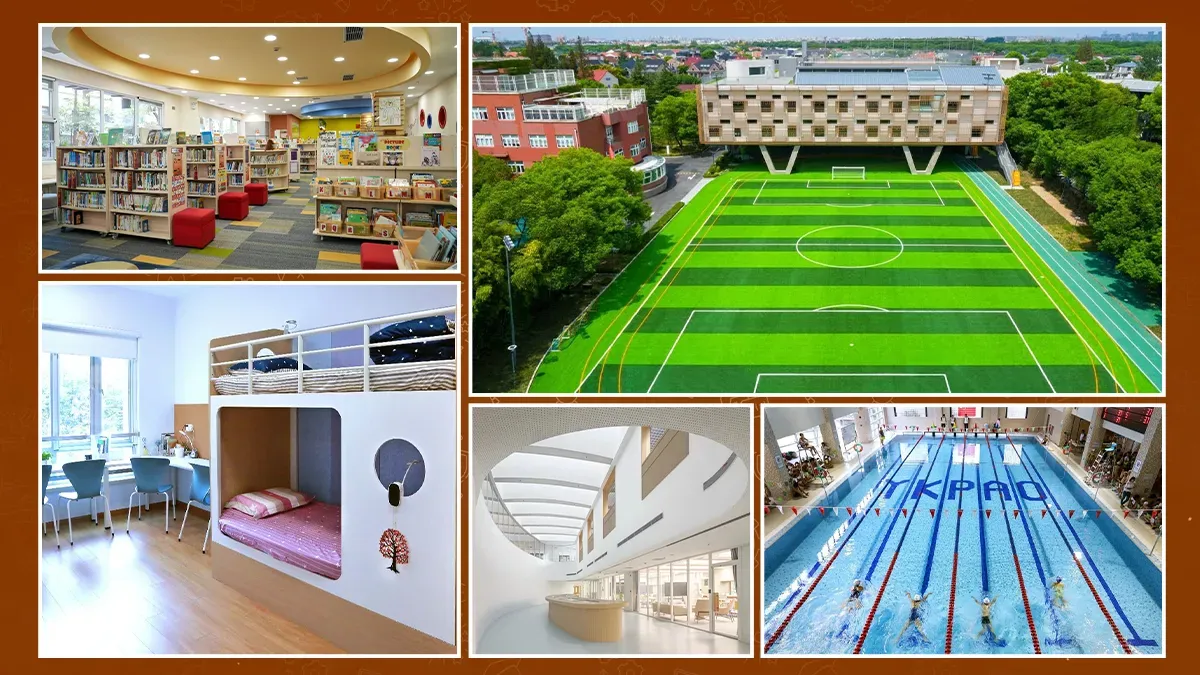
YK Pao School’s three Shanghai campuses are not separate schools — they are three stages of a single educational journey, sharing the same values, the same curriculum philosophy and the same bilingual commitment. Each campus is purpose-built for its age group.
Primary School Campus — Years 1 to 6| Detail | Information |
|---|---|
| Address | 20 Lane 1251 West Wuding Road, Changning District, Shanghai 200042 |
| District | Changning — at the heart of Shanghai's international community area |
| Years | Years 1–6 (Primary School) |
| Curriculum | International Primary Curriculum (IPC) + Chinese national content |
| Key programmes | CCA, Young Pioneers, service learning, individualised academic support |
| Phone | +86 21 6167 1999 |
| Detail | Information |
|---|---|
| Address | 2206 Hongqiao Road, Changning District, Shanghai 200336 |
| District | Changning — well-connected Hongqiao area |
| Years | Years 7–9 (Middle School) |
| Curriculum | "Shanghai Plus" — Cambridge + Chinese Studies |
| Boarding | 5-day boarding available (+RMB 9,800/year) |
| Key programmes | Zhixing China Programme, Extension Programmes (~60 courses) |
| Phone | +86 21 6167 1999 |
| Detail | Information |
|---|---|
| Address | No. 1800, Lane 900 North Sanxin Road, Songjiang District, Shanghai 201620 |
| District | Songjiang — quieter district southwest of central Shanghai |
| Years | Years 9–12 (High School) |
| Curriculum | "International Plus" — Cambridge IGCSE (Y9–10) + IB Diploma (Y11–12) |
| Boarding | 5-day boarding available (+RMB 13,800/year) |
| Key programmes | IGCSE, IB DP, University Counselling (from Year 9), Residential Life |
| Phone | +86 21 6167 1999 |
Campus transition. The transition from Middle to High School includes the internal Zhong Kao assessment, which determines whether a student is ready to progress into the IGCSE year (International Plus). This ensures students entering the most demanding phase of the curriculum are genuinely prepared for it.
Boarding and Residential Life at YK Pao School
Boarding at YK Pao School is available from Year 9 upward — 5-day boarding at the High School campus (Year 9: RMB 19,600/year; Years 10–12: RMB 27,600/year) and at the High School campus (RMB 13,800/year). The residential programme is described by the school as a transformational part of the Pao School experience — not simply accommodation, but a structured environment that develops character in ways the classroom cannot.
How residential life works
Students, parents and staff alike view the residential programme as an extension of the school’s character education framework. Daily life in the boarding community is structured around the school’s core values of Compassion, Integrity and Balance — students live alongside peers from different backgrounds and nationalities, practicing those values rather than studying them.
Prefect System
Prefects are senior students who take ownership of peer leadership within their Houses. They work alongside House Parents on the daily residential schedule — including study hall management, wake-up and lights-out routines, and House activities. The Prefect role is one of the most meaningful leadership opportunities at Pao School: it puts authority and responsibility in the hands of students, not only teachers.
Student Government
Student Government is a peer-elected group that serves the broader school community by listening to and identifying solutions to school challenges, and organising activities that promote the school’s mission. It gives students direct experience of democratic representation, community decision-making and accountable leadership.
What boarding at Pao School is and is not
- It is a 5-day programme — students typically return home on weekends
- It is not a requirement — day student attendance is the norm; boarding is an option
- It is not available at Primary School level — only from Year 9 (High School) upward
- It is structured and supervised — House Parents are resident staff, not remote administrators
For international families: If you are a family with a parent or guardian in Shanghai, boarding is an option for convenience and character development — not a necessity. Boarding at Pao School requires parental presence in China; it is not a long-stay programme for students whose families are entirely overseas. Confirm current boarding arrangements with the school before applying.
Accreditations — Cambridge, CIS and IB
YK Pao School holds three major international accreditations — each from a distinct global body, each reflecting a different dimension of educational quality. Together they form a credibility signal that matters to both parents evaluating schools and universities evaluating applicants.
| Accreditation body | What it means for students and families |
|---|---|
| Cambridge International Education (CIE) | Cambridge IGCSE examinations taken in Year 10 are set, marked and certificated by Cambridge International Examinations — one of the most widely recognised pre-university qualifications in the world. Cambridge IGCSE certificates are accepted by universities in the UK, USA, Canada, Australia, Singapore, Hong Kong and mainland China. The accreditation confirms that YK Pao School’s IGCSE teaching meets Cambridge’s standards. |
| CIS (Council of International Schools) | CIS accreditation requires a comprehensive school-wide evaluation of governance, curriculum, student welfare, community and continuous improvement. Universities use CIS membership as a quality signal when evaluating transcripts from international schools. It verifies that the school’s assessment practices are reliable and that the institution meets international standards across every department. |
| IB World School | YK Pao School is an IB-authorised school for the Diploma Programme (DP). IB Diploma examinations in Year 12 are externally set and marked by the International Baccalaureate Organization, producing an internationally portable qualification accepted for university entry across all major English-speaking university systems and in mainland China. The IB World School designation confirms that the school’s DP teaching, assessment and pastoral care meet the IBO’s ongoing standards. |
Three accreditations simultaneously — Cambridge (for curriculum and examinations), CIS (for institutional quality) and IB (for the DP programme) — is a rigorous combination. Each accreditation is renewed through independent review. Families can verify current status directly with each body before applying.
University Counselling at YK Pao School
YK Pao School’s University and Careers Counselling programme begins in Year 9 — earlier than most schools. The office believes strongly that the university process is not a Year 12 emergency but a multi-year journey of self-understanding and strategic preparation.
Philosophy: best fit, not best ranking
The University Counselling Office explicitly rejects a ranking-chasing approach. Its published philosophy states: "There is no ‘one size fits all’ when it comes time for students to make the next step in their educational journey." Students and families are encouraged to evaluate universities for fit — matching the student’s strengths, interests and skills to the school’s academic culture — rather than simply pursuing the highest name recognition.
The goal is for students to thrive in university and achieve great results. Finding an appropriate school is the mechanism; the outcome is a student who is prepared and well-placed, not one who is mismatched with a prestigious institution.
Services provided from Year 9
- Support in identifying universities that match the student’s academic profile and goals
- Identification of worthwhile summer programmes and internships
- A wide range of other enrichment opportunities relevant to university applications
- University and careers counselling meetings
- Guidance on IGCSE subject selection in Year 10 to ensure options are kept open for the IB DP
- IB subject selection in Year 11 for university alignment
Counselling team leadership
The Director of University and Careers Counselling is Ben Leung — originally from Hong Kong, Ben holds a Master’s degree in Engineering Management (Financial Engineering concentration) from Duke University and a Bachelor of Engineering in Industrial Engineering from Tsinghua University. His combination of elite Western and Chinese university experience mirrors exactly the dual-pathway situation many Pao School graduates face.
University destinations. YK Pao School does not publicly disclose a ranked list of graduate university destinations. This is a deliberate policy — consistent with the "best fit" philosophy. For families with specific university targets, Alifa Education can provide context on how Pao School graduates have fared and which university systems the school counsels most effectively toward. Contact admissions@alifaedtech.com.
Location — Shanghai’s Three-Campus School
YK Pao School occupies three campuses across Shanghai, each in a district that makes practical sense for the age group it serves.
Primary Campus — Changning District
The Primary Campus at 20 Lane 1251 West Wuding Road is located in Changning District, described by the school as "the heart of the international community area." Changning is one of the most international districts in Shanghai — home to many expatriate families, international schools and international businesses. For families new to Shanghai, a primary school in Changning is typically the most accessible location in terms of housing, community and transport.
Middle Campus — Hongqiao, Changning District
The Middle Campus at 2206 Hongqiao Road sits in the Hongqiao area of Changning — well-connected by the Hongqiao transport hub (airport + high-speed rail). Families who live in the western districts of Shanghai (Changning, Minhang, Qingpu) typically find this campus the most convenient.
High School Campus — Songjiang District
The High School Campus at No. 1800, Lane 900 North Sanxin Road is in Songjiang District — a quieter, more suburban environment approximately 30–45 minutes from central Shanghai by car or metro. Songjiang is a natural location for a boarding campus: the lower density, the campus-specific environment and the distance from the city centre support the residential culture the school has built at this stage.
| Campus | Address | Postcode |
|---|---|---|
| Primary (Y1–6) | 20 Lane 1251 West Wuding Rd, Changning | 200042 |
| Middle (Y7–9) | 2206 Hongqiao Road, Changning | 200336 |
| High School (Y9–12) | No. 1800, Lane 900 N. Sanxin Road, Songjiang | 201620 |
For relocating families: Families arriving in Shanghai for the first time typically choose housing near whichever campus their child is entering. The Primary and Middle campuses in Changning are convenient to the main expatriate residential clusters (Gubei, Hongqiao, Jingan). The High School campus in Songjiang is best supported by the boarding option. School bus routes — confirm availability and coverage with the school directly before committing to housing.
What Alifa Checked
| What we checked | What we found | Source |
|---|---|---|
| School identity and status | Private non-profit bilingual school, founded 2007, named after Sir YK Pao | ykpaoschool.cn |
| Alifa school directory | School profile live at alifaedtech.com/schools/yk-pao-school | Alifa database (verified live) |
| Campus addresses | All 3 campuses: Changning (Primary), Changning (Middle), Songjiang (High School) | ykpaoschool.cn/Contact |
| Fees (2026) | RMB 168,000 (Y1–5) · RMB 190,000 (Y6–9) · RMB 216,000 (Y10–12) per year (charged per semester) | ykpaoschool.cn/Admission/Tuition |
| Boarding fees | RMB 19,600 (Year 9) · RMB 27,600 (Years 10–12) per year, 5-day basis | ykpaoschool.cn/Admission/Tuition |
| Curriculum pathway | IPC (Y1–6) → Cambridge (Y7–9) → IGCSE (Y9–10) → IB DP (Y11–12) | ykpaoschool.cn/Academics |
| Accreditations | Cambridge International Education, CIS, IB World School | ykpaoschool.cn + internationalschools.net |
| Student count | 1,645 students; 1:6 student:teacher ratio | internationalschools.net |
| Non-profit status | Confirmed — all fee income used solely for school operations | ykpaoschool.cn/Admission/Tuition |
| Admissions eligibility | Chinese and international students; Shanghai MEC approved; 2+ year commitment recommended | ykpaoschool.cn/Admission/Admissions-Criteria-and-Process |
| Extension Programmes | ~60 courses in 5 categories (language, STEM, sports, drama, arts) | ykpaoschool.cn/School-Life |
| University counselling | From Year 9; Director Ben Leung (Duke/Tsinghua); "best fit" philosophy | ykpaoschool.cn/Academics/University-Counselling |
| Zhixing Programme | Compulsory annual cultural travel programme across China — all year groups | ykpaoschool.cn/Academics/Zhixing-China-Programme |
Confirm before you apply. Fees, admissions criteria and programme details are reviewed annually. Always verify current information directly with YK Pao School at admissions@ykpaoschool.cn or +86 21 6167 1999 before making any payment or decision.
Frequently Asked Questions — YK Pao School
YK Pao School (包玉刚实验学校) is a private non-profit bilingual school in Shanghai, educating students from Year 1 through Year 12 across three campuses. It is named after Sir YK Pao (包玉刚, 1918–1991), the World Shipping Magnate who built one of the 20th century's largest privately-owned shipping fleets, served as HSBC's first Chinese director and vice chairman, co-founded Dragonair, and played a key role in the negotiations for Hong Kong's return to China. The school was founded in 2007 to honour his legacy of bridging Chinese culture and international excellence.
No — YK Pao School is approved by the Shanghai Municipal Education Commission to enrol both Chinese and international students. This mixed-nationality model is central to the school's identity: one of the defining features of Pao School is that a substantial number of Chinese and English native-speaking students are immersed together in both languages throughout their entire education. It is not a school that separates Chinese and international students into tracks or streams.
Both — with equal weight throughout. English is the primary language for most academic subjects (science, mathematics, humanities, IGCSE and IB DP subjects). Chinese is a core, full-depth academic subject at every year level — not a once-a-week language class. Teachers conduct lessons in both languages from Year 1, creating a bilingual immersion environment. The school explicitly states it is one of the very few schools in the world where native speakers of English and Chinese are equally present and equally immersed in both languages.
Students take two sets of externally awarded examinations: Cambridge IGCSE at the end of Year 10 (set and marked by Cambridge International Examinations, UK) and the IB Diploma Programme at the end of Year 12 (assessed by the International Baccalaureate Organization). Students also take an internal Zhong Kao assessment at the end of Year 9 to determine readiness for the IGCSE programme. Both the Cambridge IGCSE and the IB Diploma are accepted by universities in the UK, USA, Canada, Australia, Hong Kong and mainland China.
Yes — 5-day boarding is available from Middle School (Year 7) upward. Boarding costs RMB 9,800/year at Middle School and RMB 13,800/year at High School. The residential programme is structured around the school's values of Compassion, Integrity and Balance. It includes a Prefect system, Student Government, and House Parents who are resident staff. Boarding at Pao School is not suitable for students whose families are entirely overseas — at least one parent or guardian needs to be present in Shanghai.
The Zhixing China Programme is an annual compulsory week of structured learning outside the classroom, in which students travel to different locations across China to experience Chinese culture, history and traditions directly. "Zhixing" (知行) means "knowledge and action" — the classical idea that real learning requires direct experience, not just study. The programme runs for all year levels. Destinations vary by cohort and are chosen to match the curriculum stage. Attendance is treated with the same expectation as classroom attendance.
Partially — the school explicitly recommends families who plan to stay for at least two years. The bilingual programme is designed as a long-term process; a student who joins for one year will not get the same depth of language development as one who completes a full stage. The Cambridge IGCSE and IB Diploma qualifications are internationally portable — any student who completes either can use those certificates anywhere. But the school's culture, the Zhixing programme, and the character education framework all require time to work. Short-term enrolment is generally not encouraged by the admissions team.
The school recommends attending an information session first — to understand the pedagogy and philosophy before submitting an application. After the information session, submit the online registration form with required documents. You will receive email confirmation when materials are received. The school will then schedule academic assessments in English, Chinese and Mathematics. Contact admissions@ykpaoschool.cn or +86 21 6167 1999 to confirm the next available information session. Alifa Education can also help you prepare your application and navigate the process — contact admissions@alifaedtech.com.
YK Pao School sits in a distinct position in the Shanghai market: it is neither a purely expatriate school (like SAS or SUIS) nor a Chinese school with an international add-on. It is a genuinely bilingual school where Chinese and international students coexist in the same classrooms from Year 1 — and where both the Chinese curriculum and the international qualifications (Cambridge IGCSE, IB DP) carry real academic weight. Fees (RMB 84,000–108,000/year) are significantly below fully private international schools in Shanghai (RMB 180,000–300,000+). For families who want their children to be academically bilingual and culturally bicultural — not just language-competent — Pao School is one of the strongest options in mainland China. Contact Alifa to compare against alternatives for your child's specific needs.
The school assesses Chinese ability as part of the admissions process — alongside English and Mathematics. It does not require students to arrive at an advanced level, but it does assess whether the student has the capacity to develop within the bilingual programme. Because the Chinese curriculum at Pao School is substantive (not a simplified foreign-learner syllabus), students who arrive with no Chinese will face a steeper initial adjustment. The admissions team evaluates readiness case by case. Attend an information session and speak with admissions directly about your child's current language level before applying.
Alifa Education Services
Is YK Pao School the Right Choice for Your Family?
It fits families relocating to Shanghai who want their children to be genuinely academically bilingual — not just language-competent but culturally fluent in both Chinese and English. The non-profit structure keeps fees significantly below comparable private international schools. The Cambridge IGCSE and IB Diploma provide internationally recognised qualifications. The mixed-nationality, equal-immersion classroom is something very few schools anywhere in the world can offer.
Consider carefully if your stay in Shanghai will be less than two years (the school recommends longer), if your child has zero Chinese and the bilingual commitment feels premature, or if you are looking for a school that separates Chinese and international students. Alifa can compare YK Pao School honestly against other Shanghai options and help you assess the right fit for your child's age, language level and family circumstances.
✉ Ask Our Consultant About YK Pao School →Disclosure: Alifa Education Services is an independent education placement consultancy. We may earn a referral fee from partner schools when families enrol, at no extra cost to the family. Our recommendations are based on fit, not fee structure.
Sources
- YK Pao School — Official school website. School profile, history, curriculum, admissions, tuition and campus pages. ykpaoschool.cn (accessed September 2026).
- YK Pao School — Official Tuition page. Fee schedule for Primary, Middle and High School; boarding fees; non-profit disclosure. ykpaoschool.cn/Admission/Tuition
- YK Pao School — Contact page. All three campus addresses (Changning Primary, Changning Middle, Songjiang High School) and telephone numbers. ykpaoschool.cn/Contact
- YK Pao School — Admissions Criteria and Process. Eligibility, assessment subjects, process and commitment expectations. ykpaoschool.cn/Admission
- Internationalschools.net — YK Pao School school profile. Student count (1,645), 1:6 student:teacher ratio, curriculum types, accreditations, founded 2007. internationalschools.net
- Alifa Education Services — YK Pao School article (original, September 2025). Published September 18, 2025. blog.alifaedtech.com
By Emmanuel Usang, Alifa Education. Updated September 2026. Fees and admissions details change annually — confirm with YK Pao School before any payment or decision.
Related Articles
 Emmanuel Usang

 Emmanuel Usang

 Emmanuel Usang

 Emmanuel Usang


Member comments