

Introduction
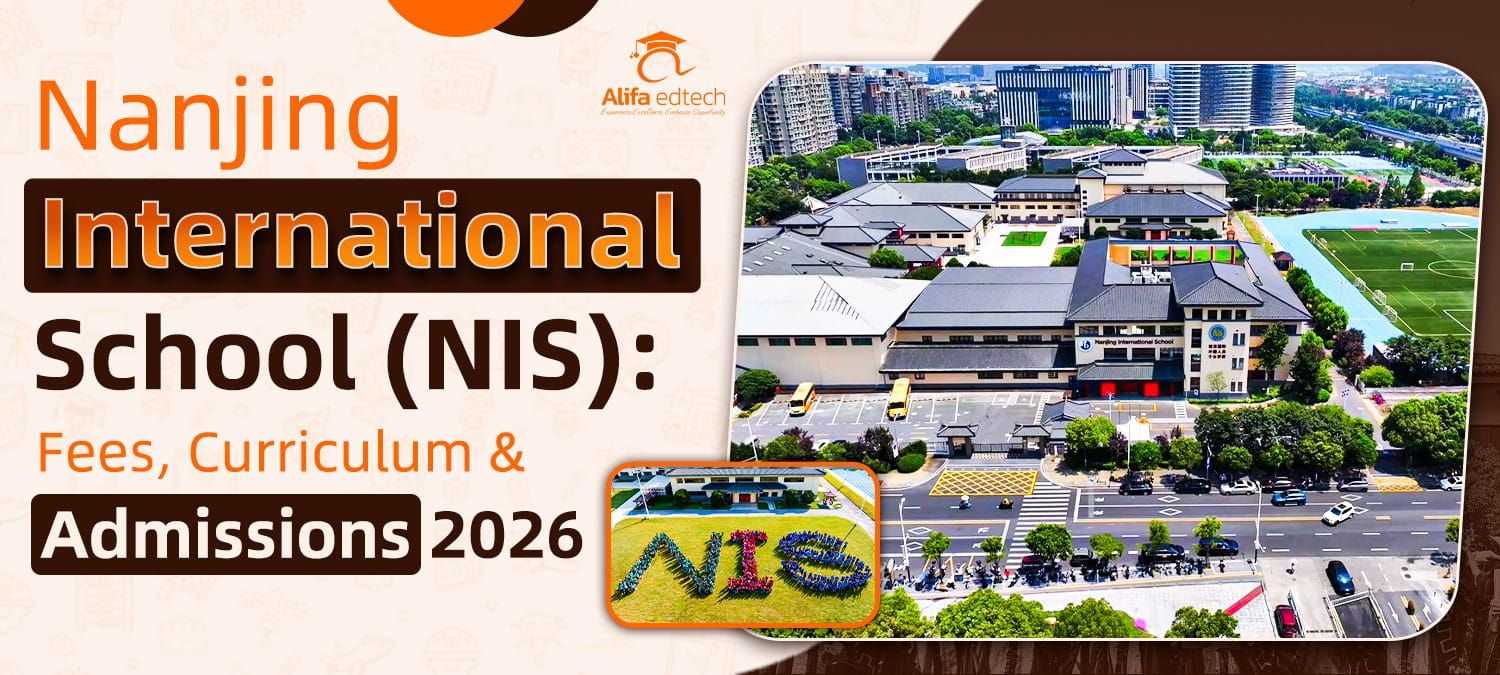
Nanjing International School (NIS) has been operating since 1992. It is China’s first and oldest international school. More than thirty years later, it is still the only independent school in the city. It is also fully accredited and non-profit.
What sets NIS apart? A few things stand out. You won't find A-level or AP programs here—NIS runs the full IB continuum from Pre-K to grade 12 and nothing else. Consistency is important. It helps your child follow one academic path. This starts at age three and goes through university applications.
The school serves just over 600 students from more than 35 countries. Class sizes are limited. The teacher-to-student ratio is 1:7. Plus, all tuition revenue goes back to the school, not to outside shareholders.
That said, NIS isn't cheap. Annual fees for 2025–2026 run from RMB 252,716 at the primary level to RMB 268,956 for Grades 11–12. This school is like many expatriate schools in Nanjing. It accepts only students with foreign passports.
Here’s a simple breakdown of fees. You'll also find details on the IB curriculum, campus facilities, and admissions steps. Plus, see how NIS compares to its main competitors.
NIS at a Glance
Nanjing International School opened in October 1992. A group of expat parents started it. They wanted English classes for their kids in Nanjing. The school began with five students in Grades 1–5. It operated from rented rooms at Nanjing Foreign Language School.
Growth came fast. By 1996, NIS had formally registered with Nanjing authorities. In 2004, the school moved to its new location in Xianlin University City. This campus was built for over 600 students. The school celebrated 30 years of operation in 2022.
Today, NIS is the only independent, fully accredited non-profit international school in Nanjing. No other school in the city has full IB authorization for all three programs at the same time.
A nonprofit model and why that matters
Most international schools in China operate as businesses. NIS doesn't. All tuition revenue goes back to the school. It helps hire better teachers, upgrade facilities, and fund student programs. There are no external investors, no overseas group taking a cut. The school is effectively owned by its parent community.
That structure also shapes who NIS hires. Many experienced international educators prefer non-profit schools for their stability and academic independence. NIS's faculty of 85 foreign teachers from 22 countries reflects that.
The IB Curriculum at NIS
NIS runs one curriculum and one only: the International Baccalaureate. The full K-12 pathway covers three consecutive programs:
Primary Years Programme (PYP), Pre-K to Grade 5
The PYP focuses on inquiry-based learning. Students don’t just read about ideas. They ask questions, explore concepts, and connect what they learn to the world around them. The program has six subjects. They are:
- Language
- Social studies
- Math
- Science
- Arts
- Physical education.
A key feature is student agency. Children should take charge of their learning early. They follow a transdisciplinary framework. This means they learn across different subjects, not just one at a time.
Middle Years Programme (MYP), Grades 6 to 10
The MYP bridges primary and high school. In Grade 10, students study eight subject groups. They also do a personal project. This project is independent and self-directed. It helps them develop research and critical thinking skills.
The MYP doesn't end with a high-stakes external exam. Students are assessed using a mix of coursework and teacher evaluations. This approach provides a better view of their progress than just a single test score.
Diploma Programme (DP), Grades 11 and 12
The IB Diploma is a two-year pre-university qualification recognized by leading universities worldwide. Students learn six subjects in various groups. They write a 4,000-word extended essay and take a theory of knowledge course. They also complete a Creativity, Activity, and Service (CAS) requirement.
NIS graduates often attend top universities. They go to schools in North America, the UK, Europe, and Asia-Pacific. The DP is well-known worldwide. This makes it one of the best university prep programs out there.
Faculty and Teaching Environment
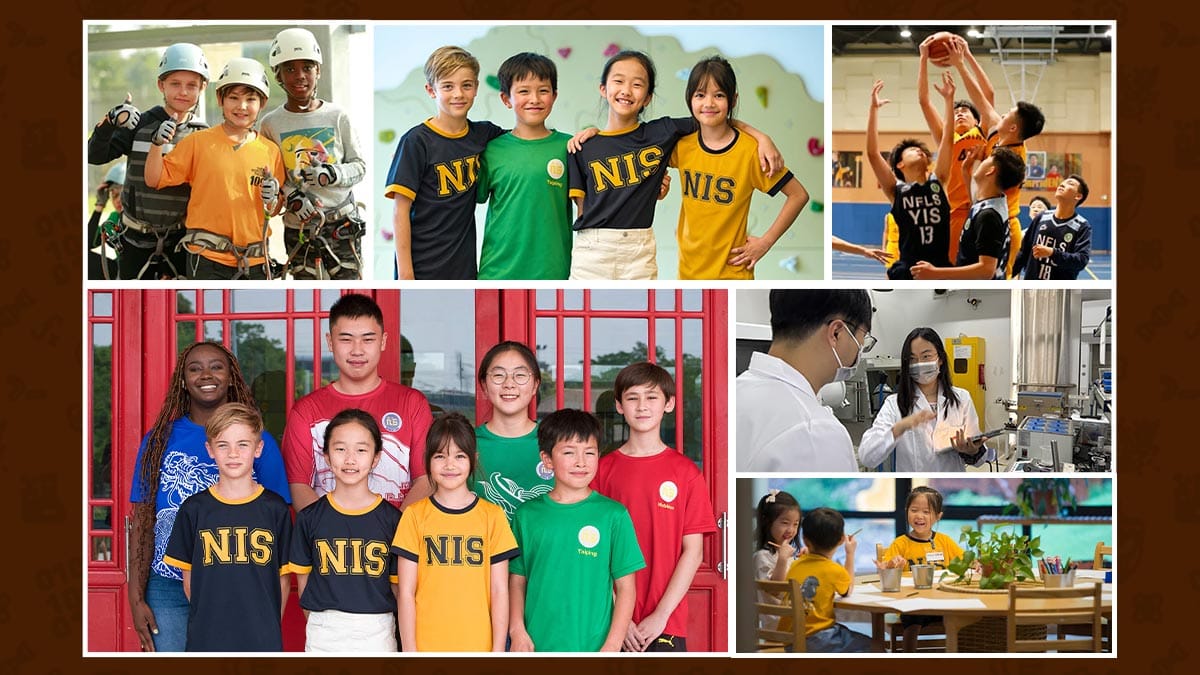
NIS employs 85 foreign teachers from 22 countries alongside 96 Chinese staff members. The school keeps a 1:7 teacher-to-student ratio, with primary class sizes capped at 20.
What that ratio looks like in practice
Small class sizes mean teachers know each student's strengths, gaps, and learning style. Tracking progress with student portfolios keeps families updated on their child’s growth. It’s more than just a report card at the end of the term.
Teachers at NIS undergo structured professional development throughout the year. The school's IB-only focus means every teacher is trained in the same framework. There are no curriculum splits or competing priorities.
EAL support helps students who are improving their English skills. Mandarin Chinese is available in every grade. Older students can also choose German as a third language.
Campus and Facilities
The NIS campus covers 60,621 square meters. It is located in Xianlin University City, Qixia District. You can reach it in about 20 minutes by car from central Nanjing.

Sports and Outdoor Spaces
- FIFA-standard full-length football pitch and running track
- Heated swimming pool
- Two gymnasiums
- Basketball and multi-sport courts
Academic and Creative Spaces
- 540-seat multipurpose theatre and a Black Box studio
- Early Years theatre
- Dedicated science laboratories
- Art studios, music rooms, and recording studios
- Library and digital research hub
Technology and Safety
The campus has a complete digital learning setup. Smartboards, student devices, and online platforms are used in every grade. Air quality monitoring and campus security systems are in place throughout the site.
Admission to NIS
NIS admits students throughout the academic year, subject to space availability. Admission is open to children of foreign nationals living in Jiangsu Province.
Who can apply
NIS is an expatriate school. Applicants need a foreign passport. Local Chinese students are not eligible. Parents will need to provide:
- Child's foreign passport
- Valid Chinese visa or residence permit
- Parents' work permit or residency documentation
- Previous school reports or transcripts (translated if not in English)
The admission process
- Submit an application online or in person at the Admissions Office
- Attend a family interview and, where needed, a student assessment for language readiness.
- Receive an admission decision and confirm enrollment.
Class sizes are capped. This means some grades may have limited spaces, especially mid-year. Families relocating to Nanjing should apply as early as possible.
Tuition Fees
NIS publishes its fees annually. For the current academic year:
| Grade Level | Annual Tuition (RMB) | Approx. USD |
|---|---|---|
| Pre-K / K1 / K2 | RMB 252,716 | ~$35,500 |
| Grades 1–5 | RMB 252,716 | ~$35,500 |
| Grades 6–8 | RMB 256,952 | ~$36,050 |
| Grades 9–10 | RMB 260,000 | ~$36,500 |
| Grades 11–12 | RMB 268,956 | ~$37,800 |
As a non-profit, NIS reinvests all tuition revenue into school operations. There are no dividend payments or external shareholder returns.
Student Life and Extracurricular Activities
Sports Teams and Activities
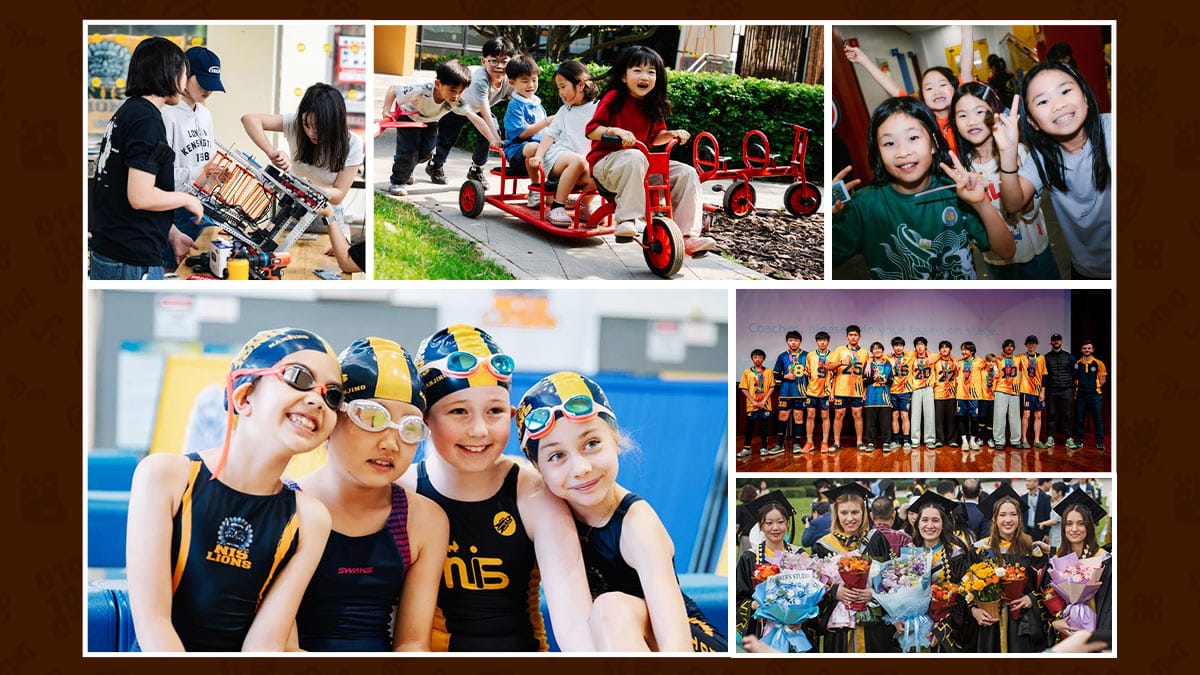
NIS runs competitive sports programs in football, basketball, swimming, and more. Teams compete in regional and international school leagues throughout the year. The FIFA-standard pitch and pool give student-athletes great facilities. They are as good as those in bigger schools.
Arts and Performance
The 540-seat theater hosts regular drama productions, music concerts, and arts showcases.
Students can study:
- Visual arts
- Instrumental music
- Dance
- Theatre
This is true for every year group.
Leadership and service
Model United Nations (MUN), debate clubs, and student council help older students learn leadership. They give clear experiences that boost confidence. Service learning is included in the IB curriculum through the CAS requirement. This pushes students to help their local community and beyond.
Cultural activities
NIS has international cultural festivals. They bring the school community together all year. The Japanese Weekend School and the parent-run Korean School are both on campus. They show the school's truly multinational community.
NIS vs. the British School of Nanjing vs. EtonHouse
Parents researching NIS are usually also looking at BSN and EtonHouse. Here's how the three compare at a glance:
| NIS | British School of Nanjing (BSN) | EtonHouse Nanjing | |
|---|---|---|---|
| Curriculum | IB (PYP, MYP, DP) | British NC, IGCSE, A-Level | IB PYP, British NC, Cambridge |
| Ages | 3–18 | 2–18 | 2–18 |
| Annual Fees | RMB 252K–269K | RMB 213K–273K | RMB 115K–181K |
| School Type | Non-profit | For-profit (Nord Anglia) | For-profit (EtonHouse Group) |
| Class Size | Max 20 (primary) | Max 20 | Max 20 (KG), 24 (older) |
| Who Can Apply | Foreign passport only | Foreign passport only | Foreign passport only |
| Key Differentiator | Only full IB school in Nanjing | Longest-running British school | Most affordable private option |
Choose NIS if your child will be in Nanjing until Grade 12. This ensures a steady IB pathway from the beginning.
Choose BSN for a British curriculum with IGCSE and A-Level qualifications. Also, consider it if you have connections to UK universities.
Choose EtonHouse if fees matter or if your child is in early years. This Singapore-based education group offers a solid inquiry approach.
Frequently Asked Questions
Q: Is NIS only for children with foreign passports?
Yes. NIS is a school for expatriates. It is approved by China's Ministry of Education to educate foreign nationals' children. Local Chinese students are not eligible to apply. You must show a foreign passport. Also, provide a valid Chinese visa or residence permit for admission.
Q: Does NIS offer boarding?
No. NIS is a day school only. Students commute from home or from family accommodation in Nanjing. School bus routes cover the main residential areas used by expat families in the city.
Q: What accreditations does NIS hold?
NIS is accredited by the Council of International Schools (CIS). It is also accredited by the Western Association of Schools and Colleges (WASC). The school is authorized by the International Baccalaureate Organization (IBO) for all three programs: PYP, MYP, and DP. It is also approved by China's Ministry of Education.
Q: How competitive is admission to NIS?
NIS admits students throughout the year, but class sizes are capped. Spaces in popular grades, especially primary, fill up fast. This is true for September entry. Families new to Nanjing should reach out to the admissions office early. Aim for three to six months before your start date.
Q: Does NIS teach Mandarin Chinese?
Yes. Mandarin Chinese is available at every grade level. For native speakers, the program runs at a higher proficiency level. German is also offered as a third language for older students.
Q: What happens after the IB Diploma at NIS?
NIS graduates apply to universities worldwide. The IB Diploma is accepted by top universities in North America, the UK, Europe, Australia, and Asia. The school offers a counseling program just for DP students. It helps them with the application process.
Q: Is NIS worth the fees compared to other Nanjing schools?
That depends on what matters most to your family. NIS is one of the more expensive options in Nanjing, but it's the only school offering the full IB continuum from Pre-K to Grade 12. You won't need to switch your child's academic framework midway through their schooling. For families committed to the IB pathway and planning to stay in Nanjing long-term, it's a strong choice.
Conclusion
Is NIS the Right School for Your Child?
NIS isn't the right fit for every family—but for the right one, it's hard to beat.
If your child is starting young and you plan to stay in Nanjing until Grade 12, think about it carefully. The full IB program runs from Pre-K to diploma. This means your child stays in one school system for their entire education. That consistency compounds over time.
The non-profit structure matters too. Every family at NIS is effectively a co-owner of the school. Decisions focus on students, not shareholders. This choice affects teacher hiring and campus investment.
The fees are real. At RMB 252,000–269,000 per year, NIS sits at the premium end of Nanjing's international school market. You pay less here than at similar IB schools in Shanghai or Beijing. Often, the learning environment is even better.
What's the bottom line? If the IB pathway suits your child's university plans, take a close look at NIS. If Nanjing is your long-term home, NIS is a great option. Schedule a campus visit before you decide. You can’t fully grasp the school's community vibe from a webpage.
Ready to explore your options? Alifa Education Services works with 800+ international schools across China. Book a free consultation with us and get matched to the right school for your child.
Related Articles
 Emmanuel Usang
 Emmanuel Usang
 Emmanuel Usang
 Emmanuel Usang


Member comments