

Introduction
Wellington College Education (China) operates six main schools across Tianjin, Shanghai, Hangzhou and Nantong: three Wellington College International schools and three Hiba Academy bilingual schools. The group also operates separate early-years settings and a specialist A Level Centre in Tianjin.
Wellington College International schools primarily serve families who meet campus-specific international-school eligibility requirements. Hiba Academy bilingual schools — known in Chinese as 惠立 (Huili) — are designed mainly for Chinese and internationally minded families. Tuition, application fees, eligibility and curricula differ by campus. All figures in this guide are therefore identified by academic year and should be verified against the relevant school’s official admissions information.
That two-line split is the most confusing thing about the brand. A recent rebrand of the English name, from “Huili School” to “Hiba Academy,” adds to it. So this guide clears the split first. Then it covers the six main schools, city by city. It looks at the curriculum, exam results, university offers, who can enrol, fees and admissions, and boarding. It ends with how a family moving to China can get help with a place and a local guardian.
📚 Scope of This Guide
This guide covers the six main schools. The group also operates separate early-years nurseries in Shanghai, Hangzhou and Tianjin, and a specialist A Level Centre in Tianjin. Those settings are noted in context but are not profiled individually. Overseas Hiba campuses (including the planned Bay Area site) sit outside this guide’s scope.
Key Takeaways
Two brands, one group. Wellington College International is for foreign-passport children. Hiba Academy (惠立), formerly known as “Huili School,” is a private bilingual school open to Chinese and international children.
Six main schools, four cities: Tianjin, Shanghai (Pudong), Hangzhou (Xiaoshan), and Nantong. Counting the four kindergartens and Tianjin’s A Level course centre, that comes to eleven institutions.
Founded by Joy Qiao (乔英) in 2009. The first school opened in Tianjin in 2011 — the first Wellington College campus anywhere outside the UK.
Results are strong. In 2025, Wellington International Shanghai averaged 37.4 on the IB Diploma. Tianjin and Hangzhou each posted 63–64% A*/A at A Level. Hiba Academy Shanghai reached 79% A*/A at IGCSE.
Sixth Form paths differ by campus. Shanghai (International) is IB only. Tianjin is A Level only. Hangzhou (International) offers both. The Hiba schools run the IB Diploma in Shanghai and A Level in Hangzhou and Nantong.
Tuition varies widely (2025–26). Hiba Academy Shanghai charges about RMB 170,000/year for primary. Wellington International Shanghai charges RMB 391,000/year for Sixth Form.
Boarding is offered in Tianjin, Hangzhou (from Year 5), and at Hiba Academy Nantong’s flagship, which has room for close to 800 boarders.
From Berkshire to China
Wellington College UK is a leading British independent school. It was founded in 1859 in Berkshire, England, as a national monument to the first Duke of Wellington. Over more than 160 years, it built a strong name for academic results, pastoral care, and a broad, whole-child education.
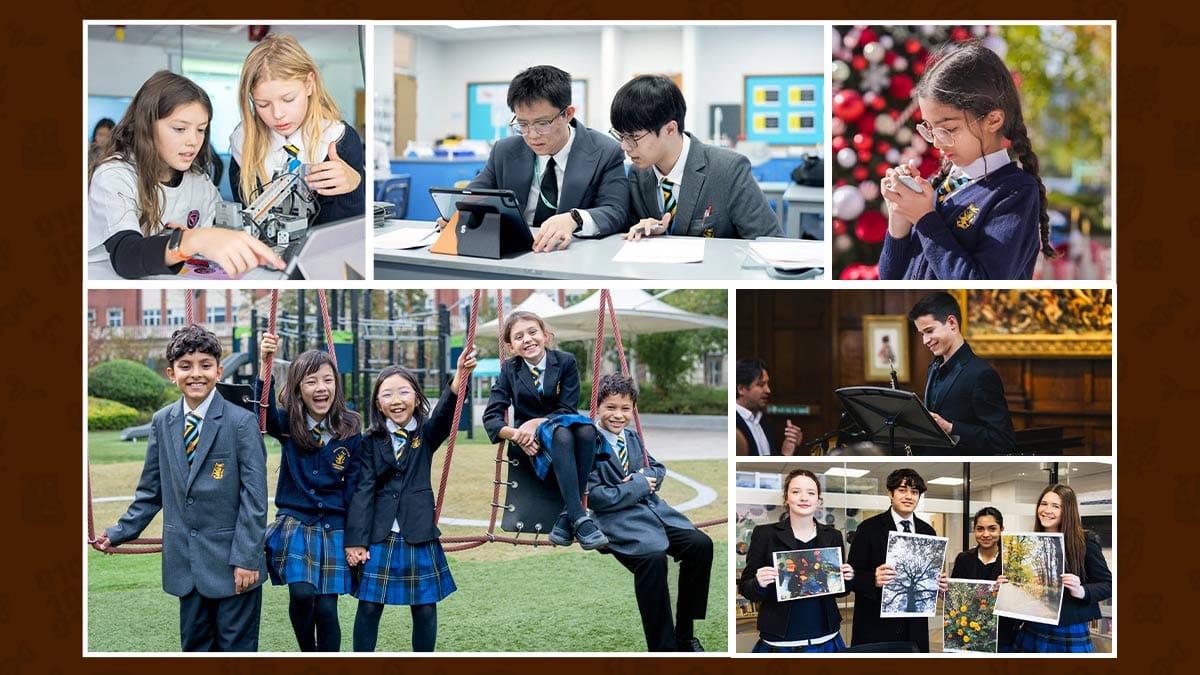
The China story began in 2009. That year, Joy Qiao (乔英) founded Wellington College Education (China), or WCEC. The group’s first school opened in Tianjin in 2011 — the first Wellington College campus anywhere outside the United Kingdom. Wellington Education — as the group is widely known — belongs to the wider Wellington College education network, which now spans the UK, China, India, and Thailand, with more campuses opening in the US and Indonesia. Each China campus has its own School Affairs Board under the group’s central leadership.
Beyond China, Wellington runs operating schools in Bangkok, Pune (India), and Jakarta. Wellington College International Lagos is planned to open in September 2027 and is not yet operating. A further Hiba Academy campus is due to open in the Bay Area, California — the brand’s first step outside China. Those overseas campuses sit outside the China footprint this guide covers.
Wellington International vs Hiba Academy
China has two very different school systems for two very different groups of children, and Wellington operates in both. Getting this right is the whole game.
Wellington College International (惠灵顿外籍人员子女学校) is a school for foreign children. It is a 外籍人员子女学校 under Chinese rules. Teaching is mainly in English and follows a British path.
Hiba Academy (惠立学校) is a private, bilingual school open to Chinese and international families with no nationality restriction. It teaches in both Chinese and English, combining the Chinese national curriculum with international teaching methods. Hiba Academy is part of the same group — but it is a separate school type, with its own campuses.
Wellington College International
惠灵顿外籍人员子女学校
Hiba Academy (惠立)
惠立学校
Every School, City by City
There are three Wellington College International schools and three Hiba Academy schools, across four different cities. Each city also has an early-years or course centre setting. Here is the full picture at a glance.
| School | City | Type | Ages | Opened |
|---|---|---|---|---|
| Wellington College International Tianjin | Tianjin · Hongqiao | International | 2–18 | 2011 |
| Wellington College International Shanghai | Shanghai · Pudong | International | 2–18 | 2014 |
| Wellington College International Hangzhou | Hangzhou · Xiaoshan | International | 5–18 | 2018 |
| Hiba Academy Shanghai | Shanghai · Pudong | Bilingual | Primary–Senior (separate nursery) | 2018 |
| Hiba Academy Hangzhou | Hangzhou · Xiaoshan | Bilingual | 2–18 | 2018 |
| Hiba Academy Nantong | Nantong | Bilingual · boarding | 2–18 | 2022 |
Tianjin
Hongqiao District — where it all started
Wellington College International Tianjin opened in 2011 — the group’s first school. It takes children from age 2 to 18 and offers boarding. The city also has a bilingual nursery (2017) and an A Level course centre (2014), both under the Wellington College Bilingual Tianjin name. There is no Hiba Academy campus in Tianjin.
Shanghai (Pudong)
The group’s largest cluster
Wellington College International Shanghai opened in 2014, for foreign-passport families, ages 2 to 18. Hiba Academy Shanghai opened in 2018 as the bilingual option, with a separate Hiba nursery. Its fees are set by the Shanghai Pudong New Area Development & Reform Commission. The two schools cover both routes on one side of the city.
Hangzhou (Xiaoshan)
Mirrors the Shanghai set-up
Wellington College International Hangzhou and Hiba Academy Hangzhou both opened in 2018 and share a campus in Xiaoshan, with a Hiba nursery alongside. The international school takes children from age 5 and offers boarding from Year 5. The Hiba school runs the full bilingual route from age 2.
Nantong
Flagship boarding campus
Hiba Academy Nantong opened in 2022 — a continuous school for ages 2 to 18. Two seven-storey boarding buildings hold close to 800 students. Its first senior cohort graduated in 2026. There is no Wellington College International campus in Nantong.
Count the kindergartens and Tianjin’s course centre too, and the group runs eleven institutions. A twelfth is on the way: Hiba Academy Bay Area, in San Francisco, opens in autumn 2026 — the brand’s first campus outside China.
Curriculum and Academic Pathways
The two school types teach across all educational stages on two different tracks.
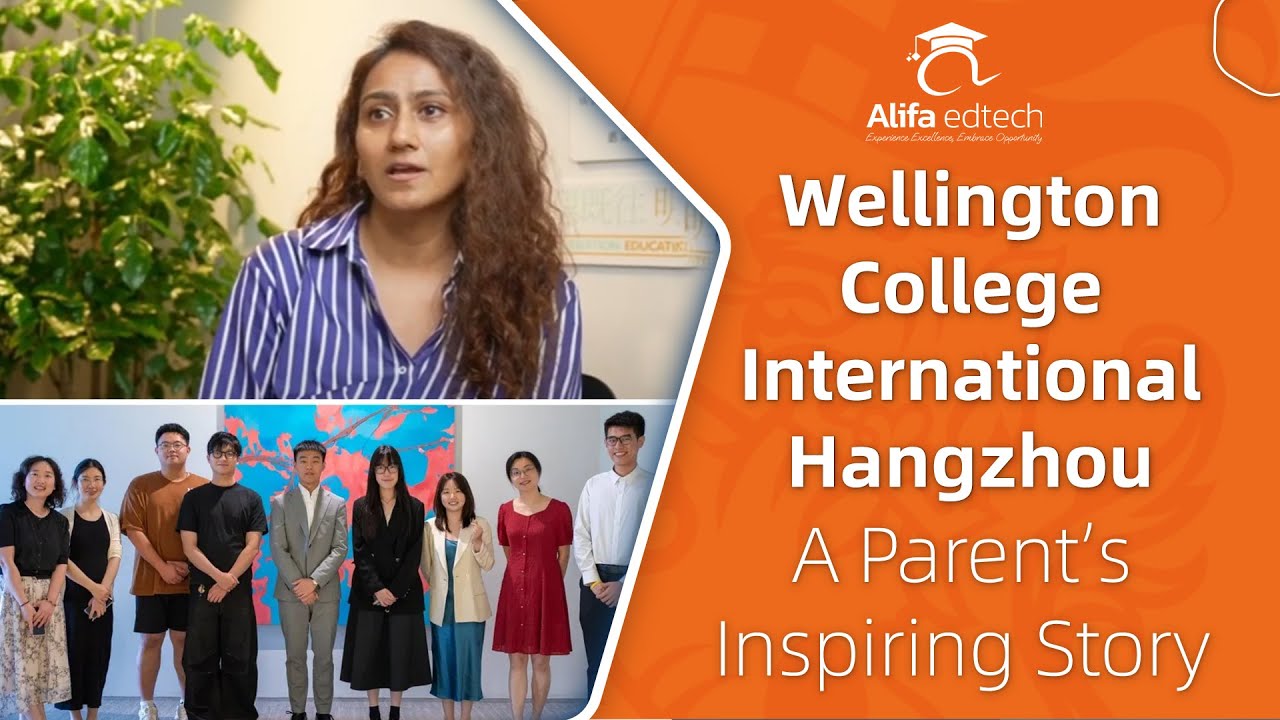
At the Wellington College International schools, children follow a British path. It starts with early years in the EYFS framework. Primary years use the English National Curriculum alongside the IPC. In Years 10–11, students sit IGCSE exams — the international form of GCSEs. The final two years differ by campus:
- Shanghai — the IB Diploma Programmeme only.
- Tianjin — A Level only. Tianjin is the group’s established A Level centre, offering CIE, AQA, and Edexcel exams.
- Hangzhou — A Level only. The curriculum follows IGCSE preparation, then a two-year A Level programmeme in Years 12 and 13.
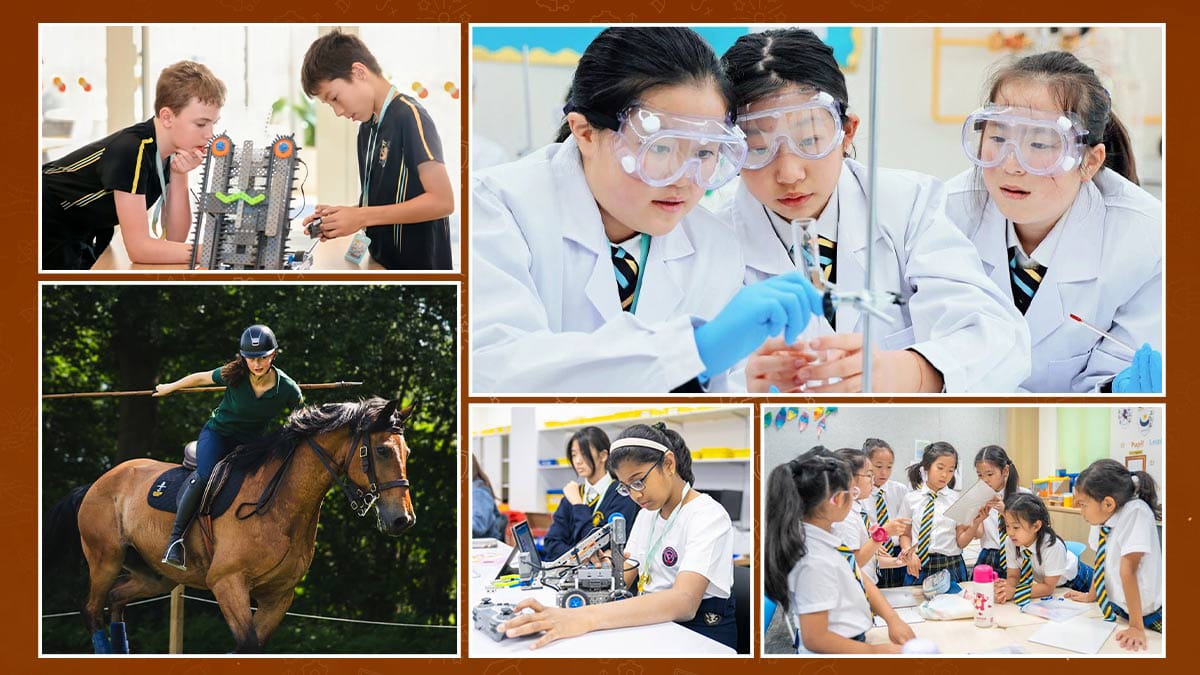
At the Hiba Academy schools, children follow a bilingual “fusion” model. Lessons run roughly half in English and half in Chinese. The model is built on the Chinese national curriculum, so pupils sit the Chinese Zhongkao and Huikao milestones. They then move to international exams at the senior level:
- Shanghai — IGCSE, then the IB Diploma Programmeme.
- Hangzhou — IGCSE, then A Level.
- Nantong — an IGCSE/Pre-A foundation, then A Level.
The group also holds a wide set of accreditations and memberships that reflect its global recognition. These include CIS, the IB Organization, COBIS, ACAMIS, and FOBISIA. The list also includes the Duke of Edinburgh’s Award and LAMDA at some campuses, alongside IPC, Cambridge Assessment English, and Edexcel as authorised centres.
Exam Results and University Destinations
Each school publishes results for its own leaving exams. The exception is Hangzhou, where the two schools share a campus and report jointly. The table below shows the most recent figures available at time of writing. Wellington College International Shanghai has published 2026 results; other campuses’ 2026 results should be verified directly with each school. Hiba Academy Nantong’s first full A Level results are due in 2026.
| School | Sixth Form | Latest published results | University offers |
|---|---|---|---|
| WCI Tianjin | A Level | 2025–26: A Level 29% A*, 63% A*/A; IGCSE 41% A*/A | 2025: 130 offers, 85% to QS Top 100, 31% to UK “G5” |
| WCI Shanghai | IB Diploma Programme | 2026: IB average 38.2/45 (updated July 24, 2026; earlier announcement 37.9); 2025: 37.4/45 | Oxford offers four years running; Cambridge, UCL, Imperial |
| WCI Hangzhou | A Level | 2025, campus-wide†: A Level 25% A*, 64% A*/A; IGCSE 35% A*, 61% A*/A | Class of 2026, campus-wide†: 203 offers (7 per pupil); 50% to QS Top 10 |
| Hiba Shanghai | IB Diploma Programme | 2025: IGCSE 44% A*, 79% A*/A, 94% A*–B (first IB cohort results pending) | Group-level Oxbridge and Ivy League offers |
| Hiba Hangzhou | A Level | Reported jointly with WCI Hangzhou† | Reported jointly with WCI Hangzhou† |
| Hiba Nantong | A Level | 2025 (AS Level): 42% of grades at A; first full cohort 2026 | Class of 2026: 24 offers; 88% to QS Top 20 (UCL, Melbourne, HKUST) |
† The two Hangzhou schools share one campus and report IGCSE, A Level, and university-offer results jointly as “Wellington College Hangzhou.” Figures are not split between the foreign-passport and bilingual schools. G5 = the five most selective UK universities (Oxford, Cambridge, Imperial, LSE, UCL). QS rankings refer to the QS World University Rankings. Figures are as published by each school; confirm the latest year with the school before relying on them.
Who Can Attend?
This is where families most often trip up, so read it carefully.
Wellington College International
Wellington College International schools are for children from other countries, under China’s rules. Shanghai publishes the most detailed test. Applicants must fall into one of six categories, set by the Shanghai Municipal Education Commission:
| Category | Who qualifies (WCI Shanghai) |
|---|---|
| A | A working parent holds a valid Shanghai work-type residence permit (foreigner). |
| B | The working parent is a PRC national; the child was born overseas or in Hong Kong / Macao / Taiwan. |
| C | A working parent holds a Hong Kong or Macao passport. |
| D | Family holds a formal SHMEC waiver letter (PRC nationals with foreign permanent residence and 2+ years’ study abroad). |
| E | PRC-national parent married to a non-working, non-PRC national residing legally in Shanghai; the child is a PRC national. |
| F | The PRC-national parent holds foreign permanent residence; the child is a foreign national with a valid Shanghai residence permit. |
Hangzhou and Tianjin use a simpler version of the same idea. A child qualifies with a foreign passport, a foreign permanent residence permit (绿卡), or Hong Kong / Macao / Taiwan residency. Children of Chinese citizens living abroad also qualify. The rule is clear. A mainland-Chinese family with no overseas status generally cannot enrol in a 外籍人员子女学校. Eligibility depends on the child’s nationality, the parents’ residency status, and the local education authority’s rules. Families should complete an eligibility check directly with the relevant admissions office.
Hiba Academy
Hiba Academy schools are private bilingual schools that primarily serve Chinese and internationally minded families. Nationality is generally not the same barrier as it is at international schools. However, for compulsory-education years, local residency, hukou, and the local education bureau’s rules may still apply. Families should confirm their child’s eligibility with the relevant Hiba campus before applying. Senior entry expects strong English.
Hiba Academy admissions are rolling and free to apply. The steps are simple: an inquiry, a recommended taster day or campus visit, and the application in Open Apply. The assessment combines a cognitive test, English and Chinese language tests, and a family interview. For compulsory grades, the school follows the local education bureau’s calendar. Senior entry can expect an IELTS or TOEFL benchmark — for example, IELTS 5.5 for Hangzhou’s Grade 10.
Fees and Admissions
Tuition is set for each school year and rises with year group. The international schools charge a one-off application fee and a resource fee of RMB 18,000. The Hiba schools charge no application fee. All schools bill meals, uniforms, and transport separately.
⚠ Freshness note — July 2026: Where 2026–27 fees have been officially published, those figures are shown. Where they have not, the most recent confirmed schedule is shown and labeled accordingly. Always verify the current year’s fee schedule directly with each school before making financial plans.
Tuition rises about 3% across all year groups. Application fee: RMB 3,500 (non-refundable).
| Stage | Annual Tuition (RMB) |
|---|---|
| Early Years | 301,200 |
| Years 1–5 | 334,300 |
| Year 6 | 352,100 |
| Years 7–9 | 367,400 |
| Years 10–11 (IGCSE) | 391,700 |
| Years 12–13 (IB) | 402,700 |
Fees increase roughly 3% for Years 1–10; Years 11–13 hold at RMB 335,950.
| Stage | Annual Tuition (RMB) |
|---|---|
| Years 1–6 | 307,710 |
| Years 7–10 | 322,580 |
| Years 11–13 | 335,950 |
Tuition rises about 8%. Figures below show the discounted annual-payment rate; termly payment costs slightly more.
| Stage | Annual Tuition (RMB) |
|---|---|
| Years 2–6 | 344,100 |
| Years 7–9 | 365,400 |
| Years 10–13 | 370,300 |
Government-approved tuition unchanged for 2026/27; billed per semester.
| Stage | Annual Tuition (RMB) |
|---|---|
| Primary (G1–5) | 170,000 |
| Junior (G6–9) | 196,000 |
| Senior (G10–12) | 220,000 |
2026/27 fees pending price-bureau approval; figures below are the 2025/26 rates.
| Stage | Annual Tuition (RMB) |
|---|---|
| Primary (G1–6) | 193,600 |
| Junior (G7–9) | 226,400 |
| Senior (G10–12) | 259,000 |
Billed per semester; meals, boarding, uniforms and the comprehensive service fee charged separately.
| Stage | Annual Tuition (RMB) |
|---|---|
| Primary (G1–6) | 150,000 |
| Junior (G7–9) | 168,000 |
| Senior (G10–12) | 288,000 |
Application fee: RMB 3,500 (Shanghai) or RMB 2,000 (Hangzhou, Tianjin), non-refundable. Resource fee: RMB 18,000 at all three WCI schools. Families should check current refund and withdrawal conditions in the official fee schedule. Hangzhou’s international school starts at Year 1; Tianjin’s at Year 2. Younger children attend the group’s separate Wellington-branded kindergartens.
Hiba Academy charges no application fee. Hiba Shanghai’s fees are set and published by the Shanghai Pudong Development & Reform Commission. Hiba Hangzhou and Hiba Nantong set their fees on local price bureau approval. Boarding, meals, uniform, school bus service, and a Hiba “quality education fee” (惠立特色素质教育费) are all billed on top.
How Admissions Work
Wellington College International
Wellington College International campuses have a rolling process managed through OpenApply. The main intake is in August.
Enquire and confirm eligibility
Check your child fits an eligible category for that campus before applying.
Apply online and submit documents
Upload the required documents and pay the application fee (RMB 3,500 for Shanghai; RMB 2,000 for Hangzhou and Tianjin), non-refundable. Payment is processed through OpenApply.
Assessment
Age-appropriate. The youngest sit a classroom activity and a parent interview. From around Year 3 up: a CAT4 cognitive test, a short English writing task, and a family interview.
Decision
Usually within a few working days to three weeks.
Offer and acceptance
Pay an RMB 18,000 resource fee to secure the place. Families should check current refund and withdrawal conditions in the official fee schedule, as terms vary by year.
Applications for the next school year open the preceding September. There is no hard deadline — but seats are limited, so early application matters.
Hiba Academy
Hiba Academy admissions are also rolling and free to apply. The steps are simple: an inquiry, a recommended taster day or campus visit, and then the application through OpenApply. After applying, families go through an assessment that combines a cognitive test, English and Chinese language tests, and a family interview. For compulsory-education grades, the school follows the local education bureau’s calendar. Senior entry can expect an IELTS or TOEFL benchmark — for example, IELTS 5.5 for Hangzhou’s Grade 10.
Boarding and Campus Life
Two of the six schools run as day schools only: Wellington College International Shanghai and Hiba Academy Shanghai. Boarding is offered in three places:
Wellington College International Tianjin — full boarding RMB 131,400/year (RMB 6,000/week); weekly boarding RMB 102,000/year (RMB 4,000/week).
Wellington College International Hangzhou — full or weekly boarding from Year 5, in Ming House.
Hiba Academy Nantong — the group’s flagship boarding campus. Two seven-storey boarding buildings provide close to 800 beds. Pupils can board from Grade 1. There are four options: day, weekly, full, and overseas-student boarding.
Campus life across the group rests on a house system, the Duke of Edinburgh’s Award, and, at selected campuses, LAMDA drama. A wide programme of co-curricular activities spans sports, performing arts, and science. Several campuses include a dedicated performing arts centre for drama, music, and dance. Classes are small — around 24 pupils, with low student-teacher ratios — so pastoral care stays personal. Resident support staff at boarding campuses provide care all day and night, covering academic, emotional, and practical needs. This whole-child model is core to the Wellington approach.
Frequently Asked Questions
How Alifa Helps International Families
Placement and Guardianship, Handled Locally
Alifa Education helps international families place their children in Wellington College schools across Tianjin, Shanghai, and Hangzhou — and provides a local guardian once they arrive. We handle the parts that are hardest to manage from abroad.
🏫 School placement
We shortlist the right campus for your child’s passport, grade, and goals. We prepare the application and documents, ready your child for the entry assessment, and manage the timeline so nothing is missed.
A minor studying in China usually needs a local guardian. Alifa provides a vetted guardian based in the school’s own city — a trusted Chinese national, never a company director. Our full guardianship covers the day-to-day care a family abroad cannot provide.
📄 Eligibility check
Not sure if your family qualifies for a Wellington College International school? We check your passport, residency, and status against the relevant city’s rules before you apply.
🕒 Ongoing support
From school selection to settling in, we stay with your family. Our team is on the ground in China, reachable by WeChat, email, or phone.
Alifa Education Services
Ready to apply to a Wellington College school in China?
Tell us your child’s passport, current grade, and preferred city. We will check eligibility, shortlist the right campus — Wellington College International or Hiba Academy — and manage the application from there.
📅 Book a Free Consultation →Disclosure: Alifa Education Services is an independent education placement consultancy. We may earn a referral fee from partner schools when families enroll, at no extra cost to the family. Our recommendations are based on fit, not fee structure.


Member comments