

Introduction
Tsinglan School (清澜山学校) is a private bilingual international school in Dongguan, in China’s Greater Bay Area. It was funded by Huawei and its teaching is run by the High School Affiliated to Tsinghua University. It teaches children from age two and a half to Grade 12, and it runs two athletic academies with their own admissions process: tennis and fencing.
This guide is written for families comparing schools from outside China. We only use information the school and official bodies publish themselves. Where a fact is not published, we say so instead of guessing. That matters at Tsinglan, because some numbers repeated on other websites cannot be traced to any official source.
Quick answer: Tsinglan School serves children from age two and a half through Grade 12 and operates separate tennis and fencing academies with their own admissions processes.
Tsinglan School at a Glance
Key school information based on Tsinglan School’s published materials and public accreditation records.
| Category | Details |
|---|---|
| Founded | August 2017 |
| Ages / grades | 2.5 to 18 years (Pre-K to Grade 12) |
| School type | Private bilingual international school (民办双语国际化学校) |
| Funded by | Huawei. Teaching and operations are run by Tsinghua High School. |
| Location | Songshan Lake, Dongguan, Guangdong |
| Curricula | Chinese national curriculum, IGCSE, AP and A-Level |
| Students | About 2,022, of whom 527 are in high school |
| Class size | 20 to 24 students |
| Boarding | Available from Grade 6 |
| Accreditation | WASC (2024–2029) and Cognia (since June 2021) |
| Signature programmes | Tennis Academy (2019) and Fencing Academy |
| Class of 2026 | 93 graduates and 532 offers as of April 2026, including Stanford and Penn |
Source note: Student and staff figures are from the school’s 2025–2026 School Profile. Accreditation is confirmed in the WASC and Cognia public registers.
Who Built Tsinglan, and Who Runs It
The simplest way to understand Tsinglan is this: Huawei paid for the school, and Tsinghua High School runs the teaching. Those are two different roles, and mixing them up is the most common mistake in English-language write-ups.
Funding and construction
Huawei
The school states that it was fully funded and built through Huawei’s investment.
Teaching and operations
Tsinghua High School
The school’s education, daily teaching and operational management are handled by Tsinghua High School.
The school’s own website says it was “fully funded by Huawei” (由华为全额投资建设). Tsinghua High School — one of China’s best-known academic secondary schools, attached to Tsinghua University — is responsible for education and for day-to-day management.
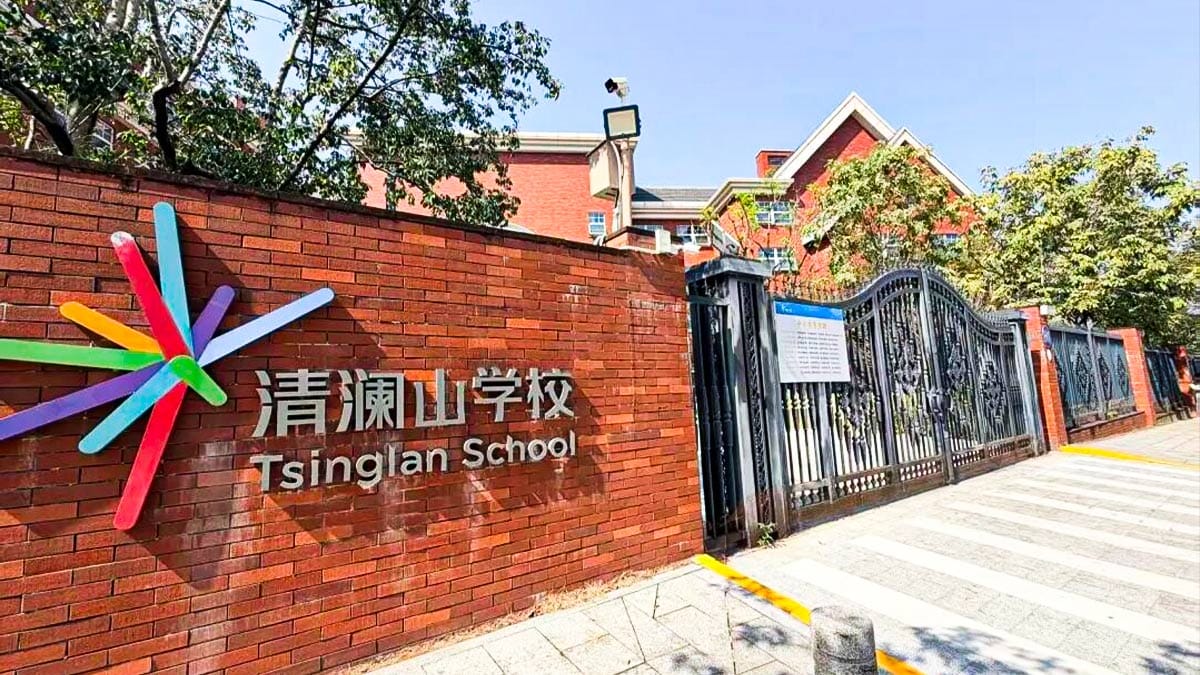
The legal position is on record with the Dongguan Education Bureau, and we checked it in the Bureau’s own published register of licensed private schools. The school’s registered name is 东莞市松山湖清澜山学校, the licence number is 教民144190030002850, the recorded start date is July 2017, and the registered operator is Huawei Training (Dongguan) Co., Ltd. (华为培训(东莞)有限公司). The kindergarten holds its own separate licence as 东莞市松山湖清澜山幼儿园.
So it is not accurate to call Tsinglan “a Huawei school.” It is a private school, open to applications, that Huawei financed and that an academic partner operates. The main campus sits in Songshan Lake, close to Huawei’s own campus in the same district.
The principal is Li Wenping (李文平). Before Tsinglan she was executive principal of the International Department at Tsinghua High School. The school describes roughly 20 years of work in Chinese education followed by 12 years in international education.
A number we have left out. You will see it stated elsewhere that Huawei invested RMB 500 million in the school. We could trace that figure to only one source, a 2020 article from a Tsinghua University department, and we could not open a working link to it. The school’s own website and the Dongguan Education Bureau publish no figure at all. We mention the claim only so you know why this guide does not treat it as a fact.
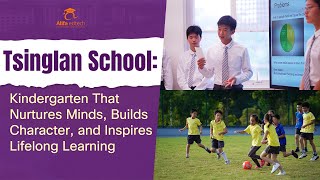
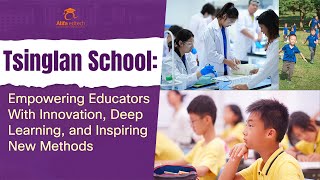
The Campus, Boarding Facilities, and Songshan Lake Location
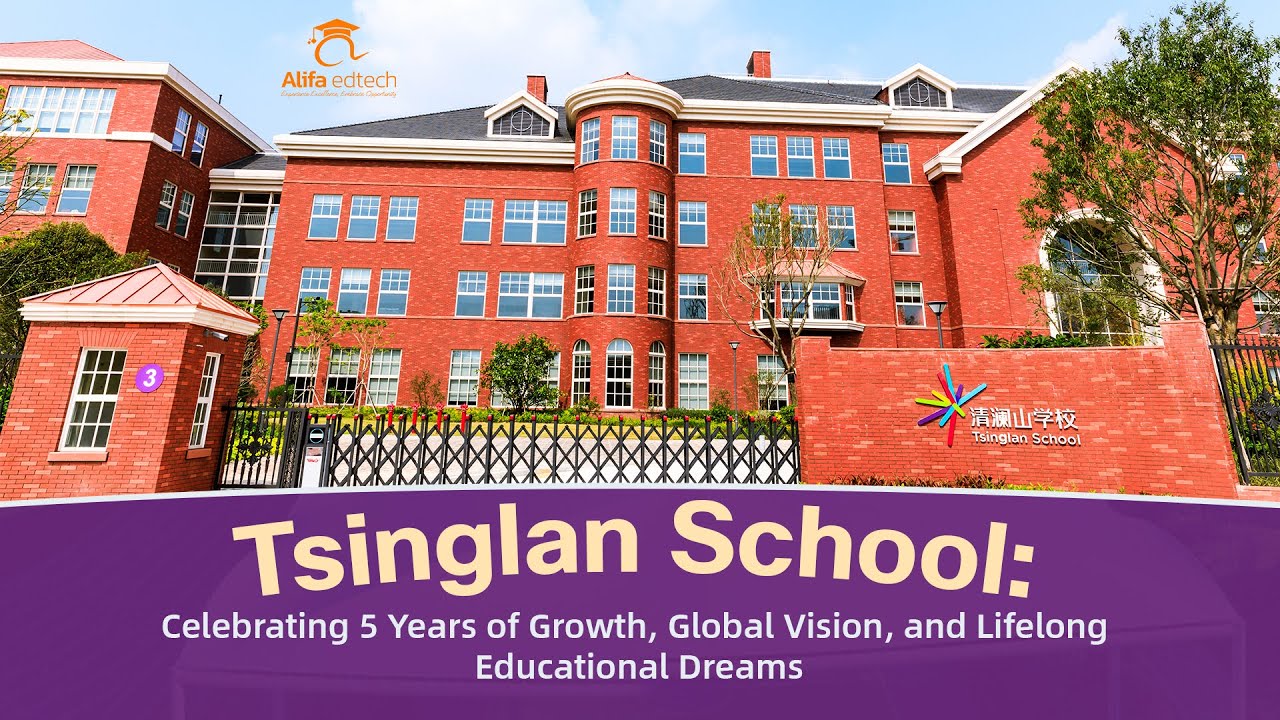
Tsinglan has two campuses in Songshan Lake. The main campus, for Grades 1 to 12, is at 8 Tainan Road. The kindergarten is a short distance away at the Huawei Southern Apartments on Industrial North Third Road (工业北三路). The school describes its grounds as close to 30 acres, which is about 120,000 square metres. It does not publish a separate land area for each campus.
Facilities
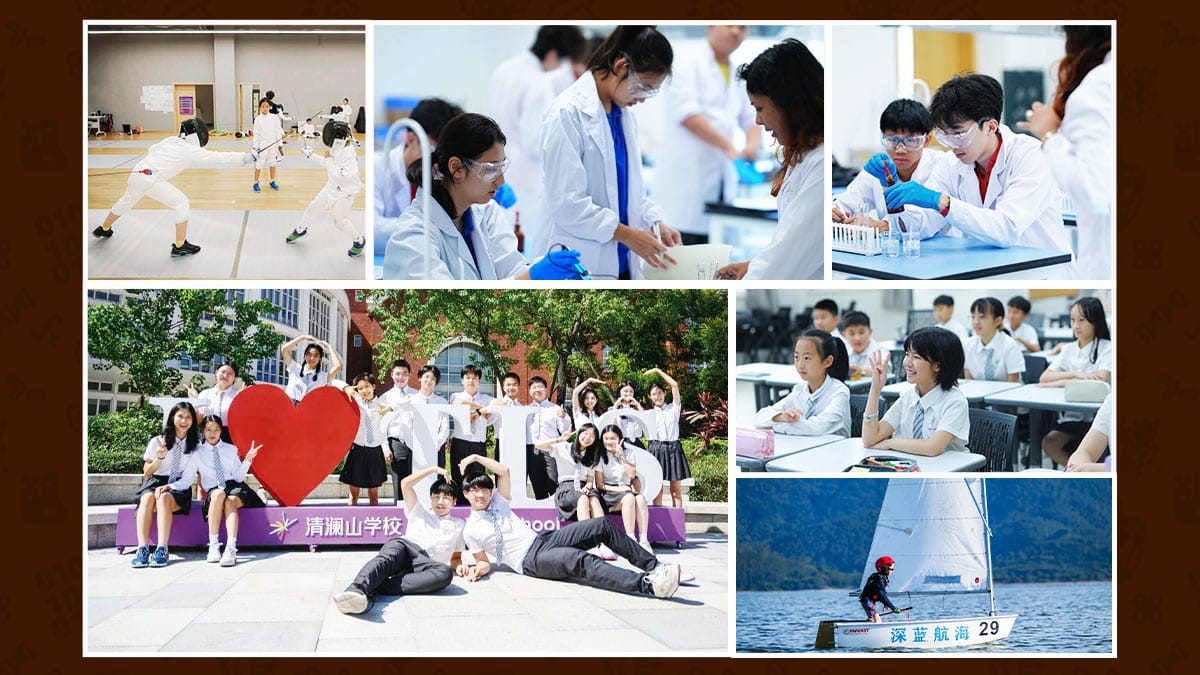
Sport: a fitness centre, a swimming pool, a fencing hall, an archery hall, two gymnasiums, four outdoor tennis courts, a football pitch and a 400-metre track.
Arts:
A 550-seat theatre
A black box theatre
Two Steinway grand pianos
Individual music practice rooms
Studios for 2D and 3D design, fashion and textiles, wood and mixed materials, calligraphy, metal, and clay and ceramics
Academic: A library and an advanced research laboratory for high school students.
One small honesty note: the school’s own pages give different counts for its music practice rooms, and the Chinese and English pages differ on whether one facility is a shooting range or an archery hall. We have followed the English pages.
Boarding at Tsinglan School
Boarding starts in Grade 6. The boarding centre uses a two-mentor system for each student. Rooms hold a maximum of three students and have their own bathroom, air conditioning for both heating and cooling, a fresh-air system and filtered drinking water. Laundry equipment and laundry service are free, and each floor has a shared social space. A health centre provides medical care 24 hours a day. In the high school there are five boarding houses and close to 20 boarding clubs.
The school does not publish boarding fees.
What Songshan Lake Is Like to Live In
Songshan Lake is a national high-tech zone in the middle of Dongguan, bordering the Guangming district of Shenzhen. It is the centre of an electronics industry cluster led by Huawei, and since 2020 it has been part of a national science centre pilot zone with Shenzhen.
For families moving in, the school’s own careers pages are useful: most two- and three-bedroom apartments run roughly RMB 3,000 to 3,500 a month, about USD 420 to 490, and the closest option is directly across the street from the main campus. The school also notes that international medical facilities in Shenzhen and Guangzhou are within about an hour, and that many of them bill insurers directly.
The Five Tracks, Explained Plainly
This is the part families find most confusing, and it is confusing in Chinese too. Tsinglan does not run one single programme. It runs five, and two of them overlap in the middle school years. The difference that matters is where each track leads.
| Track | Grades | Main Curriculum | Where It Leads |
|---|---|---|---|
| Kindergarten | PreK–K (2.5–6) | Montessori Education approach with English themes | Tsinglan primary school |
| Primary | G1–G5 | Chinese national curriculum, with English taught at different levels | Either middle school track |
| International middle | G6–G8 | National curriculum, built to feed the international high school | Tsinglan international high school |
| Bilingual middle | G6–G9 | National curriculum aimed at the zhongkao, plus extra English | Chinese high schools or Tsinglan international high school |
| International high | G9–G12 | IGCSE, then AP or A-Level | Universities outside mainland China |
Zhongkao is the Chinese high school entrance examination, taken at the end of Grade 9.
The two middle school tracks are the real decision point. International middle school runs Grades 6 to 8 and has no zhongkao route. To join the international high school, students must complete a project in Grade 8. They need to do at least three months of research. They also write a paper and give a defence.
Bilingual middle school runs Grades 6 to 9 and keeps both doors open. It follows the Chinese national curriculum for the zhongkao. However, it adds 224 English lessons each year. The school reports that around 70% of its graduates build linguistic competency to CEFR level B1 or B2. At the end of Grade 8, families choose between two options. They can stay for Grade 9 and take the zhongkao for a Chinese high school. Or, they can apply to Tsinglan’s international high school.
青云项目 — the Qingyun Project
This is an A-Level entry route into Grade 9 for strong students who have just taken the zhongkao. Applicants qualify by meeting any one of three published standards: a zhongkao total of 90% or more of the local maximum; a single score of 95% or more in mathematics, physics or chemistry; or 95% or more in English, or equivalent proof of English ability.
Once admitted, students follow a structure the school calls seven ladders. It includes IELTS teaching built into English lessons, a summer bridging camp before Grade 9, a research mentor programme, and one-to-one support from a writing centre.
澜创班 — the Lanchuang Class
This is an innovation class inside the bilingual middle school, opened for Grade 6 from the 2025–2026 school year. Mathematics and informatics are the core subjects, taught with competition-style problems and project work, and it prepares students for contests including the national high school mathematics league, mathematics olympiads, CSP-J/S, NOIP and the Lanqiao Cup.
Its most unusual feature is who leads it: Bai Fengshan, a mathematics professor at Tsinghua University, is described as guiding the class throughout, including course design, selecting and training teachers, and teaching directly.
AP or A-Level: How to Choose
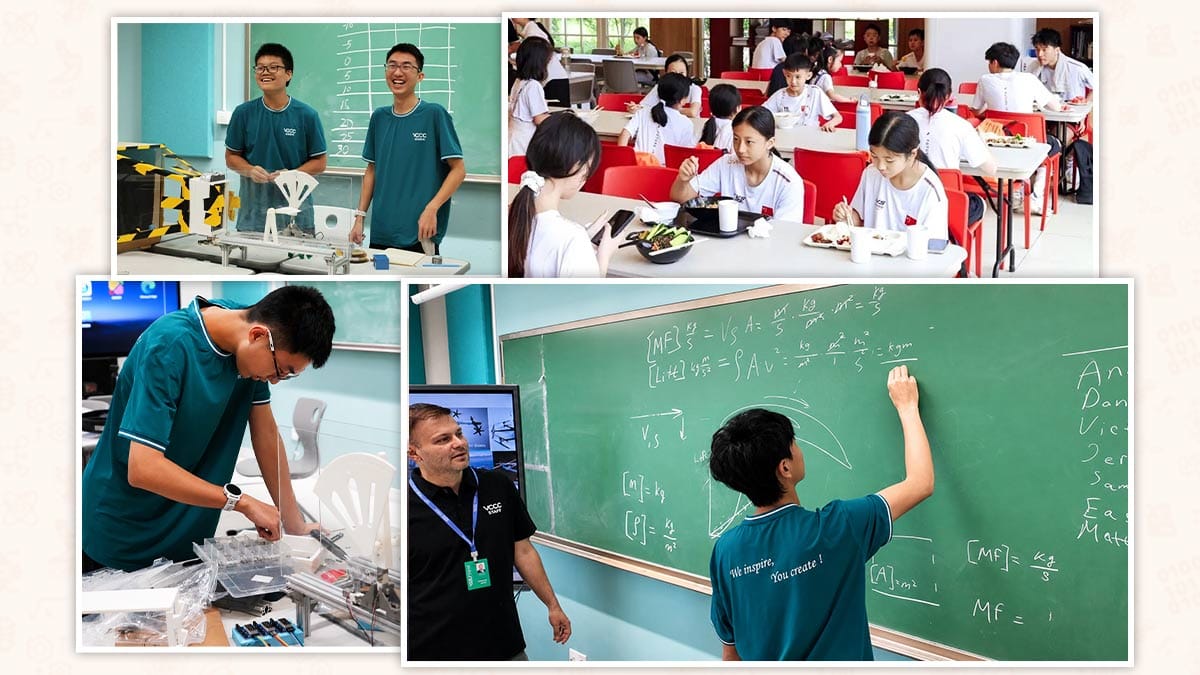
In Grades 9 and 10 all international high school students take IGCSE courses. IGCSE stands for International General Certificate of Secondary Education, a British-style course for roughly ages 14 to 16. It is used here as a broad base so students can test what they are good at before specialising.
After Grade 10, students choose AP or A-Level based on where they want to apply.
Choose AP if…
AP means Advanced Placement, a set of American college-level courses and exams run by the College Board. Students take AP subjects alongside a full high school programme, so their application rests on grades across four years, teacher references, activities and essays, as well as AP results.
This suits families aiming mainly at the United States, or who want to keep a wide range of countries open. Tsinglan is authorised by the College Board under school code 694130, and its current list of approved AP subjects can be checked on the College Board’s public AP Course Ledger using that code.
Choose A-Level if…
A-Level is the British route. Students study a small number of subjects — usually three or four — in real depth, and final exam grades carry most of the weight in an application.
This is for families aiming at the UK, Hong Kong, Singapore, Australia, or Canada. It is also for students who know their strengths and prefer to be assessed by exams. The Qingyun Project described above is an A-Level route. Tsinglan works with Cambridge International and lists centre number CX048 on its own school profile.
The Tsinglan School Tennis Academy (TSTA)
Tsinglan runs two athletic academies, and this is where the school is genuinely unusual. Its own athletics page states it plainly: “清澜山还有两个关于体育的特色学院:网球学院和击剑学院。这两个学院有单独的招生流程” — the school has two specialist athletic academies, tennis and fencing, and both use a separate admissions process.
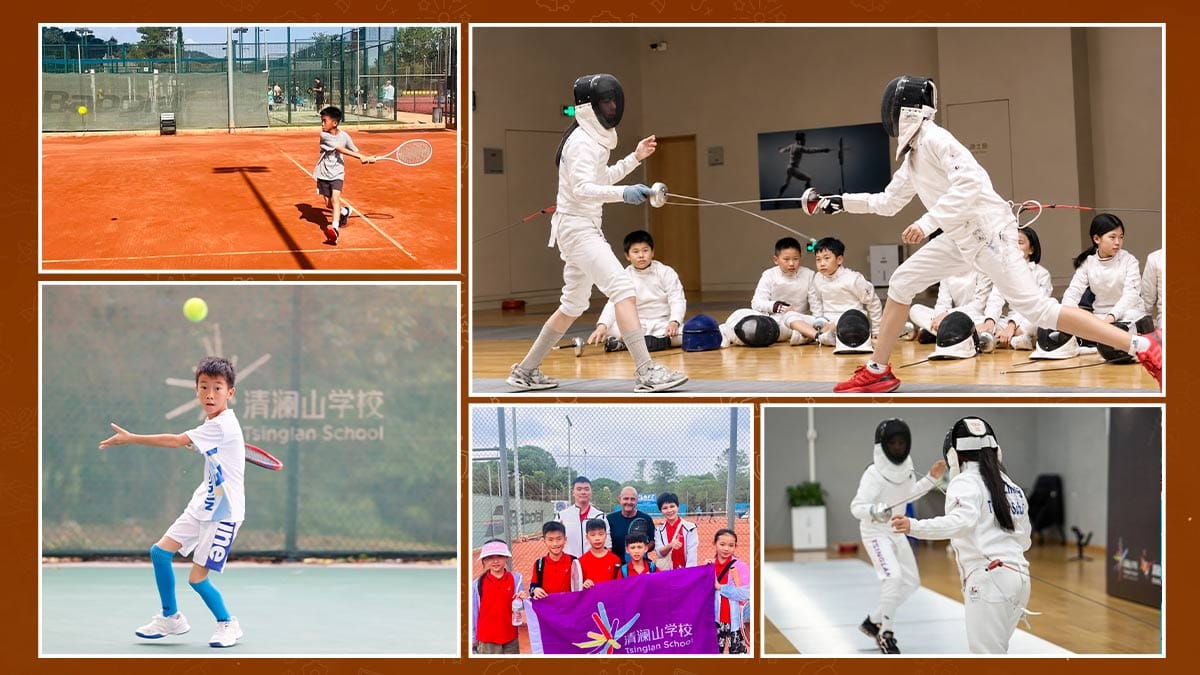
The Tsinglan School Tennis Academy, or TSTA, was founded in 2019. For outside validation of the school’s sports focus: KingLead, a Chinese ranking body, placed Tsinglan first in China on its 2026 sports characteristic ranking.
The Detail That Matters Most
According to the school’s own 2025–2026 School Profile, students admitted to the Tennis Academy, the Art Academy or the Symphony Orchestra can graduate on a reduced 16-credit requirement. And tennis players may miss 20% to 50% of the school year for competition, as long as they complete their coursework and assessments.
For a family with a serious junior player, that single policy is more important than any facility list. It means competition travel is built into the academic rules, not fought over case by case.
How the Training Is Structured
The academy uses a Spanish pyramid training system covering physical conditioning, technique, tactics and psychology. It also draws on the Canadian LTAD framework — Long Term Athlete Development, a model for developing players by stage rather than by age group — and on the training approach of American college teams through the ITA, the Intercollegiate Tennis Association. Each student has an OFE file: observing, feedback and evaluation.
Since 2020 the academy has worked with UTR, the Universal Tennis Rating system. The school notes why this matters: UTR is one of the main measures American university coaches use when recruiting tennis players. There is also a long-running link with BTT Tennis Academy in Barcelona, including a summer training trip there in 2024.
Coaches
The published coaching staff is deeper than most school programmes. It includes Chloe Xie (谢舒瑾), a Beijing Sport University graduate with around 15 years of coaching experience, a former professional player, an assistant tutor on ITF Level 1 coaching courses run with the Chinese Tennis Association, certified by Tennis Canada, and an international white badge referee who has officiated at the 2008 Beijing Olympics and Wimbledon qualifying. Others include James Han (韩璞), a former American college player and PTR-certified coach; Zhu Zhicheng (朱志成), who led the 2024 Barcelona trip; and Rasa Radovan Misic, a Serbian coach registered with the ITF who joined in 2020. The academy also has dedicated physical trainers.
Yan Zi (晏紫), whom the school describes as a leading Chinese tennis player, was appointed as an academy advisor.
Results the School Publishes
The school lists the following results on its athletics pages. It does not give dates for them, so read them as a record of what the programme has achieved rather than as recent news.
Champion, boys’ 14-and-under singles, European Junior Tour (Villena, Spain)
Champion, under-16 singles, Junior Tour (Marca, Spain)
Runner-up, doubles, Hong Kong International Junior ITF J30
Runner-up, men’s doubles, ITF J30 Junior Tour (Alicante, Spain)
Champion, under-14 boys’ singles, China Middle School Tennis League Finals
Champion, under-14 boys’ singles, China Middle School Tennis League, second stop
What the Tennis Academy Actually Costs
The academy fee is not published anywhere, so we asked the Tennis Academy directly in August 2026. The answer was that there is no single price. Fees depend on whether your child trains in a group or one to one, and the coaching team assesses each student’s level and skills first before quoting. Whatever is agreed is charged on top of standard tuition.
That means two things for you. Budget for the academy as a separate line item, not as part of tuition. And expect the number only after an assessment, so ask early if the total cost will decide whether you apply.
Four outdoor courts are confirmed. The school does not publish the court surface, whether the courts are floodlit, whether indoor courts exist, weekly training hours, or how many students are in the academy. It also does not publish a list of graduates recruited to American college teams. If your decision depends on any of those, ask before you apply.
Fencing: The Academy and the New Dual-Excellence Programme
The Tsinglan Fencing Academy offers fencing to students in all grades, using what the school calls an East-West teaching system, with lessons at one-to-one, one-to-four and one-to-six ratios. There is a dedicated indoor fencing hall, and the school says its team competes both in China and internationally.
The coaching credentials are strong. The head coach is Marc Bigorra, formerly head coach of the French Youth Fencing Team and of the Zhejiang provincial team. Zhu Shengcao (朱圣操) was previously head coach of the Liaoning provincial youth fencing team. Sun Yuyue (孙雨悦) fenced for the Shandong provincial team and later worked as a technical and conditioning coach in Weifang.
The academy page itself is thin: it gives no founding year, no weapon list and no competition results, and it displays the Chinese Fencing Association logo without explaining the relationship, so we will not characterise it.
The Academic and Fencing Dual-Excellence Programme
In March 2026 the school announced a new fencing pathway, 学术×击剑双优项目, which starts in autumn 2026. It is the most detailed sports programme Tsinglan publishes, and for a family with a competitive young fencer it may be the single strongest reason to look at this school.
Dual-excellence programme: the published details
| Who it is for | Students in China and overseas, aged 9 and above |
| Weapon | Épée first. Foil and sabre are planned as the programme grows |
| Training | Three hours a day, Monday to Friday, in the school’s own fencing hall |
| Timetable | The school uses a “one student, one timetable” approach so training fits around lessons |
| Entry requirements | A good academic record, existing formal fencing training, and passing the school’s entrance assessment. Provincial-level competition experience is preferred |
| Fees | Charged separately from tuition. Private lessons, competition entry fees and travel are billed as they occur |
| How to apply | Tick 「击剑x学术双优项目」 on the application form for your child’s division |
Two exit routes are stated. The first uses fencing to strengthen a university application to the United States, United Kingdom, Canada or Hong Kong. The second is athletic recruitment: American NCAA college teams, or top universities in Hong Kong and Macau on a sports pathway. NCAA stands for National Collegiate Athletic Association, the body that governs American university sport.
The Coaching Roster
The technical director is Kang Yan (康雁), a former China national team coach and head coach of the Beijing and Guangdong teams. The resident head coach is Steven Grams of the United States, a former US national team member and former NCAA starter with a psychology degree from New York University.
Beyond the daily staff, the school lists a visiting master-class roster assembled with its partner, Yuanjian. It includes the head fencing coaches of Princeton, Yale and the University of Pennsylvania (Zoltan Dudas, Marat Israelian and Andy Ma), Gennady Tyshler, chair of the coaching committee at the FIE — the international fencing federation — along with Luan Jujie (栾菊杰), Asia’s first Olympic fencing gold medallist, Zhao Gang, head épée coach of the Chinese national team, Olympic champion Li Na, and three-time world champion Sergei Golubitsky.
Three Ivy League head fencing coaches on one visiting roster is unusual for a school programme, and it aligns directly with the stated NCAA recruitment route.
One honest caveat: this programme begins in autumn 2026, so it has no track record yet. Everything above is what the school has published about its design, not results it has produced. Ask what the fencing fee actually is, since the figure is not published.
If you are weighing sports pathways more broadly, we cover swimming programmes and basketball schools in China in separate guides.
Tsinglan School University Results, 2023 to 2026
Tsinglan’s first cohort graduated in 2023, so its record is short. It is also growing quickly: 2026 was its largest cohort, and its first with offers from Stanford and the University of Pennsylvania. One point to understand before reading any of these numbers: these are offers, not students. One student can hold ten offers. The school publishes offer counts, not final enrolment figures.
| Cohort | Graduates | Offers | Notes |
|---|---|---|---|
| 2023 (first) | 32 | 180+ | Included Johns Hopkins, Washington University in St. Louis, USC, Imperial College London and UCL |
| 2024 (second) | 64 | 363 | About RMB 14.2 million in scholarships. 33 offers from US top-30 universities |
| 2025 (third) | 60 (43 AP, 17 A-Level) | 425 | Full breakdown below. 2 Oxford and 2 Cambridge offers confirmed. |
| 2026 (fourth) | 93 | 532 | As of 19 April 2026. First ever offers from Stanford and the University of Pennsylvania |
Sources: 2025 cohort figures from the school’s official WeChat account, published 10 June 2025. Oxford and Cambridge offers verified in separate announcements. 2023, 2024 and 2026 figures are school-reported without individual source links.
For the class of 2025, the school reported that 84.8% of graduates received an offer from a US top-30 university or liberal arts college, a UK top-5, a Hong Kong top-3, Canada’s top-ranked university, an Australian top-3, or a US top-3 art school. It put the figure at 98% when the range widens to US top-50 and UK top-10.
Where the Class of 2025 Was Admitted
| Region | Offers |
|---|---|
| United Kingdom | UCL 14, Oxford 2, Cambridge 2, Imperial College London 2, LSE 1 |
| United States | UCLA 5, Berkeley 5, Washington University in St. Louis 3, Northwestern 1, Cornell 1, Dartmouth 1, Vanderbilt 1, Carnegie Mellon 1, Michigan 1, Williams 1, Swarthmore 1, Claremont McKenna 1, Harvey Mudd 1, Wesleyan 1 |
| Hong Kong | HKUST 14, HKU 10, CUHK 9, City University 3 |
| Canada and Australia | Toronto 24, UBC 3, McGill 1, Sydney 5, Melbourne 3, ANU 1 |
| Art and design | Pratt 4, RISD 3, Parsons 3, School of Visual Arts 2, School of the Art Institute of Chicago 2, UAL 1 |
| Elsewhere | NTU Singapore 1, Waseda 1, Amsterdam 1, EHL Lausanne 1 |
Where the Class of 2026 Was Admitted
The class of 2026 is the largest so far, with 93 graduates. As of 19 April 2026 they held 532 offers. Two results stand out as firsts for the school: Stanford University and the University of Pennsylvania. The school describes this as its second consecutive year of both Oxbridge and Ivy League success.
United States. Twenty-four offers came from universities ranked in the American top 20, 33 from those ranked 21 to 30, and 162 from those ranked 31 to 50. UC Berkeley and UCLA each made 6 offers, and the University of Southern California made 8. Among liberal arts colleges, students received 5 offers from top-20 institutions, including Swarthmore, Claremont McKenna and Carleton.
United Kingdom. Oxford made 3 offers and Cambridge 1. Imperial College London made 9 and UCL 23. The school puts its total from the G5 group — Britain’s most selective universities — at 36, which is those four figures added together. King’s College London made a further 8 offers, and a further 53 offers came from other UK top-10 universities.
Hong Kong and later additions. The April summary covered the United States and United Kingdom only. By 28 May 2026 the school’s homepage was also listing 20 offers from the University of Hong Kong, 18 from HKUST, 6 from City University of Hong Kong, 2 from CUHK and 1 from Hong Kong Polytechnic, along with 14 offers from UC San Diego, 5 from North Carolina at Chapel Hill and 2 each from Rice and Virginia.
School-reported figures. 532-offer figure published by the school as of 19 April 2026; May figures from the school’s own homepage. No individual WeChat source link available for the 2026 cohort.
The Final 2026 Picture
At the graduation ceremony on 12 June 2026, the school reported that 85.8% of the class received an offer from a US top-30 or global top-30 university, a Hong Kong top-3, a UK top-5, or a top-5 art school. It put the figure at 96.4% for a US top-40 or global top-50, a UK top-10, or a top-10 art school.
The principal named three results as firsts for the school: Stanford, the University of Pennsylvania and Tsinghua University. That last one is worth noticing, because it is a domestic Chinese university rather than an overseas one, and it shows the domestic route is not theoretical. The school also described offers from all five G5 universities in Britain.
How to read these figures. The 532 total is the school’s own count as of 19 April 2026, published while offers were still arriving, so it is not a final figure. Counts for individual universities were also revised as the year went on: Imperial College London appears as 9 offers in the April summary and 8 on the school’s homepage in late May. We give both rather than quietly picking one. Sources: the school’s April admissions summary and its graduation report of 22 June 2026.
Tsinglan School Fees and Scholarships
Tsinglan School’s admissions office confirmed the current fee schedule directly to us via WeChat. We have organised those figures below so families can clearly compare tuition, boarding and estimated annual costs.
Tuition
Tuition covers school and miscellaneous fees, course fees, facilities and consumables, and some electives and activities. It does not cover boarding, meals, uniform or the school bus.
| Division | Per Year (RMB) | Per Semester (RMB) | Per Year (Approx USD) |
|---|---|---|---|
| Kindergarten, Pre-K to K | ¥189,604 | ¥94,802 | about US$26,300 |
| Primary, G1–G5 | ¥205,044 | ¥102,522 | about US$28,500 |
| International Middle, G6–G8 | ¥228,926 | ¥114,463 | about US$31,800 |
| Bilingual Middle, G6–G9 | ¥214,174 | ¥107,087 | about US$29,700 |
| International High, G9–G12 | ¥264,748 | ¥132,374 | about US$36,800 |
Boarding and Meals
Boarding is available from Grade 6 and is billed per semester. For the international high school, the list price is RMB 40,000 a semester. The school applies a RMB 10,000 boarding scholarship, so families pay RMB 30,000.
| Division | Per Semester (RMB) | Per Year (RMB) | Per Year (Approx USD) |
|---|---|---|---|
| International Middle, G6–G8 | ¥40,000 | ¥80,000 | about US$11,100 |
| Bilingual Middle, G6–G9 | ¥20,000 | ¥40,000 | about US$5,600 |
| International High, G9–G12 | ¥30,000 | ¥60,000 | about US$8,300 |
International middle boarding includes meals, living services and the boarding programme. The international high school figure shown above is after the RMB 10,000 boarding scholarship.
Day students pay for meals by the number of days actually attended, at roughly RMB 50 a day for three meals plus afternoon tea. If your child boards, meals are normally already included in the boarding fee.
What a Full Year Adds Up To
Adding tuition and boarding gives a realistic annual figure before the smaller extras:
| Boarding Student | Per Year (RMB) | Per Year (Approx USD) |
|---|---|---|
| Bilingual Middle, G6–G9 | ¥254,174 | about US$35,300 |
| International Middle, G6–G8 | ¥308,926 | about US$42,900 |
| International High, G9–G12 | ¥324,748 | about US$45,100 |
Currency note: US dollar figures are approximate, converted at about RMB 7.2 to US$1, and will move with the exchange rate.
Two warnings about fee figures you may see elsewhere. First, a number of agency websites still quote the 2022–2023 prices, which were lower: about RMB 184,000 for kindergarten, RMB 199,000 for primary, RMB 222,000 for international middle, RMB 208,000 for bilingual middle and RMB 257,000 for high school. If a guide shows those numbers, it is out of date.
Second, our figures were confirmed to us in August 2026 and fees are reviewed annually. Before you sign anything, ask admissions for the current Fee Confirmation Sheet (费用确认单), which is the document that actually governs what you pay.
The school also publishes its scholarship scheme in detail, and that is worth understanding before you apply.
The Tsinglan Scholarship
The school describes the scheme as open to all outstanding applicants. Current Tsinglan students who meet the criteria are welcome to apply as well. Awards are given as a credit against each academic year’s tuition.
There are five named types:
High School Scholarship
Bilingual School Scholarship
High School Entrance Examination Scholarship — for students arriving through the zhongkao
Arts Scholarship
Sports Scholarship
The school states that both academic achievement and talent qualify, and it names music, art, sports and technology. So a strong young tennis player or fencer applies through the Sports Scholarship rather than through a separate programme award.
How much they are worth
Awards run from 10% to 100% of tuition. The highest award covers 100% of tuition plus accommodation, including meals. Applications are assessed by the school’s Scholarship Committee, which also interprets the rules.
What this does and does not tell you
The awards are expressed as percentages of tuition, not as sums of money. So a full award is extremely valuable, but the scheme cannot be used to work out what tuition actually is. You still have to ask the school for the fee schedule. Be wary of any guide that claims to know Tsinglan’s fees — we could not find them published anywhere official.
Costs to Ask About
Because nothing is published, ask the admissions office for all of these in writing before you commit: annual tuition for your child’s specific grade, the application and assessment fees, any deposit and whether it is refundable, meals, uniform, school bus, textbooks and materials, insurance, AP or A-Level examination fees, boarding, and any extra charge for the tennis or fencing academies. The academies’ training fees in particular are not published anywhere; see what we learned about the Tennis Academy fee above.
Contact admissions
Teachers and Accreditation
The 2025–2026 School Profile gives about 2,022 students, 527 of them in the high school, and 121 international teachers. Average class size is 20 to 24, although the school’s careers pages give the homeroom range as 20 to 23. Of the teaching staff, 12% hold doctorates, 90% hold a master’s degree or higher, and more than 85% have studied or worked outside China. Staff come from around 20 countries, though the exact figure the school quotes changes from year to year.
About That 1:5 Ratio
The school advertises a student-to-staff ratio of 1:5, and this is worth explaining because it is easy to misread.
In November 2024 the school published both halves of the calculation in one sentence: about 1,930 students and about 430 staff. That works out at roughly 1:4.5, which fits the claim. But it only works if the denominator is every employee — teachers, administrators, boarding staff, catering and support — rather than classroom teachers alone. The school does not publish a separate teaching headcount.
So 1:5 is accurate as the school states it. It is a student-to-staff ratio, not a class ratio. The number that describes your child’s classroom is the class size: 20 to 24.
Accreditation and Codes
| Body | Status | Reference |
|---|---|---|
| WASC (Western Association of Schools and Colleges) | Accredited, 2024–2029 | PreK–12, code 62 42238 999. Confirmed in the WASC public school directory |
| Cognia | Accredited since June 2021 | Listed in the Cognia registry. The register shows grades up to Grade 10 |
| College Board (AP) | Authorised | School code 694130, listed on the AP Course Ledger |
| Cambridge International | Works with Cambridge | Centre CX048, from the school’s own profile. We could not confirm this in Cambridge’s own database |
| NESSIC | Member | Welcomed as a new member in July 2026. Listed in the NESSIC school directory. |
Cognia accreditation came first, in 2021, and WASC followed in 2024. Some sources describe Tsinglan as a UCAS member. We could not verify that with UCAS, so we have left it out.
External Rankings (KingLead 2026)
KingLead (京领), a Chinese school ranking body, rates Tsinglan AAAAA and places it as follows on its 2026 lists:
| Category | Placing |
|---|---|
| Sports characteristic | 1st in China |
| Humanities | 4th |
| Arts | 7th |
| Research | 93rd |
| Innovation competitiveness (private schools) | 4th |
| Monthly rating (July 2026) | 2nd |
| American curriculum route | 18th |
| British curriculum route | 16th |
| Hong Kong route | 13th |
We include the weaker research placing alongside the strong ones so you can see the full picture rather than a selection.
Tsinglan School Admissions: What Is Published and What You Must Ask
As of August 2026, applications for the 2026–2027 school year are open. Entry is possible at kindergarten, Grades 1 to 5, either middle school track, and Grades 9 to 12.
Every applicant must pass the school’s entrance assessment (入学评估). Beyond that sentence, Tsinglan publishes very little, and this is the most significant gap for overseas families. Not published anywhere official: which subjects are tested, the test format, the language of the test, how long it takes, the interview structure, application deadlines, assessment dates, how many places exist, which documents you need, or the waitlist policy.
Detailed descriptions of the entrance test do circulate on agency websites. We have not used them, and we would treat them with caution.
Two Questions Overseas Families Should Ask First
Nationality and household registration
The school reports students from more than 10 nationalities, but it does not publish a statement about nationality or hukou — the Chinese household registration system — for each track.
This matters because the bilingual middle school is built around the zhongkao, so it is designed for local families. Ask which specific tracks are open to a child holding a foreign passport before you apply anywhere else in the process.
Language support
This is the clearest gap we found. Tsinglan publishes no Chinese-as-a-second-language programme for students who arrive without Chinese. What it does have is English support, which is a different thing: a Standardized Testing Academy founded in 2019 that teaches TOEFL and IELTS in small tiered groups, a summer bridging camp for Qingyun students, English immersion in kindergarten, and 224 English lessons a year in the bilingual track.
Preparing for an English exam is not the same as supporting a child who cannot yet follow lessons. If your child has little or no Chinese, ask exactly what daily support exists.
How Tsinglan Compares in the Greater Bay Area
Tsinglan competes with a strong group of schools in Shenzhen and Guangzhou, both roughly an hour away.
| School | City | Main Offer |
|---|---|---|
| Shenzhen College of International Education (SCIE) | Shenzhen | IGCSE, A-Level and AP, plus an arts division |
| Vanke Meisha Academy | Shenzhen | AP and Post-AP with 25 AP courses, plus IGCSE and A-Level |
| Merchiston International School Shenzhen | Shenzhen | English national curriculum through to A-Level, two campuses |
| Huitong School Studios (formerly Whittle) | Shenzhen | Its own East-West curriculum with 200+ studio courses |
| Canadian Foreign Language School Cambridgeshire (加拿达外国语学校) | Guangzhou (Panyu) | Chinese national curriculum with IB PYP and MYP, and a dual international / zhongkao track |
| Utahloy International School Guangzhou (UISG) | Guangzhou | Full IB continuum plus a DSE programme |
What separates Tsinglan from that list is a combination rather than a single feature: one continuous PreK-to-Grade-12 pathway; both AP and A-Level rather than one or the other; a genuine domestic zhongkao route running alongside the international one; two athletic academies with their own admissions; and the Huawei and Tsinghua High School origin. The trade-off is location. Dongguan has fewer established international-family services than central Shenzhen or Guangzhou.
Getting to Tsinglan School
Tsinglan School Dongguan is more accessible than its address suggests. Dongguan Metro Line 1 opened in November 2025, and the nearest station, Songshan Lake, is about 1.3 kilometres from the campus — roughly an 18-minute walk.
| From | By Car | Distance |
|---|---|---|
| Central Shenzhen (Futian) | About 1 hour | 62 km |
| Shenzhen Bao’an International Airport | About 1 hour | 59 km |
| Central Guangzhou (Tianhe) | About 1 hour 15 minutes | 79 km |
| Guangzhou Baiyun International Airport | About 1 hour 25 minutes | 109 km |
| Humen high-speed rail station | About 33 minutes | 27 km |
| Songshan Lake North intercity station | About 5 minutes | 1.4 km |
From Hong Kong, the fastest route is high-speed rail from West Kowloon to Humen, which takes about 48 minutes, then about 33 minutes by road. Allow around two hours door to door. Driving times above are map estimates and will vary with traffic.
The school does not publish school bus routes. If you will depend on one, confirm the route and the cost with admissions.
Frequently Asked Questions
Alifa Education Services
Thinking about Tsinglan for your child?
We help international families find schools in China and provide guardianship support when you arrive. We can tell you which Tsinglan track fits your child, what to ask before you apply, and how the visa and guardian paperwork works.
📅 Book a Free Consultation Today →Disclosure: Alifa Education Services is an independent education placement consultancy. We may earn a referral fee from partner schools when families enrol, at no extra cost to the family. Our recommendations are based on fit, not fee structure.


Member comments