

Introduction
Tennis education in China has experienced significant growth over the past decade. The sport now plays an important role in K-12 schools. Government support, rising interest in complete student development, and parents seeking global opportunities have all contributed to this growth. For many schools, tennis is more than recreation. It can lead to athletic scholarships, international competition experience, and personal growth.
Chinese K-12 schools approach tennis in three main ways. Public schools introduce tennis to large student groups. Bilingual private schools offer structured training while balancing academics. International schools run advanced programmes that prepare students for global pathways.
Top schools invest in modern facilities and trained coaches. Many use the Universal Tennis Rating (UTR) system. UTR provides a clear way to track progress. Universities worldwide recognise it and strengthen student athletic portfolios.
Choosing the right tennis-focused school can feel overwhelming. Alifa Education can guide you with personalized support. Book a free consultation today. What questions do you have about Tennis Lessons in Chinese K-12 schools?
Overview of Tennis Programs in Chinese K-12 Schools
Public Schools
Public schools began adding tennis through government initiatives starting in 2016. Cities like Wuhan, Beijing, and Shanghai added tennis to PE classes in many schools.
Public school tennis focuses on basic instruction. Students learn strokes and footwork during lessons. The emphasis is on participation and enjoyment rather than competition. Most students reach UTR scores of 3.0 to 6.0 by age 18.
Yet, public schools face limits. One coach may work with up to 20 students. Some coaches are part-time and may need more training. Court access is often limited to after-school hours. Still, some public schools have been successful. For example, Beijing No. 4 High School and Shanghai Gezhi High School have sent players to provincial teams. This shows how strong teaching can succeed, even with fewer resources.
Bilingual Private Schools
Bilingual private schools often position tennis as part of their identity. Schools such as YK Pao School blend classroom lessons with team and club activities. These schools balance strong academics with athletic development.
They maintain better coach-to-student ratios (often 1:15). Coaches usually hold solid professional qualifications. Students train through level-based instruction, focusing on technique, tactics, and match preparation. Many schools assist students with their schedules. This helps keep academics and athletics in balance.
Many schools have partnerships with Famous tennis clubs in Beijing, Shanghai, Guangzhou and Shenzhen, in big cities. Where they send their students to the club for further specialized developments. The club and school have an internal agreement. So the student enjoy strong academy and develop high skills in tennis
Tennis plays a role in Global university admissions like Harvard and Stanford. Students with higher UTR scores have better access to scholarship opportunities. Many bilingual schools partner with professional tennis clubs to help students build competitive profiles.
Average UTR scores in these schools go from 4.0 to 9.0. Top performers even hit over 10.0, making them competitive at the university level.
International Schools
International schools lead China’s tennis development. Schools such as Shanghai American School and Wellington College Shanghai offer professional-level programmes. Tennis is treated as a core part of student development.
These schools often have multiple indoor courts and sometimes clay courts. Facilities are available throughout the school day, not just after school. Coach ratios average 1:8, allowing more personalised training.
Many international schools use technology-based training tools. Systems like Hawk-Eye and PlaySight give real-time stroke feedback. Video review supports both technique and decision-making. This speeds up improvement and helps students train with clear goals.
Students compete in ATF and ITF youth tournaments, gaining experience in international competition. Many graduates have UTR scores of 8.0 to 12.0. This range makes them eligible for athletic scholarships. Schools also offer counselling and wellness support to help students balance pressure.
Top Schools with Exceptional Tennis Lessons
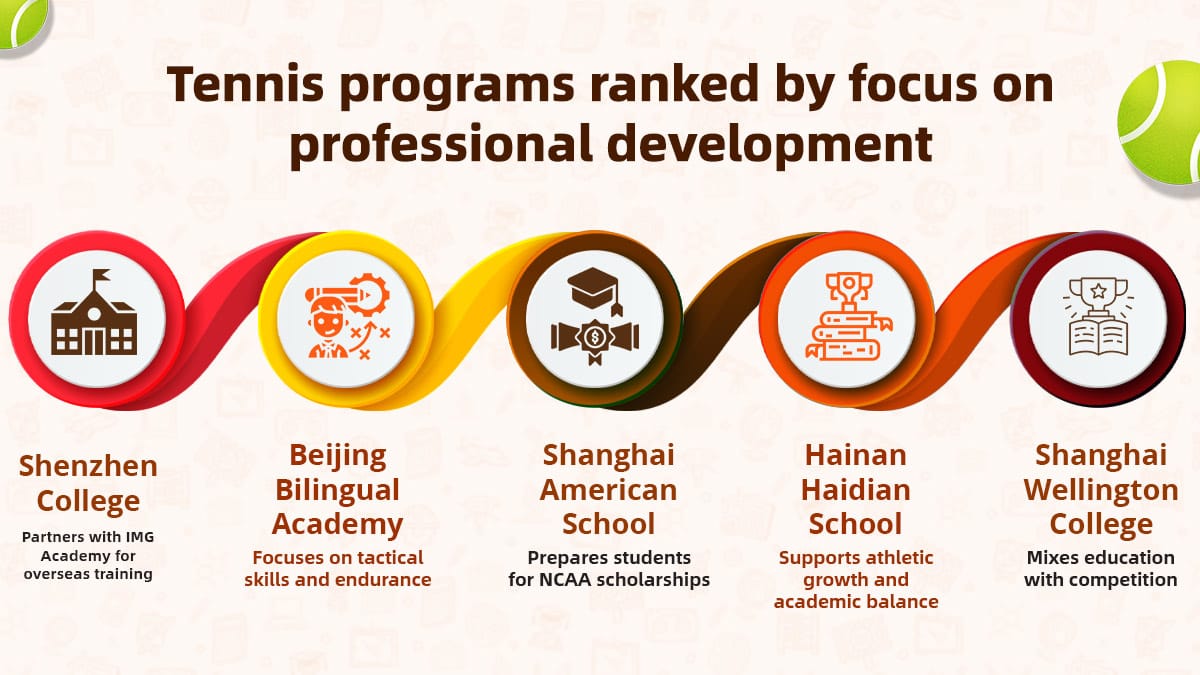
1. Shanghai American School (SAS)
This flagship programme ranks among Asia's top programmes. It has 12 indoor hard courts. These have professional lighting. Students enjoy structured junior programmes. These have clear learning objectives.
SAS students compete in the ATF Youth Championships. The tennis team has won many titles. Many graduates get athletic scholarships. These come from NCAA Division 1 schools. The average UTR for seniors reaches 9.5. The school provides academic advising. It provides learning strategies. These help balance athletics with studies.
To learn more about the services offered by Alifa Education, please visit our dedicated page. Whether you are a guardian, affiliated with an international or bilingual school in China, or a study abroad education agency, Alifa Edtech offers services tailored to your unique needs. Please visit our page to learn more about our offerings.
2. Beijing International Bilingual Academy
This school combines Chinese and international coaching methods. It partners with the National Tennis Centre. Students access ATP-level tennis facilities.
The school focuses on tactical skills. It uses instructional-based drills. It uses scenario training. Coaches receive ongoing professional development. They use methods to build endurance. They also build mental strength. They build emotional health. Students compete in both domestic and international competitions. The school offers tennis summer camp programmes. These happen during breaks. These use learning paths. They tailor the paths to skill levels.
3. Shenzhen College of International Education
This school operates in one of China's largest markets. It focuses on professional tennis paths. The programme partners with IMG Academy. This gives students overseas training. Students attend tennis summer camps. These are in Australia. They are in the United States.
Graduates achieve a ranking in the ITF Youth Top 200. Several students have pursued professional careers. The school has strong ties with university tennis programmes. These are worldwide. The athletic development framework uses learning analytics. This tracks progress. This supports the potential of players. It supports players at all levels.
4. Wellington College International Shanghai
Wellington College International Shanghai offers complete tennis facilities. The programme mixes physical education classes with competitive sports. Students get personal training plans. These factors depend on their UTR levels. They base it on skills through level assessment. The school uses digital tools. These are for performance tracking.
Looking for elite Chinese coaches for your child? We connect you with Olympic, national, and league-level coaches from China for high-performance competitive training.
In 2023, Wellington students won two gold medals. They competed at the ITF Hope Matches. This was for international competition. They also won one silver. This success pushed the school to first place. This was in China's rankings. The school provides support. This includes academic advising. This comes with athletic development. It uses modern learning strategies.
5.Hainan Haidian Foreign Language Shiyan School
Hainan Haidian Foreign Language Shiyan School has a strong tennis development environment supported by quality facilities and structured training. The school offers a mix of red clay, indoor, and covered courts, allowing year-round practice. Students benefit from a dual competition system that includes both national and international junior tournaments, giving them regular exposure to high-level match play. The program focuses on skill progression, match strategy, and physical conditioning. Partnerships with professional tennis organizations and certified coaches ensure that students receive training aligned with international standards. Overall, the school provides a pathway that supports both athletic growth and academic balance.
China Tennis Junior Pro Track Pathways
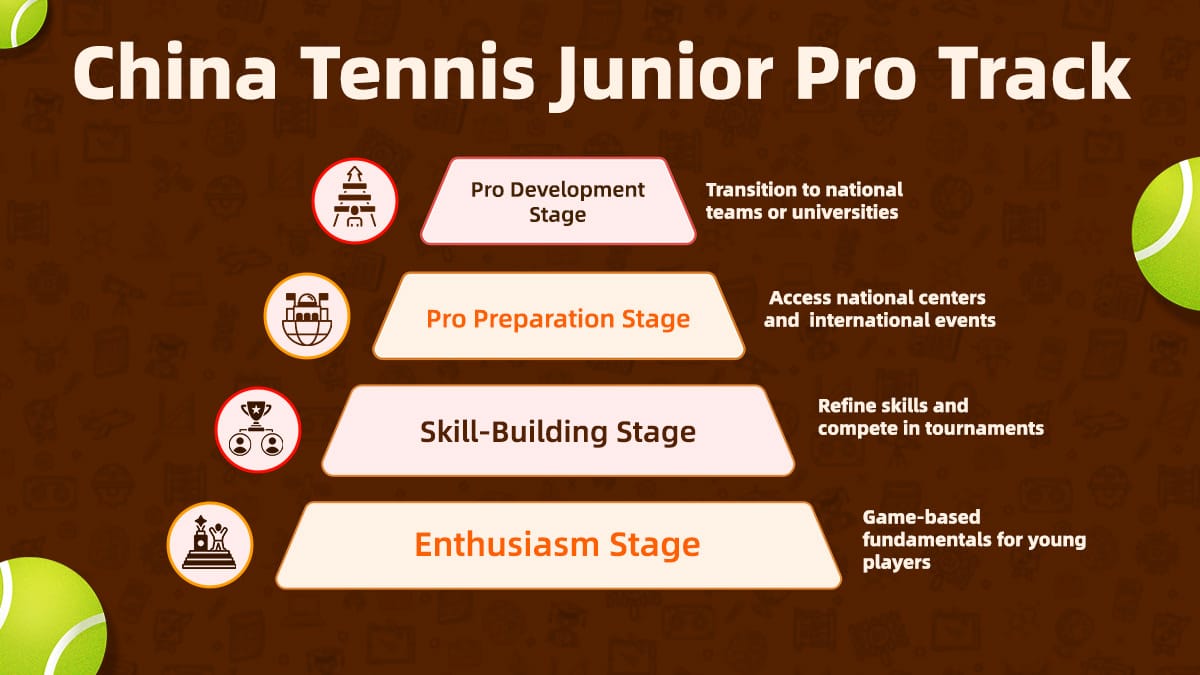
For students pursuing professional tennis development, Chinese schools offer structured progression through four distinct stages:
Enthusiasm Stage (Ages 6–10)
Young players are introduced to tennis through game-based fundamentals that prioritize enjoyment and basic skill acquisition. The focus is on developing a love for the sport through play-oriented activities.
Skill Building Stage (Ages 11–14)
Students enter "Youth Elite" development classes featuring 20+ hours of weekly training. Players refine technical skills and begin competing in domestic tournaments to build match experience and competitive foundations.
Pro Preparation Stage (Ages 15–18)
Advanced players gain access to national training centers and international competition opportunities. Students compete in ITF junior circuits and work toward qualifying for prestigious events such as Roland Garros junior tournaments.
Pro Development Stage (Ages 18+)
Elite athletes transition to national teams, professional circuits, or university tennis programs. Top performers may pursue professional careers while others leverage their athletic achievements for admission to leading universities like Tsinghua and Zhejiang University.
Facilities, training, and competitive opportunities.
Tennis Facilities
Top Chinese schools make many investments in athletic infrastructure. International schools average 1.2 courts per 1,000 students. Public schools have 0.3 courts. Court surfaces include hard courts. They include clay courts.
Indoor facilities have LED lighting systems. They also have drainage systems. Courts are usable within 30 minutes after rain. Temperature control enables training in all weather. These tennis facilities match professional centres. They create positive experiences for all players.
Support amenities include gyms. These have specialised equipment. Injury assessment tools reduce injury rates by 40%. Video analysis rooms use educational technology. These help students improve technical strokes. They improve swing patterns. This happens through feedback systems. These facilities create the best learning environment. Some schools also include wheelchair tennis facilities. These are for kids with disabilities.
Training Methods
Leading schools use an athletic development framework. Programs combine technical work. They combine physical conditioning. They also include mental training. This is for emotional health. This ensures complete development. It happens through clear learning objectives.
Technical training uses breakdown methods. It uses instructional-based drills. Coaches isolate specific elements first. Then they add footwork. High-speed cameras capture movements. Students get immediate feedback. This happens through AI-assisted learning systems. The emphasis on instruction ensures steady progress. This technological integration improves learning outcomes.
Want to put your brand in front of families, students, and education-focused readers? We're inviting select partners to advertise with us on our trusted blog.
Want to get featured? Click 'Learn more' and submit a story for us to include.
Physical training follows Tennis Performance Institute standards. Programs include exercises. These are for tennis-specific movements. Agility ladders improve court movement by 27%. Mental training uses mindfulness. It also uses pressure simulation. Students practise deciding points. This improves clutch performance. These methods improve win rates by 19%. The youth tennis strategy focuses on building the potential of players. This happens through differentiated teaching.
Schools run tennis summer camp programmes. These provide intensive training. This happens during school breaks. The camps use play-oriented games. They use instructional-based drills. Coaches lead these programmes. They have years of professional development. This creates positive experiences. It builds skills at the same time. Some camps now include online learning platforms. These are for theory and tactics.
Competition Opportunities
Schools organise internal competitions. These use level-based play. These have different levels. Elementary students enjoy mini-tennis formats. They enjoy play-oriented games. Junior high students compete in UTR-grouped tournaments. Seniors take part in professional-format matches.
External competition includes many paths. Domestic events feature the CTA Junior Tour. These include national championship qualifying events. International competition includes ATF Junior Tours. They also include ITF Youth tournaments.
Students with UTR scores above 7.0 qualify for U14 ATF events. Those reaching UTR 10.0 or more compete in Asian tournaments. Top performers with UTR 11.5 or more enter Grand Slam junior events. This complete pathway helps students build experiences. These are for tennis players at every level. Schools use learning analytics. These track tournament performances.
Challenges and Future Trends
Current Challenges
The tennis education system in China still lacks unified standards. Schools often rely on competition results for reputation, which can make comparison difficult. Access to coaching also varies. Public schools may lack dedicated or fully qualified coaches.
UTR data transparency could be improved. Without clear data, parents struggle to gauge progress. Better reporting systems would support more informed decisions.
Balancing training and academics is another challenge. Without emotional and academic support, students can experience stress or burnout.
Emerging Trends
- Smart court technology is becoming more common. AI systems analyse movement and predict performance.
- Regional UTR leagues are forming, offering more match opportunities.
- The Chinese Tennis Association plans a national coach certification programme to improve teaching quality.
- Online platforms now support theory lessons and tactical learning outside court time.
- Inclusive tennis, including wheelchair tennis, is experiencing gradual expansion in schools.
Conclusion.
Chinese K-12 schools have built strong junior programmes. These come in many models. International schools lead with professional tennis facilities. They lead with educational technology. They offer international competition exposure. Bilingual private schools offer specialised scholastic programming. They have strong teaching quality. Public schools provide accessible entry points. Students can discover the tennis game there. This happens through classroom instruction.
The best programmes share common elements. They have quality athletic infrastructure. They have coaches with strong educational qualifications. They have structured curricula. This happens through level-based play. They offer competitive opportunities. They offer school support. Schools using UTR systems produce students. Schools using learning analytics produce students. These students are ready for university tennis programmes. Many graduates secure athletic scholarships. These are at top universities.
Parents should consider many factors. They need to look at teaching quality and at tennis facilities. Competition schedules matter. School support matters too. This includes academic advising. It includes personal counselling. The use of educational technology matters. Feedback systems matter. The right programme depends on your child's skill level. It depends on their learning strategies. It depends on the tennis experience they seek.
Related Articles
 Emmanuel Usang
 Emmanuel Usang
 Emmanuel Usang


Member comments