

Introduction
Teaching English in China is a top choice for foreign educators today. Over 300 million students are learning English. Because of this, the need for qualified ESL teachers is very high. If you're looking to teach English in China, there are many options. Public schools and private training centers both offer great opportunities. The way forward is often clearer than you might think.
But what is the truth about teaching English in China? It is competitive, rewarding, and surprisingly accessible with the right credentials. Start with a TEFL, TESOL, or CELTA certification to immediately stand out in a crowded job market. These qualifications help you get into schools. They also open doors to international institutions and language centers across the country.
Teaching English in China salary figures are another reason this career path draws thousands of foreign educators annually. Pay ranges from ¥7,200 to over ¥27,500 per month depending on your school type, experience, and location. Beyond the paycheck, most contracts include housing support, health coverage, and flight allowances.
In this guide, you’ll learn about working conditions in different school types. You’ll also see how salaries vary by institution. Plus, you’ll gain tips for navigating cultural differences with confidence. You’ll gain practical tips for success in the classroom. You’ll also learn how to build strong connections in your school community.
Teaching English in China: Requirements
Chinese authorities have set clear rules for who can be a legal foreign English teacher. These aren't just suggestions. They are strict checkpoints. They are directly linked to your visa approval.
- China recognizes seven countries as native English nations. They are the USA, UK, Ireland, Canada, Australia, New Zealand, and South Africa. Teachers from these countries face the least obstacles in the hiring process. Some private and international schools hire strong English speakers not on this list. However, these chances are much rarer. They usually need stronger qualifications to make up for it.
- A four-year bachelor's degree in any subject is the standard requirement. Chinese authorities must recognize your degree. It has to come from an accredited university. A two-year diploma or an incomplete degree won't meet this requirement. This is true no matter how much experience you have.
- A TEFL, TESOL, or CELTA certificate of at least 120 hours is required for Z visa eligibility. The certification must come from an accredited provider. Short programs, weekend courses, or uncertified online classes won't meet the visa requirements. So, they will be rejected.
- The Z visa is the only legal work authorization for foreign teachers in China. A licensed school must sponsor your application—you cannot self-sponsor. Working on a tourist or business visa is illegal. This can lead to fines, deportation, and a permanent ban from returning.
- A clean criminal record is mandatory across all provinces. You need a full health check, which includes blood work and chest X-rays, before your visa can be processed. Some provinces have age limits for eligibility. Most set the cap at 55 or 60 years old. This can change based on the region and school type.
Teaching English in China Public School: A Detailed Look
Teaching English in China’s public schools is the most common way for new foreign teachers to start. The structure is clear, the hours are predictable, and the role is well-defined from the start.
What your role actually covers
Foreign teachers in public schools are hired specifically for oral and communicative English. Each lesson has speaking activities. It has listening exercises, too. Real-world conversation practice is also included. Local Chinese teachers handle grammar instruction and exam prep. They work with you in the same school.
Class sizes
Public school classes are large. A typical group has 40 to 60 students. This size is much larger than what most Western-trained teachers are used to. Clear lesson planning matters. Having defined student roles helps a lot. It makes managing large groups easier.
Working hours
Most public school teachers work Monday to Friday, broadly between 8 AM and 4 PM. Weekly contact hours are usually 12 to 20. This depends on the school and grade level. The remaining time covers lesson preparation, staff meetings, and school activities.
Salary and benefits in context
Base salaries in public schools commonly sit between ¥7,200 and ¥11,500 per month. When housing is free and a return flight is included, a teacher makes ¥8,600 per month. With no rent, this teacher saves like one earning ¥13,000 in an expensive city. The total package matters more than the headline figure.
Teaching English in China vs Japan: A Direct Comparison
Both China and Japan are established destinations for foreign English teachers, and both offer genuine career value. The differences are significant enough to affect your decision depending on what you prioritize.
| Aspect | China | Japan |
|---|---|---|
| Degree Requirement | Four-year bachelor's degree required | Bachelor's degree strongly preferred |
| TEFL Requirement | 120-hour accredited certificate required | Helpful but not always mandatory |
| Native-Speaker Rule | Strictly enforced in most public school roles | More flexible in private and corporate settings |
| Monthly Salary (RMB) | ¥13,000 – ¥27,500/month | ¥9,400 – ¥21,600/month |
| Public School Salary (RMB) | ¥7,200 – ¥11,500/month | ¥8,600 – ¥14,400/month |
| International School Salary (RMB) | ¥21,600 – ¥27,500+/month | ¥14,400 – ¥21,600/month |
| Standard Benefits | Free housing, annual flight, health coverage | Varies significantly by employer and program |
| Typical Class Sizes | Large, often 40 – 60 in public schools | Smaller on average, especially in eikaiwa roles |
| Work Culture | High demand, structured school systems | Strong discipline culture, some roles involve split shifts and longer hours |
| Best Suited For | Teachers prioritising higher pay and stronger benefits | Teachers prioritising cultural experience and schedule variety |
China offers higher average salaries and more consistent benefit packages. Japan draws teachers looking for a unique culture. They also want a varied daily routine. Private and corporate English jobs in Japan often hire non-native speakers. They look for strong language skills. This is important for teachers from countries not on the seven-country list.
Proven Strategies for Success in Teaching English
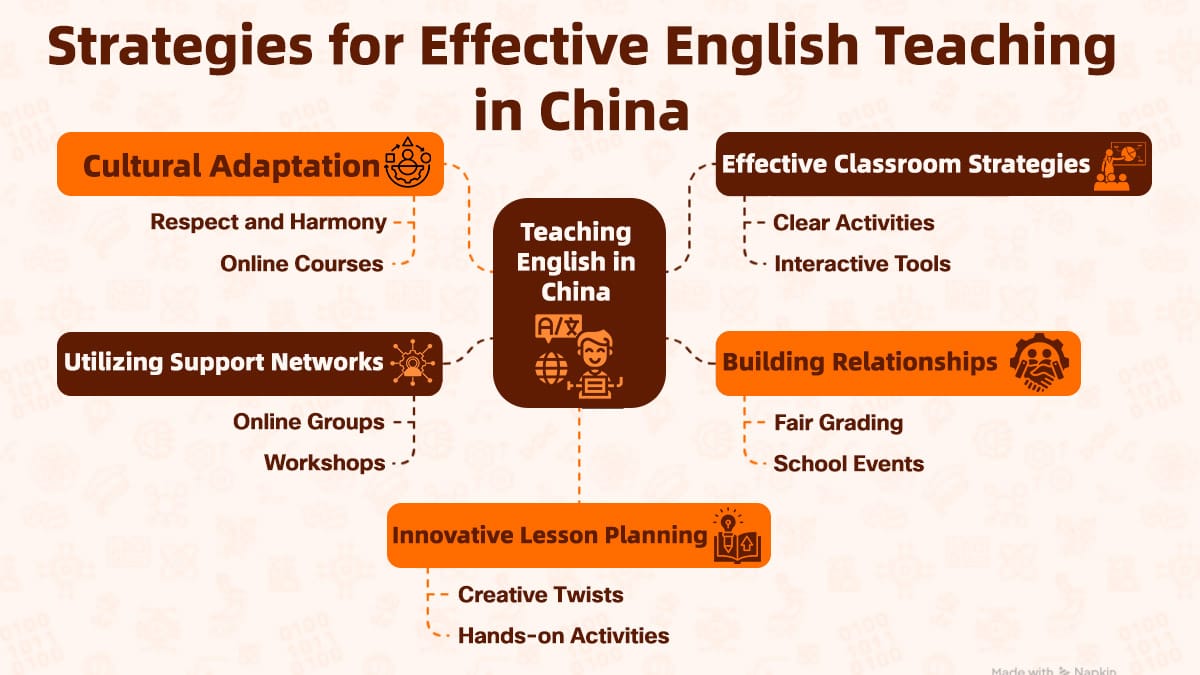
Teaching English in China gets easier with proven strategies. They include adapting to culture, using smart classroom methods, building school connections, tapping into support, and creating fresh lesson plans. Let's dive into each one to help you thrive with Chinese students.
Cultural Adaptation Techniques
Adapt to the local ways for a smoother ride. Chinese students value respect and harmony in class. How do you handle big changes? Start by learning simple customs and mixing in global classroom ideas. Keep class size in mind to build trust. Professional development through online courses boosts your skills. You'll feel more at home and teach better every day.
Effective Classroom Strategies
Good strategies make lessons click. Think about class size when planning; smaller groups let you connect more. Chinese students respond to clear, fun activities. Do you worry about grading papers quickly? Set simple routines and use interactive tools. A global classroom vibe adds excitement. Mix games with direct teaching to keep energy high and learning steady.
Building Relationships in Schools
Strong ties make a big difference. Chinese students open up when you show interest in their world. Have you tried chatting after class? Work on grading papers fairly to build trust. Join school events to join the global community. Parallel efforts like team projects foster friendships. Balance feedback with praise to create a supportive space for everyone.
Utilizing Support Networks
Support networks guide you through tough spots. Where can you find help for professional development? Online groups share tips on teaching Chinese students. Reach out to fellow teachers for advice on lesson plans. A global community offers resources and encouragement. What if you need ideas? Attend workshops to grow and stay connected in this journey.
Innovative Lesson Planning
Fresh lesson plans keep things lively. Chinese students enjoy creative twists on familiar topics. Why stick to the same routine? Adapt plans to fit class size and add global classroom elements. Include hands-on activities alongside grading papers tips. This mix sparks curiosity and helps you innovate. You'll see real progress with varied approaches.
Lifestyle and Work Culture for English Teachers in China
The work culture for English teachers in China varies a lot by school type. Public school teachers often have lighter schedules. They teach fewer hours each week. They also enjoy more public holidays. Teachers at private language centers and international schools have busy jobs. They face heavy workloads. Still, these positions often pay better than other ESL markets.

Outside the classroom, life in China rewards curiosity. Major cities buzz with life. Strong expat communities help you settle in quickly. Plus, the country's natural landscapes provide a real change from city life. Teachers can switch from a busy city life to a calm, quiet one without going far.
China offers foreign educators a unique blend of benefits. It has organized school systems and good salaries. Living environments vary widely, and there’s a strong support network among expats. This makes the transition easier than many anticipate.
Frequently Asked Questions
Is teaching English in China still worth it in 2026?
Yes. China has more than 300 million English learners. There is a strong need for qualified foreign teachers. This demand is high in public schools, training centers, and international schools. Salaries vary from ¥7,200 to more than ¥27,500 a month based on the school type. Most contracts also offer housing support, health coverage, and flight allowances.
What's the truth about teaching English in China?
It's competitive but realistic with the right credentials. You need a four-year bachelor's degree and a 120-hour TEFL, TESOL, or CELTA certificate. Also, you must be from one of China’s seven recognized native-English-speaking countries. If not, you should have strong qualifications. Life in public schools involves big class sizes, indirect communication norms, and an adjustment period. It’s a familiar, structured path, not a gamble.
How much can I earn teaching English in China?
Salaries vary significantly by school type. Public school ESL teachers typically earn ¥7,200 to ¥11,500 per month. International schools pay considerably more, up to ¥27,500 or higher. Training centers usually match public school base pay. They often add bonuses for extra teaching hours. Free housing and an annual flight allowance can meaningfully boost the real value of a lower base salary.
What are the requirements for teaching English in China?
To teach abroad, you need a four-year degree from an accredited university. It can be in any subject. You also need a TEFL, TESOL, or CELTA certificate with at least 120 hours. Most jobs require citizenship from one of these seven countries: USA, UK, Ireland, Canada, Australia, New Zealand, or South Africa. You'll also need a clean criminal record and to pass a health check, including blood work and a chest X-ray.
Can foreigners without a teaching degree teach English in China?
Yes, a teaching degree isn't required. China requires a four-year bachelor's degree from an accredited university. You also need a 120-hour TEFL, TESOL, or CELTA certificate. The certificate, not your degree subject, is what qualifies you to teach English specifically.
What's it like teaching English in a Chinese public school?
Public school teachers teach speaking and listening in English. They work on oral skills. Local Chinese teachers focus on grammar. They also help students get ready for exams. Class sizes run large, often 40 to 60 students. Most teachers work Monday to Friday, roughly 8 AM to 4 PM, with 12 to 20 weekly contact hours and the rest spent on lesson planning and school activities.
Do I need a Z visa to teach English in China?
Yes. The Z visa is the only legal work permit for foreign teachers in China. A licensed school must sponsor your application; you can't self-sponsor. Teaching on a tourist or business visa is illegal and can result in fines, deportation, and a ban on future entry.
Why is a TEFL certificate important for teaching English in China?
To get a Z visa, you must have a TEFL, TESOL, or CELTA certificate. It should be at least 120 hours from an accredited provider. This is a strict requirement, not just something to add to your resume. Short weekend courses or uncertified online programs can’t meet visa requirements. So, they will be rejected during the application process.
Is teaching English in China better than teaching in Japan?
China usually has better pay and benefits. Public school salaries range from ¥7,200 to ¥11,500 a month. In comparison, Japan's public school pay is between ¥8,600 and ¥14,400 monthly. For international schools, China offers salaries over ¥27,500, while Japan's range is ¥14,400 to ¥21,600 a month. China enforces its native-speaker rule in public schools. In contrast, Japan's private and corporate roles are more flexible. Japan often attracts teachers who value cultural experiences and diverse schedules more than high income.
Conclusion
Teaching English in China brings exciting opportunities. Average salaries from 10,000 to 27,500 RMB fit well with the cost of living in various cities. Public transportation makes daily commutes simple and affordable. You'll handle the visa process by starting Z visa applications, completing visa applications, securing work permits, residency permits, medical checks, and criminal record checks. A teaching contract often includes flight arrangements and hotel accommodation for a smooth start. Success strategies cover cultural norms, classroom tips, and building connections.
Pursue TEFL certification to sharpen your skills and open doors. What gains await? Steady income, cultural insights, and a network that shares experiences, keeping you engaged and encouraging links to more resources.
Alifa supports job seekers by streamlining the path to teaching roles in China, from guiding visa applications and work permits to matching you with contracts that match average salaries and cover costs. How can you make this journey yours? Book a free consultation now to take the next step.
Related Articles
 Emmanuel Usang
 Emmanuel Usang
 Emmanuel Usang


Member comments