

Introduction
Nord Anglia Education runs 15 schools across mainland China and 1 school in Hong Kong, making a total of 18 schools. But “Nord Anglia School” does not mean one thing. The group runs two separate tracks. Each has its own rules, its own fees, and the most significant aspect, its own passport requirements.
This guide covers all 16 Nord Anglia campuses now open in China. It explains the two school tracks in simple terms, so they are easy to understand.
It also points out the campuses that closed, changed, or were renamed between 2024 and 2025. Some older parent guides still list these schools; however, they are no longer options for international families.
Every fact in this guide comes from Nord Anglia’s China website, the global Nord Anglia website, or the official school websites.
What Is Nord Anglia Education?
Nord Anglia Education is a global network of premium K-12 schools teaching more than 100,000 students aged 3 to 18 worldwide. The company is led by CEO Andrew Fitzmaurice. Dr. Elise Ecoff is the chief education officer. She runs the curriculum and checks teaching quality across the network. Nord Anglia is headquartered in London, with regional offices covering Asia, the Americas, the Middle East, and Europe.

In China, Nord Anglia has two brands. One is bilingual schools — they accept all students. The other is international schools, which serve families with foreign passports. Both brands share the same parent company and the same global partnerships, including access to the same enrichment programmes. They simply serve different students under Chinese education law.
Nord Anglia delivers world-class teaching through partnerships with MIT for STEAM projects and with Juilliard on the arts. Teachers attend training sessions led by experts from both institutions. Nord Anglia also teams up with UNICEF on global citizenship programmes connected to the UN’s Sustainable Development Goals. Every year, students across the network raise money and volunteer through a programme called Share a Dream, supporting local causes they care about.
Students connect through Global Campus — an online platform that links classrooms across different countries for joint projects. A Beijing student might collaborate with a peer in Dubai or São Paulo on the same assignment. Beyond the classroom, Nord Anglia runs boarding-style expeditions for older students as part of a wider set of learning experiences that extend beyond the school day.

Nord Anglia China is Mid-Consolidation
International families researching Nord Anglia need to know one thing before reading further. The China network is smaller now than it was two years ago. Between 2018 and 2020, Nord Anglia opened six new bilingual campuses in China. Between 2024 and 2025, three of them closed, converted, or were repurposed. A fourth changed names within its first year of opening and is now easy to misidentify in parent guides.
⚠ Out-of-date guides: Have you read an older article listing “20 Nord Anglia schools in China”? Or one that still names Foshan, Fangshan, or Shenzhen Longhua as options? That article is out of date. The list you should be planning around is the 16 campuses below.

The Two Tracks, Explained
This is the single most important thing to understand before you read any further. Nord Anglia’s China schools split into two groups, and they are not interchangeable.
| Bilingual Schools | International (EiM) Schools | |
|---|---|---|
| Who can enroll | Any nationality, including Chinese passport holders | Foreign passport, or Hong Kong / Macau / Taiwan passport only |
| Number of campuses | 7 | 9 |
| Typical curriculum | Chinese national curriculum plus IB or A Level elements | Full British or international curriculum (IGCSE, A Level, IB) |
| Where they’re listed | nuodeanda.cn | nordangliaeducation.com |
| Typical annual fee (2026) | ¥120,000–¥245,000 | ¥171,500–¥385,000 |
“EiM” stands for “Education for International Minors.” It’s the formal term for what Chinese regulation calls 外籍人员子女学校 — schools for the children of foreign staff. If your child holds a Chinese passport, only the bilingual track is open to them. This is true no matter how international a campus looks or feels.
The eligibility rule comes from the Chinese government, not from Nord Anglia. China lets only non-Chinese passport students into EiM schools, keeping Chinese students in their own system until they finish. Bilingual programmes fill the gap — mixing Chinese classes with an international programme so families have a meaningful alternative to choose from.
All 7 Bilingual Nord Anglia Schools in China
These schools sit on nuodeanda.cn, Nord Anglia’s China portal. Any nationality can apply, including Chinese passport holders.
| City | School | Ages | Fee from (2026) | Website |
|---|---|---|---|---|
| Beijing | Nord Anglia School Beijing, Shunyi 北京市顺义区诺德安达学校 |
6–18 | ¥205,000 * | nasbeijing.cn |
| Dalian | Dalian Huamei Bilingual School 大连金普新区华美双语学校 |
6–18 | ¥120,000 | dalianhuamei.cn |
| Guangzhou | Nord Anglia School Guangzhou, Panyu 广州市番禺区诺德安达学校 |
6–15 ** | ¥158,000 | nasguangzhou.cn |
| Jiaxing | Nord Anglia School Jiaxing 嘉兴市诺德安达学校 |
3–18 | ¥130,000 | nasjiaxing.cn |
| Nantong | Nord Anglia School Nantong 南通诺德学校 |
6–18 | ¥125,000 | nasnantong.cn |
| Shanghai | NACIS Shanghai 上海闵行区诺达双语学校 |
6–18 | ¥154,000 | nacisminhang.cn |
| Suzhou | Nord Anglia School Suzhou, Xiangcheng 苏州市相城区诺德学校 |
6–18 | ¥140,000 | nassuzhou.cn |
ℹ Beijing Shunyi
The official admissions page lists annual tuition as ¥205,000 (primary), ¥225,000 (middle school), and ¥245,000 (high school). Some third-party sites list lower “starting from” prices — these are marketing figures and do not reflect the real tuition for any grade level.
ℹ Guangzhou Panyu
The school currently offers Grades 1–9 (ages 6–15). Plans to open Grade 10 have been announced, but a full Grades 10–12 senior high school is not yet operating. Confirm the latest Grade 10 expansion plans with the school directly before enrolling.
ℹ Nantong
This campus is a strategic partner of Nord Anglia Education, not a directly owned school. It uses Nord Anglia’s curriculum and students access MIT, Juilliard, UNICEF, and Global Campus programmes. The partnership structure does not change the teaching or learning experience.
ℹ NACIS Shanghai
The school has changed its Chinese name to 上海闵行区诺达双语学校, also written as 上海诺达双语国际学校 in some materials. The English name and NACIS abbreviation remain unchanged. Older brochures may use the former Chinese name but refer to the same campus.
Each bilingual campus teaches a mix of Chinese and international staff. Chinese teachers teach national curriculum subjects. Native English teachers teach English — many also teach maths, some teach science, and a few teach humanities through an international programme.
All 9 Nord Anglia International Schools in China (Foreign Passport Only)
These schools sit on Nord Anglia’s global site. All require a foreign, Hong Kong, Macau, or Taiwan passport. Chinese nationals cannot enrol, no matter how long the family has lived abroad.
| City | School | Ages | Fee from (2026) |
|---|---|---|---|
| Beijing | British School of Beijing, Sanlitun | 1–11 | ¥247,000 |
| Beijing | British School of Beijing, Shunyi | 2–18 | ¥247,000 |
| Chengdu | Léman International School Chengdu | 2–18 | ¥171,500 |
| Dalian | Dalian American International School | 3–18 | ¥172,500 |
| Guangzhou | British School of Guangzhou | 1–18 | ¥197,000 |
| Hong Kong | Nord Anglia International School Hong Kong | 3–18 | US$19,098 |
| Nanjing | British School of Nanjing | 2–18 | ¥213,145 |
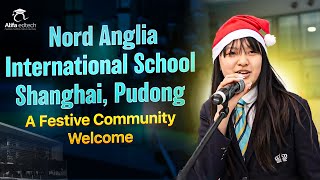
| Shanghai | Nord Anglia International School Shanghai (Pudong) | 2–18 | ¥280,000 |
| Shanghai | British International School Shanghai, Puxi | 2–18 | ¥280,000 |
A few names are worth knowing if you’ve researched this already. Nord Anglia International School Shanghai (Pudong) operated as “BISS Pudong” until Nord Anglia rebranded it in 2015. Parent forums and older articles still use the old name for the same campus. Léman International School Chengdu is known as 成都乐盟外籍人员子女学校 in Chinese, confirmed by several official sources.
Dalian’s two Nord Anglia-linked schools share more than a city. Dr. Craig Wilson leads both: Dalian American International School and Dalian Huamei Bilingual School. The two share administrative functions across the same campus complex — one of the only places in the Nord Anglia China network where children on different passports could attend the same site. If one child holds a foreign passport and another holds a Chinese passport, the Dalian complex is worth a closer look.
Nord Anglia China Campuses That Have Closed or Been Renamed
Several Nord Anglia campuses have closed, converted to non-Nord Anglia schools, or changed names since 2024. If you’ve read an older guide that lists these as options, they are no longer available under the Nord Anglia name.
Understanding the Curriculum Options
International families often choose this without fully knowing UK education. Here are some terms to help.
The International Early Years Curriculum (IEYC) covers the youngest learners, typically ages 2 to 5. It focuses on play-based learning across personal, social, and cognitive development.

The international track follows the English National Curriculum, progressing from early years through to Cambridge IGCSE and A Level. Cambridge Assessment International Education administers the Cambridge IGCSE — International General Certificate of Secondary Education. Students usually sit these exams around age 16 across a range of subjects. It is the international equivalent of the UK’s GCSE and forms the foundation before A Levels or the IB Diploma. Some campuses also offer Oxford AQA and Pearson Edexcel qualifications alongside their main curriculum pathway.
A Levels are subject-specific exams usually taken over two years, from about age 16 to 18. Students typically choose 3 to 4 subjects to study in depth — suited to a student who already knows their intended university major.
Some campuses offer Advanced Placement (AP) electives for students targeting US universities.
The IB Diploma (International Baccalaureate) takes a broader approach over the same two years. Students study six subjects across sciences, humanities, and languages, write a research essay, and complete a personal project. It suits a student who wants to keep options open across many fields.
Nord Anglia’s China network mixes these systems. Across the 16 campuses you’ll find IEYC, Cambridge IGCSE, IBDP, and A Levels. The British School of Beijing Shunyi and The British International School Shanghai Puxi offer both A Levels and the IB Diploma — students choose either exit route at sixth form. British School of Guangzhou and British School of Nanjing offer A Levels. Check the specific pathway with each campus before assuming what’s on offer.
| Cambridge IGCSE | A Levels | IB Diploma | |
|---|---|---|---|
| Typical age | 14–16 | 16–18 | 16–18 |
| Subject count | 5–10 subjects | 3–4 subjects | 6 subjects + essay + personal project |
| Approach | Foundation stage | Deep, focused study | Broad, balanced study |
| Best suited for | Nearly all students, as groundwork | Student with a clear university major in mind | Student who wants to keep options open |
City-by-City Snapshot
Beijing has three currently active Nord Anglia campuses: the bilingual school in Shunyi, and the British School of Beijing’s EiM campuses in Sanlitun and Shunyi. The Fangshan bilingual campus closed in July 2024. Families choosing between the two British School of Beijing campuses should note the age split — Sanlitun serves ages 1 to 11; Shunyi covers the full range through age 18.
Shanghai has three campuses: the bilingual NACIS school in Minhang, plus two EiM campuses in Pudong and Puxi. Pudong and Puxi sit on opposite sides of the city. Commute time from your home or office should factor heavily into the choice between them.
Guangzhou has two campuses: the bilingual school in Panyu and the British School of Guangzhou. Panyu currently teaches ages 6 to 15, with Grade 10 planned; British School of Guangzhou covers the full age range. Families with a Chinese passport should be aware this matters if their child will continue into senior high. It is worth asking the school directly about the Grade 10 launch timeline.
Dalian, Chengdu, Nanjing, Hong Kong, Jiaxing, Nantong, and Suzhou each have a single Nord Anglia-linked campus. That simplifies the city-level decision — but it also means there is no in-network alternative if that specific school is not the right fit.
Foshan and Shenzhen no longer have a Nord Anglia campus. Both were part of the group between 2019 and 2024–2025 but have since closed or been converted to non-Nord Anglia schools.
Boarding Life at Nord Anglia Schools
Several Nord Anglia campuses in China operate as boarding schools. The school finder marks each one with a 寄宿 (boarding) or 走读 (day only) label. Beijing Shunyi, Guangzhou Panyu, Jiaxing, Nantong, and Suzhou Xiangcheng have boarding — each has a bilingual track. Dalian Huamei is day-only.
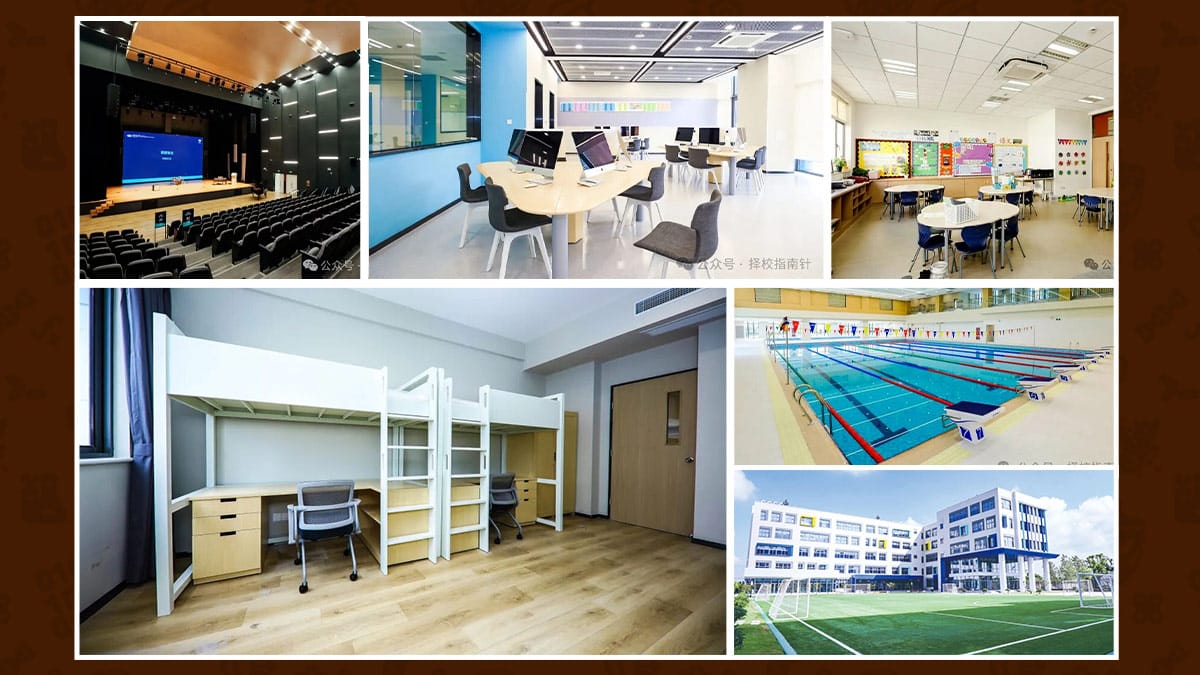
Nord Anglia describes its boarding houses as supportive learning environments — a “home away from home.” Dedicated boarding staff give support all day and night. They help with academic, emotional, and practical needs. The company says boarding helps kids. It makes them independent. It also builds confidence. This is quicker than daily attendance. That claim is from Nord Anglia’s marketing, not independent research. So, see it as a viewpoint, not a proven fact.
If boarding matters to your family, confirm the specific arrangement directly with each campus. Room types, staff ratios, and weekend policies vary by school and were not independently verified for this guide.
Accreditation and Safeguarding
Nord Anglia’s commitment to academic excellence is backed by a group-wide safeguarding framework across its schools. It covers child protection policy, staff vetting, and reporting procedures. The company also runs a dedicated Equality, Diversity, Inclusion, and Belonging programme at the group level.
Each campus has different accreditation. Some hold Council of International Schools (CIS) membership. Some have WASC accreditation. The American-curriculum campus in Dalian is the most well-known. British-curriculum campuses may hold COBIS. Alifa suggests you check a school’s current accreditation status directly. For any campus presenting itself as an IB school, confirm it holds its own current IB World School authorisation — each campus has its own; the whole group does not share it.

Typical Admissions Process and Timeline
Admissions steps at Nord Anglia schools in China are broadly the same. Each school has its own process and different deadlines.
-
1Initial inquiry. Contact the school through its website, WeChat account, or the group hotline. Most schools respond within 24 hours.
-
2Entrance assessment. You will have an English assessment. There will also be a maths test for your child’s age. Younger children might have an informal interview too.
-
3Interview. Older applicants, and sometimes parents, typically meet with admissions staff or the principal.
-
4Offer and deposit. Successful applicants receive a formal offer, usually with a deadline to pay a deposit and secure the place.
-
5Enrolment and onboarding. Before the term starts, many schools hold an orientation for new families. Documents and health records are submitted at this stage.
Most Nord Anglia China campuses admit on a rolling basis for available places. The main intake still aligns with the September start of the academic year. Boarding places and popular grade levels can fill months in advance. Start the process early if you have a specific campus and year in mind.
How to Book a Campus Visit or Open Day
Nord Anglia’s China campuses run open days on a regular schedule. Most welcome visits from families who are still deciding.
- Call the group hotline: 4006-196-100. This is Nord Anglia China’s central enrolment line. Staff will connect you to the admissions team at whichever campus you’re interested in.
- Or search the campus’s WeChat account. Search “[city name] 诺德安达” in WeChat, then look for 开放日 (open day) or 探校预约 (campus visit booking) in the account’s menu.
- Or go through the website. Visit nuodeanda.cn and choose your city. Click “view more” to reach that campus’s own site, where you can fill out an inquiry form directly.
Open days typically run on a Saturday, either 9:30–11:30 AM or in the afternoon, roughly once a month per campus. A standard visit includes a short talk with the principal, a class observation, and a campus tour. Shanghai Minhang (NACIS), Beijing Shunyi, and Guangzhou Panyu are the busiest campuses for visits. Book 1 to 2 weeks ahead if you want one of those slots.
Frequently Asked Questions
- Bilingual schools: From ¥120,000/year (primary at Dalian Huamei) to about ¥245,000/year (high school at Beijing Shunyi).
- International schools: ¥171,500 to ¥385,000/year — Léman Chengdu starts at ¥171,500; senior grades at Shanghai Pudong and Puxi reach ¥385,000.
Which Nord Anglia School Fits Your Family?
Start with passport eligibility since that narrows the list before anything else matters.
If your child holds a Chinese passport, only the 7 bilingual schools are open to you. This includes dual nationals who use a Chinese passport for residency. Compare them on curriculum balance — some lean further toward the Chinese national curriculum and others toward IB or A Level. Also compare boarding versus day options, since not every bilingual campus offers both.
If your family holds a foreign, Hong Kong, Macau, or Taiwan passport, all 16 schools are technically open to you. The 9 EiM schools will feel closer to a “full international school” experience — English is the main language of instruction throughout those campuses.
If you’re relocating for work and don’t yet know your city, Shanghai and Beijing offer the most choice. Both cities have three campuses each across both tracks. Smaller cities like Jiaxing, Nantong, and Suzhou have one bilingual option each — simple to choose, but fewer alternatives if that school isn’t the right fit.
If your child is set on A Levels, several campuses offer them. The British School of Beijing Shunyi and the British International School Shanghai Puxi offer both A Levels and the IB Diploma. British School of Guangzhou and British School of Nanjing also offer A Levels.
Whichever track fits, book a visit before committing. Course balance, teacher retention, and campus culture vary considerably between schools — more than Nord Anglia’s marketing materials show.
Alifa Education Services
Considering a Nord Anglia campus for your child?
Alifa Education Services helps families choose schools, assists with applications, and arranges guardianship papers for K-12 placements in China — all schools in this guide included.
📅 Book a Free Consultation →Disclosure: Alifa Education Services is an independent education placement consultancy. We may earn a referral fee from partner schools when families enrol, at no extra cost to the family. Our recommendations are based on fit, not fee structure.


Member comments