

Introduction
Quality Schools International (QSI, 科爱赛) has some of the oldest American schools in mainland China. They are well-known for great education. But the network is small, and it is easy to get confused. Some articles say there are six schools. Others count Shenzhen twice. This guide sets the record straight.
There are five QSI schools in mainland China. They sit in Shenzhen, Zhuhai, Dongguan, Chengdu, and Shenyang. All five are foreign-passport schools (外籍人员子女学校). All five follow the same American, mastery-based model. And one of them — Shenzhen — now runs something no other QSI school in China offers: a French programme officially recognised by France’s Ministry of Education.
This page verifies every campus against official sources, checked in July 2026. Where school data was out of date online, we corrected it. Where we could not confirm a figure, we say so.
The 5 QSI Schools in China at a Glance
| School | City | Founded | Campuses | Ages | IB Status | French |
|---|---|---|---|---|---|---|
| QSI Shenzhen (深圳科爱赛) | Shenzhen | 2001 | 3 | 2–18 | IB DP | Yes — French programme |
| QSI Zhuhai (珠海科爱赛) | Zhuhai | 1999 | 1 | 2–18 | US + AP only | Not found |
| QSI Dongguan (东莞科爱赛) | Dongguan | 2004 | 1 | 2–18 | US + AP only | Elective only |
| QSI Chengdu (成都科艾赛) | Chengdu | 2002 | 1 | 2–18 | IB DP | Elective only |
| QSI Shenyang (沈阳科爱赛) | Shenyang | 2012 | 1 | 3–18 | US + AP only | Not found |
These schools are accredited by the Middle States Association (MSA-CESS). They accept passport holders from foreign countries, Hong Kong, Macau, and Taiwan. Mainland Chinese passport holders cannot apply.
A quick answer for the common question — how many QSI schools are in China? There are five: Shenzhen, Zhuhai, Dongguan, Chengdu, and Shenyang. Shenzhen runs across three campuses, but it is still counted as one school. QSI has opened no new China campus since Shenyang in 2012.
What Is Quality Schools International (QSI)?
Quality Schools International is a non-profit school network. It started in 1971 in Sanaa, Yemen, with just four students. Today it is headquartered in Malta and runs around 35 schools across 28 countries on five continents, according to QSI’s own school directory. Its newest school opened in Liberia in 2025. QSI schools are also affiliated with the U.S. Department of State’s Office of Overseas Schools.
QSI’s own pages disagree. Its global homepage shows 35 schools in 28 countries, while several campus sites still display “37 in 31,” and some 2025 school profiles print “34 in 28.” The count shifts as schools open and close. We use the current homepage figure (35 / 28), verified July 2026.
China is home to five of those schools. They are all in the East Asia group, alongside QSI campuses in Vietnam, Thailand, and Timor-Leste.
QSI does not use a single national exam as its core. Instead, it uses a mastery-based American model. Students move forward once they have mastered a unit, not just when a term ends. QSI invests in ongoing professional development for teachers across all five China campuses to maintain this standard. The school pairs this with its own “Success Orientations” — a set of character goals like trustworthiness and kindness.
QSI schools in China aim to bring the best practices of psychosocial wellness and positive thinking to students’ lives both professionally and personally. Older students take Advanced Placement (AP) courses, developing critical thinking and problem-solving skills across academic disciplines. Some campuses also offer the IB Diploma, but this varies — see the curriculum section below.
Who Can Attend a QSI School in China?
This is the single most important rule for families. All five QSI schools in China are 外籍人员子女学校 — schools for children of foreign nationals.
That means a student must hold one of the following:
- A foreign passport, or
- A Hong Kong, Macau, or Taiwan passport or residence permit.
Students who hold only a mainland Chinese passport cannot enroll. This is a legal restriction on this school type, not a QSI policy choice.
This sets QSI apart from bilingual networks such as some Nord Anglia campuses, which run a separate track open to Chinese nationals. QSI has no such track. Every QSI China campus is foreign-passport only.
The Five Campuses in Detail
QSI International School of Shenzhen Flagship
- Chinese name: 深圳科爱赛国际学校
- Founded: 2001
- Main campus: Bitao Building, 8 Taizi Road, Shekou, off Gongyuan Road (518067)
- Students: 35+ nationalities
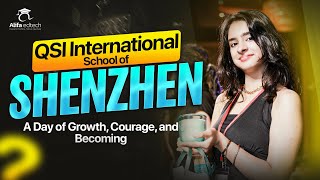
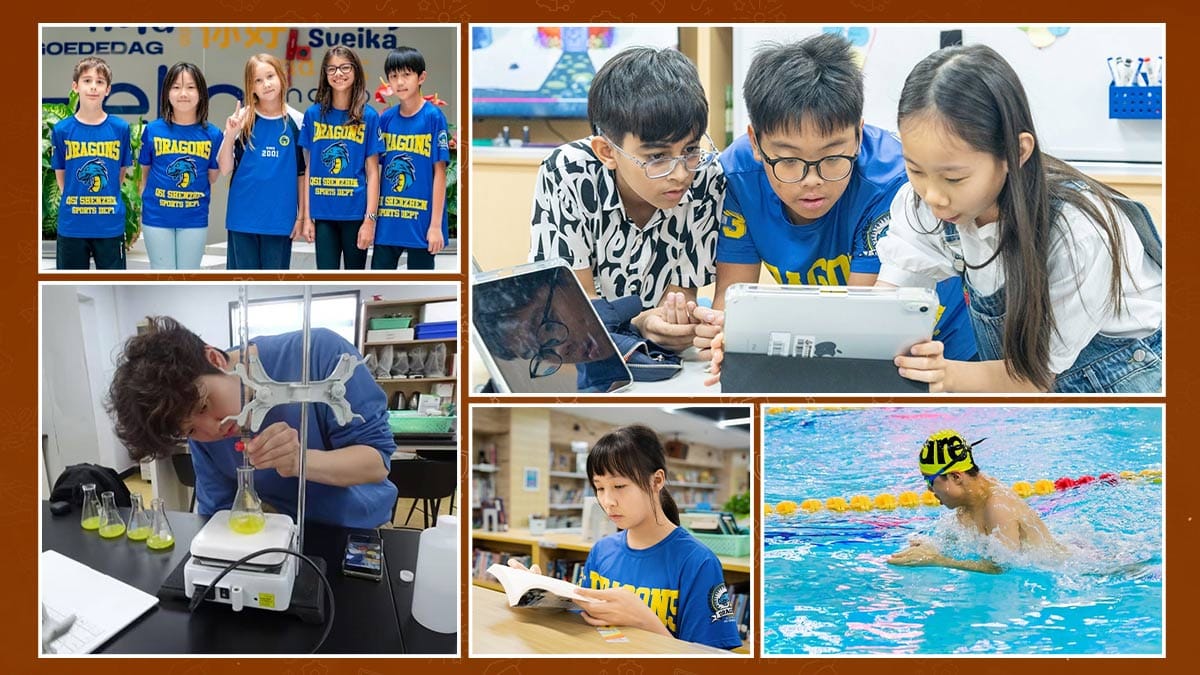
QSI International School of Shenzhen is the largest and best-known QSI school in China. It was established in 2001. QSI Zhuhai is the oldest QSI school in China, founded in 1999. The main Shenzhen campus sits at Bitao Building, 8 Taizi Road, Shekou, and its students come from over 35 nationalities, making it a genuine hub for cultural exchange.
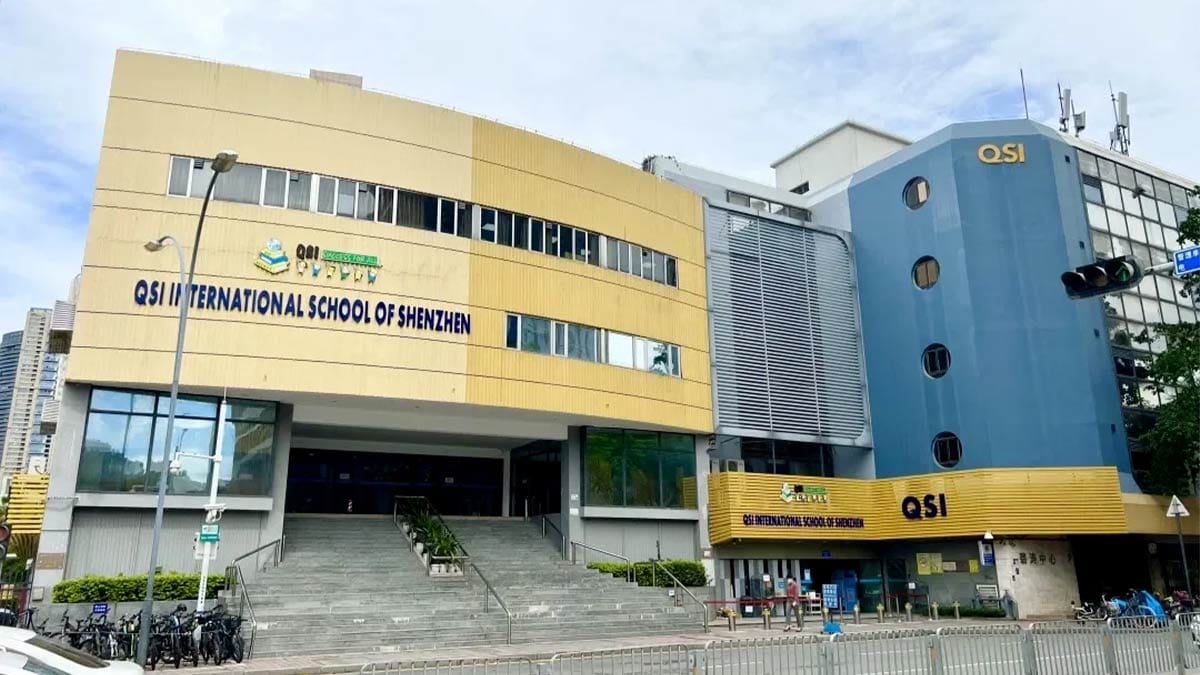
This is a single school, not two. Some older articles split it into separate schools, but QSI, the education authorities, and the school’s own website all describe it as one school across several campuses.
QSI International School of Shenzhen holds IB Diploma (DP) authorization, granted in 2009, and is accredited by the Middle States Association. It does not run the IB Middle Years or Primary Years programmes — older sources that list “MYP” are inaccurate. Admission uses MAP testing, an English writing sample, and an interview. The school runs SAT sittings on site.
📚 Curriculum
US mastery model · AP · IB Diploma (DP) · 21st Century Learning frameworks · homologated French programme
QSI International School of Zhuhai Oldest
- Chinese name: 珠海科爱赛国际学校
- Founded: 1999
- MOE registration: 2000
- Accreditation: MSA
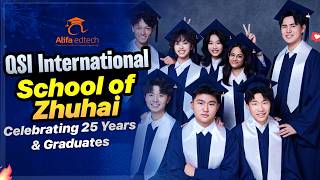
QSI Zhuhai is the oldest QSI school in China, founded in 1999. It was also the first international school in Zhuhai. It registered with the Ministry of Education in 2000 and is MSA-accredited.
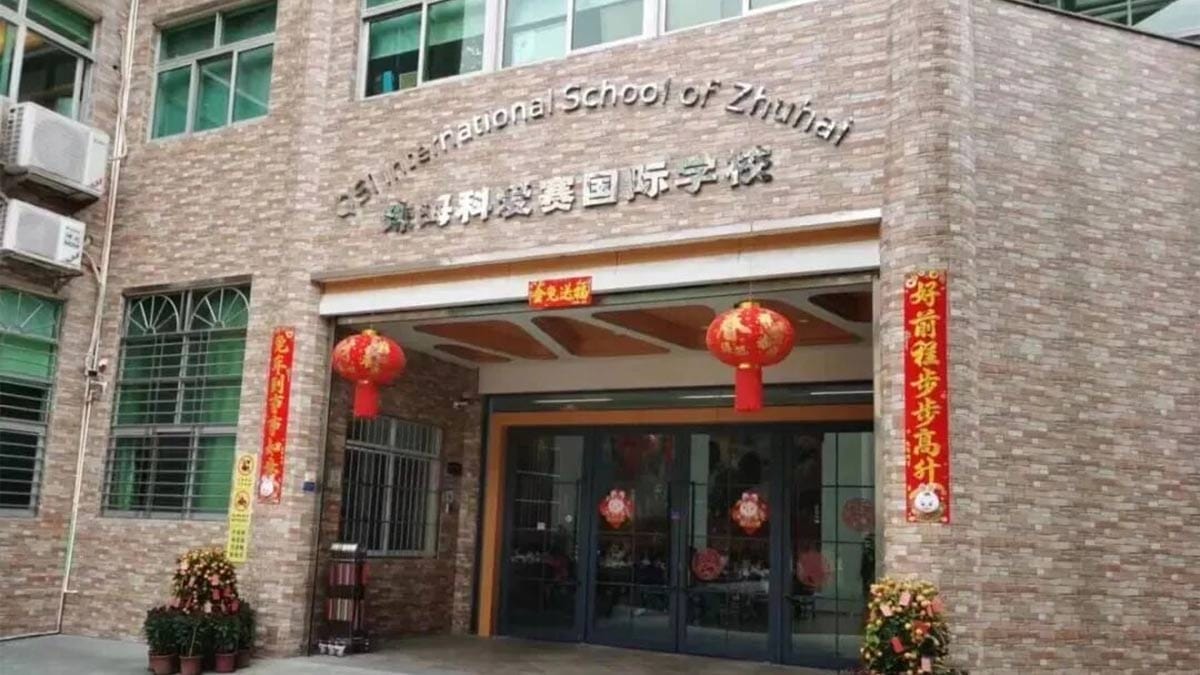
The school has moved several times over its history. Its current campus is at 2 Shuiwantou West Street, Xiangzhou District (香洲区水湾头西街2号). Older listings that place it on Anning Road (安宁路) are out of date. The head of school is Dr. Troy Snyder, in post since at least 2021.
Zhuhai teaches from preschool through secondary (ages 2 to Grade 12). It follows the standard QSI American model with AP. It does not offer the IB — the school does not appear in the official IB directory, and its own site lists only AP.
Website: zhuhai.qsi.org
- Chinese name: 东莞科爱赛国际学校
- Founded: 2004
- School type: 外籍人员子女学校
- Current campus: No. 8 Yuwu Commercial Street, Dongcheng District (东城区余屋商业街8号)
QSI Dongguan opened in 2004 and operates as a licensed foreign-nationals’ school (外籍人员子女学校) under the local education authorities. Its current campus is at No. 8 Yuwu Commercial Street, Dongcheng District (东城区余屋商业街8号). Earlier addresses in the Dongcheng Centre are out of date.
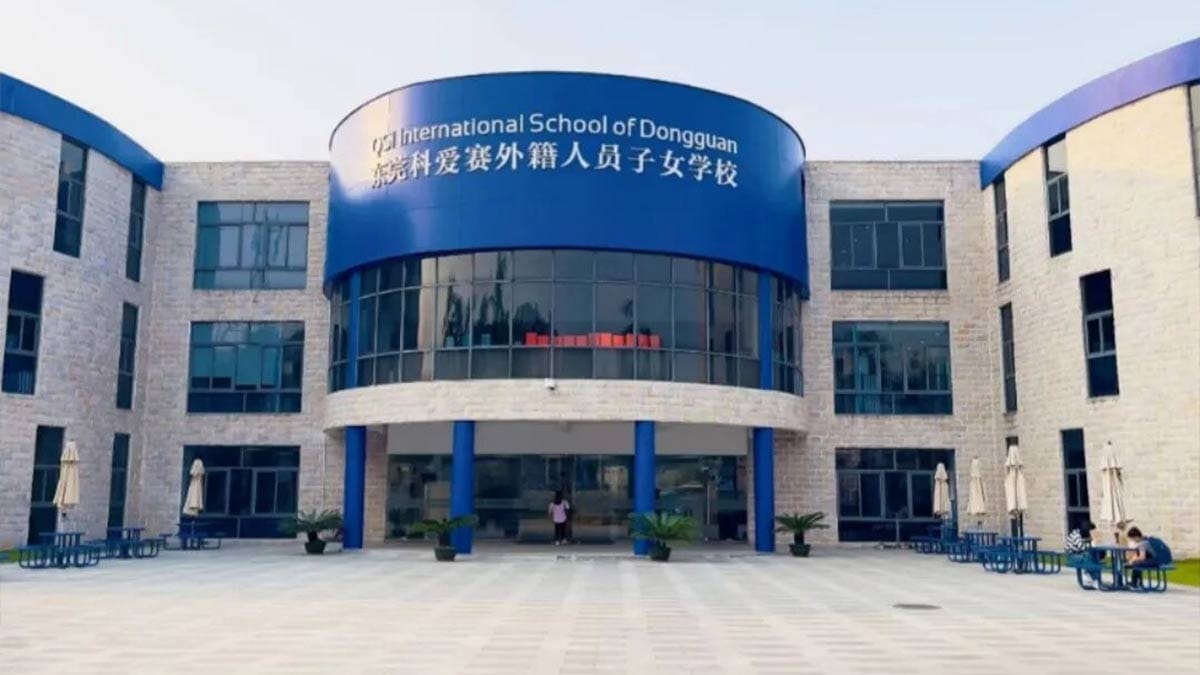
The school enrolls over 255 students from more than 25 nationalities, from preschool through Grade 12. It follows the QSI mastery curriculum with AP, and it is a College Board test centre for AP, SAT, and PSAT. It does not offer the IB; its published diplomas are the Academic, Academic with Honors, and General diplomas, with no IB track. About 750 students attend, taught by a team of international educators from 22 countries. Its current head is Luke Ammon Woodruff (per the most recent public record).
Dongguan offers French as a foreign-language elective, alongside Mandarin. It is not a French department, and it holds no AEFE accreditation.
Website: chengdu.qsi.org
- Chinese name: 成都科艾赛外籍人员子女学校
- Founded: 2002
- Campus: American Garden (美洲花园), 188 South Section 3, 3rd Ring Road (三环路南三段188号), Chengdu 610041
- District: Wuhou District (administered under Chengdu Hi-Tech Zone)
- Director: Dr. Clare McDermott
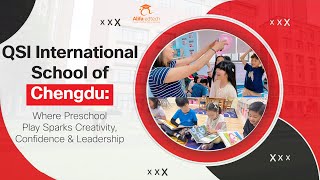
QSI Chengdu opened in 2002. It teaches over 200 students from more than 25 nationalities, from preschool through Grade 12. Its campus is in the American Garden (美洲花园) complex at 188 South Section 3, 3rd Ring Road (三环路南三段188号), Chengdu 610041. The site sits within an area administered by the Chengdu Hi-Tech Zone, though it falls formally within Wuhou District. Its director is Dr. Clare McDermott.
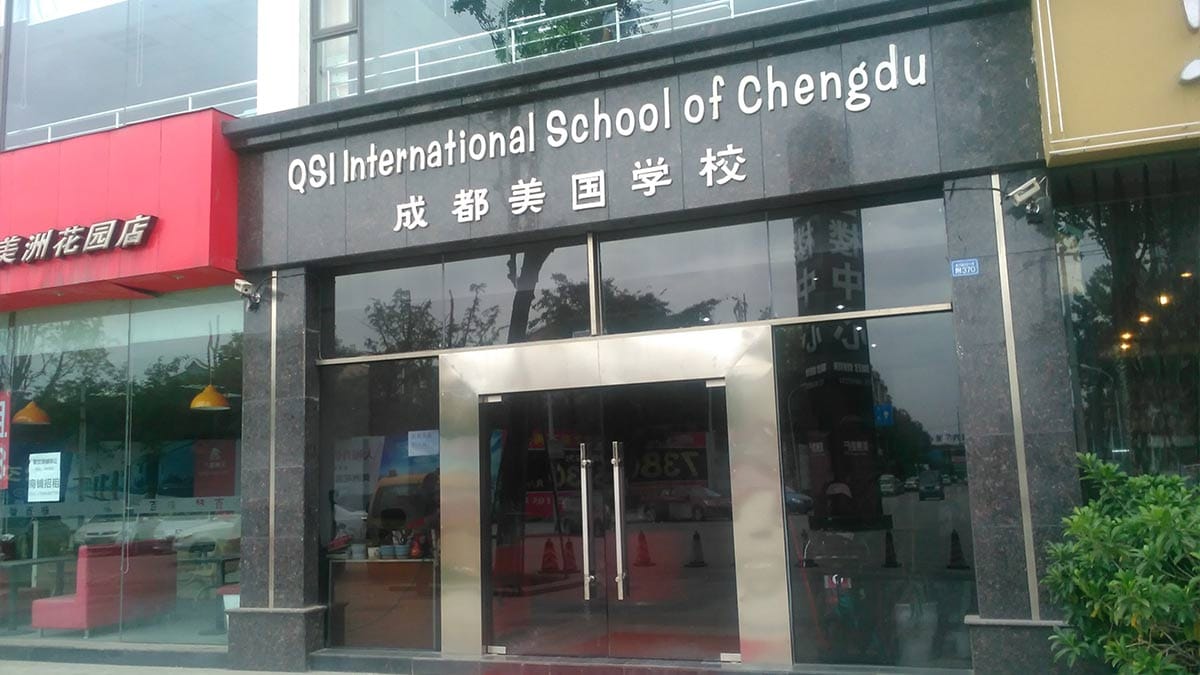
This campus is usually written as 科艾赛. This appears in its own enrollment materials, Chengdu government documents, and major education platforms. The other four QSI schools use 科爱赛, which is also the form the Ministry of Education used for the Guangdong campuses. We use 科艾赛 for Chengdu to match its local official usage.
Chengdu holds IB Diploma (DP) authorization, granted in 2015, and has been accredited by the Middle States Association (MSA-CESS) since 2008, among other bodies. It offers French as an elective (French I/II/III and AP French), alongside Chinese and German. There is no AEFE-linked French programme here.
Website: chengdu.qsi.org
QSI International School ShenyangNewest
- Chinese name: 沈阳科爱赛国际学校
- Founded: August 2012
- Ages: 3–18
- Campus: 78 Shiji Road, Hunnan District (浑南区世纪路78号)
- Director: Mark Mason
- Accreditation: Middle States (MSA)
QSI Shenyang is the newest QSI school in China, opened in August 2012 — QSI has added no China campus since. It is also the smallest of the five, with students from over 10 nationalities. Instruction is delivered entirely by native English teachers. The school is active and current — it posted campus updates as recently as June 2026.
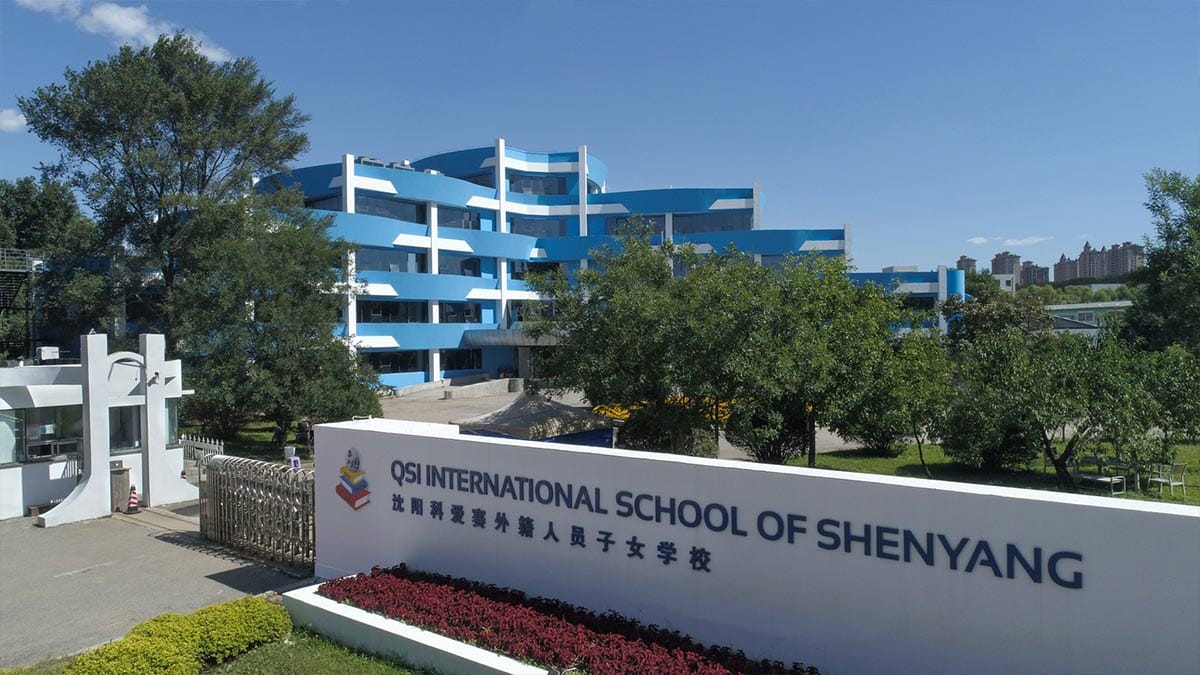
Shenyang follows the QSI American model with AP, including the AP Capstone diploma. It does not offer the IB — it is not in the official IB directory, and its own site lists only AP. There is no French programme at this campus.
Website: shenyang.qsi.org
Does QSI Teach French?
This is where QSI China holds a genuine surprise. The answer depends on the campus.
QSI International School of Shenzhen runs a full French programme with official French recognition. The Programme Français started in 2024. The French Ministry of Education officially recognises it. The school partners with AEFE, the French state agency for education abroad. It covers ages 2 to 14, follows the French national curriculum through Cycles 1–4, and partners with CNED (France’s national distance-learning centre) for the secondary stage. Students can prepare for the French national diploma, the DNB. The French Consulate General in Guangzhou publicly described the school as “AEFE-accredited” during a visit in October 2025.
One honest point, in the interest of accuracy. Today, QSI runs as one school across three campuses in the Shekou area of Nanshan District — Shenzhen’s main international community corridor. As of July 2026, the campus is not listed in AEFE’s public online directory. However, French government activity lists name it as a partner school. The distinction is technical, but it matters: this is a ministry-homologated programme delivered by an AEFE partner, not a stand-alone French lycée. Families who need certainty should ask the school for its homologation documents directly.
Chengdu and Dongguan offer French only as an elective — a foreign-language class alongside subjects like Spanish and German. Neither runs a French department, and neither has any AEFE link.
For Zhuhai and Shenyang, we found no French offering listed on the official course pages. If French matters to your family, confirm with those campuses directly.
Curriculum and Qualifications
It helps to be precise here, because online sources often blur this. QSI is, at its core, a US mastery-based network with Advanced Placement. That is the standard across all five China campuses.
The IB Diploma is not offered everywhere. In fact, only a handful of QSI schools worldwide hold IB DP authorization. Checked against the official IB directory, only two China campuses are IB World Schools, both for the Diploma only:
- Shenzhen — IB DP, authorised 2009
- Chengdu — IB DP, authorised 2015
Neither offers the IB Middle Years (MYP) or Primary Years (PYP) programme. Zhuhai, Dongguan, and Shenyang do not offer the IB at all — none appears in the IB directory, and each school’s own site lists only AP. Some teacher-recruitment and school-comparison databases still tag these three as “IB DP”; that is an error, and you should not rely on it.
All five schools have Middle States Association (MSA-CESS) accreditation. This is a recognised US regional accreditor — the credential that lets QSI issue American high-school diplomas.
QSI Fees in China
QSI is careful with public pricing. Only two campuses publish clear numbers; the rest we can give only as approximate ranges from third-party sources. Always confirm current fees with the school, as QSI raises tuition most years.
QSI Shenzhen
2025/26 published fees
QSI Chengdu
2025/26 published fees
Plus registration, capital, school bus service, and meal fees.
Note: QSI bills globally in US dollars (roughly $12,400 and $30,000), so the RMB figures are local equivalents.
⚠ Approximate ranges — third-party, confirm with school
- Zhuhai: about ¥93,000–¥162,000 / year
- Dongguan: about ¥104,000–¥172,000 / year
- Shenyang: about ¥130,000–¥230,000 / year
Why Is There No QSI in Beijing or Shanghai?
It is a fair question. China’s two largest expat hubs have dozens of international schools — yet QSI is in neither.
The pattern in QSI’s China map is telling. Three campuses cluster in the Pearl River Delta (Shenzhen, Zhuhai, Dongguan), a manufacturing and trade region. One serves the west (Chengdu). One serves the northeast (Shenyang). These are cities with real expat communities but fewer long-established American schools.
Beijing and Shanghai, by contrast, are saturated. Older, larger international schools have held those markets for decades. QSI’s model has tended to serve second-tier and regional cities where foreign families have fewer options. That is the practical reason a family in Beijing or Shanghai will not find a QSI campus nearby.
How QSI Compares to Other Networks in China
QSI sits in a different lane within the broader education sector, distinct from the big British-brand networks. If you are weighing your options, a few contrasts matter.
QSI is foreign-passport only at every campus. Networks like Nord Anglia and Dulwich / Dehong run bilingual arms that also admit Chinese nationals. If your child holds a mainland passport, QSI is not open to you.
QSI is American-first (mastery + AP), with IB only at Shenzhen and Chengdu. British-brand schools such as AISL Harrow lead with A Levels or IGCSEs. Choose based on which university systems your family is aiming at.
QSI campuses are small — often a few hundred students. That can mean close attention and small classes. It can also mean fewer subject options at senior level than a large campus offers.
Frequently Asked Questions
How Alifa Helps Families Choose and Enrol
Alifa Education Services places foreign K-12 students in schools across China, and our help is free for families — schools pay us, not you. We match your child to the right campus, guide the application, and handle the paperwork most families find hardest.
For minors studying without a parent in China, we also provide guardianship services under MOE Order 42 — the legal guardian documentation schools require before a place is confirmed.
Alifa Education Services
Ready to apply to a QSI school in China?
Tell us your child’s passport, current grade, and preferred city. We will confirm eligibility, shortlist the right QSI campus — or a better-fit school if QSI is not the right match — and manage the application from there. Free for families.
📅 Book a Free Consultation →Disclosure: Alifa Education Services is an independent education placement consultancy. We may earn a referral fee from partner schools when families enroll, at no extra cost to the family. Our recommendations are based on fit, not fee structure.


Member comments