

Introduction
International education in China is changing. Students applied with different documents. Some used high school transcripts. Others used language tests. This has created confusion.
A new system is changing everything. The China Scholastic Competency Assessment (CSCA) sets clear standards. It tests students' readiness for Chinese universities. This affects thousands of international students each year.
Students must understand CSCA. Parents need clear information. Education consultants guide applicants. Before applying to top universities or C9 League universities, you must pass the CSCA subject exams. The university will accept your admission files only after you pass. Otherwise they will not proceed with your application. Alifa Education Services helps international students with expert guidance.
Ready to help your child excel in the CSCA and strengthen their university admission chances? Contact Alifa Education Services for expert preparation guidance and resources. Book a free consultation today!
What is CSCA?
The China Scholastic Competency Assessment is a standardized test. It checks if international students are ready for Chinese universities. Think of it as China's SAT. It is designed for Chinese schools.
CSCA tests three main areas. First is language. Second is maths. Third is subject knowledge for your major.
You can take the test in two ways. The Computer-Based Test uses computers. The Paper-Based Test uses paper. Both are at offline test centres worldwide. Online registration opens months before exam windows. Test fees vary by region.
Test Structure and Subjects
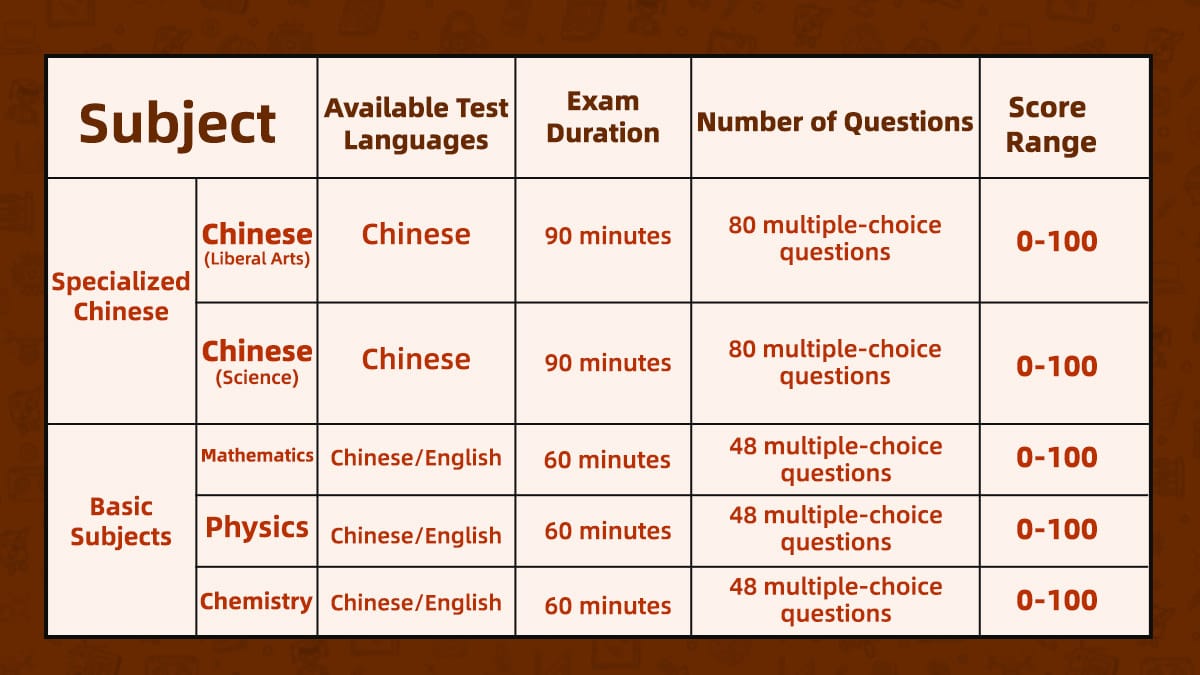
CSCA has two language options: Chinese or English. All students take Mathematics. These are the foundations.
Your major determines other requirements. Science students need Physics or Chemistry. Business students need Chinese and Maths. Humanities students need specialised Chinese skills.
STEM programmes use scientific Chinese terms. Business programmes use humanities Chinese terms. This helps students learn what they need.The exam uses computer-based multiple-choice questions. Remote proctored exams are held where there is no physical exam center. You get a Test Score Report. It shows your performance. Universities look at these scores.
Testing Options and Logistics
CSCA offers flexible testing. The Computer-Based Test gives faster results. The Paper-Based Test is available in some regions. In areas where there is no paper-based exam, you can take CSCA via remote proctoring exams. For more information, call Alifa Education Services. They can help you ace these subject exams.You can pay with Alipay, WeChat Pay, UnionPay, VISA, and MasterCard. The fee is RMB 450 for one subject or RMB 700 for two or more subjects. Registration and all exam information are available at the official CSCA website: http://csca.cn/home
Implementation Timeline of CSCA
CSCA is rolling out in phases. Knowing this helps you plan.
Pilot Phase (2025-2026)
The first global CSCA test happened on 21 December 2025. Online registration opened in November 2025. This first test collected data.
A pilot test for China Government Scholarship students took place on 12 October 2025. Officials used this to improve scoring.
In 2026, CSCA became required for scholarships. All scholarship students must submit CSCA scores. This raised standards.
Expansion Phase (2027)
More universities started using CSCA in 2027. Top schools added it to their standards. These include C9 League universities. Examples are Tsinghua University and Peking University.
Testing locations grew worldwide. More offline test centres opened. This gave students better access.
Full Implementation (2028 and beyond)
CSCA becomes required for everyone in 2028. All international students must take it. This includes international students in Chinese high schools programs.
Universities will set small scores. Different programmes have different requirements. Competitive programmes need higher scores. This creates clear standards.
Impact on University Admissions
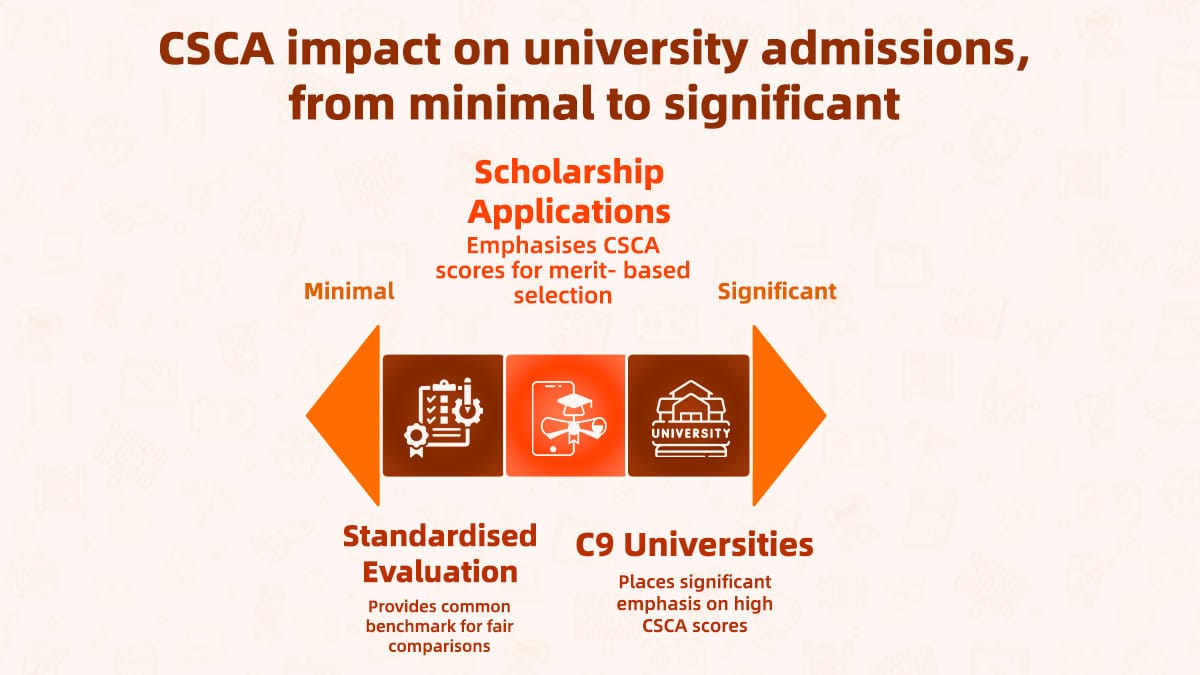
CSCA changes how universities check students. These changes create challenges and opportunities.
Standardized Evaluation Framework
Admission standards displayed a broad range of differences. Some schools accepted minimal documents. Others wanted extensive portfolios. This confused applicants.
CSCA provides a common benchmark. Universities can now conduct fair comparisons of students. Students from different backgrounds compete on equal terms. A Thai student has the same chance as a Kenyan student. Academic ability matters most.
Changes for Different Student Groups
International Students applying to university outside of China, are at great disadvantage since they need to appear for the compulsory CSCA Chinese language subject exams. And they must have HSK 4 or 5 experience too. However for international students who are already in Chinese high schools international department are at great advantage since they can speak and read Chinese in 2 years, plus their school prepare them for HSK exams as well as CSCA aligned subjects
To learn more about the services offered by Alifa Education, please visit our dedicated page. Whether you are a guardian, affiliated with an international or bilingual school in China, or a study abroad education agency, Alifa Edtech offers services tailored to your unique needs. Please visit our page to learn more about our offerings.
Students from Chinese high school in China need to adapt too. Their background helps. But they need strong CSCA scores. HSK Level 4 was enough before. Now it does not guarantee admission.
C9 universities and elite institutions
Top universities place significant emphasis on CSCA scores. C9 League schools set high small scores. They give major weight to CSCA.
These schools need specific subject scores. Engineering programmes want strong Maths and Physics scores. Medical programmes check Chemistry and Biology. Business schools look at Maths and Economics.
Scholarship Applications
The Chinese Government Scholarship selection now places considerable emphasis on CSCA scores. High scorers get an advantage. The test counts for at least 30% of decisions.
This measures merit based on goal criteria. Outstanding students can prove their abilities. This helps qualified candidates. It maintains programme quality.
Professional and Career Implications
CSCA preparation builds valuable skills. Strategic analysis becomes a habit. So does performance evaluation. These skills help in work later.
Strong CSCA performance leads to better jobs. Top programme graduates attract better employers. The test filters for academic ability early.
Universities link CSCA scores with professional education units. Some programmes need certain scores for advanced courses. This ensures that students can handle difficult material.
Want to put your brand in front of families, students, and education-focused readers? We're inviting select partners to advertise with us on our trusted blog.
Want to get featured? Click 'Learn more' and submit a story for us to include.
5 Ways to Boost Your University Application with CSCA
Success in CSCA requires strategic planning and the right preparation environment. Here are five proven approaches to maximize your admission chances:
1. Start Preparation Early from Grade 9
Begin CSCA preparation two to three years ahead of time, from Grade 9. Early preparation allows you to build strong foundations across all required subjects and gives you time to address weaker areas systematically.
2. Enroll in Chinese High School International Programs
International students in Chinese high school programs have a significant advantage. They can speak and read Chinese within 2 years, their schools prepare them for HSK exams, and the question structure and content align with Chinese national curriculum—giving them the best competitive advantage for CSCA subject exams.
3. Achieve High HSK Levels Alongside CSCA Scores
Strong HSK credentials (Level 4 or 5) combined with good CSCA scores create a powerful application profile. International students applying from outside China must pass compulsory CSCA Chinese language subject exams and need HSK 4 or 5 experience, making this dual achievement essential.
4. Master Your Major-Specific Subject Requirements
Focus strategically on subjects relevant to your intended program. Engineering applicants need strong Mathematics and Physics scores. Medical programs require Chemistry and Biology. Business schools evaluate Mathematics and Economics performance. Target your preparation to match your academic goals.
5. Work with Expert Education Consultants
Professional guidance from specialists like Alifa Education Services makes a critical difference. Expert consultants provide strategic analysis, help with strategy implementation, understand admission standards at different universities, and can place students in Chinese high school programs where CSCA preparation coaching is strong—positioning students to graduate with high HSK levels, good CSCA scores, and a Chinese high school diploma.
Preparing for CSCA: Tips for Success
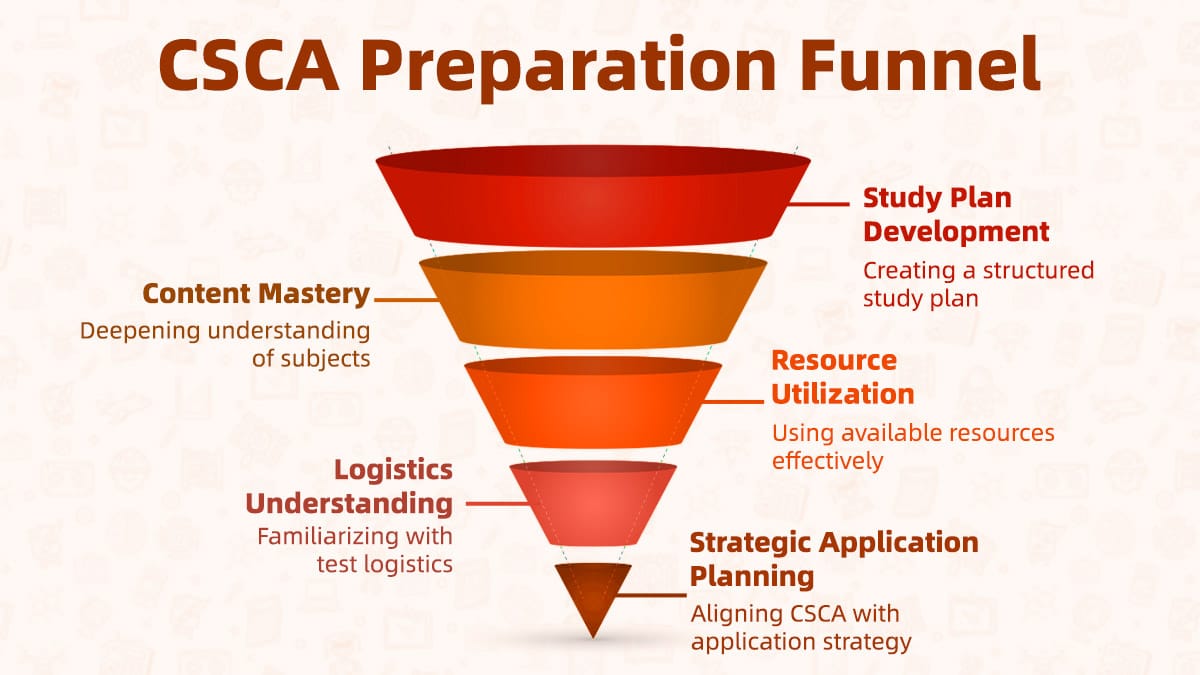
Success needs systematic preparation. Start early. Focus on strategy.
Develop a comprehensive study plan.
Start preparing two to three years ahead of time, from Grade 9. Create a detailed study plan. Cover all required subjects. Give more time to weaker areas.
Break preparation into phases. Start with basic concepts. Move to advanced material. Save the final weeks for practice tests.
Set specific goals for each session. Define what you will master each day. This creates accountability. It shows progress.
Master Subject-Specific Content
Practice problem-solving for Maths and Science. Understand concepts in depth. Do not memorise formulas. CSCA tests how you apply knowledge.Foreign students studying in Chinese high school programs are best equipped for CSCA subject exams. The question structure and content are the same as Chinese national curriculums. This gives these students a significant advantage in preparation.Language sections need different approaches. CSCA offers Professional Chinese in two versions: Humanities Chinese and Science Chinese. This test is 90 minutes with 100 multiple-choice questions. It has no English version and is required for all Chinese-taught programs. The test assesses academic reading and comprehension, not daily conversation. Mathematics, Physics, and Chemistry can be taken in Chinese or English based on your program requirements.
Subject tests need specialised knowledge. Engineering applicants should review Physics and Chemistry. Business students must understand the basics of Economics. Humanities students need deep Chinese skills.
Understand Test Logistics
Get familiar with both test formats. Practise with the format you will use.
Complete online registration early. Popular test centres fill up fast. Early registration gets you your preferred location.
Know what payment methods work in your region. Prepare test fees ahead of time. Check what ID documents test centres need.
Seek expert guidance.
Professional guidance makes a big difference. Alifa Education Services specializes in placing Grade 8 or Grade 9 students in Chinese high school programs where CSCA subject exam preparation coaching is strong.
Your child will graduate from Chinese high school with high HSK levels, good CSCA scores, and a Chinese high school diploma. This combination gives students the best competitive advantage for admission to top Chinese universities.
Education consultants who know CSCA provide strategic analysis and help with strategy implementation. They understand admission standards at different universities and guide students through the entire application process.
Conclusion
The China Scholastic Competency Assessment is a major shift. It creates transparent standards. This helps qualified students. It raises programme quality.
CSCA challenges students to show real readiness. Success needs preparation and planning. Students who approach it with strategy will find opportunities.
The timeline means applicants must adapt without delay. Understanding requirements early gives an advantage. Students who prepare will excel.
For universities, CSCA enables better selection. Schools can find candidates ready for tough programmes. This improves outcomes. It improves reputation.
The test connects to broader goals. Skills you develop during preparation serve you throughout your career. Strategic analysis and disciplined study help over the long term. CSCA preparation builds foundations for success.
China's higher education continues to expand its global presence. CSCA shows that China is serious about quality. The framework signals a commitment to excellence
Related Articles
 Emmanuel Usang
 John Wong
 Emmanuel Usang


Member comments