


Introduction
Most foreign families searching for a Beijing public school land on SDSZ. The school that actually accepts their child's foreign passport is a different institution — BNU High School Beijing, one founded in 1901 and one of the oldest state schools in China.
The High School Affiliated to Beijing Normal University (北京师范大学附属中学 — BNU High School) has enrolled international students since 1996. Its International Student Department (留学生部) has educated nearly a thousand students from over a dozen countries — in Chinese, following the national curriculum, aiming for Chinese universities. Confirmed — school brochure, August 2026
Enrollment is deliberately small: approximately 10 international students per year group. The department runs what it calls a 个性化、精品化、特色化 model — personalized, premium, and distinctive. Every student's track is assessed individually based on Chinese proficiency, academic background, and goals. Confirmed — school teacher, 2026-09
This guide covers every figure Alifa has verified from the school's own admission page and brochure: which track your child enters, what it costs semester by semester, which documents require apostille and which require notarisation in China, what the CSCA route looks like, and what happens if a subject exam is not passed first time.
Other names for this school: The High School Affiliated to BNU · High School Affiliated to BNU · BNU Affiliated High School · 北京师范大学附属中学 · 北师大附中 · 师大附中 · HSABNU. All refer to the same institution at Hepingmen, Xicheng District, Beijing.
Last reviewed 2026-09-14. See also: BNU High School vs SDSZ and how international students thrive at BNU. School fees and admission rules change. Confirm current figures with the school before submitting any application.
What is this school?
China's oldest government public secondary school, founded 1901. International students follow the national curriculum in Chinese and aim for Chinese universities.
Who is it for?
Foreign passport holders, age 12+, in good health with a legal guardian residing in Beijing. All nationalities. No Chinese nationality ever held.
What does it cost?
Tuition is RMB 23,100 per semester (language or certificate class). Chinese class insertion is RMB 26,400 per semester. Boarding adds RMB 10,000 per semester.
What is the realistic year-one cost?
Alifa estimates RMB 73,000 to 74,200 for a boarding student in the certificate class, including tuition, boarding, application fee, books, uniform and meals.
When can a student enroll?
September for all programs. February for the language class only. No mid-semester entry. Places fill on a first-come, first-served basis.
What is the language class progression rate?
100% of students who pass semester-end exams advance to the certificate class within two semesters. It is not an indefinite holding track.
Are there scholarships?
No. The school does not offer scholarships or tuition waivers for international students.
Where is it?
18 Nanxinhua Street, Hepingmen, Xicheng District, Beijing. 100 metres south of Hepingmen Metro Station (Line 4).
About the High School Affiliated to Beijing Normal University
BNU High School (北京师范大学附属中学) was founded in 1901, making it the earliest government-established public secondary school in China. It operates three campuses in Xicheng District, Beijing, under unified management, and educates around 4,000 students from Grades 7 to 12. Confirmed — school brochure, August 2026
History
The school was established by imperial decree in 1901 as the Five-City Academy (五城学堂). The original Qing government approval document is still held by the school. It is affiliated with Beijing Normal University (北京师范大学), one of China's leading teacher-training and research universities, and was among the first batch of National Model Schools (国家级示范校) designated by the Ministry of Education for implementing the new national high school curriculum.
School values
The school's four guiding values — Integrity (诚), Compassion (爱), Diligence (勤), Courage (勇) — are embedded in the physical environment and classroom culture. The school's educational philosophy is holistic education (全人格教育): developing students who are academically capable, well-rounded in character, grounded in their own culture, and ready for cross-cultural engagement.
The International Student Department
The International Student Department (留学生部) has been in operation since 1996 — one of the longer-established international divisions among China's government public secondary schools. Its guiding principle is 以文化育人: "educating through culture." Chinese language is taught not as an abstract system but as a living expression of Chinese civilisation — its festivals, arts, literature, philosophy and social customs are woven into the academic programme.
Intake per year group is deliberately kept at approximately 10 international students. This is a design choice, not a capacity limit. Small cohorts make genuine immersion and personalised instruction possible in a way that larger international programs cannot sustain. Confirmed — school teacher, 2026-09
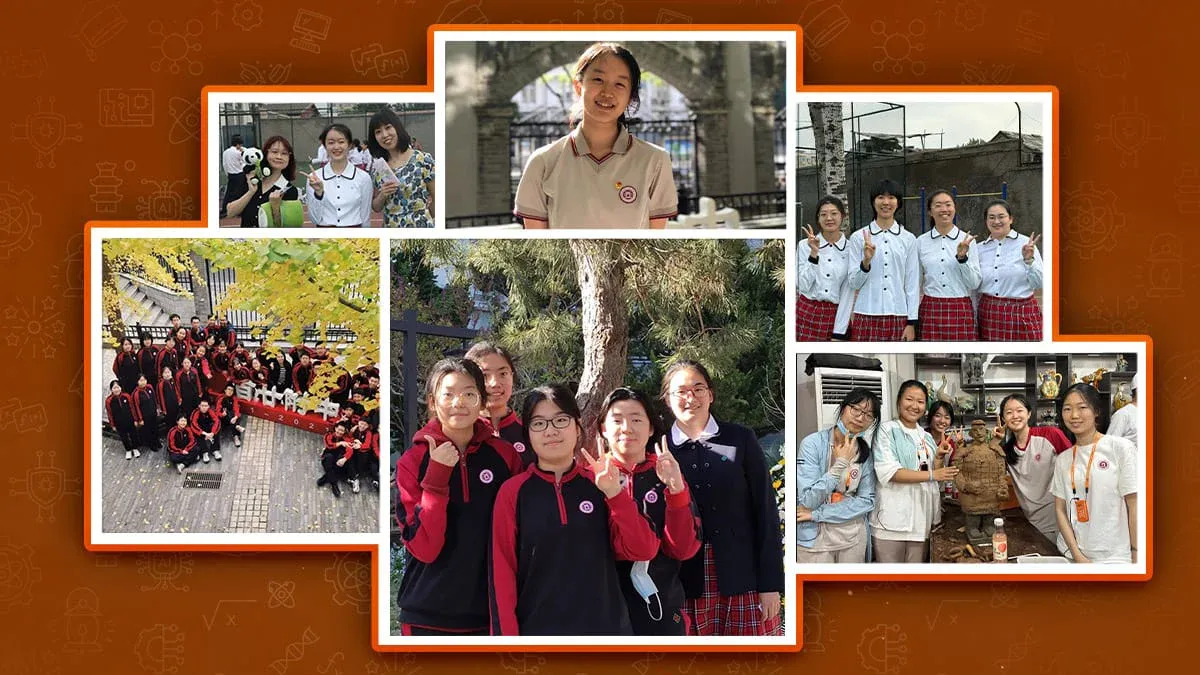
Who BNU High School Accepts
Foreign passport holders, aged 12 or above, in good health and of good character, who have entered Beijing legally and have a legal guardian residing in Beijing. Confirmed — admission page, 2026-03-19
Eligibility requirements
- Age: At least 12 years old at the time of enrollment
- Passport: Foreign passport holder (non-Chinese national)
- Health: In good physical health
- Character: Good conduct and behaviour (verified by school records from the previous school)
- Legal entry: Must have entered Beijing with valid visa and legal documentation
- Guardian in Beijing: A legal guardian must be residing in Beijing — this is a hard requirement, not a recommendation
Grades accepted
BNU High School accepts students into both junior high (Grades 7–9) and senior high (Grades 10–12). The grade a student enters depends on their age, academic background, and Chinese proficiency level.
Short-term exchange programs
Short-term exchange programs are not currently available at BNU High School. The school accepts students on semester-length or full academic-year bases only. Confirmed — school teacher, 2026-09
Enrollment windows
Students may only enroll at the start of two annual semesters:
- September semester — for all programs including the certificate class
- February semester — for the language class
There is no rolling mid-semester enrollment. The certificate class (学历班) starts in September only. Seats fill on a first-come, first-served basis — enrollment is open year-round until capacity is reached. Confirmed — school teacher, 2026-09

The Three Program Tracks
BNU High School runs three tracks for international students: the Chinese Language Program, the National High School Certificate Program, and integration into mainstream Chinese student classes. The track a student enters is determined by their entrance exam result and HSK level.
| Track | Chinese name | Who it's for | Entry requirement | Outcome |
|---|---|---|---|---|
| Chinese Language Program | 语言班 | Students with limited or zero Chinese | Interview + academic records from previous school | Beijing high school diploma (after progressing to certificate class) |
| National Certificate Program | 学历班 · 单独编班 | Students with some Chinese; international-only class | Written exam (Chinese, Maths, Foreign Language) + interview | Beijing Municipal High School Graduation Certificate |
| Chinese Class Integration | 插班学习 | Students with strong Chinese (HSK 4–6) | Written exam + interview + HSK verification | Beijing Municipal High School Graduation Certificate (same as Chinese students) |
↔ Swipe to see all columns
Language Program → Certificate Program: 100% progression rate
Every student who passes the semester-end examinations in the Language Program advances to the Certificate Program (single-class or Chinese-class insertion) within two semesters. The progression rate is 100%. The Language Program is a defined, time-bound on-ramp — not an indefinite holding track. Confirmed — school teacher, 2026-09
Chinese Class Integration: HSK requirements
| Integration type | Junior high students | Senior high students |
|---|---|---|
| Full-day, long-term | HSK Level 5, score 220+ | HSK Level 6, score 220+ |
| Half-day experience (1–2 semesters) | HSK Level 4, score 260+ | HSK Level 4, score 260+ |
| During half-day insertion, the remaining half-day is in the International Certificate Program. Students without a valid HSK certificate can sit the school's own internal placement test. | ||
↔ Swipe to see all columns
The learning pathway from zero Chinese
For a student arriving with no prior Chinese, the pathway looks like this:
Result: Pass → Enter Language Program (语言班)
Result: Good → Enter Certificate Program directly (单独编班)
Result: Excellent → Integrate into Chinese student classes directly (插班学习)
Step 2 — From Language Program: After 1–2 semesters, pass semester-end exams → advance to Certificate Program. Once HSK proficiency is sufficient, move toward Chinese class integration.
Step 3 — Final year (Grade 12): Apply to Chinese universities via CSCA through the International Department.
Fees at BNU High School — 2026–2027
All fees below are from the school's admission page (dated 2026-03-19), confirmed unchanged by school staff on 2026-09-14. Payment is made in person at the school by China-issued UnionPay card, after the school sends a payment notice. Confirmed — school teacher, 2026-09-14
| Item | Amount | How often |
|---|---|---|
| Application fee | RMB 500 | Once, at application |
| Tuition — Language Program (语言班) | RMB 23,100 | Per semester |
| Tuition — Certificate Program (学历班) | RMB 23,100 | Per semester |
| Tuition — Chinese Class Insertion (插班) | RMB 26,400 | Per semester |
| Boarding — on-campus dormitory | RMB 10,000 | Per semester |
| Textbooks | ~RMB 300 | Per semester |
| School uniform | ~RMB 300 | Once |
| Breakfast | RMB 3 | Per meal — prepaid card |
| Lunch or dinner | RMB 12–15 | Per meal — prepaid card |
Meals are paid by prepaid card, topped up as needed. No annual meal plan. All fees paid at school by China-issued UnionPay card.
Alifa first-year estimate — boarding student, certificate class
Total: RMB 73,000–74,200 Alifa estimate
Excludes: X1 student visa fees, the insurance policy required at enrollment, document apostille and notarisation costs, and international travel. These vary significantly by country of origin.
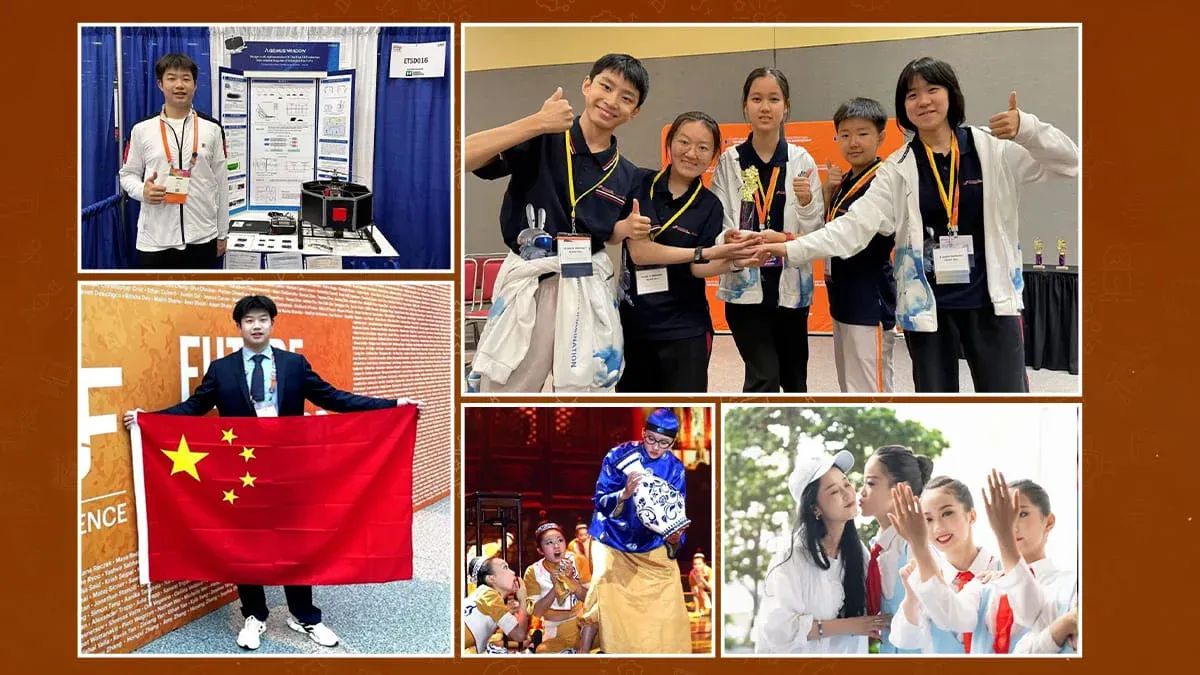
How to Apply to BNU High School
Applications are open year-round until places are filled. The certificate class starts in September only. The language class can start in September or February. All applicants sit an entrance assessment before being assigned to a track. Confirmed — school teacher, 2026-09
Admission process by track
- Certificate Program and Chinese Class Insertion: Written examination in core subjects (Mathematics, Chinese language, Foreign language) + personal interview
- Language Program: Interview + review of academic records and grades from the previous school
Entrance assessment
All applicants sit an entrance assessment covering: Chinese, English, Mathematics and a personal interview. The result determines which track the student enters — Language Program, Certificate Program, or Chinese class insertion. Students without a formal HSK certificate can sit the school's own internal placement test.
Insurance
A copy of a purchased insurance policy is a required document at enrolment. The school does not recommend any specific commercial insurer or policy type. Parents and guardians choose independently. The school will issue any supporting documentation that the chosen insurer requires. Confirmed — school teacher, 2026-09
Every international student needs a legal guardian in Beijing and an X1 student visa. Both require documents prepared outside China before the school application can proceed.
→ Guardianship and notarisation for foreign students in China — covers the Apostilled Guardian Delegation Letter (item 6 below) and the Chinese notary Guardian Guarantee Statement (item 7 below)
→ X1 / X2 student visa guide for China — covers what a first-time visa application inside China requires (item 8 below)
Required documents
Chinese national guardian: National ID card + Beijing Residence Permit
Foreign national guardian: Passport bio-data page + visa page
Items 6 and 7 are the most commonly missed and take the longest to prepare. Start them first — item 6 (apostille) is done in the student's country of origin, item 7 (notarisation) is done in China. They are two separate processes.
Payment method
All fees are paid in person at the school by China-issued UnionPay card, after the school sends an official payment notice. Overseas cards are not accepted. International families typically arrange payment through a local guardian or trusted contact in Beijing.
What Students Study at BNU High School
International students follow the same national curriculum as Chinese students, must pass the Beijing Academic Proficiency Examination (合格考) in each subject to earn the graduation certificate, and use the CSCA route to apply to Chinese universities.
National curriculum subjects
Core academic subjects: Chinese language · Mathematics · English · Physics · Chemistry · Biology · Geography · History · Politics · Information Technology
Completion-based subjects: Art · Science (Technology) · Physical Education
All subjects are taught in Chinese. The curriculum is identical to what Chinese national students study at BNU High School. Confirmed — brochure, August 2026
The 合格考 — Beijing Academic Proficiency Examination
To earn the Beijing Municipal High School Graduation Certificate (北京市普通高中毕业证书), students must pass the 合格考 in each subject. This exam is administered twice per year by the Beijing Municipal Education Commission. Students have multiple attempts — there is no limit on retakes for any single subject.
Chinese language instruction
The language curriculum covers five skills: vocabulary, reading, listening, speaking, and writing. Teaching is structured around active use — methods include vlog production, classroom presentations, drama performance, and dubbing. Language is treated as inseparable from culture.
Tiered instruction runs from zero-basis (零基础) through HSK 3–5. Students move up tiers based on progress. The Chinese language classroom is not a separate "international track" — it feeds into the national curriculum subjects taught in Chinese.
Comprehensive Practice curriculum
Project-based learning built around Chinese cultural themes forms part of the required national curriculum. Each unit uses a cultural element as its core. Recent modules include: the Shangsi Festival (上巳节), Chinese New Year (中国年), and tea culture. Activities include: kite painting, calligraphy, traditional festival customs, classical poetry, and folk arts. Cultural exchange events include making rice dumplings, Peking Opera, a performance of the Chinese drama 雷雨, and multicultural exhibitions where students present their home countries to the wider school community.
University preparation — CSCA and HSK
Students aiming for Chinese universities sit the CSCA (Chinese Standardized College Admission / 汉考), the national university entrance examination for international students. BNU High School's curriculum is explicitly aligned with the CSCA syllabus, and dedicated CSCA and HSK preparatory courses are built into the timetable.
Students at BNU High School achieve CSCA scores in the range of 50–100. Confirmed — school teacher, 2026-09
Application guidance curriculum (升学指导课程)
A structured university preparation track runs from Year 10 through Year 12:
| Year | Semester | Content |
|---|---|---|
| Year 10 (高一) | Semester 1 | Career planning |
| Year 10 (高一) | Semester 2 | Leadership skills |
| Year 11 (高二) | Semester 1 | Speech and presentation; Chinese and international protocol |
| Year 11 (高二) | Semester 2 | University selection; major exploration (seminars, visits); career experience activities |
| Year 12 (高三) | Semester 1 | CV writing in Chinese; CV writing in English; mock application system practice |
| Year 12 (高三) | Semester 2 | Mock interview practice |
Where graduates go
Alumni from the 2020–2023 cohorts enrolled at some of China's most competitive universities, including: Peking University, Tsinghua University, Zhejiang University, Fudan University, Shanghai Jiao Tong University, Nanjing University, Beihang University, Renmin University of China, Beijing Institute of Technology, East China Normal University, Beijing Foreign Studies University, Wuhan University, China Central Academy of Fine Arts, and Beijing Normal University.
The number of graduates varies year by year. Current and complete graduate destination data: bjsdfz.com/list-128-1.html Confirmed — school teacher, 2026-09
Location, Campuses and Contacts
BNU High School operates three campuses in Xicheng District, central Beijing, under unified management. The main campus of the International Student Department is at 18 Nanxinhua Street, Hepingmen — 100 metres south of Hepingmen Metro Station.
Address
北京师范大学附属中学
18 Nanxinhua Street, Hepingmen, Xicheng District, Beijing
北京市西城区和平门南新华街18号
Postcode: 100052
Metro: Hepingmen Station (Line 4) — 100 metres south. The closest major key-stage secondary school to any Beijing metro station.
Campuses
The school operates three campuses, all in Xicheng District, under unified management. The International Student Department is based at the main campus. Dormitory accommodation is on-campus.
Contact details
Phone: 8319-3000-7899
School website: www.bjsdfz.com
Graduate destinations: bjsdfz.com/list-128-1.html
WeChat Official Account: The International Student Department (留学生部) maintains an active WeChat Official Account — contact the school directly for the account name. Confirmed — school teacher, 2026-09
Watch the School
The High School Affiliated to Beijing Normal University Videos
What Alifa Checked About BNU High School
| Item | What we found | Status |
|---|---|---|
| Founded | 1901 — China's earliest public school | Confirmed — school document |
| International dept since | 1996 — nearly 1,000 students educated, from 12+ countries | Confirmed |
| Current intake per grade | ~10 international students per grade | Teacher-confirmed |
| Enrolment timing | September or February start only — no mid-semester entry | Teacher-confirmed |
| Language → academic progression | 100% of language students who pass semester exams advance within 1–2 semesters | Teacher-confirmed |
| Fees 2026–2027 | Language/Academic: RMB 23,100/sem · Integration: RMB 26,400/sem · Boarding: RMB 10,000/sem · Application: RMB 500 | Teacher-confirmed |
| CSCA scores | Range 50 to 100 at BNU | Teacher-confirmed |
| Qualification exam retakes | Multiple retakes allowed; unpassed exams affect top university applications | Teacher-confirmed |
| Scholarships | None — no scholarships or waivers for international students | Teacher-confirmed |
| Short-term exchange | No short-term exchange programmes currently | Teacher-confirmed |
| Insurance | Family selects independently — school does not recommend any insurer but can issue required certificates | Teacher-confirmed |
| Integration HSK requirements | Full-day: HSK 5 (220+) junior / HSK 6 (220+) senior. Half-day: HSK 4 (260+) | Confirmed — official document |
| Graduate destinations | Published at bjsdfz.com/list-128-1.html — varies by year | Teacher-confirmed |
| WeChat account | International Student Department has an official WeChat public account | Teacher-confirmed |
↔ Scroll on mobile
Ask before you pay the application fee
- Which track? Ask the school to confirm which track your child qualifies for based on their current Chinese level.
- Available places. Confirm places in your child's grade before arranging travel — enrolment closes when the year group is full.
- Guardianship. Ask exactly which guardianship documents your country requires and whether the apostille route has changed.
- University target. Ask the school to name Chinese universities that accepted BNU international graduates in your child's target subject area.
- WeChat account. Ask for the official WeChat account QR code of the International Student Department for ongoing updates.
- Insurance. Ask what minimum coverage the school recommends, even if it won't name an insurer.
Last reviewed: September 2026 by Alifa Education, using the school's official 2026 admission document and teacher statements. Fees and rules change — confirm with the school before making any payment.
Frequently Asked Questions
What programs does BNU High School offer for international students?
BNU High School offers three tracks. The Chinese Language Program (语言班) is for students building Chinese from zero. The National High School Certificate Program (学历班) runs in an international-only small class. Chinese Class Insertion (插班) is for students with HSK 4–6 who study alongside Chinese national students. Short-term exchange programs are not currently offered. School teacher, 2026-09
What is the language class progression rate at BNU High School?
100%. Every student who passes the semester-end examinations in the Language Program advances to the Certificate Program within two semesters. The Language Program is a time-bounded on-ramp — not an indefinite holding track. School teacher, 2026-09
When can international students enroll at BNU High School?
Students may only enroll at the start of two semesters each year: September (all programs, including the certificate class) and February (language class only). There is no mid-semester enrollment. Applications are accepted year-round until places are filled. School teacher, 2026-09
How much does BNU High School cost for international students in 2026–2027?
Per semester: RMB 23,100 for the language or certificate class; RMB 26,400 for Chinese class insertion; RMB 10,000 for on-campus boarding. Application fee is RMB 500 (once). Alifa estimates the first full year at RMB 73,000–74,200 for a boarding student in the certificate class, including tuition, boarding, books, uniform, and meals. Confirmed — school teacher, 2026-09-14
Are there scholarships for international students at BNU High School?
No. BNU High School does not offer scholarships or tuition waivers for international students. School teacher, 2026-09
What HSK level is needed for Chinese class insertion at BNU High School?
Full-day long-term insertion: HSK 5 (score 220+) for junior high; HSK 6 (score 220+) for senior high. Half-day experience insertion (1–2 semesters): HSK 4 (score 260+) for both. Students without a certificate can sit the school's own internal placement test. Confirmed — admission page, 2026-03-19
What happens if an international student fails the 合格考?
The student may retake that subject in future exam sittings — no maximum limit on retakes. The 合格考 runs twice per year, arranged by the Beijing Municipal Education Commission. If a subject is still unpassed at the time of university application, the student may receive the school's graduation certificate, but unpassed subjects will reduce competitiveness for China's top-tier universities. School teacher, 2026-09
What CSCA scores do BNU High School students achieve?
Students at BNU High School achieve CSCA (汉考) scores in the range of 50 to 100. The school's curriculum is explicitly aligned with the CSCA syllabus. Dedicated CSCA and HSK preparatory courses are built into the timetable. School teacher, 2026-09
Does a BNU High School international student need a legal guardian in Beijing?
Yes — this is a hard enrollment condition, not a recommendation. Every international student must have a legal guardian residing in Beijing. The guardian must be documented with an Apostilled Guardian Delegation Letter (海牙认证的监护人委托书) and a Guardian Guarantee Statement notarised by a Chinese notary office (声明公证). Alifa can arrange guardianship in Beijing for families who need it. See the guardianship and notarisation guide. Confirmed — admission page, 2026-03-19
Which universities do BNU High School international graduates attend?
Alumni from 2020–2023 enrolled at: Peking University, Tsinghua University, Zhejiang University, Fudan University, Shanghai Jiao Tong University, Nanjing University, Beihang University, Renmin University of China, Beijing Institute of Technology, East China Normal University, Beijing Foreign Studies University, Wuhan University, China Central Academy of Fine Arts, and Beijing Normal University. The number of graduates varies year by year. For the full current list: bjsdfz.com/list-128-1.html. School teacher, 2026-09
Is BNU High School the same as SDSZ? How do I tell them apart?
No — they are two different schools, both affiliated with Beijing Normal University. BNU High School (北京师范大学附属中学 / 北师大附中) accepts foreign passport holders through its International Student Department and has done so since 1996. SDSZ (北京师范大学附属实验中学 / 北师大附实) requires students to sit the Beijing city secondary school entrance exam and does not accept international applicants through a comparable route. If you want a foreign student to study in Chinese and apply to Chinese universities, BNU High School is the one.
Alifa Education Services
Is BNU High School Right for Your Family?
It fits a child aged 12 or above who holds a foreign passport, wants to study in Chinese alongside Chinese students, and is aiming for a Chinese university through the CSCA route. It suits families who are committed to genuine immersion — not an English-track international school — and who can arrange or already have a legal guardian in Beijing, as the school requires.
It does not fit a family aiming at a Western university, a student who needs instruction in English, a child who cannot have a guardian in Beijing, or anyone looking for a short-term exchange programme. Alifa Education works with families across the Belt and Road region and provides China-based guardianship for students who need it — including the Apostilled Delegation Letter and Beijing notarisation that BNU High School requires.
✉ Ask Our Consultant About BNU High School →Related Guides
Comparison
BNU High School vs SDSZ International Department
Two Beijing schools, almost the same name. Only one accepts a foreign passport. Side-by-side facts, fees and which takes your child.
Student experience
How International Students Thrive at RDFZ and BNU in Beijing
Inside look at what daily school life looks like for a foreign student enrolled in a Chinese public school in Beijing.
Legal requirement
Guardianship and Notarisation for Foreign Students in China
Every BNU High School student needs a legal guardian in Beijing. This guide covers the Apostilled Delegation Letter and the Chinese notary statement step by step.
Visa
X1 / X2 Student Visa Guide for China
BNU High School enrollment requires an X1 study visa. This guide covers documents, the application process, and what changes at renewal.
Related Articles
 Emmanuel Usang
 Emmanuel Usang
 Emmanuel Usang
 Emmanuel Usang


Member comments