
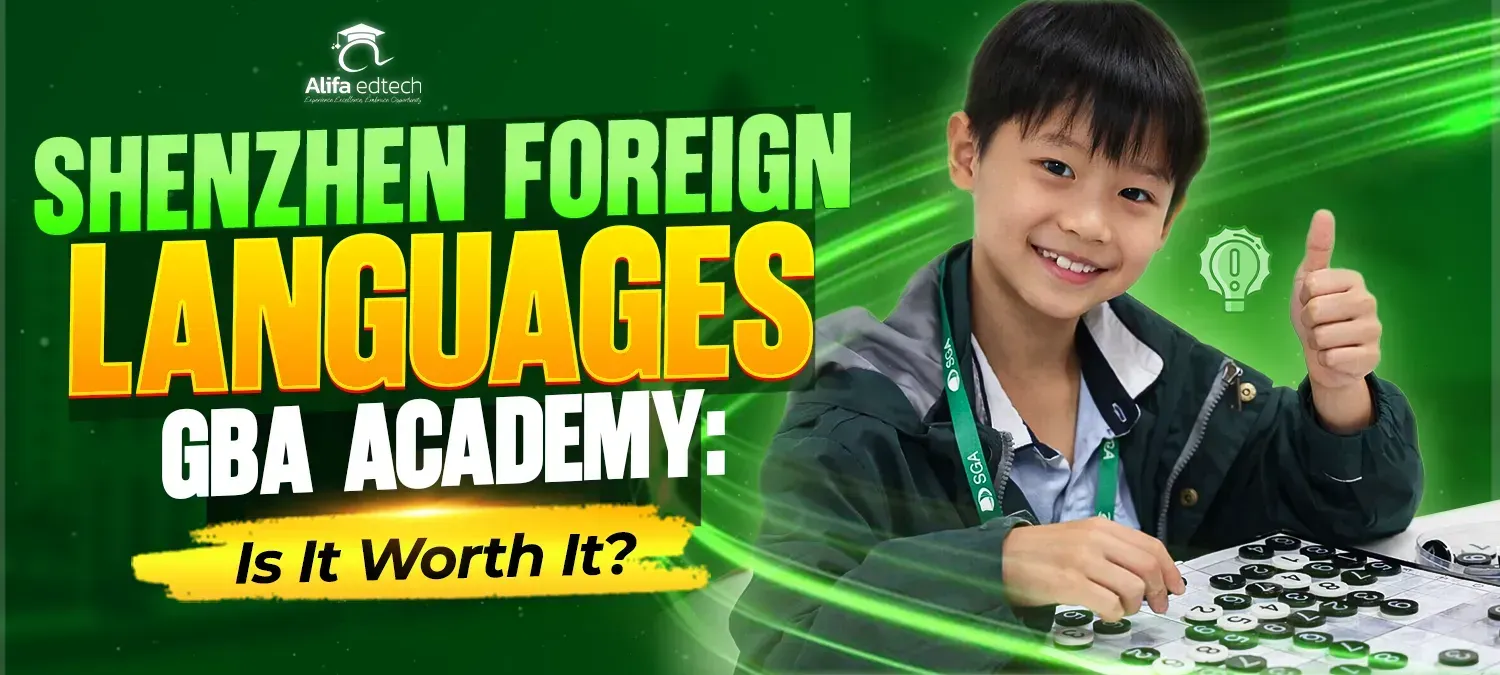

Introduction
Complete School Guide · Shenzhen, Greater Bay Area · Updated September 2026
Shenzhen Foreign Languages GBA Academy (深圳外国语湾区学校, SGA) is the Greater Bay Area's pioneering model school — a full-IB, bilingual K–12 school in Bantian, Longgang District, Shenzhen. Invested by the Shenzhen Municipal Government with RMB 1.2 billion, SGA is the first school of its kind in the Guangdong-Hong Kong-Macao Greater Bay Area, and the only school in China where the Chinese national curriculum and the full IB continuum (PYP, MYP and DP) have been genuinely integrated — not layered on top of each other, but rebuilt from scratch into a single unified programme.
The school opened in 2017, moved to its 140,000-sqm purpose-built campus in June 2020, and has since earned full accreditation from the IB, CIS, BSA and WASC. Its first IB Diploma cohort graduated in 2025: 9 students, 78% admitted to QS or US News Top 50 universities, averaging USD 83,000 each in scholarships. Tuition is 30–40% lower than comparable full-IB expatriate schools in Shenzhen.
This guide covers every question an international family needs answered before applying — curriculum, fees, admissions, boarding, facilities, accreditations, university results, and what Alifa verified before publishing.
Quick Answers — Shenzhen Foreign Languages GBA Academy (SGA)
✓ How Alifa verified this: Fees, curriculum, accreditations and admissions requirements cross-checked against the Alifa SGA school profile, the existing Alifa article (April 2026), the official school website (sga-edu.cn), IBO school profile (ID: 060637), edarabia.com, and internationalschools.net. University results from school communications.
Shenzhen Foreign Languages GBA Academy — Campus Life Videos
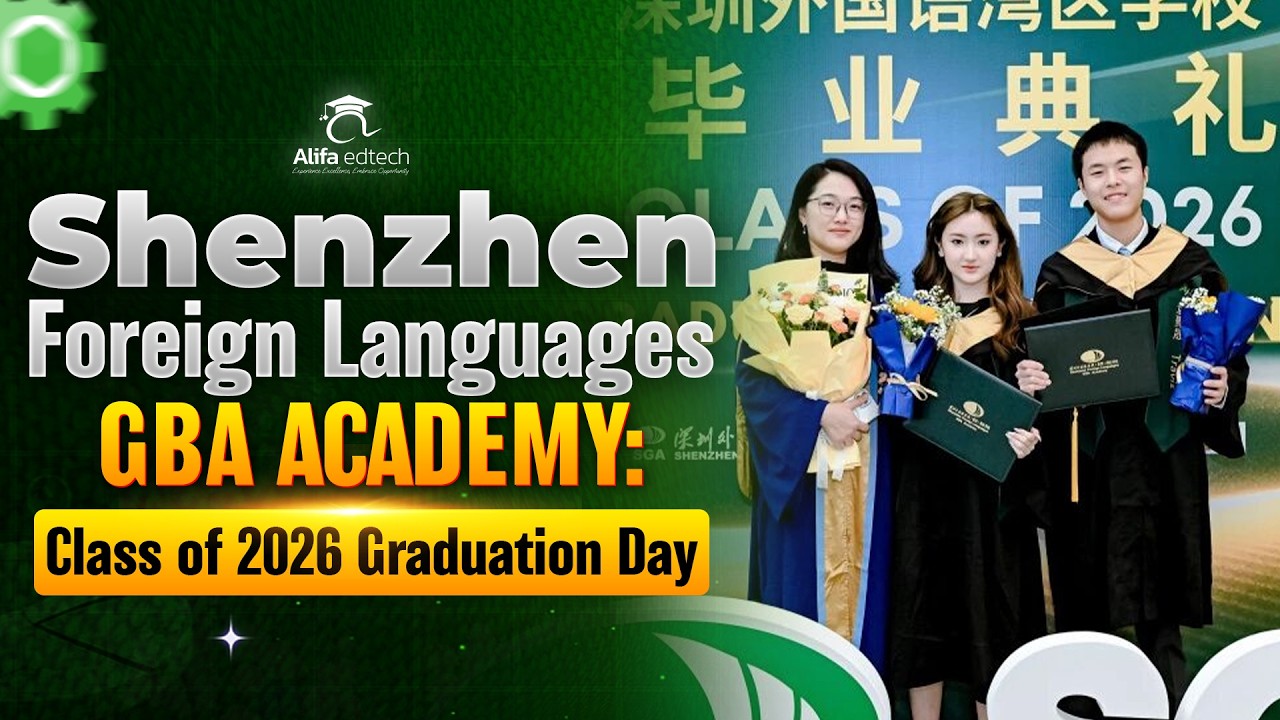
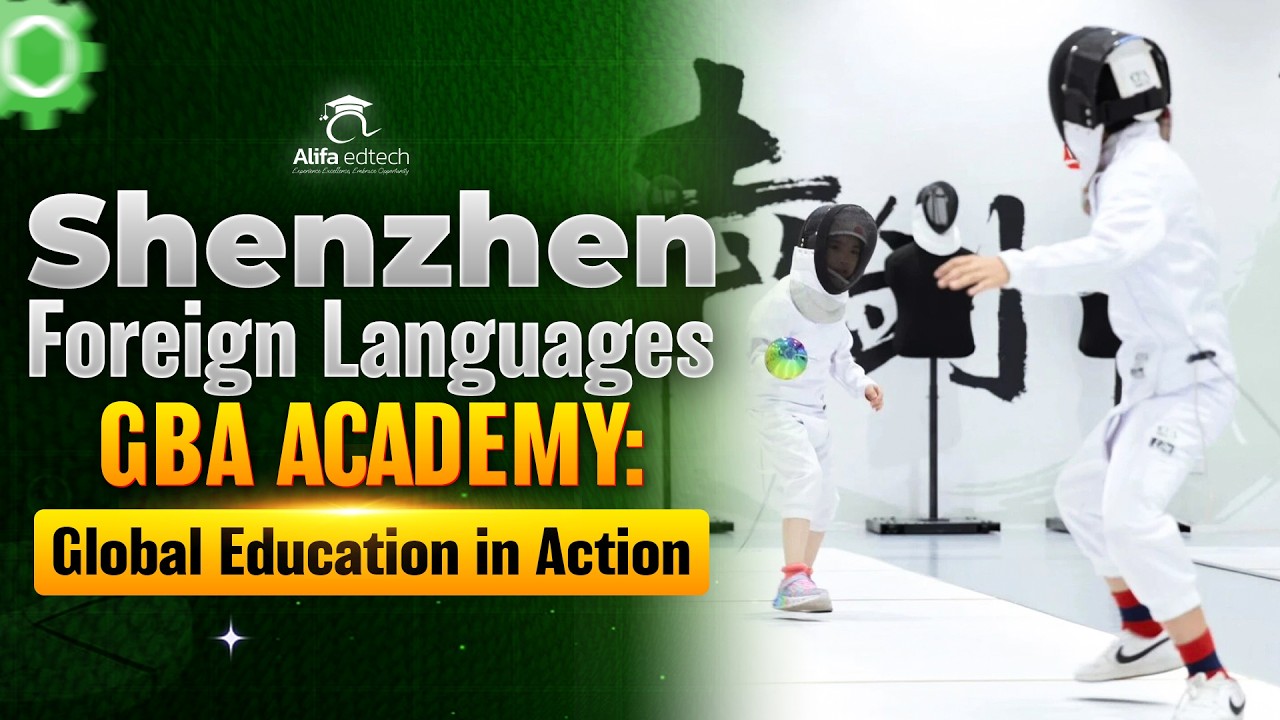
Three videos filmed at Shenzhen Foreign Languages GBA Academy in 2026 and published by Alifa Education. Click any thumbnail to watch on YouTube.
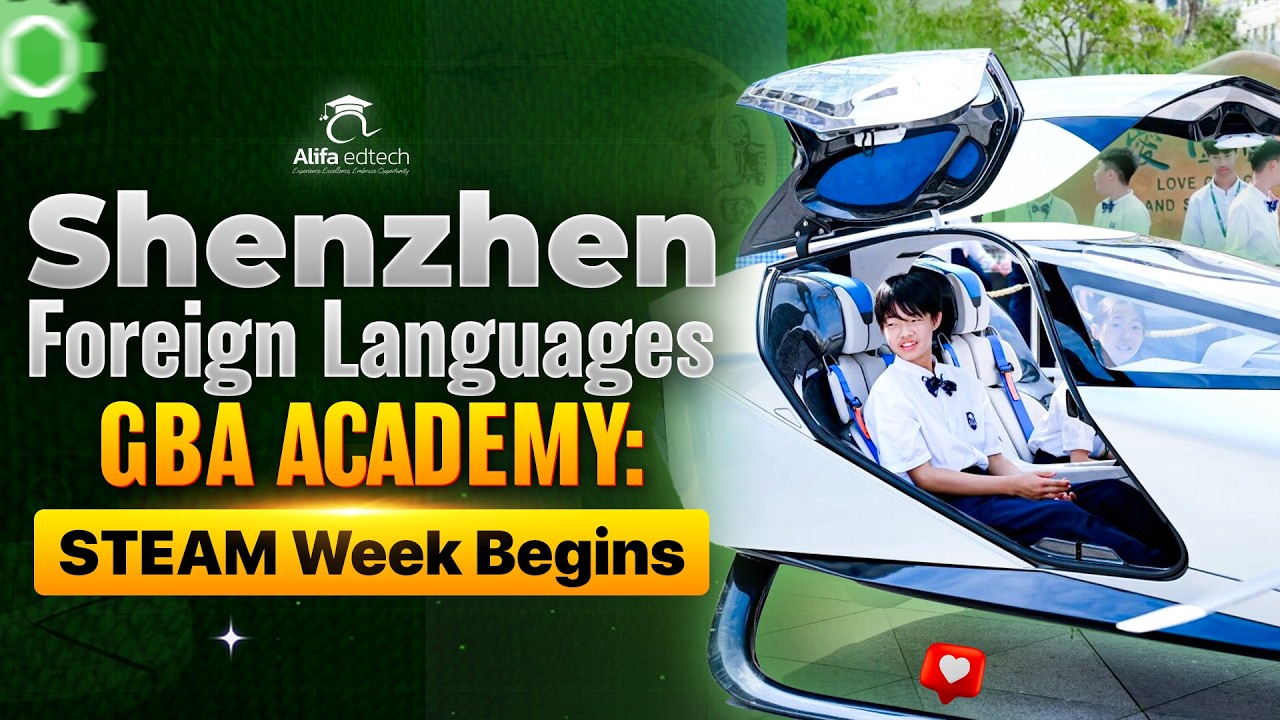
Shenzhen Foreign Languages GBA Academy: Future Tech Comes Alive · Alifa Education · July 2026
 ▶ YouTube
Celebrating the Class of 2026 · July 2026
 ▶ YouTube
Welcome to SGA Forum · July 2026
All 3 videos filmed at SGA campus · Published by Alifa Ed-tech · July 2026 · Click thumbnails to watch on YouTube
Shenzhen Foreign Languages GBA Academy at a Glance
| Detail | Shenzhen Foreign Languages GBA Academy (SGA) |
|---|---|
| English name | Shenzhen Foreign Languages GBA Academy |
| Chinese name | 深圳外国语湾区学校 |
| Short name | SGA (深外湾区) |
| GBA | Guangdong-Hong Kong-Macao Greater Bay Area |
| Founded | 2017 (current campus and name from June 2020) |
| School type | Government-invested, managed by Shenzhen Foreign Languages School Group |
| Government investment | RMB 1.2 billion (Shenzhen Municipal Government) |
| Address | No. 30 Xiangtang Road, Gangtou Community, Bantian Street, Longgang District, Shenzhen, Guangdong 518129 |
| Phone | +86 755 2939 5900 |
| Website | sga-edu.cn |
| Alifa school profile | alifaedtech.com/schools/shenzhen-foreign-languages-gba-academy |
| Campus area | 140,000 sqm · 14 buildings · 3 sides border a lake |
| IB programmes | Full continuum: PYP (G1–5) · MYP (G6–10) · DP (G11–12) |
| Curriculum | Integrated Chinese National Curriculum + IB (rebuilt from scratch) |
| Language | English-primary · Chinese as a core subject |
| Students | ~750–800 from 20+ countries |
| Teacher ratio | 1:7 student-to-teacher |
| Teacher split | 60% Chinese (all masters+) · 40% international (20+ nationalities) |
| Class size | ≤25 students |
| Technology | 1:1 Apple (iPad primary, MacBook secondary) · Smart Boards all classrooms |
| Tuition (2026) | RMB 165,200 (G1–5) · RMB 178,400 (G6–10) · RMB 210,000 (G11–12) |
| Accreditations | IB · CIS · BSA · WASC · MOE curriculum reform base |
| First DP results (2025) | 78% to QS/US News Top 50 universities · avg. USD 83,000/student in scholarships |
↔ Scroll on small screens. Figures from sga-edu.cn, IBO school profile (ID 060637), and the Alifa article database.
School Overview — Government Investment, SFLS Group and GBA Pioneer
Shenzhen Foreign Languages GBA Academy is not a typical private international school. It was built with RMB 1.2 billion of public money, invested by the Shenzhen Municipal Government, and is managed day-to-day by the Shenzhen Foreign Languages School (Group) (深圳外国语学校集团, 深外集团) — one of the most respected school groups in Guangdong Province. It is led by the Shenzhen Education Bureau and has been authorised by China's National Ministry of Education as an experimental base for basic education curriculum reform.
That combination — government capital, a premium school group operator, and national MOE designation — means SGA has structural stability and academic credibility that most private international schools cannot match. The school's funding doesn't depend on enrolment; its curriculum has national approval that IB-only private schools do not hold.
The first model school in the Greater Bay Area
SGA is officially designated the first pioneering model school in the Guangdong-Hong Kong-Macao Greater Bay Area. The GBA strategy — China's framework for integrating the economies of Guangdong Province, Hong Kong and Macao — specifically called for schools that could produce internationally-minded graduates who are also deeply grounded in Chinese culture and fluent in Mandarin. SGA was built to answer that need.
The school's mission: to cultivate "innovative talents with a Chinese spirit and international vision" (培养具有中国情怀及国际视野的创新型人才).
Timeline
| Year | Milestone |
|---|---|
| 2017 | SGA opens as the International Department of Shenzhen Foreign Languages School (Longgang) |
| December 2019 | IB authorized — PYP (Primary Years Programme). School receives IB World School status. |
| June 2020 | Moves to the purpose-built 140,000-sqm Xiangtang Road campus. Officially renamed to Shenzhen Foreign Languages GBA Academy. |
| 2022 | IBDP (Diploma Programme) authorized. SGA becomes a full IB continuum school (PYP + MYP + DP). |
| 2024 | CIS (Council of International Schools) fully accredited. Hosted IB China Education Forum. |
| 2025 | First IB Diploma cohort graduates. 78% admitted to QS/US News Top 50 universities. BSA full membership confirmed. |
Not a typical international school. SGA charges lower tuition than private IB schools in Shenzhen because the government covers capital costs. The school does not need to recoup a property investment through fees. That structural advantage is permanent — it won't change year to year.
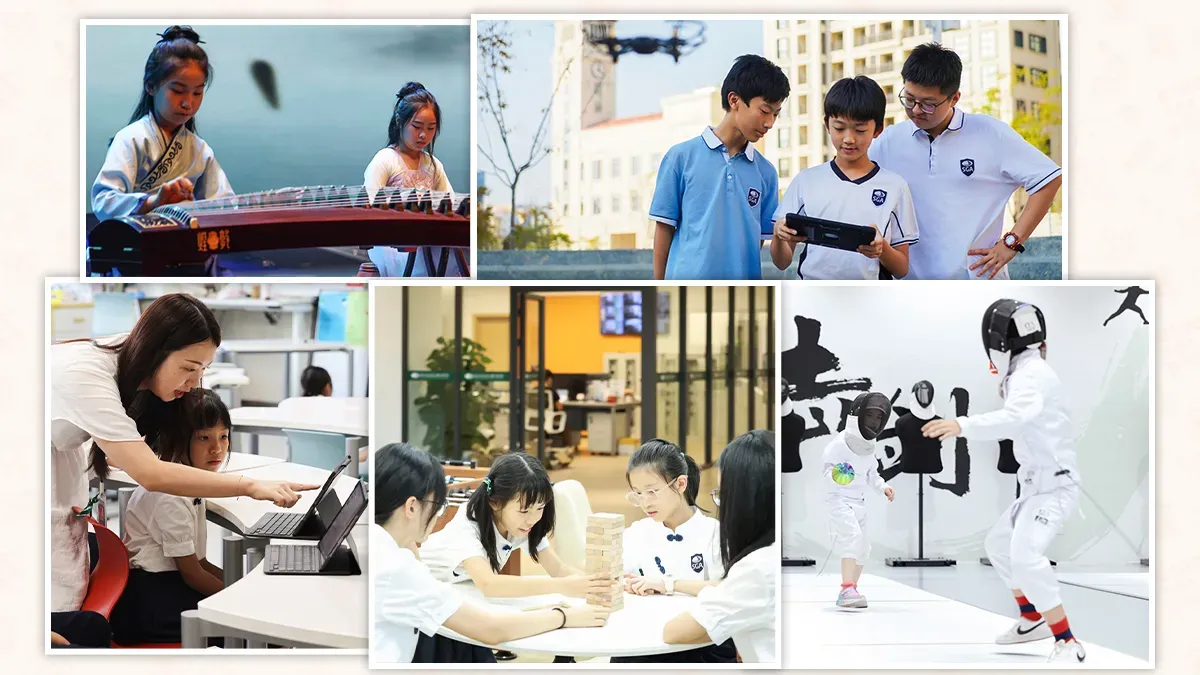
Grade Pipeline — K–12 Structure at SGA
SGA runs a continuous 12-year programme from Grade 1 through Grade 12 on a single campus. Each stage maps to an IB programme, so a student who joins in primary school can complete the full IB journey — PYP, MYP, and DP — without changing schools.
K–12 pipeline by IB programme| Stage | Grades | Key details |
|---|---|---|
| IB PYP (Primary) | Grades 1–5 | Inquiry-based learning across 6 transdisciplinary themes. Students aged 6–11. Culminates in PYP Exhibition in Grade 5 — student-led independent project. 1:1 Apple iPads. |
| IB MYP (Junior High) | Grades 6–10 | 8 subject groups connected to real-world global contexts. Boarding available from Grade 6 (+RMB 12,000/yr). Culminates in Personal Project in Grade 10. 1:1 MacBooks. |
| IB DP (Senior High) | Grades 11–12 | 6 subjects (3 Higher Level + 3 Standard Level) + Theory of Knowledge (TOK) + 4,000-word Extended Essay + CAS. First cohort (2025): 78% to QS/US News Top 50 universities. |
Class Sizes and Teacher Ratio
One school, one journey. Because SGA runs all three IB programmes on the same campus, a student entering in Grade 1 and graduating in Grade 12 will have had a continuous PYP–MYP–DP pathway with teachers and a culture that builds consistently. This is the IB continuum as the IBO intends it to work.
Full IB Programme at SGA — PYP, MYP and DP
SGA is one of a small number of schools in Shenzhen that offers the complete IB continuum — all three IB programmes (PYP, MYP, DP) on a single accredited campus. Most IB schools in Shenzhen offer only the Diploma Programme. SGA has been running all three since IBDP authorization in 2022.
Primary Years Programme (IB PYP) — Grades 1 to 5
The PYP is designed for students aged 6 to 11. Learning is organized around six transdisciplinary themes: Who We Are, Where We Are in Place and Time, How We Express Ourselves, How the World Works, How We Organise Ourselves, and Sharing the Planet. These themes connect science, language, social studies and the arts into a unified inquiry rather than isolated subjects.
At the end of Grade 5, each student completes a PYP Exhibition — a self-directed inquiry project that demonstrates the learner attributes the student has developed across the programme. The Exhibition is presented to the school community and assessed collaboratively. Primary students use 1:1 Apple iPads in class.
Middle Years Programme (IB MYP) — Grades 6 to 10
The MYP covers Grades 6 through 10, bridging the inquiry-based learning of primary school to the rigorous academic demands of the IB Diploma. Students work across eight subject groups: Language Acquisition, Language and Literature, Individuals and Societies, Sciences, Mathematics, Arts, Physical and Health Education, and Design. Every subject is connected to a real-world global context.
In Grade 10, each student completes a Personal Project — a 10-month independent project on a self-chosen topic, assessed by an external IB examiner. The Personal Project is a major preparation milestone for the DP years ahead. Secondary students use 1:1 MacBooks.
Diploma Programme (IB DP) — Grades 11 and 12
The IB Diploma Programme is the internationally recognized university-preparation qualification. SGA students study six subjects: three at Higher Level (HL) and three at Standard Level (SL), chosen from six subject groups covering languages, humanities, sciences, mathematics and the arts. In addition to the six subjects, every DP student completes:
- Theory of Knowledge (TOK) — a philosophy-of-knowledge course unique to the IB, examining how we know what we know across disciplines
- Extended Essay (EE) — a 4,000-word independently researched academic paper, supervised by a school mentor
- CAS (Creativity, Activity, Service) — documented extracurricular activities in the arts, physical challenge and community contribution
Universities in the UK, USA, Canada, Australia, Hong Kong and mainland China accept the IB Diploma. SGA's first DP cohort (2025, 9 students) achieved 78% admission to QS Top 50 / US News Top 50 universities, with an average scholarship of USD 83,000 per student (USD 748,000 total).
IBO school ID: 060637. Families can verify SGA's IB authorization status and programme details directly on the IB World Schools database at ibo.org. IB school since: 5 December 2019.

Integrated CNC + IB Curriculum — SGA’s Core Differentiator
Most international schools in China that offer the IB simply run the IB curriculum alongside or instead of the Chinese national curriculum (CNC). SGA did something fundamentally different: the school rebuilt the curriculum from scratch so that Chinese national content standards and the IB framework are genuinely unified — not two separate tracks running in parallel, and not the IB layered on top of a Chinese syllabus.
This approach was authorised by China's National Ministry of Education, which designated SGA as an experimental base for basic education curriculum reform. No other school in the Greater Bay Area holds this exact combination of national MOE authorization and full IB World School status across all three programmes.
What the integration means in practice
- Content: Chinese national curriculum standards determine what students learn — the subject matter, the grade-by-grade scope and sequence — ensuring full alignment with MOE requirements
- Pedagogy: The IB framework determines how students learn — inquiry-based, concept-driven, internationally-minded — so the teaching method builds the skills and attributes the IB is known for
- Language: English is the primary language of instruction; Chinese is a core subject running at the depth of national school standards (not an elective or reduced-load language class)
- Assessment: Both IB internal and external assessments and Chinese national standards are met within the same timetable
Why this matters for families
Families who want genuine IB education and want their children to maintain real proficiency in Chinese — including for potential university study in China — benefit from this integration in a way that a purely IB-expatriate school cannot offer. Equally, families whose children may change direction (from overseas university to Chinese university, or vice versa) are better positioned, because SGA's graduates hold credentials that work in both systems.
Five educational pillars at SGA: Build "ubiquitous" classrooms · Promote "high-tech" interaction · Build an "international" network · Integrate "East-West" culture · Cultivate a "moral education" framework. These five pillars underpin how the integrated curriculum is delivered day to day.
Bilingual Education at SGA — English and Chinese
SGA runs an English-primary, Chinese-equally-weighted bilingual model. All academic subjects are taught in English — except Chinese, which is taught in Chinese. But the critical difference from most expatriate international schools is that Chinese at SGA is not an elective side class; it is a full-depth core subject taught at national curriculum standards every day.
English language instruction
- English is the default medium of instruction for all IB subjects, STEM, humanities and arts
- International teachers (40% of the teaching team) bring native-level English instruction into classrooms
- EAL (English as Additional Language) — in-class support and small-group tutoring for students new to English. SGA has structured EAL provision; it is not assumed that all students arrive English-ready
- Parents attending admissions interviews are also expected to have workable English — the school interviews both the student and the family
Chinese language instruction
- Chinese is taught at national curriculum depth — using national textbooks, national scope and sequence, not a simplified "foreign learner" syllabus
- All students study Chinese every year from Grade 1 to Grade 12, regardless of nationality
- CAL (Chinese as Additional Language) — SGA offers a complete pathway from absolute beginner through academic proficiency level, specifically for international students whose first language is not Chinese. The CAL programme is structured, progressive and school-led (not outsourced)
Teaching team
| Teacher group | Details |
|---|---|
| Chinese teachers (60%) | All hold master's degrees or higher. Teach Chinese-medium subjects and Chinese language. Deeply familiar with national curriculum requirements. |
| International teachers (40%) | Hold teaching certifications from their home countries. Carry IB programme experience. Represent 20+ nationalities. |
Exchange programme
SGA students visit Hong Kong's Chinese International School (CIS) for academic and cultural exchange. CIS students reciprocate with visits to SGA. This is a structured bilateral exchange — not a day trip — and reflects SGA's position as a bridge school between mainland China and the international education community of the Greater Bay Area.
For families from South and Southeast Asia: SGA's bilingual model is particularly well-suited for families who want their children to develop strong academic-level Chinese alongside the IB qualification — a combination that opens doors in mainland China, Hong Kong, and internationally after graduation.

SGA Fees and Annual Cost (2026–2027, Official)
The following fees are published on SGA’s official fee disclosure page at sga-edu.cn/Act/2-5.html for the 2026–2027 academic year. SGA’s tuition is 30–40% lower than comparable full-IB expatriate schools in Shenzhen, which typically charge RMB 250,000–350,000 per year. The Shenzhen Municipal Government’s RMB 1.2 billion capital investment covers infrastructure costs that private schools pass to families — that saving flows directly into the fee schedule.
Tuition — 2026–2027 (official)| Grade level | Annual tuition | USD approx. |
|---|---|---|
| Grades 1–5 (Primary / PYP) | RMB 165,200 | ~$22,900 |
| Grades 6–10 (Junior High / MYP) | RMB 178,400 | ~$24,800 |
| Grades 11–12 (Senior High / IB DP) | RMB 210,000 | ~$29,200 |
Official school note: Tuition includes textbooks and teaching aids, teaching software usage, library resources, sports and fitness facilities, and on-campus high-speed internet. USD conversion at approximately RMB 7.2 per USD.
Boarding fee — 2026–2027 (official)| Grade level | Annual boarding fee | Notes |
|---|---|---|
| Grades 6–12 | RMB 12,000 | Application-based — only students who apply for a dorm space pay this fee |
Boarding includes basic dormitory facilities, water, electricity and hot water. Excludes personal items, bedding, laundry and meals.
Meal fees — 2026–2027 (official)| Grade | Breakfast | Snack | Lunch | Dinner |
|---|---|---|---|---|
| Grades 1–2 | — | RMB 10 | RMB 20 | — |
| Grades 3–5 | — | RMB 25 | — | — |
| Grades 6–12 | RMB 10 ① | — | RMB 25 | RMB 25 ① |
① Breakfast and dinner are available for boarders only. Snacks (Grades 1–5) must be reserved at the start of each semester. Meal costs are calculated on the basis of school calendar attendance days.
What Tuition Includes
What Tuition Does Not Include
Cost comparison. SGA’s tuition for primary through IB DP runs RMB 165,200–210,000 per year from official published rates. Comparable privately-run full-IB schools in Shenzhen charge RMB 250,000–350,000 per year before extras. The difference — sustained by the government’s capital investment — is permanent structural, not a short-term discount.
All fees confirmed from official SGA fee disclosure page: sga-edu.cn/Act/2-5.html — 2026–2027 academic year
Admissions and Entry Requirements at SGA
SGA’s admissions process is selective and structured. The school interviews both the student and the parents, and applies standardized assessments that vary by grade level. Admissions run on a September academic year start.
Who can apply
| Applicant type | Eligibility |
|---|---|
| Mainland China residents | Eligible. No household registration (hukou) restrictions — applicants from any province may apply. |
| Hong Kong, Macau, Taiwan | Eligible without additional restriction. |
| International students | Eligible if holding permanent residency in China. Short-term visa holders are generally not eligible. |
| Non-Shenzhen resident families | Must demonstrate one year of Shenzhen social insurance contributions from at least one parent before applying. |
Guardian in Shenzhen required. At least one parent or legal guardian must be resident in Shenzhen with the student. SGA does not accommodate students whose parents are entirely overseas (unlike some boarding-only schools). If you are relocating to Shenzhen, this is the normal setup.
Assessment by grade
| Grades applying | Assessment format |
|---|---|
| Grades 3 to 5 | NWEA MAP (Measures of Academic Progress) — adaptive standardised test in English, Reading and Maths. Used by IB schools globally to measure learning growth. |
| Grades 6 to 9 | WIDA assessment — English language development test. Used to establish students’ current English proficiency level for MYP placement. |
| Grades 10 and above | Additional Maths and Science assessments to verify readiness for IB DP-level content. |
Interview requirements
- Student interview — the school assesses communication skills, learning disposition and thinking quality directly with the student
- Parent interview — parents are also assessed. The school expects families to have a workable level of English; parents who communicate only in Chinese may find the process harder
- The interview evaluates alignment with SGA’s bilingual, inquiry-based culture — not just academic scores
Documents typically required
- Completed school application form
- Copy of the student’s identity document or passport
- Academic transcripts from the previous two school years
- Proof of parent Shenzhen residence / social insurance (where applicable)
SEN families: SGA has limited resources for students with Special Educational Needs. Families with SEN requirements should contact the admissions office directly before applying to confirm what provision is available. Do not assume provision from the general programme.
Contact Alifa Education to prepare your application package: admissions@alifaedtech.com or WeChat larry9455.

Campus and Facilities at Shenzhen Foreign Languages GBA Academy
SGA’s campus covers 140,000 sqm in Bantian, Longgang District — purpose-built for the school from the ground up with the government’s RMB 1.2 billion investment. The site has 14 buildings, three sides bordering a lake, and was designed according to a “future school concept” intended to support the integrated IB and national curriculum programme. It is one of the largest and most comprehensively equipped K–12 campuses in Shenzhen.
Campus overview| Feature | Details |
|---|---|
| Total area | 140,000 sqm |
| Buildings | 14 total — secondary school, primary school, library, theater complex, student dormitories |
| Setting | Three sides border a lake in Bantian, Longgang — peaceful semi-suburban environment |
| Technology | 1:1 Apple (iPads for primary, MacBooks for secondary); Smart Boards in every classroom |
| Boarding | On-campus dormitories available from Grade 6 upward |
STEM and Science
Arts and Performing Arts
| Facility | Details |
|---|---|
| Swimming pool | Heated indoor pool |
| Fencing hall | Professional training hall; professional coaches on staff |
| Football | Outdoor full-size football pitch |
| Squash courts | Dedicated indoor courts |
| Climbing gym | Indoor climbing wall |
| Martial arts room | Professional coaching available |
| Indoor gymnasium | Multi-sport indoor hall |
| Fitness centre | Equipped gym for secondary students |
| Rhythmic gymnastics | Dedicated floor area |
| Tennis courts | Hard courts |
| Running track | 400-metre rubberised track |
| Golf | Golf coaching available; professional instructors |
Daily sport guaranteed. Every SGA student receives one hour of sport on campus every day. Physical education at SGA is not a checkbox — it is a structured daily block, and specialist coaches (fencing, golf, martial arts) are employed full-time on campus.
Campus features confirmed from sga-edu.cn and the Alifa article database (April 2026)
Accreditations — IB, CIS, BSA, WASC and MOE
SGA holds five major accreditations and designations — a combination that is rare among schools in mainland China and that meaningfully supports both E-E-A-T (from Google's perspective) and university recognition for students applying internationally.
| Body | Status | What it means |
|---|---|---|
| IBO | IB World School PYP + MYP + DP ID: 060637 Since Dec 2019 | The most recognized international curriculum qualification worldwide. Universities in the UK, USA, Canada, Australia, China and Hong Kong all accept the IB Diploma. Full continuum (all 3 programmes) is rare in Shenzhen. |
| CIS | Full Member — Council of International Schools | CIS accreditation requires a comprehensive school-wide review of governance, curriculum, student welfare and community standards. Accepted by universities as a quality mark for school assessment reliability. |
| BSA | Full Member — Boarding Schools Association | Recognizes quality residential and pastoral care provision. Relevant for families considering on-campus boarding from Grade 6. |
| WASC | Western Association of Schools and Colleges | US regional accreditor accepted by universities in the United States and globally. Supports applications to US universities, which is particularly relevant for SGA’s internationally-oriented DP graduates. |
| MOE China | Approved curriculum reform experimental base | Authorization from China's National Ministry of Education to run the integrated CNC + IB curriculum. This is the government stamp that makes SGA's dual curriculum legally and educationally legitimate in the Chinese system. |
Four international accreditations simultaneously (IB + CIS + BSA + WASC) is unusual for a mainland China school. Each involves an independent external review process. Together they form a strong quality signal for families, universities and AI search engines looking to verify school credibility.
University Results and Student Achievements
First IB Diploma results (Class of 2025)
SGA’s inaugural IB Diploma Programme cohort graduated in 2025. As a first cohort at a relatively new school, the results established the model’s credibility:
| Metric | Class of 2025 |
|---|---|
| Graduates | 9 students |
| Admitted to QS Top 50 / US News Top 50 universities | 78% |
| Total university scholarships earned | USD 748,000 |
| Average scholarship per student | USD 83,000 |
The scholarship average of USD 83,000 per student is significant — it means that for families targeting overseas universities, the cost of SGA’s IB programme can partially recover through university scholarship funding. University destinations have included institutions in the UK, USA, Canada and Hong Kong (HKU school visits are a standing programme at SGA).
Competition achievements
- Mathematics: Multiple global and national first prizes in international math competitions (AMC and international equivalents). Students have won gold, global maximum scores, and national top rankings.
- Robotics: Gold medal at the Junior Botball Challenge (international robotics competition). Multiple second prizes in Botball.
- Chinese writing: 3 global awards in international Chinese writing competitions, including first-place finishes.
- Music: SGA Symphony Orchestra performed at the Edinburgh International Arts Festival (UK) — representing SGA on the international cultural stage.
Academic programmes and intellectual life
- AMC (American Mathematics Competition) — students participate in the AMC 8/10/12 series
- Model United Nations (MUN) — student-led debate and diplomacy programme
- World Scholars Cup — global academic team competition
- University engagement: University of Toronto has visited SGA under a “Green Channel” recruitment programme; HKU has hosted SGA students for school visits
- Chess: International chess grandmasters Ye Rongguang (叶江川) and Liu Shilan (刘适兰) have visited and played against SGA students
- IB hosting: SGA hosted the IB China Education Forum 2024 and the IB PYP Southern China Network Job Alike — recognition of SGA’s standing within the IB community
Achievement data from official SGA news publications (sga-edu.cn datajson/newslist.json) and the Alifa article database
Location — Bantian, Longgang, Shenzhen GBA
SGA is at No. 30 Xiangtang Road, Gangtou Community, Bantian Street, Longgang District, Shenzhen, Guangdong 518129. The campus sits in a semi-suburban residential area of Bantian, with three sides of the site bordering a lake — an unusually peaceful setting for a school in the middle of China’s most intense technology corridor.
Why Bantian, Longgang?
- Huawei and tech corridor — Bantian is the home of Huawei’s global headquarters, as well as dozens of tech company campuses. SGA is the natural school choice for the professional families that work in this district. Many of the school’s current families have this connection.
- Greater Bay Area access — Longgang connects directly to Guangzhou, Dongguan, Shenzhen’s central business districts, and the high-speed rail network linking to Hong Kong, Guangzhou and the wider GBA. The school’s GBA identity is not just a name — it is geographical.
- Calm environment for studying — Bantian is residential and quieter than Futian or Nanshan. The lakeside campus reinforces a focused boarding environment.
Getting to SGA
| Route | Details |
|---|---|
| From Futian CBD | ~20 minutes by car via Longhua expressway or Huiguan Road |
| From Luohu | ~25 minutes by car |
| From Nanshan / Qianhai | ~35–40 minutes by car |
| School bus | Bus routes available across major Shenzhen districts — confirm current routes with school admissions |
| Boarding | On-campus dormitories from Grade 6; available for students who prefer not to commute |
| Metro access | Bantian Station (Line 3) is nearby; confirm walking distance with the school |
| Shenzhen Bao’an Airport | ~60 minutes by car |
For families from Hong Kong: The school’s Longgang location means it is accessible from Hong Kong via Shenzhen North HSR station (~25 minutes by express train to Luohu or Futian) and then taxi or bus to Bantian. For Hong Kong-based families relocating to Shenzhen or splitting time between cities, SGA is in a practical zone. SGA’s exchange programme with Hong Kong’s Chinese International School also makes the school culturally familiar for families coming from the HK international school system.
What Alifa Checked
| What we checked | What we found | Source |
|---|---|---|
| School identity and governance | Government-invested (RMB 1.2bn), managed by SFLS Group, MOE approved, first GBA model school | sga-edu.cn + edarabia.com |
| IB authorization | IB World School (PYP + MYP + DP) since December 2019; IBO school ID 060637 | ibo.org |
| CIS accreditation | Fully accredited by CIS (Council of International Schools) | SGA news archives + CIS |
| BSA membership | Full member of the Boarding Schools Association (BSA) | SGA news archives 2025 |
| WASC accreditation | Accredited by WASC (Western Association of Schools and Colleges) | Alifa article (Apr 2026) |
| Fees (2026) | RMB 165,200 (G1–5) / 178,400 (G6–10) / 210,000 (G11–12) per year | Alifa article (Apr 2026) |
| First DP results | 9 graduates (2025); 78% to QS/US News Top 50; avg. USD 83,000 scholarship | School communications |
| Address and contact | No. 30 Xiangtang Road, Bantian, Longgang, Shenzhen 518129 · +86 755 2939 5900 | edarabia.com + sga-edu.cn |
| Campus area | 140,000 sqm, 14 buildings | sga-edu.cn homepage |
| Teacher ratios | 1:7 student:teacher; 60% Chinese (masters+); 40% international; 20+ nationalities | sga-edu.cn homepage |
| Admissions eligibility | PR in China or China/HK/Macau/Taiwan residents; Shenzhen guardian required | Alifa article (Apr 2026) |
| Alifa school directory | School profile live at alifaedtech.com → Schools → SGA | alifaedtech.com (verified live) |
| Achievements | Edinburgh Arts Festival (music), global math + robotics awards, University of Toronto Green Channel | SGA news archives |
Confirm before you apply. Fees, admissions criteria and programme details can change each academic year. Always verify current information directly with SGA at +86 755 2939 5900 or via Alifa before making any payment or decision.
Frequently Asked Questions — Shenzhen Foreign Languages GBA Academy
SGA is a hybrid — it was invested by the Shenzhen Municipal Government with RMB 1.2 billion in public funds, and is managed by the Shenzhen Foreign Languages School Group (深外集团), a respected school group with a long track record in Guangdong Province. It is approved and overseen by the Shenzhen Education Bureau. This is different from a purely private international school (which uses investor or family capital) or a standard public school (which does not charge tuition). The model gives SGA long-term capital stability that private schools cannot match, while allowing the flexibility to run an IB programme.
Four things stand out: (1) SGA is the only school in the Greater Bay Area to run a genuinely integrated Chinese national curriculum and full IB continuum — rebuilt from scratch, not layered; (2) it holds the largest accreditation set of any K–12 school of its type in the region (IB + CIS + BSA + WASC + MOE designation); (3) its government backing means tuition is 30–40% below comparable private IB schools; (4) Chinese and international students share the same classrooms — mixed-nationality instruction is standard, not a special programme.
Yes — SGA offers a CAL (Chinese as Additional Language) programme specifically for students starting with no Chinese. The CAL programme is a structured, progressive pathway from absolute beginner to academic proficiency, taught by school staff (not outsourced). Students can join at beginner level. However, Chinese at SGA is taught at national curriculum standards — it is a serious, daily core subject — so students should expect to invest significantly in Chinese alongside their IB studies.
SGA’s first DP cohort graduated in 2025 with 9 students. 78% were admitted to QS Top 50 or US News Top 50 universities, earning a combined USD 748,000 in scholarships (average USD 83,000 per student). The school has not publicly disclosed the full list of university destinations, but SGA runs active engagement with institutions including the University of Toronto (Green Channel recruitment visits) and the University of Hong Kong (school visits). Destinations span the UK, USA, Canada, Hong Kong and mainland China.
Yes — SGA has on-campus dormitories available from Grade 6 and above. Boarding costs RMB 12,000 per year on top of tuition. Note that SGA’s admissions rules require at least one parent or legal guardian to reside in Shenzhen with the student — boarding at SGA is supplementary accommodation for convenience, not a replacement for parental presence in the city.
Assessment varies by grade: Grades 3–5 sit the NWEA MAP (adaptive standardised test in English, reading and maths, used by IB schools globally); Grades 6–9 take the WIDA English language assessment; Grades 10+ sit additional maths and science tests. Both the student and the parents are interviewed. The school evaluates communication ability, learning disposition and thinking quality — it is looking for cultural and academic fit, not just test scores.
Yes. The IB Diploma (DP) is recognized for university entry in the UK, USA, Canada, Australia, Hong Kong and mainland China. Additionally, SGA holds WASC accreditation — the Western Association of Schools and Colleges — which is a US regional accreditor that universities in the United States specifically look for when evaluating transcripts from non-US schools. CIS accreditation further reinforces the reliability of SGA’s assessments for international university applications.
SGA’s co-curricular programme includes: robotics, AMC mathematics competitions, Model United Nations (MUN), World Scholars Cup, Symphony Orchestra (which performed at the Edinburgh International Arts Festival), fencing (with professional coaches), golf, martial arts, and an international chess programme. Students receive one hour of structured sport every day as part of the timetable — this is mandatory, not optional.
For families joining the technology and manufacturing sector in Shenzhen — particularly those at Huawei, Foxconn, and related companies in Bantian and the surrounding Longgang corridor — the school is extremely convenient, as it is essentially on the doorstep. For families based in Futian or Nanshan (Shenzhen CBD), the commute is approximately 20–40 minutes by car, and school bus routes cover most of Shenzhen’s districts. The campus environment — lakeside, low-traffic, residential — is genuinely quieter and greener than Shenzhen’s CBD districts.
SGA’s unique positioning is: full IB at government-subsidised fees, with genuine bilingualism and the most comprehensive accreditation set in its category. Schools like Harrow Shenzhen or BASIS International are purely private with fees starting at RMB 200,000+. Schools like Shekou International School (SIS) target the Western expatriate community with a mostly Western student body. SGA is the school for families who want the IB qualification and a real Chinese education simultaneously — and who want to pay for it without selling assets. Contact Alifa for a side-by-side comparison matched to your family’s specific needs.
Alifa Education Services
Is Shenzhen Foreign Languages GBA Academy Right for Your Family?
It fits professional families relocating to Shenzhen — especially those joining the technology sector in Bantian and Longgang (Huawei, Foxconn and neighbouring companies) — who want their children to hold a full IB Diploma, genuinely develop academic-level Chinese, and study alongside peers from 20+ countries. The 30–40% lower tuition than private IB schools, combined with four international accreditations and the government backing, makes this one of the strongest value propositions in international education in the Greater Bay Area.
Consider carefully if your child has significant Special Educational Needs (SGA’s SEN provision is limited), if your family will remain entirely overseas (SGA requires a guardian in Shenzhen), or if you are looking for a school that teaches only in English with minimal Chinese content. Alifa can help you assess fit honestly and compare SGA to alternatives across Shenzhen’s broader international school market.
✉ Ask Our Consultant About SGA →Disclosure: Alifa Education Services is an independent education placement consultancy. We may earn a referral fee from partner schools when families enrol, at no extra cost to the family. Our recommendations are based on fit, not fee structure.
Sources
- Shenzhen Foreign Languages GBA Academy — Official school website. School profile, statistics and news archives. sga-edu.cn (accessed September 2026).
- International Baccalaureate Organization — IB World Schools database. SGA school profile: IB school since 5 December 2019; school ID 060637. ibo.org
- Edarabia — Shenzhen Foreign Languages GBA Academy school profile. School description, governance, address and phone number. edarabia.com
- Internationalschools.net — SGA school profile. Fees (EUR 27,300–36,000), accreditations, admissions and facilities. internationalschools.net
- SGA official news archive (sga-edu.cn/datajson/newslist.json, 250 articles) — Competition achievements, accreditation announcements (CIS, BSA, IBDP), university visits, Edinburgh orchestra performance, chess grandmaster visits, IB forum hosting. Accessed September 2026.
- Alifa Education Services — "Shenzhen Foreign Languages GBA Academy Overview." Published April 18, 2026. Fees table (RMB 165,200 / 178,400 / 210,000), admissions requirements, university results (Class of 2025), WASC accreditation. blog.alifaedtech.com
By Emmanuel Usang, Alifa Education. Updated September 2026. Fees and admission rules change each academic year — confirm with SGA before making any payment.


Member comments