
Why This Article Exists
You’ve looked at SES. It stands for Shanghai Experimental School. Some guides say SESID. You know it is not another international school in Shanghai.
You’ve looked at the bilingual curriculum. You’ve also learned about Oxford AQA and College Board AP pathways. The placement rate is around 80% for universities in the QS World Top 30. Plus, classes are small, so teachers know every child by name.
Now you have one question: what does it actually cost?
Most international school websites in China hide fees behind a “contact us” button. They may show only one number. They don’t explain what’s included or excluded. It’s unclear what surprises might come up at registration.
This guide does the opposite. Here are all the costs. This covers tuition by year group. It also includes registration, textbooks, lunch, and uniforms. External exams and payment details for families from Southeast Asia are listed, too.
The Short Answer: Two Clear Fee Tiers
SES has a 5+3+1+2 academic structure. This includes five years of primary school. Then, there are three years of middle school. Next, one year is for pre-IGCSE. Finally, two years are for IGCSE/A-Level. In total, that adds up to 11 years, from Grades 1 to 11. Tuition splits into exactly two tiers:
| Stage | Grades | Annual Tuition (RMB) | Per Semester | Approx. USD / Year |
|---|---|---|---|---|
| Primary | 1–5 | ¥68,000 | ¥34,000 | ~$9,300 |
| Secondary | 6–11 | ¥76,000 | ¥38,000 | ~$10,400 |
The two primary campuses are Puxi in Xuhui District (Tianlin) and Pudong on Nanmatou Road. They charge the same fees. No campus differential.
One reassuring finding: these fees have not changed since 2019. SES is a public school. It is under the Shanghai Municipal Education Commission. Its fees are set by the government. That’s why SES is in a different category than private international schools.
Key Takeaways
SES tuition costs ¥68,000–¥76,000 each year, making it 3.9–4.8 times cheaper than similar international schools in Shanghai, which can charge up to ¥378,300.
Government-regulated fees have stayed the same since 2019, helping families plan for costs when enrolling for multiple years.
The total annual budget, including extras, is ¥88,300–¥102,400. This amount covers textbooks, lunch, uniforms, trips, and exam fees.
About 80% of SES graduates get into QS World Top 30 universities, matching the success of private schools that charge four times the tuition.
ASEAN families must open a CCB account to make RMB-only payments. This is mandatory before enrollment starts.
Boarding is available, but you must declare it when you apply. Day students usually can’t switch to boarding after they enroll.
To be eligible, you need a foreign passport or residency in HK, Macau, or Taiwan. This limits admission to families with international qualifications only.
What Tuition Covers and What It Doesn’t
This is where families are most often surprised. Tuition is the foundation, not the complete picture.
Included in annual tuition
- All core classroom instruction across every subject
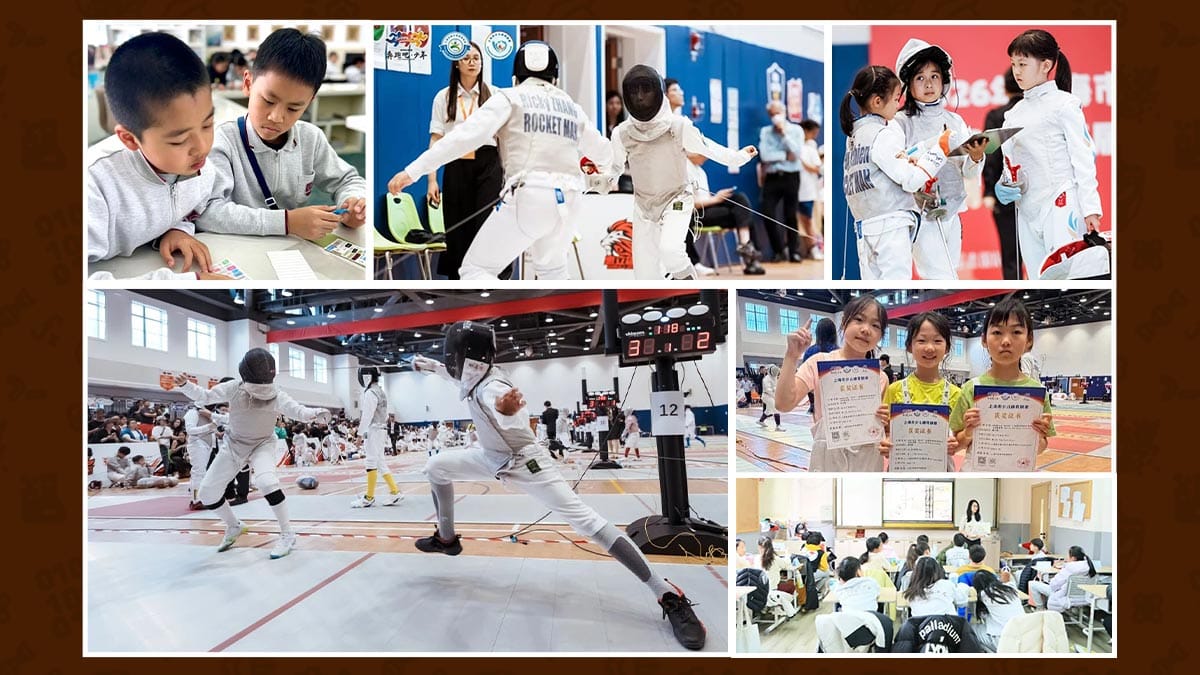
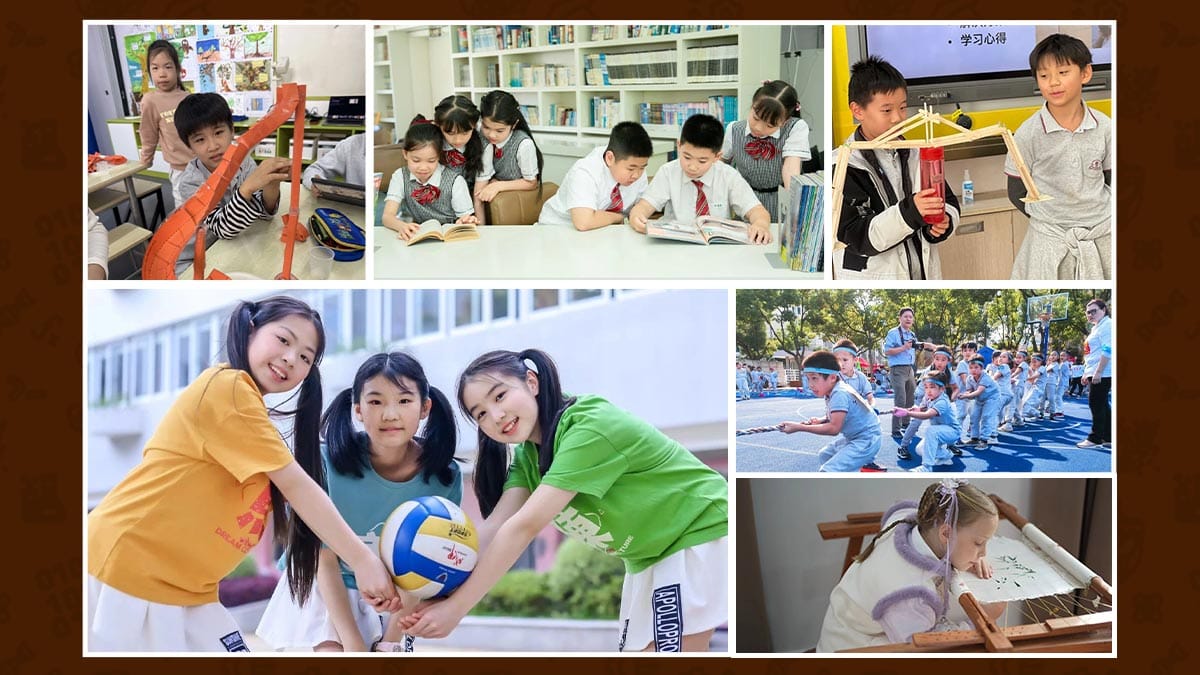
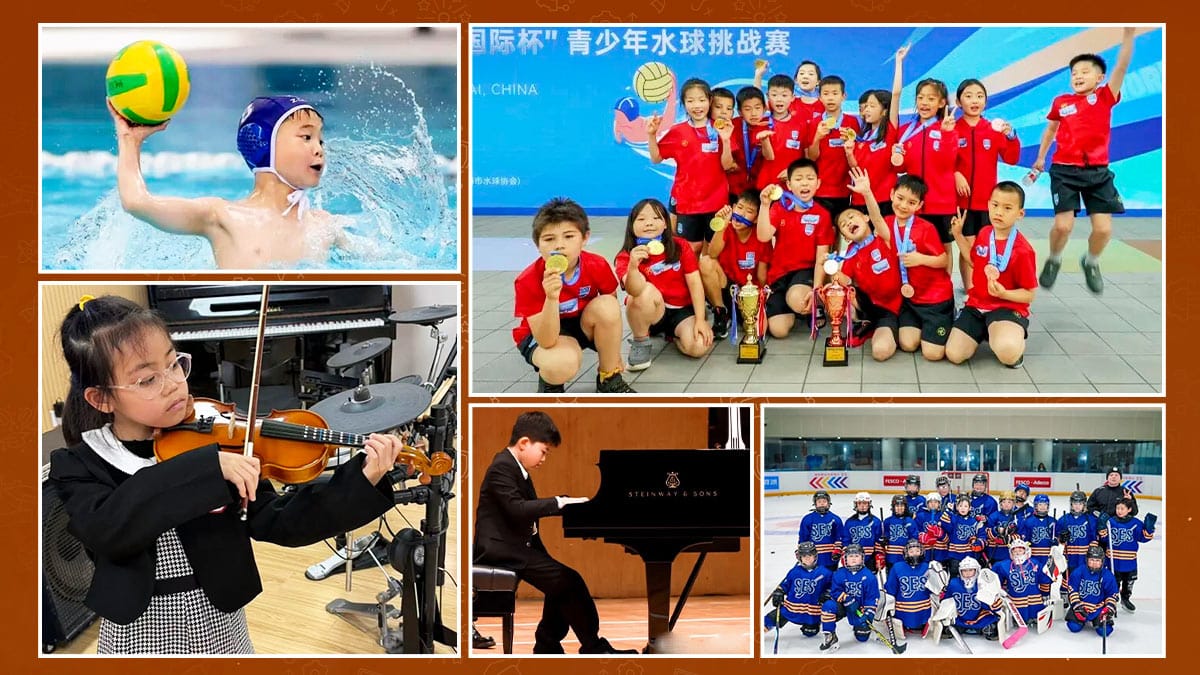
- Activity clubs include sports, arts, music, and coding. They are part of the regular schedule.
Billed separately — budget for these
Textbooks and Learning Materials
When you reserve a book, there’s a fee of ¥2,000–3,000. This fee goes towards your textbook costs. Additional textbook charges are settled at semester end.
Miscellaneous School Fee (学杂费)
¥5,000 per semester for primary (¥10,000/year confirmed). Secondary fees are different. SES is a public-school program. It charges secondary students based on real costs. At the end of the semester, students pay for textbooks, materials, and activities. This is not a set prepaid fee. No public figure exists because the amount varies per student per semester. Budget conservatively and expect a semester-end invoice.
Field Trips and School Excursions
Settled per activity throughout the year.
External Examination Fees
Oxford AQA, IGCSE, and AP exams cost extra.
Application and Registration Costs
Before your child attends a single class, two upfront fees apply:
| Fee | Amount (RMB) | Notes |
|---|---|---|
| Entrance assessment fee | ¥200 | Paid on test day. Non-refundable. |
| Book reservation fee | ¥2,000–3,000 | Charged on acceptance. Applied toward textbook costs. |
About the Entrance Assessment
Students take a computerized test on an iPad. Then, they have an interview in Chinese and English. Transfer students are assessed across logical thinking, Chinese, mathematics, and English. There’s no separate application fee. Also, you don’t need an enrollment deposit beyond the book reservation.
Lunch and Cafeteria Costs
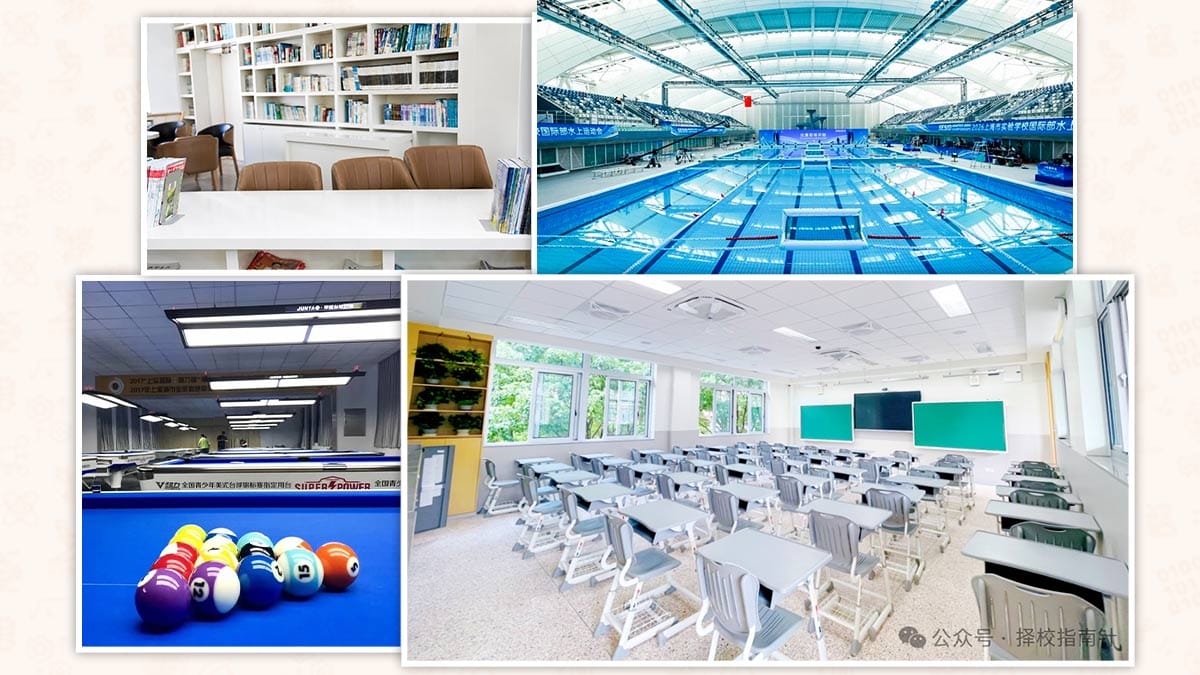
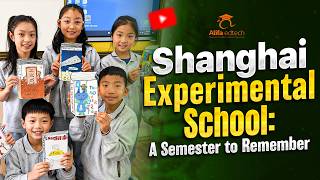
SES’s main cafeteria, 尚识堂 (Shangshi Tang), has three floors. It offers various dining areas with noodles, a buffet, rice dishes, and meal sets. Students with allergies can pick a “no fish” option. They can also choose “no shrimp.” Lunch is charged separately from tuition.
- Daily lunch cost: Approximately ¥20 per day
- Estimated annual cost: ~¥3,600 (based on ~180 school days per year)
Whether the meal plan is mandatory or whether students may bring and reheat their own food was not confirmed. Confirm at registration.
For Muslim families from Malaysia, Indonesia, and Brunei: SES’s admissions materials have no halal options. There are no Halal foods. The school has many international students. Because of this, dietary accommodations are often possible. But you must arrange them directly and in advance.
Ask specifically:
- Whether a Halal window exists
- Whether students may bring and reheat their own lunch
- Whether food procurement uses a separate halal supply chain
Named Contacts for Dietary Inquiries
Uniform Costs
School uniforms are mandatory for all International Division students.
- Estimated full set cost: approximately ¥1,700 RMB
- This figure has remained consistent since 2019
- Budget for partial replacement in subsequent years as children grow
- Specific items and purchase arrangements are confirmed at registration
Boarding: Day School with Limited Conditional Places
SES International Division is primarily a day school. However, limited boarding places do exist under specific conditions. How you handle this in the application stage is very important. Many guides overlook this fact.
| Boarding Factor | Details |
|---|---|
| Primary arrangement | Day school — the majority of students commute daily |
| Boarding availability | Conditional — exists, but the school does not actively encourage it |
| Who qualifies | Families with a commute of over 1 hour, or those living outside Pudong District. Local Pudong families are generally not approved. |
| Dormitory setup | 3–4 students per room · air-conditioned · bunk beds · desk and locker per student · shared bathrooms (no en-suite) · elevator building |
| Switching rules | Boarding students may transfer to day school. Day students generally cannot switch to boarding after enrollment. |
If you need boarding, say so early. Do it when you apply and during admission. Don’t wait until later. Requests to add boarding post-enrollment are very rarely approved.
To confirm eligibility, contact Teacher Dong (董老师) at the Middle/High campus: 021-50866773
How SES Compares to Other International Schools in Shanghai
| School | Annual Tuition — Secondary (RMB) | Curriculum |
|---|---|---|
| SES | ¥68,000–76,000 | Oxford AQA + College Board AP / ACT |
| SUIS Shanghai (Pudong)* | ¥122,000 | IB / 融合课程 |
| Concordia International School Shanghai | ¥322,000–330,000 | American / College Board AP |
| Britannica International School Shanghai | ¥339,300–347,900 | British National / IGCSE / A-Level |
| BISS International School Shanghai | ¥354,050–378,300 | British / IGCSE / IB |
| YCIS Shanghai (耀中国际) | ¥350,200–356,400 | IB / IGCSE / British |
* SUIS figure refers to the 融合课程 (bilingual/fusion) track. SUIS international-stream fees are higher.
SES is 3.9 to 4.8 times cheaper than similar private international schools. It also places about 80% of graduates in QS World Top 30 universities.
Important: SES accepts foreign passport holders. It takes permanent residents from HK, Macau, and Taiwan. Some overseas families can apply, too. Private schools such as Concordia and BISS admit a broader applicant pool.
External Exam Fees: The Cost Parents Often Forget
SES has been an authorized Oxford AQA examination center since September 2017. It is also an authorized College Board AP test center. The school takes care of all exam registrations. Parents do not register with exam boards.
Exam entry fees are billed separately from tuition.
| Exam | Approx. Fee Per Subject |
|---|---|
| Oxford AQA A-Level / IGCSE | ¥1,000–2,000 per subject |
| College Board AP | ~USD $130–150 (~¥950–1,100) per exam + local admin fee |
Planning Guidance: A student taking 3–4 A-Level subjects will pay about ¥4,000–12,000 in exam costs. This is for Grades 10–11. Late registration incurs surcharges of 2–2.5×. Build this into your Year 10 and Year 11 budget.
Payment Schedule and Methods: Critical for ASEAN Families
This section matters more than most guides acknowledge. SES’s payment structure is different. It is not like private international schools. This matters for families from Southeast Asia.
Payment schedule: Tuition is paid per semester. There is no annual lump-sum option.
How payment works at SES:
| Requirement | Detail |
|---|---|
| Primary payment method | China Construction Bank (CCB) automatic deduction |
| Account requirement | Parents must open a CCB personal savings account in the student’s name |
| Currency | RMB only — no USD, SGD, MYR, THB, or other foreign currencies |
| International wire | Not supported — RMB-only policy. Convert and transfer into your CCB account via a Chinese bank or licensed FX service before the semester payment date. |
| Payment timing | Due per semester before semester start |
If you’re moving to Shanghai from Malaysia, Indonesia, the Philippines, Thailand, or Vietnam, open a China Construction Bank (CCB) account first. This step is important. Don’t wait until later. Factor currency conversion and Chinese banking setup into your relocation timeline.
This reflects SES’s nature as a government public school. Once the account is in place, the process is straightforward.
Total Annual Budget: The Real Number
| Cost Item | Primary (RMB) | Secondary — Non-Exam Year | Secondary — Exam Year (Gr. 10–11) |
|---|---|---|---|
| Tuition | ¥68,000 | ¥76,000 | ¥76,000 |
| Misc school fee | ¥10,000 | Variable* | Variable* |
| Textbooks | ¥3,000–5,000 | ¥3,000–5,000 | ¥3,000–5,000 |
| Lunch (~¥20/day) | ¥3,600 | ¥3,600 | ¥3,600 |
| Uniform (Year 1) | ¥1,700 | ¥500–800 | ¥500–800 |
| School trips (est.) | ¥2,000–4,000 | ¥2,000–5,000 | ¥2,000–5,000 |
| External exam fees | — | — | ¥4,000–12,000 |
| Estimated Total | ~¥88,300–91,700 | ~¥85,100–90,400 | ~¥89,100–102,400 |
- Primary: ~$12,100–12,600
- Secondary (non-exam): ~$11,700–12,400
- Secondary (exam year): ~$12,200–14,100
Secondary miscellaneous fees vary. They are reimbursed at the end of the semester. This reimbursement is based on actual costs, not a set prepaid charge. No public figure is available. Your secondary totals don’t include this item. Your actual secondary total will be higher by the settled amount.
Financial Aid and Sibling Discounts
The SES International Division has no scholarships. There are no merit bursaries. Sibling discounts do not exist. SES is a public school. The Shanghai Municipal Education Commission sets the fees. This keeps their rates lower than those of private international schools.
Families can ask the admissions office. They can inquire about any programs not listed publicly.
Frequently Asked Questions
SES tuition is ¥68,000 per year for Primary (Grades 1–5) and ¥76,000 per year for Secondary (Grades 6–11). Both are paid as two equal semester installments. Fees have not increased since 2019.
Tuition covers core instruction, school facilities, and standard activity clubs. It does not cover textbooks (about ¥3,000–5,000 per year), miscellaneous school fee (around ¥5,000 per semester for primary), or lunch (about ¥3,600 per year). Uniforms, school trips, and external exam fees are not covered.
SES’s secondary tuition is ¥76,000 — 3.9 to 4.8 times cheaper than similar private international schools. Concordia charges ¥322,000–330,000. Britannica asks for ¥339,300–347,900. BISS ranges from ¥354,050–378,300, and YCIS costs ¥350,200–356,400. All offer similar university outcomes.
There is no application processing fee. Families pay a ¥200 entrance fee on test day. If accepted, they also pay a ¥2,000–3,000 book reservation fee, which goes toward textbooks. No separate enrollment deposit is charged.
Fees are paid each semester in RMB via automatic deduction at China Construction Bank (CCB). Parents must open a CCB savings account in the student’s name. No foreign currency or international wire transfers are accepted.
No scholarship programs or sibling discounts have been confirmed for the International Division. The government sets the fee structure. It shows big savings compared to private international schools.
SES is primarily a day school but offers limited, conditional boarding. Places are open to families who commute for over one hour or live outside Pudong District. Local families in Pudong usually do not qualify. Dormitories house 3–4 students per room with air conditioning and shared bathrooms. Boarding must be declared when applying. Day students usually can’t switch to boarding after they enroll. Contact Teacher Dong (董老师) at 021-50866773 to confirm eligibility.
SES admits:
- Children with a foreign passport whose parents work legally in Shanghai
- Permanent residents from HK, Macau, or Taiwan
- Chinese citizens with overseas permanent residency who have recently returned to Shanghai and hold a municipal certificate
- Chinese citizens working in Shanghai whose children were born overseas
Final Verdict: Is SES Worth the Investment?
Let’s be direct.
At ¥68,000–¥76,000 a year — about the cost of a mid-range international school in Kuala Lumpur or Bangkok — SES provides this in Shanghai:
- Shanghai’s education is strong. It uses SES’s own curriculum. This is a national program, not a Western one brought to China.
- Oxford AQA and College Board AP/ACT pathways open doors to universities in the UK, US, Canada, Australia, Singapore, and Japan.
- Bilingual instruction protects Chinese language. This creates a long-term advantage, not a compromise.
- Small classes (~25 students) where teachers genuinely know every child
- ~80% QS World Top 30 university placement — a result that rivals schools charging 4× as much
Caveats apply:
- A foreign passport or HK/Macau/Taiwan status is needed.
- Chinese is important.
- Only RMB payments via China Construction Bank (CCB) are accepted.
- Admissions can be competitive for some year groups.
If your family qualifies, and you value strong academics, this is a top choice. It also offers great Chinese language skills. This makes it the best option in Shanghai’s international schools.
Still, choosing a school abroad is a big step. You have forms to fill, tests to plan, and many questions to answer. That’s where Alifa Education Services comes in. We make school placement in China simple for families like yours. We know the schools, the tracks, and the real costs. We match your child to the right fit, then guide you the whole way.
Your child’s future deserves the right start.
Book a Free Consultation →Disclosure: Alifa Education Services is an independent education placement consultancy. We may earn a referral fee from partner schools when families enroll, at no extra cost to the family. Our recommendations are based on fit, not fee structure.


Member comments