

Introduction
Sino-Canada School is one of the oldest and largest international schools in East China. Are you a parent in Singapore, Manila, Jakarta, or Mumbai? You likely want the same thing for your child. You want a strong education that leads to a top university, and this school can deliver.
The campus sits in Suzhou, close to Shanghai. The school opened in 2003. The school holds approval from both the Chinese and Canadian governments. Today it teaches more than 3,000 students, from age 3 to Grade 12. Families come from China, India, Korea, Russia, and many other countries. So your child joins a real international community from day one.
What makes this school different? Students can earn a real dual diploma. That means both a Canadian and a Chinese high school diploma. Your child can also choose A-Level or Advanced Placement (AP) courses. The campus is huge, green, and safe. University results are strong. Best of all, the fees cost far less than those of top schools in Shanghai or Beijing.
But choosing a school from far away feels hard. You’re not picking a curriculum. You’re picking the people who shape your child’s daily life. You need clear, honest answers.
By the end of this article, you’ll know what Sino-Canada School offers. You’ll also understand who it’s for and how to enroll your child. You’ll find clear answers about the curriculum, university results, campus life, fees, and the admission process. This information is all a parent needs to make a decision.
Sino-Canada School at a Glance
Key Takeaways
Sino-Canada School is the best BC offshore school. It has won this title for ten years straight, from 2016 to 2024. The British Columbia Ministry of Education gave this award.
High school tuition costs between ¥80,000 and ¥96,000 each year. This is less than half the price of similar international schools in Shanghai or Beijing.
The Class of 2025 received 841 university offers. Of these, 45% are from global top 20 universities, and 95% are from global top 100 schools.
Students can earn a dual diploma — both a Canadian BC Dogwood Diploma and a Chinese high school diploma at the same time.
The A-Level program sends about 60% of its graduates to top UK G5 universities. These include Oxford, Cambridge, Imperial, UCL, and LSE.
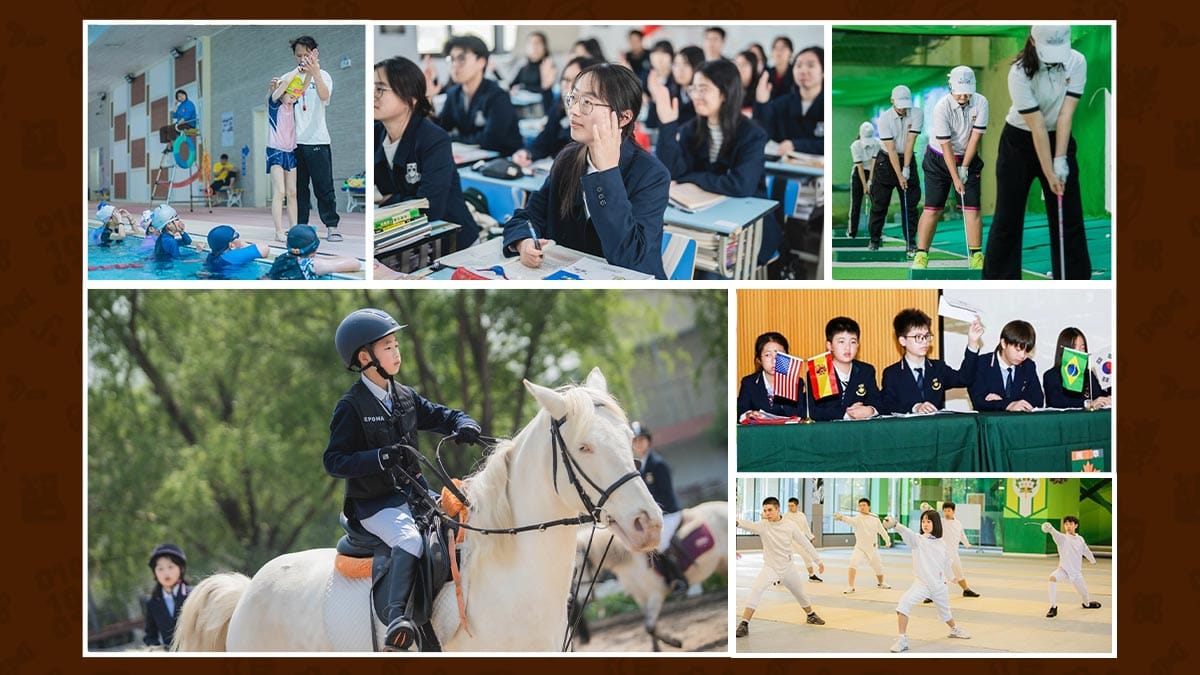
The 550-acre campus features an equestrian center, a heated indoor pool, a fencing hall, and a golf area. There are also over 140 student clubs and activities.
The school has about 70 Canadian-certified teachers. The student-to-teacher ratio is 8:1 for high school.
What Is Sino-Canada School? Accreditation, Rankings & Reputation
Sino-Canada School is a large international school in Suzhou, China. You may also see it written as 中加枫华国际学校 (Zhōng Jiā Fēng Huá), or shortened to Fenghua (枫华). Both names refer to the same campus. Note: This is not the same school as Concord College of Sino-Canada, an unrelated UK boarding school sometimes confused with it.
The school has a long story behind it. The school opened in September 2003. The first class held 140 students in grades 10 to 12. Today, more than 3,000 students study here across all grades. The campus even has a fun past. Part of the land once held a theme park. Now it holds classrooms, labs, and sports fields. In 2023, the school marked its 20th anniversary. So your child joins a school with deep roots and a proven name.
Here’s what sets the school apart. The school holds approval from two governments. The Chinese (Jiangsu) education authority approves it. So does the British Columbia Ministry of Education in Canada. That dual approval is rare, and it matters for your child.
Because of that approval, students can earn a real dual diploma. Your child graduates with both a Canadian (BC) diploma and a Chinese diploma. The Canadian curriculum follows real British Columbia rules. The school did not make it up. The UK exam boards, Oxford AQA, and Pearson Edexcel also recognize the school.
The track record is strong:
One of Jiangsu Province’s earliest British Columbia (BC) offshore schools.
School history →The program is certified by the British Columbia Ministry of Education. Graduates receive the BC Dogwood Diploma.
BC Offshore Schools directory →The BC Ministry regularly inspects the school for certification. Recent reports show the school is still in compliance.
2025 BC Inspection Report →Recognized among China’s Top 40 international schools in 2024.
2024 Forbes ranking announcement →Has developed bilingual and international education programs since its founding in 2003.
School history →The school also runs the Fenghua Global Alumni Association. Past students stay connected across the world. That network gives your child friends and contacts for life. All this creates a real, globally minded education for your child.
Location and Getting to Shanghai
Where exactly is the school? The campus sits in Wujiang District, in the south of Suzhou. The campus rests near Dianshan Lake, by the border of Shanghai, Suzhou, and Zhejiang. So you get a quiet, green setting in one of China’s richest regions.
Many parents think the school is far from Shanghai. That’s not true. The campus borders Shanghai’s Qingpu district. You can reach central Shanghai in about 40 minutes by car. The high-speed train is even faster. Suzhou South Railway Station opened in 2024, about 7 km away. From there, the train reaches Shanghai in roughly 25 minutes. Shanghai Hongqiao Airport is about 40 minutes by car.
Your child enjoys the best of both worlds — a calm, green campus away from city noise, yet Shanghai’s airports, hospitals, and shops stay close. Family visits and trips home are easy.
What’s life like in Suzhou? Suzhou is a famous old city, often called the “Venice of the East.” The city has beautiful gardens, canals, and 2,500 years of history. The city is modern too, with good hospitals, malls, and a growing expat community. The cost of living is lower than Shanghai, so your family can enjoy a calm, comfortable home base.
Academic Programs and Teaching
Sino-Canada School covers every stage of K–12 education. Your child can start in kindergarten and stay through Grade 12. Each stage builds on the one before.
In kindergarten (ages 3 to 6), classes run in both Chinese and English. Fun programs build early skills, like Orff music, logic math, and Lego building. So your child learns to think in two languages from the start.
Primary school keeps that bilingual base. The Fenghua Primary School blends Chinese and Western teaching. Lessons run in both Chinese and English. Senior primary grades use tiered teaching, so each child works at the right level. Students who need extra help get Chinese language support, too.
Middle school (Grades 7 to 9) builds the bridge to high school. The program mixes Chinese subjects with international ones. Students prepare for IGCSE and grow their critical thinking skills. So they’re ready when high school begins.
High school is where the school stands out. Your child picks from several pathways. Each one leads to a different group of universities:
High School Pathways
The flagship track. Follows real British Columbia curricula. After 80 credits, your child earns the BC “Dogwood” diploma. Classes run mostly in English with native teachers from Canada, the US, and the UK. Assessment is continuous — not one big final exam. Many graduates skip IELTS or TOEFL because the BC diploma already proves their English.
For the UK and Commonwealth. The school uses Oxford AQA, a leading UK exam board. Students choose three or four subjects in depth — math, further math, physics, chemistry, or economics. The school runs its own exam center, so students sit exams on campus. Best for families targeting the UK, Singapore, Hong Kong, and Australia.
Advanced Placement (American college-level) courses from Grade 11. Students can earn university credit early. Best for students applying to the United States.
A path to top Japanese universities. Students study the Japanese language and culture. Some teachers come from leading Japanese universities.
A three-year international art and design track. Students build a strong portfolio. For creative children aiming for top art schools.
For families who prefer the Chinese (Gaokao) route.
What about students still learning English? The school runs a full ESL program. Extra classes and small-group help bring them up to speed. Many families start here with little English. Most catch up within a year.
Good teachers make all this work. The school employs about 70 Canadian-certified teachers. They hold licenses from the BC Ministry of Education. Teachers also come from the US, the UK, Australia, and China. About 40% of the faculty are international. Classes stay small — in high school, there is about one teacher for every eight students. So your child won’t get lost in a crowd. Teachers learn each child’s name, strengths, and struggles.
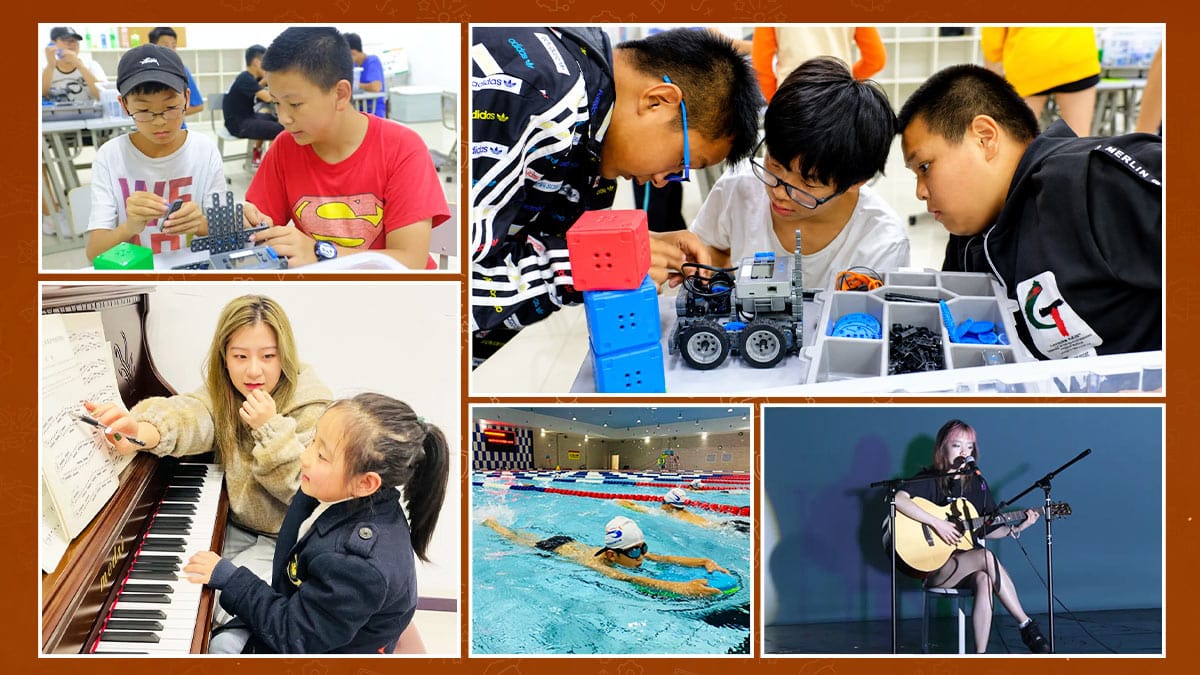
STEM is strong here as well. Students use real science labs, including a physics lab and a biology/chemistry lab. There are computer labs and maker spaces for coding, robotics, and 3D printing. The aim is simple: the school wants students to think, not memorize.
All this reflects the school’s educational philosophy. Academic excellence matters, but holistic development matters as much. The school helps your child grow as a whole person, ready for university and life.
University Results and Where Graduates Go
So where do graduates actually go? The results speak for themselves. The school reports strong outcomes each year. Its 2025 class earned 841 university offers in total. About 45% of those offers came from the world’s top 20 universities. Around 90% came from the top 50. And about 95% came from the top 100.
The two main tracks both post strong numbers.
About 55% of graduates reach a top-20 university. About 98% reach the top 100.
About 60% of graduates earn a place at a UK “G5” university — Oxford, Cambridge, Imperial, UCL, and LSE.
Graduates head to strong universities across the globe.
Imperial College London, UCL, Edinburgh, Manchester, and King’s College London
University of Toronto, UBC, and McGill
Melbourne, Sydney, UNSW, and Monash
University of Hong Kong, Amsterdam, and Auckland
How does the school reach these results? Every student gets help from a university counseling center. Advisors guide them through applications, essays, and interviews. The school also hosts a yearly education fair. More than 40 universities send staff to campus.
The Canadian diploma opens many doors. Universities in Canada, the US, the UK, and Australia accept it as a direct application. So your child can aim high, with a clear route to post-secondary education. The goal goes beyond grades. The school wants to raise confident global citizens with real global awareness.
Campus, Facilities, and Boarding Life
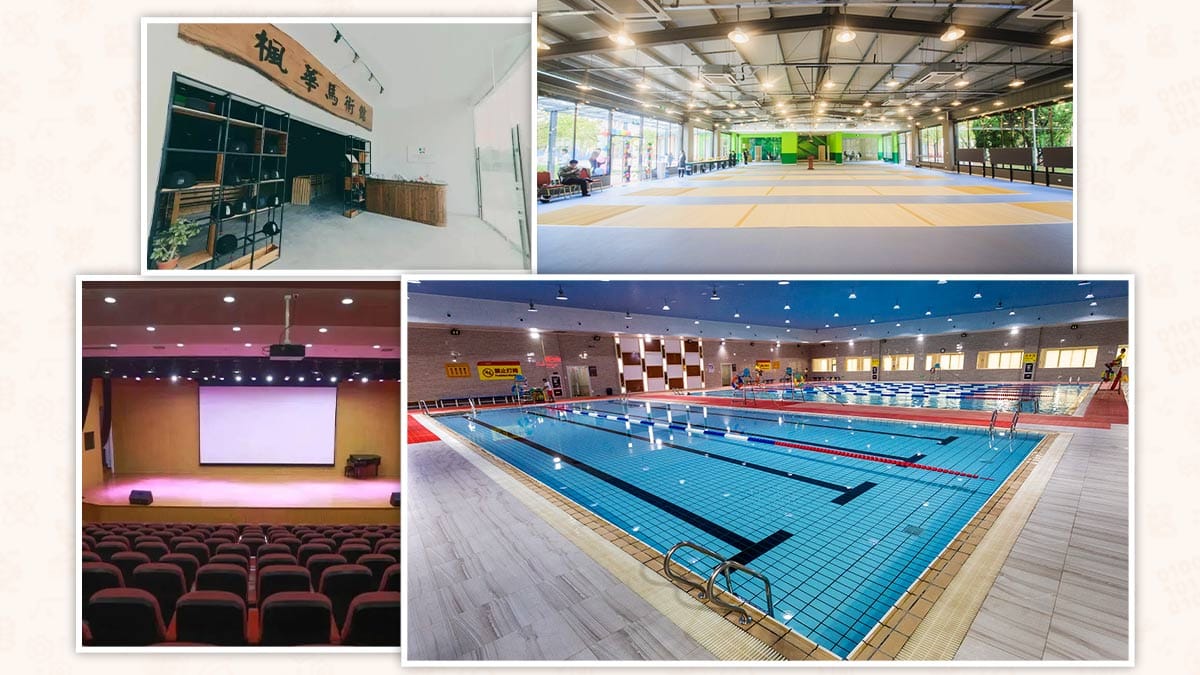
What will your child see every day? A huge, green campus. Sino-Canada School covers about 550 acres. About 330 acres are for teaching. The buildings add up to roughly 80,000 square meters. The campus uses a bright Canadian style, with lots of open space. The campus feels more like a park than a school.
Learning Spaces
- About 105 classrooms with modern tech, plus many multipurpose rooms.
- Science labs, including a physics lab and a biology and chemistry lab.
- Computer labs and maker spaces for coding and 3D printing.
- A large library with more than 15,000 Chinese and English books.
- A music center, art studios, and a performance hall.
Sports Facilities
- An indoor, heated aquatics center for swimming all year round.
- An equestrian center with about 20 horses and trained coaches.
- A fencing hall, a golf area, and tennis courts.
- A large outdoor sports field, an indoor gym, and a running track.
Boarding Life
Most students live on campus during the week. The school has eight dorm buildings. Here’s what that looks like for your child:
- Rooms for two, three, or four students, each with a private bathroom.
- Hot water, air conditioning, and heating in every room.
- A “life teacher” in each dorm who checks on students daily.
- An on-site clinic and nurse, open around the clock, with hospitals nearby.
- Three cafeterias with Chinese, Western, and halal options.
Is the campus safe? Yes. The school keeps the campus closed and gated. Guards, CCTV, and keycard access run around the clock. Visitors must sign in, so your child stays safe day and night.
A normal weekday has a clear rhythm. Students wake around 7:00 AM. Classes fill the morning and early afternoon. Clubs and sports follow. After dinner comes a quiet study hall. Lights go out by about 9:30 or 10:30 PM, based on age.
There’s plenty to do beyond class. The school offers more than 140 clubs and activities. Your child can join Model United Nations, robotics, debate, drama, music, or art. There are clubs for calligraphy, French, sports, and more. These activities build skills that grades cannot show. Step by step, students grow more self-reliant and self-confident.
What about weekends? A school bus runs to Suzhou, Shanghai, and Wuxi. Boarders can head home or join campus trips. So families stay close, even from far away.
Sino-Canada School Fees and Scholarships (2026)
Now for the question every parent asks: how much does it cost? The honest answer is far less than top schools in Shanghai or Beijing. Fees change each year, so check current rates with the school. Here’s a 2026 guide.
Yearly Tuition by Level
- Kindergarten¥25,000–¥60,000 (~$3,500–$8,500)
- Primary School (Grades 1–6)¥50,000–¥66,000 (~$7,000–$9,200)
- Middle School (Grades 7–9)¥66,000–¥70,000 (~$9,200–$9,800)
- High School — BC or A-Level (Grades 10–12)¥80,000–¥96,000 (~$11,000–$13,400)
Boarding & Extra Costs
- Boarding: About ¥5,000 a year for a four-bed room, or ¥10,000 for a two-bed room.
- School bus: Optional, about ¥12,000 a year.
- Meals, uniforms, and textbooks: Extra and based on your choices.
What about help with costs? The school offers merit scholarships for strong students. Award amounts change from year to year, so book a consultation with Alifa Education Services for expert guidance.
Many international schools in Shanghai charge ¥150,000 to ¥370,000 a year. Sino-Canada School often costs less than half of that. And your child still earns a real, certified Dual Diploma. That’s strong value for a world-class education.
Admission: Requirements and How to Apply
Ready to take the next step? The process is simpler than you might think. Sino-Canada School welcomes students of every nationality. There’s no nationality limit at all.
What Your Child Needs
- For middle school: A finished elementary education.
- For high school: A finished middle school (or Grade 9).
- For any level: An entrance assessment covering English and math, plus a friendly interview.
Strong English helps. But remember, the ESL program supports students who need it.
How do you apply? Follow these simple steps:
- Book a consultation with Alifa Education Services for guidance.
- Sit for the entrance assessment — English, math, and a short interview.
- Get your offer and plan the start date.
The school also supports international families beyond admissions. Staff can help with visa questions, housing, and settling into life in China. The team has worked with families from Russia, Korea, Japan, and many other countries. So your family won’t feel alone.
Frequently Asked Questions
The school sits in Wujiang District, Suzhou, near Dianshan Lake. The campus borders Shanghai’s Qingpu District. You can reach central Shanghai in about 40 minutes by car or 25 minutes by high-speed train.
Tuition runs from about ¥25,000 a year for kindergarten to about ¥96,000 for high school. Boarding adds about ¥5,000 to ¥10,000 a year. Fees change each year, so check current rates with the school.
The school offers a dual diploma — both Canadian and Chinese. High school students can choose the Canadian BC Program (leading to the BC Dogwood Diploma), A-Level, AP, a Japan track, or an arts track. Younger students follow a bilingual K–12 program.
No. Strong English helps, but the school runs a full ESL program. Many students start with little English. Most catch up within a year.
Yes. The school keeps the campus closed and gated. Guards, CCTV, and keycard access run around the clock. Each dorm has a live-in teacher who checks on students daily.
Reach out to Alifa Education Services and book a free consultation. Your child then sits for a short English and math test, plus an interview. After that, you receive an offer. Or let Alifa Education Services handle the whole process for you.
Conclusion
So, is Sino-Canada School right for your child? For many international families, the answer is yes. Let’s recap why.
Your child can earn a dual diploma, both Canadian and Chinese. The school offers many paths to university. Your child can pick BC, A-Level, AP, or a Japan track. Results are strong, with most graduates reaching top-100 universities. Teachers are Canadian-certified, and classes stay small. The campus is large, green, and safe. The boarding program runs well, with life teachers and round-the-clock security. Best of all, fees cost far less than schools in Shanghai or Beijing.
Still, choosing a school abroad is a big step. You have forms to fill, tests to plan, and many questions to answer. That’s where Alifa Education Services comes in. We make school placement in China simple for families like yours. We know the schools, the tracks, and the real costs. We match your child to the right fit, then guide you the whole way.
Your child’s future deserves the right start.
Book a Free Consultation →Disclosure: Alifa Education Services is an independent education placement consultancy. We may earn a referral fee from partner schools when families enroll, at no extra cost to the family. Our recommendations are based on fit, not fee structure.


Member comments