

Introduction
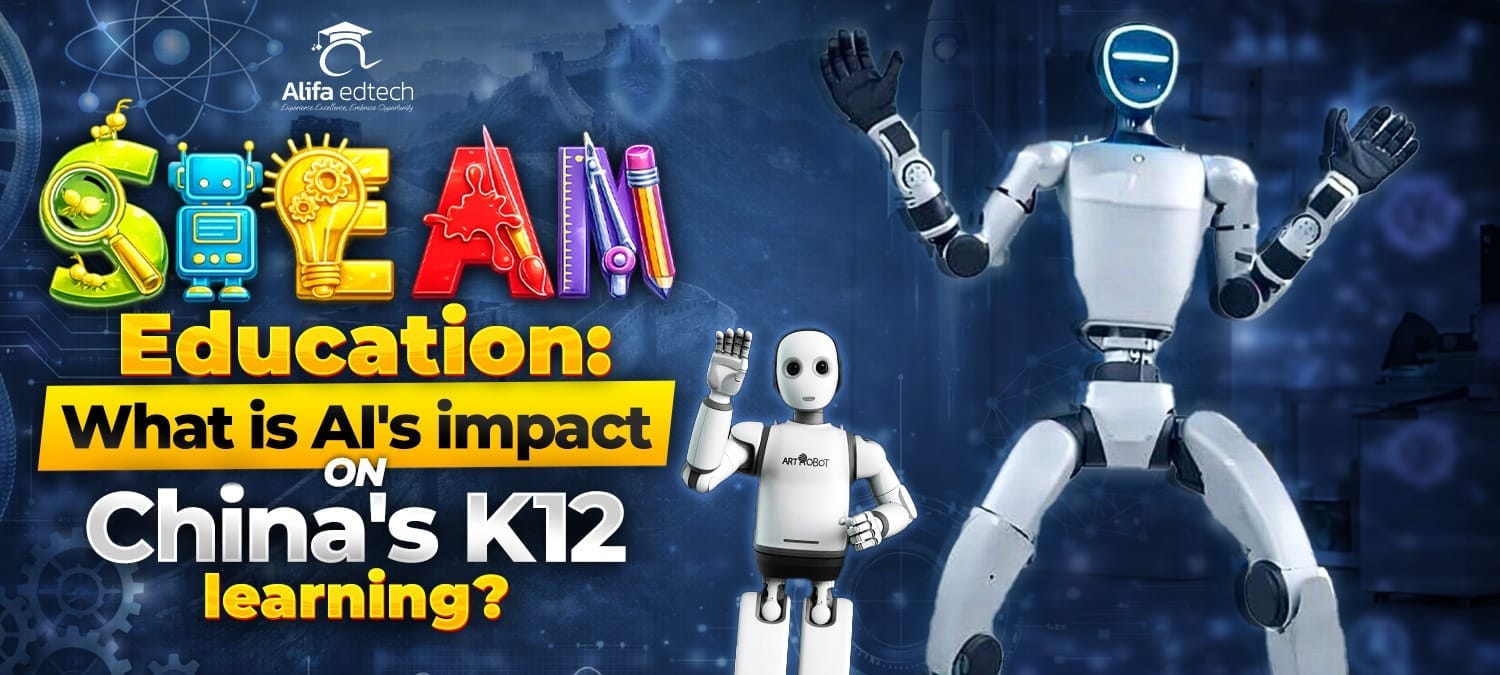
STEAM education blends science, technology, engineering, arts, and math. It teaches real-world problem-solving. Also, it builds multiple skills like critical thinking and creativity. Moreover, it makes learning engaging and prepares students for future jobs.
China's K-12 STEAM education has grown much. It moved from simple ideas to deep local roots. Big cities and top China’s K12 schools lead in new ways. Rural areas create their own special paths.
Also, teachers' skills are vital for success. The C-STEAM model helps rural schools. It links culture with science and art. New teaching ideas change classrooms. These ideas focus on "Learning through Play, Learning by Doing, and Learning through Creation."
For future growth, big changes are needed. Moreover, teacher training must improve. Technology also needs to help make education fair for everyone.
Thinking About K-12 Schools in China with STEAM Education?
Alifa has helped hundreds of Expat families and international parents find the right school and explore cutting edge technology schools like innovative future oriented schools in AI, Robotics, and Strong STEM programs.
Contact us today if you want to put your child on the cutting edge of education in today's AI future.
How Does AI Personalize Learning in STEAM?
AI personalizes STEAM education by tailoring lessons to each student's pace and needs.
Adaptive Practice in Math and Science
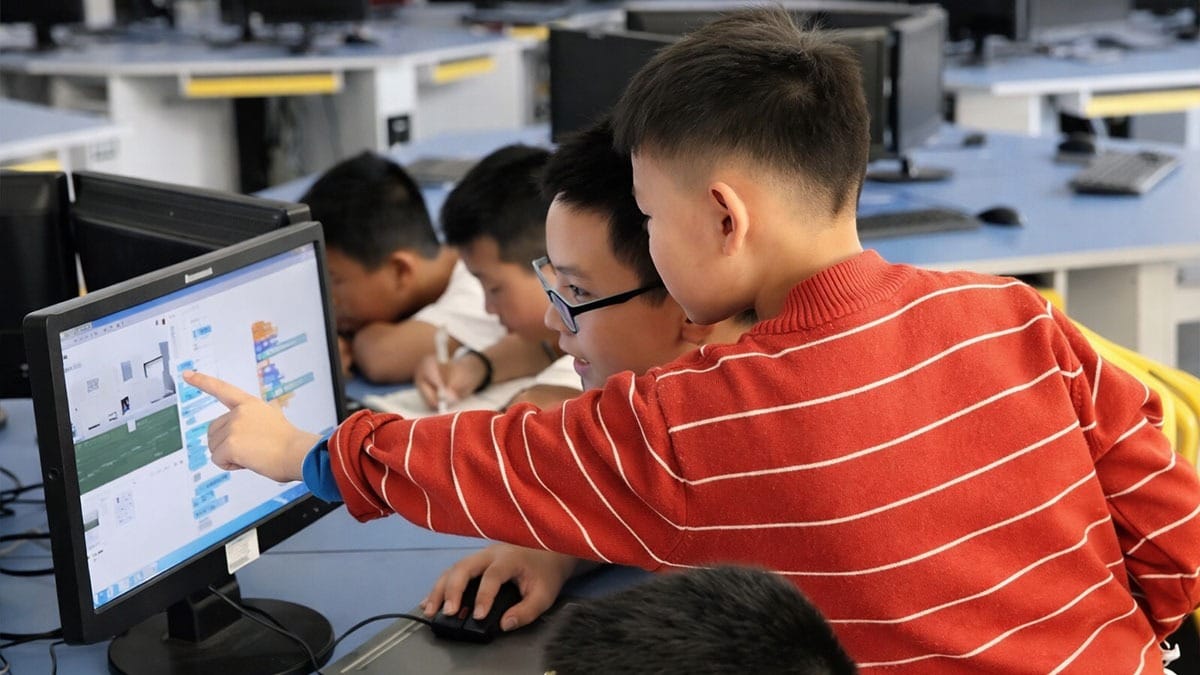
Chinese K-12 schools use AI tools for math, science, and coding. These tools find what students know well and where they struggle.
Systems break subjects into many small "knowledge points." They instantly change questions and review plans. This acts like a private tutor for each child. These digital tools are in many cities. They offer unique problem sets and review paths.
Real-Time Feedback and Diagnostics
AI tools watch how each student acts. They build a clear skills list. They highlight specific wrong ideas. This happens right away, not just on tests.
These tools create "personal learning paths." Teachers easily see who needs extra help. This clear view aids better STEAM curriculum teaching.
Differentiated Tasks in Classrooms
China's Department of Education wants flexible teaching. AI helps in classrooms. Better students get harder tasks. Others get easier steps.
AI quietly changes how hard things are. This makes sure each child is pushed but not lost. This improves learning for all students.
Personalized Projects and Creativity
AI helps make project-based learning special for each student. It suggests easy starts for new learners. It offers hard tasks for students who know more.
AI tools can give custom examples. They fit different ways of learning. This makes STEAM education help more students. It boosts new ideas and the creative process.
Language and Modality Support
Many AI tools work in two languages. This helps students with different language skills. Systems adapt to language level. They give more words for science. They use more pictures and show things with simulations. This helps when reading is tough. This makes sure all students can learn from the STEAM curriculum.
Teacher Support for Targeted Instruction
AI should help teachers, not replace them. Teachers need to know AI. AI data helps teachers group students. They plan special class activities.
Teachers can focus on harder tasks like talking and making new things. AI handles easy checks. This "teacher-student-machine" way makes teaching better. It builds soft skills for 21st-century success.
How Do AI Tools Help Struggling Students in STEAM Education?
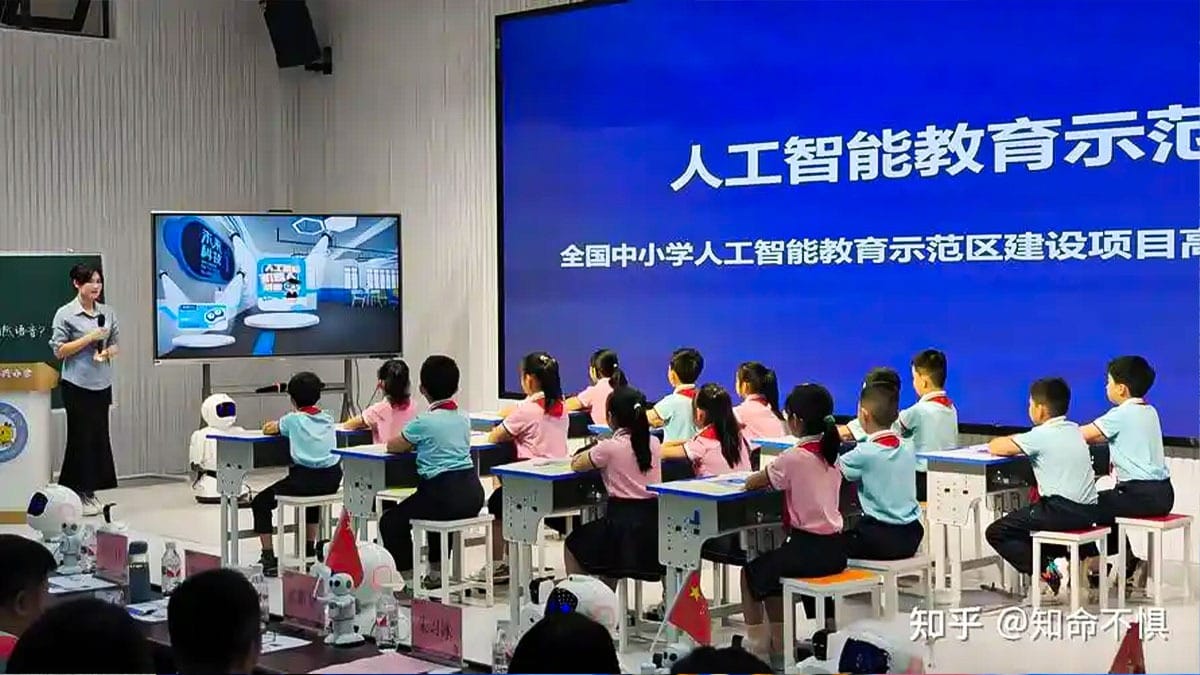
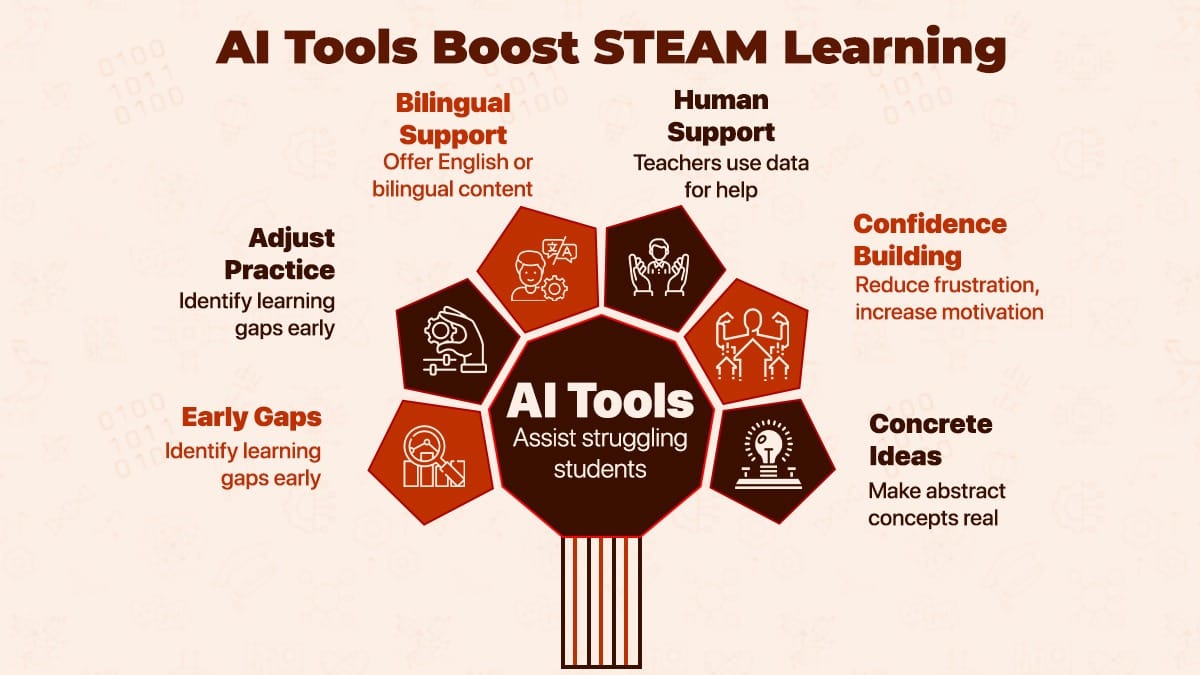
AI tools significantly assist struggling students in STEAM education. They identify learning gaps early, offer personalized practice, and provide timely human support. This helps build confidence and makes abstract concepts clearer.
Early Identification of Learning Gaps
AI systems in Chinese schools continuously analyze student answers. They break subjects into small "knowledge points." This spots exactly which small concepts a student missed. This happens before traditional tests show problems.
This is key for fast-paced STEAM curriculum classes. Small gaps can quickly become big issues. Artificial intelligence helps find these early.
Adaptive Practice at Each Child's Pace
Once gaps are found, AI platforms change the difficulty. They adjust questions and practice.
Struggling students get more focused exercises. They don't fall behind the class. This happens in many K12 settings. Students who struggle with algebra get more step-by-step help. Others move to harder tasks. This helps manage large classes.
Alifa Education Services bridges ed-tech entrepreneurs and policymakers with China's leading AI companies. Get matched with the perfect technology partner for your region.
Book Your Partnership Consultation Today!
Tell us your needs—we'll find your ideal Chinese AI firm match.
Bilingual Support for Diverse Learners
For expat students, language is often a challenge in STEAM. Many AI tools offer English or bilingual content. Explanations and feedback can be in a student's stronger language. This helps them learn Chinese academic terms.
Global research shows AI can use more visuals and simulations. This helps students who find dense text hard. This makes topics like physics easier.
Turning Data into Human Support
China's AI education rules emphasize a "teacher-student-machine" model. AI does the checks and practices. Teachers use the data for focused help.
Teachers in Chinese schools get data showing which students struggle. They see how performance changes. This allows for quick help. Teachers can step in early to adjust teaching.
Want to put your brand in front of families, students, and education-focused readers? We're inviting select partners to advertise with us on our trusted blog.
Want to get featured? submit a story for us to include.
Building Confidence and Motivation
Struggling students can lose faith easily. Adaptive AI tools give quick feedback. They celebrate small wins. They offer tasks that are just right.
Success feels possible but still needs effort. This tailored approach reduces frustration. It helps students feel more able in STEAM subjects. This makes them join class activities more.
Making Abstract Ideas Concrete
AI simulations and virtual labs are common now. These tools show real-time visuals. They show how changing things affects a circuit or robot. This makes hard ideas real and easy to recall. This is good for students who learn best by seeing and doing.
It helps make abstract concepts clear through experiential learning. This also supports problem-based projects. Teachers use a Teacher Dashboard to track this. This is part of the advanced AI curriculum.
What is the Risk of Over-relying on AI on STEAM Education?
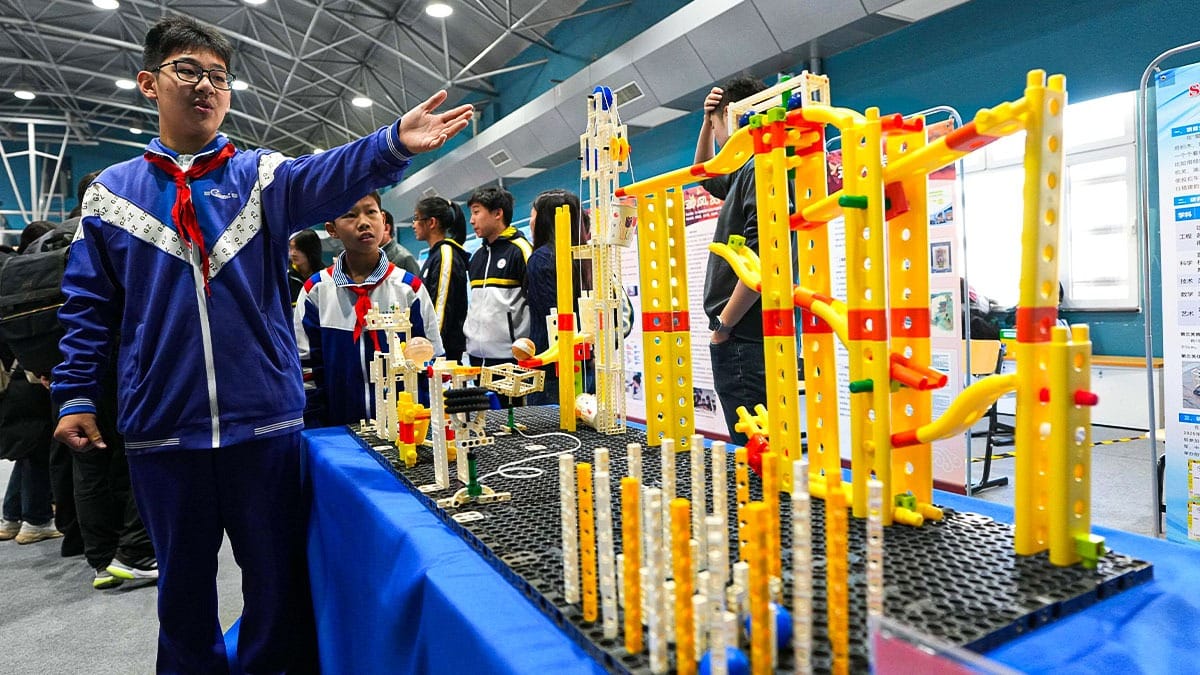
Over-reliance on artificial intelligence in STEAM education poses risks. It can weaken critical thinking, reduce human interaction, and raise privacy concerns. Careful implementation is key.
Weakened Problem-Solving Skills
Leaning too much on AI for answers can stop students from thinking hard. This "productive struggle" is vital for understanding.
If AI does the work, thinking skills may decline. Experts worry about "cognitive risks." Students might offload too much thought to AI tutors. This can make problem-solving harder later on.
Less Human Interaction and Growth
AI tools can be constant learning buddies. But if they replace teachers or friends, students miss chances to connect. This can hurt skills like talking, teamwork, and empathy. China's experts stress that education must stay human-focused. AI should be a tool, not a replacement for people.
Data Privacy and Surveillance Risks
AI in education collects lots of data. This includes test scores and behavior tracking. International groups worry about data privacy. They question the use of sensitive information and watching kids.
Some K12 schools use cameras to track kids. Parents may not know how this data is used or deleted.
To learn more about the services offered by Alifa Education, please visit our dedicated page. Whether you are a guardian, affiliated with an international or bilingual school in China, or a study abroad education agency, Alifa Edtech offers services tailored to your unique needs. Please visit our page to learn more about our offerings.
Inequality and Algorithmic Bias
Well-funded schools can buy advanced AI. Rural or poorer schools often cannot. This widens the STEAM gap. AI gains are strongest in rich schools.
Rural schools lack basics. This deepens old gaps. Also, biased AI can score unfairly. This happens if AI training data misses certain groups.
Narrowed Perspectives and Creativity
If AI focuses only on test scores, students get correct answers but little room to question. They may not explore other ideas.
Over-dependence on AI can weaken thinking habits. It might limit imagination. Students may learn to give safe answers, not bold new ones.
Teacher Over-Reliance Concerns
Teachers are urged to use AI data. But many lack training. They may feel forced to use systems.
If teachers trust AI dashboards too much, they might ignore their own skills. Opaque AI can shape key choices about students. This happens even if the AI is not perfect. This impacts the tech field.
Can AI Bridge STEM and Art Together?
Yes, Artificial intelligence can indeed bridge STEM and Art together. It helps combine these fields in exciting ways. This creates a richer learning experience within STEAM education.
AI tools, like generative AI, help create new art forms. Students can use AI to make music, paintings, or digital designs. This blends computer science with artistic expression. It opens new avenues for the creative process.
AI also helps in design. It can optimize shapes or structures for both function and beauty. Students use design software powered by AI. This allows for fresh ideas in products or architecture. It merges engineering logic with aesthetic goals.
At the same time, AI can take complex data and turn it into clear visuals using data collection tools. Data visualization often involves artistic choices, linking math and science with art visually. Using AI to connect STEM and art builds soft skills.
Students learn to think creatively and solve problems. This strengthens the design thinking process. It prepares them for 21st-century careers that need both technical and artistic minds.
Conclusion
Ultimately, STEAM education, greatly boosted by AI, is very important for China's K-12 schools. It offers personalized learning, helping each student grow and succeed.
Balancing AI's use is key to encouraging the creative process and vital soft skills. This prepares students well for challenging 21st-century careers.
Also, it helps ensure true educational equity for all. This strong STEAM curriculum shapes innovative minds for the future.


Member comments