
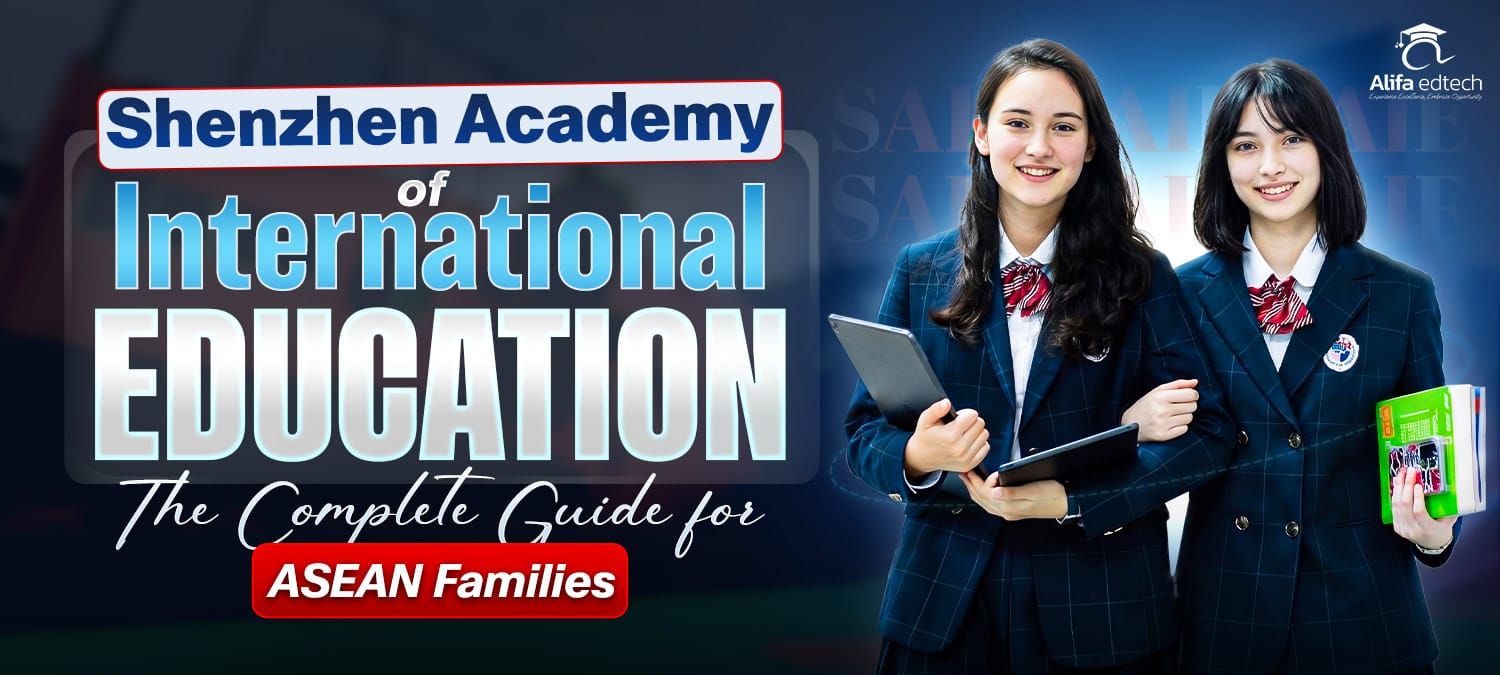

Shenzhen Academy of International Education (SAIE) — 2026–27 Guide
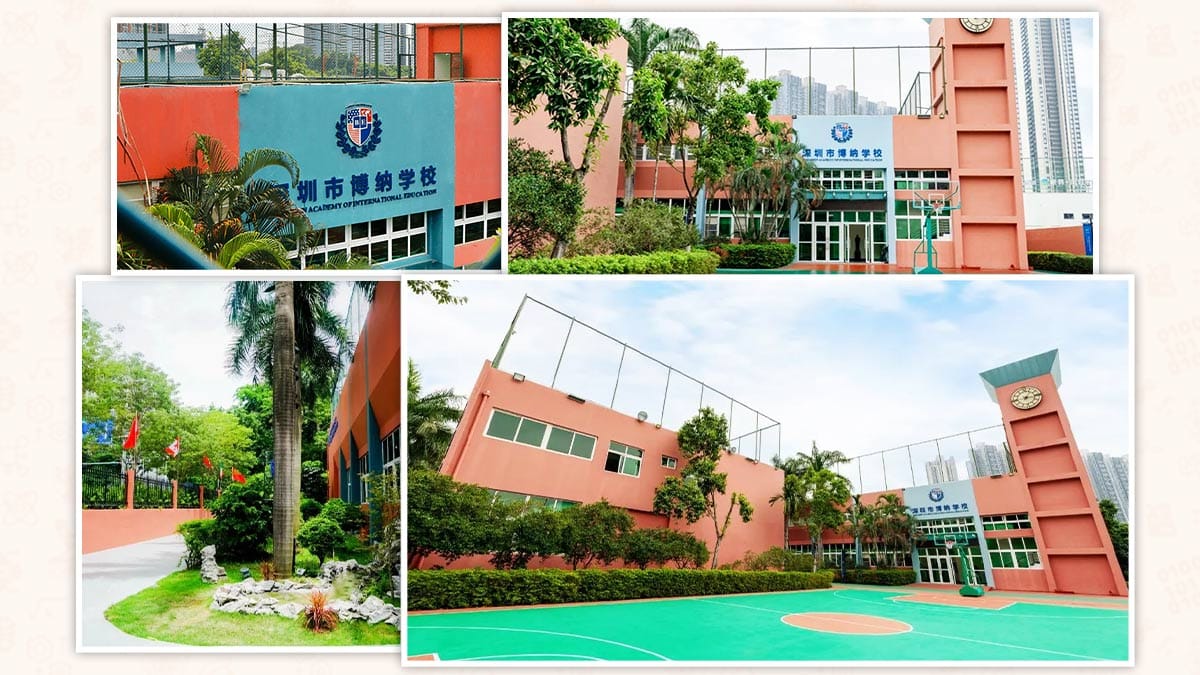
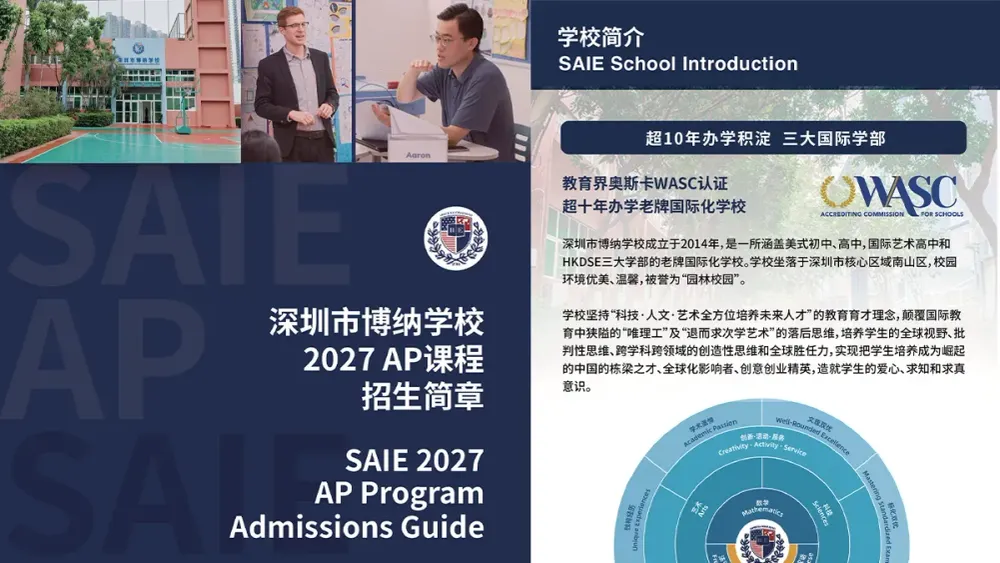
Shenzhen Academy of International Education (SAIE, 深圳市博纳学校) is an international school in Nanshan District, Shenzhen. It serves Grades 6–12 across a US-based middle school programme and three high school routes: AP, A-Level and HKDSE. It also has an arts division with film, music, theatre, fashion design and visual art. The school is enrolling for 2026–27.
SAIE is not the same school as Shenzhen College of International Education (SCIE) — a different school with a similar English name. This article is about SAIE only.
Quick answers. 2026–27 tuition RMB 188,000–288,000/year depending on track. Application fee RMB 500. Weekly boarding RMB 16,800/year. Foreign nationals eligible from Grade 6. English-medium teaching. Nearest metro: Line 12, Tongle South Station, ~5 min walk. Address: 13 Zhongxiang Road, Nanshan District, Shenzhen. Contact: 0755-26602340 / zsb@usapschool.com.
This guide covers the two tracks, the complete 2026–27 fee schedule, the arts programme, faculty, admissions process, university counselling and what has not yet been published. View the Alifa school listing: alifaedtech.com/schools/saie
Fees confirmed against the school’s 2026 yearbook (August 2026). Admission rules, boarding and language confirmed directly with the SAIE admissions team (October 2026).
SAIE — At a Glance
| Full name (EN) | Shenzhen Academy of International Education (SAIE) |
| Full name (CN) | 深圳市博纳学校 |
| Founded | 2014 (12+ years of operation as of 2026–27) |
| School type | International school — middle school, high school + arts division |
| Grades | G6–G12 |
| High school tracks | AP (Advanced Placement) · A-Level · HKDSE · Arts Division |
| Tuition 2026–27 | RMB 188,000–288,000/year depending on track (school yearbook, Aug 2026) |
| Boarding | Weekly boarding from G6 — RMB 16,800/year (excl. weekends) |
| Teaching language | English; small number of bilingual courses (admissions team, Oct 2026) |
| Foreign students | Eligible. G9 and below: foreign nationals and HK/Macau/Taiwan only |
| Average class size | 15 students (admissions team, Oct 2026) |
| Faculty | 50+ teachers and TAs from 8 countries; 75%+ hold Master’s degree |
| Online courses | Yes — Global Online Academy (GOA) member, 50+ online courses |
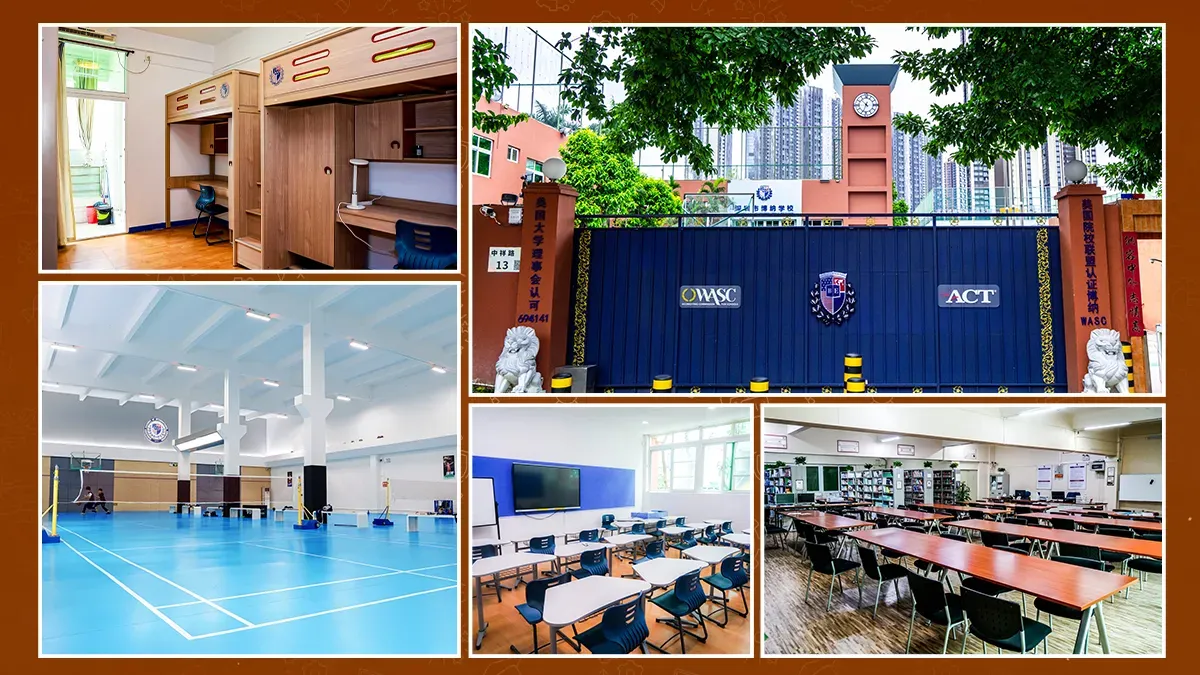
| Accreditations | WASC (re-accredited Feb 2025 for 6 years) · College Board CEEB 694141 · ACT test centre · Edexcel centre 94558 |
| Rankings | Shenzhen Top 10 · Guangdong Province Top 20 · China National Top 70 |
| Address | 13 Zhongxiang Road (中祥路13号), Nanshan District, Shenzhen |
| Metro | Line 12, Tongle South Station — approx. 5 min walk (school) |
| Phone | 0755-26602340 · 18300008200 (WeChat) |
| zsb@usapschool.com | |
| Website | www.usapschool.com |
SAIE at 12 Years — Three Departments, One Campus
Shenzhen Academy of International Education opened in 2014 and has grown over twelve years into a school with three distinct international departments operating on a single campus in Nanshan District. The school describes its model as "AI-driven learning" (博纳智学) — a cross-disciplinary approach fusing science, humanities and the arts, with a proprietary blockchain-based student growth feedback system and Social Emotional Learning (SEL) integrated into the daily timetable.
Three international departments
Recognition and rankings
After twelve years the school reports it has been recognised by WASC, College Board, ACT and Edexcel as an authorised institution. It has been ranked in the Shenzhen Top 10, Guangdong Province Top 20 and China National Top 70 by multiple international school rankings. Its WASC accreditation was renewed in February 2025 for a six-year term.
The "8-to-1" care model
The school describes an "8-to-1" model in which eight types of support wrap every student: homeroom teacher, subject teachers, tutors, club mentor, academic support, school nurse, dormitory supervisor and college counsellor. The school also runs a Feedback First cycle — each piece of feedback to a student builds on the previous one using four steps: review prior feedback, recognise progress, name what to improve, invite parent participation.
Campus and environment
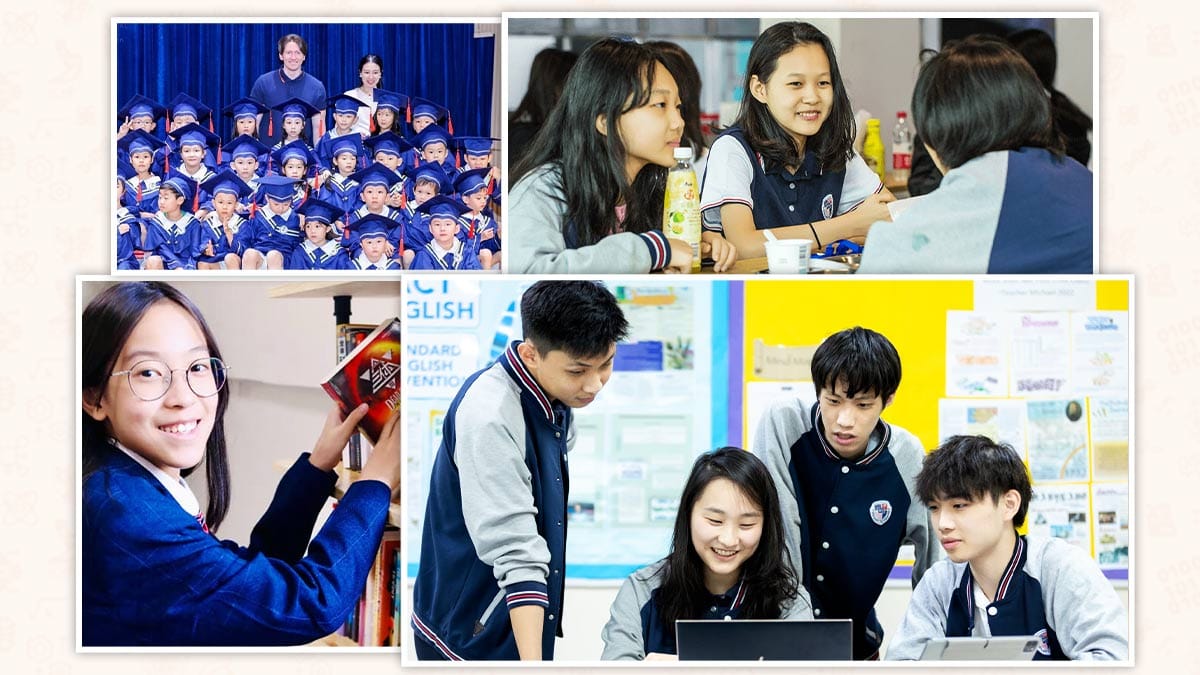
The school describes its Nanshan campus as a "Garden Campus" (园林校园) — a green, welcoming environment in the heart of one of Shenzhen’s most developed districts. The campus houses all three departments (middle school, high school, arts division) on one site. The curriculum is trilingual: English, Chinese and French are all taught.
For families comparing SAIE against other Shenzhen international school options, read the Alifa guide to Shenzhen Foreign Languages GBA Academy (SGA) — a different type of school on a different curriculum pathway.
SAIE — Videos
Three videos published by K-12 Excellence Hub, filmed at Shenzhen Academy of International Education. Click any thumbnail to watch on YouTube.
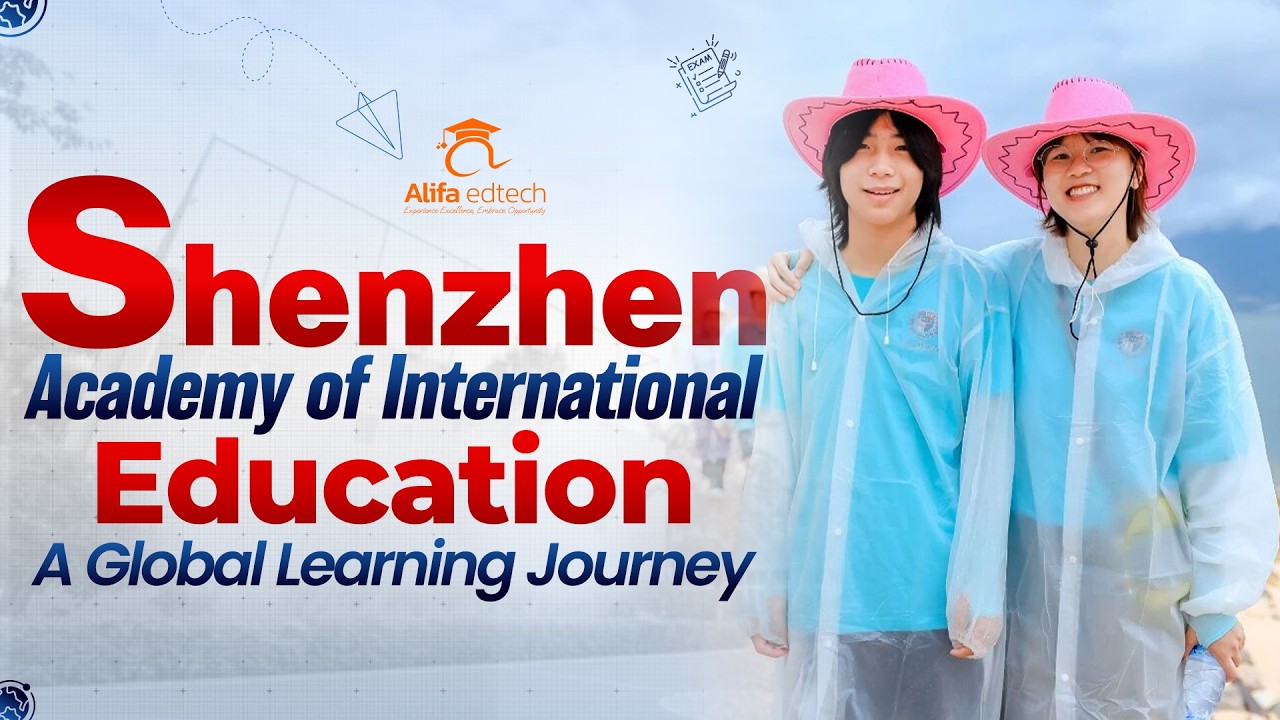
SAIE student life and campus activities · K-12 Excellence Hub · Click to watch on YouTube
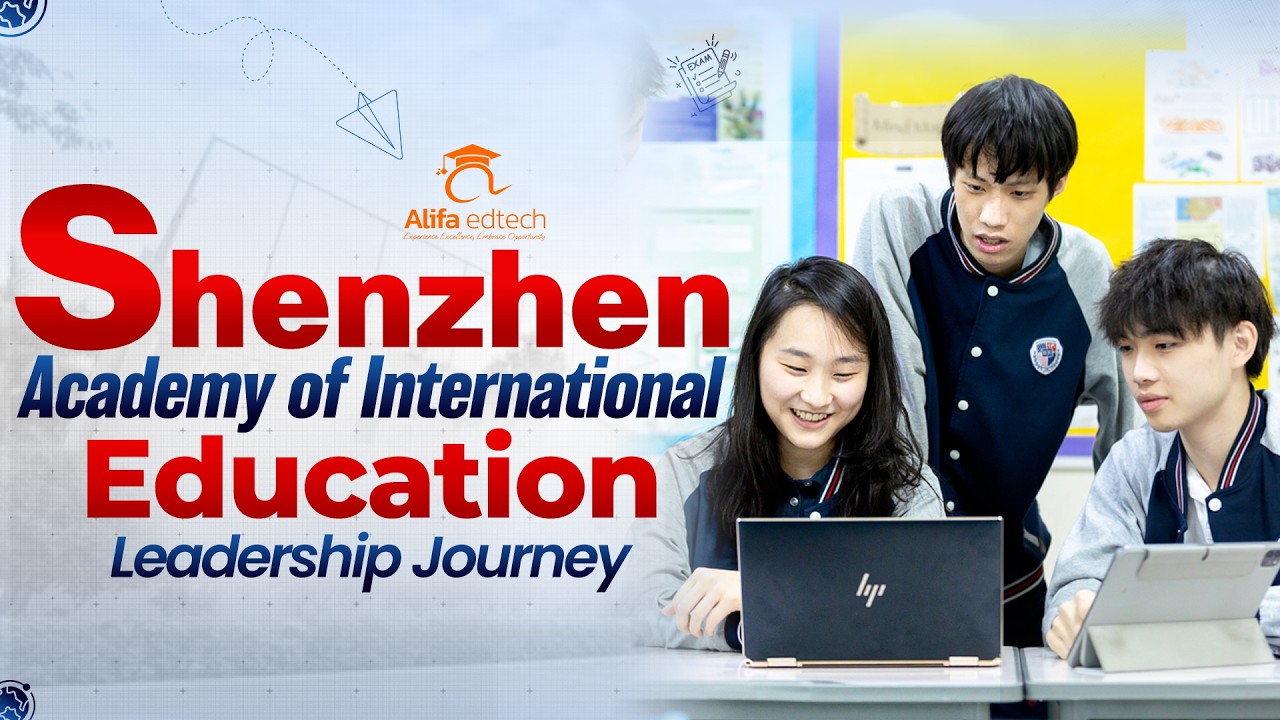 ▶ YouTube
Faculty spotlight · K-12 Excellence Hub
 ▶ YouTube
Student projects · K-12 Excellence Hub
✓ All 3 videos filmed at Shenzhen Academy of International Education · K-12 Excellence Hub · Click thumbnails to watch on YouTube
Curriculum — AP, A-Level, HKDSE and Arts
SAIE operates a US Common Core-based programme in Grades 6–8 (middle school). In Grades 9–12, students choose from four tracks. Students may also select individual courses across tracks — for example, choosing AP courses alongside an HKDSE timetable.
High school tracks — 2026/27| Track | Exit qualification | Key features |
|---|---|---|
| AP | SAIE Diploma + AP exam scores | ~30 AP courses including AP Capstone (2-year research programme). College Board CEEB code 694141. 2 students earned AP Capstone Diploma in 2025. CAS (150 hours, G9–G11) required for SAIE Diploma. |
| A-Level | SAIE Diploma + A-Level results | Pearson Edexcel authorised centre, code 94558. Tuition not separately published. Cross-track course selection allowed. |
| HKDSE | SAIE Diploma + HKDSE results | Hong Kong secondary exam. Results accepted by Chinese mainland universities, Hong Kong universities and others internationally. ACT is also an authorised internal test centre. |
| Arts Division | SAIE Diploma + portfolio/exams | Film, music, theatre, fashion design, visual art. Led by Prof. Pan Hua (Communication University of China, film PhD). MAP test at entry. |
Global Online Academy (GOA)
SAIE is a member of the Global Online Academy. Students can take 50+ online courses in computer science, economics, psychology, health sciences and design. Ask the school which GOA courses count toward the SAIE diploma credit requirements.
AI-driven cross-disciplinary learning (博纳智学)
The school describes a cross-disciplinary curriculum where subjects are taught in connected pairs or groups — for example, English alongside History and Music, AP Psychology alongside British Literature, or Computer Science alongside Artificial Intelligence. A blockchain-based student growth tracking system records progress dynamically. Social Emotional Learning (SEL) is embedded into the daily timetable alongside academic work.
Student activities — 20+ clubs
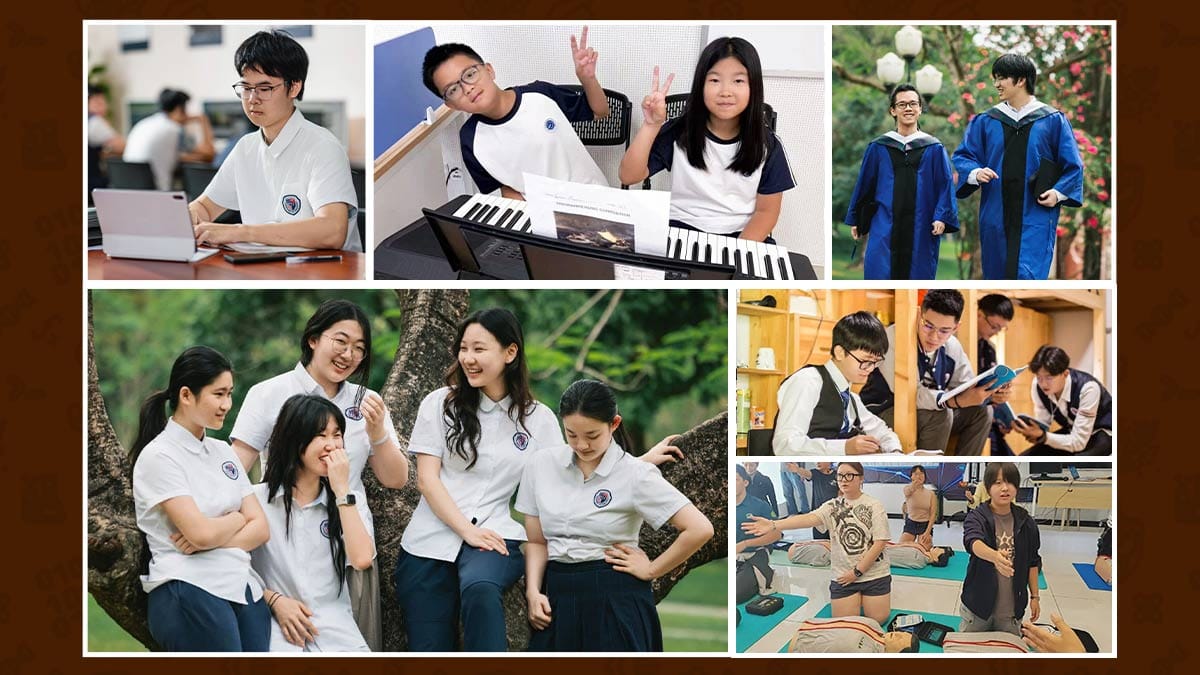
The school runs more than 20 student clubs meeting on Tuesday and Thursday afternoons. Clubs include animation, basketball, film, engineering, biology outreach, Frisbee, band, and mathematics competitions, among others. Annual school events include a sports day, spring trip, New Year gala and graduation ceremony.
Academic Competitions — Recent Results
The following competition results are from the school’s 2027 AP Programme Admissions Guide, covering the last two academic years. This is school-stated data.
| Competition | Results (last 2 years) |
|---|---|
| IPPF International Public Policy Forum | Global Top 32 — 1st place (only Chinese school); Global Top 64 — 2nd place |
| John Locke Essay Competition | 3 finalists |
| US Physics Cup (美国物理杯) | Silver ×1 · Regional Excellence ×1 · National Top 14 ×3 |
| USAD Academic Decathlon | National Gold ×1 · Silver ×3 · Bronze ×6 |
| World Scholar’s Cup | Gold ×5 · Silver ×5 |
| UK Junior Math Challenge (UKMT-JMC) | Gold ×9 · Silver ×6 · Bronze ×3 |
| HOSA Future Leaders Challenge | Silver ×5 · Bronze ×5 |
| NEC Economics Challenge | National Team Silver · Individual win ×3 |
| Hippo English Olympiad (河马英语) | 1st ×3 · 2nd ×4 · 3rd ×2 · Excellence ×6 · National Silver ×2 · National Bronze ×1 |
| UK Biology Olympiad (BBO) | Gold ×1 |
| USA Biology Olympiad (USABO) | Silver ×1 |
| Australia Biology Olympiad (ASOB) | Gold ×1 |
| Canada Chemistry Challenge (CCC) | National Excellence ×2 · National Silver ×2 |
| Duke of Edinburgh International Award | Silver ×1 · Bronze ×2 |
| SASMO (Singapore Maths Olympiad) | Gold ×1 · Bronze ×2 |
| Brainbee Neuroscience Challenge | Guangdong Regional 3rd ×1 |
| North American Calculus (CCL) | National Silver ×2 · National Bronze ×1 · National Excellence ×3 |
All results above are school-stated figures from the SAIE 2027 AP Programme Admissions Guide. Results cover approximately the last two academic years. Alifa has not independently verified individual competition placements.
SAIE Fees — 2026–27 & 2027–28
Two official school documents give fee data. The 2026 yearbook (August 2026) covers all tracks for 2026–27. The 2027 AP Programme Admissions Guide (October 2026) gives the AP-track fees for 2027–28. Both are confirmed school publications. The admissions team did not correct either set of figures.
2026–27 fees — all tracks (2026 yearbook, August 2026)| Track / Grade band | Annual tuition | Notes |
|---|---|---|
| Middle school G6–G8 | RMB 208,000 | US Common Core-based programme |
| AP high school G9–G12 | RMB 228,000 | ~30 AP courses incl. AP Capstone; CEEB 694141 |
| Arts Division G9–G12 | RMB 288,000 | Film, music, theatre, fashion design, visual art |
| HKDSE track | RMB 188,000 | Hong Kong exam pathway |
| A-Level track | Not published | Not separately published |
| Grade band | Annual tuition | Notes |
|---|---|---|
| Middle school G6–G8 | RMB 228,000 | AP programme pathway |
| High school G9–G12 | RMB 248,000 | AP programme pathway |
The 2027 AP guide covers the AP track only; Arts, HKDSE and A-Level fees for 2027–28 are not yet published. Tuition may be paid annually or per semester.
Additional fees — both years (same in both documents)| Fee | Amount | Notes |
|---|---|---|
| Application fee | RMB 500 | Non-refundable |
| Weekly boarding | RMB 16,800/year | Excludes weekends (Mon–Fri only). From G6. |
| Uniform | RMB 1,880/set | Includes summer and winter uniforms |
| Meals | Per meal, smart metering | Exact price Not published |
| International exams + study trips | Not published | Not included; charged separately |
First-year total estimates (2026–27, all-in). HKDSE day student: ~RMB 190,380. AP day student: ~RMB 230,380. Arts Division with boarding: ~RMB 307,180. All estimates add application fee (RMB 500) + uniform (RMB 1,880) to tuition. Boarding range adds RMB 16,800. Excludes meals, bus, textbooks, insurance and exam fees which are not published.
✓ Fees from school’s 2026 yearbook (Aug 2026) and 2027 AP guide (Oct 2026). Cross-checked with admissions team Oct 2026.
Faculty — Leadership & Teaching Team
The school states it has 50+ teachers and teaching assistants from 8 countries and regions, with more than 75% holding a Master’s degree or higher. The founder and head of school is Dr. Simon Chen (陈晓民), who personally teaches the AP Capstone courses. The admissions team states average class size is 15 students.
Selected faculty from the 2027 AP programme guide
| Name | Role | Credentials |
|---|---|---|
| Prof. Pan Hua (潘桦) | Art Education Director | Film PhD, Communication University of China professor. Beijing Municipal Teaching Master. Guest Professor, CUNY Brooklyn College Film Dept. |
| Coco (许可) | Director of College Counselling | Peking University BA · Columbia University MA. 10 years international education. 6 years AP + A-Level counselling director. Guided students to Harvard, Oxford, Cambridge and HK Top 3. |
| Sandy (周春燕) | Head of School Life / Languages | 12 years at SAIE. 10 years AP management. ACT certified teacher. AP English average 4+. |
| Aaron (王祚霖) | Academic Dean / Science Head | MS, University of Florida. 12 years international physics teaching. Outstanding Coach for International Physics Competitions. |
| Peter (孙昊) | Academic Registrar / Maths Head | MS Mathematics, University of Kansas. Florida-certified maths teacher. College Board AP certified teacher. 5+ years experience. |
| Hamid | School Life Director | 35 years experience in teaching, educational leadership and teacher training. |
| Dr. Jay | Senior High Head / Humanities Lead | PhD History, University of Rochester. 16 years teaching US History, World History, World Geography, Human Geography at high school and university level. |
| Maria | Junior High Head | MA History, Heilongjiang University. HSK Level 6. 7 years education experience. |
Partial faculty listing from the 2027 AP Programme Admissions Guide published by SAIE.
Admissions — Entry Requirements
SAIE accepts foreign national students across Grades 6–12, confirmed by the admissions team in October 2026. The school yearbook specifies that Grade 9 and below admit only foreign nationals and students from Hong Kong, Macau and Taiwan. There are no fixed intake dates or application deadlines.
Who can apply
Admission assessment — by track
| Track | Assessment |
|---|---|
| AP · A-Level · Arts | MAP test (Maths + English, 90 min) + 20-min interview + 10-min character & skills assessment |
| HKDSE | Language, Maths, English test (120 min) + 20-min interview + 10-min assessment |
Application documents
Contact and process
| Phone / WeChat | 0755-26602340 · 18300008200 |
| zsb@usapschool.com | |
| Website | www.usapschool.com |
| Communication languages | English — admissions staff and class teachers all speak English (admissions team, Oct 2026) |
| Parent channels | WeChat · Feishu (enterprise chat) · Email · School app · Parent-teacher association · Coffee with the Principal · Parent workshops |
If parents are not based in Shenzhen, Alifa provides professional guardianship services for K–12 international students in Shenzhen and across China.
University Counselling & Results
SAIE’s Director of College Counselling is Coco (许可) — Peking University BA, Columbia University MA, 10 years in international education, 6 years running AP and A-Level counselling at SAIE. She is the founder of the SAIE Excellence Programme and has guided students to Harvard, Oxford, Cambridge and the Hong Kong Top 3 universities.
AP Capstone university outcomes
The 2027 AP brochure states that AP Capstone students at SAIE have received offers from: Amherst College, Oxford University, Cambridge University, New York University (NYU), University of Hong Kong (HKU), Chinese University of Hong Kong (CUHK), Imperial College London, and the London School of Economics (LSE). SAIE is described as one of the few schools in Shenzhen authorised to offer the AP Capstone programme.
Counselling support
Published university outcomes
The school states in its 2026 yearbook that 80% of students across its graduating classes have been admitted to “top global universities”. The school does not define “top” or publish cohort sizes, so Alifa cannot verify this figure independently. The school has directed students to universities in the USA, UK, Hong Kong, Canada, Australia and Japan.
For families considering the HKDSE route. The school states that HKDSE results are accepted by Chinese mainland universities, Hong Kong universities and others internationally. This is a growing pathway for families who want access to both the Hong Kong and mainland Chinese university systems from one school. Ask the school which specific mainland universities have accepted SAIE’s HKDSE results.
Accreditations & Authorisations
| Body | Status |
|---|---|
| WASC | Western Association of Schools and Colleges. Re-accredited February 2025 for six years. A US regional accreditation body. |
| College Board | Authorised AP school. CEEB code 694141. Eligible to offer AP courses and administer AP exams. |
| ACT | Authorised ACT school and internal test centre. |
| Pearson Edexcel | Authorised Edexcel exam centre, code 94558. |
| AP Capstone | Authorised to run AP Seminar and AP Research (the AP Capstone Diploma programme). |
| Global Online Academy (GOA) | Member school. Students have access to 50+ GOA online courses in multiple subject areas. |
All accreditations above are as stated by the school in its official publications. Alifa has listed them with this attribution and has not independently verified current status with each accrediting body. The school has been ranked in the Shenzhen Top 10, Guangdong Province Top 20 and China National Top 70 by multiple international school rankings, as stated in its 2026 yearbook.
Location — Nanshan District, Shenzhen
| Address (EN) | 13 Zhongxiang Road, Nanshan District, Shenzhen, China |
| Address (CN) | 深圳市南山区中祥路13号 |
| Postcode | Not published |
| Metro | Tongle South Station (同乐南), Line 12 — approx. 5 min walk (school statement) |
| School bus | Not published |
About Nanshan District and Shenzhen
Shenzhen is a major city in Guangdong Province, directly north of Hong Kong. Nanshan District is one of Shenzhen’s most developed areas — home to many technology companies and professional families. The climate is subtropical: mild winters (15–25°C), hot and humid summers, with typhoons possible from June to October. Shenzhen connects to Hong Kong via several land border crossings and high-speed rail, giving SAIE families with business in Hong Kong easy access. Shenzhen Bao’an International Airport handles both domestic and international flights.
The metro network is extensive, with clear bilingual signage. Nanshan is served by Line 1, Line 5, Line 12 and others. Most day-to-day payments in Shenzhen use WeChat Pay or Alipay — set up a mobile payment wallet before arriving.
For families comparing location against another Shenzhen school, read the Alifa guide to SGA Shenzhen (Shenzhen Foreign Languages GBA Academy), also in Guangdong Province.
What Alifa Checked — Verification Ledger
Alifa verifies all data points in school profile articles before publication. The table below records what was checked, how, and which source confirmed it.
| Data point | Value confirmed | Status | Source |
|---|---|---|---|
| School name and type | SAIE / 深圳市博纳学校 — international school | ✓ Verified | 2026 yearbook |
| Middle school tuition | RMB 208,000/year (G6–8) | ✓ Verified | 2026 yearbook + admissions team |
| AP track tuition | RMB 228,000/year (G9–12) | ✓ Verified | 2026 yearbook + admissions team |
| Arts division tuition | RMB 288,000/year (G9–12) | ✓ Verified | 2026 yearbook + admissions team |
| HKDSE track tuition | RMB 188,000/year | ✓ Verified | 2026 yearbook + admissions team |
| Weekly boarding fee | RMB 16,800/year (excl. weekends) | ✓ Verified | 2026 yearbook + admissions team |
| Application fee | RMB 500 (non-refundable) | ✓ Verified | 2026 yearbook |
| Uniform | RMB 1,880/set | ✓ Verified | 2026 yearbook |
| Foreign students eligible | Yes — G9 and below: foreign nationals and HK/Macau/TW only | ✓ Verified | 2026 yearbook + admissions team |
| No fixed intake dates | Confirmed | ✓ Verified | Admissions team, Oct 2026 |
| Weekly boarding from G6 | Confirmed | ✓ Verified | Admissions team, Oct 2026 |
| Guardian required | Parents not in Shenzhen must arrange guardian before enrolment | ✓ Verified | Admissions team, Oct 2026 |
| English-medium teaching | English; few bilingual courses | ✓ Verified | Admissions team, Oct 2026 |
| English-speaking staff | All admissions staff and class teachers speak English | ✓ Verified | Admissions team, Oct 2026 |
| Metro station | Line 12, Tongle South, ~5 min walk | ✓ Verified | Admissions team, Oct 2026 |
| Average class size | 15 students | ✓ Verified | Admissions team, Oct 2026 |
| WASC re-accreditation | February 2025, six years | ✓ Verified | 2026 yearbook |
| AP Capstone | Authorised; 2 students earned AP Capstone Diploma in 2025 | ✓ Verified | 2027 AP guide |
| AISD listing | alifaedtech.com/schools/shenzhen-academy-of-international-education-saie | ✓ Verified | Alifa platform |
All data verified against primary sources: SAIE 2026 yearbook (August 2026), SAIE 2027 AP Programme Admissions Guide, and direct confirmation from the SAIE admissions team (October 2026). Last reviewed October 2026.
View the full school listing at Alifa Education: alifaedtech.com/schools/saie
Frequently Asked Questions — SAIE Shenzhen
Questions families ask most often about Shenzhen Academy of International Education, answered from official school data and confirmed admissions team responses.
Yes — foreign national students can apply to all grades (G6–G12), confirmed by the SAIE admissions team in October 2026. The school's 2026 yearbook states that Grade 9 and below admit only foreign nationals and students from Hong Kong, Macau and Taiwan. There are no fixed application dates or deadlines.
Annual tuition (2026–27, school yearbook August 2026): Middle school G6–8: RMB 208,000; AP track G9–12: RMB 228,000; Arts Division G9–12: RMB 288,000; HKDSE track: RMB 188,000. Additional: application fee RMB 500 (non-refundable), weekly boarding RMB 16,800/year, uniform RMB 1,880/set. Meals are charged per meal. Total first-year estimate: RMB 190,000–307,000 depending on track and boarding. A-Level tuition: Not published — ask the school before paying a deposit.
AP (Advanced Placement) is the US College Board curriculum leading to US university-recognised scores — SAIE offers ~30 AP courses including AP Capstone. A-Level is the British pre-university exam via Pearson Edexcel (centre 94558). HKDSE is the Hong Kong secondary exam, accepted by mainland Chinese, Hong Kong and international universities. Students may select individual courses across tracks. Arts Division students focus on film, music, theatre, fashion design and visual art.
AP, A-Level and Arts Division applicants take the MAP test (maths and English, 90 minutes), followed by a 20-minute interview and a 10-minute character and skills assessment. HKDSE applicants take a 120-minute test in language, maths and English, plus the same interview and assessment.
Yes — weekly boarding (Monday to Friday, excluding weekends) is available from Grade 6. The fee is RMB 16,800 per academic year. Parents who are not based in Shenzhen must arrange a guardian for their child before enrolment. Alifa provides professional guardianship services for K–12 international students in Shenzhen.
The school states the following: WASC (Western Association of Schools and Colleges) accreditation, re-accredited February 2025 for six years; College Board authorised school (CEEB 694141); ACT authorised school and internal test centre; Pearson Edexcel exam centre (code 94558); AP Capstone authorised programme. SAIE is also a Global Online Academy (GOA) member with access to 50+ online courses.
Classes are taught primarily in English. A small number of courses mix Chinese and English instruction. The admissions team states that all admissions staff and class teachers speak English. Language support is offered (the specific content and cost were not published — ask the school).
SAIE is at 13 Zhongxiang Road (中祥路13号), Nanshan District, Shenzhen. The nearest metro station is Tongle South (同乐南) on Line 12, approximately 5 minutes' walk. Nanshan District is one of Shenzhen's most developed areas, close to the tech industry hub. Shenzhen Bao'an International Airport handles both domestic and international flights.
The school states in its 2026 yearbook that 80% of students across its graduating classes have been admitted to 'top global universities'. The school does not define 'top' or publish cohort sizes. The college counselling team is led by Coco (Columbia MA, Peking University BA), who has guided students to Harvard, Oxford, Cambridge and HK Top 3 universities. The school's HKDSE results are stated to be accepted by mainland Chinese, Hong Kong and international universities.
Yes — the Arts Division at SAIE (Grades 9–12) covers film, music, theatre, fashion design and visual art. It is led by Professor Pan Hua (潘桦), a professor at the Communication University of China (中国传媒大学), film PhD supervisor, Beijing Municipal Teaching Master, and guest professor at CUNY Brooklyn College's Film Department. The Arts Division fee is RMB 288,000/year.
Alifa Education Services
Is SAIE the Right School for Your Family?
It fits families with foreign national children in Grades 6–12 who want AP, A-Level or HKDSE routes at a single Shenzhen school with strong university counselling. The arts division is unique in Shenzhen for the breadth of creative disciplines under one roof. Class sizes of 15, English-medium teaching, and staff who all speak English make it accessible for families arriving without Mandarin. The HKDSE route is particularly valuable for families who want doors open to both mainland Chinese and Hong Kong universities from one programme.
Consider carefully if budget is a constraint — fees run RMB 188,000–288,000/year before meals, bus, books, insurance and exam costs, which are not yet published. Get all costs in writing before paying a deposit. If your child is in Grade 9 or below and holds a Chinese passport, confirm eligibility directly with the school before applying. Alifa can compare SAIE honestly against other Shenzhen and Guangdong schools and help you decide which track and school fits your child’s age, language level and university goals. We can also arrange guardianship support if your family is not based in Shenzhen.
✉ Ask Our Consultant About SAIE →Disclosure: Alifa Education Services is an independent education placement consultancy. We may earn a referral fee from partner schools when families enrol, at no extra cost to the family. Our recommendations are based on fit, not fee structure.
Sources
- SAIE 2026 Yearbook (深圳市博纳学校2026年册) — Official school yearbook including 2026–27 fee table, admissions page, curriculum, accreditations and faculty. Published August 2026.
- SAIE 2027 AP Programme Admissions Guide (2027 AP课程招生简章) — Official school brochure covering AP curriculum, faculty and leadership. Published October 2026.
- SAIE Admissions Team — Direct confirmation of eligibility, boarding, guardian requirements, teaching language, metro station and class size. October 2026.
- Alifa Education — SAIE school listing. alifaedtech.com/schools/saie
- School website: www.usapschool.com
By Alifa Education. Updated October 2026. Fees and admissions details change — confirm with SAIE directly before any payment.


Member comments