


Introduction
Is your child ready for a math contest? Are you unsure between Math Kangaroo and SASMO? Many parents feel this way each year. They try to find the best math contest for their child.
Both Math Kangaroo and SASMO are well-known in China. Many students join them worldwide. But these contests are different. They have different structures, levels of difficulty, and who they are for. Picking the wrong one might make things too hard for your child. Or, it might not challenge them enough.
This guide will explain Math Kangaroo vs SASMO. We'll cover difficulty, how the tests work, when to sign up, and how to get ready. By the end, you'll know which contest fits your child's skills and dreams best.
Quick Comparison: Math Kangaroo vs SASMO at a Glance
Before getting into the description of Math competition comparison, here is the quick comparison table for your easy understanding.
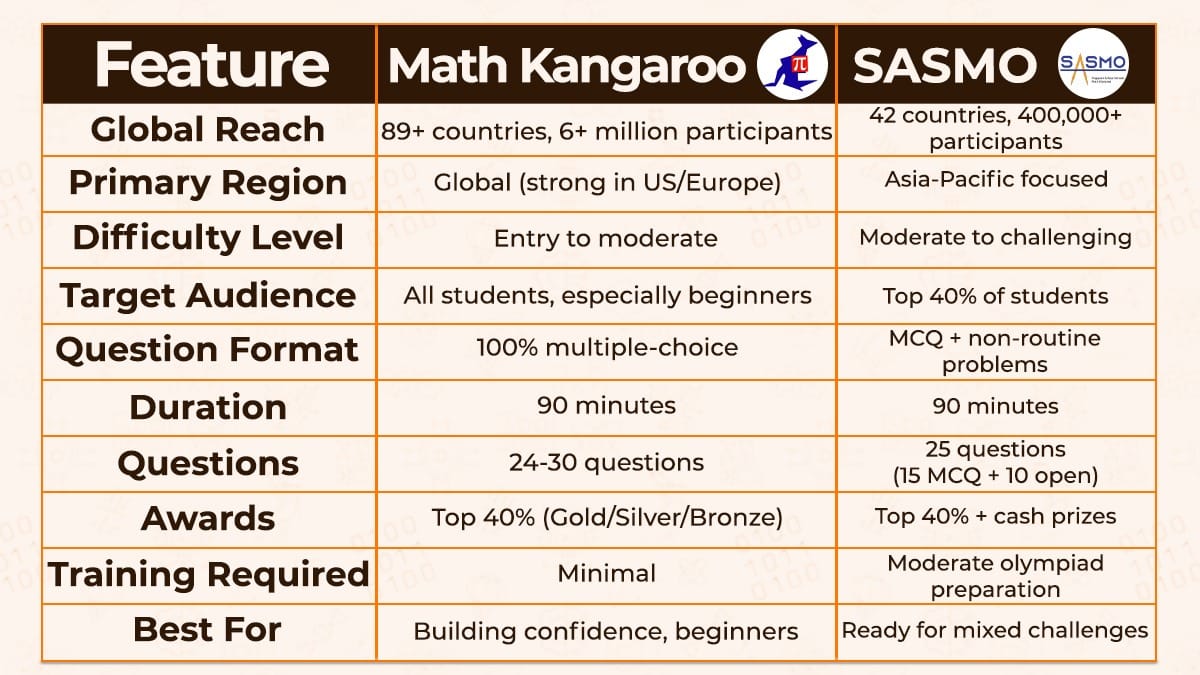
Can’t decide which math competition to choose for your kid?
Alifa Education Services assists parents of K-12 students in China. They help choose schools that fit their children's math skills and study goals. We give clear advice on schools worldwide. Our focus is on programs that boost language skills and prepare for careers.
Contact us today!
What is Math Kangaroo?
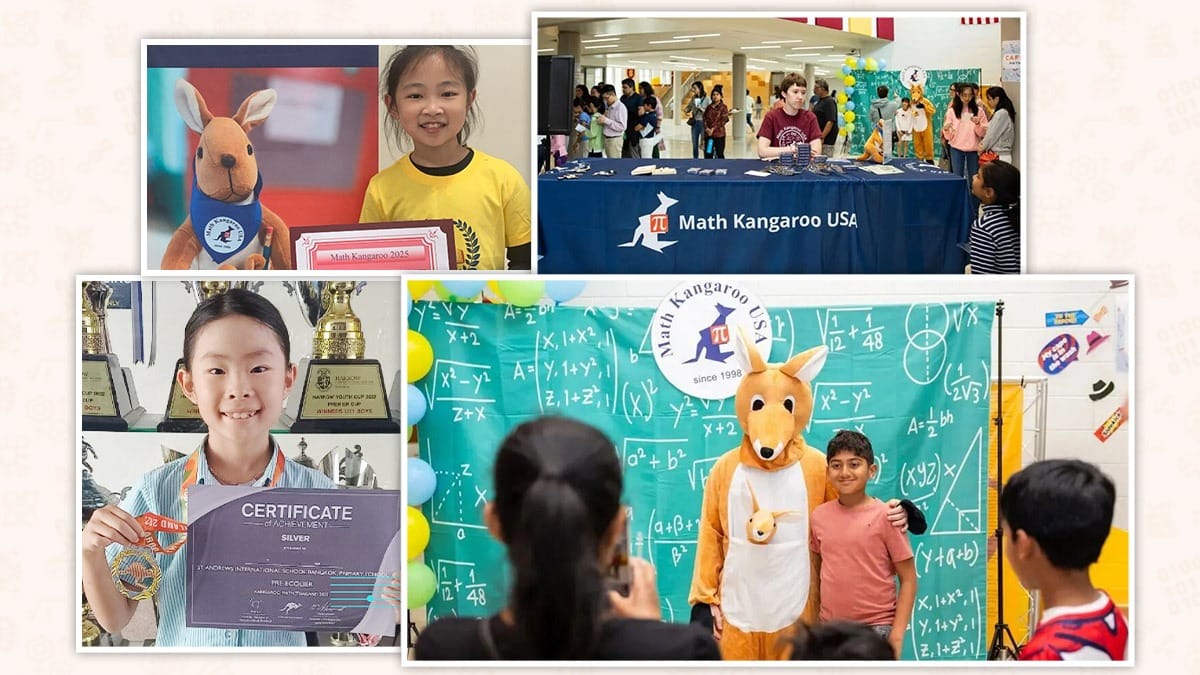
Math Kangaroo is a famous Math Competition. It started in France in 1991. Now, over 90 countries have joined. Millions of students take part each year.
This Math Olympiad focuses on fun and real-life math. It uses questions that need problem-solving skills. It's not just about difficult math. It's about making math interesting. The test has questions for all skill levels.
Students in grades 1 to 12 can join. It encourages creativity. It helps students think outside the box. Kangaroo Math is a great way to explore math.
Who Should Take Math Kangaroo?
Math Kangaroo is ideal for:
- Students new to competitive mathematics who want a supportive entry point
- Learners who excel with multiple-choice formats and visual problem-solving
- Children building confidence in their mathematical abilities
- Primary to secondary students (Grades 1-12/K-12)
- Those seeking international recognition on their academic resume
The competition wants students who might find math scary. It helps them see math thinking in a nice way. Experts say Kangaroo Math is the best first step for kids in math contests. It helps build Reasoning Skills.
Competition Structure and Format
Math Kangaroo features a straightforward single-test format:
- Duration: 90 minutes
- Questions: 24 questions (Primary 1-4) or 30 questions (Primary 5-12)
- Format: 100% multiple-choice
- Scoring: Questions arranged by increasing difficulty with corresponding point values (3, 4, or 5 points). Negative marking applies: wrong answers deduct 1 point, while non-attempts score 0
The questions start easy with basic math and logic puzzles. Then, they get harder with more complex problems. This helps students with different skills show what they can do.
Difficulty Level: What to Expect
Math Kangaroo questions focus on creative thinking, not hard math knowledge. Students don't need special training or difficult theories. They will find things like:
- Pattern recognition challenges
- Logical reasoning puzzles
- Geometry and spatial visualization
- Number theory basics
- Practical word problems with creative twists
Parents and teachers say Kangaroo Math is easier than other math contests. This makes it good for more students. The multiple-choice style also helps. Students can cross out wrong answers. They don't need to write out every step.
To learn more about the services offered by Alifa Education, please visit our dedicated page. Whether you are a guardian, affiliated with an international or bilingual school in China, or a study abroad education agency, Alifa Edtech offers services tailored to your unique needs. Please visit our page to learn more about our offerings.
Awards and Recognition
Math Kangaroo rewards the top 40% of participants:
- Top 10%: Gold Award
- Next 15%: Silver Award
- Next 15%: Bronze Award
- 40th-50th percentile: Honorable Mention
Winning an award in Math Kangaroo is a big deal. Many countries, 89 in total, take part. Schools in North America, Europe, and Asia know this contest.
For students in the US, Kangaroo Math awards look good on their records. They can help with gifted programs and school applications.
What is SASMO?
SASMO started in 2006. The Singapore International Math Contests Centre (SIMCC) created it. SASMO is now a top math contest in Asia.
Over 400,000 students from 42 countries have joined. Each year, 20,000 to 30,000 students compete. Many schools in Singapore send students every year.
SASMO is different because it balances school math with harder contest problems. Professors and teachers create the questions. The contest wants to help students reach their full math potential. It keeps standards realistic. Students can succeed without special Math Olympiad training.
Who Should Take SASMO?
SASMO targets and best suits:
- Students in the top 40% of their class who are ready for intellectual challenge
- Learners comfortable with mixed question formats (both MCQ and open-ended)
- Those preparing for DSA applications in Singapore’s education system
- Students from Primary 2 to JC 2 (Grades 2-12)
- Children seeking recognition in Asian academic contexts
SASMO is different from Math Kangaroo. SASMO is for students who want a bigger challenge. It helps them think in harder ways. It goes beyond basic problem-solving.
Experts suggest SASMO as good practice before the hardest contests. It is harder than school math. But it is easier than the toughest Math Olympiad challenges.
Competition Structure and Format
SASMO features a unique two-section approach completed in a single 90-minute session:
Section A: Multiple Choice Foundation (15 questions)
- Correct answer: +2 points
- Non-attempt: 0 points
- Wrong answer: -1 point
Section B: Non-Routine Problems (10 questions)
- Correct answer: +4 points
- Wrong answer: 0 points
- Here's a simplified version targeting a Flesch score of 80:
Note: Every student starts with 15 points. This way, no one gets a score below zero. The highest score is 85.
Want to put your brand in front of families, students, and education-focused readers? We're inviting select partners to advertise with us on our trusted blog.
Want to get featured? submit a story for us to include.
This test checks both quick thinking and deep analysis. Section A has questions for students who know standard ideas. They can show they are good at these. Section B finds students who are truly gifted at math.
Difficulty Level: What to Expect
SASMO is consistently described as “tougher than Math Kangaroo but more accessible than pure olympiad competitions.” The questions combine:
- School mathematics fundamentals that students recognize
- Olympiad-style extensions requiring creative problem-solving
- Non-routine scenarios that can’t be solved with memorized formulas
- Multi-step reasoning that tests logical progression
Parents say SASMO questions are harder than Math Kangaroo. Section B has tough problems.
Students must show full steps to solve them. But Section A has questions like those in school. This helps students feel more sure of themselves. They can build confidence before trying harder parts.
Awards and Recognition
SASMO offers comprehensive recognition for the top 40% of participants:
- Gold, Silver, and Bronze awards based on performance tiers
- Perfect Score Award: $100 cash prize for achieving maximum points
- Certificate of Participation for all contestants
- School team rankings and trophies
In Singapore, SASMO is important for students applying to the Direct School Admission (DSA) program. It helps build their applications, though it's not a main requirement.
Top schools know this contest. Schools like Raffles Institution and Hwa Chong Institution join every year. Over 100 schools in Singapore participate. This shows SASMO is well-respected.
Head-to-Head: Math Kangaroo or SASMO
Let’s learn the Best math competition for primary school in detail.
Difficulty: Which Competition is Harder?
SASMO is a bit harder than Math Kangaroo.
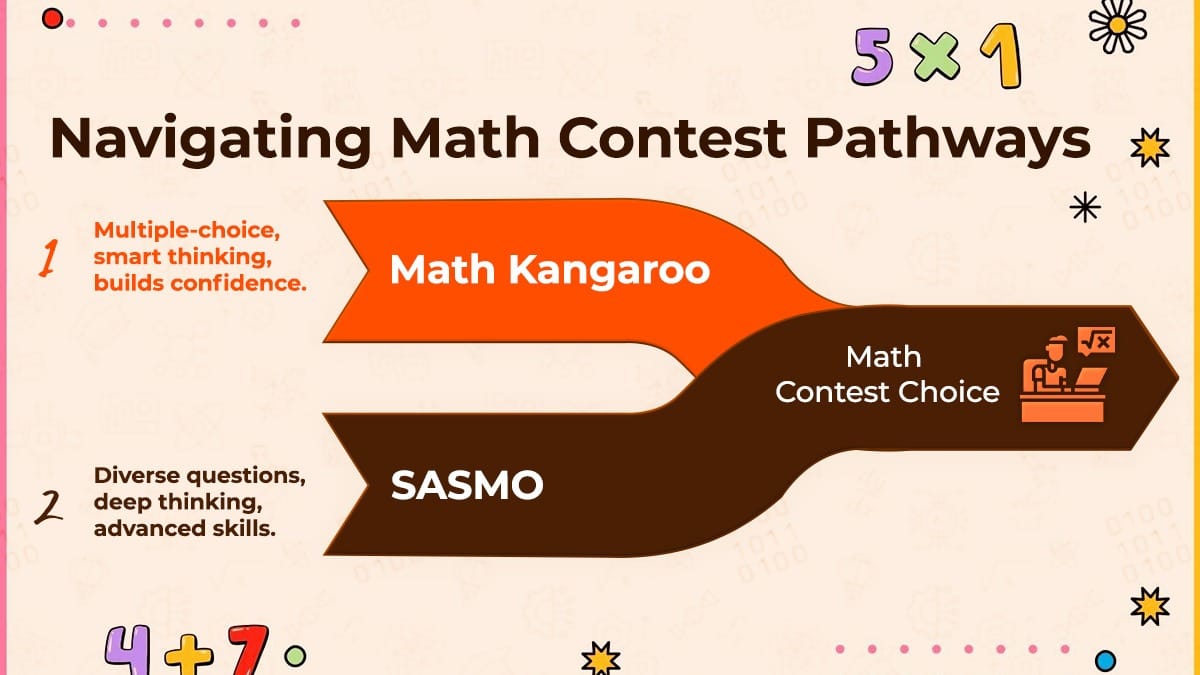
Math Kangaroo uses only multiple-choice questions. It focuses on smart thinking, not hard math tricks. This makes it easier for students. They can do well without special contest training. It’s good for building confidence. It’s a nice start to math contests.
SASMO has different question types. Section B has problems needing full answers. These need deep thinking and math skills. SASMO is not as hard as IMO or AIME. But it requires more advanced thinking. It goes beyond normal school math.
So, if your child is new to math contests, Math Kangaroo is a good first step. If they like hard problems and want a bigger challenge, SASMO is a good next step.
Format Differences and Learning Styles
The format distinction significantly impacts which competition suits different learning styles:
Math Kangaroo’s all-MCQ approach favors:
- Visual and spatial learners who can work backward from answer choices
- Students who excel at elimination strategies
- Those who experience anxiety about showing detailed work
- Fast processors who can efficiently evaluate multiple options
SASMO’s hybrid format favors:
- Analytical thinkers who prefer constructing complete solutions
- Students comfortable with diverse question types
- Those who excel at both speed (Section A) and depth (Section B)
- Learners who want to demonstrate full problem-solving processes
Neither contest is better than the other. They just test different ways of thinking. Think about what your child is good at. This will help you choose the right contest for them.
Geographic Strength and Recognition
Math Kangaroo dominates in:
- United States (50,000+ annual participants)
- European countries (original stronghold)
- Western education systems
- International schools with Western curricula
SASMO dominates in:
- Singapore (100+ participating schools)
- Asia-Pacific region (primary focus of 42 participating countries)
- Schools aligned with Asian education standards
- DSA and regional admission processes
If your child studies in Asia or wants to join programs there, SASMO is well known. It can help with applications in that area. If you are looking at schools in the West or want your child to study abroad, Math Kangaroo is more widely known. Its global name can be helpful.
Your Child's Future Starts with the Right School
Stop scrolling through endless options. We've already vetted 800+ schools across China—let us match your child with the perfect fit, budget, and scholarship opportunities.
✓ Free consultation
✓ Scholarship & grant assistance
✓ Full admissions support
Preparation Requirements and Time Investment
Math Kangaroo preparation:
- Timeline: 1-3 months of casual practice often sufficient
- Focus: Past papers, logical thinking exercises, basic problem-solving strategies
- Training: Special coaching not required; self-study viable
- Resources: Abundant free past papers and practice materials available online
SASMO preparation:
- Timeline: 3-6 months recommended for serious contenders
- Focus: Balance of school fundamentals + olympiad-style problem-solving
- Training: Benefits significantly from structured coaching or olympiad classes
- Resources: Past papers available; specialized training materials helpful for Section B
Getting ready for Math Kangaroo takes less extra effort. Smart students can do well with just their school learning.
SASMO aims for the top 40% of students. It has tough problems that need special thinking. Students who spend time learning these skills often do better in SASMO.
Preparation Strategies for Math Kangaroo and SASMO
Math Kangaroo
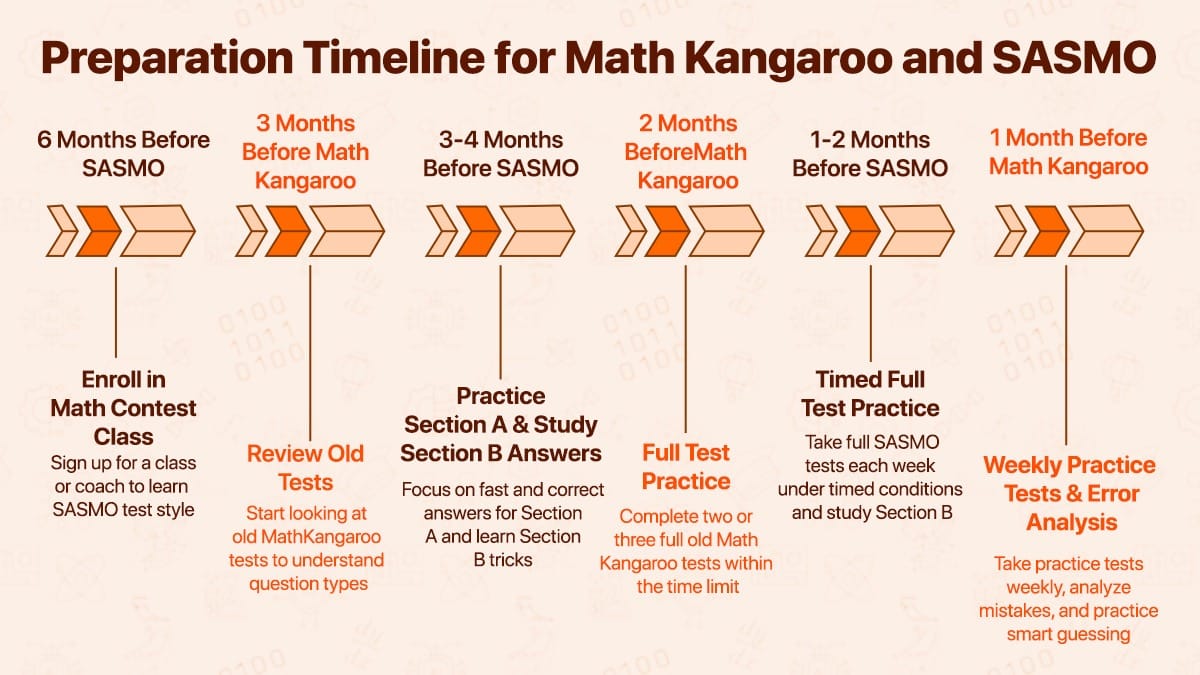
- 3 Months Before: Start by looking at old Math Kangaroo tests from the official website. Find out what kinds of questions are asked, like patterns, logic, and geometry. Practice how to finish the test on time. You have 90 minutes for 24 to 30 questions.
- 2 Months Before: Do two or three full old tests. Try to finish them within the time limit. Focus on the harder questions, worth 4 or 5 points. Learn how to use the answer choices to help you guess smartly. This makes the multiple-choice format work for you.
- 1 Month Before: Take practice tests every week. Look closely at the questions you got wrong. Understand why your answers were not correct. Practice guessing smartly. This helps you get more points, especially when wrong answers lose points.
SASMO
- 6 Months Before: Sign up for a math contest class or find a coach. They should know the SASMO test style. Make sure you know school-level math well. This helps you do well in Section A. Start learning how to solve harder problems that are not usual.
- 3-4 Months Before: Practice Section A questions. Try to answer them fast and correctly. Aim to get all 15 questions right on time. Study the answers for Section B problems from old tests. Learn common contest tricks, like working backward or finding patterns.
- 1-2 Months Before: Take full SASMO tests each week. Do this under timed conditions. Study Section B problems carefully. Practice showing all your steps and thinking clearly. Look at common mistakes and try not to lose points in Section A.
General Preparation Tips for Both
- Start early: Don’t wait until the last minute; mathematical thinking develops over time
- Consistent practice: 30-45 minutes daily beats marathon weekend sessions
- Learn from mistakes: Review wrong answers thoroughly to understand reasoning gaps
- Simulate test conditions: Practice under timed pressure to build stamina
- Balance challenge and confidence: Mix difficult problems with achievable ones to maintain motivation
2026 Registration and Important Dates
Math Kangaroo 2026
- Registration Opens: September 2025
- Registration Deadline: Varies by center, typically early March 2026
- Competition Date: March 19, 2026 (tentative, subject to confirmation)
- Results Release: Early May 2026 (6-8 weeks post-competition)
- How to Register: Through Math Kangaroo USA website (mathkangaroo.org) or authorized international centers
- Eligibility: Students in Grades 1-12 (K-12)
SASMO 2026
- Registration Opens: January 16, 2026
- Registration Deadline: March 16, 2026
Competition Dates:
- Private candidates (Singapore): March 29, 2026
- School candidates (Singapore): March 7 - April 7, 2026
- International candidates: March 7 - April 7, 2026
- Results Release: Approximately 2 weeks after last Singapore contest date (early release available for P6 DSA applicants upon request)
- How to Register: Through SASMO website (sasmo.sg) or school registration
- Eligibility: Students from Primary 2 to JC 2 (Grades 2-12)
Important: Registration spots fill quickly, especially for popular test centers. Register early to secure your preferred date and location.
Decision Framework: Which Competition Should I Choose for My Kid?
Selecting between Primary school math competitions depends on your kid compatibility to the competitions.
Choose Math Kangaroo if Your Child:
- Is new to competitive mathematics and needs a confidence-building experience
- Prefers multiple-choice formats and feels more comfortable with answer options
- Excels at logical thinking but hasn’t had olympiad-specific training
- Attends school in North America or Europe where the competition has stronger brand recognition
- Wants international credibility with participation in 89+ countries
- Has limited preparation time (1-3 months) before the competition
- Is in Kindergarten through Grade 4 and just beginning competitive math journey
Choose SASMO if Your Child:
- Ranks in the top 40% of their class and is ready for intellectual challenge
- Enjoys mixed question formats and can handle open-ended problem-solving
- Has exposure to olympiad-style thinking or has completed olympiad training classes
- Attends school in Asia-Pacific especially Singapore, Malaysia, or regional systems
- Is preparing for DSA or regional academic applications that value SASMO recognition
- Can commit 3-6 months to structured preparation including non-routine problem practice
- Is in Primary 4-6 or secondary levels and ready to move beyond entry-level competitions
Why Not Both?
Here’s an often-overlooked strategy: Many successful students participate in both competitions.
Math Kangaroo (typically held in March) and SASMO (typically March-April) don’t conflict significantly in timing. Participating in both offers several advantages:
- Diverse experience with different question formats and styles
- Multiple opportunities to earn awards and recognition
- Reduced pressure since performance isn’t dependent on a single competition
- Skill development across both MCQ strategies and open-ended problem-solving
- Resume building with achievements in both Western and Asian-recognized competitions
If time and resources allow, taking both competitions maximizes your child’s competitive mathematics experience while building a more comprehensive skill set.
Conclusion
Choosing between Math Kangaroo and SASMO depends on your child. Think about their math level, what they like, and their goals.
Math Kangaroo is good for beginners. It builds confidence and is known globally.
SASMO is for students ready for harder problems. It is well-known in Asia.
Both contests help build math skills and confidence. The main goal is to enjoy math and find the challenge. Both offer great experiences for your child.
Related Articles
 Emmanuel Usang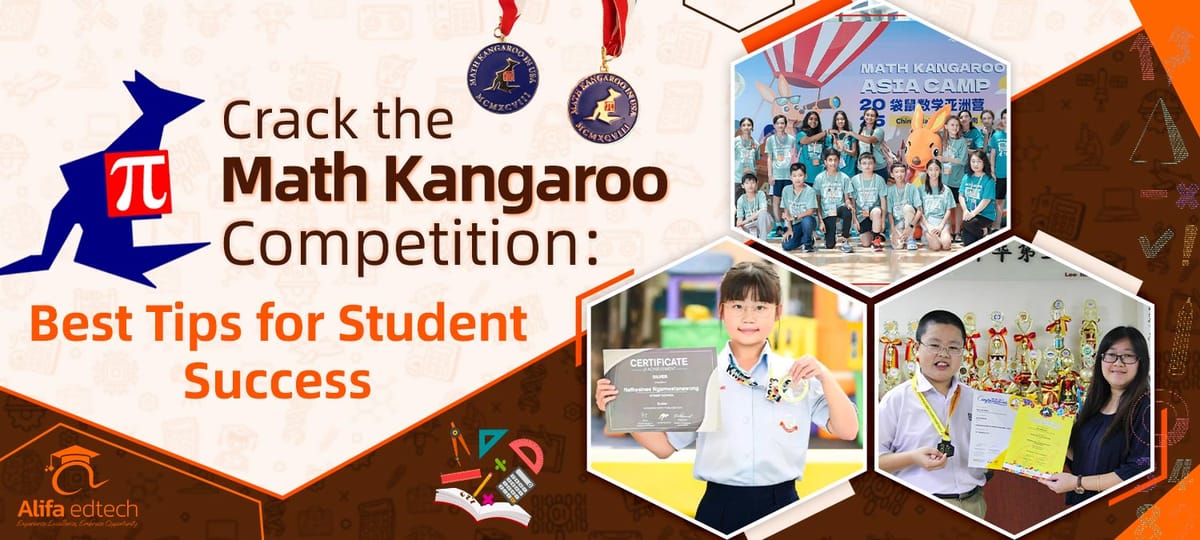
 Emmanuel Usang
 Emmanuel Usang


Member comments