

Introduction
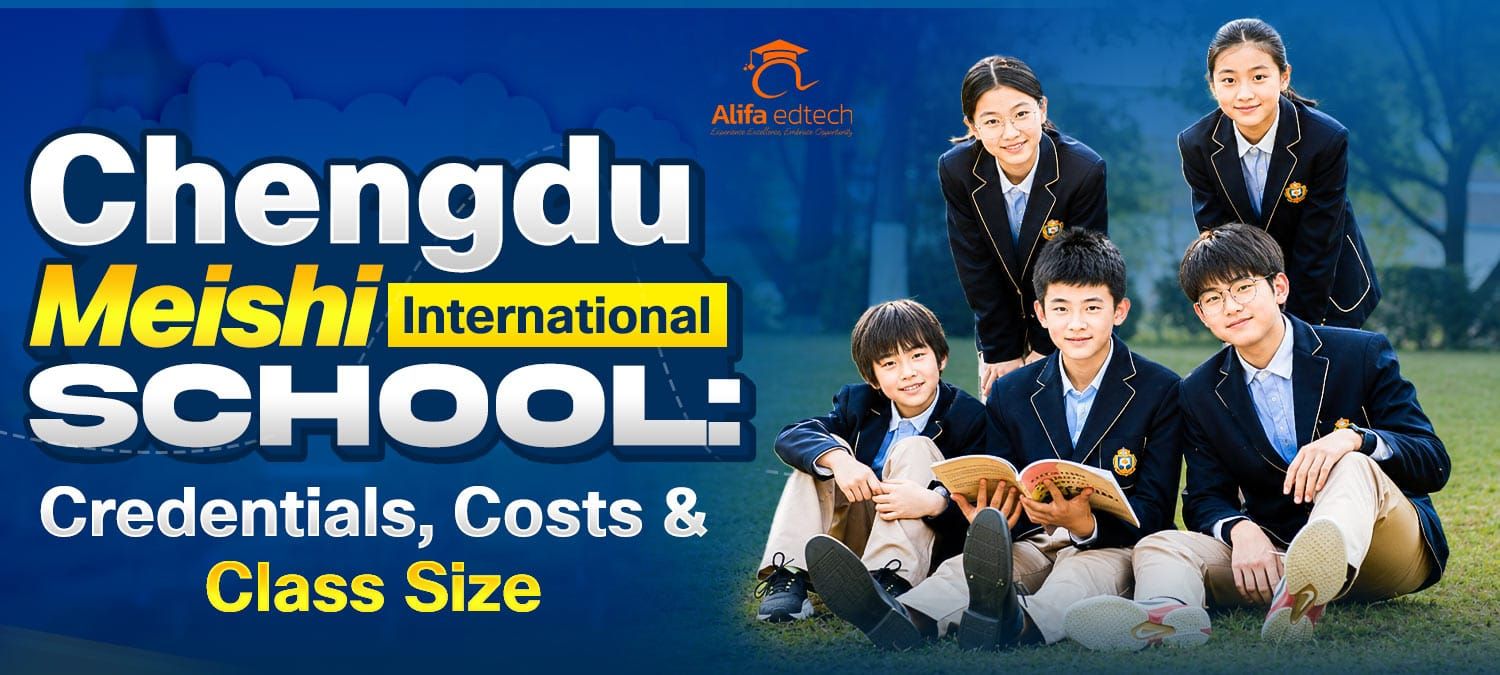
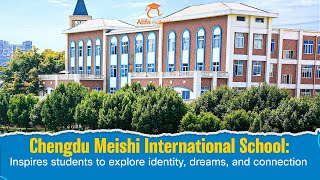
Chengdu Meishi International School (CMIS) , now operating in Chinese as Chengdu Meishi Shiyi School (成都美视师一学校), is a private K–12 day and boarding school in Chengdu, Sichuan. Founded in 2002, the school provides both national-curriculum and integrated international education pathways. The International Baccalaureate continues to list the school under the English name Chengdu Meishi International School.
Meishi was the first school in western China to hold all three major IB programmes : the Primary Years Programme (PYP), Middle Years Programme (MYP), and Diploma Programme (DP). Its IB World School code is 003888. The Diploma Programme was authorised in 2009, followed by the MYP in 2016 and the PYP in 2017. The school also offers AP courses as an additional international academic pathway.
The latest published 2026 IB Diploma results show a 100% pass rate, a highest score of 44 out of 45, and 23% of students scoring 39 points or above. In 2025, Meishi reported an average IB Diploma score of 37.8/45, a highest score of 43, and another 100% diploma pass rate.
Today, the school reports more than 2,000 Chinese and international students, including 700+ students in its Fusion Division. The current school profile also lists 500+ staff, 25+ foreign teachers, and classes of approximately 20 students in the Fusion Division.
Parents in Southeast Asia and India tend to ask the same questions: Will my child get into a good university? Will the academics hold up? What does daily school life look like? In this Alifa Education guide, we answer those questions and explain the curriculum, academic results, reported fees, boarding, admissions, and student experience families should understand before considering Chengdu Meishi.
Experience Excellence, Embrace Opportunity.
At a Glance
| Field | Details |
|---|---|
| School | Chengdu Meishi International School (CMIS) |
| Current Chinese Name | Chengdu Meishi Shiyi School (成都美视师一学校) |
| Founded | 2002 |
| School Type | Private K–12 day and boarding school |
| Location | Chengdu High-Tech Zone, Sichuan; 230+ mu campus near Tianfu 5th Street Metro Station |
| Students | 2,000+ Chinese and international students |
| Fusion Division | 700+ students |
| School Staff | 500+ staff members |
| Foreign Teachers | 25+ foreign teachers |
| Fusion Class Size | Approximately 20 students per class |
| IB School Code | 003888 |
| IB Programmes | Primary Years Programme (PYP), Middle Years Programme (MYP) and Diploma Programme (DP) |
| Other Pathway | College Board-authorised AP courses |
| Boarding | Available |
| Latest 2026 DP Results | 100% pass rate; highest score 44/45; 23% scored 39+ |
| Reported Tuition | Approximately ¥108,000–¥134,000/year for primary through high-school Fusion programmes. Confirm the latest academic-year fee schedule directly with the school. |
Key Takeaways
First in western China with PYP, MYP and DP — Chengdu Meishi was the first school in western China to hold all three major IB programmes: the Primary Years Programme, Middle Years Programme and Diploma Programme. The school also offers AP courses.
Latest 2026 IB results show a 100% pass rate — the highest Diploma Programme score was 44 out of 45, while 23% of students scored 39 points or above.
The 2025 DP cohort averaged 37.8 out of 45 — with another 100% diploma pass rate and a highest score of 43. The 2025 result provides useful context because Meishi did not publish a cohort average in its 2026 results announcement.
More than 2,000 Chinese and international students attend the school, including 700+ students in the Fusion Division. The current school profile also reports 500+ staff, 25+ foreign teachers, and Fusion Division classes of approximately 20 students.
Reported tuition is approximately ¥108,000–¥134,000 per year for primary through high-school Fusion programmes. These figures should be treated as reported fees rather than a confirmed current academic-year schedule, so families should request the latest written fee information directly from Meishi.
Meishi reports strong university progression — by 2025, the school reported a 100% overall university progression rate across 15 graduating cohorts. For the previously published five-year period, it also reported a 100% US top-100 admission rate among students applying to US universities and an average 82.8% US top-50 admission rate.
What Academic Results Can You Expect?
Start with the latest numbers. Chengdu Meishi’s most recent published IB Diploma results are strong.
In 2026, Meishi reported a 100% IB Diploma pass rate and 100% diploma attainment. The highest score was 44 out of 45, while 23% of students scored 39 points or above. The school did not publish a cohort average for 2026.
For comparison, the 2025 DP cohort averaged 37.8 out of 45, against a reported global average of 30.58. The highest score was 43 out of 45, and the school again reported a 100% diploma pass rate.
| IB Result | 2026 | 2025 |
|---|---|---|
| Diploma Pass Rate | 100% | 100% |
| Diploma Attainment | 100% | 100% |
| Highest Score | 44 / 45 | 43 / 45 |
| Average Score | Not published | 37.8 / 45 |
| 39+ Points | 23% | — |
| 40+ Points | — | 20% |
| 38+ Points | — | 50% |
| 36+ Points | — | 90% |
The school also published detailed subject results for the 2025 cohort. These give parents a clearer picture than a single overall average.
| Subject | 2025 Result |
|---|---|
| Chinese B | 100% of students achieved the maximum score of 7 |
| Physics | 50% achieved 7; 100% scored 6 or above |
| Chemistry | 43% achieved 7; 86% scored 6 or above |
| Mathematics AA Higher Level | 71% scored 6 or 7 |
| Mathematics AA Standard Level | 67% achieved 7; 100% scored 6 or above |
| Visual Arts | 100% achieved the maximum score of 7 |
| Theory of Knowledge (TOK) | 80% received an A or B |
These subject-level results show where the 2025 cohort performed particularly well. They should still be read as results from a specific graduating class, rather than a guarantee of future individual outcomes.
Meishi also reports a broad range of university destinations. Recent offers have included Stanford University, UCLA, UC Berkeley, Imperial College London, LSE, UCL, the University of Edinburgh, the University of Toronto, McGill University, the University of Melbourne, Nanyang Technological University, the University of Hong Kong and Tsinghua University.
As of May 2025, the school reported that all 15 graduating cohorts had progressed to universities, maintaining a 100% overall university progression rate. This should not be confused with saying that every graduate entered a world top-100 university.
For students applying to US universities during the previous five years, Meishi reported a 100% admission rate to US top-100 universities and an average 82.8% admission rate to US top-50 universities. For the 2025 cohort specifically, the school reported a 100% US top-50 admission rate and a 50% US top-30 admission rate.
For students applying to universities in Commonwealth countries and regions over the same five-year period, the school reported a 100% admission rate to world top-100 universities. For the 2025 cohort, it reported that 90% received admission to world top-30 universities within this applicant group.

The school also offers Advanced Placement (AP) courses through the College Board. NUS and NTU, two top schools in Singapore, both accept AP scores for admission.
Forbes China named the school the top institution in Sichuan Province. Forbes also ranked it #36 among all schools in the nation for 2024 (listed under the school’s name at the time, Chengdu Meishi International School — the school’s Chinese registration has since changed, but this is the same institution). Meishi is the only school in Southwest China in the national top 50.
How the Dual-Track IB System Keeps Options Open
Meishi operates two main education pathways side by side, giving families different options depending on a student’s academic goals and future university plans.
Track 1 – Chinese National Curriculum (CNC)
This pathway follows the Chinese National Curriculum and Sichuan provincial requirements. It is generally suited to families planning for long-term study in China or students preparing for domestic university pathways such as the Gaokao.
Track 2 – Fusion / International Pathway
The Fusion Division combines Chinese educational foundations with international approaches. Meishi is authorised to offer the IB Primary Years Programme (PYP), Middle Years Programme (MYP), and Diploma Programme (DP). The school also offers College Board-authorised AP courses at high-school level.
Families considering a move between the national and Fusion pathways should ask admissions about current entry points, academic requirements, and available places. Transfers between pathways should not be assumed to be automatic.
Meishi’s education model combines Chinese educational foundations with international teaching approaches. The two pathways are designed for students with different academic goals, language needs, and future university plans.
Language use also varies by programme and grade. The PYP and MYP use both Chinese and English, while the IB Diploma Programme is taught in English. At high-school level, the Fusion pathway places greater emphasis on English-medium learning for students preparing for international university study.
Building Strong Chinese and English Skills
For families seeking both international education and continued Chinese-language development, Meishi offers regular exposure to Chinese and English across its international pathway.
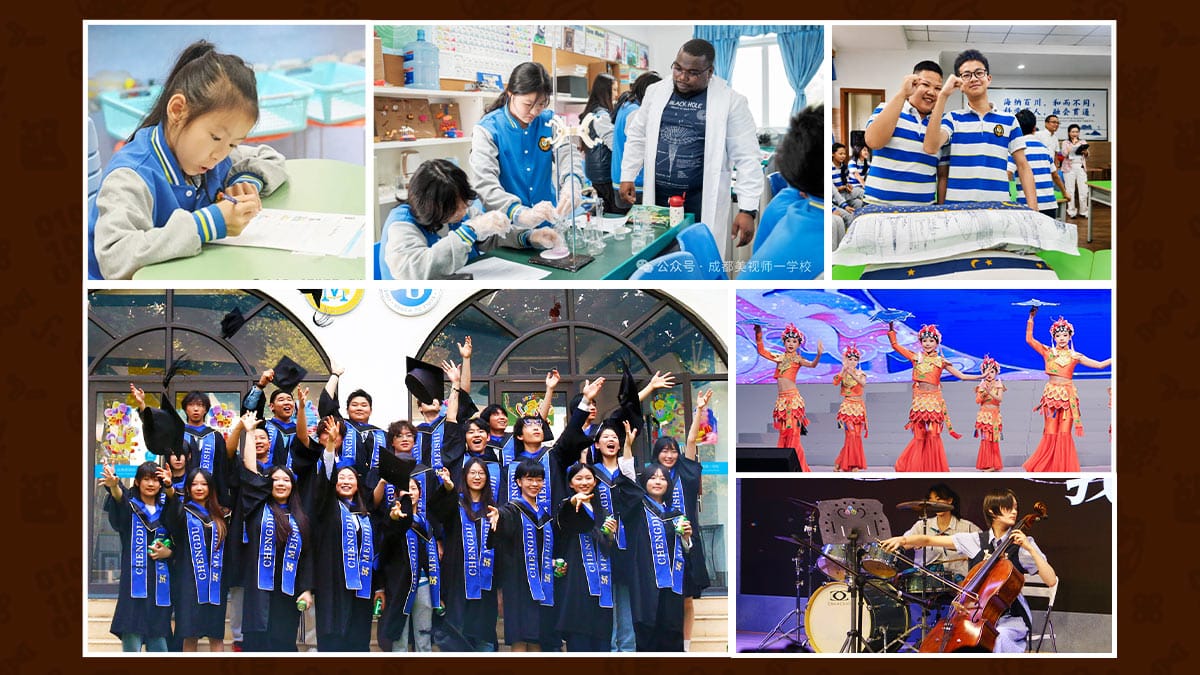
Chinese and English both play important roles in Meishi’s international pathway. The IB lists English and Chinese as languages used in the PYP and MYP, while the IB Diploma Programme uses English as its language of instruction . Chinese remains available as an important language subject for students at different proficiency levels.
Chinese A
Designed for students with strong Chinese-language ability, including native, heritage, or near-native speakers studying Chinese at an advanced academic level.
Chinese B
An IB language-acquisition course for students who already have experience with Chinese and want to develop stronger academic and practical language skills.
Ab Initio
A beginner-level IB language course designed for students with little or no previous experience in the language. “Ab initio” means “from the beginning.”
In the most recent year for which Meishi publicly reported this figure, 92% of the 2021 graduating cohort earned the IB Bilingual Diploma. This provides evidence of strong bilingual achievement within that particular cohort, although the school has not published a newer percentage for direct comparison.
Meishi gives students regular exposure to both Chinese and English. This can be particularly useful for families who want an international academic pathway while maintaining Chinese language development. A student’s final language level will depend on starting ability, programme choice, grade level, and individual progress.
English-language support may also be available for students who enter the Fusion Division with weaker English skills. Families who need additional language support should confirm the current ELL or English-support options with admissions for the student’s specific grade and programme.
Campus Facilities & Student Life
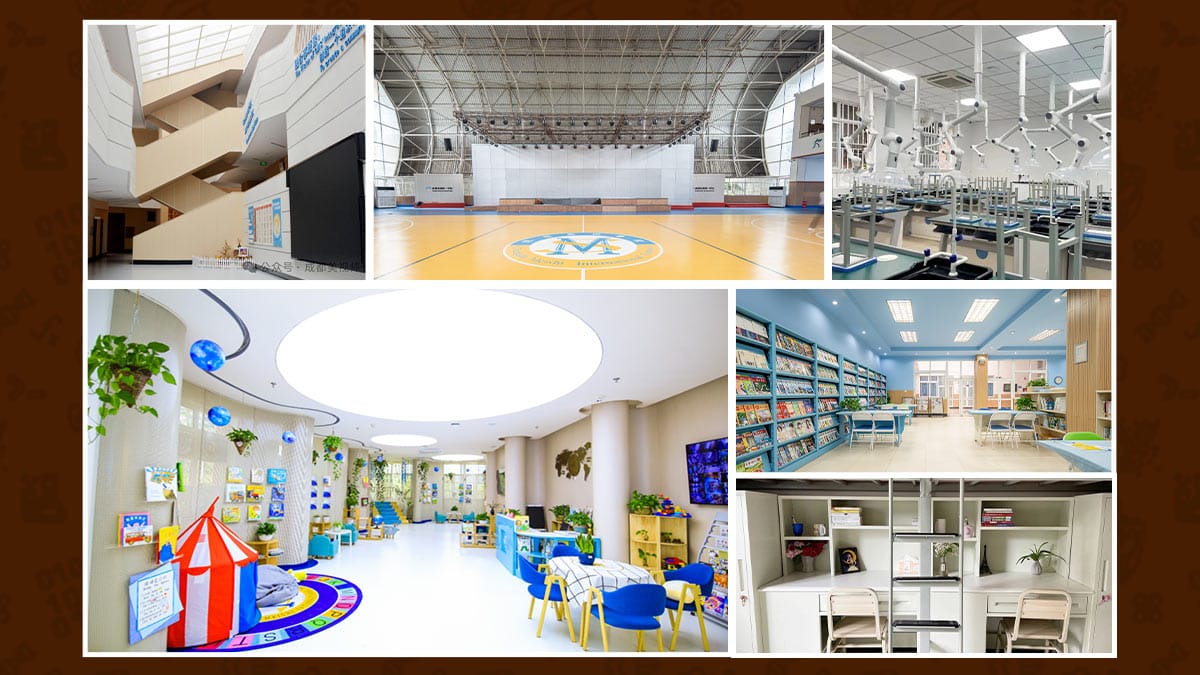
The campus covers around 230 mu (~38 acres) in Chengdu’s High-Tech Zone. Here’s what’s on-site.
Academic Buildings
- Dedicated IB Teaching Buildings
- Science centre with IB-standard labs
- Library with Chinese and English collections
Sports & Recreation
- Indoor basketball stadium
- Full-sized outdoor football field
- Tennis courts
Arts & Enrichment
- Art center with piano rooms and visual arts studios
- Music and dance performance spaces
Boarding & Day Programs
- Boarding open from primary school up on the Chinese National Curriculum track; the IB/International division boards from Grade 6 (day school below that)
- Students can board on weekdays and go home on weekends
- Also runs as a day school for local families who don’t need boarding
The campus sits 200 meters from Metro Line 1, which makes the daily commute easy for day students.
After school, there are plenty of options for students. They can join MUN (Model United Nations), compete in sports with CISA (Chengdu Inter-School Sports Association), be part of coding clubs, or engage in service learning. Students take on CAS requirements for the IB Diploma starting in grade 11.
Class sizes average about 25 students. The IB Diploma cap runs from 25 to 30 per class — small enough for teachers to give each student real attention.
Tuition & Cost Comparison
Reported Chengdu Meishi Tuition Fees
Fee note: The figures below are the latest reported tuition and school-cost information available to Alifa Education Services. Fees can vary by grade, programme, services and student requirements.
| Level | Annual Fee |
|---|---|
| Kindergarten | ¥80,000/year (~USD 11,100) |
| Primary / Fusion Primary | ¥108,000/year (~USD 15,000) |
| Middle / Fusion Middle | ¥117,000/year (~USD 16,200) |
| High School / Fusion High | ¥134,000/year (~USD 18,600) |
| Boarding | ¥1,800/year (~USD 250) |
| Application Fee | ¥2,000 (~USD 280) |
| School Bus | ¥2,800/year (~USD 390) |
Meals are generally charged separately rather than included in tuition. Families should also budget for items such as meals, transport, uniforms, activities, insurance and personal living expenses, depending on the student’s programme and living arrangements.
Regional Tuition Comparison — Annual High School Fees
| School | Annual Fee (USD) |
|---|---|
| Chengdu Meishi International School (Chengdu, China) | ~$18,600/year |
| Dulwich College (Singapore) | ~$44,000–46,000/year |
| Bangkok Patana School (Bangkok, Thailand) | ~$22,000–31,000/year |
| British School Jakarta (Jakarta, Indonesia) | ~$31,000–35,000/year |
| Shanghai American School (Shanghai, China) | ~$43,000/year |
Comparison note: These figures are approximate and intended for general budgeting. Schools use different grade structures and may include or charge separately for application fees, transport, meals, activities, capital fees and other services.
Based on the reported figures above, Meishi’s high-school tuition is lower than several well-known international schools in Singapore, Bangkok, Jakarta and Shanghai. However, tuition alone should not decide a school choice. Families should also compare curriculum, language support, boarding, university pathways, admissions requirements and total living costs.
Chengdu’s comparatively moderate living costs may also be useful for families relocating with a child. A two- to three-bedroom apartment near the school has historically been estimated at around RMB 4,000–8,000 per month (~USD 550–1,100), although actual rent depends on location, property type and market conditions.
For parents from Southeast Asia and India, the total family budget should therefore include more than tuition: housing, meals, transport, insurance and day-to-day living costs can significantly affect the final cost of studying in Chengdu.
Admissions & Next Steps
Meishi enrolls both Chinese and international students. Eligibility, assessment and document requirements depend on the student’s grade, programme and current admissions requirements. The school operates under approval from the local education department. Here’s how the process works:
PYP (Primary): Family interview and informal meeting
MYP (Grades 6–9): Interview plus academic test
IB Diploma (Grades 11–12): Math test, English test, and interview
Class sizes stay capped, so spaces fill fast. The school accepts mid-year transfers if there is space. This helps families who move outside the usual school calendar.
We recommend a campus tour. A visit lets you meet teachers and see the IB buildings in person for a real sense of the school. Checking the school’s social media is an easy way to see daily campus life before your visit.
Frequently Asked Questions
Yes. Chengdu Meishi International School is an IB World School with school code 003888. It is authorised to offer the PYP, MYP and Diploma Programme (DP).
For 2026, Meishi reported a 100% IB Diploma pass rate, a highest score of 44/45, and 23% of students scoring 39 points or above.
Reported annual tuition is approximately ¥108,000 for primary, ¥117,000 for middle school, and ¥134,000 for high school. Boarding, meals, transport and other school costs may be additional.
Both languages are used across the international pathway. The PYP and MYP use Chinese and English, while the IB Diploma Programme is taught in English.
Students can enter with different Chinese-language backgrounds. Depending on programme and eligibility, language options can include Chinese B and beginner-level Ab Initio. Placement depends on the student’s previous language experience and academic pathway.
Yes. Chengdu Meishi operates as a day and boarding school. Boarding arrangements and availability depend on the student’s grade and programme.
Is Chengdu Meishi International School Right for Your Family?
Chengdu Meishi International School may suit families looking for an established Chengdu school with IB PYP, MYP and Diploma Programme pathways, AP options, boarding, and regular exposure to both Chinese and English.
Its latest published 2026 IB Diploma results include a 100% pass rate, a highest score of 44 out of 45, and 23% of students scoring 39 points or above. The school also reports a long history of university progression to institutions in the US, UK, Canada, Australia, Hong Kong, Singapore and China.
For families in Southeast Asia and India, Meishi can be especially worth considering if the goal is to combine an international academic pathway with continued Chinese-language development and the option of studying in Chengdu.
The final decision should still depend on your child’s age, language level, academic profile, preferred curriculum, boarding needs and university goals. Families should also compare tuition, admissions requirements and programme placement before making an enrolment decision.
Alifa Education Services
Let Alifa Help You Decide
Alifa Education Services helps international families research and compare schools in China. The team can assist with school shortlisting, programme comparison, application preparation and admissions planning, helping families make a more informed choice based on their child’s needs and long-term education goals.
This guide is independently researched by Alifa Education Services using publicly available information from the school, the International Baccalaureate and other relevant sources. Fees, admissions requirements, programme details and school policies can change over time.


Member comments