

Introduction
Swimming schools in China are no longer a luxury. They're a real factor for families picking a school.
More parents in Southeast Asia and India are moving to China for work. They want schools that cover academics and physical growth. Swimming fits both. A strong swim program builds water safety, discipline, and confidence. For kids coming to a new country, it helps them make friends. It provides opportunities for social interaction.
China has hundreds of international and bilingual schools. But schools with proper swimming programs are fewer than you'd think. Indoor pools, trained coaches, and structured swim classes — not all schools have these. That's why this guide exists.
We looked at 23 schools across 9 cities. Every school on this list has an on-campus pool and an organized swim program. Not a PE period in a shared facility; real coaching, real competition access.
Choosing the right school takes time. Alifa Education Services helps families cut through the noise. Their team knows the Chinese school market well. They match children to the right school based on your goals, budget, and location.
Book a free consultation with Alifa Education Services today. Get expert guidance from the start.
Table of Contents
Why Swimming Programs Matter in K-12 Schools in China
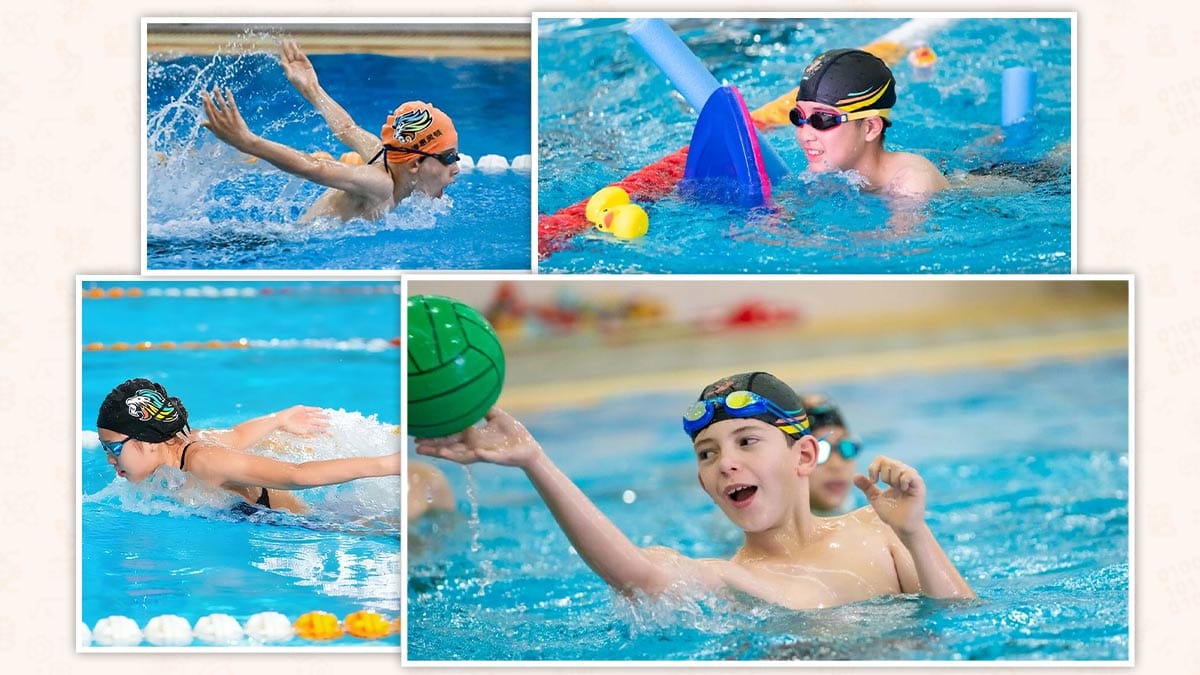
Swimming in China isn't a sport; the government treats it as a safety priority.
In 2020, China's Ministry of Education named swimming a national focus for children. The main reason is drowning. Accidental drowning is one of the top causes of child death in China. Guangdong Province acted first. From 2020, all primary schools there must teach swimming from Grade 4. Cities like Shanghai, Hangzhou, Guangzhou, Shenzhen, Suzhou, and Nanjing now include swimming in the Zhongkao — the middle school PE exam.
For international families, this matters in four ways.
Water safety: Proper swim lessons reduce real risk. Children who know how to stay safe in water are less likely to be in danger near it.
PE credits: Individual schools may require PE or award school-level credits. Whether swimming counts depends on each school's curriculum.
Competitive growth: Children with talent can join the school's swim club and compete at regional and national events.
Social connection: Swim galas and team training help new students settle in fast. For a child who has moved to China, the pool is often where friendships start.
One thing to be clear about: a swimming program in an academic school is not a Swim Academy. You get organized, graded swim classes built into the school day, not private classes for elite athletes.
Key Takeaways
23 schools verified across 9 Chinese cities — all have on-campus pools and structured swimming programmes.
More than 90% of the schools selected for this guide primarily serve international families.
Two schools have 50-metre, 8-lane indoor: Dulwich College Puxi in Shanghai and ISA Wuhan.
Shanghai has the most options — 9 confirmed schools. Beijing is second with 5.
ACAMIS is the main competitive swimming network for international schools in China. 14+ schools in this guide are members.
Annual fees range from ¥150,000 to ¥390,000 depending on school, city, and curriculum.
The 3 Types of Schools with Swimming in China
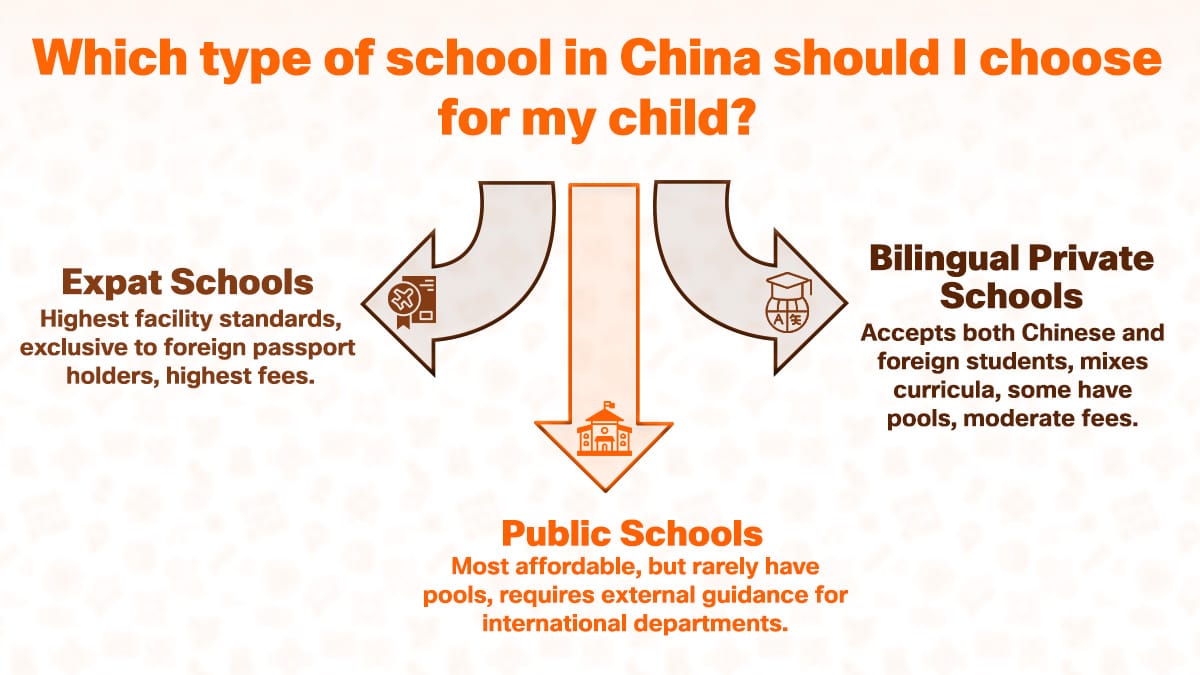
Not every school type in China has a pool. Here's what you need to know.
Expat Schools
These schools only accept children with a foreign passport. Chinese nationals aren't eligible unless they hold a valid foreign passport. Expat schools have the highest facility standards. Over 90% of the 23 schools in this guide are expat schools.
approx. US$21,000 – US$54,000
Bilingual Private Schools
These schools accept both Chinese and foreign students. Lessons mix Chinese and English. Many follow a blend of the Chinese national curriculum and IB or Cambridge. A small number now have on-campus pools. This guide includes two—both from Nord Anglia Education in Shanghai and Shenzhen.
approx. US$21,000 – US$28,000
Public Schools with International Departments
These are the most affordable options, but most don't have pools on campus. We didn't include them in this guide. If you need help with a public international department, reach out to Alifa Education Services for expert guidance.
approx. US$7,000 – US$14,000
What to Look For in a School Swimming Program
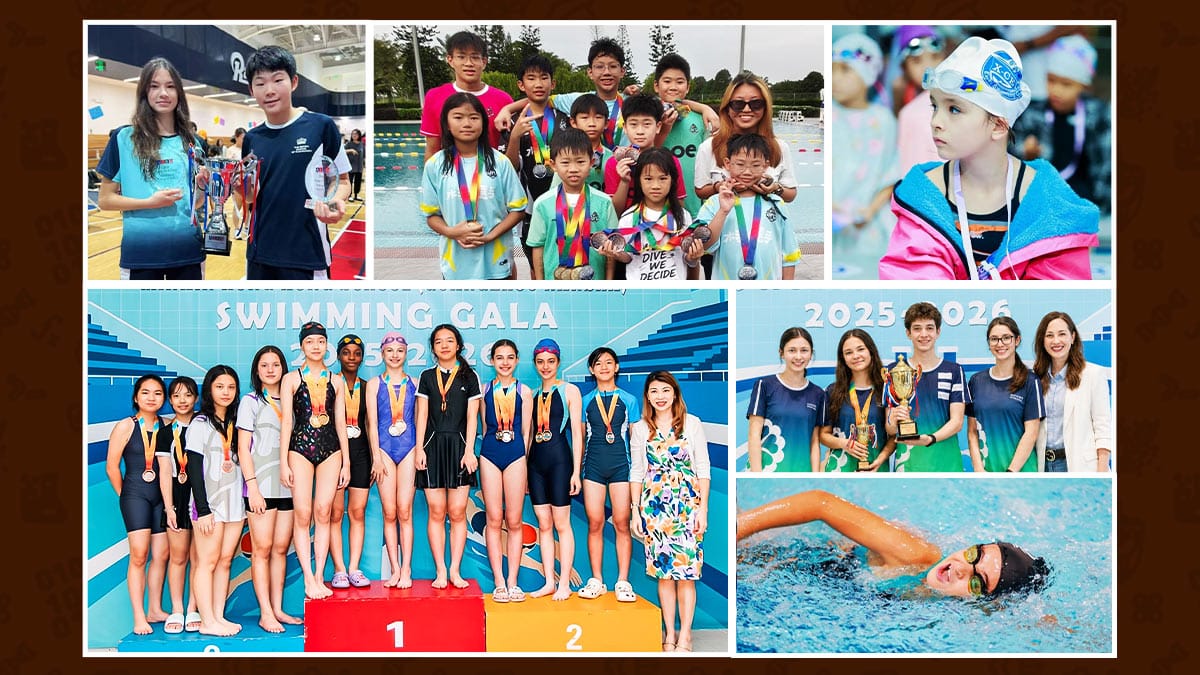
Before you choose a school based on its pool, ask these eight questions.
Pool size. Is the pool 25 metres or 50 metres? A 25-metre pool is standard for school PE and swim clubs. A 50-metre pool supports competitive training and race events.
Indoor or outdoor. In cities like Beijing and Tianjin, people can't use outdoor pools in winter. Always ask if the pool is indoor and heated year-round.
Depth and a children's section. Does the pool have a shallow area for beginners? A depth of 1.2 metres or less suits young swimmers.
Coach qualifications: Are the coaches certified swim instructors? Do they speak English or your child's language?
Are swim classes required for all students, or are they an after-school option?
Competition access. Does the school have a swim club? Does it compete in ACAMIS, ISAC, or other inter-school events?
Session frequency: How many swim lessons do each student get per week or per term?
Graded progress. Does the school track each child's growth through a level system — like the UK ASA awards?
Understanding Competitive Swimming in China — ACAMIS and Beyond
What Is ACAMIS?
ACAMIS stands for the Association of China and Mongolia International Schools. It's the main sports network for international schools in China. Schools must be ACAMIS members to take part in its events.
ACAMIS runs championships in swimming, basketball, and football. The swim championship is one of its most popular events each year.
The 2024 ACAMIS Junior Swim Meet
In 2024, Xi'an Liangjiatan International School hosted the championship. Twenty-four schools from China and Mongolia took part. Age groups include U12, U14, and Junior Varsity. Strokes cover freestyle, backstroke, breaststroke, butterfly, individual medley, and relay races.
Other Competitive Networks
ISAC
Active in Beijing and Northern China.
APAC
A wider regional network.mainland China, Hong Kong, Japan, South Korea, the Philippines and Vietnam. Shanghai American School and ISB Beijing both compete here.
Shanghai Swim League (SSL)
Based in Shanghai; involves Dulwich College, BISS, and others.
City-level galas
Local events in Guangzhou, Shenzhen, Hangzhou, and other cities.

The Best Schools with Swimming Programs in China (2025–2026)
Every school below has a verified on-campus pool and a structured swim program. Fee figures are from 2024–25. Always confirm 2026–27 fees directly with the school. Figures marked (est.) come from educational media. Always consult ALIFA Education Services for expert guidance.
Shanghai — 9 Schools
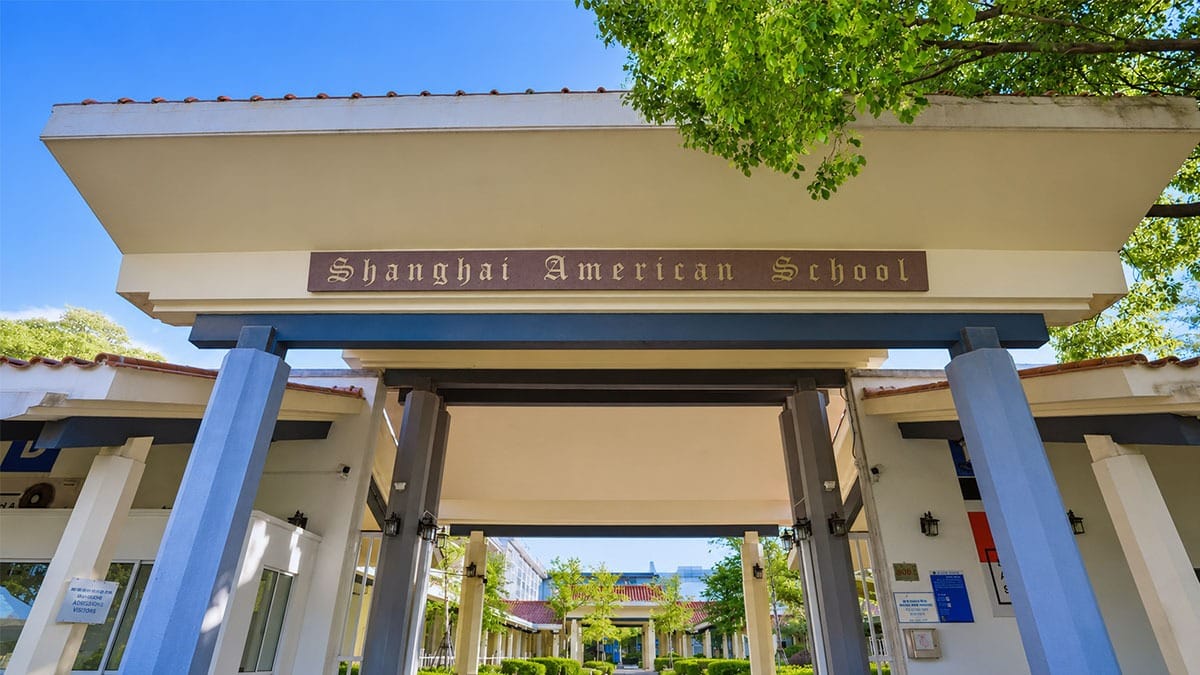
- Pool: Two indoor 25-meter pools
- Curriculum: AP, IB
- Competition: APAC, Shanghai Swim League (SSL)
- Annual fees: ¥248,000 – ¥307,900
SAS runs the Aqua Eagles program. It's one of the largest school swim clubs in Asia. Over 400 members from Grade 2 up. Students compete at APAC events alongside schools from South Korea, Japan, and Thailand.
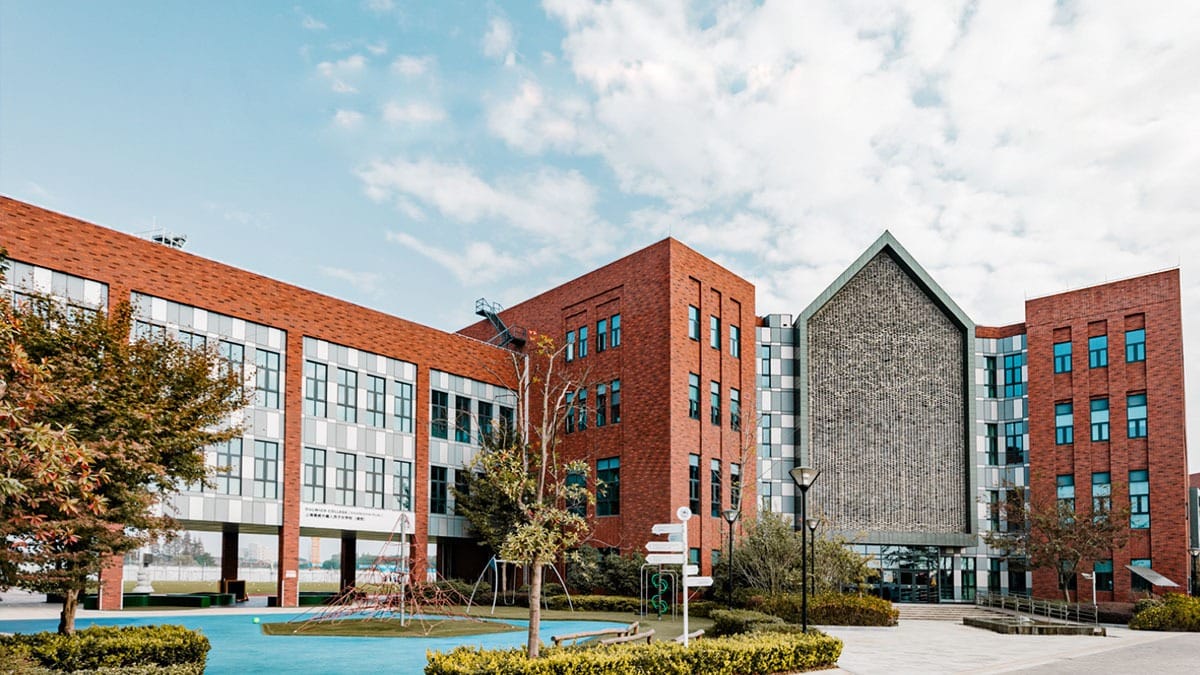
- Pool: 50-metre, 8-lane Olympic-standard indoor pool + separate teaching pool
- Curriculum: British, IGCSE, IBDP
- Competition: ACAMIS, SSL
- Annual fees: ¥132,500 – ¥390,000
Shanghai has the only school with a full 50-meter indoor pool. There’s also a separate teaching pool, so beginners and advanced swimmers can train together.
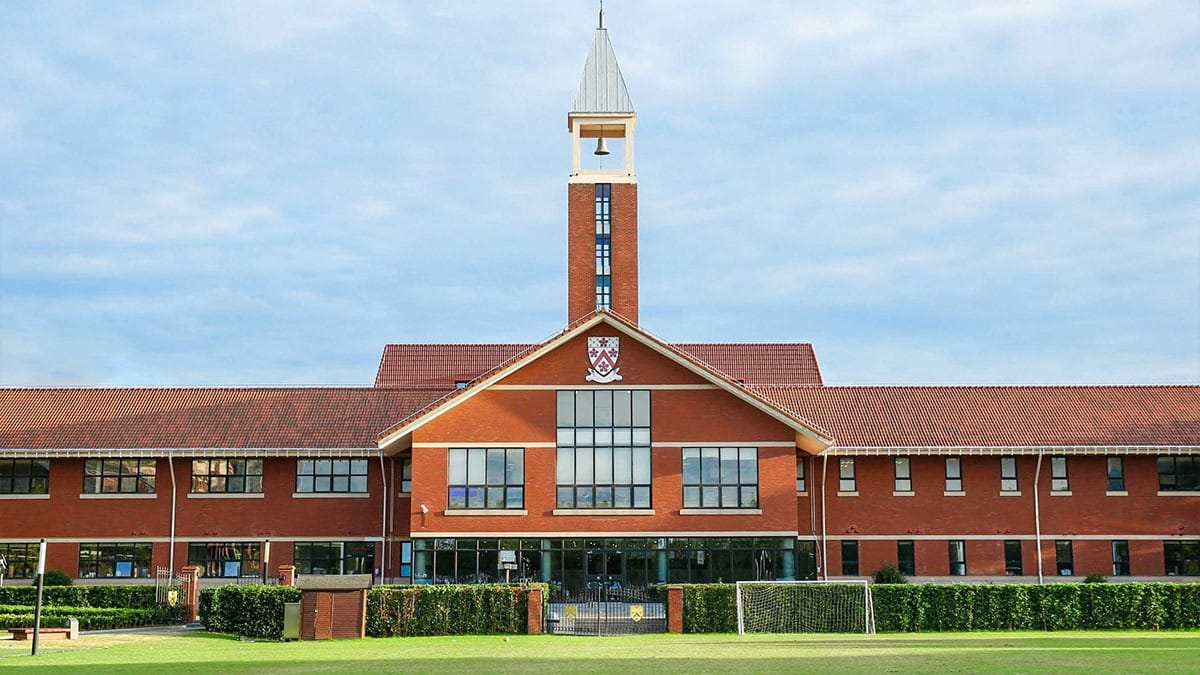
- Pool: 25-metre, 6-lane indoor pool + training pool
- Curriculum: British, IGCSE, IBDP
- Competition: ACAMIS, SSL
- Annual fees: ¥256,000 – ¥375,000
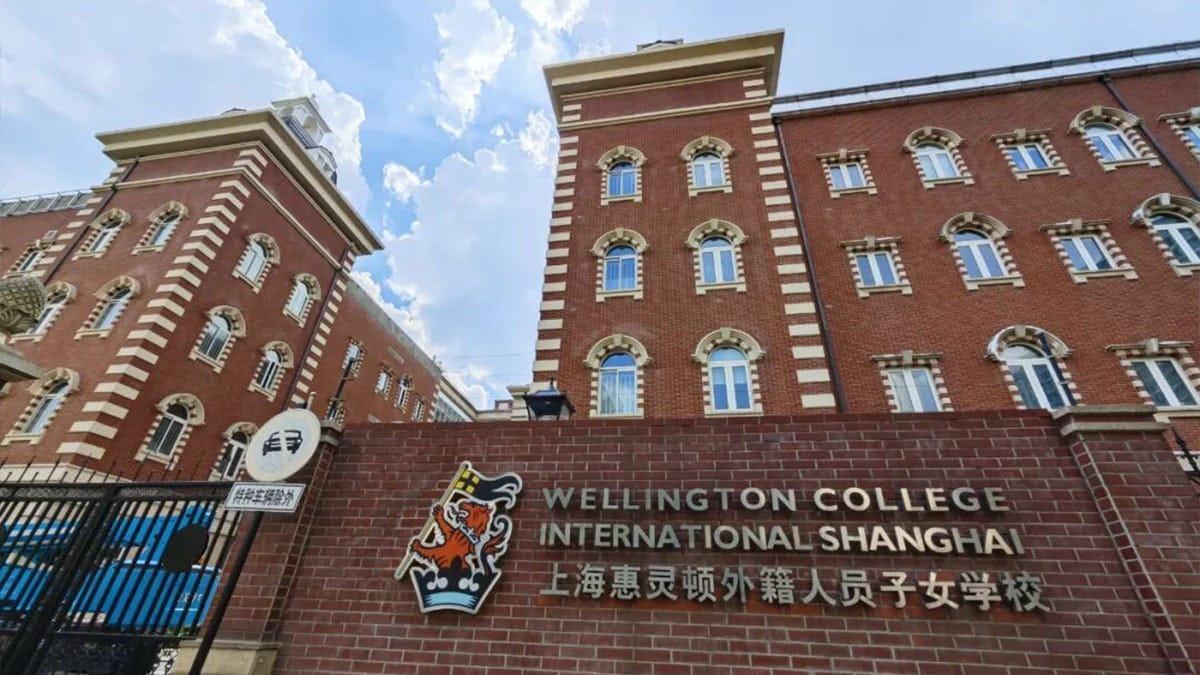
- Pool: 25-metre, 6-lane competition pool with electronic timing + learner pool
- Curriculum: British, IGCSE, IBDP
- Annual fees: ¥270,000 – ¥360,000
Two pools on one campus are a real advantage. The electronic timing system means the pools can host official swim galas.
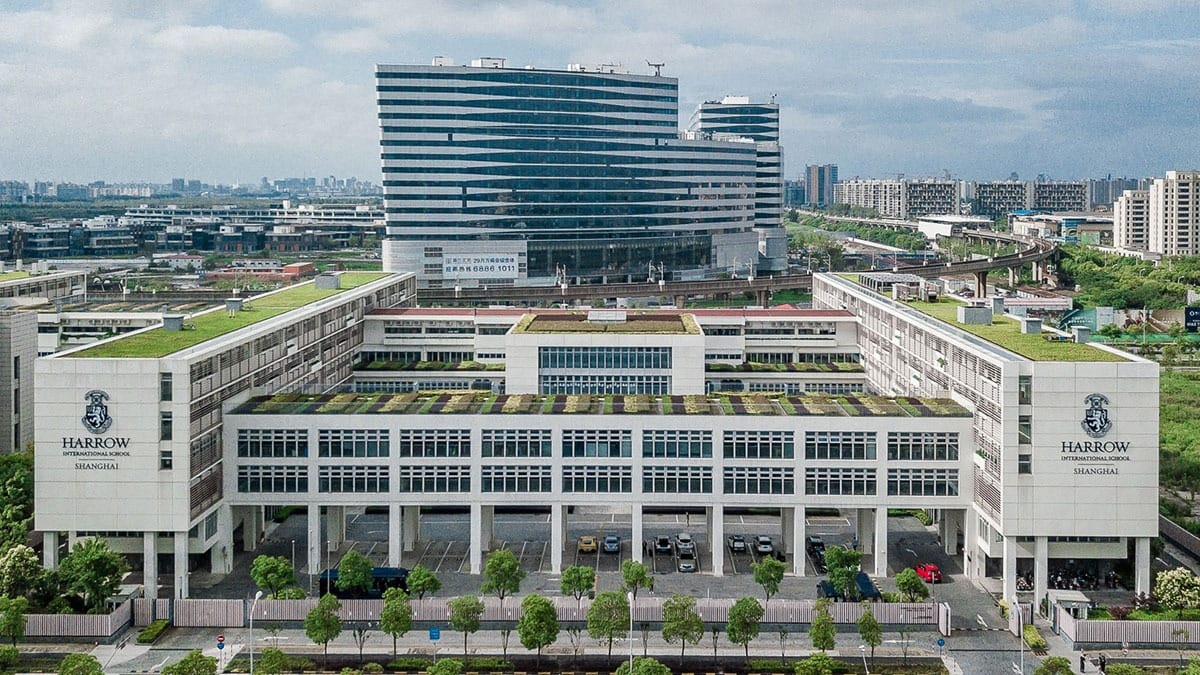
- Pool: 25-metre indoor pool
- Curriculum: British, IGCSE, A-Level
- Competition: ACAMIS
- Annual fees: ¥250,000 – ¥350,000 (est)
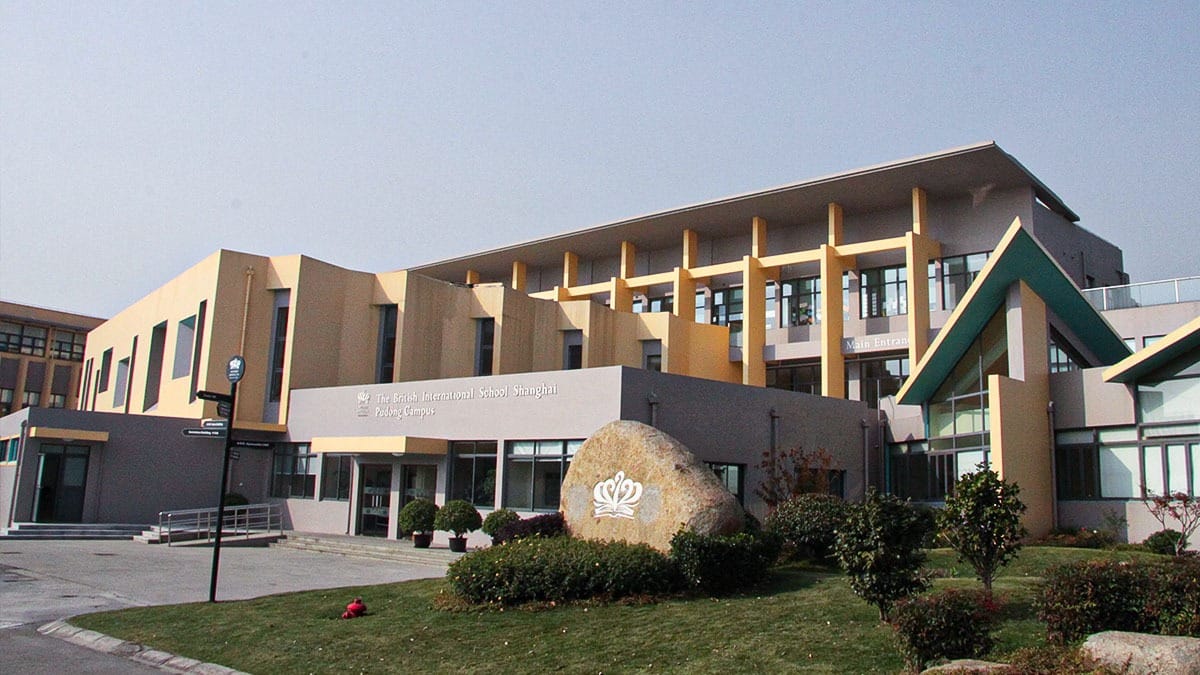
- Pool: 25-metre indoor pool
- Curriculum: British, IGCSE, IBDP
- Competition: ACAMIS, SSL
- Annual fees: ¥229,280 – ¥303,900
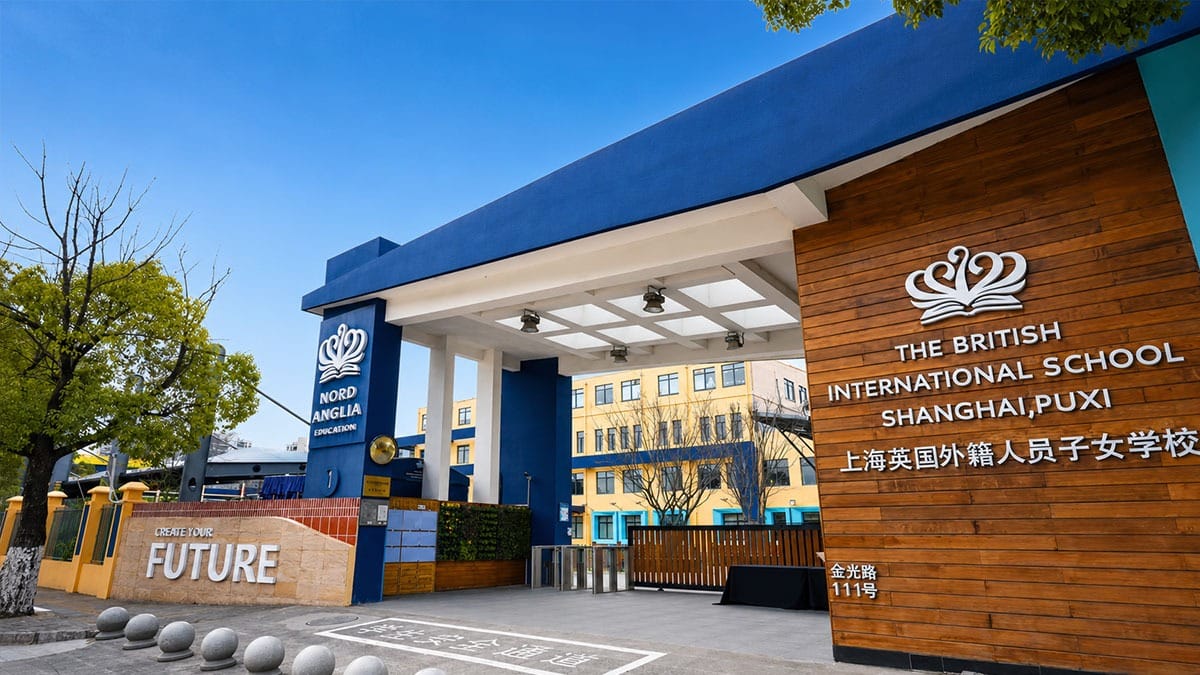
- Pool: 15-metre learner pool + 25-metre main pool
- Curriculum: British, IGCSE, IBDP
- Competition: ACAMIS
- Annual fees: ¥200,000 – ¥300,000 (est)
Two pools suit families with children at very different swimming levels.
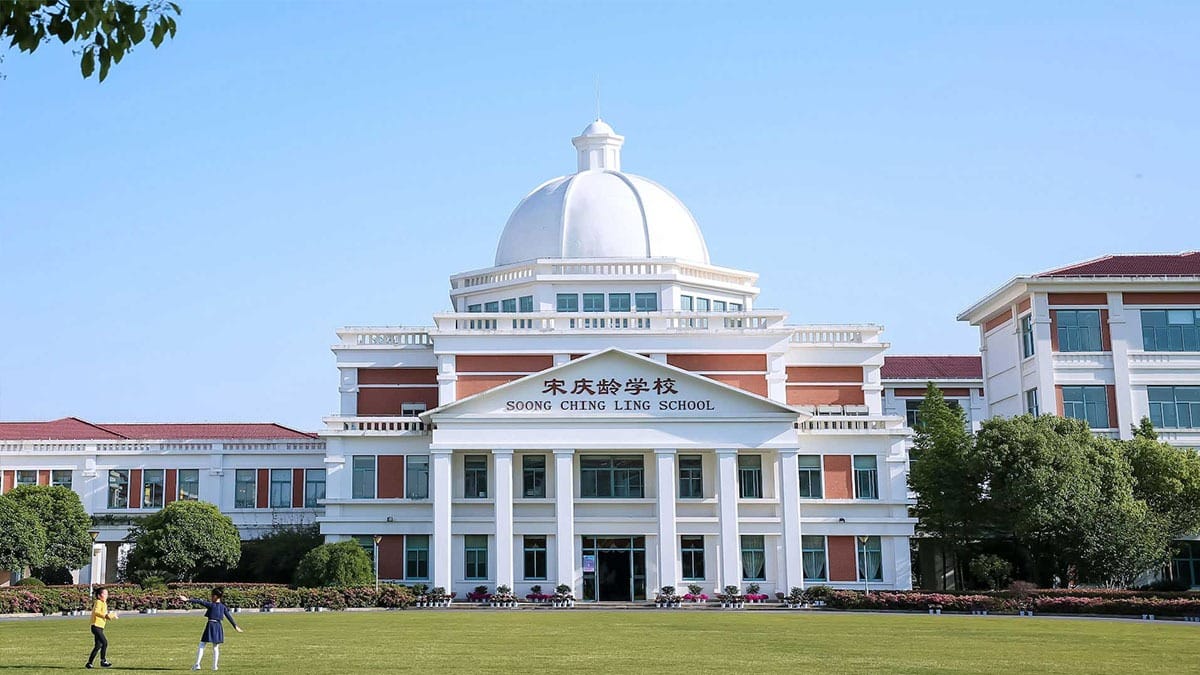
- Pool: Indoor pool (confirm size with school)
- Curriculum: IB, Integrated
- Annual fees: ¥150,000 – ¥200,000 (est)
One of Shanghai's oldest international schools is a cheaper option for expats.
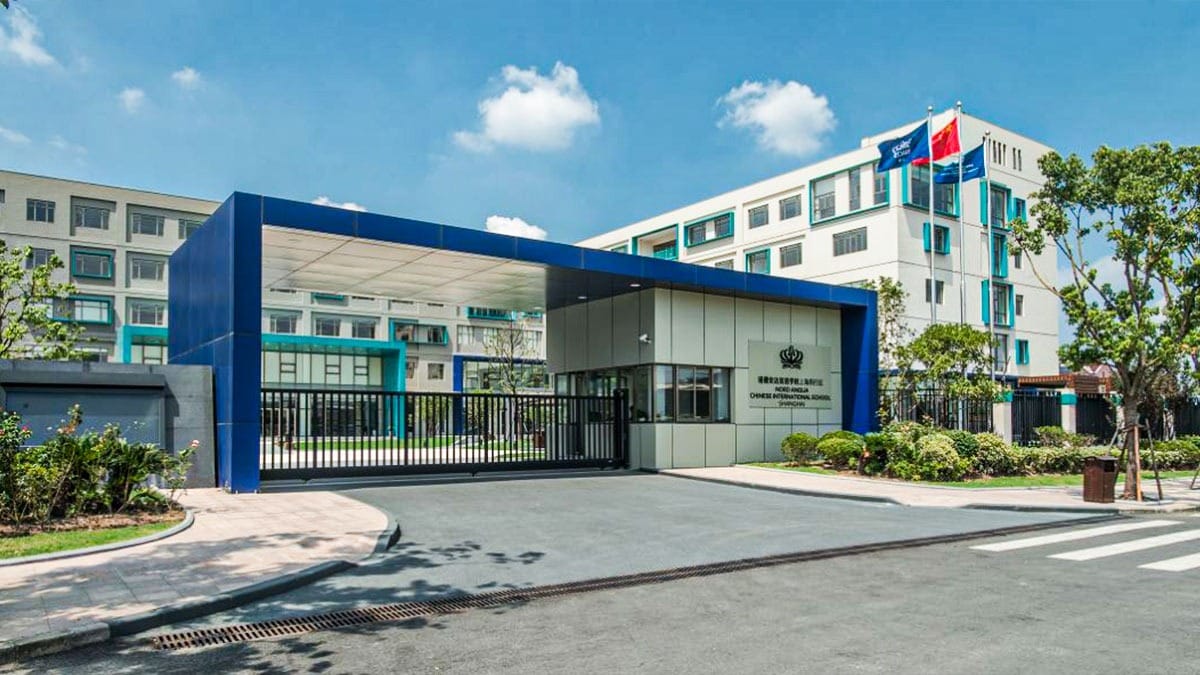
- Pool: 25-metre, 6-lane indoor pool
- Curriculum: Chinese National Curriculum + IB, A-Level
- Type: Bilingual (open to Chinese and foreign students)
- Annual fees: From ¥190,000
This guide includes one of only two bilingual private schools that have an on-campus pool. It’s a great option for mixed Chinese-foreign families.

Beijing — 5 Schools
All five schools below have indoor, heated pools. That's important in Beijing's cold winters.
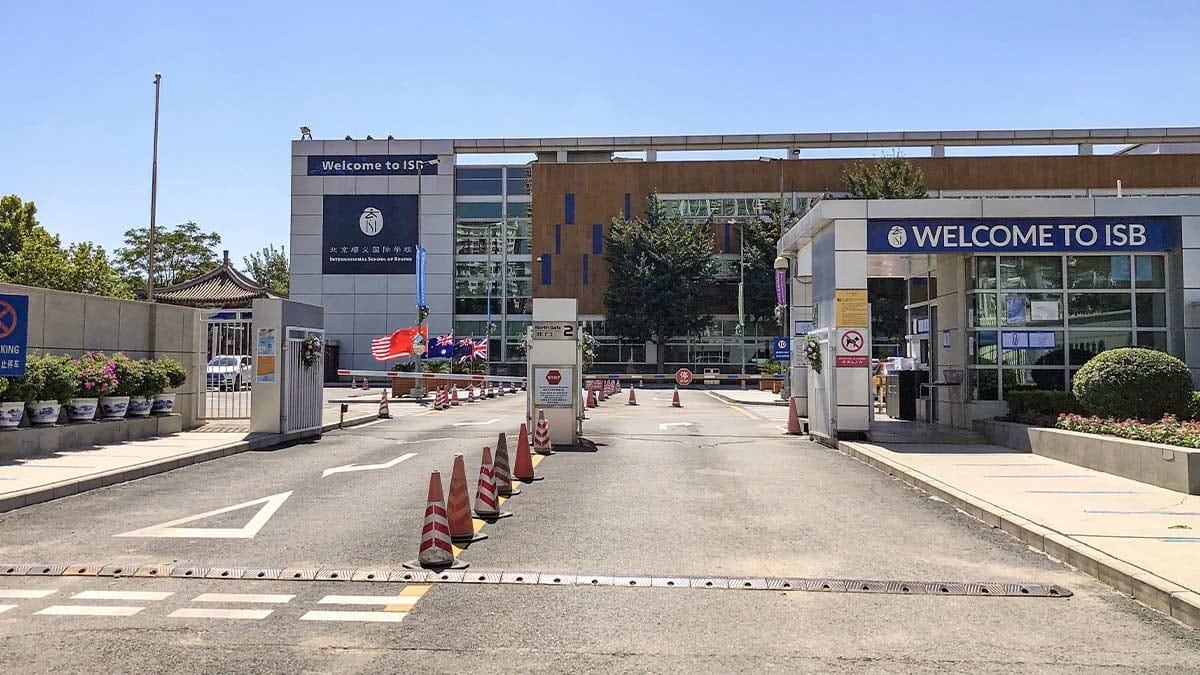
- Pool: 25-metre indoor pool with diving board
- Curriculum: ISB-designed international curriculum; IB Diploma Programme and AP options in high school
- Competition: ACAMIS, ISAC, APAC
- Annual fees: ¥232,800 – ¥333,300
ISB participates in several inter-school sports networks. For families with competitive swimmers, that means the most official events each year.
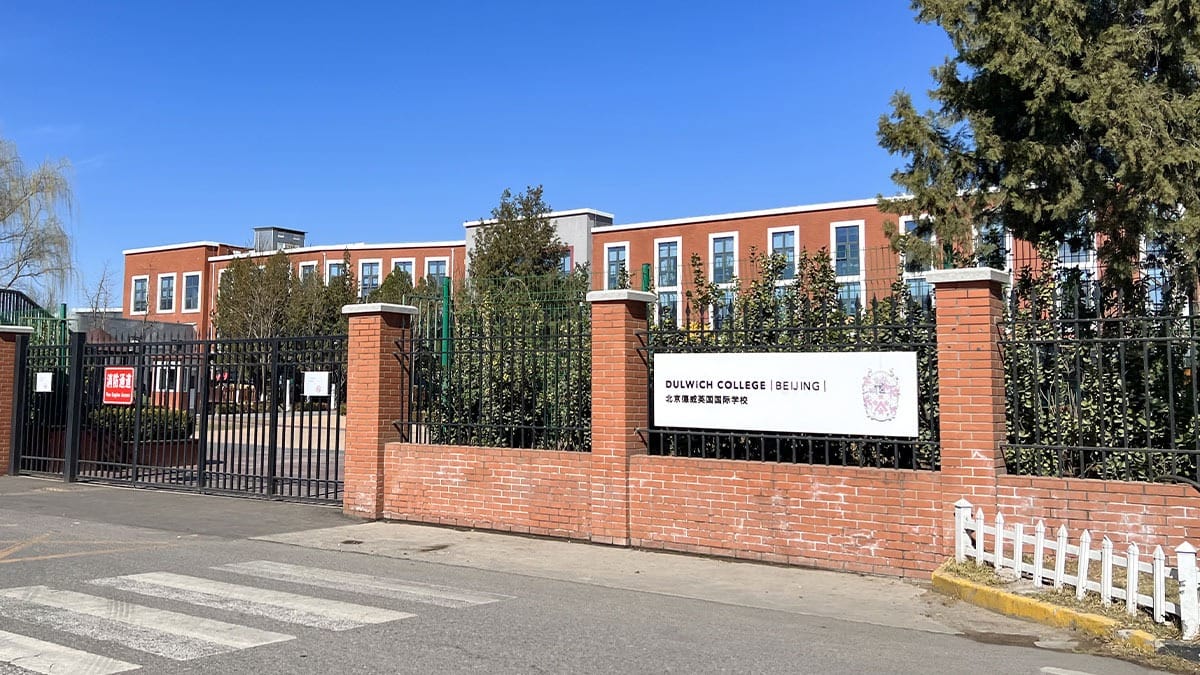
- Pool: Standard indoor pool (confirm size with school)
- Curriculum: British, IGCSE, IBDP
- Competition: ACAMIS, ISAC
- Annual fees: ¥239,000 – ¥361,000
Dulwich Beijing hosts the Olympia Festival every four years. Students from all Dulwich campuses worldwide compete together. Swimming is one of the main events. Over 600 students take part.
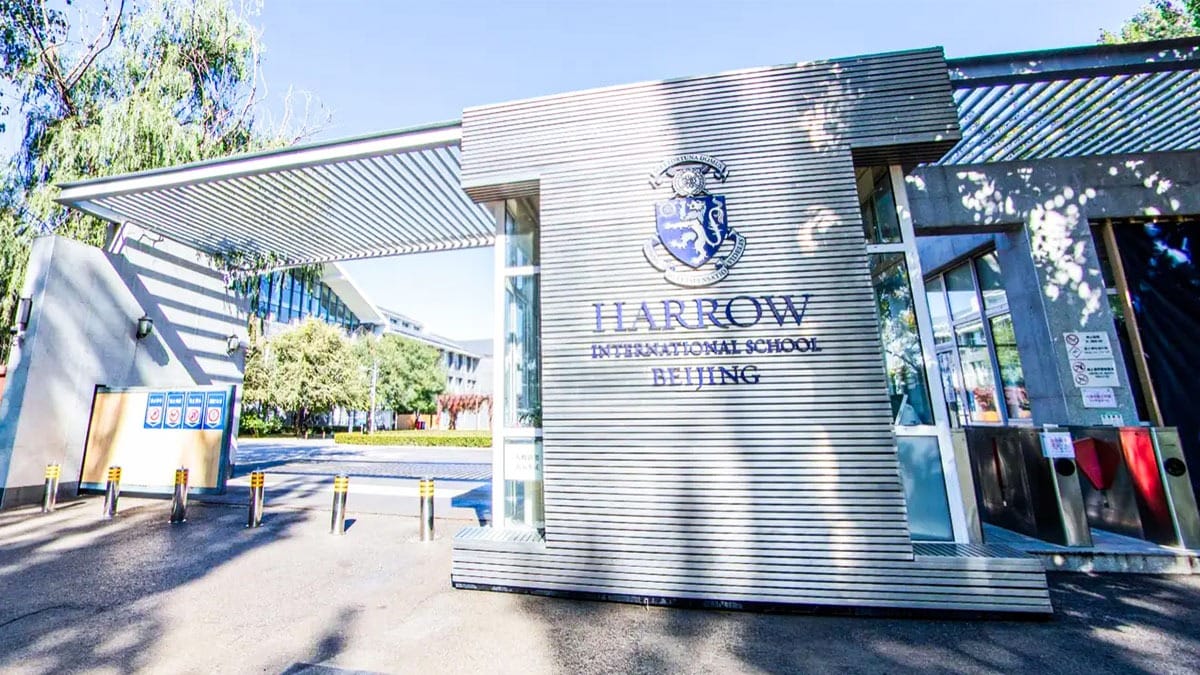
- Pool: 25-metre indoor pool
- Curriculum: British, IGCSE, A-Level
- Competition: ACAMIS, ISAC
- Annual fees: ¥219,400 – ¥339,400
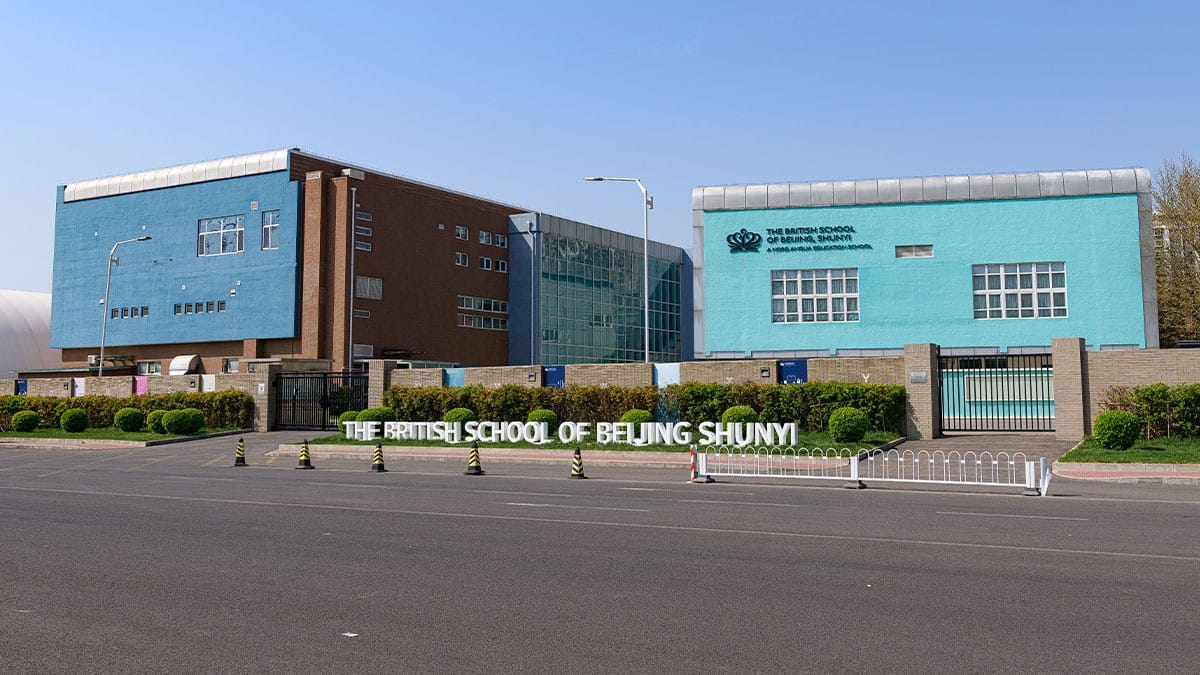
- Pool: Standard indoor pool + separate children's pool
- Curriculum: British, IGCSE, IBDP
- Competition: ACAMIS (AquaBears team)
- Annual fees: ¥195,671 – ¥243,257
BSB is the most affordable expat school in Beijing on this list with a competitive swim team. The children's pool is great for very young beginners.
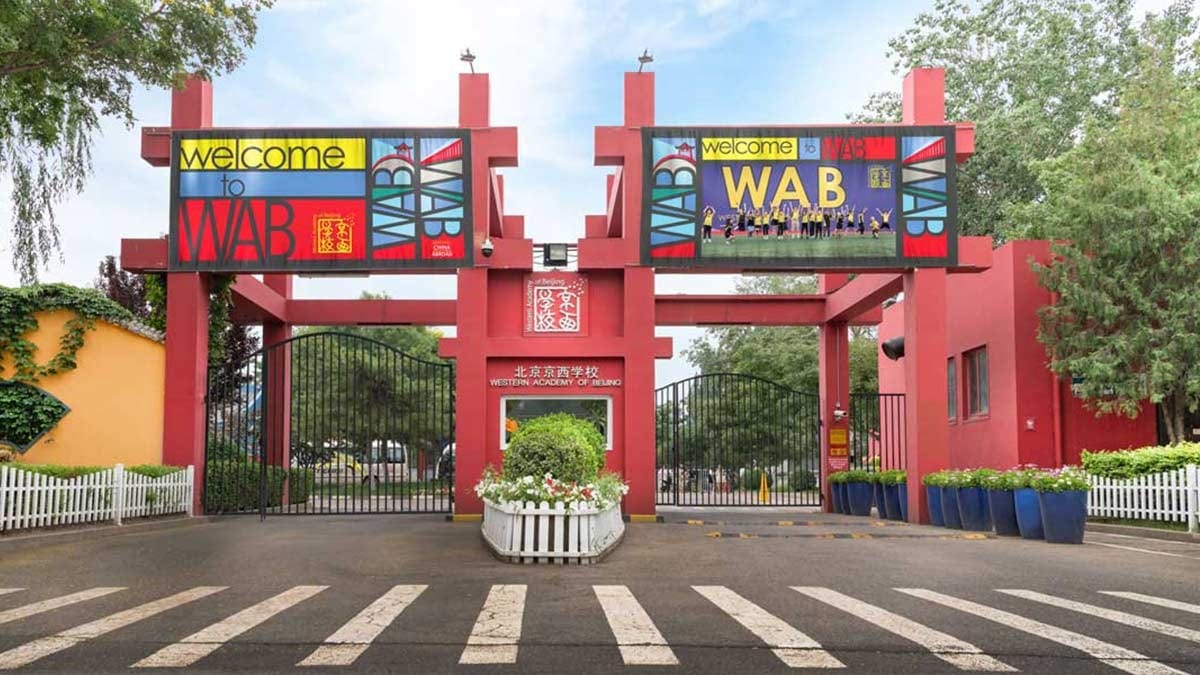
- Pool: 25-metre indoor pool (depth: 1.3 m – 2 m)
- Curriculum: Full IB (PYP, MYP, DP)
- Competition: ACAMIS, APAC, ISAC
- Annual fees: ¥200,000 – ¥310,000 (est)
WAB also participates in multiple inter-school sports networks. The pool depth range suits both beginners and advanced swimmers.
Guangzhou & Shenzhen — 4 Schools
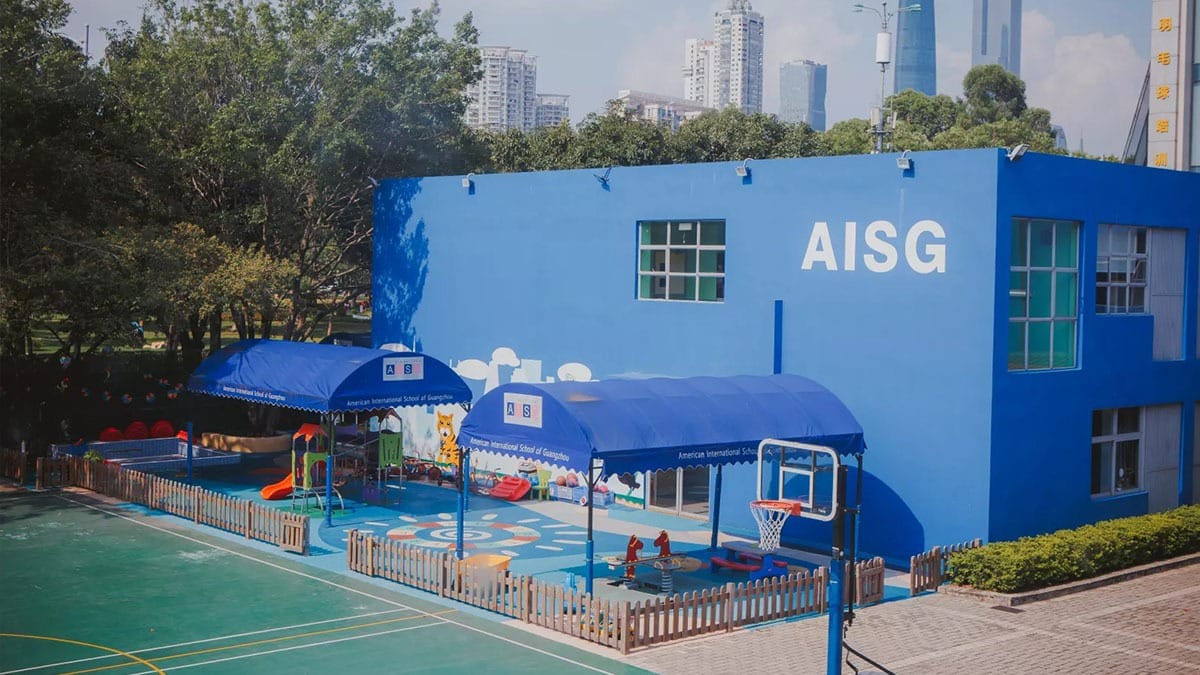
- Pool: 25-metre indoor heated pool (built 2023)
- Curriculum: IB (PYP, MYP, DP)
- Competition: ACAMIS
- Annual fees: ¥200,000 – ¥280,000 (est)
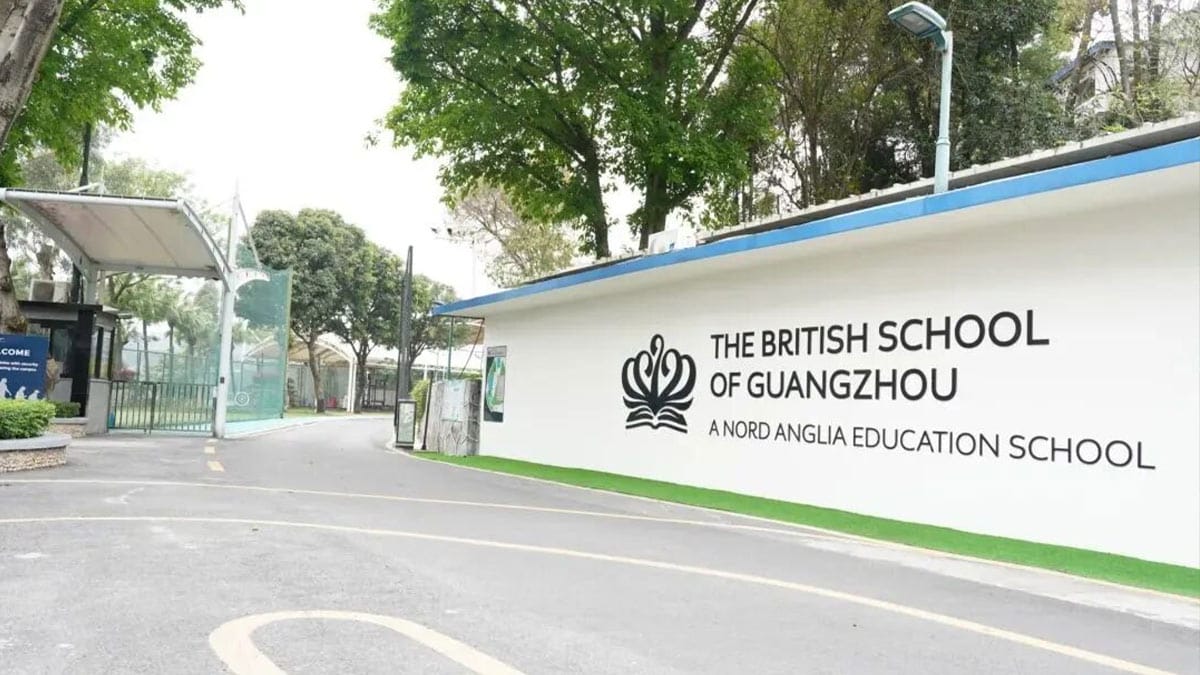
- Pool: Standard indoor pool (confirm size with school)
- Curriculum: British, IGCSE, A-Level
- Competition: ACAMIS
- Annual fees: ¥173,954 – ¥243,257
The most affordable expat school option in Guangzhou on this list is.
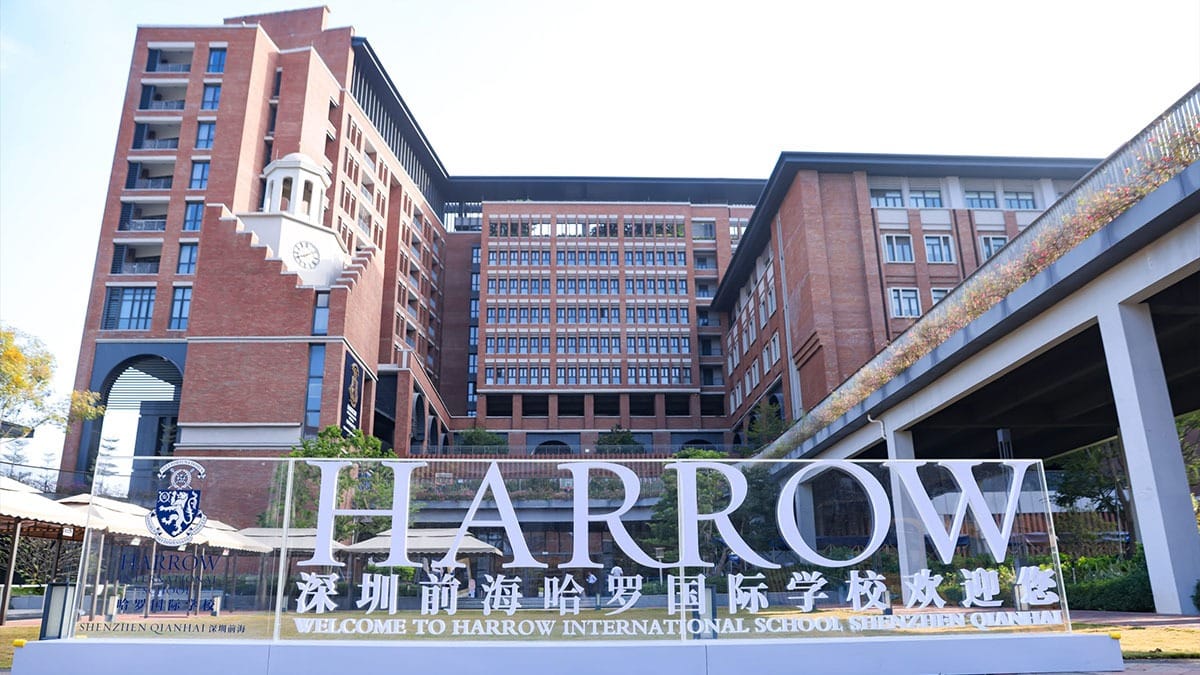
- Pool: 6-lane indoor heated competition pool
- Curriculum: British, IGCSE, A-Level
- Annual fees: ¥291,400 – ¥360,300
One of the newest Harrow campuses in China, the campus investment exceeds ¥300 million. The pool and facilities are purpose-built to a high standard.
18. Nord Anglia School Shenzhen
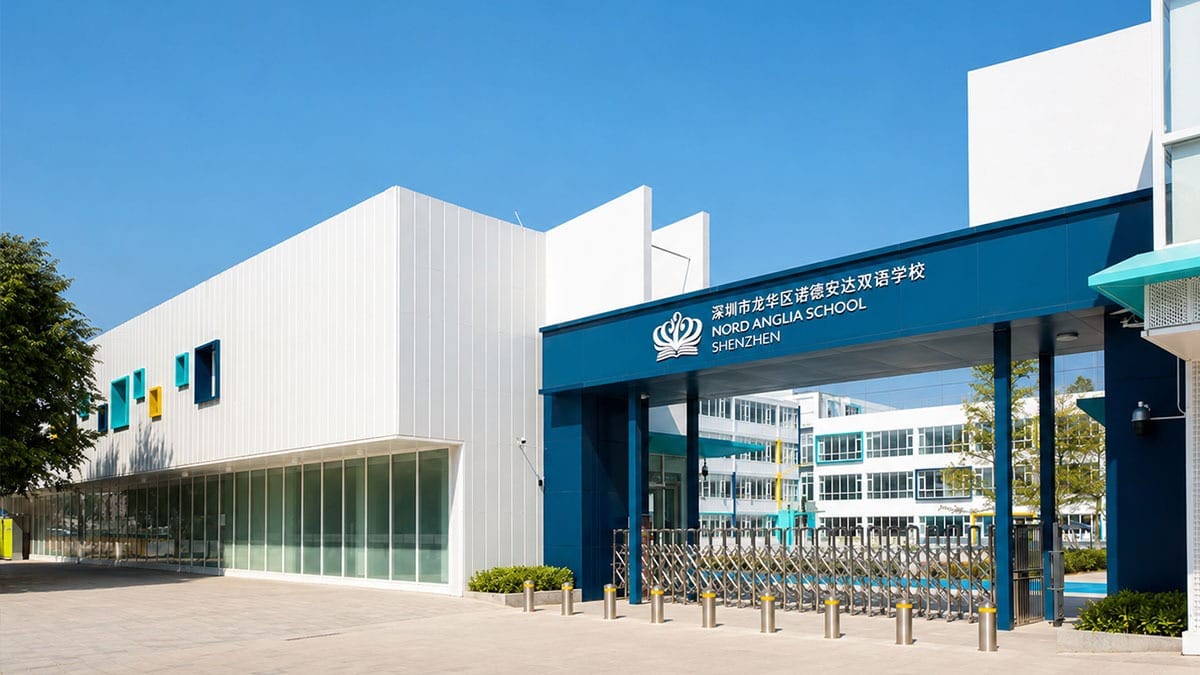
- Pool: 25-metre indoor pool
- Curriculum: Chinese National Curriculum + IB, A-Level
- Type: Bilingual
- Annual fees: From ¥190,000
Open to both Chinese and foreign students; a solid choice for mixed-nationality families in Shenzhen.
Tianjin, Suzhou, Nanjing, Hangzhou & Wuhan — 5 Schools
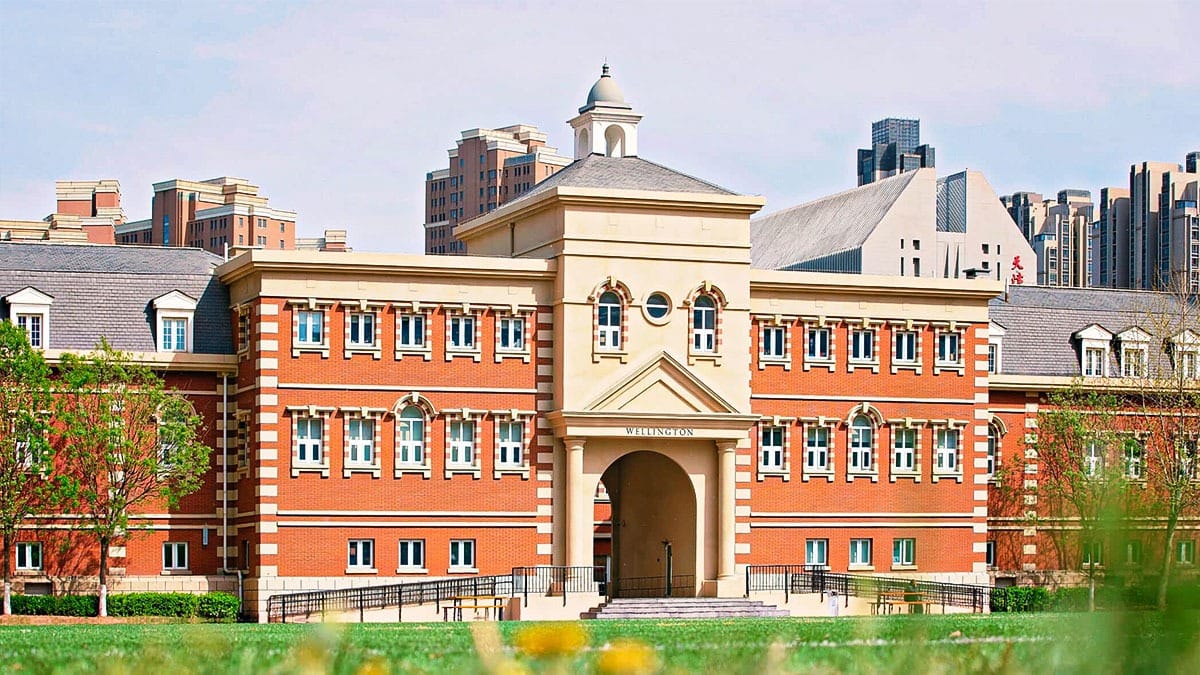
- Pool: Two indoor pools on campus
- Curriculum: British, IGCSE, IBDP
- Annual fees: ¥273,300 – ¥294,000
The first school outside the UK to carry the Wellington name is two pools mean beginner classes and competitive training can run at the same time.
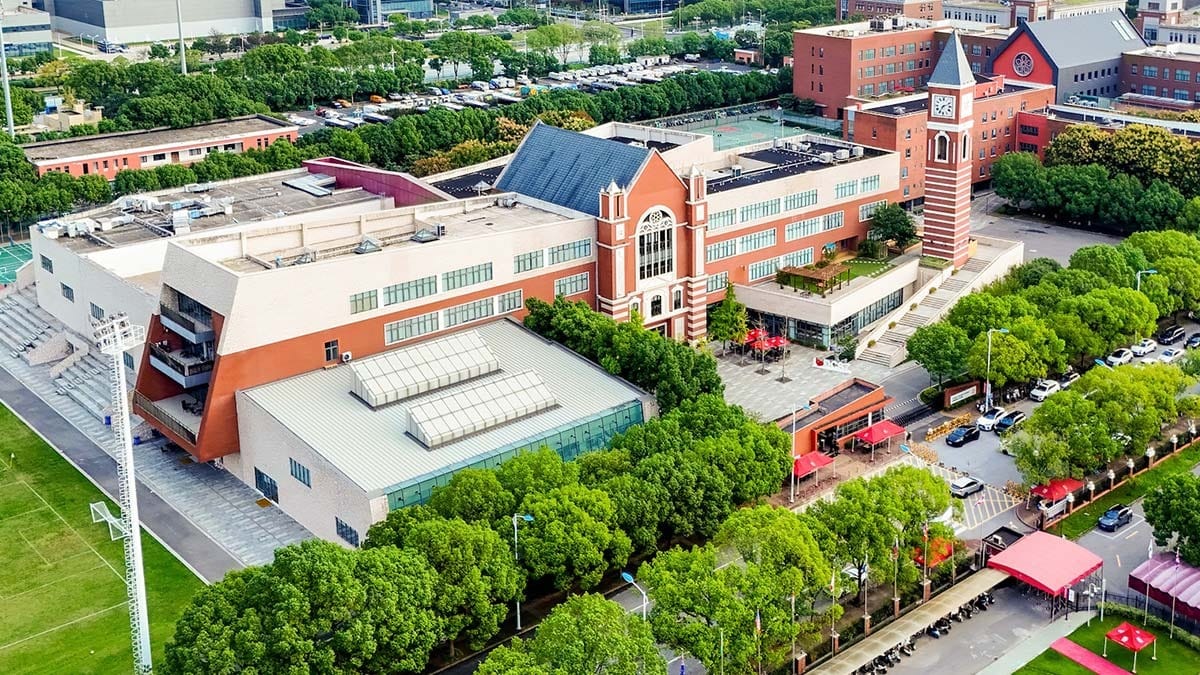
- Pool: 25-metre indoor competition pool
- Curriculum: British, IGCSE, IBDP
- Competition: ACAMIS, SSL
- Annual fees: ¥200,000 – ¥300,000 (est.)
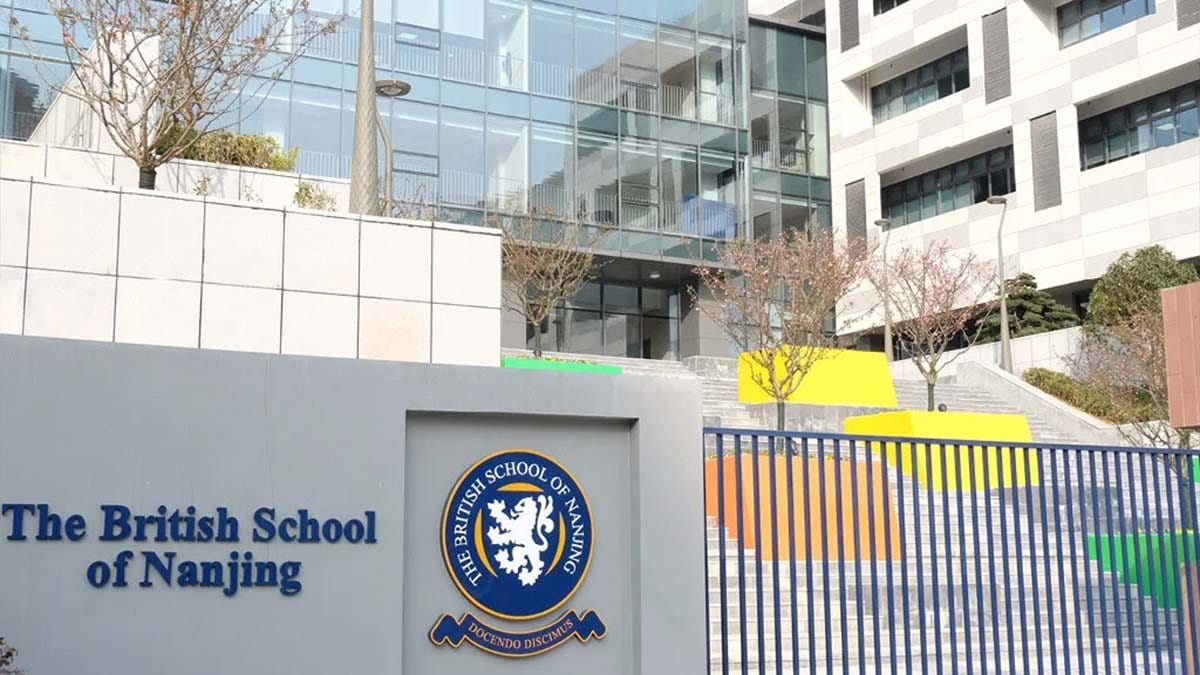
- Pool: 25-metre indoor pool
- Curriculum: British, IGCSE, IBDP
- Competition: ACAMIS
- Annual fees: ¥150,000 – ¥220,000 (est)
One of the most affordable expat schools on this list has a confirmed on-campus pool.
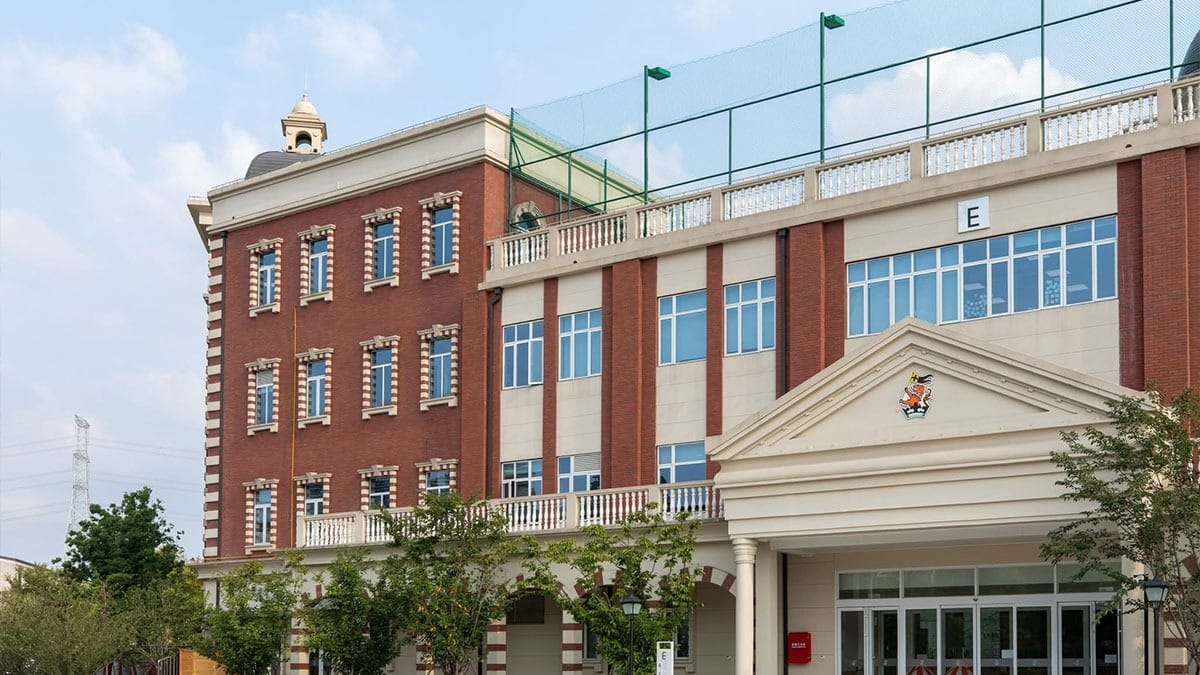
- Pool: 25-metre, 6-lane indoor heated pool with Colorado electronic timing + learner pool
- Curriculum: British, IGCSE, A-Level
- Annual fees: ¥281,600 – ¥299,000
National and international competitions use the Colorado Timing System. Having it in a school pool is rare. That makes this one of the best swim facilities in Zhejiang Province.
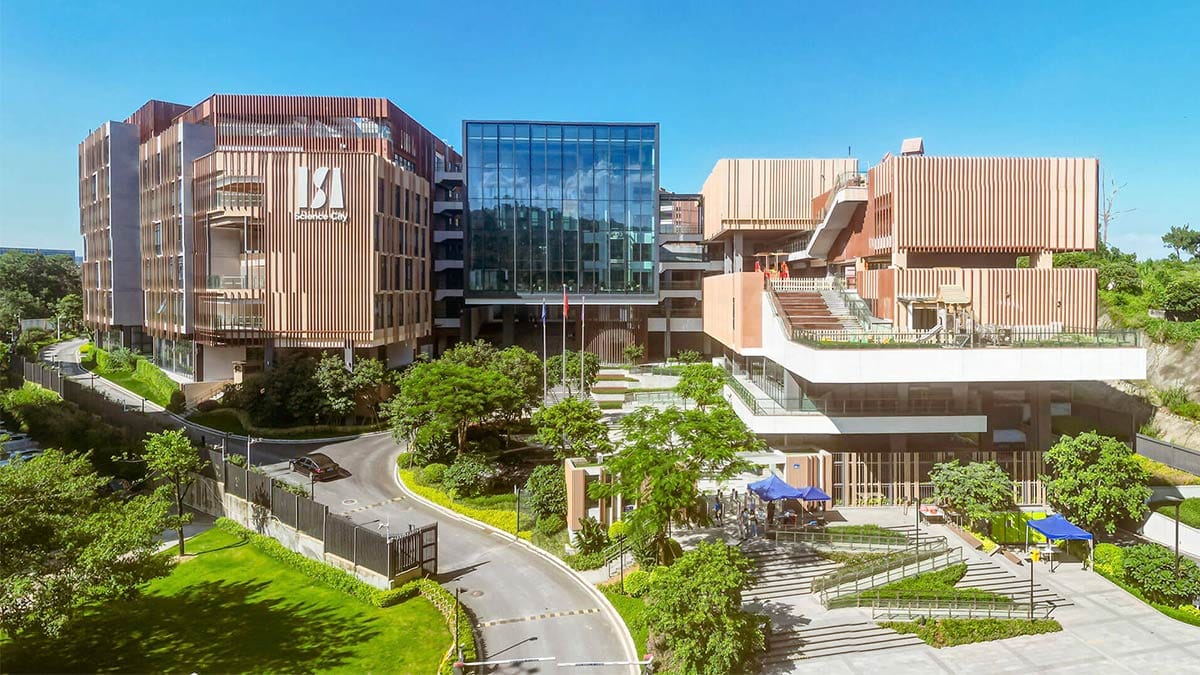
- Pool: 50-metre, 8-lane Olympic-standard indoor pool with smart anti-drowning monitoring
- Curriculum: IB (PYP, MYP, DP)
- Competition: ACAMIS (ISA Wuhan has a 50-metre indoor pool. ACAMIS participation should be confirmed with the school.)
- Annual fees: ¥200,000 – ¥280,000 (est)
ISA Wuhan has the only Olympic-standard pool in central China on this list. XLIS hosting the 2024 ACAMIS Junior Swim Meet—with 24 schools—shows its standing as a top competitive swimming school.
Frequently Asked Questions
1 Do international schools in China have to have pools?
No. There's no legal rule. But since 2020, the government has pushed for more swim education. Newer campuses — built after 2015 — now often include indoor pools as standard.
2 What is ACAMIS swimming and which schools take part?
ACAMIS is the Association of China and Mongolia International Schools. Its Junior Swim Championship includes over 24 member schools each year. Key schools are ISB Beijing, WAB, and Dulwich with many campuses. Also included are Harrow in Beijing and Shanghai, BSB, Dulwich Suzhou, the British School of Nanjing, and ISA Wuhan.
3 Can Chinese students join expat schools with pools?
Eligibility varies by school and city. Confirm directly with the school. But bilingual private schools are open to both. Two bilingual schools in this guide have confirmed pools: Nord Anglia Shanghai and Nord Anglia Shenzhen.
4 What are the typical fees for schools with swim programs?
Fees range from ¥150,000 to ¥390,000 per year, approximately US$21,000 – US$54,000. Schools in Shanghai and Shenzhen tend to cost more. Schools in Nanjing, Guangzhou, and Wuhan are lower for similar facilities.
5 Which cities have the most schools with pools?
Shanghai leads with 9 schools. Beijing has 5. Guangzhou and Shenzhen account for 4. Tianjin, Suzhou, Nanjing, Hangzhou, and Wuhan each have one.
6 How do I check a school's pool before enrolling?
Visit in person. Ask to see the pool. Key questions: What size is it? Is it heated year-round? How many swim lessons per week? Is swimming compulsory? Data in this guide are from 2024–2025. Always consult ALIFA Education Services for expert guidance.
Conclusion
Finding a good school is hard; finding one with a strong swim program is harder.
This guide covers 23 schools across Shanghai, Beijing, Guangzhou, Shenzhen, Tianjin, Suzhou, Nanjing, Hangzhou, and Wuhan. Every school has an on-campus pool, structured swim classes, and trained coaching staff. Most also offer competition access through ACAMIS, APAC, ISAC, or the Shanghai Swim League.
The right choice depends on your city, your child's level, and your budget. ISB Beijing and WAB offer triple competition access. BSB and the British School of Nanjing give solid facilities at lower fees. For families open to bilingual schools, Nord Anglia's Shanghai and Shenzhen campuses serve both Chinese and foreign students.
The key is asking the right questions before you commit.
Get expert school guidance from day one
Alifa Education Services helps international families make that call with confidence. Their team knows the Chinese school market inside out. They match your child to the right school — based on academics, sports, location, and budget. Don't spend months searching alone.
Book a Free Consultation


Member comments