

Introduction
Every parent wants their child to be ready for the future. But wanting it and knowing how to make it happen are two different things. STEM education covers science, technology, engineering, and maths. It is now one of the most important tools a child can have in the 21st century. Schools are working hard to keep up. Yet for many families, the most powerful learning still happens outside the classroom.
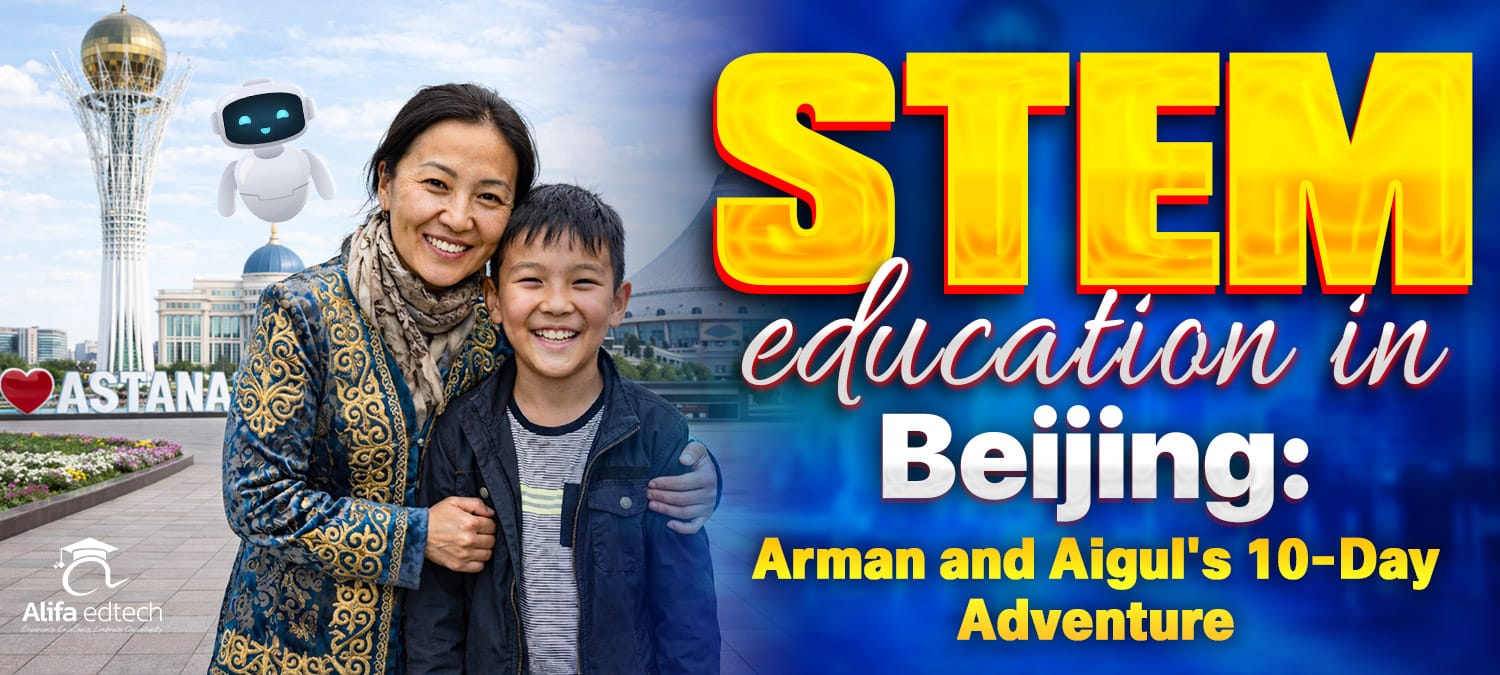
This is the story of Aigul Bektemirova and her 10-year-old son Arman. Aigul is a project coordinator from Astana, Kazakhstan. She is a mother of two. She pays close attention to how her children learn and grow. Arman is a curious, quiet boy. He loved video games. He showed little interest in school. That changed in December 2025. He found a robotics program in Beijing online. From that moment, everything shifted.
In January 2026, Aigul and Arman joined 19 other Kazakhstani families in Beijing. They enrolled in the Springboard International Bilingual School (SIBS) Robotics and Innovation Winter Intensive. It was a 10-day STEM program. The National Science Foundation is clear on this. Hands-on, problem-based learning boosts student engagement. It builds skills that last. This approach built this program. It used design thinking, teamwork, and real challenges to teach STEM from the ground up.
We are sharing their story because it is not unique. It is a story many families are living right now. Families who want more for their children. Families ready to invest in real learning. If that sounds like you, ALIFA Education Services is here to help. We connect families to top international STEM programs. We handle everything from program selection to travel logistics.
Want a safe, trusted way to connect your students with China-based STEM programs? Alifa Education Services works as the link between your school and verified host schools in Beijing.
We check every program for quality, match you with the right partners, and support you from booking, execution to program completion. Get in touch for a free consultation and explore our Beijing study tour programmes for Russian and Central Asian Students.
Day-by-Day Journey
Days 1–2: Building Real Robots
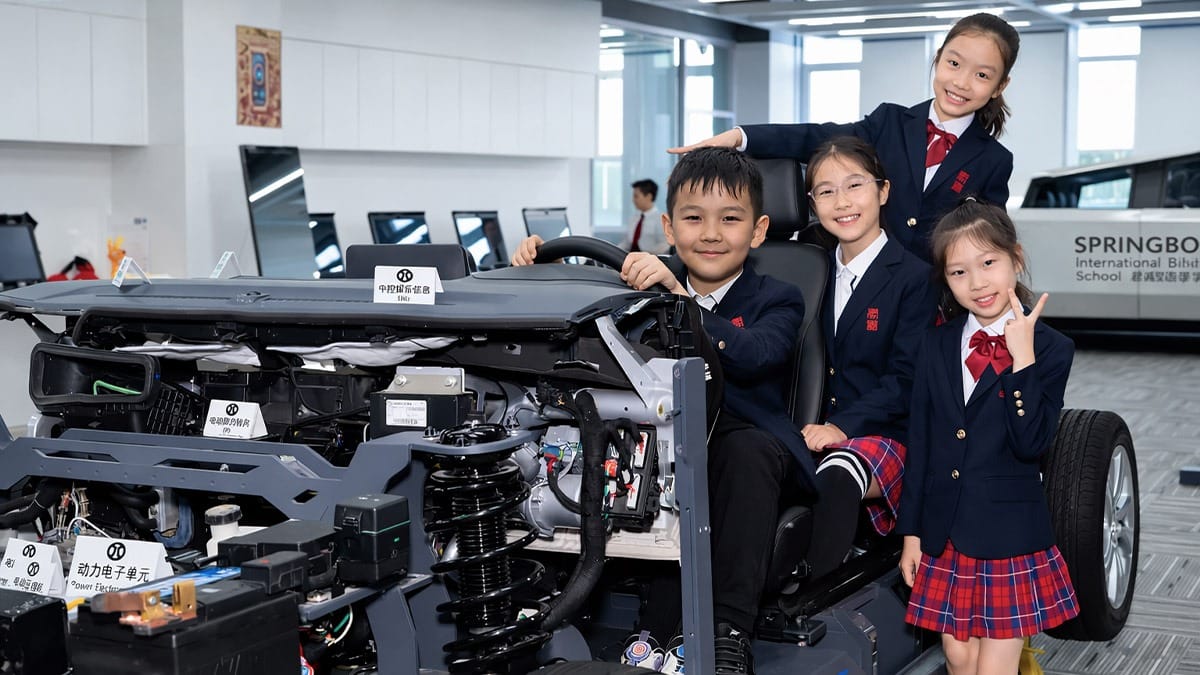
Aigul and Arman arrived at the SIBS Innovation Lab on January 21st. It is in the Shunyi District of Beijing. The welcome banners were in English, Chinese, and Kazakh. That small detail meant a lot. It told them right away — this program respected where they came from.
Teacher Chen Yiming handed out robot kits on Day 1. Each box held motors, wheels, sensors, circuit boards, and screws. Arman spent the whole afternoon on the chassis. The wheels pointed the wrong way. The motors were backwards. One screw rolled under the table. It took 15 minutes to find it.
This is educational robotics in action. It is messy. It is frustrating. And it works. The National Science Teaching Association supports this kind of learning. When children build something physical, they connect ideas to real results.
A 9-year-old girl named Aidana noticed Arman's frustration. She slid her completed chassis across the table, making no noise. She pointed at the motor setup. No words. The universal language of "look, this is how it works."
By the end of Day 2, Arman's robot stood on four aligned wheels. The LED lights blinked on. He shouted "YES!" across the room. That night, Aigul watched her son draw robot diagrams. He did not touch his video games. She knew something had shifted.
Days 3–5: Learning to Code and Think Like an Engineer
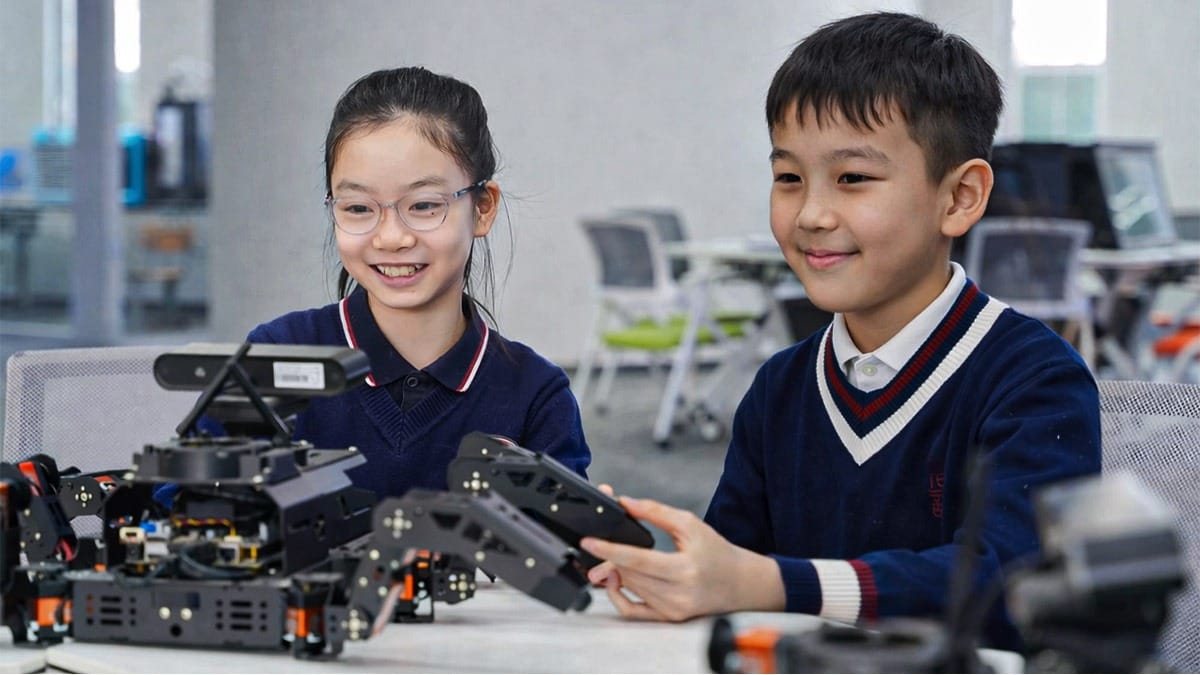
Days 3 to 5 focused on visual programming. The platform used colourful blocks. "Forward 3 seconds." "Turn right 90 degrees." "If you detect an obstacle, stop." It looked simple. It was not.
The Day 3 challenge was to navigate a small maze. Arman's robot crashed into walls. It spun in circles. It stopped for no clear reason. This happened seven times in a row. Teacher Chen pointed to one line in her code. "Delay: 0.1 seconds." One number change fixed everything. She changed it to 0.5 seconds. The robot glided through the maze.
That moment showed Arman the power of data analysis and causal reasoning. When something fails, you find the cause. You change one variable. You test again. Aigul watched from across the room. She said later: "I saw something click in his eyes. He was thinking like an engineer."
On Day 4, Arman teamed up with Nurlan. Nurlan was an 11-year-old from Nazarbayev Intellectual School. They used an interdisciplinary approach. They mixed logic, maths, and strategy. Their robot finished the challenge in 27.3 seconds. Third place . They also learned that peer instruction works. Different thinking styles make a team stronger.
To learn more about the services offered by Alifa Education, please visit our dedicated page. Whether you are a guardian, affiliated with an international or bilingual school in China, or a study abroad education agency, Alifa Edtech offers services tailored to your unique needs. Please visit our page to learn more about our offerings.
Weekend: The Great Wall and Design Thinking
On Saturday, January 25th, Aigul and Arman visited the Great Wall at Mutianyu. One child asked: "Could robots build this today?" Arman answered fast. "You could use drones for surveying. Autonomous vehicles for materials. Robot arms for precision work."
Aigul stopped walking. Five days earlier, her son had no idea what a sensor was. Now he was applying design thinking to a 2,000-year-old wall. She said: "That was the moment I knew the trip was worth every penny."
On Sunday, the group visited 798 Art District. The kids found a robotic art installation. It was a large sculpture that responded to human movement. They spent 40 minutes studying how it worked. The artist, Zhang Meilin, came over to talk. She told them: "Art and engineering are not so different. Both create something from nothing." Arman did not forget that.
Days 6–7: Inside China's Tech Startups
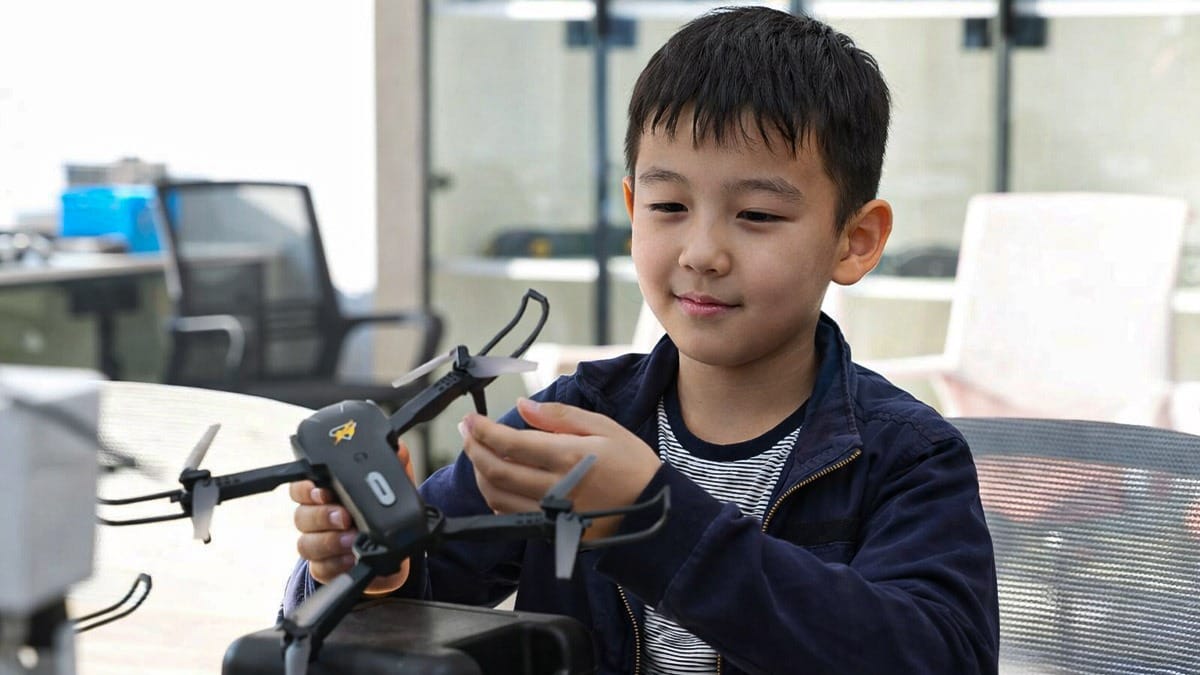
Tuesday brought Aigul and Arman to Zhongguancun Software Park. It is Beijing's answer to Silicon Valley. They visited KuaiSong Tech. It is an AI-powered logistics startup. Experts value it at $2.3 billion. The office surprised Arman. No suits. No cubicles. Young people staring at live data screens.
Product Director Liu Xiaoting showed the children her artificial intelligence dashboard. Every second, it made 40,000 route calculations. Arman raised his hand. "What if it rains? Does the algorithm change?" Liu's face lit up. Rain adds 23% to delivery times. The system adjusts in real time. That feature was only built after a public failure. It happened during Beijing's rainy season.
After the session, Liu pulled Arman aside. She said: "That question showed you understand real systems face real problems. Never lose that thinking." Aigul stood nearby and listened. She said later: "My son was getting career advice from a director at a billion-dollar company. He was 10 years old."
This is career exploration at its best. Children see real professionals using artificial intelligence to solve everyday problems. They see that failure is part of the process. It is not the end of it.
Day 7 took them to a virtual reality company in Yizhuang. The CTO, Wang Jianhua, started small. He began with three people in a basement lab at Tsinghua University. Today the company serves 50,000 visitors monthly. It operates across 18 countries. When Arman put on the VR headset, Aigul heard him gasp. "I'm floating! I can see Earth!"
Wang showed the children how motion-capture sensors work. They translate body movement into digital avatars. They use the same maths the children used to code their robots. He told the children: "In ten years, one of you will show me a technology I cannot even imagine today."
Want to put your brand in front of families, students, and education-focused readers? We're inviting select partners to advertise with us on our trusted blog.
Want to get featured? submit a story for us to include.
Days 8–9: The Final Project Under Pressure
By Day 8, the children had 36 hours to build a final project. Arman's team chose a museum tour-guide robot. The plan was bold. It needed autonomous navigation, obstacle avoidance, precise stopping, and audio playback. They tried to build everything at once. Nothing worked.
By 4 PM, Aigul could see the stress on her son's face. The robot kept overshooting its stop points. The audio played at random times. Two teammates argued. One spoke Mandarin. The other spoke Russian. Arman sat in silence. He looked overwhelmed.
Then Aidana stood up. She clapped her hands with a sudden, quick motion. Everyone stopped. She said in a measured tone: "We are failing because we try to do everything. Let's do one thing well."
The team listened. They removed the audio system. They simplified to three fixed stop points. By 8 PM the robot worked 90% of the time. Teacher Chen stayed late to help. Aigul watched from the doorway. She said: "Watching my son keep going without giving up — that was worth more than any grade he has ever received."
This was problem-based learning in its purest form. Find the real problem. Simplify. Test. Repeat.
Study tours in China, year-round! 🎓 Ages 14–22. Language immersion, cultural deep-dives, STEM/AI/Robotics projects—we've got it all. Tap the Google Drive link and reach out when you're ready!
Day 10: The Presentation
On February 1st, 40 parents packed the Springboard International Bilingual School (SIBS) auditorium. Arman's team was fourth. Aigul sat in the front row. She was more nervous than he was.
The team presented well. Then came the live demo. Arman pressed START. The robot moved forward. It reached the first stop. It paused. Then it crashed into a chair. Someone had moved it since the morning setup. The room went quiet. Aigul held her breath.
Arman did not freeze. He picked up the robot. He faced the crowd with composure. "This is why we need debugging." The room laughed. He opened his laptop. He fixed the code on the spot. He restarted the robot.
This time, it completed all three stops with precision. The room erupted in applause. Not for the demo. But for his composure.
A parent asked what the hardest part was. Arman said: "Learning that perfect is the enemy of good enough." Aigul was in tears.
Key Insights and Practical Takeaways
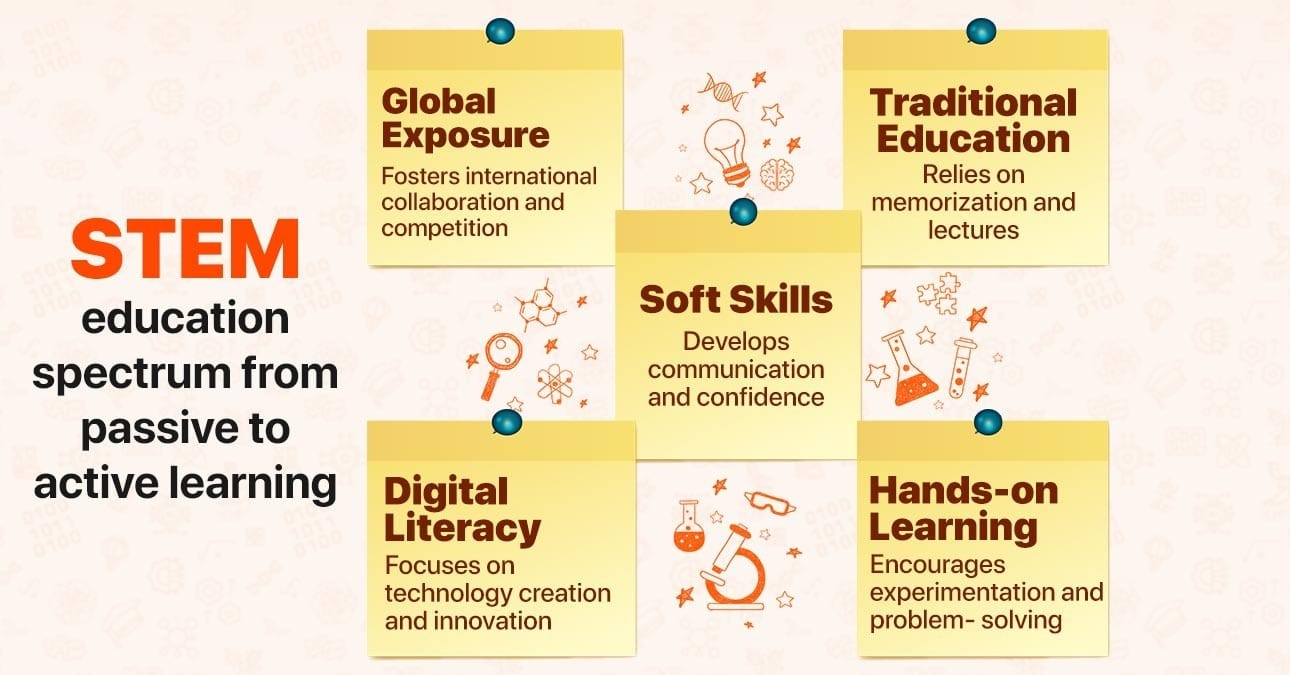
Aigul and Arman's story is powerful. But it is more than a travel story. It shows what modern STEM education looks like when done right. Here are the lessons their journey makes clear.
First, hands-on learning works. The National Research Council found that students learn more by doing than by watching. Arman built, failed, fixed, and rebuilt. That cycle taught him more than any worksheet could.
Second, global exposure matters. From 2021 to 2023, demand for STEM skills in global job markets experienced significant growth. The Georgetown University Center on Education and the Workforce reports that STEM graduates earn more over their careers. Starting early gives children a real head start. Starting internationally enhances its strength.
Third, great programs exist for every child. The FIRST Robotics Competition, Hour of Code, and Girls Who Code show that any child can engage with STEM. Aigul and Arman's story proves that innovation knows no borders. Children in Astana can compete with children anywhere in the world.
Fourth, digital literacy is now a basic skill. These children were not learning to use technology. They were learning to build it. That is the difference between a consumer and a creator.
Fifth, soft skills grow too. Arman came home with stronger research skills and real confidence. Aidana presented her own robotics project at her school science fair three months later. She had found her voice in Beijing. She brought it home.
Program Cost Breakdown:
- SIBS Robotics & Innovation Winter Intensive program fee: $1,850 USD
- Round-trip flights via Air Astana (Astana to Beijing): approximately $1,100 USD
- Weekend activities, meals, and transport: approximately $500 USD
- Total estimated investment: approximately $3,450 USD per family
Private tutoring focused on memorization rarely builds real skills. Programs like this help children develop problem-solving skills, collaborate, and engage in creative thinking. Those are 21st century skills that last a lifetime.
Conclusion
Three months after Beijing, Arman is a different child. He joined Astana's junior robotics club. He started a YouTube channel teaching basic programming in English. His math grades went up. Not because Aigul pushed him. But because he finally saw math as a tool, not a subject.
He now video-calls his Beijing teammates to work on projects for youth competitions. On his bedroom wall hangs a photo from the Great Wall. Twenty kids from Kazakhstan. Arms around each other. Robots at their feet. Futures ahead of them.
Aigul expressed her view: "We did not send Arman to a winter program. We sent him to a launchpad."
That is what the right program can do. It does not matter where you start. It matters where you are willing to go.
STEM education in Beijing is not for elite families. It is for any curious child who asks "why" and "how." If your child has that curiosity, they are ready.
ALIFA Education Services helps families find the right international STEM programs. From short intensives to full academic placements, we handle program research, applications, and travel planning. You focus on your child. We handle the rest. Book a free consultation today. Aigul and Arman took the leap. Now it is your turn.
Related Articles
 Emmanuel Usang
 John Wong
 Emmanuel Usang


Member comments