

Introduction
SPGS International School Chengdu carries a big name. It is the first overseas school in the network built by St Paul’s Girls’ School (SPGS), London — a school that has topped UK league tables for years. That pedigree raises a fair question for parents: does a famous name in London guarantee a strong classroom in Chengdu? Will your child get real attention or a brand on a wall?
Below, we cover what’s verified and what isn’t. Location, curriculum, staff checks, fees, and the exact nature of the London link were checked directly against the school’s own published pages, not third-party trackers. We flag the strong points. We flag the open questions too, including a couple the school hasn’t published anywhere yet.
Here’s the short answer: The school has real, documented strengths, and it also has a few genuine information gaps — mainly around the size of its newest sixth form intake and its deposit-refund terms. It opened in August 2021, so it’s entering its fifth year — still young for a K–12 campus, though its first Sixth Form cohort has already posted a 100% A-Level pass rate.
Key Takeaways
First overseas school in the SPGS International network, opened August 2021, operating under licence from SPGS International Ltd. — the wholly owned subsidiary of St. Paul’s Girls’ School, London.
Fully co-educational, all year groups — despite the “Girls’ School” name in its lineage.
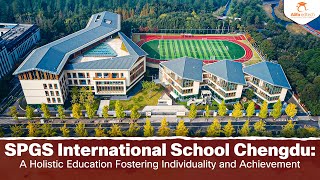
Located at No. 6 Shengxing Alley, High-Tech Zone, next to Jincheng Park. Officially registered as 成都高新区晟珀外籍人员子女学校 — a licensed school for children of foreign personnel.
Enrollment is limited to foreign passport holders (or Taiwan/Hong Kong/Macau Mainland Travel Permit holders) — Chinese mainland passport holders generally aren’t eligible.
Enhanced the English National Curriculum with daily Mandarin immersion, then IGCSE and A-Level.
Its Sixth Form’s first cohort — just 5 students — achieved a 100% A-Level pass rate; IGCSE results were 85% A*–B; total enrollment across the school is 428 students.
Named Designated Safeguarding Lead and a documented, verifiable staff-vetting process for every new hire.
Where Is SPGS Chengdu Located?
成都市高新区盛兴胡同6号 — next to Jincheng Park
Licensed as a 外籍人员子女学校 — a school for children of foreign personnel (foreign-passport-holding families). The postal code for this district is 610041.
SPGS International School Chengdu sits inside the High-Tech Zone, part of Tianfu New Area — a fast-growing tech and finance district on Chengdu’s south side. The campus backs onto Jincheng Park, home to Jincheng Lake, one of the district’s main green spaces.
Tech firms and research parks fill this part of Chengdu, and a sizeable international community already lives here. Many tech, finance, and consulting families live nearby, which cuts down the daily commute for a good share of the school’s intake.
Chengdu ranks among China’s easier cities for foreign families to settle into. Direct flights connect it to major hubs across Asia, hospitals near the High-Tech Zone see foreign patients, and imported goods are easy to find. None of that replaces a good school, but it does mean your family won’t feel isolated.
Still, weigh the commute before you decide. A short one buys back family time every day; a long one eats into homework, sleep, and patience. Ask other parents about their actual door-to-door time — map apps rarely match rush-hour reality in this part of Chengdu.
How Close Is SPGS Chengdu to St. Paul’s Girls’ School, London?
St Paul’s Girls’ School has topped UK school rankings for years. Its international arm, SPGS International Limited, is a wholly-owned subsidiary of the London school. SPGS Chengdu operates under licence from SPGS International Limited, built — in the school’s own words — “hand-in-hand with our Chinese partner.” That’s a licensed partnership model, similar to how other UK independent schools run China campuses, not a case of London owning and running the Chengdu campus directly.
| Name | Role |
|---|---|
| Liz Hewer | High Mistress, St Paul’s Girls’ School, London |
| Tim Haywood | Chair, SPGS International; Governor, St Paul’s Girls’ School, London |
| Sara Brazendale | Managing Director, SPGS International |
| Qin Li | Managing Director, SPGS International School China |
The London school’s own head — the High Mistress — sits on Chengdu’s board in person. Students and teachers take exchange trips between the two campuses, and London runs standards checks on teaching quality.
Does That Guarantee a London-Level School in Chengdu?
Not on its own. The Chengdu campus runs day to day by itself, under a local leadership team, drawing on London’s values and outside checks. Five years in, the campus is still building its own track record — though a 100% A-Level pass rate in its first cohort is a genuinely strong start. Ask for the grade-by-grade breakdown behind that headline pass rate, not just the pass/fail number, and how the Sixth Form has grown since its five-student founding cohort — concrete, current evidence beats any brochure claim.
One clarification worth making plainly: despite “Girls’ School” in its name and lineage, SPGS Chengdu is fully co-educational — it enrolls both boys and girls in every year group. The name reflects heritage, not an admissions policy.
SPGS International is expanding on more than one front. A second full campus, SPGS International School Bangkok, is confirmed to open in August 2026 in partnership with Country Group Development PCL — a 9.1-acre site near the Rama III area, also for ages 3–18. Separately, in Guangzhou, SPGS International runs the Horizon Programme (圣保罗班) — a joint IGCSE and A-Level pathway delivered inside Guangzhou ULink International School (GUIS), launched in 2025.
That’s a curriculum partnership, not a third SPGS-branded campus: St Paul’s Girls’ School’s own charity filings note an earlier plan for a full Guangzhou school was postponed after the local partner couldn’t secure an operating license under China’s tightened rules for foreign-linked schools.
A growing network often means the model is working; it can also mean support spreads thinner, and this Guangzhou episode is a reminder that even this network’s own expansion plans don’t always land as first announced. Ask how much head-office attention Chengdu still gets as the network grows on two more fronts.
What Does the Junior School Offer?
The Junior School covers Early Years through Year 6 — ages 3 to 10. Early Years starts with play-based learning, language practice, and social-skills building; Key Stage 1 and 2 follow the English National Curriculum from there. Shirley Wan, who joined as Head of Junior School in August 2025 after leadership roles at Dulwich College Beijing, Dulwich College Suzhou, and Pembridge Hall School in London, leads this section alongside Deputy Head John Devlin.
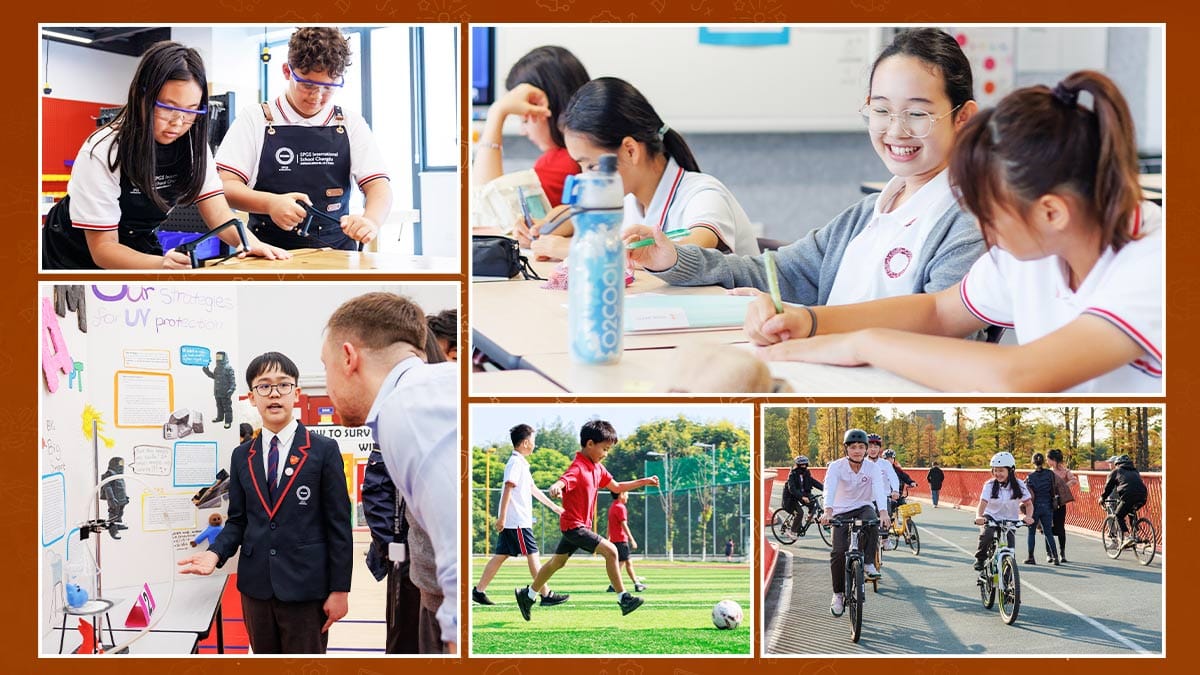
Chinese language classes run across every age group, and local culture shows up at every stage. The school leans on immersion: Mandarin appears daily, not once a week. Kids who get daily practice tend to build real fluency rather than textbook phrases.
The school’s FAQ publishes maximum class-size caps school-wide: 20 students for Early Years and 24 for Year 1 upward (including Senior School and Sixth Form). These are ceilings, not confirmed current headcounts — a class could run well under cap, especially in newer year groups. Ask admissions for the actual current number in your child’s specific year.
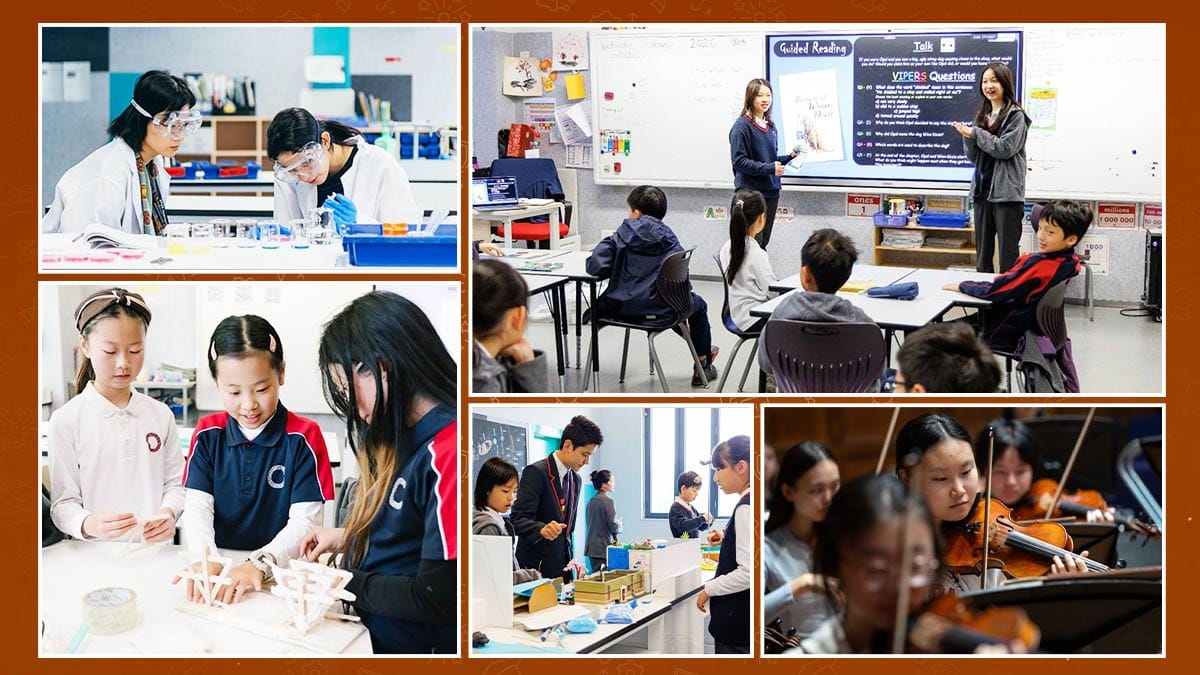
A strong junior school matters. Kids who feel safe and curious carry that forward into senior school. Teachers use a hands-on method rather than long lectures, and group work is organized by age — a three-year-old never gets the same task as a nine-year-old.
The Senior School and A-Level Path
The Senior School serves students aged 11 to 18 (Years 7–13). Students follow an enhanced English National Curriculum blended with Chinese language and culture, sit IGCSE exams, and then choose A-Level subjects for the final two years. James Stubbert, Deputy Head Academic, leads Senior School academics under Principal Naomi Edwards.
A-Level Subjects on Offer
Sixth Form study is enriched with the Duke of Edinburgh Award, the Extended Project Qualification, and Olympiad competitions — on top of subject teaching aimed at G5 and Ivy League applications.
Verified Outcomes (Updated)
Who Is Teaching Your Child?
Most parents skip past staff checks, but these matter more than any brochure photo. SPGS Chengdu’s own recruitment listings confirm a standard pre-employment process for every new hire:
Named safeguarding lead: Rachael Heppenstall holds the ALNCo and DSL (designated safeguarding lead) roles. The safeguarding team also includes Principal Naomi Edwards and Head of Junior School Shirley Wan.
A school willing to publish its safeguarding steps and name its lead has little to hide. These steps rarely make headlines, but they matter every school day — a child’s safety comes from small, steady checks, not one big rule.
What Happens Beyond the Classroom?
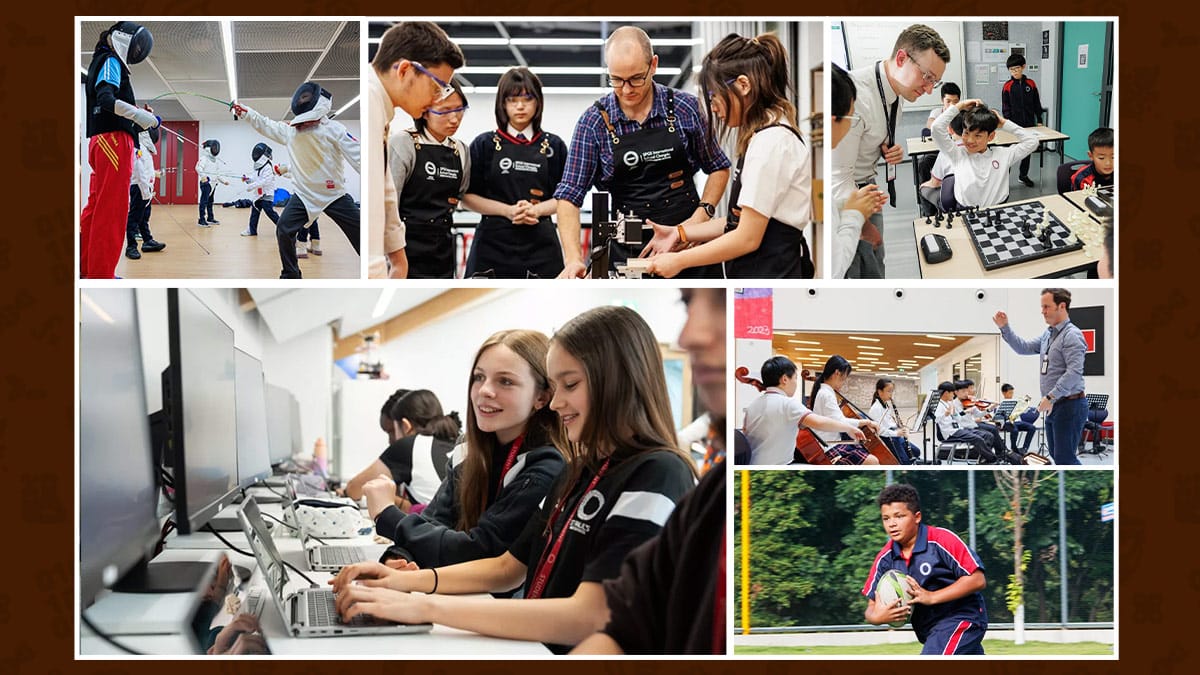
Grades tell only half the story. SPGS Chengdu runs a full co-curricular program spanning music, sport, and art. Music holds a special place here: the link traces back to Gustav Holst, who directed music at St Paul’s Girls’ School in London from 1905 to 1934 and composed part of The Planets in the school’s own music room. The Chengdu campus draws on that legacy through its own music festivals and ensembles.
Student leadership starts early, built through mentoring and house teams. Community projects and local work placements add real-world experience for older students.
For a look at day-to-day campus life, the school’s WeChat account is the active local channel — the Contact page publishes a WeChat QR code directly. The wider SPGS International network also keeps a LinkedIn presence and an Instagram account (@spgsinternational), though those run at the group level and lean toward recruitment and cross-school news rather than Chengdu-specific updates.
Extracurricular activities span every age group: Junior School clubs after lessons, Senior School sports fixtures against other Chengdu schools, and a calendar of Chinese-culture festivals, local trips, and group projects that run well past a single holiday lesson. Learning support stays on hand for students who need extra help keeping pace.
What Are the School Fees?
Before fees — who can even enroll: SPGS Chengdu accepts foreign passport holders, or holders of a Mainland Travel Permit for Taiwan, Hong Kong, or Macau — the standard eligibility rule for a licensed 外籍人员子女学校 in China. Chinese mainland passport holders are generally not eligible; confirm directly with admissions if your family has mixed nationalities or residency status.
These are the school’s own published tuition figures for the 2025–26 academic year — not a third-party fee tracker:
| Year Group | Annual Tuition (RMB) |
|---|---|
| Nursery / Reception | 185,000 |
| Year 1–6 (Primary) | 226,000 |
| Year 7–9 | 249,000 |
| Year 10–11 | 269,000 |
| Year 12–13 (Sixth Form) | 279,000 |
Tuition covers daily teaching, stationery, learning materials, sports facilities, PE, and some after-school clubs. It excludes uniforms, bus service, meals, and some individual programs; trips, specialist clubs, extracurricular courses, and exam fees may cost extra.
Sibling discount: 5% off tuition for a second child, 10% for a third child or more, applied in order of age — the youngest gets the largest discount.
Application & enrollment fees: a non-refundable RMB 2,000 application fee is due when you submit. Once you accept an offer, an RMB 20,000 enrollment fee secures the place — deductible from your first tuition payment, not an extra cost on top.
SPGS Chengdu takes applications on a rolling basis, subject to space. After you apply, expect a family assessment, an admissions decision within 5 working days, and 10 working days to accept and pay the enrollment fee. Ask admissions about scholarships as well as the sibling discount above, and get refund conditions for the enrollment fee in writing if your plans could change before the term starts, since that specific detail isn’t spelled out on the official pages.
Frequently Asked Questions
Conclusion: Can Students Thrive Here?
SPGS International School Chengdu has real, verified strengths: a genuine St Paul’s Girls’ School link backed by named governance, not just a shared name; daily Chinese-language immersion at every stage; a full path from Early Years to A-Level, with its first Sixth Form cohort already posting a 100% pass rate; and a location deep inside a growing international community in the High-Tech Zone, now home to 428 students school-wide. It’s also still young — opened in 2021, with a Sixth Form whose first cohort numbered just five students.
Some facts remain genuinely open: the size of the September 2025 Year 12 intake and full deposit-refund terms aren’t yet public. Verify these directly before you commit.
Alifa Education Services
Placing a child in a Chinese school from abroad?
Alifa Education Services closes that gap for families like yours. We check fees, dates, and enrollment status straight with schools in China — not from old listings — and compare SPGS Chengdu against other strong Chengdu schools to match the right fit to your child’s needs and your budget.
📅 Book A Free Consultation Today →Disclosure: Alifa Education Services is an independent education placement consultancy. We may earn a referral fee from partner schools when families enroll, at no extra cost to the family. Our recommendations are based on fit, not fee structure.


Member comments