

Introduction
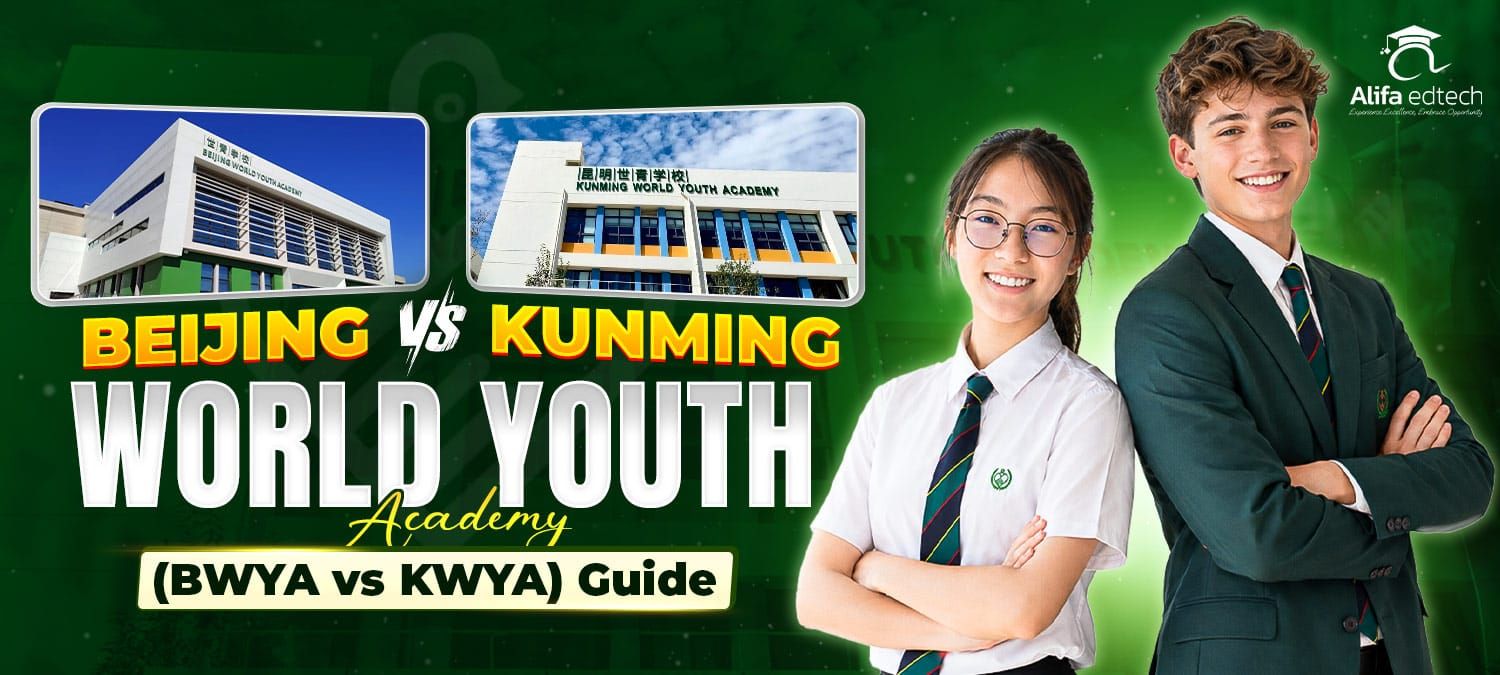
Beijing World Youth Academy (北京市朝阳区世青学校, BWYA) and Kunming World Youth Academy (昆明世青学校, KWYA) are two of the most searched international schools in China — and two of the most misunderstood. Most families searching for one assume they are branches of the same school. They are not. They are legally separate institutions with different ownership, different curricula, different fee structures and different cities.
Beijing World Youth Academy is a fully private K–12 international school in Chaoyang District, Beijing, founded in 2001. It runs the complete IB continuum — Primary Years Programme, Middle Years Programme and Diploma Programme — alongside Cambridge IGCSE. Tuition is approximately ¥260,000–¥280,000 per year. It is a day school with no boarding.
Kunming World Youth Academy is a government-partnered international school in Chenggong District, Kunming, Yunnan Province, established in 2016 through a three-way agreement between the Kunming Education Bureau, Beijing World Youth Academy and the Chenggong District People's Government. It became Yunnan Province's first IB World School in 2019. It runs the Chinese national curriculum with an IB Diploma exit in Grades 11 and 12. Tuition is approximately ¥80,000–¥115,000 per year. 5-day boarding is available.
The three-to-one fee gap between the two schools has a structural explanation — not a quality one. This guide covers both Beijing World Youth Academy and Kunming World Youth Academy as standalone entities, with full details on fees, curriculum, admissions, boarding and university outcomes for each.
This guide was compiled using the official Beijing World Youth Academy website (ibwya.net), the official Kunming World Youth Academy website (kwya.top), the KWYA official WeChat public account, and primary research. All fees and facts are drawn from primary sources and verified in 2026. Alifa Education is an independent placement consultancy — not affiliated with either school.
BWYA vs KWYA at a Glance
Here is the short version. Each row below is drawn from primary sources, which are listed at the end.
| Point | BWYA — Beijing | KWYA — Kunming |
|---|---|---|
| Founded | 2001, Chaoyang District | 2016, Chenggong District |
| Legal Type | Private non-profit (民办非企业单位) | Independent legal entity; government-partnered (国有民办) |
| Founder | Wang Hong (王虹), ex-principal, Beijing No. 55 Middle School | Three-way agreement; sponsor not publicly named |
| Grades | K–12, twelve-year through-school | Grade 1 to Grade 12 |
| Curriculum | Full IB — PYP, MYP, Diploma — plus IGCSE | Chinese national curriculum + IB Diploma (final two years) |
| Tuition (2025–26) | ¥260,000–¥280,000 / year | ¥80,000–¥115,000 / year |
| Boarding | Day school | 5-day boarding (home on weekends) + day; dorm ¥5,000 / year |
| Latest published IB result | 36 — 2020 (record; recent data varies) | 33 — 2024 (100% pass, five years running) |
| Relationship | Parent school | Only outside-Beijing campus — cooperation and brand, no shared ownership |
ⓘ These figures are from different exam sessions and cannot be directly compared.
Key Takeaways
BWYA (Beijing, Chaoyang) was founded in 2001 by Wang Hong (王虹), a former public-school principal — a rare, verified educator-founder story, not a property developer.
KWYA (Kunming, Chenggong) opened in 2016 through a three-way government agreement. It is a legally independent school and the only World Youth Academy campus outside Beijing.
There is no company called “世青教育集团” (World Youth Education Group). The two schools are linked by cooperation, brand, and shared curriculum — not by shared ownership.
BWYA is a full IB school — PYP, MYP, and Diploma (IB directory date: 1995 — predates the school’s 2001 founding; likely a predecessor institution’s code, unconfirmed) — plus IGCSE. KWYA is different: it teaches the Chinese national curriculum in lower grades and adds the IB Diploma only for the final two years, so students also keep a local Kunming school record (学籍).
Fees differ about three times: BWYA ¥260,000–280,000; KWYA ¥80,000–115,000 per year.
The study visa runs through the school’s confirmation form, and a local resident guardian must be appointed — a Beijing-resident guardian for BWYA (confirm whether a Chaoyang address is specifically required), a Kunming-resident guardian for KWYA. This applies to any student whose parents do not ordinarily reside in the city.
Two Schools, One Lineage: The Real Structure
The most common myth is that “世青” is a large education group with many branches. It is not. We found no company registered under the exact name “世青教育集团” as of July 2026. Unrelated firms with similar names exist in Henan, Shanxi, and Xiamen, but none is connected to these schools.
Beijing World Youth Academy (BWYA) — Complete School Guide
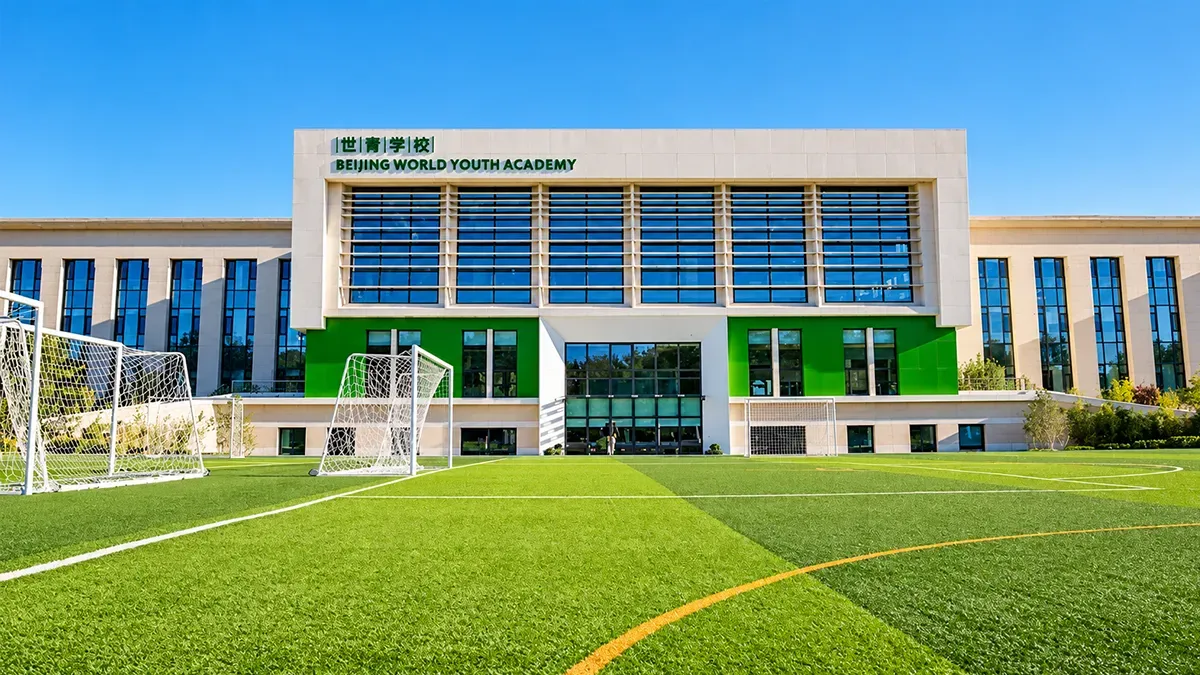
Beijing World Youth Academy (北京市朝阳区世青学校, BWYA) is a private international school in Chaoyang District, Beijing, founded in 2001. It is the original and founding school in the World Youth Academy family. BWYA runs a full K–12 IB continuum (PYP, MYP and Diploma Programme) alongside Cambridge IGCSE, making it one of the few schools in Beijing authorised for the complete IB pathway plus IGCSE. View the BWYA school profile on Alifa Education for the latest admissions information. Confirmed from BWYA official site
The school's motto is "Locally Grounded, Globally Aware" — a phrase that runs through all its promotional and academic materials and reflects its position as a school that takes Chinese cultural heritage seriously while delivering a fully international curriculum.
Beijing World Youth Academy — key facts
| Item | Detail |
|---|---|
| Full Chinese name | 北京市朝阳区世青学校 |
| English name | Beijing World Youth Academy (BWYA) |
| Founded | 2001 — 25 years of continuous operation |
| Location | Chaoyang District, Beijing |
| School type | Private non-profit (民办非企业单位) |
| Founder | Wang Hong (王虹), independent founder |
| Grades | Kindergarten through Grade 12 — full 12-year programme |
| Day type | Day school — no boarding |
| IB programmes | PYP · MYP · Diploma Programme (full IB continuum) |
| Additional curriculum | Cambridge IGCSE |
| Latest published IB score | 36/45 — see IB school rankings in China 2026 |
| Tuition 2025–26 | ¥260,000–¥280,000 per year |
| Alifa school profile | View BWYA profile → |
| Official website | ibwya.net |
↔ Scroll on mobile · All facts confirmed from BWYA official website, ibwya.net
Beijing World Youth Academy curriculum — full IB continuum
Beijing World Youth Academy is one of Beijing's few schools authorised to run all three IB programmes in sequence. Students who enter BWYA in Kindergarten can follow a single consistent academic framework all the way through to university applications without switching schools. See how BWYA compares in the full IB school rankings for China 2026.
- IB Primary Years Programme (PYP) — inquiry-based learning from Kindergarten through Grade 5
- IB Middle Years Programme (MYP) — interdisciplinary framework from Grades 6 through 10
- IB Diploma Programme (DP) — the internationally recognised university entrance qualification in Grades 11 and 12
- Cambridge IGCSE — offered alongside or as an alternative to the IB MYP pathway
Confirmed from BWYA official site
Beijing World Youth Academy enrichment and special programmes
- Duke of Edinburgh's International Award — BWYA is an approved DofE centre, one of the most recognised youth development credentials globally
- Model United Nations (MUN) — active MUN programme preparing students for global citizenship
- Classroom Without Walls Programme — experiential learning outside the school environment
- Wolves Athletic — BWYA's sports programme covering competitive athletics across multiple disciplines
- Parent Teacher Association (PTA) — active community organisation
- University Counselling — dedicated guidance from high school entry through to university applications globally
Confirmed from BWYA official site
Beijing World Youth Academy admissions
Beijing World Youth Academy welcomes students from all over the world. Applicants sit an admissions assessment appropriate for their grade level. Contact BWYA directly through ibwya.net/admissions to confirm current place availability, grade-specific requirements and entry timelines. Confirmed from BWYA official site
Want a consultant to check BWYA's current place availability for your child's grade?
View BWYA Profile on Alifa →Beijing World Youth Academy's position in Beijing's international school landscape: At ¥260,000–¥280,000 per year, BWYA sits in the upper tier of Beijing international school fees. What it offers in return is a full 12-year IB continuum — something most Beijing international schools do not provide. Families who want their children in a single school from Kindergarten through Grade 12 without switching frameworks will find BWYA one of the strongest options in the capital.
Kunming World Youth Academy (KWYA) — Complete School Guide
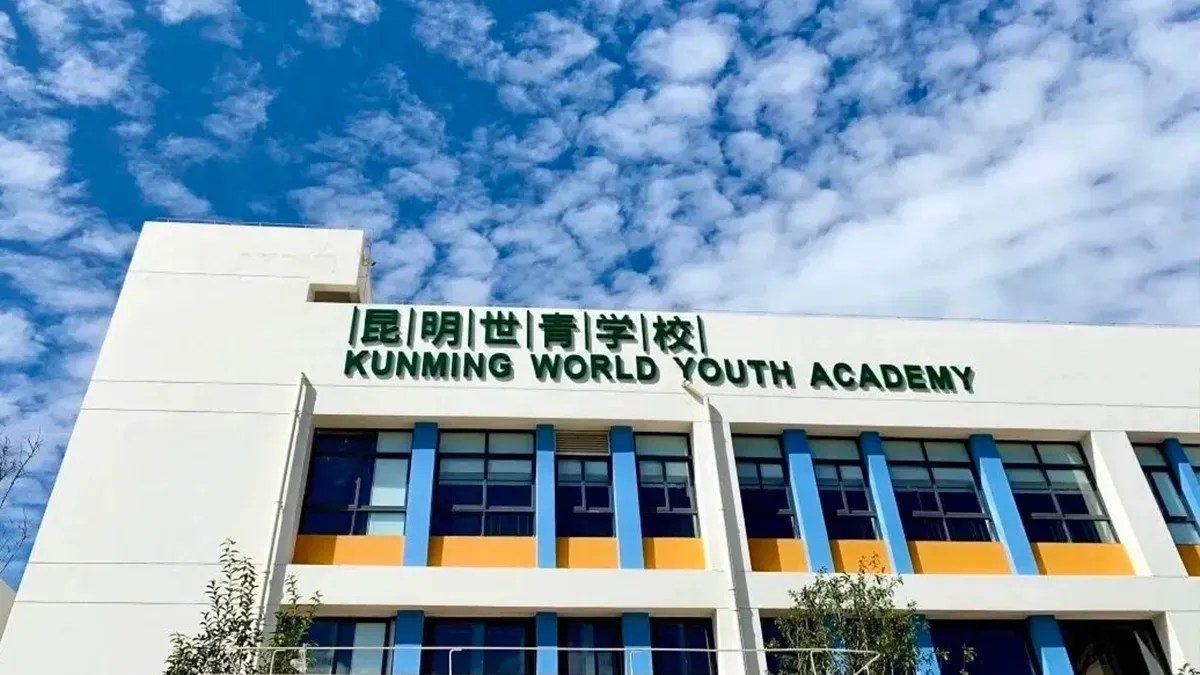
Kunming World Youth Academy (昆明世青学校, KWYA) is an international school in Chenggong District, Kunming, Yunnan Province, established in 2016 through a three-way government agreement between the Kunming Municipal Education and Sports Bureau, Beijing World Youth Academy and the Chenggong District People's Government. KWYA became an authorised IB World School in 2019 — making it Yunnan Province's first and, as of 2026, only IB-authorised school. View the KWYA school profile on Alifa Education for the latest admissions information. Confirmed from KWYA official site
Kunming World Youth Academy — key facts
| Item | Detail |
|---|---|
| Full Chinese name | 昆明世青学校 |
| English name | Kunming World Youth Academy (KWYA) |
| Founded | Established May 21, 2016 · Opened September 2016 |
| Location | Chenggong District, Kunming, Yunnan Province |
| School type | Government-partnered school (国有民办) — three-way agreement |
| Three-way agreement | Kunming Education Bureau + Beijing World Youth Academy + Chenggong District Government |
| Grades | Grade 1 through Grade 12 |
| IB authorization | IB World School — authorised 2019. Yunnan's first IB school. |
| IB programme | IB Diploma Programme only (Grades 11–12) |
| Main curriculum | Chinese national curriculum + IB Diploma for final 2 years |
| Boarding | 5-day boarding available (home on weekends) · Dorm fee ~¥5,000/year |
| Tuition 2025–26 | ¥80,000–¥115,000 per year |
| Admissions contact | Teacher Liu (刘老师), KWYA Admissions Office |
| Phone | +86 871 6745 1511 |
| Alifa school profile | View KWYA profile → |
| Official website | kwya.top |
↔ Scroll on mobile · Facts confirmed from KWYA official website and official WeChat public account
How Kunming World Youth Academy was established — the three-way agreement
Kunming World Youth Academy was created through a formal tri-party agreement signed by three separate organisations: the Kunming Municipal Education and Sports Bureau, Beijing World Youth Academy and the Chenggong District People's Government. This government-partnership model is why its fees are roughly one-third of BWYA's — the government provides land, infrastructure and partial subsidy in exchange for KWYA delivering an international curriculum in Yunnan. Beijing World Youth Academy contributes the curriculum model and the World Youth Academy name. Confirmed from KWYA official site
Kunming World Youth Academy curriculum
KWYA runs the Chinese national curriculum through most of the school and introduces the IB Diploma Programme only in the final two years (Grades 11 and 12).
- Students from Grade 1 through approximately Grade 10 follow the Chinese national curriculum with international elements
- In Grades 11 and 12, students take the IB Diploma — the internationally recognised university entrance qualification
- The IB Diploma at KWYA is the exit credential used for overseas university applications
- KWYA does not offer IB PYP or IB MYP — this distinguishes it clearly from BWYA
Extracurricular activities include roller hockey (旱冰球), cooking (烹饪), chess (国际象棋) and other clubs. Confirmed from KWYA official site
Kunming World Youth Academy admissions process
KWYA has two admissions pathways — for local Chinese students and for foreign national students. The following details are drawn from KWYA's official WeChat public account.
Local admissions — Grade 6 to Grade 7 transition
Families register through the Kunming Municipal Compulsory Education Admissions System at kmyzw.cn. Parents log in during the Education Bureau's announced timeframe, select KWYA, print the Student Information Confirmation Form (《学生信息确认单》) and submit it to Teacher Liu (刘老师) at the KWYA Admissions Office. Students bring their primary school graduation exam admission card to KWYA on the specified date to complete enrolment.
Foreign national student admissions
Children of foreign nationals apply under the "Kunming City Kindergarten and Primary/Secondary School Admissions and International Student Training Implementation Rules" (《昆明市中小学幼儿园招生和培养国际学生实施细则》). All applicants are encouraged to sit an entrance assessment appropriate to their grade level.
School visits and trial days
Prospective families can book a full-day immersion visit through the KWYA Admissions Office. Students spend a complete day in the relevant grade class. Contact +86 871 6745 1511 to arrange.
Verified from official WeChat account
Kunming World Youth Academy boarding
KWYA offers 5-day boarding — students stay Monday to Friday and return home on weekends. The dormitory fee is approximately ¥5,000 per year, making it one of the most affordable boarding options at any IB-authorised school in China. Families from across Yunnan Province and southwest China rely on this to avoid relocating to Kunming city. Confirmed from KWYA official site
Kunming World Youth Academy university results
KWYA's latest published IB Diploma result is 33/45. The school places graduates in universities globally. At ¥80,000–¥115,000 per year, KWYA is one of the most affordable routes to an IB Diploma in China. Confirmed from KWYA official site
Want a consultant to check KWYA's current place availability and boarding options?
View KWYA Profile on Alifa →Why Yunnan families choose Kunming World Youth Academy: KWYA is the only IB-authorised school in Yunnan Province. For families in Kunming, Yunnan or southwest China who want their child to graduate with an IB Diploma — the most widely recognised international qualification for overseas university applications — KWYA is the only local option. At ¥80,000–¥115,000 per year with boarding available, it removes the need to relocate to Beijing or Shanghai.
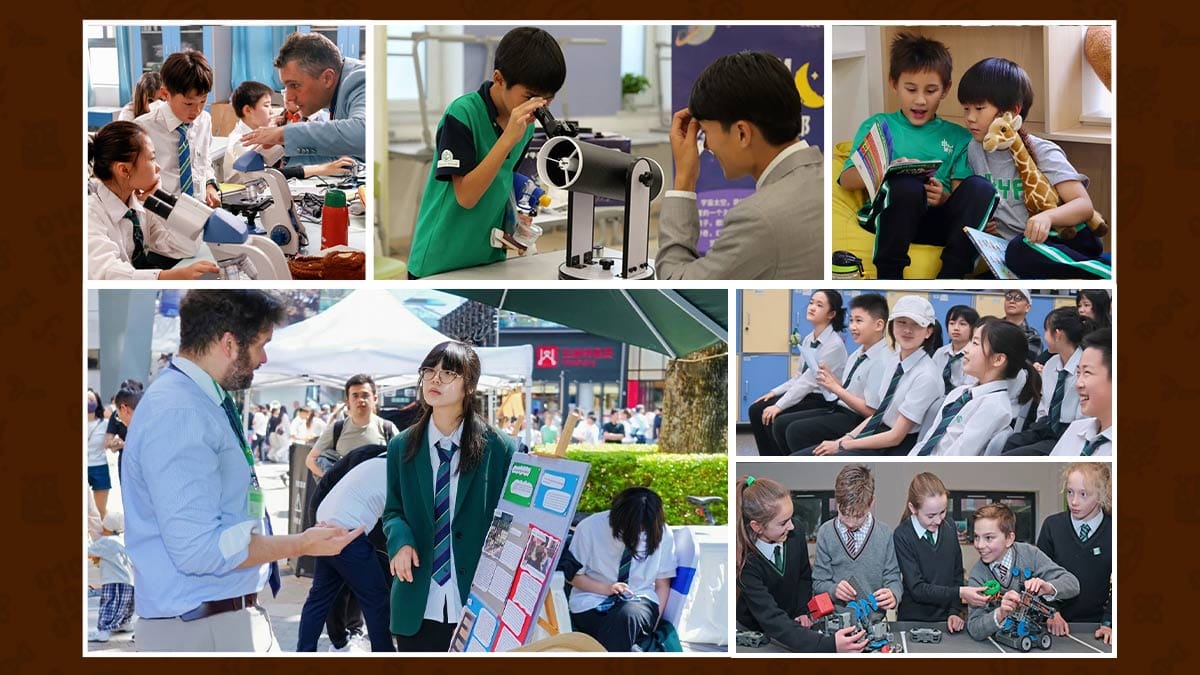
The real picture is simpler. BWYA is the founding school. It runs several sites inside Beijing’s Chaoyang District, including Wangjing, Lido, and Laiguangying. KWYA is the only BWYA-affiliated school outside Beijing, established through a government-supported cooperation agreement. No third city has a World Youth Academy.
KWYA came from a three-way agreement signed in 2016. The Kunming Education Bureau set the policy. Beijing World Youth Academy supplied the curriculum and brand. The Chenggong District Government provided the land and campus. A local partner, Kunming Foreign Languages School, helped run it. One person, Li Meng (李锰), links the two schools directly: he was a principal’s assistant at BWYA and now sits on the KWYA board. He helped negotiate the 2016 deal.
Independent, but branded as a branch — KWYA is a legally separate school with no shared ownership with BWYA. Yet it is marketed as the “only branch.” Both things are true. China limits simple cross-province school chains. A government-backed structure is a common, legal way to share a brand. For parents, the point is simple: KWYA’s quality rests on the strength of the deal, not on ownership.
Beijing World Youth Academy & Kunming World Youth Academy — Videos
Watch campus tours, IB curriculum overviews and a full BWYA vs KWYA comparison from both schools.
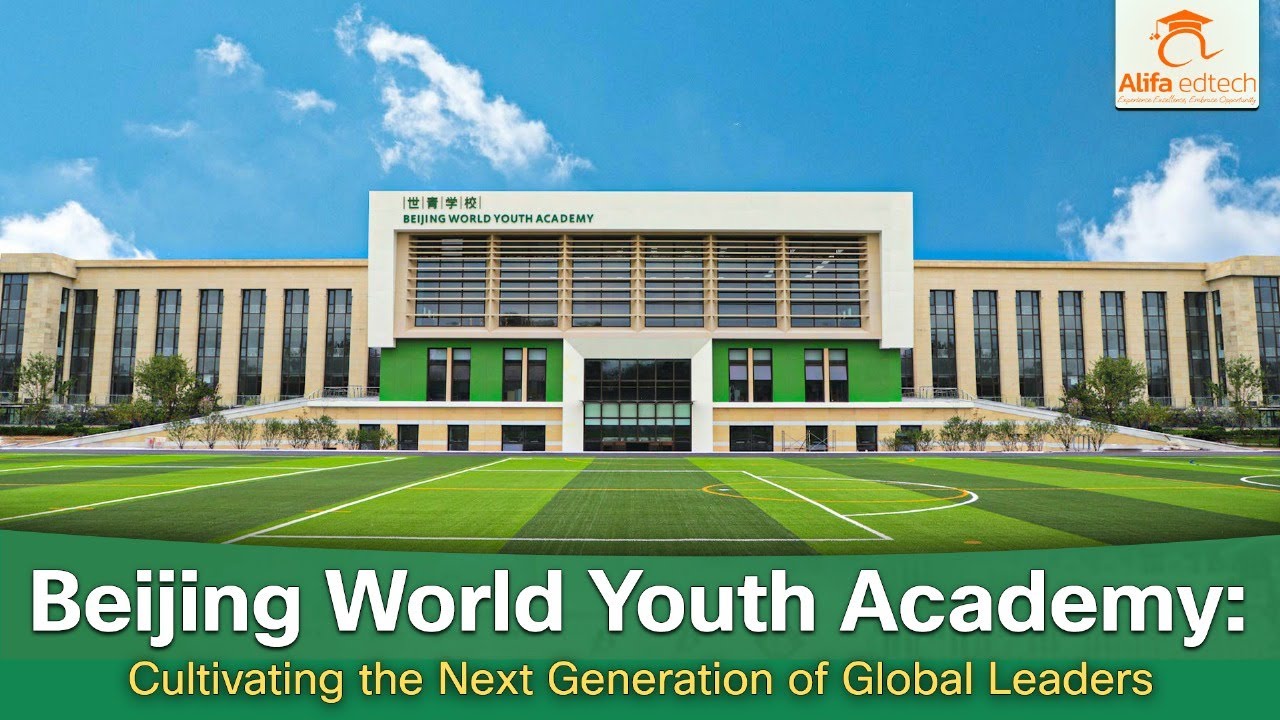
Beijing World Youth Academy (BWYA) · Apr 2025
Kunming World Youth Academy (KWYA) · Oct 2025
BWYA vs KWYA — Full Comparison · Oct 2025
School Type and Governance
Both schools are private and non-profit. That shapes how they spend money and how they are run.
BWYA stands out for one reason that is easy to verify. Its founder, Wang Hong (王虹), was the principal of Beijing No. 55 Middle School before she started the school in 2001. Many top schools here were started by property developers. A real educator-founder is rare. The line “founded by an educator, not a businessman” is not just marketing here. Public records confirm it. She remains the legal representative, and there has been no founder change since 2001.
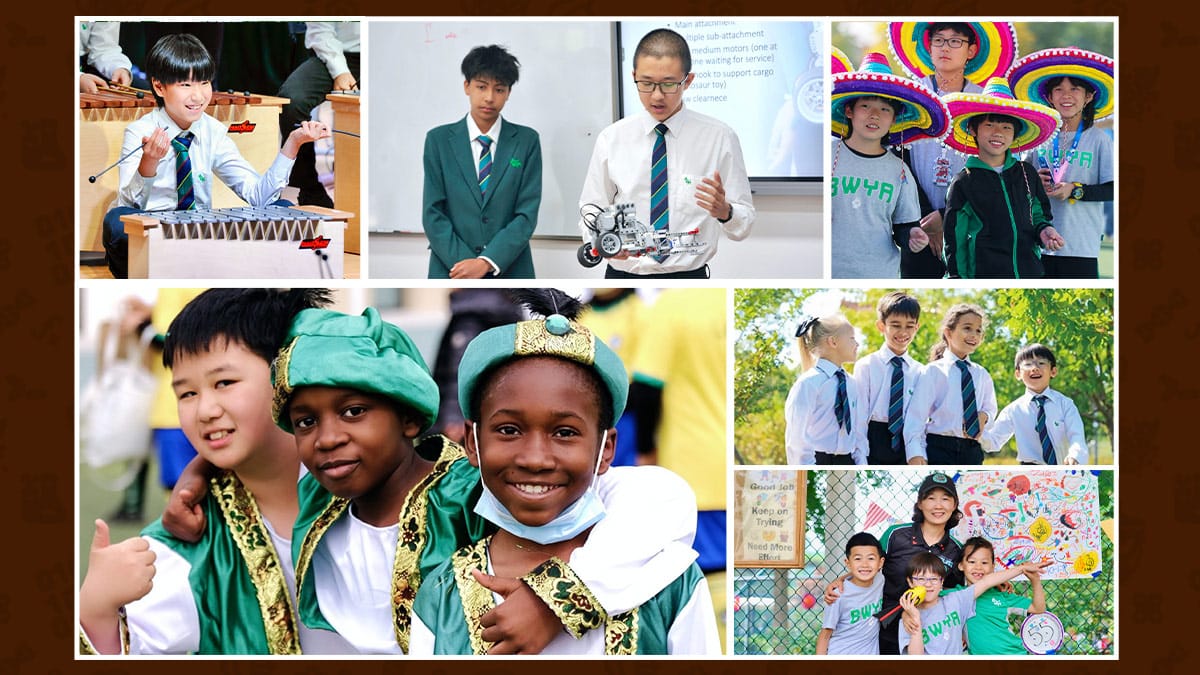
KWYA follows a different model. It is a “state-owned, privately run” (国有民办) school. The government provides the site, and Beijing World Youth Academy provides the education. This model gives KWYA strong local backing. Its first principal was Wu Xuejing (吴学静). John Stephens, an American, previously held a senior leadership role at KWYA from August 2019. The current IB directory lists Ms. Li Li as Head of School. Families should confirm the present leadership structure directly with the school. (A common online claim that a British staff member named “Andy” was the first principal is wrong; he was a curriculum coordinator.)
Curriculum and IB Authorization
This is where the two schools differ most and where marketing and fact sometimes part ways. We checked every claim against the official IB World School directory.
BWYA — Full IB Continuum
BWYA runs all three main IB programs. The IB approved its Diploma, its MYP in 2009, and its PYP in 2025 — one of Beijing’s oldest IB schools. The school also claims Cambridge IGCSE and WASC accreditation. These are the school’s own claims; we could not independently confirm them, and the WASC term ran to 2025 so may be up for renewal.
KWYA — National Curriculum + IB Diploma Exit
KWYA runs a dual diploma system — Chinese national curriculum through lower and middle grades, then the IB Diploma in the final two years. Students hold a Kunming school record (学籍), can sit China’s own exams as a fallback, and finish with an IB Diploma for overseas universities.
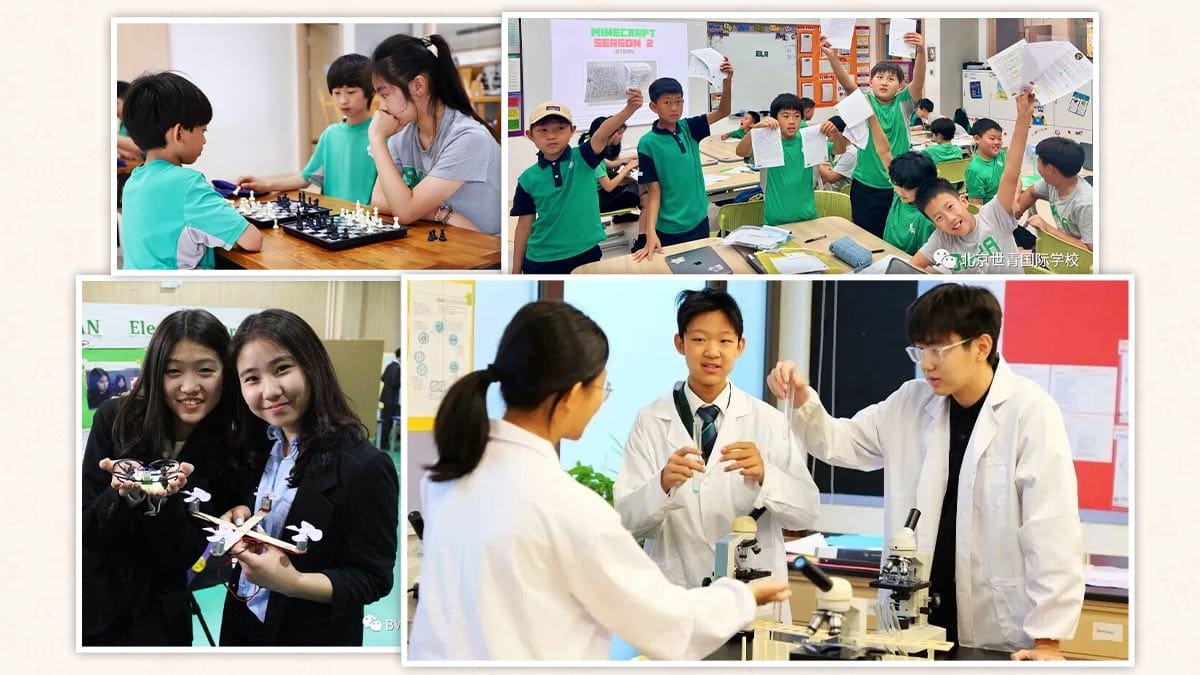
It is IB-authorized for the Diploma only (since 21 March 2019), with no PYP or MYP authorization. Chinese language support is available for international students who join the national curriculum track. This support helps students who need extra help with Mandarin instruction. Ask the school exactly how the switch from the national track to the diploma works.
A claim we corrected — KWYA is often called “the first IB World School on the Yunnan-Guizhou Plateau.” That is not accurate. A school in Guiyang was authorized about nine months earlier, in July 2018. KWYA may fairly be called one of the first IB Diploma schools on the plateau but not the first IB World School overall.
Fees and Scholarships
The price gap is the headline. For the same final diploma years, BWYA costs roughly two and a half to three times more than KWYA.
| Grade Band | BWYA (2025–26) | KWYA (2025–26) |
|---|---|---|
| Lower Primary | ¥260,000 (G1–2) | ¥80,000 (G5+; confirm G1–4 fee with school) |
| Upper Primary / Early Middle | ¥263,000 (G3–5) | ¥92,000 (G6–8) |
| Middle School | ¥265,000 (G6–8) | ¥92,000 (G6–8) |
| Pre-Diploma | ¥265,000 (G9–10) | ¥103,500 (G9–10) |
| Diploma (G11–12) | ¥280,000 | ¥115,000 |
| Boarding | Day school | ¥5,000 / year (5-day; home on weekends) |
BWYA also charges a registration fee of ¥2,000 and a new-student fee of ¥3,200. It offers a sibling discount: 15% off for a second child and 30% off for a third. BWYA lists scholarships too — an academic award, an art-and-sports award, and financial aid — though details are limited.
KWYA does not publish scholarship information, and its fees have held steady since 2022. Its boarding is 5-day — students board on weekdays and go home on weekends.
One caution: two websites listed slightly different BWYA fees days apart. Confirm the exact figures with the school before you enroll.
University Results and Outcomes
BWYA
BWYA has a strong record of helping students gain admission to leading universities around the world. Its graduates often receive offers from leading institutions in the U.S., U.K., and Canada.
2024 offer destinations include
KWYA
KWYA has strong IB Diploma results. Class sizes are small, which means students get more help and personal guidance for university applications.
Offer destinations include
Study Visas and Guardianship for Foreign Students
This is the question that matters most for a family sending a child to China on their own. The answer has two parts: how the system works, and what it means in practice at these two schools.
How the System Works Now
For a child studying in China for more than 180 days, the old JW202 form is no longer used at the school level. Instead, the school issues a Confirmation Form (《基础教育阶段教育机构接受外国来华学习人员确认表》). A provincial education department must approve it.
The family then applies for an X1 study visa abroad. Within 30 days of arrival, the child gets a study residence permit. Multiple Chinese embassy guides confirm this. One shortcut: a child already living in China on a family-reunion visa does not need to switch to an X1.
What This Means at BWYA and KWYA
At both schools, the study-visa pathway runs through the school’s confirmation form, and a local, city-resident guardian must be appointed. For BWYA, that means a guardian who ordinarily resides in Beijing (confirm whether a Chaoyang address is specifically required by the school or district office). For KWYA, a guardian who lives in Kunming.
The guardian is not just a name on a form. They handle the paperwork that turns a school place into a study visa, and they are the person the school and the police deal with while the child is enrolled. Requirements can change, so confirm the current document list with each school’s admissions office.
The Guardian Rule You Cannot Skip
This is set by national policy, not by the school. Any international student whose parents do not ordinarily reside in the city must have a guardian who does ordinarily live there. The parents appoint that guardian in a notarized letter. In Beijing, the guardian must also file a notarized declaration inside Beijing. In Kunming, the appointment must be notarized and, if signed abroad, authenticated by a Chinese embassy. Without a qualifying local guardian, the visa application process cannot be completed — which is why this step, not the school place, is often the real bottleneck.
Where Alifa fits — This is exactly the gap we close. Alifa provides the local guardian your child’s study visa depends on — a Chaoyang-resident guardian for Beijing schools and a Kunming-resident guardian for Yunnan schools — and prepares the notarized guardianship documents each city requires. That guardian processes the Confirmation Form and study-visa paperwork on the family’s behalf. Our full landing service then covers arrival, residence permit filing, and day-to-day care. School placement itself is free to families.
Need a Local Guardian in Beijing or Kunming?
Alifa arranges city-resident guardians and handles all notarized documentation for your child’s study visa.
BWYA or KWYA: How to Choose
There is no single winner. The right choice depends on your city, your budget, and your goal.
Choose BWYA if…
Choose KWYA if…
Sources and How We Verified This
We built this guide from primary and official sources, not from a single marketing page. IB programs and dates come from the official International Baccalaureate Organization (IBO) directory.
Chinese government policy sets visa and guardianship rules. These include national rules for schools admitting international students (MOE Order No. 42, 2017), Beijing’s 2022 measures, Kunming’s 2022 rules, and several Chinese embassy visa guides.
Corporate status was checked through China’s official public registry, not third-party lookup sites. Where a fact rested only on a school’s own claim, or on a user-editable page, we said so. Where we could not verify a claim, we left it out.
Fees, authorizations, and visa filings change. This guide reflects the best public information as of mid-2026. For enrolment decisions, confirm current fees, IB status, and visa capability directly with each school.
Frequently Asked Questions
What is Beijing World Youth Academy (BWYA)?
Beijing World Youth Academy (北京市朝阳区世青学校, BWYA) is a private international K–12 school in Chaoyang District, Beijing, founded in 2001 by Wang Hong (王虹), a former principal of Beijing No. 55 Middle School. BWYA is the founding school in the World Youth Academy family and runs the full IB continuum — Primary Years Programme, Middle Years Programme and Diploma Programme — alongside Cambridge IGCSE. Its motto is "Locally Grounded, Globally Aware." BWYA is a day school with no boarding. Tuition runs approximately ¥260,000–¥280,000 per year for 2025–2026.
What IB programmes does Beijing World Youth Academy offer?
Beijing World Youth Academy offers the complete IB continuum: IB Primary Years Programme (PYP) from Kindergarten through Grade 5, IB Middle Years Programme (MYP) from Grades 6 through 10, and the IB Diploma Programme (DP) in Grades 11 and 12. Cambridge IGCSE is also offered alongside the MYP. This makes BWYA one of Beijing's few schools where a student can enter in Kindergarten and exit with an IB Diploma 12 years later without changing school or curriculum framework. BWYA's record IB score was 36/45 (2020).
What are the fees at Beijing World Youth Academy?
Beijing World Youth Academy tuition for 2025–2026 runs approximately ¥260,000–¥280,000 per year depending on grade level. This places it in the upper tier of Beijing international school fees. BWYA is a day school — there is no boarding option, so there are no dormitory fees. Families who need boarding accommodation in Beijing will need to arrange housing independently. For the full fee breakdown, contact BWYA directly through ibwya.net/admissions.
Does Beijing World Youth Academy have boarding?
No. Beijing World Youth Academy is a day school — there is no boarding or dormitory accommodation. All students commute daily. Families relocating to Beijing for BWYA should plan accommodation in or near Chaoyang District. If boarding is a requirement, Kunming World Youth Academy (KWYA) offers 5-day boarding at approximately ¥5,000 per year — though the school and city are different.
What is Kunming World Youth Academy (KWYA)?
Kunming World Youth Academy (昆明世青学校, KWYA) is an international school in Chenggong District, Kunming, Yunnan Province. It was established in May 2016 and opened in September 2016 through a three-way agreement between the Kunming Municipal Education and Sports Bureau, Beijing World Youth Academy, and the Chenggong District People's Government. KWYA became an IB World School in 2019 — Yunnan Province's first IB-authorised school. It is legally separate from BWYA and operates under a government-partnered structure (国有民办). Tuition is approximately ¥80,000–¥115,000 per year, boarding available.
What IB programmes does Kunming World Youth Academy offer?
Kunming World Youth Academy offers the IB Diploma Programme only — in Grades 11 and 12. It does not offer IB PYP or IB MYP. Students from Grade 1 through approximately Grade 10 follow the Chinese national curriculum with international elements. The IB Diploma is introduced in the final two years as the internationally recognised university exit qualification. KWYA is one of the most affordable IB Diploma schools in China at ¥80,000–¥115,000 per year total tuition. Its latest published IB score is 33/45.
How does the Kunming World Youth Academy admissions process work?
Kunming World Youth Academy has two admissions pathways. Local Chinese students transitioning from Grade 6 to Grade 7 register through the Kunming Municipal Compulsory Education Admissions System at kmyzw.cn. Parents log in during the Education Bureau's announced timeframe, select KWYA, print the Student Information Confirmation Form (《学生信息确认单》), and submit it to Teacher Liu (刘老师) at the KWYA Admissions Office. Foreign national students apply under the "Kunming City Kindergarten and Primary/Secondary School Admissions and International Student Training Implementation Rules." Prospective families can also book a full-day trial visit — students spend a complete day in the relevant grade class. Contact +86 871 6745 1511 to arrange.
✓ Verified from official WeChat accountDoes Kunming World Youth Academy have boarding?
Yes. Kunming World Youth Academy offers 5-day boarding — students stay at school Monday to Friday and return home on weekends. The dormitory fee is approximately ¥5,000 per year, making it one of the most affordable boarding options at any IB-authorised school in China. KWYA's boarding makes it accessible to families from across Yunnan Province and southwest China who cannot commute daily. Contact KWYA at +86 871 6745 1511 to confirm current boarding availability and room types.
Is Kunming World Youth Academy related to Beijing World Youth Academy?
They share a name and academic lineage but they are legally separate institutions. Kunming World Youth Academy was created through a three-way government agreement that includes Beijing World Youth Academy as one of the three parties — alongside the Kunming Education Bureau and the Chenggong District Government. BWYA contributes the curriculum model and the World Youth Academy name. KWYA operates independently under a government-partnered structure. They are not a chain, they do not share finances, and admission to one does not affect admission to the other.
Which is better — Beijing World Youth Academy or Kunming World Youth Academy?
Neither is objectively better — they serve different needs. Choose Beijing World Youth Academy if: your family is based in Beijing, you want the full IB continuum from Kindergarten through Grade 12, and your budget allows ¥260,000–¥280,000 per year. Choose Kunming World Youth Academy if: your family is in Yunnan or southwest China, you want an IB Diploma exit qualification at a significantly lower cost (¥80,000–¥115,000/year), and boarding availability matters. Both schools produce graduates who enter overseas universities with IB Diplomas. The choice is primarily about location, budget and whether you need the full IB continuum or the IB Diploma alone.
Alifa Education Services
Placing a child in a Chinese school from abroad?
Alifa Education Services helps international families choose the right school, handle the study-visa paperwork, and settle in. School placement is free. We provide the city-resident guardian your child’s study visa depends on. The guardian lives in Chaoyang, Beijing, and in Kunming, Yunnan. We prepare the notarized guardianship documents. We also handle arrival and residence-permit filing.
📅 Book A Consultation Today →Disclosure: Alifa Education Services is an independent education placement consultancy. We may earn a referral fee from partner schools when families enroll, at no extra cost to the family. Our recommendations are based on fit, not fee structure.


Member comments