

Introduction
Choosing a high school in Shanghai is hard. Parents want strong academics. They want cultural support. They want smooth transitions for their children. No. 2 High School of East China Normal University is a top option. People call it HSEFZ.
HSEFZ came into existence in 1958. The school has a solid international reputation. It has been built over six decades. In 1999, it created the International Division. HSEFZ was one of Shanghai's first public schools to admit foreign students. Today, students from over 20 countries study here.
The school is in Zhangjiang Hi-Tech Park. This area is in Pudong New District. The location gives easy metro access. It puts students near Shanghai's tech hub. But does HSEFZ deliver on its promises? This article looks at the school's programmes. It covers costs. It explains support systems.
Many global families struggle to find the right school. They need places that balance tough academics with Chinese language help.
ALIFA Education Services helps families through Shanghai's education options. We match students with schools that fit their needs. We handle the complex admissions process.
Ready to explore if HSEFZ is right for your family? Book a free consultation with ALIFA Education Services to discuss your options.
No. 2 High School of East China Normal University School Overview and History
Academic Standing and Recognition
HSEFZ ranks among Shanghai's key high schools. The Ministry of Education recognizes it. They refer to it as a school of national importance. HSEFZ has strong ties to East China Normal University. This gives students access to research. It gives access to resources.
The International Division earned a special title. It is a national "Chinese International Promotion Base." This honour shows the school's expertise. Few schools in China hold this status.
HSEFZ also belongs to UNESCO's education network. This membership gives the high school access to global educational resources and partnerships.
Location and Facilities
The campus is in Zhangjiang Hi-Tech Park. The area covers 150 acres. It has modern facilities. The buildings use steel structures. They have copper sunshades. They have wooden acoustic boards. These features create comfortable learning spaces.
The location offers practical benefits. Zhangjiang Hi-Tech Park Station is 500 metres away. It is on Metro Line 2. Students can reach Lujiazui in 30 minutes. This is Shanghai's central business district. The Huangpu River area is also close. The Shanghai New Bund is nearby.
The campus design uses space well. It keeps green spaces. It fits many buildings. This supports both study and fun.
Global Student Community
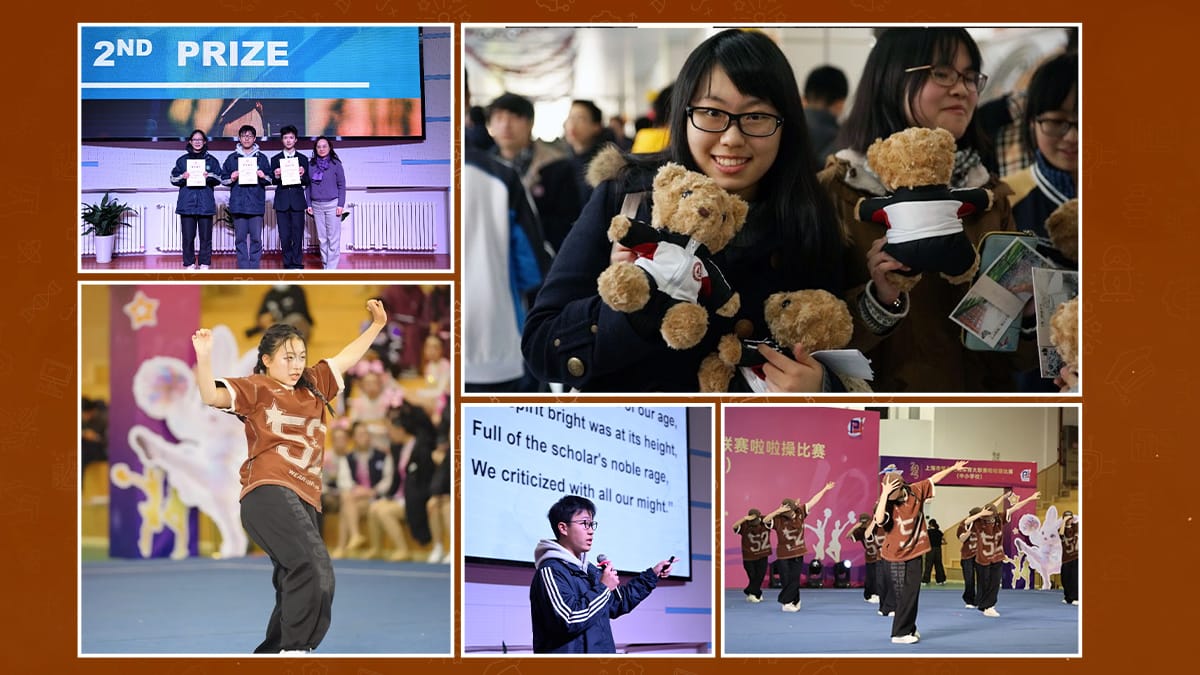
The school's global student body has grown. In 2019, about 80 foreign students attended. By 2024, that number had reached 260.
These students come from many countries. They come from the United States. They come from Japan. They come from Singapore. They come from Malaysia. They come from the Netherlands. They come from Australia. They come from New Zealand. They come from Canada. They come from Indonesia. They come from Sweden. They come from Italy. They come from the Philippines. They come from South Korea. They come from Hong Kong. They come from Macao. They come from Taiwan.
To learn more about the services offered by Alifa Education, please visit our dedicated page. Whether you are a guardian, affiliated with an international or bilingual school in China, or a study abroad education agency, Alifa Edtech offers services tailored to your unique needs. Please visit our page to learn more about our offerings.
East Asian students make up 45%. Europeans and Americans account for 30%. Southeast Asian students make up 25%. This diversity creates rich opportunities for cultural exchange.
The school runs student clubs. These bring Chinese and global students together. They include the Model United Nations (MUN). They include Drama Club. There is an Artificial Intelligence Programming Club. There are sports teams. These activities help build the student community.
Chinese Academic Studies and Language Programmes
Program Structure
HSEFZ combines the Chinese National Programme with school-based courses for foreign students. This approach allows for special study.
The Comprehensive Teaching Department oversees core subjects. These include Chinese. These include Mathematics. These include English. These include Physics. These include Chemistry. These include Biology. These include History. These include Geography.
The school also offers Advanced Placement (AP) courses. These are college-level classes. Students can earn university credit. They do this while in high school. The programme balances depth in traditional subjects. It balances modern skills.
Classes stay small. This allows teachers to give personal attention. Full-time teachers develop strategies. These build classroom communities. Class tutors track student progress. They provide academic support when needed.
Chinese Language Teaching
The Chinese language programme has six levels. These align with HSK standards. HSK is the official Chinese test. Complete beginners start with basic conversation. Advanced students work on academic writing. They work on research presentations.
HSEFZ runs one of China's first HSK testing centres. This is in a secondary school. The Office of Chinese Language Council certified this facility. Students can take official Chinese tests on campus. This reduces stress. It cuts travel time.
The programme uses varied teaching methods. Core classes focus on listening. They focus on speaking. They focus on reading. They focus on writing.
Cultural extension classes explore idioms. They explore traditional festivals. They also cover Chinese history. Academic Chinese classes prepare students for university work.
Help us match families with top schools in China. Take our 1-minute survey to share what matters most.
Project-based learning makes lessons practical. Students might research Shanghai's cultural heritage. They might interview local business owners. These projects need Chinese presentations. This builds real-world skills.
Teachers use "New Practical Chinese Reader" textbooks. They also use authentic materials. These include news broadcasts. These include podcasts. These include films. This exposes students to different accents. It exposes them to different speaking styles.
Support Systems for Learning
The school assigns bilingual mentors to global students. Each group of ten students works with one mentor. These mentors help with academic questions. They help with social challenges. They assist with daily life issues.
Monthly "Chinese Culture Workshops" offer hands-on learning. Students practise calligraphy. They paint Peking opera masks. They cook traditional seasonal dishes.
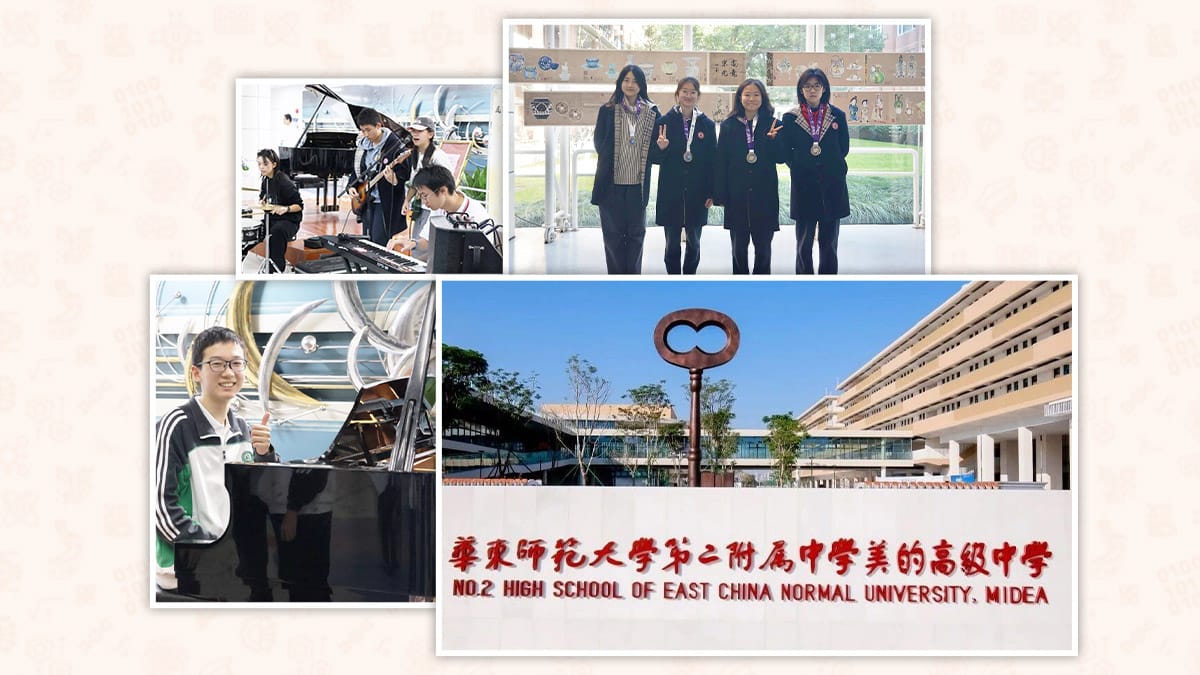
Quarterly "City Exploration Days" visit sites. These include Yu Garden. These include the Shanghai Museum.
The "Peer Pairing Program" connects Chinese and global students. They work together on group research projects. Topics might compare old Shanghai lane culture with modern community life. These partnerships build friendships across cultures.
Mental health counselors support students. They help students adjust to life in China. The school knows that cross-cultural transitions can be stressful. Professional guidance helps students manage these challenges.
Support for Global Families
Admissions Process
The school accepts foreign nationals. It also accepts residents of Hong Kong. It accepts residents of Macao. It accepts residents of Taiwan. Applicants need a valid passport. They need a house permit.
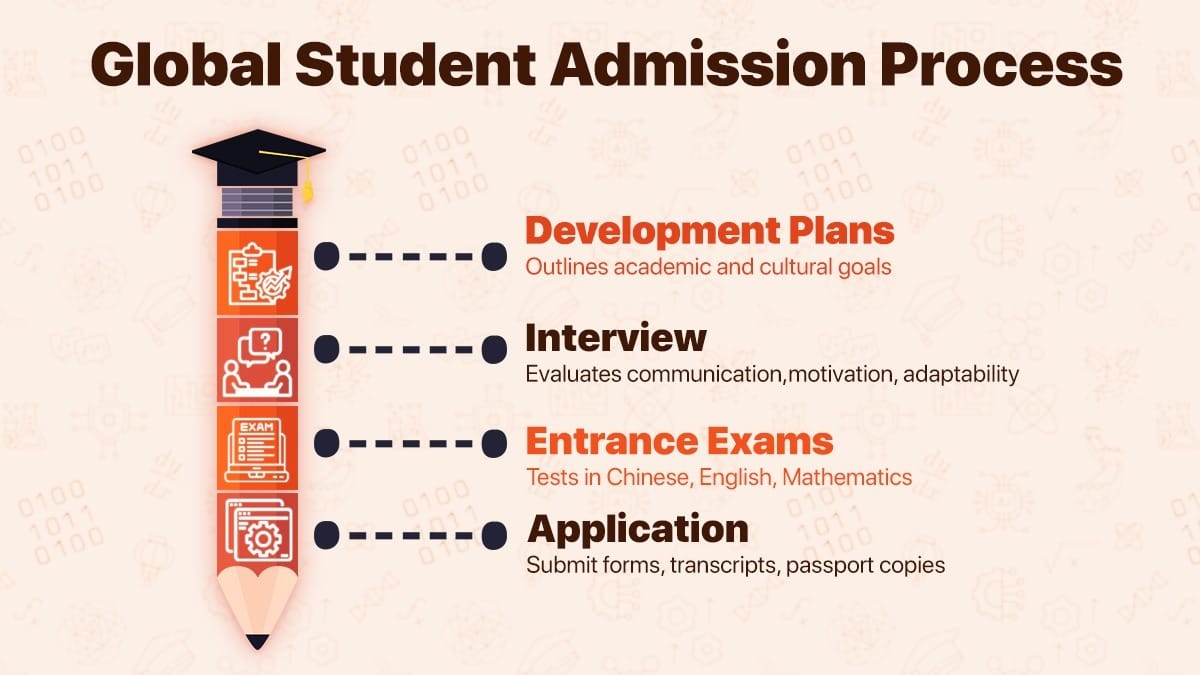
The admissions process has several steps.
First, families submit application materials. These include completed forms. These include academic transcripts. These include passport copies. These include photos. These include recommendation letters. The admissions committee reviews these materials.
Students join an online interview. HSEFZ sends the meeting link via email after accepting application materials. The interview happens online through Tencent Meeting or VooV Meeting. It lasts 15-20 minutes. The interview is conducted in English and Chinese. Students should prepare blank paper and a pen during the interview. If students need language support, HSEFZ can assign a teacher to help. For example, Japanese-speaking students can get Japanese language support. The interview evaluates communication skills. It looks at the motivation for attending HSEFZ. It assesses cultural adaptability. This high school takes a holistic approach. It looks beyond test scores.
Teachers create personal "Development Plans" after placement. These plans outline specific goals for each student. They cover academic goals. They cover cultural goals.
Costs and Financial Planning
For the 2025-2026 academic year, tuition costs RMB 38,000 per semester. Annual tuition totals RMB 76,000. This rate applies to grades 9–12.
Housing and transport fees add RMB 5,000 per semester. This covers four-person rooms. The rooms have private bathrooms. They have air conditioning. The school includes the bus service.
Meals cost extra. The cafeteria offers affordable options. The food is healthy. Textbook and material costs vary by course load. The school provides a required materials list. This comes at the start of each semester.
Students with zero Chinese knowledge may need intensive language courses. These add RMB 10,000 per year. A one-time visa service fee of RMB 3,000 applies. Medical insurance costs RMB 800 per year.
The "HSEFZ Excellence Scholarship" covers 50% to 100% of tuition. The school awards this based on academic potential. It considers cultural engagement. It considers financial need. About 10% of global students receive this scholarship each year.
Want to put your brand in front of families, students, and education-focused readers? We're inviting select partners to advertise with us on our trusted blog.
Want to get featured? submit a story for us to include.
Visa and guardianship requirements
Global students need an X1 visa for stays of over six months. They need an X2 visa for shorter exchanges.
After admission, HSEFZ issues the JW202 form. This is the Application Form for Foreign Students to Study in China. Students use this with their admission notice. They use it with their passport. They apply for X1 visas at Chinese embassies.
Students must get a permanent residency within 30 days of arrival in China. This is after arriving in Shanghai.
The school's global office provides visa advisors. They guide families and students through each step.
Chinese law requires students under 18 to have a legal guardian in China. This applies to students at this high school. This can be parents. It can be immediate relatives with notarized kinship certificates. Approved partner groups can also serve as guardians for HSEFZ students. Long-term Shanghai residents can be guardians. They need notarised agreements.
ALIFA Education Services can support guardianship attestation and services in Shanghai. We help families navigate the legal requirements. Contact us for guardianship assistance.
Guardians make important decisions. These include education decisions. They include healthcare decisions. They include legal matters. They sign school documents. They help with document renewals.
The school holds online meetings with natural parents twice a semester. These meetings report on students' progress.
Conclusion
No. 2 High School of East China Normal University offers strong academics. It provides complete Chinese language support and prepares students for the China Academic Proficiency Test (APT), a key requirement for earning a Shanghai high school diploma.. It has a diverse global community.
The school's location in Zhangjiang Hi-Tech Park provides modern facilities. It offers excellent transport links. Costs remain competitive. We compare this to other global schools in Shanghai.
The school excels in several areas. Its title as a national Chinese language promotion base stands out. The on-campus HSK testing centre gives language learners clear advantages. The integrated programme combines Chinese national standards with CSCA Courses and preparation to apply to top top Chinese universities. Small classes help students adjust. Personal support helps students adjust to Chinese education.
Some students may find the Chinese National Programme (APT) challenging at first. The school addresses this through language preparation programmes. Bilingual mentors also help. Families should consider if their children are ready. This is an immersive academic environment.
HSEFZ suits students who want serious Chinese language skills. It suits those who want strong academics. Families seeking deep cultural integration will find the school's approach valuable. The growing global community means students will not feel isolated. They receive support as they adjust.
Finding the right school in Shanghai takes time. It takes expertise. ALIFA Education Services knows the landscape well. We help families understand each school's strengths. We complete applications with accuracy. We prepare students for entrance exams. Our consultants have guided hundreds of families through this process.
Related Articles
 Emmanuel Usang
 Emmanuel Usang
 Emmanuel Usang
 Emmanuel Usang


Member comments