

Introduction
Choosing the right K–12 education in China is very important for expat families. Bilingual schools are a top choice. They offer a special balance. Local Chinese schools or fully international schools cannot offer this same mix.
These bilingual schools teach main subjects in both Chinese and English. They mix the Chinese National Curriculum (CNC) with global study plans. This creates a smooth, combined learning plan. Learning in Chinese builds strong STEM skills. The English part helps with fluency and thinking. It also builds skills for working across cultures. This combined learning helps students compete for Chinese universities. It also helps them get into international schools.
For expat children, especially from Belt and Road Initiative (BRI) countries, these bilingual education schools are a helpful bridge. They use Western teaching styles. They also offer real Chinese culture learning. This gets students ready for a future that involves travel and global connections.
This Bilingual Private Schools in China Guide is made to help expat parents choose a school well. It helps them feel sure about their choice.
Planning your child’s K–12 education in China?
Alifa Education has guided hundreds of international families to the right bilingual private school in China. We handle the full admissions cycle—school matching, documentation, tuition negotiation, scholarship identification, and visa coordination—so you can stay focused on your family’s transition.
Application deadlines are approaching. Contact Alifa Education Services to get started.
What Is a Bilingual School in China?
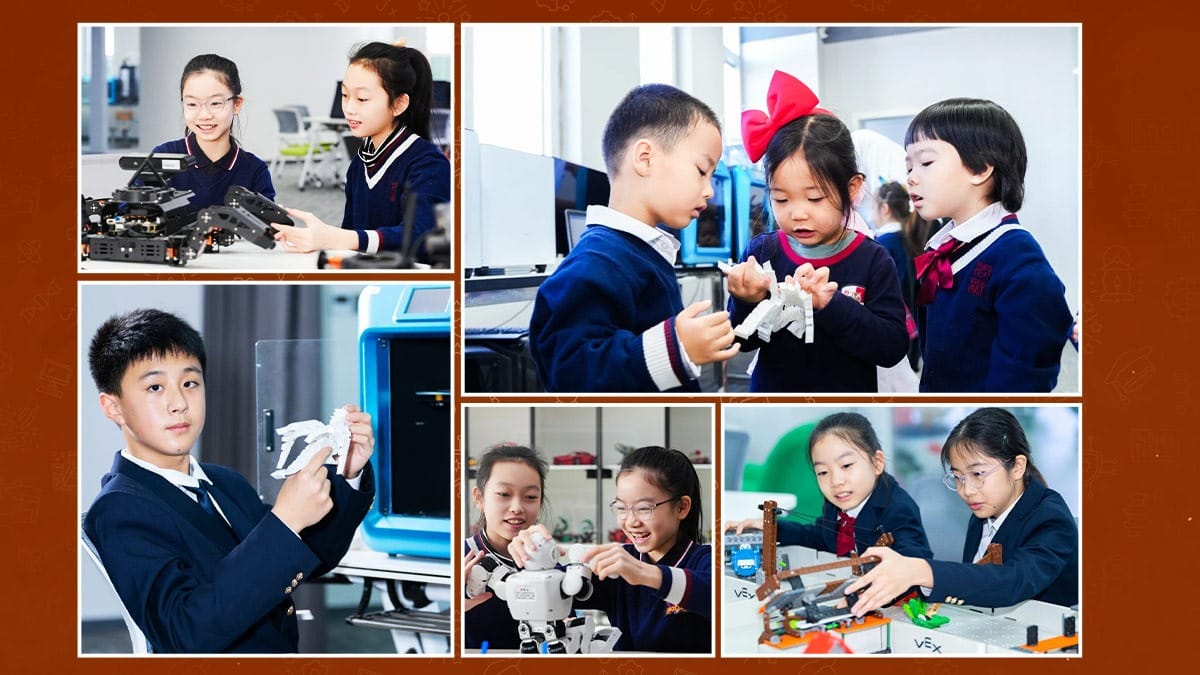
A bilingual school in China is a K–12 school. It teaches many subjects in two languages, usually Chinese and English.
These schools follow the Chinese National Curriculum (CNC). They also follow China’s rules for 9-year education. Most students are Chinese. But foreign students can also attend.
These schools mix the Chinese National Curriculum with international curricula. This might include programs like IB or American or British study plans.
Subjects like science or humanities are taught in both languages. Often, a Chinese teacher and a foreign teacher teach together. This dual approach is key to bilingual education.
Help us match families with top schools in China. Take our 1-minute survey to share what matters most.
Many bilingual schools help expat families. They help kids prepare for Chinese or foreign universities. They teach global skills and thinking. They prepare students for schools abroad. These schools often have many Chinese teachers. These teachers have degrees from Top USA Tech colleges. Foreign teachers usually teach English. This mix helps children learn well.
Bilingual schools offer a special Bilingual Curriculum. This helps students know Chinese culture. This is part of international education. It leads to academic excellence. It is an integrated curriculum. This applies from Primary School onwards.
Who Are Bilingual Schools Best For?
A bilingual private school in China is great for international students. They want the best of both worlds. Expat kids can learn Chinese well. They can also follow international study plans.
Ideal Student Profiles
Families who commit to the bilingual way for 3-4 years see the best results. Yearly fees are about $20,000 to $30,000 (140,000 RMB to 240,000 RMB). This is much cheaper than international schools. You still get good international results like IBDP, A-Level, and AP.
Students from BRI countries like Kazakhstan and Thailand benefit greatly. Many families want the strong learning from the CNC. They also want Western thinking and English skills.
Bilingual schools in Beijing and Shanghai offer this well. Students who want to work in STEM do well with Chinese math and science lessons. These can be better than in many international schools. Those aiming for schools overseas can add IBDP, A-Level, or AP classes. Top schools mix these well.
To learn more about the services offered by Alifa Education, please visit our dedicated page. Whether you are a guardian, affiliated with an international or bilingual school in China, or a study abroad education agency, Alifa Edtech offers services tailored to your unique needs. Please visit our page to learn more about our offerings.
Best for Specific Family Types
Bilingual private schools are also good for mixed families. This includes homes with one or two Chinese parents. They want kids to know Chinese language and culture. They also want kids to have a global classroom experience.
Long-term residents like schools that follow rules. They like limits on homework and screen time. These schools follow rules well.
Yearly fees of 140,000 RMB to 240,000 RMB are much lower than international schools. These cost 200,000 RMB to 400,000 RMB or more. This makes good bilingual learning easier for more families. It does not lower how well students do.
What Curriculum Do These Schools Follow?
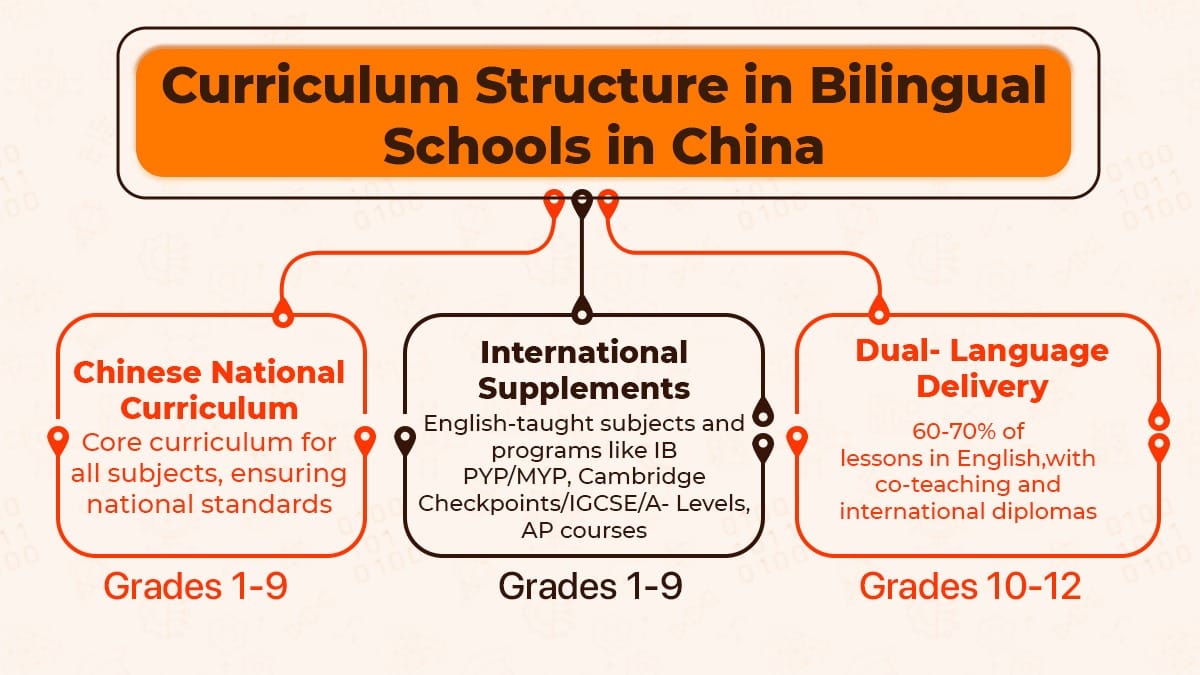
Bilingual private schools build their lessons in steps. The Chinese National Curriculum (CNC) is the main part. It is required for grades 1–9. This ensures schools follow rules and national standards. Global study plans are added in English. The amount of each language changes as students get older.
Core Curriculum Structure
- Chinese National Curriculum (CNC): This is required for all subjects in primary and middle school (ages 6–15). It covers Chinese language, math, science, history, and moral studies. The CNC is the learning base. It helps students prepare for tests like Zhongkao. It also makes sure schools meet national rules. Good bilingual private schools always follow the CNC.
- International Co-Curriculum Supplements: Top schools add programs like the International Baccalaureate (IB). This includes PYP, MYP, or Diploma Programme. They also use Cambridge Checkpoint/IGCSE/A-Level, or AP courses. These global studies are taught in English. They become more common in high school. They give the papers needed for college applications abroad.
- Dual-Language Delivery: Main CNC subjects are taught in Chinese. Science, humanities, and arts lessons switch between Chinese and English. Often, a Chinese teacher and a foreign teacher work together. This is common in good schools. In high school, English lessons are usually 60–70% of the time. This helps students become truly fluent in both languages.
What Should Expat Parents Ask Before Choosing a Co-Curriculum Education in China?
To choose a co-curriculum education in China, parents need to ask specific questions. These questions help find the best school for what your family expects.
Curriculum Compliance and Blend
Ask how schools mix the Chinese National Curriculum (CNC) with global study plans. Ask how the languages change as students get older. Good schools will explain this clearly. They often teach 70% Chinese in Primary School (Grade 1- 6).
By high school, it might be 70–80% in English. This helps students get ready for International Exam Boards and colleges/universities overseas. If international students need help with Mandarin, ask about the New HSK 3.0 classes. Some schools have beginner Chinese for new students. This is important to know.
Language Instruction Model
Bilingual education means more than just English classes. Ask how schools use both languages in all subjects. Find out which subjects are in Chinese and which are in English. Ask how teachers work together.
Also, ask how they track language progress. Young students might have 60% Chinese classes. Older students might have 60% English classes. Ask for proof that students become truly bilingual.
Admissions and Student Fit
Most bilingual private schools can accept international students. They can help with visas. The steps to join usually include checking age and school skills.
Top schools have few spots for international students. Ask how many students they accept each year. Also, ask about help for students who don't know much Chinese or come from different school systems. Good schools have ways to help new students join smoothly.
Faculty Qualifications and Co-Teaching Model
Good bilingual schools hire Chinese teachers from top STEM programs. These teachers can teach in Chinese and English. Foreign teachers bring English skills and experience from international schools.
Look at how well these teachers work together. Co-teaching works best when it's planned. Teachers should get ongoing training for this. Schools that train teachers for bilingual methods usually do better.
Fees, Financial Structure, and Value
Yearly tuition fees at bilingual private schools in China are about 140,000 RMB to 240,000 RMB. This fee usually covers just teaching, meals, buses, boarding, tests, and fun activities.
Also, ask about help with fees. Some schools offer discounts for students from BRI countries or for good grades. Look at where students go after school. Schools with high university placement rates offer better value.
Campus Facilities and Environment
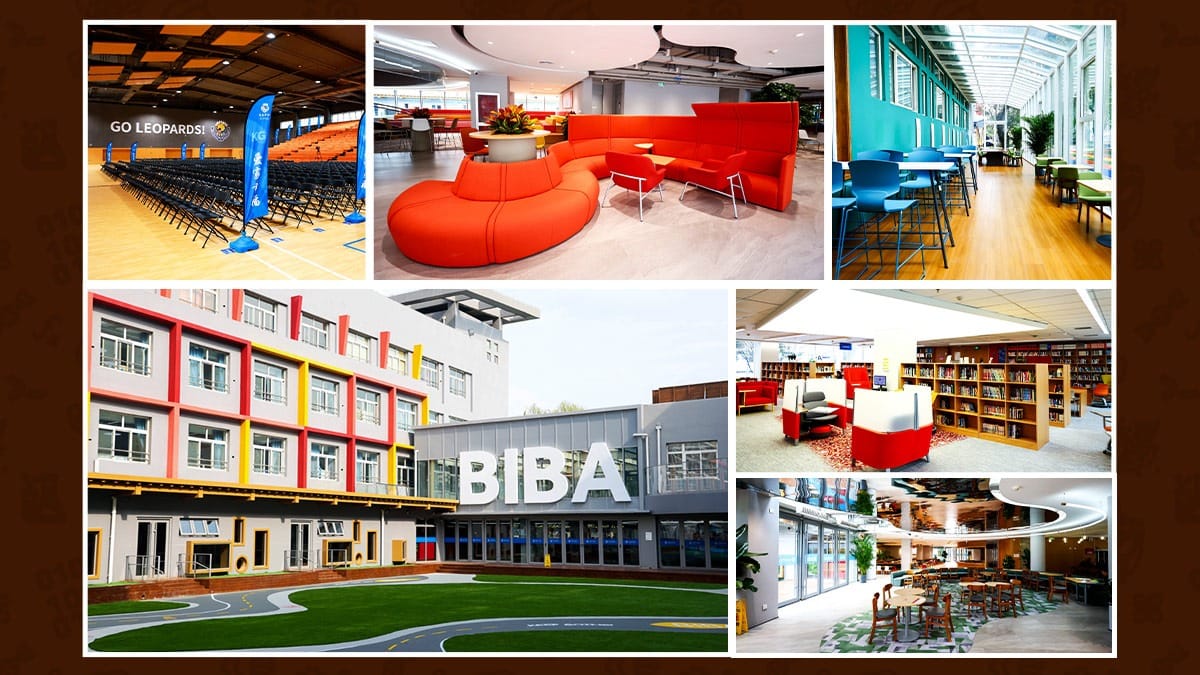
Check the school's buildings. Look at smart classrooms with good tech. See the science labs, libraries, and sports fields. Make sure the school is safe. It should have security and a nurse or clinic. Class sizes matter.
Smaller classes help teachers give more attention. Visiting the school helps you see how it works each day. You can see how students and teachers interact. This gives a better idea than just reading about it.
Is a Bilingual School the Right Choice for Expat Kids in China?
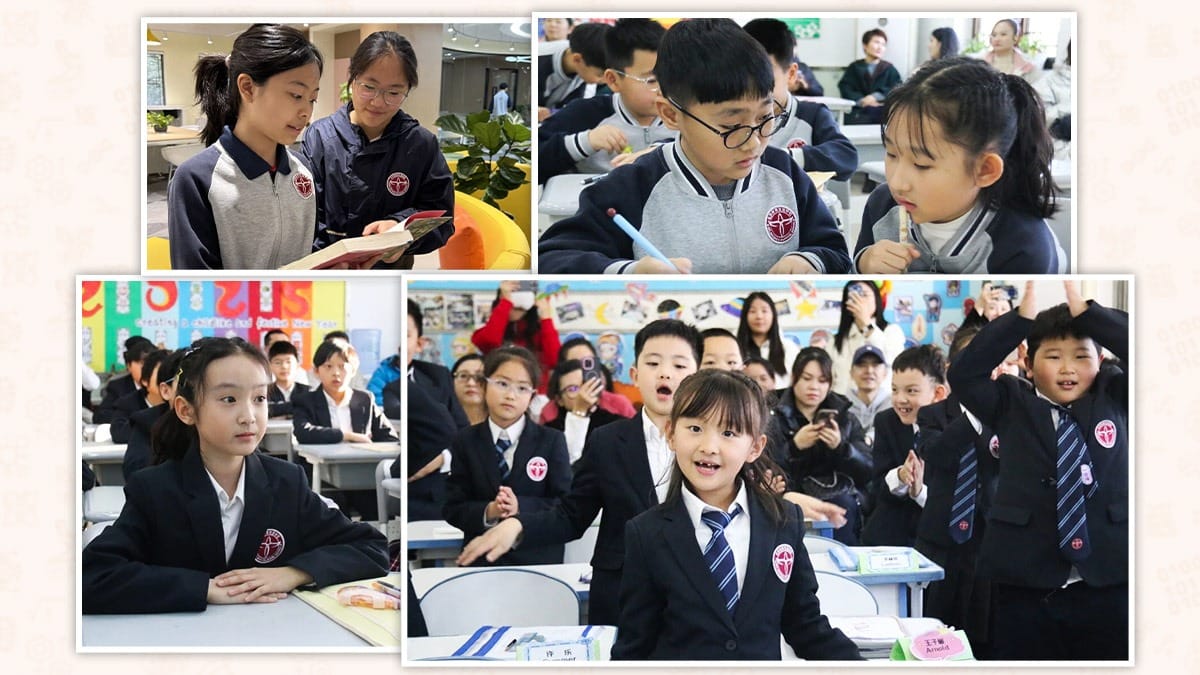
Bilingual private schools in China are a smart choice for most expat families staying long-term. They offer real bilingual skills and global recognition. They cost much less than pure international schools.
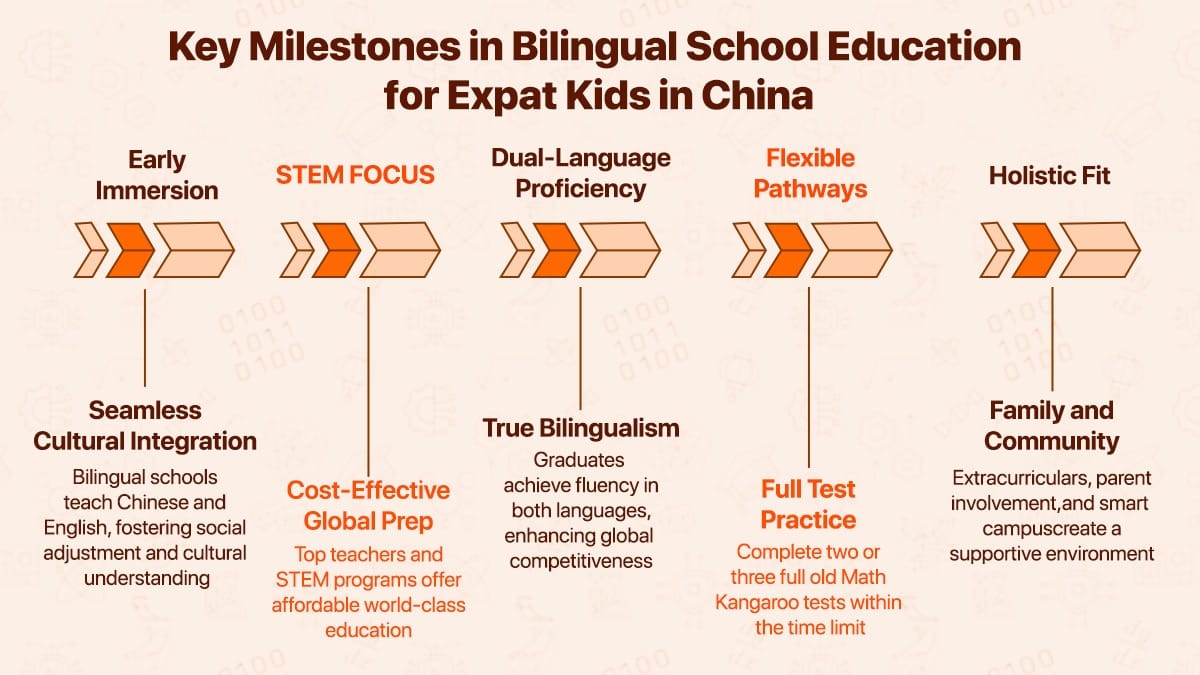
Seamless Cultural Integration
These schools mix Chinese culture into learning, not just as an extra. Students learn with Chinese classmates. They mix in a real way. This helps them adapt socially and feel confident with languages.
For families living in China for three years or more, this mix is very helpful. It's more than just learning about culture.
Cost-Effective Global Preparation
Yearly all-in-cost fees are about 140,000 RMB to 240,000 RMB. This is much less than international schools. You get good teachers and known global results like IGCSE, A-Level, IBDP, or AP.
For families wanting strong STEM skills and good college chances abroad, this is a great deal. The cost is much lower than the quality you get.
True Bilingual Proficiency
Learning in two languages from a young age makes a big difference. It's more than just separate English lessons.
Students from these schools get good TOEFL and IELTS scores. They also speak Mandarin well. This helps them in jobs in China or worldwide. This skill makes them stand out.
Want to put your brand in front of families, students, and education-focused readers? We're inviting select partners to advertise with us on our trusted blog.
Want to get featured? submit a story for us to include.
Flexible University Pathways
Good bilingual schools prepare students for many futures. Top Chinese University Pathways like the C9-leagues or the traditional Big-4 University destination countries like USA, UK, Australia, Canada. Bilingual private schools in China prepare students for both pathways.
They can also aim for schools abroad using IBDP, A-Level, or AP. This flexibility is good for families unsure about staying in China. It removes the need to choose only one system. It makes moving easier if plans change.
Holistic Co-Curriculum and Community
Bilingual schools offer many activities after classes. These are not just extras. Model UN, robotics, debate, arts, and sports are common. These build leadership skills. They help students connect with Chinese culture and the world.
Active parent groups and apps create a strong community. This includes both Chinese and international parents.
Smart campus technology like STEAM laboratories helps learning. It mixes Chinese school strength with global, inquiry-based methods.
Your Child's Future Starts with the Right School
Stop scrolling through endless options. We've already vetted 800+ schools across China—let us match your child with the perfect fit, budget, and scholarship opportunities.
✓ Free consultation
✓ Scholarship & grant assistance
✓ Full admissions support
Conclusion
Bilingual private schools in China give expat and international families something special. Local schools or only international schools can't match this. These schools offer a blended education. They help kids learn Chinese culture. They build Mandarin language skills. They also provide known global academic papers. This is all in one smooth program.
The best schools do not just mix two systems. They thoughtfully join them. This creates students ready for China and the world. For families staying in China for a long time, and for students who want to do very well, these schools are the best choice. They offer great value for the money.
To pick the right school, ask clear questions. Ask about the lesson structure. Ask how languages are taught. Ask about teacher skills and where students go after school. Use this guide to help you choose. You might also think about using Alifa Education Servces. They can help manage the school choice and application steps.
Related Articles
 Emmanuel Usang
 Emmanuel Usang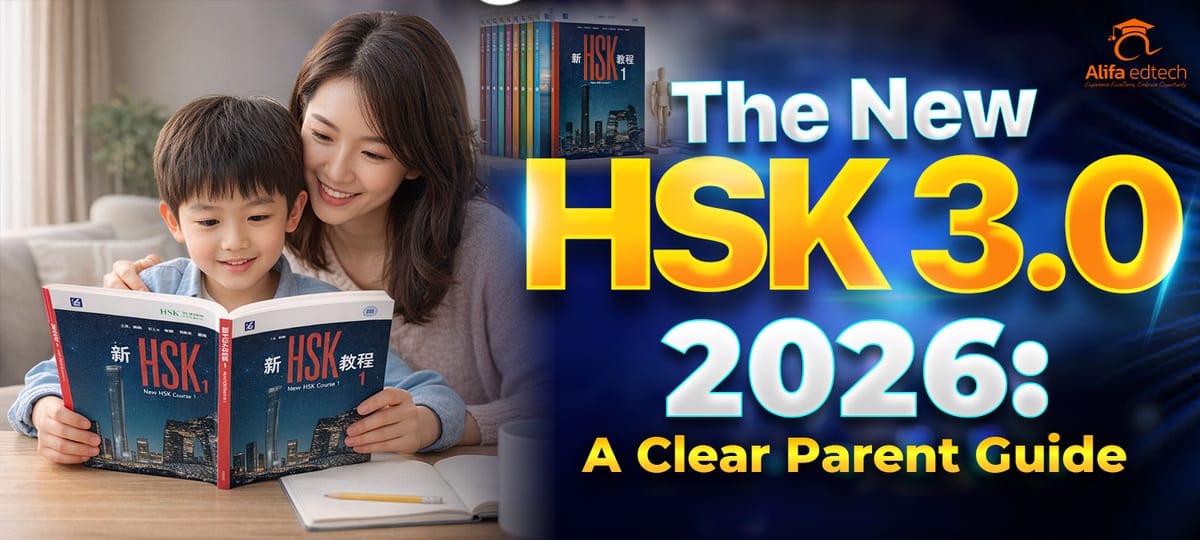
 Emmanuel Usang


Member comments