

Introduction
Many expat families are moving to China for reasons like new job prospects or setting up international trade business.
For expats wanting a US education in China, there are top schools. Many of these top schools are in big cities like Shanghai and Beijing. These schools are only for foreign students. They follow strict government rules.
This American Schools in China Guide explains it all. We cover who can join and the costs. We talked about how to apply and what to look for. We also cover challenges and helpful tips. The goal is to help your child move smoothly to US schools and enjoy life in China.
Are you an expat parent looking for the best American Schools in China?
Alifa Education Services guides families through this choice. We know the education system well. We help with student enrollment. Book a free consultation with us today. Find which school suits your child.
What is American Education in China?
American education in China usually means international or bilingual schools. These schools follow a US-style plan. They often use standards like Common Core or AERO and The Next Generation Science Standards (NGSS) frameworks. Most teaching happens in English. They give an official US high school diploma. Some also offer AP or IB courses for college.
These schools use the US K–12 system. It has elementary, middle, and high school grades. They are checked by US groups like WASC. They teach core subjects like English, math, science, and social studies. They also have other classes and activities. These schools try to give students a US-like academic and school life, but in China.
Types of American-Style Schools in China
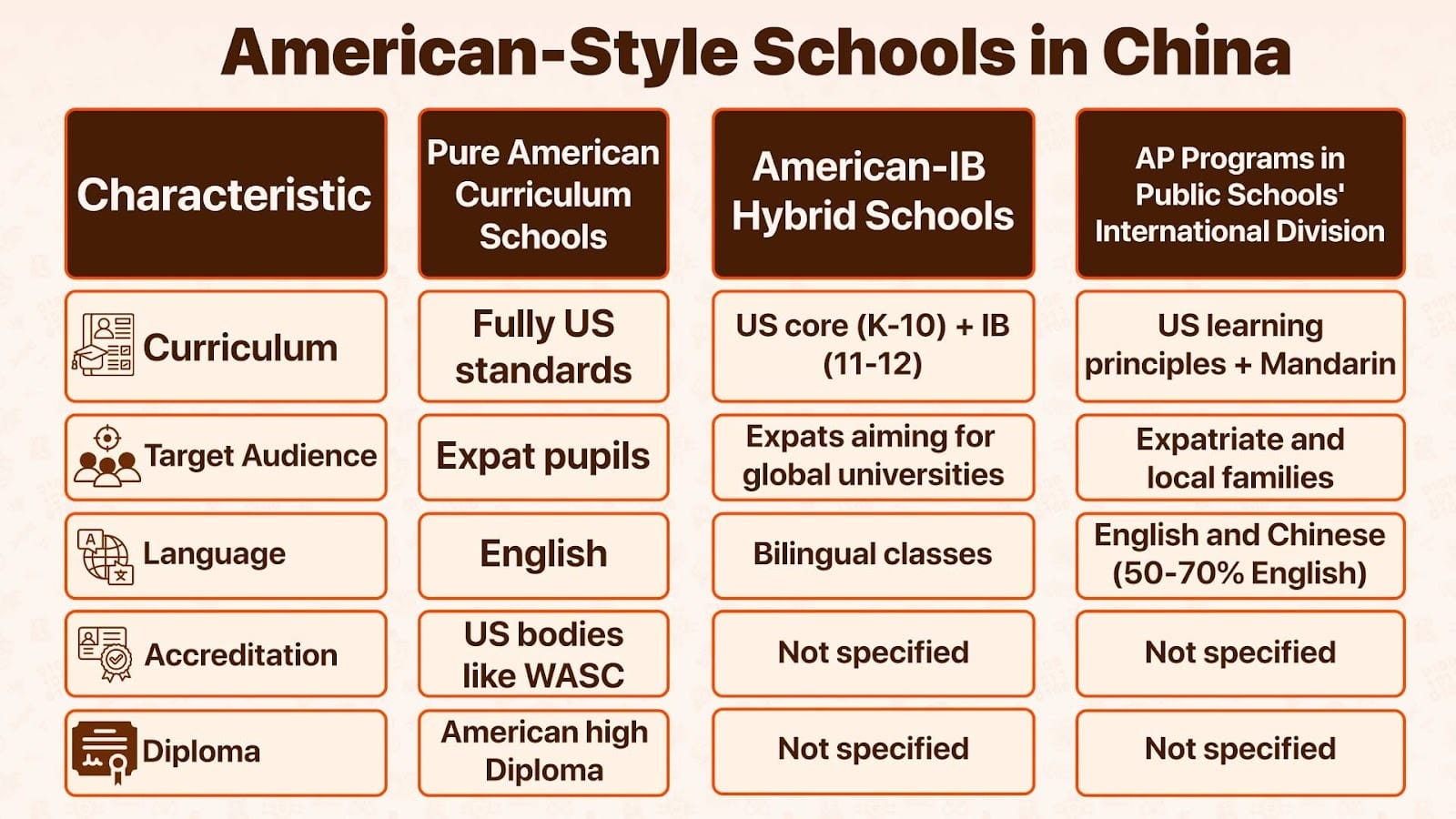
American-style schools in China offer diverse educational options. They follow United States standards. These schools are mainly for expat pupils.
Pure American Curriculum Schools (Expat Schools)
These schools fully adhere to US standards from preschool through high school. Emphasis is placed on student-centered learning and project-based activities.
A wide range of sports and arts are also available. Accreditation by US bodies like WASC confirms their quality. Graduates receive American high school diplomas.
American-IB Hybrid Schools (Bilingual Private Schools)
Commonly found in major cities like Beijing and Shanghai, these schools combine a US core curriculum (K-10) with the International Baccalaureate program for grades 11-12.
This approach provides greater flexibility for global university applications. Many also offer bilingual classes. These schools are well-suited for expats aiming for US, Canada, or European universities.
AP Programs in Public Schools’ International Division
These institutions integrate US learning principles in their 3-years high school programs like Advanced Placements with significant Mandarin language and Chinese culture immersion. They often cater to families with both expatriate and local members.
English remains the primary language of instruction. While following US standards, they incorporate dual-language teaching. Instruction typically features English and Chinese learning (around 50–70% English).
Help us match families with top schools in China. Take our 1-minute survey to share what matters most.
Eligibility Rules for Enrolment in Pure American Curriculum Schools in China
American schools for Expats in China have strict rules for who can enroll. The Ministry of Education (MoE) and cities or provinces set these rules. These schools are mostly for foreign passport holders. People with Chinese passports usually cannot join, unless they meet special rules.
Core Eligibility Categories
Schools follow categories set by the MoE. Families need to show proof for one of these. The rules might differ a little by city or school.
- Category 1: Child of Foreign Citizens: The student needs a foreign passport. At least one parent must work in China. They need a valid work and residence permit.
- Category 2: Child Born Overseas to PRC Citizens: The student needs an overseas birth certificate. Parents must have PRC passports. One parent needs proof of working in Shanghai or Beijing.
- Category 3: Children of HK/Macau/Taiwan Residents: The student and parents need passports from HK, Macau, or Taiwan. They may also use mainland travel permits.
- Category 4: Special Waiver: The student needs a special waiver letter from SHMEC or MoE. This is rare. It's usually for students who recently studied abroad or have permanent residency overseas.
Required Documents (Typical List)
Families need to give original or copied papers for checking. This usually includes:
- Passports/visas/residence permits for student + parents.
- Student birth certificate (authenticated if overseas).
- Employment verification letter + company business license (stamped) for working parents.
- Proof of local residence (lease, hukou if applicable).
- Previous school transcripts/reports (2–3 years).
- Marriage certificate if names differ.
Admissions Process in American Schools in China: Step-by-Step
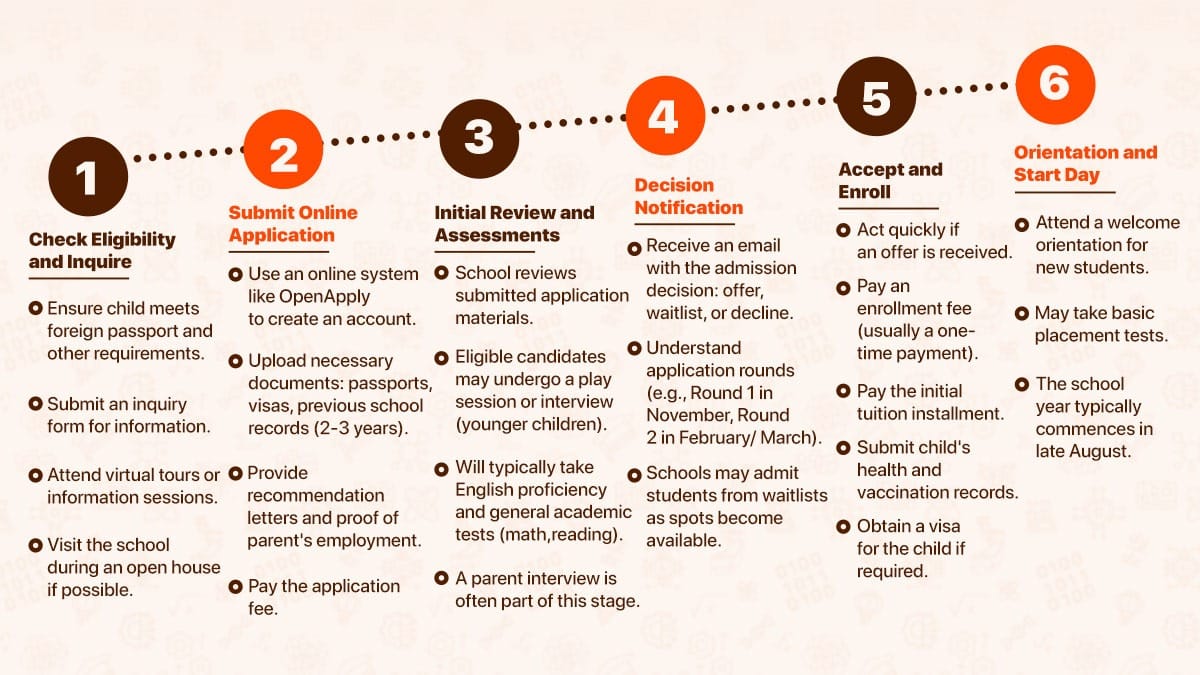
Getting into American schools in China usually follows a set process. Top schools like Shanghai American School (SAS) and Concordia International School Shanghai have similar steps. It's best to start early, maybe 12 to 18 months before you want your child to start. Many popular grades have waiting lists.
Check Eligibility and Inquire (1–2 Months Prep)
First, make sure your child meets the rules. Check the school's website for lists about foreign passports and other needs. Send in a form to ask for information. Go to virtual tours or talks. If you can, visit the school during an open house.
Submit Online Application (Week 1)
Most schools receive applications online. Create an account to your chosen school. Upload needed papers. This includes passports, visas, and school records from the last 2-3 years. You'll also need recommendations and proof of a parent's job. There's a fee to apply.
Initial Review and Assessments (2–4 Weeks)
The school will check your papers. If they approve, your child might have a play session or interview. Younger kids might have a playgroup or interview. Older students will take tests. These tests might be for English skills or general math and reading. A parent interview is also common.
Your Child's Future Starts with the Right School
Stop scrolling through endless options. We've already vetted 800+ schools across China—let us match your child with the perfect fit, budget, and scholarship opportunities.
✓ Free consultation
✓ Scholarship & grant assistance
✓ Full admissions support
Decision Notification (1–4 Weeks After Tests)
You'll get an email about the decision. It might be an offer, a waitlist spot, or a decline. Schools have main application rounds. For example, Round 1 might be in November, and Round 2 in February or March. After that, they might accept students as spots open.
Accept and Enroll (Within 1–2 Weeks of Offer)
If you get an offer, you need to act fast. Pay a fee when you accept. This fee is usually paid once. You also pay the first part of the tuition. Send in your child's health and vaccine records. Get a visa if your child needs one.
Orientation and Start Day
After enrolling, there's a welcome for new students. They might take basic tests. The school year usually starts in late August.
Understanding the Full Cost of American Schools in China
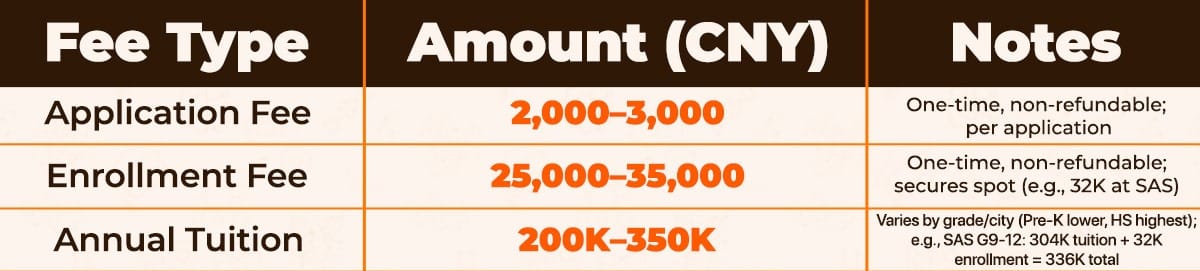
Understanding the full cost of American schools in China is important. Expect total first-year expenses from CNY 300,000 to CNY 500,000 per child. This includes yearly tuition and one-time fees.
Core Fees Explained
Application fees range from CNY 2,000 to CNY 3,000. You pay these when you apply. They are not given back. Capital or development fees are from CNY 20,000 to CNY 200,000. These fees help pay for school buildings and are paid only by new students.
Enrollment fees, around CNY 25,000 to CNY 35,000, secure your child's spot. These are also paid once and are not refundable.
Yearly tuition fees make up the biggest part of the cost. These range from CNY 200,000 to CNY 350,000. Costs usually go up as children get older. Preschool is cheaper, and high school costs the most.
Tuition Ranges by Top Schools
In Shanghai, schools like Shanghai American School (SAS) have different tuition fees for each level.
- For preschool, expect around CNY 246,000 to CNY 279,000.
- Elementary school costs about CNY 279,000. Middle school is around CNY 287,000.
- High school can cost CNY 304,000.
- High school costs about CNY 330,000.
Want to put your brand in front of families, students, and education-focused readers? We're inviting select partners to advertise with us on our trusted blog.
Want to get featured? submit a story for us to include.
Additional Expenses
Besides tuition, there are other costs.
- School buses might cost CNY 20,000 to CNY 25,000 each year.
- Meals can be about CNY 20 to CNY 40 per day, adding up to around CNY 8,000 per year.
- Uniforms and books might cost CNY 1,000 to CNY 2,000.
- Extracurricular activities and trips can add another CNY 5,000 to CNY 20,000.
- If your child stays in a boarding program, expect to pay an extra CNY 100,000 to CNY 200,000.
Some schools offer discounts for siblings, usually 5% to 20%. Financial aid is rare but possible. Fees usually increase by 3% to 5% each year. Always check the school's website for the latest costs for the upcoming school year.
Academic Experience Inside American Schools
American schools in China offer a distinct educational path. They focus on active learning, diverse classes, and many activities. This is different from local schools that often use memorization and have longer days.
Students follow US standards. They learn in English. This helps build critical thinking and global awareness alongside main subjects.
The U.S. curriculum offers three levels of classes that learners can enroll onto: regular courses, honors courses, and advanced placement (AP).
Typical Daily Schedule
A school day generally runs from 8:00 AM to 3:30 PM. This is shorter than many local schools. Mornings start with a homeroom to build a sense of community.
After that, students have about six to eight class periods. Each class lasts 45-50 minutes. Subjects include English, math, science, social studies, and Mandarin.
Arts and physical education are also part of the day. Homework usually takes 30-90 minutes each evening.
Teaching & Learning Style
Classes use methods like group projects and discussions. Students work together, do lab experiments, and debate ideas. This is not like lectures where the teacher does all the talking.
Teachers, often trained in the United States, personalize learning. They use tests like MAP Growth to see how students improve. High school has a credit system.
Students choose courses, including honors or AP classes, to build their college applications. Mandarin is included to add Chinese culture.
Honors classes require learners to complete more work than regular courses, and AP classes can be even more demanding.
While honors classes feature advanced high school coursework, AP classes are designed to mirror college-level coursework. In both honors and AP classes, difficulty level varies by subject.
Curriculum Structure by Division
Younger students (Pre-K to grade 5) learn through play. They build literacy and math skills. Social and emotional learning is also important. They have Mandarin immersion. Themes help connect different subjects.
Middle school (grades 6-8) builds on this. Students become more independent. They take core subjects and pick electives like robotics or band.
High school (grades 9-12) prepares students for college. They can choose AP or IB programs. Service learning and leadership activities are often required.
Extracurriculars & Holistic Focus
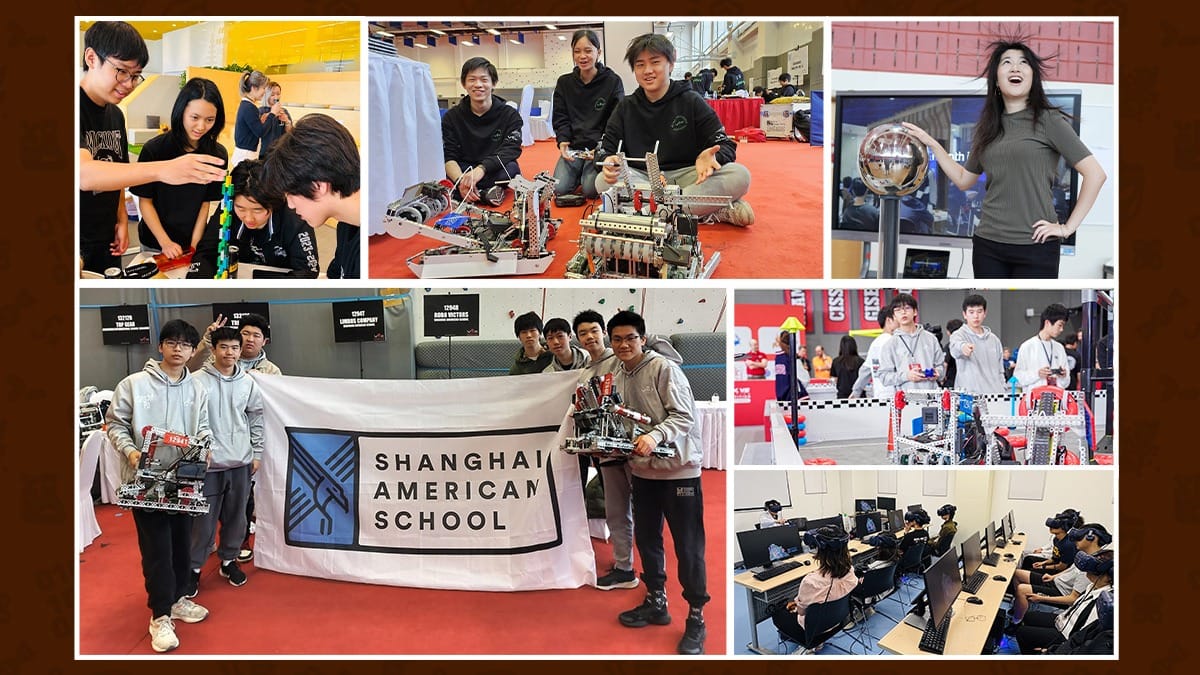
After classes, students can join over 50 clubs. These include robotics, debate, and arts. Sports like rugby and soccer are also popular. These activities are key to developing the "whole child." Weekly assemblies focus on well-being.
School counselors help with mental health. This balance helps prevent students from feeling overwhelmed. It builds traits like resilience through sports and other activities.
Assessment & Outcomes
Schools use ongoing checks like quizzes and projects more than big final exams. Preparing for AP or SAT tests helps students get into US universities.
Moreover, many students, over 90%, are accepted into colleges in the United States.
How to Evaluate American Schools in China
When choosing an American school in China, parents should look at several key areas. These include official approval, what students achieve, teacher quality, and school facilities. It's important to find a school that fits your child's needs and your family's plans.
Accreditation & Standards
Check if schools have US approval, like WASC or Cognia. This means their diplomas are valid for US colleges.
Top schools like Shanghai American School (SAS) and International School of Beijing (ISB) meet high standards. These are like good schools in the United States.
Make sure the school's accreditation is current. This confirms that credits transfer easily. This is very important for families who move around a lot.
University Placement Records
Look at where graduates go to college. Good schools send over 90% of students to US Top 100 universities. Many also get into top schools like Harvard or Stanford.
Check how many students get high scores on AP or SAT tests. Also, see how many students per counselor there are. Good records show the school's teaching is strong. They also show good college advice.
Faculty & Staff Quality
Find out about the teachers. Most should be native English speakers. They should have US teaching licenses. Low teacher turnover, under 10% each year, means the school is stable. Look at the number of students per teacher.
Good schools have fewer students per teacher. Visit classes to see if teachers are engaging. Talk to other parents about how teachers respond. Good teachers help students think critically.
Curriculum & Facilities
Check the learning plan. Schools often use Common Core or AERO standards. They might offer AP or IB programs in high school. Mandarin is usually taught to help with Chinese culture. Look at the school buildings.
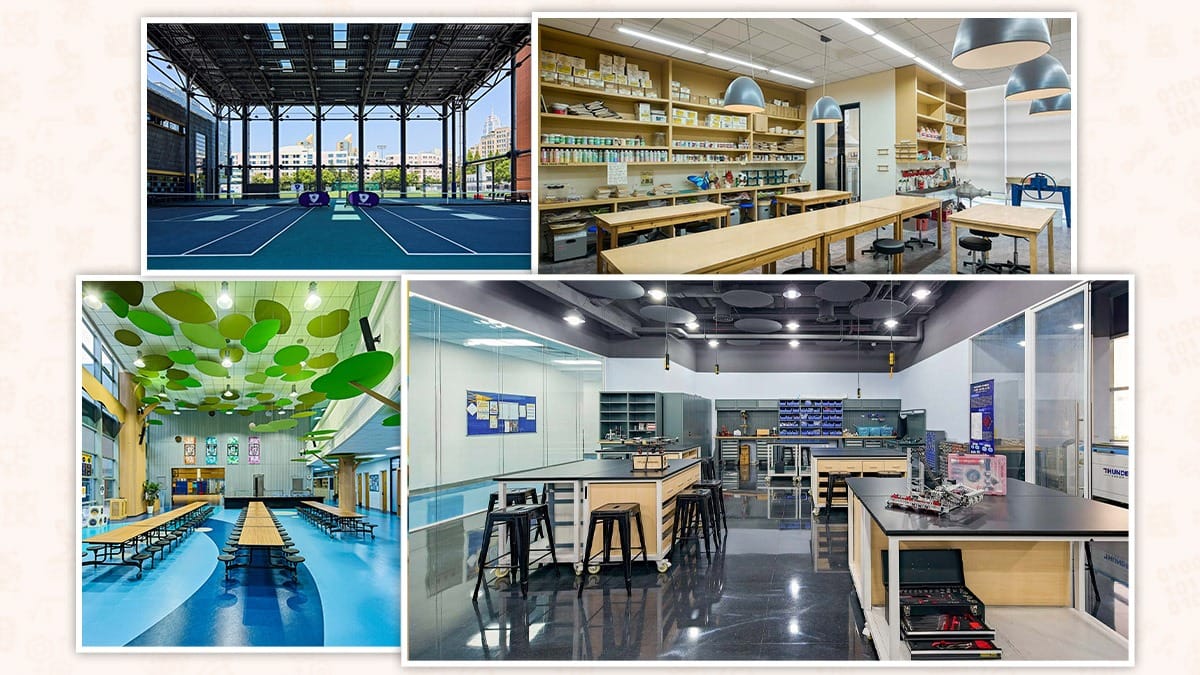
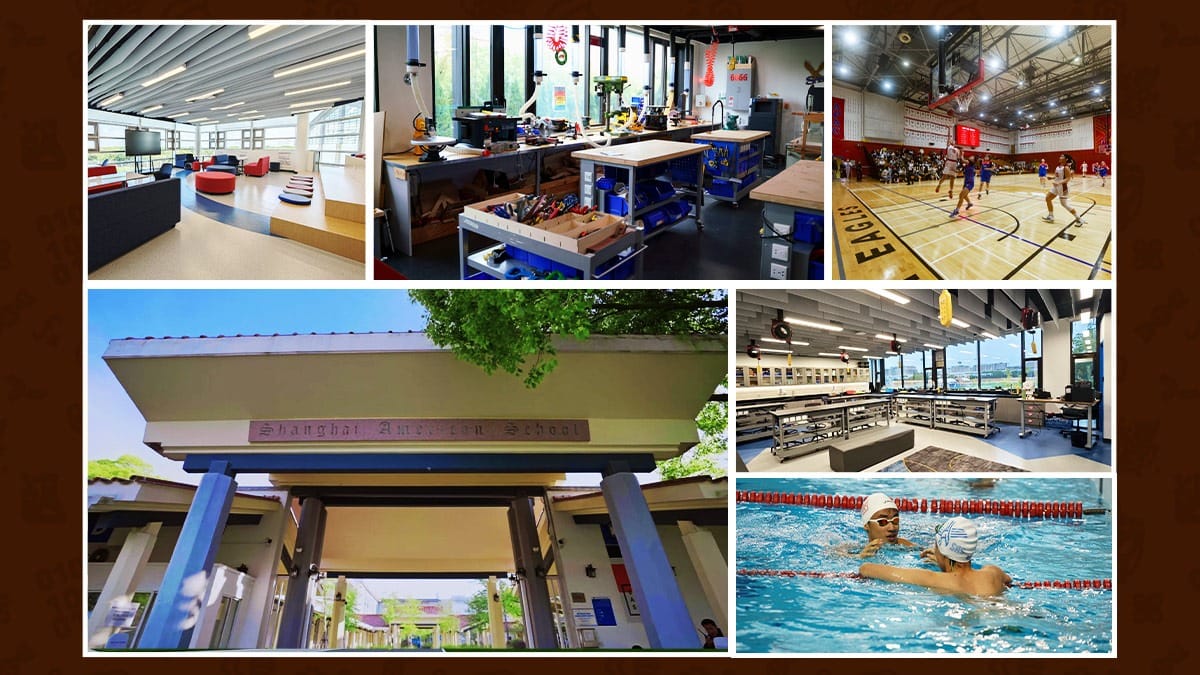
Top international schools have modern facilities. This includes STEAM laboratories. Good schools have spaces that help with all-around growth. This includes arts and sports facilities.
To learn more about the services offered by Alifa Education, please visit our dedicated page. Whether you are a guardian, affiliated with an international or bilingual school in China, or a study abroad education agency, Alifa Edtech offers services tailored to your unique needs. Please visit our page to learn more about our offerings.
Student Support Systems
See what help the school offers. This includes support for students learning English. Schools should also help students with learning differences.
Look into mental health services. Good schools have counselors for students. They should have rules against bullying. Check on programs that help students feel better. This support is important for expat pupils.
Practical Evaluation Steps
To choose a school, first find a few options. Score them on what matters most to you. Visit the schools you like most. Watch classes and talk to the principal. Try to have your child visit too.
Read what other parents say online. Think about the total cost. Start your search early, maybe 18 months before. The best school fits your child's grade, personality, and future plans. This careful approach helps you choose well.
Common Challenges Expat Parents Face
Expat parents face challenges choosing schools in China. They must understand rules, costs, and find the right fit. Planning early is key for a smooth move.
Misunderstanding Eligibility Rules
Many expats think any foreign passport works for US schools. But China's rules are strict. Only certain foreign students can enroll. This includes kids with foreign passports or specific visas.
Some children of Chinese parents born abroad might qualify. Parents must check school requirements early. This avoids rejected applications.
Underestimating Total Costs
Families often forget extra costs beyond tuition. These include application fees, capital fees, and buses. Meals, uniforms, and trips add up too. The total cost can be much higher than expected.
Parents should check the full price. They should also ask about payment plans. Planning for yearly fee increases is wise.
Choosing Based on Brand Rather Than Fit
Some parents pick schools only for their name. Prestigious schools like SAS or ISB are famous. But they might not suit every child.
A child's needs are important. Think about grade level, English support, and hobbies. Visiting schools helps see if the learning style is right. The best school fits your child's personality.
Delayed Applications and Limited Seats
Popular grades fill up fast. Some schools have waiting lists 12–18 months before. It's best to start looking early. Main application rounds are in fall.
Many families miss deadlines by waiting too long. Applying to several schools gives more options. Being flexible on location or grade helps.
Navigating the Enrollment Process
The enrollment process can be long. Parents need to collect many documents. This includes passports and birth certificates. Job proof for parents is also needed. Schools check all papers carefully.
Some schools offer special programs for new students. These help them adjust to new learning experiences. This process ensures everyone follows the rules.
Conclusion
Picking the right American school in China helps expat families. It offers a US education. These schools prepare kids for top US universities. They also help them enjoy life in China. This guide covers schools, rules, costs, and how to apply.
Start early to evaluate these schools. Find the best fit for your child. Consider what is important for the bright future of your kid. This way, choosing the best one becomes easier.
Related Articles
 Emmanuel Usang
 Emmanuel Usang
 Emmanuel Usang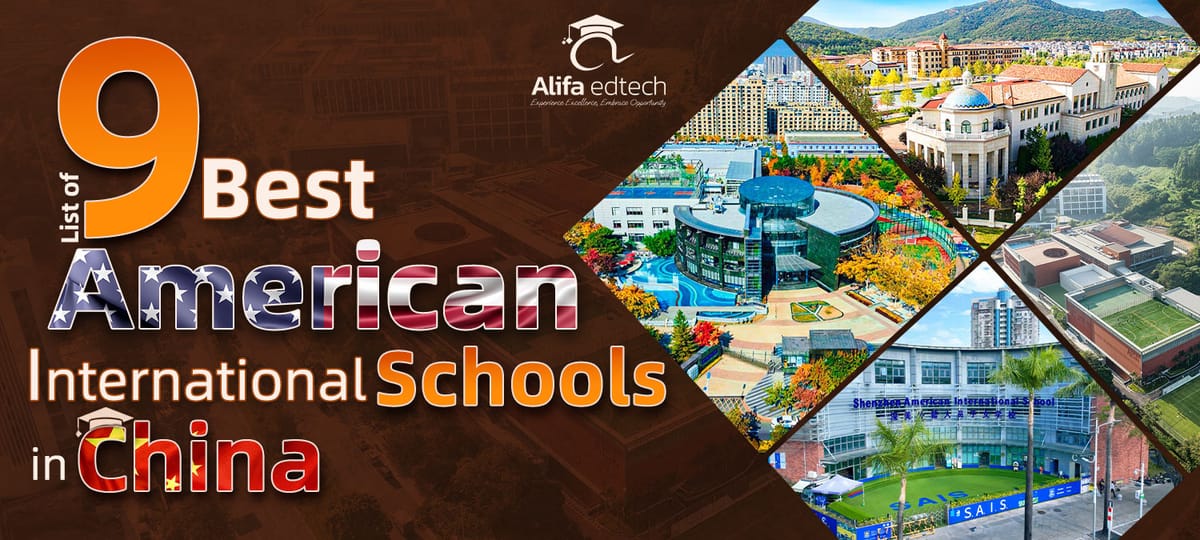
 Emmanuel Usang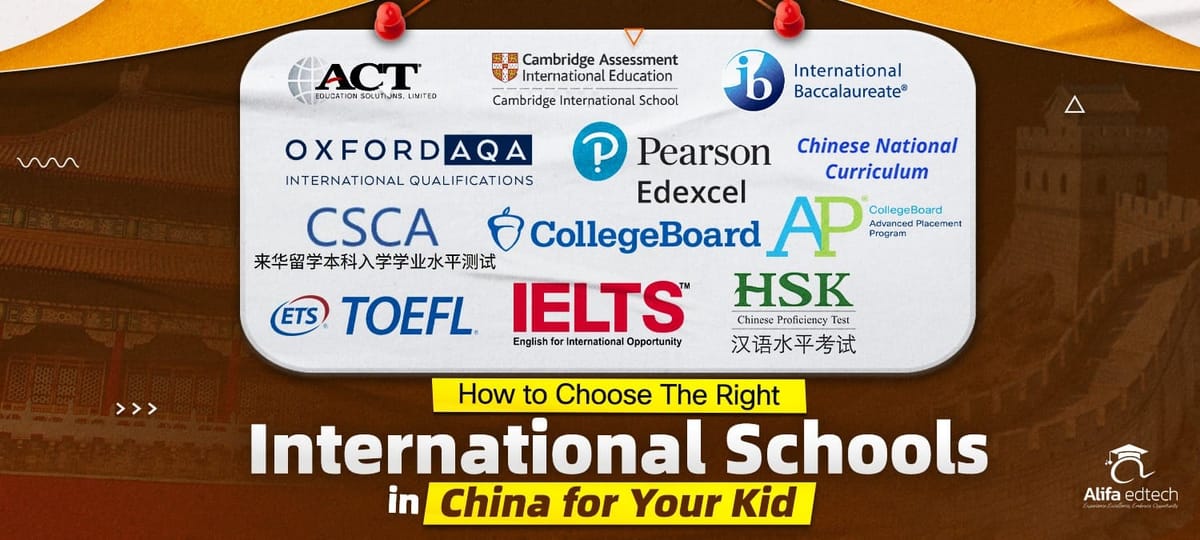


Member comments