

Introduction
HSK 5 in one year. That is the goal for many families across Central Asia.
China is part of everyday life in Kazakhstan, Uzbekistan, Kyrgyzstan, Tajikistan, and Turkmenistan. Chinese is becoming the most useful second language here.
Students across Central Asia finish high school between 16 and 18. At 19, most go straight to a foundation programme. A better option exists in the window before university.
A student aged 16 to 18 can join an intensive Chinese language programme inside a Chinese high school and earn an HSK 5 certificate in one academic year.
HSK 5 is the level needed for university admission and government scholarships. The programme runs 30 to 40 hours of Chinese classes every week, plus the full high school experience. Students study physics, math, and history with Chinese classmates, and live in Chinese all day.
The result is a clear path from zero Chinese to university-ready in 10 to 12 months.
A foundation program cannot give this daily immersion; that immersion makes the real difference.
This article ranks five Chinese high schools with an intensive Chinese language programme, and shows families and agents across Kazakhstan, Uzbekistan, Kyrgyzstan, Tajikistan, and Turkmenistan how to get started.
HSK 5 in One Year. Start the Right Path.
Table of Contents
Is This Programme Right for Your Child?
Check this list before you read further.
This Is the Right Choice If
- Your child is 16 to 18 years old and has recently finished high school in Central Asia.
- You want your child to reach HSK 5, the university admission level, before starting university in China.
- You are planning a Chinese university or scholarship application in the next 1 to 2 years.
- Your child knows little or no Chinese and needs an intensive Chinese language programme from the start.
- You want better language results than a foundation program can give.
This Is Not the Right Choice If
- Your child is 19 or older. They should apply to a university programme directly.
- They already hold HSK 4 or higher.
- You want an English-taught degree with no Chinese need.
The Key Window Is 16 to 18
At 19, the path is university. Between 16 and 18, the path through a Chinese high school is faster. It is more intensive. It produces a stronger language result.
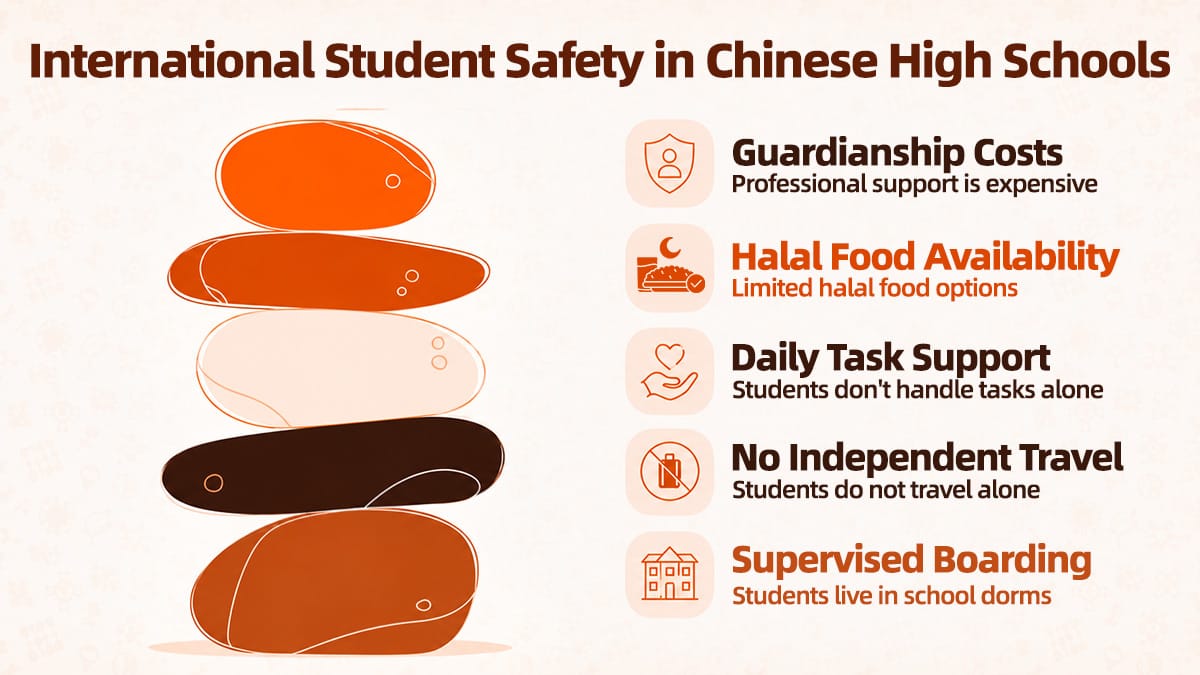
Safety First: How Chinese High Schools Take Care of International Students
Foundation Programs vs. Chinese High Schools: A Direct Comparison
This is the core decision every Central Asian family faces: here are the facts.
A foundation program equips students with the academic skills needed for Chinese university. It teaches maths, science, and basic subjects. It adds some Chinese language too. Chinese classes take up 15 to 18 hours per week. Outside class, students mix together. They come from Russia, Central Asia, Southeast Asia, and Africa. They often communicate in English with each other. After one full year, most students reach HSK 3 to HSK 4. That level is not enough for a Chinese-medium degree. It is not enough for the strongest scholarship applications either. Many students need extra language classes before their degrees can start.
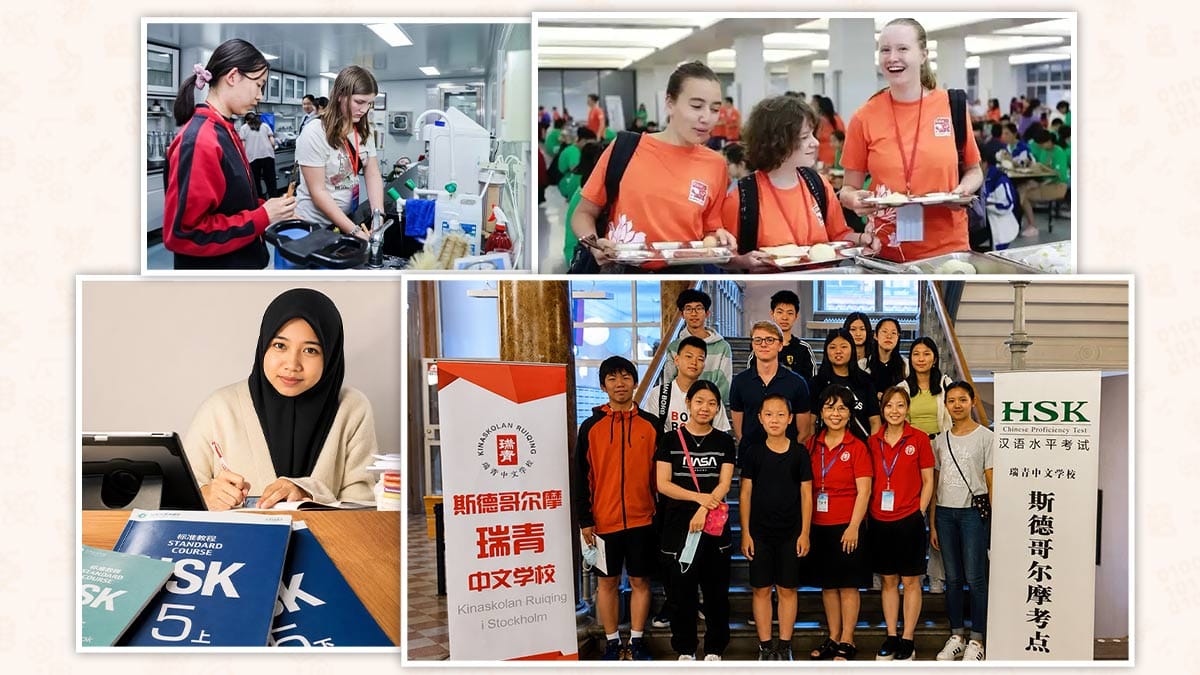
A rigorous Chinese language program in a Chinese high school operates in a unique manner. They build it only for language. Students get 30 to 40 hours of Chinese language classes every week. That is 3 to 4 times more than a foundation course. Students eat, live, and study alongside Chinese classmates. Chinese is not a subject here; it is the whole environment. After one year, most students reach HSK 5. They are ready for university on day one.
Watch These Short Videos
 Watch Short
 Watch Short
 Watch Short
 Watch Short
| Comparison Point | Foundation Program | Chinese High School Programme |
|---|---|---|
| Chinese class hours per week | 15–18 | 30–40 |
| Classmates | Other foreign students | Chinese teenagers |
| STEM and history classes | Taught to foreigners, often in English | Physics, maths, history in Chinese with local students |
| Language outside class | English with international students | Chinese with Chinese friends |
| Daily environment | Foreign-student bubble | Full Chinese high school life |
| Chinese level after 1 year | HSK 3–4 | HSK 5 |
| University ready? | No — needs extra language classes | Yes — degree starts immediately |
| Best age | 19+ | 16–18 |
| Cost | Similar | Similar |
| Scholarship ready? | Limited | Full HSK 5 access to CSC and provincial scholarships |
For a student aged 16 to 18, the high school route wins in every way that matters for language. At 19, the foundation programme becomes the standard path. But by then, a student from the high school route already holds HSK 5. That student is a full year ahead.
The Real Secret: A Full Chinese High School Life, Not Language Classes
Here is the single biggest difference between a Chinese high school and a university foundation programme. This is also the reason students experience rapid improvement.
In a foundation programme, your child takes Chinese lessons in a classroom of other foreigners. Then your child goes back to a dormitory full of foreigners too. The Chinese language stays a subject. It stays inside the classroom.
In a Chinese high school, your child lives the complete Chinese high school experience. This is full immersion, not an intensive Chinese language programme on a timetable. Yes, there are long hours of intensive Chinese language classes. But that is only part of the day. Your child also:
- Sits in physics, math, and chemistry classes taught in Chinese alongside Chinese teenagers
- Learns Chinese history and culture in the same room as local students
- Eats lunch in the canteen with Chinese classmates every single day
- Joins clubs, sports teams, and school events where Chinese is the only language.
- Makes real Chinese friends; friendship is the fastest language teacher in the world
This is total immersion. Your child is not "studying Chinese." Your child is living in Chinese. This goes from the morning bell to lights out.
Think about what this does. A foundation student practices Chinese for a few hours. Then that student switches back to English for the rest of the day. A Chinese high school student never switches off. They solve a math problem in Chinese. They argue about a football match in Chinese. They ask a classmate for help in Chinese. They make a joke in Chinese and watch their friends laugh. Every one of these moments is a language lesson. No classroom can teach this.
This is why the improvement is so fast and so deep. Language learned through real life sticks far better. This includes physics class, friendship, and daily life with Chinese teenagers. It sticks better than language learned only from a textbook. By the end of the year, your child does not pass the HSK 5 exam; they think in Chinese. They joke in Chinese. They study in Chinese. They are ready for a Chinese university, not only on paper but in real life.
Why Age 16–18 Is the Best Window for Learning Chinese
Research on language learning shows one clear result: the brain's ability to learn new sounds, tones, and speech patterns is strongest between the ages of 14 and 18. After 18, this ability experiences a gradual decline. After 22, learning Chinese tones takes much more time and effort.
Chinese has four tones. The same sound with a different tone means a completely different word. Getting tones right is the foundation of the whole language. A 16-year-old brain builds this foundation in a short time. A 21-year-old brain needs more time for the same result.
This is why the 16-to-18 window matters so much. Picture a student from Tashkent, Almaty, or Bishkek. This student starts intensive Chinese at 16 or 17. That student has a real brain advantage over someone who waits until 19. A student who holds HSK 5 at 18 gets:
- Three years of Chinese-medium university study before peers even start
- Full access to Chinese government scholarships from day one
- A career language advantage that grows every year
Your Child's Year: Month by Month
Here is what the intensive Chinese language programme looks like, from September to July.
| Period | What your child studies | Target |
|---|---|---|
| Month 1–2 | Pinyin, tones, basic characters. No Chinese needed to start | Programme start |
| Month 3–4 | Daily conversation, reading, simple writing | HSK 2–3 |
| Month 5–6 | Listening, writing, speaking tests | HSK 3 exam |
| Month 7–8 | Academic vocabulary, longer reading, deeper conversation | HSK 4 |
| Month 9–10 | Longer writing, formal listening, timed reading | HSK 4 exam |
| Month 11–12 | Advanced exam preparation. University applications start | HSK 5 exam |
What HSK 5 Gives Your Child
HSK 5 is the Hanyu Shuiping Kaoshi Level 5. It is China's official advanced Chinese skill certificate. Chinese Testing International administers this exam. Every Chinese university recognizes it.
Here is exactly what HSK 5 unlocks:
University Admission
Almost every Chinese-medium university requires HSK 5 or higher. With this certificate, your child starts their degree right away. There are no extra language classes. There is no delay.
Chinese Government Scholarships (CSC)
The CSC scholarship covers tuition, housing, and a monthly allowance. It is one of the best study programmes for Central Asian students. The strongest university placements need HSK 5.
Provincial Scholarships
Guangdong, Shandong, Fujian, Beijing, and many universities offer scholarships too. HSK 5 is the entry need. Students from Kazakhstan, Uzbekistan, and Kyrgyzstan receive a warm welcome.
Jobs Across the Belt and Road
Chinese language skills are already valuable for young people from Central Asia. This applies to trade, logistics, energy, and business. A student who holds HSK 5 at 18 enters the job market years ahead. They beat someone who starts Chinese at university.
Our 5 Partner Schools — Ranked for Central Asian Families
Quick comparison first. Full details follow below.
| Rank | School | City | Tuition (RMB/yr) |
Class Size | Halal | Best for |
|---|---|---|---|---|---|---|
| 1 | BNU Affiliated 北师大附中 | Beijing | 28,000–36,000 | Small | Niujie 10 min | Clearest HSK ladder + academic prestige |
| 2 | RDFZ 人大附中 | Beijing | 43,600 | Medium | ✓ Canteen | Most famous school + largest foreign community |
| 3 | Beijing No.39 第三十九中 | Beijing | 30,000–40,000 | Under 15 | Niujie 5 min | Smallest classes + one-on-one tutoring |
| 4 | Walton-Hefei 合肥中锐 | Hefei | 60,000 | Small | ✓ Canteen | Best value + scholarships up to 100% |
| 5 | Gold Apple 金苹果 | Shanghai | 80,000 | Under 20 | ✓ Canteen | Shanghai + confirmed halal + gentler pace |
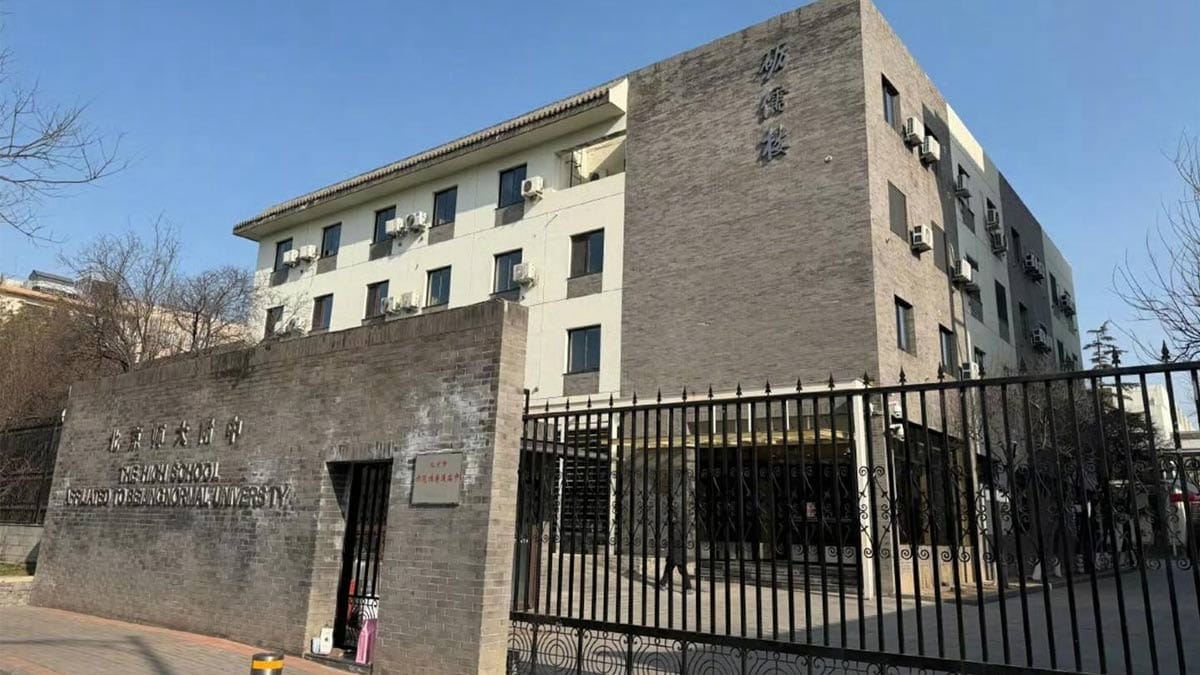
This school started in 1901. It connects to Beijing Normal University, China's top university for education and teaching. The campus sits in Nanxinhuajie, Xicheng District. Hepingmen metro station is five minutes away. Almost all students here are Chinese. A Central Asian student hears and speaks Chinese all day. This happens in class, at lunch, and in the dormitory.
The intensive Chinese language programme has a clear step-by-step path. Students start in the Language Class (语言班). This means full-time Chinese study, 30+ hours per week. Maths taught in Chinese supports this, along with cultural activities. When students pass the exam, they move to the Academic Class (学历班). When they reach HSK 5, scoring 220 or higher, they join the regular Chinese classes with local students. HSK preparation is part of the weekly timetable.
For Central Asian families:
- 30+ hours per week of intensive Chinese language classes
- HSK 5, score 220+, is the confirmed level to enter regular Chinese classes
- Small classes in the International section
- Central Beijing — Hepingmen metro, 5 minutes' walk
- Niujie (牛街), Beijing's Muslim quarter, is 10–15 minutes by bike with many halal restaurants
- Over 120 years old, one of Beijing's oldest schools
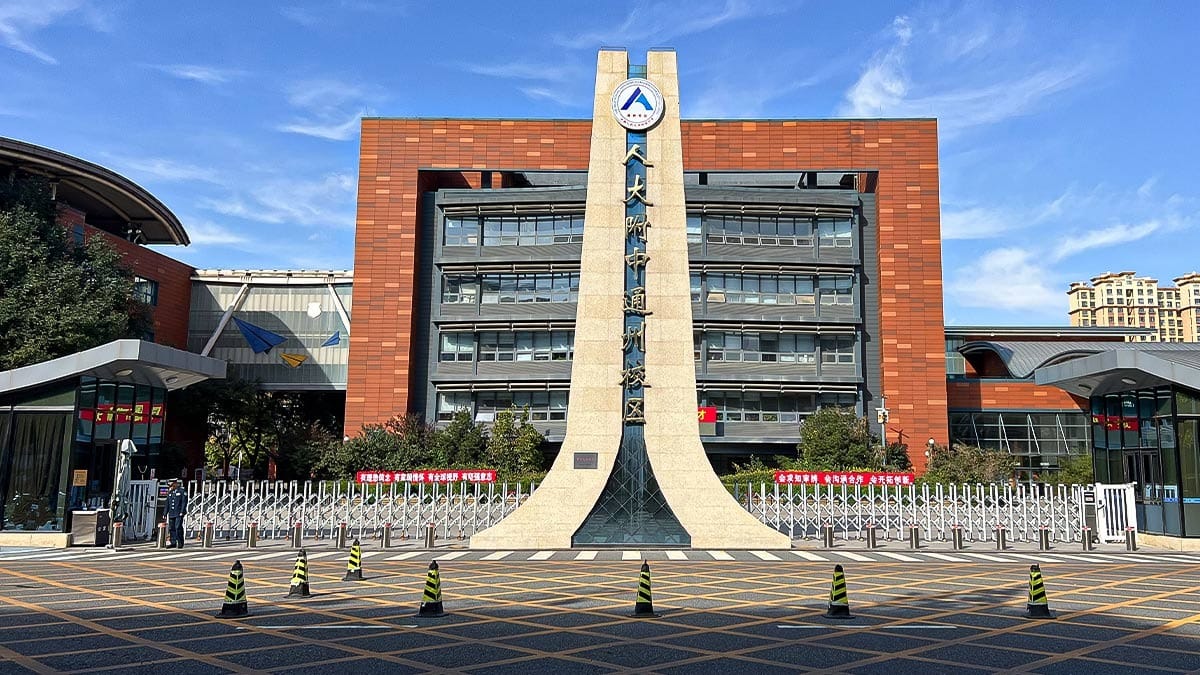
RDFZ is one of the most famous high schools in China. The Zhongguancun campus sits in Beijing's technology and university area. It is next to Tsinghua University, Peking University, and the Chinese Academy of Sciences. The school has about 200 international students from more than 20 countries. The Chinese students here work hard. They approach their studies with great seriousness. A language learner absorbs that energy every day.
The intensive Chinese language programme has two levels. Beginning suits students with little or no Chinese. Intermediate suits students who know about 1,000 characters and pass a placement test. Students receive 30+ hours of Chinese language instruction per week. Classes run from 8:00 to 16:30. Students move to academic classes once they reach a strong level. The school has a separate building for foreign students. Rooms come as twins and triples, with private bathrooms, desks, and air conditioning. A supervised study room runs each evening.
For Central Asian families:
- 30+ hours per week of intensive Chinese language instruction
- 200+ foreign students from 24+ countries, a large and well-established community
- Halal counter in the school cafeteria
- Separate foreign student building with evening study supervision
- Beginning and Intermediate classes, placed by entrance test
- Indoor swimming pool, sports facilities, and student clubs
- Scholarships Available for Strong Students
3 Beijing No. 39 Middle School
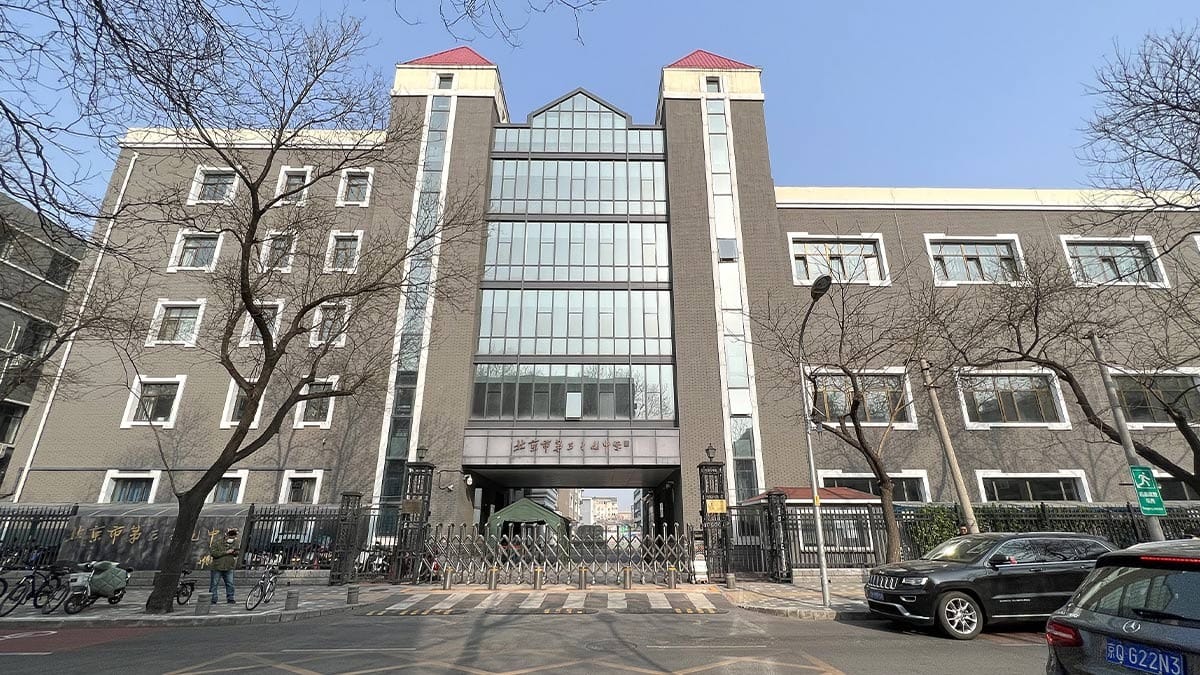
Beijing No. 39 sits in Xicheng District, near the Forbidden City. This school is smaller and quieter than the large schools above, with about 1,000 students total. The international section opened in 2002. It has only two classes for foreign students. Each class has fewer than 15 students. This suits a student who needs personal attention, a calm environment, and one-on-one support.
The intensive Chinese language programme groups students by their actual Chinese level, not by age or nationality. Every student gets 30+ hours per week of Chinese language instruction, plus individual tutoring. The first graduating class in 2003 reached 100% placement at top universities. The campus has a swimming pool, gym, and a UNESCO eco-education programme.
For Central Asian families:
- 30+ hours per week of intensive Chinese language classes plus one-on-one tutoring
- Maximum 15 students per class
- Grouped by real language level
- Lowest tuition of the three Beijing schools
- Closest to Niujie, Beijing's Muslim quarter is only 5–10 minutes walk, with many halal restaurants
- Established international department since 2002
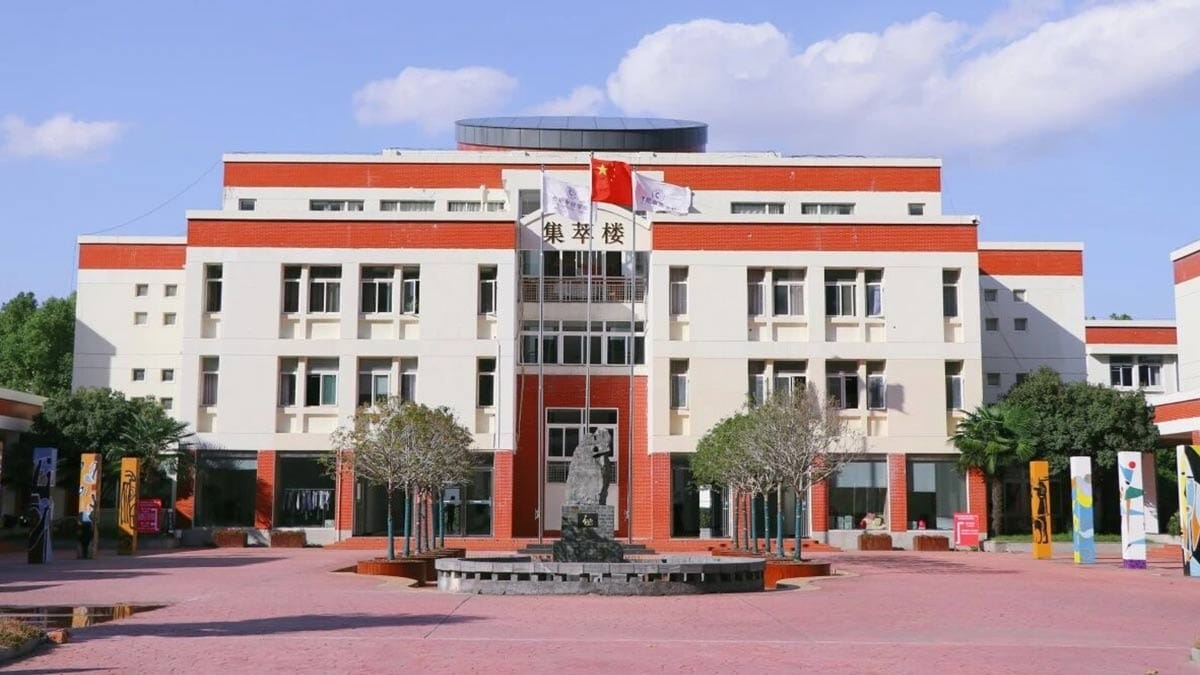
Walton-Hefei runs as the international programme of Hefei Zhongrui School. This is a 3,000-student private boarding school. It became the first school in Anhui Province approved to take foreign students back in 2004. Hefei is a Tier 2 city. It costs less than Beijing or Shanghai. It has less traffic, too. USTC, one of China's top science universities, calls Hefei home. This suits families who want real Chinese city immersion at a lower cost.
The intensive Chinese language programme combines 30+ hours per week of HSK Chinese language preparation with CSCA subject tutoring. This covers math, English, and computer skills, plus calligraphy and arts. The school reports 100% HSK pass rates. Scholarships of up to 100% of tuition are available for strong students.
For Central Asian families:
- 30+ hours per week of intensive Chinese language classes
- Halal counter in the school canteen
- First school in Anhui Province with foreign student approval since 2004
- Full boarding on campus; HSK + CSCA combined programme
- Scholarships up to 100% tuition
- Housing only RMB 2,800/year, the lowest of all five schools
- Hefei Airport has direct flights to Central Asian cities
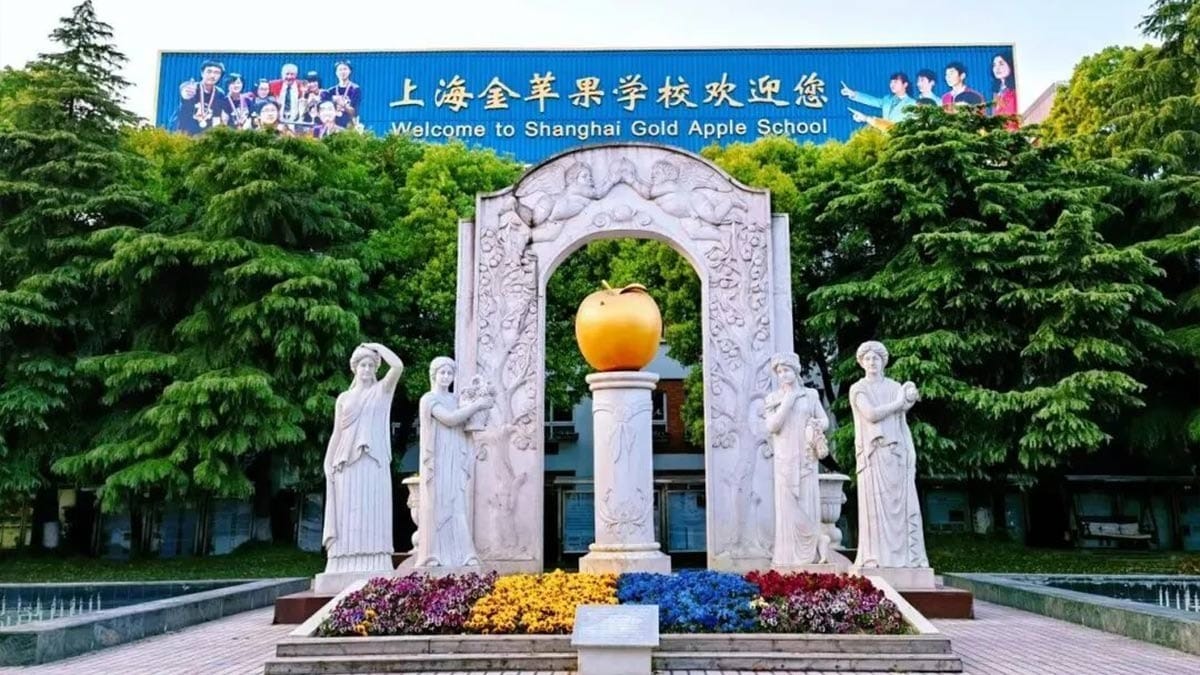
Gold Apple's Mandarin Center opened in 2004. It is one of Shanghai's government-approved Chinese language centers. The school has about 2,700 students in Pudong. About 10% are international. Class sizes stay under 20. The campus has tennis courts, a basketball court, a pottery room, and 24-hour medical staff.
The Mandarin Center programme has a distinct approach compared to the four schools mentioned above. Students start with 8–10 hours per week of dedicated Chinese language classes. Each student gets an individual study plan. At the university preparation stage, Chinese contact hours rise to 16–20 per week. Teachers also teach extra subjects in Chinese. This is a more gradual approach than the 30+ hour intensive programmes at the Beijing and Hefei schools. Graduates have placed at Fudan, Jiao Tong, Peking University, and Tsinghua.
For Central Asian families:
- Halal food counter (清真窗口) confirmed in the main canteen
- Government-approved Mandarin Center since 2004
- Student apartments: 2–4 per room, private bathroom, Wi-Fi, air conditioning, washing machine
- 24-hour staff in the dormitory
- Shanghai, China's most international city, 40 min to city center by metro
- Best for students who want a gentler start in a cosmopolitan setting
Frequently Asked Questions
What visa does my child need?
Your child needs an X1 student visa for study longer than 6 months. You will need several things. These include the school acceptance letter, a valid passport with 6+ months validity, a health certificate, and a JW201 or JW202 form, which the school provides. You also need a visa application form with a recent photo. Guardians must provide documents for children under 18. Alifa Education can arrange these. Apply at the Chinese embassy in your home country. Processing takes about 4 working days. Chinese embassies in Almaty, Tashkent, Bishkek, Dushanbe, and Ashgabat manage student visas as part of their routine operations. Central Asian passports face no extra requirements. After arriving in China, register at the local police office within 30 days. This gets your child a residence permit.
What Is the Age Range?
Most schools accept students from age 15 or 16. The upper limit for high school programmes is 18. Students aged 19 or older should look at university programmes directly. The ideal window for the intensive Chinese high school route is 16 to 18 years old. Students under 18 must have a legal guardian in China. Alifa Education provides this service.
What happens during school holidays?
The school year runs from September to July. Winter break lasts 2 to 3 weeks, around January or February, for Spring Festival. Summer break runs from July to August. During long breaks, students go home or stay with a guardian-arranged host family. During short holidays, the guardian takes care of the student. Students are never left alone on campus.
Are boys and girls separated in the dormitory?
Yes. Boys and girls live in separate buildings at all five schools. An adult supervisor stays in the dormitory every evening and overnight. Curfew is around 11 p.m. Rooms hold 2 to 4 students. If a student under 18 wants to stay outside overnight, they need written permission from a parent.
Is halal food available?
Three schools have halal counters in their canteen: Shanghai Gold Apple, RDFZ in Beijing, and Walton-Hefei. Two more schools sit close to Niujie (牛街), Beijing's Muslim quarter: BNU Affiliated and Beijing No. 39. No. 39 is a 5 minutes walk from Niujie. Alifa Education can help you choose a school based on halal food needs.
What is the total cost for one year?
| School | Tuition | Housing | Estimated total |
|---|---|---|---|
| BNU Affiliated | RMB 28–36K | RMB 20K | RMB 48–56K (USD 6,700–7,800) |
| RDFZ | RMB 43.6K | RMB 12.4–18.6K | RMB 56–62K (USD 7,800–8,600) |
| Beijing No.39 | RMB 30–40K | RMB 8K | RMB 38–48K (USD 5,300–6,700) |
| Walton-Hefei | RMB 60K | RMB 2.8K | RMB 62.8K (USD 8,700) |
| Gold Apple | RMB 80K | RMB 10K | RMB 90K (USD 12,500) |
BNU Affiliated: Tuition RMB 28,000 to 36,000. Housing RMB 20,000. Estimated total RMB 48,000 to 56,000 (USD 6,700 to 7,800).
RDFZ: Tuition RMB 43,600. Housing RMB 12,400 to 18,600. Estimated total RMB 56,000 to 62,000 (USD 7,800 to 8,600).
Beijing No.39: Tuition RMB 30,000 to 40,000. Housing RMB 8,000. Estimated total RMB 38,000 to 48,000 (USD 5,300 to 6,700).
Walton-Hefei: Tuition RMB 60,000. Housing RMB 2,800. Estimated total RMB 62,800 (USD 8,700).
Gold Apple: Tuition RMB 80,000. Housing RMB 10,000. Estimated total RMB 90,000 (USD 12,500).
How does my child take the HSK exam?
HSK exams run several times a year at official test centres, often at or near the school. Students register at chinesetest.cn. Since 2023, levels 3 through 6 include both written and speaking parts. Registration fees work like this:
| Level | Fee (RMB) |
|---|---|
| HSK 3 | 410 |
| HSK 4 | 510 |
| HSK 5 | 610 |
| HSK 6 | 710 |
What if my child does not reach HSK 5 by the end of the year?
Most schools offer extra study time for students who need it. Check the conditions in the enrolment agreement before you sign. The intensive Chinese language programme runs 30 to 40 hours per week with full campus immersion. This gives strong results. Most students reach HSK 4 or HSK 5 within the year.
Why do students learn Chinese faster in high school than in a foundation programme?
Because a Chinese high school gives full immersion, not language classes. Students get 30 to 40 hours of Chinese lessons each week. They also attend physics, maths, and history classes taught in Chinese, alongside Chinese teenagers.
They eat, play, and make friends in Chinese all day. A foundation programme keeps foreign students together instead. Those students mostly speak English outside class.
How can I stay in contact with my child?
WeChat is the main messaging app in China. It offers free video calls, voice calls, and text messages. Most dormitories have WiFi. WhatsApp and Telegram are blocked in China, but WeChat covers everything they do.
How to Get Started: For Families and Education Agents
For Families
Alifa Education handles the whole process from start to finish:
- We help you choose the right school for your child's level and goals
- We prepare and send the application
- We arrange a guardian in China
- We help with the X1 student visa and JW201/JW202 form
- We coordinate airport pick-up and school arrival
- You deal with one contact person the whole time
For Education Agents
Alifa Education is your B2B partner in China for placing students from Kazakhstan, Uzbekistan, Kyrgyzstan, Tajikistan, and Turkmenistan. We support your client relationship. We do not compete with it.
- School access — confirmed placements at all five schools
- Materials — brochures, school profiles, fee schedules, and co-branded documents for your clients
- Guardianship — our guardian network is ready when your student is confirmed
- Commission — clear referral fees on confirmed placements; contact us for rates
- Direct contact — Larry Wang is your account manager for every placement
- In-China support — we are on the ground; you do not need to be
You do not need to build China school relationships from zero. We already have them, ready to use today. A student aged 16 to 18 has a real window right now. That window leads to HSK 5, university readiness, and scholarship access within a single year.
Foundation programs cannot match this result, because they were never built for full immersion. Five strong schools stand ready across Beijing, Hefei, and Shanghai, each offering 30 or more hours of Chinese language classes every week.
Guardianship, halal options, and visa support are all in place for families from Kazakhstan, Uzbekistan, Kyrgyzstan, Tajikistan, and Turkmenistan. Alifa Education manages the entire process, from school choice through arrival in China and beyond.
Education agents get the same support, plus a ready partner who handles the on-the-ground work in every city. The 16-to-18 window does not stay open forever. Once a student turns 19, this faster and stronger path closes for good.
Families who act now give their child a full extra year of Chinese fluency, university readiness, and scholarship access compared to the standard foundation route.


Member comments