

Introduction
Is your child outside China planning to study there? You need to apply for a student visa before they travel. Apply at your nearest Chinese Embassy or Chinese Consulate. China offers two student visa types for minors: X1 and X2 visas. Your child's study duration determines which visa to apply for.
Many families face a challenge. Parents do not hold Chinese work permits. This guide helps you handle these situations. show you every rule. You will learn about school admission, house permits, and document steps. We cover guardian rules and city rules for Beijing and Shanghai.
Alifa Education Services helps you find schools authorized to issue X1 student visas, allowing your child to study in China long-term—even without a parent present. Our Guardianship services ensure full compliance with 2025 visa regulations. Book a free consultation with our lead consultants today to find the right school for your child.
Start your child's education in China with confidence.
Understanding X1 and X2 visas for minors
What the X1 visa actually is
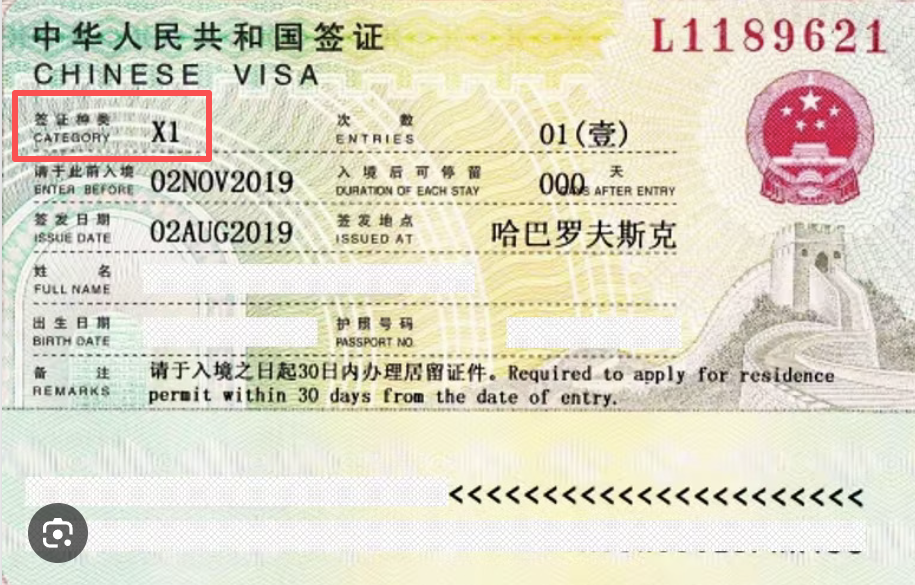
The X1 visa is China's long-term student entry visa, issued by Chinese embassies and consulates abroad to foreigners planning to study in China for more than 180 days. It authorizes a single entry into China and typically allows only a 30-day stay—just enough time to complete the mandatory conversion to a residence permit.
Key characteristics of an X1 visa:
- Cannot be used for long-term stay without conversion
- Marked with category "X1" on the visa sticker
- Usually single-entry with limited validity
- Requires a "Confirmation Form for Elementary Stage Students Study in China" form plus admission notice!
- Issued outside China by embassies/consulates
The X1 visa is essentially a "gateway document"—it gets students through the door, but they cannot legally remain in China on it beyond 30 days.
The X1 visa is for students who study in China for more than 180 days. This visa covers full school years at international or Chinese schools.
The X1 visa type allows many entries and exits. It stays valid for the full study period. Parents can then apply for S1 visas. These let you stay long-term with your child. This makes the X1 visa key for families who plan long stays.
X2 Visa: Short-Term Study
The X2 visa is for students in programmes of 180 days or less. This includes summer camps, winter programmes, and semester swaps. The X2 visa shows how long your child can stay. You see this on the visa page.. Most X2 visas allow single entry only.
Choosing the Right Visa
Your choice depends on study length and family plans. Do you want long-term family time in China? Choose programmes over 180 days. This gets your child an X1 visa. Parents can then get S1 visas for legal long-term stay.
X2 visa holders cannot switch to X1 status inside China. Students need to leave China. They must apply again at a Chinese embassy abroad. Plan this to avoid travel problems.
Eligibility Requirements and School's Role
School Accreditation
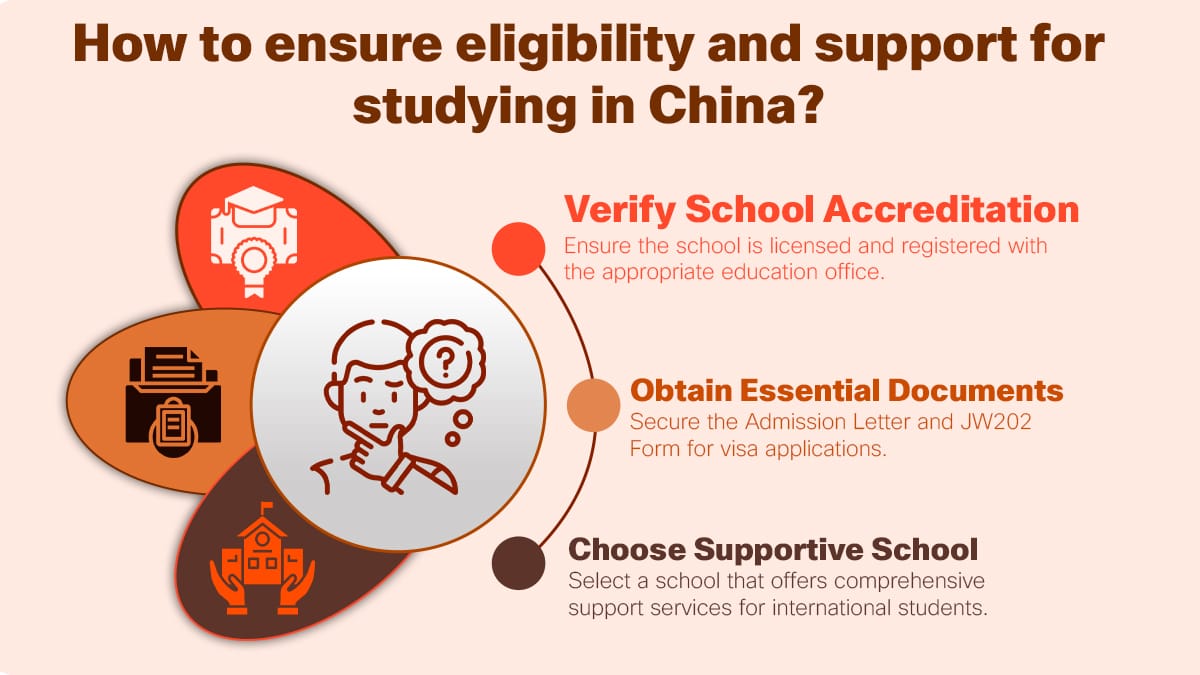
Only licensed schools can admit international students arriving in China independently. This includes international divisions of public schools and approved bilingual private schools.
These schools register with the local education commission. Beijing schools register with the Beijing Municipal Commission of Education. Shanghai schools register with the Shanghai Municipal Commission of Education. Check school licences before you apply.
Essential School Documents
Schools give you two key documents for visa applications:
Admission Letter: This paper confirms your child's acceptance. It lists the student's name, passport number, programme details, and study dates. The school stamps and signs this letter.
JW202 Form: Self-funded foreign students need this form to study in China. The school gets this form through the city education office. You must submit the JW202 Form for X1 visa applications.
School Support Services
Good schools provide strong support throughout the process. They help with document preparation, guardianship letters, residence permit registration, insurance, and all document submission to the local education bureau. They supply study plans with course details and schedules.
Support varies by school. Some offer complete services. Others provide minimal help. If your child is moving to China independently, choose schools with strong international student support or contact Alifa Education Services for full assistance.
How residence permits differ fundamentally from visas
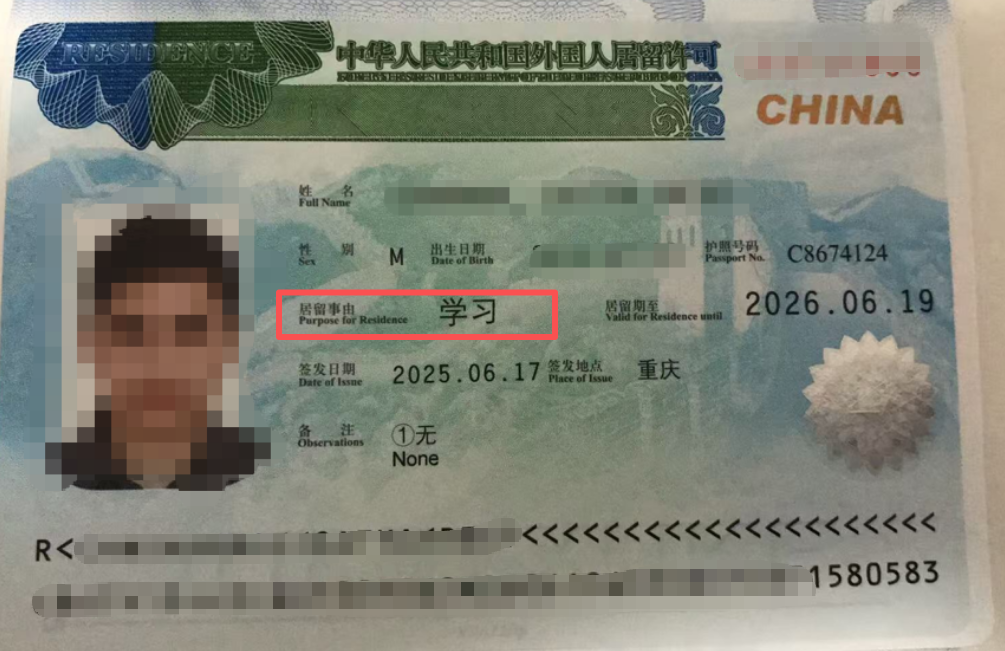
A residence permit is issued inside China by the Exit-Entry Administration of the Public Security Bureau and replaces the visa as the legal basis for staying in the country. While both documents appear as stickers affixed to passport pages, they serve entirely different legal functions.
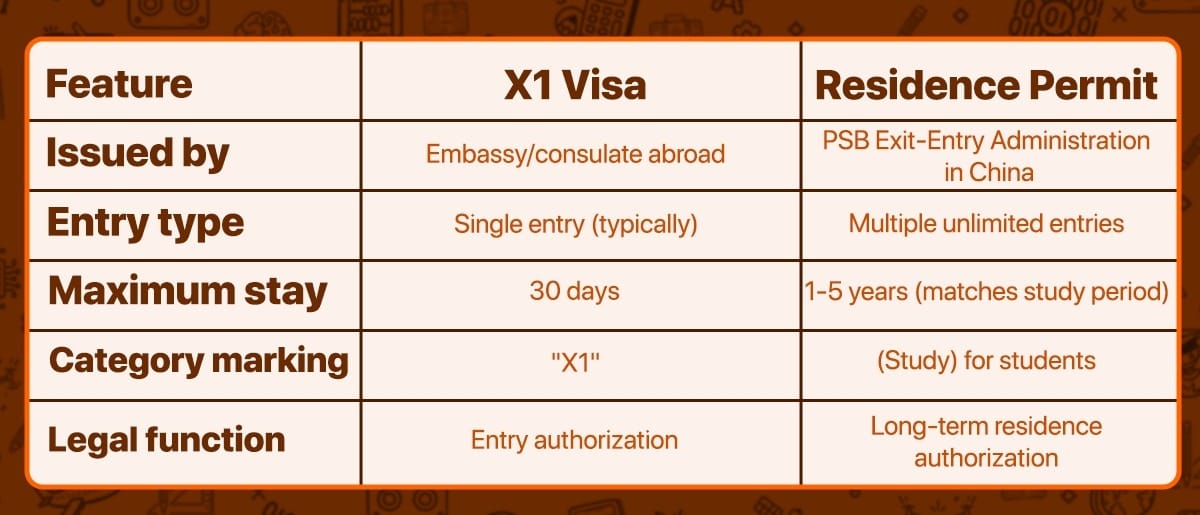
The residence permit essentially functions as a multi-year, multiple-entry visa. Once obtained, students can exit and re-enter China freely throughout their studies without needing additional visas.
Support varies by school. Some offer complete services. Others provide minimal help. If your child is moving to China independently, choose schools with strong international student support or contact Alifa Education Services for full assistance.
Step-by-Step Application Process for 2025
Timeline Planning
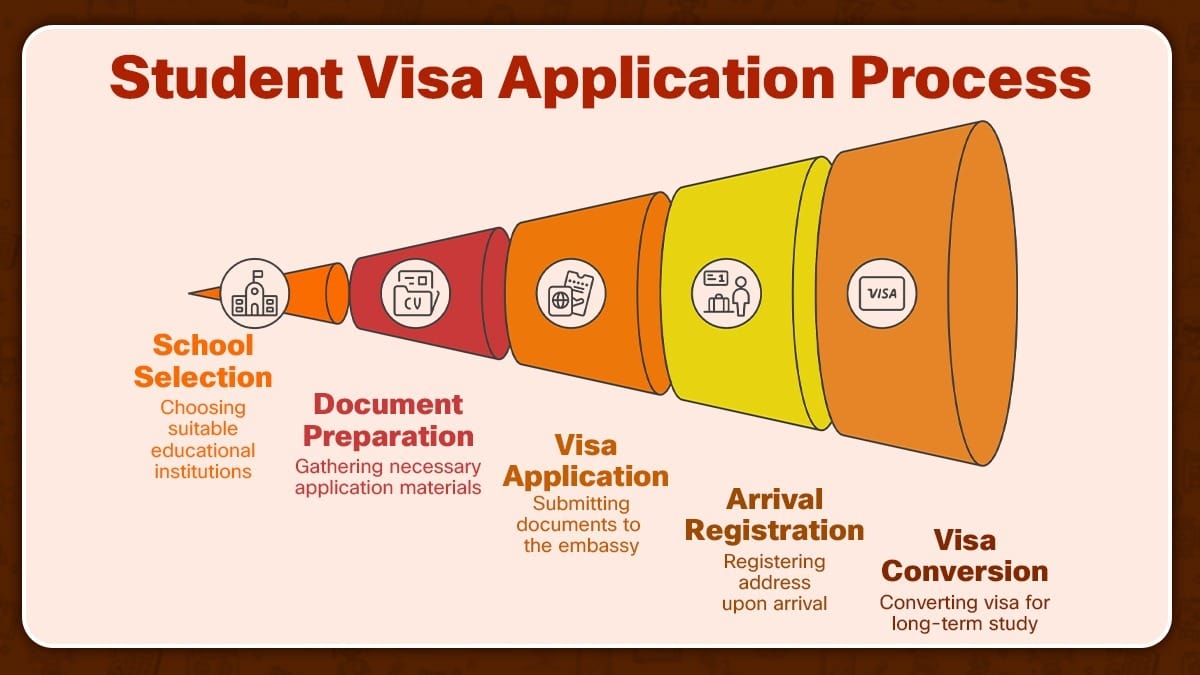
Start your prep 4–6 months before school starts:
- Six months before: Research and pick schools. Send applications. Complete online entrance exams and online interviews
- Three to four months before: Get admission documents. Start notarization and attestation the “Authorisation to the Guardian” letter.
- Two months before: Get all application materials ready. Fill in the visa form online.
- One month before: Submit documents at the Chinese Embassy or visa centre. Processing takes 3-5 working days.
- Upon arrival, register your temporary address within 24 hours at the local public security office.
Does this process feel overwhelming? Many guardians find the multi-step timeline challenging to manage alone. ALIFA Education Services offers professional consultation to guide you through each stage, covering 48-Chinese cities. Our consultants handle document preparation, school coordination, and application submissions leg-works. We ensure nothing gets missed and all deadlines are met.
Please note: Consultation fees apply for our services. Contact ALIFA today to discuss how we can simplify your child's visa application journey, making challenges into a journey.
Application Procedures at Chinese Embassies
Fill out the online form at the Chinese Consular Service Network. Print and sign the form. Book a time at your nearest Chinese consulate. Go to the meeting with your child. Submit all documents. Give fingerprints if asked. Pay visa fees and service fees. Pick up the passport when they tell you.
Beijing and Shanghai: Specific Steps
Beijing: Students visit the Beijing Public Security Bureau Exit-Entry Administration. Register your temporary address within 24 hours at the local police station.
School support varies: Some schools like Beijing No. 39 Middle School provide full settlement services—from arrival assistance to Residence Permit applications, bank accounts, SIM cards, and insurance. Other schools like the High School Affiliated to Beijing Normal University offer no such support.
Without school support? Alifa Education Services handles all settlement logistics and visa processing. Contact us for comprehensive assistance.
Shanghai: Use the Shanghai "One-Stop Government Service" website. Book times online. Processing uses more digital systems.
To learn more about the services offered by Alifa Education, please visit our dedicated page. Whether you are a guardian, affiliated with an international or bilingual school in China, or a study abroad education agency, Alifa Edtech offers services tailored to your unique needs. Please visit our page to learn more about our offerings.
Converting X2 to X1 visa
X2 visas cannot be directly converted to X1 visas inside China. This is official policy for 2025. If your child enters on an X2 visa but decides to continue studying beyond 180 days, they must leave China and apply for a new X1 visa from abroad.
Required Steps for Conversion
- Secure Long-Term Admission: Obtain a new Admission Letter from your school for a program exceeding 180 days.
- Get the JW202 Form: Your school must issue a new JW202 Form specifically for the long-term program.
- Complete Medical Examination: Schedule a physical examination at an approved center in China before departing. Shanghai International Travel Healthcare Center and Beijing International Travel Healthcare Center are authorized facilities. This saves time during your return.
- Exit China: Your child must leave China completely before the X2 visa expires. Do not overstay.
- Choose Application Location: Apply for the X1 visa at a Chinese Embassy or Chinese Consulate. Your options depend on your nationality:
- Submit Complete Documentation: Present all required documents including the new Admission Letter, JW202 Form, medical examination results, and proof of financial support.
- Re-enter China: Return to China with your approved X1 visa.
- Apply for Residence Permit: Visit the Exit and Entry Administration within 30 days of arrival. Convert your X1 visa to a Residence Permit.
Plan this process with care. Think about travel costs and embassy bookings.
Essential Documents Checklist for Minors
Core Student Documents
- Valid Passport: Must stay valid for at least six months. Needs at least two blank visa pages.
- Previous School Transcripts: Submit the past two years of school records with grades. Transcripts must be in English or include certified translations. Example: Japanese students submit Grade 7-9 Junior High School transcripts. Note your country's academic year dates if they differ from China's.
- Recent Photos: Bring four white-background passport photos. Follow Chinese visa photo rules.
- Guardianship Authorization: The "Authorization to Guardian" letter needs two steps. First, get it notarized and authenticated in your home country. Second, your guardian in China must notarize their acceptance of guardianship at a Chinese notary office.
- Admission Letter from school: Original plus one copy. Must show study length and programme details.
- JW202 Form: Original document needed for X1 applications.
Want to put your brand in front of families, students, and education-focused readers? We're inviting select partners to advertise with us on our trusted blog.
Want to get featured? Click 'Learn more' and submit a story for us to include.
Family Relationship Documents
You must notarise and verify the birth certificate. Beijing needs double verification. Shanghai accepts single verification. Translate non-Chinese documents through certified agencies.
- Parents' passport copies: Show the information pages.
- Authorization to Guardian Letter: Required when parents cannot accompany the child. This letter must list the guardian's duties and time period. You need notarization plus authentication from the Chinese Embassy in your country. Hague Convention countries can use apostille certification from their Ministry of Foreign Affairs instead.
- Guardian Documents: Chinese national ID or passport copy. Proof of house in China or Proof of current employment!
- City-Specific Requirements: Your city may require additional documents beyond this list.
Overcoming Challenges and 2025-Specific Tips
Document Authentication Timeline
Cross-border notarisation takes two to four weeks. Countries in the Hague Convention can use the Apostille process. Start verification six months before you leave. Beijing and Shanghai offer fast notary services for extra fees.
Parent-Child Dependency Considerations
Parents accompanying children to China face an unusual situation. If you don't hold a Chinese work permit in that city, you cannot get independent residence rights. Instead, you become dependent on your child's visa.
The Dependency Complication
The parent depends on the child, not the other way around.
- Child holds: X1 visa (primary visa holder)
- Parent holds: S1 visa (dependent visa)
Your legal right to stay in China depends entirely on your child's student status.
What This Means
Parents on S1 visas cannot work in China. Your residence status links completely to your child's enrollment. If your child withdraws, transfers, or graduates, your visa becomes invalid. You must leave China within the specified period.
You cannot extend your S1 visa independently. Extensions require your child's continued valid student status.
Why You Need Expert Guidance
This reversed dependency creates complications many families don't expect. What happens during school changes? How do you handle visa renewals? Can you travel freely?
ALIFA Education Services consultants specialize in family visa dependency situations. We help you understand implications, plan for contingencies, and maintain legal status. Consultation fees apply. Contact ALIFA to discuss your family's specific circumstances.
School Accommodation Options
Boarding Schools: Schools must give Dormitory Management Agreements. These list rules and emergency contacts. Beijing schools submit these together to the local education bureau (online submission at specified admission date windows). Families in Shanghai submit their applications in separate submissions.
Homestay Arrangements: Host family's no criminal record paper. Property proof needed. School partnership agreements required. Some areas in Shanghai need extra registration.
Guardian Housing: If living with appointed guardians, give their house registration paper. Beijing needs property ownership or notarised rental contracts.
2025 Policy Updates
Stay informed about current policies. The Chinese Consular Service Network posts official updates. Contact schools often for procedure changes. Processing times may vary during busy seasons.
Digital services keep expanding. More cities adopt online booking systems. Some processes now accept digital document uploads. But original documents are still needed for in-person registration.
Conclusion
Securing a Chinese student visa for your child requires careful planning. Your family situation determines the process complexity.
Parents with Chinese work permits: Your child applies for a dependent visa. This is the simplest path.
Children arriving independently: You must arrange guardianship and meet additional requirements.
Parents accompanying without work permits: This creates visa dependency issues. The parent depends on the child's visa status, not the reverse.
Each situation needs different documents and approaches. Know your scenario before starting.
The X1 visa serves long-term students. The X2 visa fits short-term programmes but limits family housing options. Success depends on early preparation, complete document sets, and school help.
Key points to remember:
- Start preparing six months early.
- Check the school licences before applying.
- You cannot switch X2 visas to X1 status inside China.
- Prepare verified family documents well ahead.
- Budget for financial proof needs.
- Book all times early through official channels.
Beijing and Shanghai have specific rules beyond national standards. Follow city rules with care. Collaborate with your school's international office. They provide valuable support throughout the process.
Related Articles
 Emmanuel Usang
 Emmanuel Usang
 Emmanuel Usang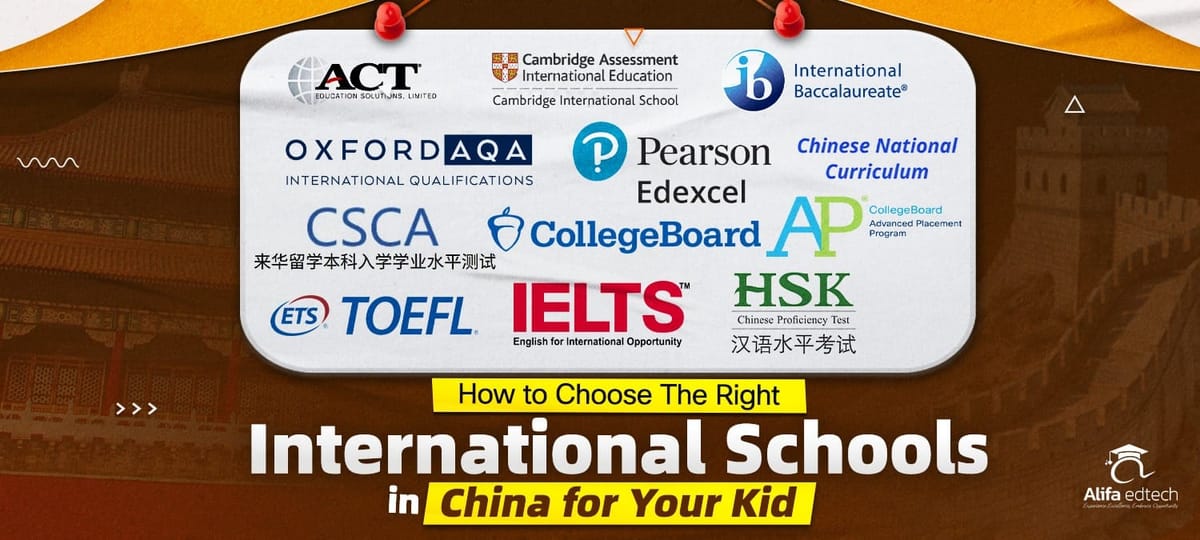
 Emmanuel Usang


Member comments