

Introduction
Chinese K-12 international schools offer many curricula, like the popular IPC and IB-PYP programs. They are there to serve families who want a global education path for their children. While both are excellent, they differ in their core teaching philosophy and structure, which can be confusing for parents.
So, what are the differences between IPC vs IB-PYP Curriculum in China?
The IPC is a structured, thematic curriculum that is more affordable for schools. The IB-PYP is a flexible, inquiry-based framework that costs more but offers a direct path to the IB Diploma.
Read this comprehensive guide which compares the IPC vs IB-PYP curriculum to help you choose the right school.
Need help choosing the right international curriculum school in China?
Alifa Education Services consultants are all educators with over 10 years of teaching experience in China. Our education consultants can help you guide your child, determine which curriculum best suits your child, and determine which framework your child can best excel in.
Contact us today for a free consultation about the curriculum that fits your child!
What is the IPC Curriculum?
The International Primary Curriculum (IPC) is a complete, theme-based curriculum for children aged 3 to 11. It is often called a "curriculum in a box" because it provides schools with structured, pre-designed units and ready-to-use resources.
Subjects like science, history, and art are taught together through fun and engaging themes. This helps students see how different subjects connect in the real world.
Benefits:
- More affordable and lower cost for schools to use.
- Structured, pre-made lessons are easy for teachers to implement.
- Engaging, child-friendly themes make learning fun for students.
Drawbacks:
- Lacks a direct pathway to a specific high school diploma.
What is IB-PYP Curriculum?
The International Baccalaureate Primary Years Programme (IB-PYP) is an inquiry-based framework for students aged 3 to 12. It is the first part of the full IB continuum, which leads to the highly respected IB Diploma.
The PYP focuses on student-led learning, where children ask questions and explore big ideas within six broad themes. It gives teachers great freedom to design lessons that match their students' interests.
Benefits:
- Provides a clear path to the globally respected IB Diploma.
- Prestigious brand with strong recognition from top global universities.
- Fosters deep inquiry and critical thinking skills in children.
Drawbacks:
- Much higher cost for schools to adopt and maintain.
IPC vs IB-PYP Curriculum in China Comparison & Explained
This table compares the key differences between the IPC and IB-PYP curricula across six important aspects for parents.
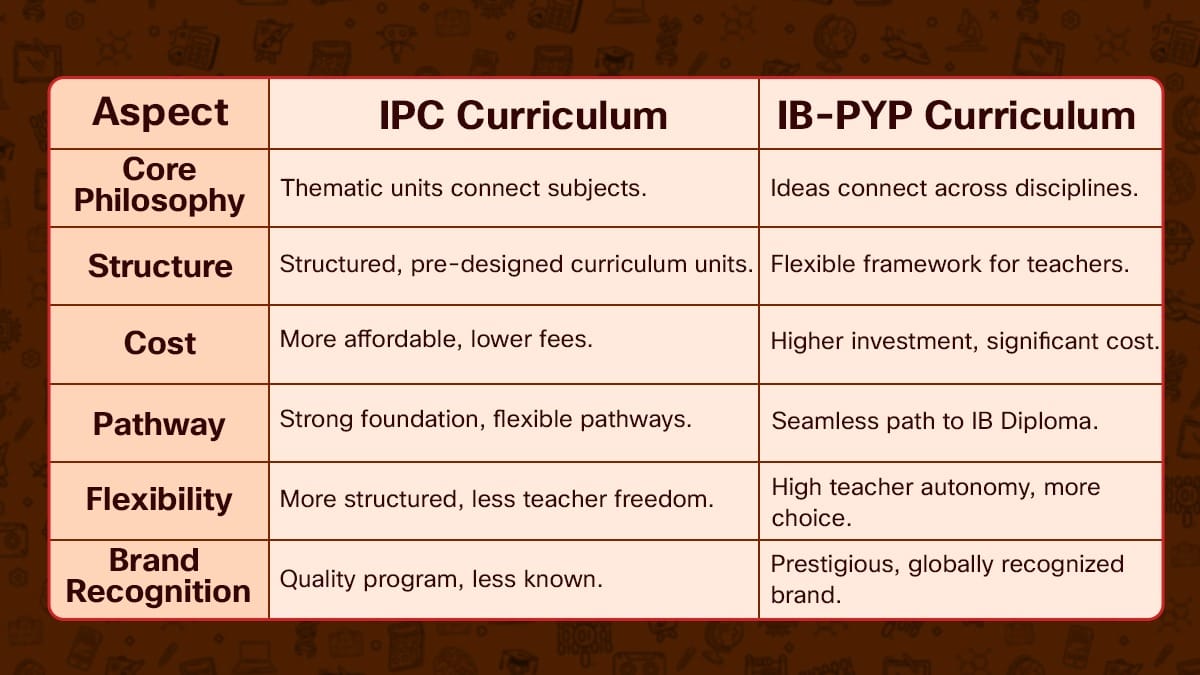
Let’s learn the IB-PYP vs IPC curriculum differences in more detail.
Core Teaching Philosophy: Thematic vs. Transdisciplinary
IPC Curriculum
The International Primary Curriculum (IPC) is a complete curriculum built around themes. It is made for children from ages 3 to 11. The curriculum has 130 different thematic units.
These units are designed to be interesting and fun for children. The IPC has seven main pillars. These focus on learning goals for each student. They also focus on learning goals for each subject and for the world. The IPC aims to create learners who are ready for a global world.
IB-PYP Curriculum
The International Baccalaureate Primary Years Programme (PYP) is a framework based on asking questions. It is for students from ages 3 to 12. It focuses on student-led learning through exploring and investigating. The PYP does not give teachers specific units to teach.
Instead, it gives them six broad themes. These themes are called transdisciplinary themes. Teachers then create their own lines of inquiry within these themes. This gives them more freedom to design lessons.
Learning Structure: How Subjects Are Integrated
IPC Curriculum
The IPC uses a thematic curriculum approach. Subjects like science, history, and art are connected through a central theme. Each theme lasts for about four to eight weeks. This structure helps students see how different subjects are linked.
It allows them to develop knowledge and skills all at once. The curriculum gives teachers clear learning goals for every subject. This provides a detailed framework for planning lessons.
To learn more about the services offered by Alifa Education, please visit our dedicated page. Whether you are a guardian, affiliated with an international or bilingual school in China, or a study abroad education agency, Alifa Edtech offers services tailored to your unique needs. Please visit our page to learn more about our offerings.
IB-PYP Curriculum
The IB Primary Years Programme uses a transdisciplinary model. This means that learning goes across traditional subject lines.
Core subjects like math and science are connected through six broad transdisciplinary themes. The PYP focuses on learning through big ideas and concepts. This helps students explore how knowledge connects in the real world. It gives teachers more freedom to design their own units of inquiry.
Flexibility vs. Structure: A Framework vs. a "Curriculum in a Box"
IPC Curriculum
The IPC is often called a "curriculum in a box." This is because it provides a very structured framework. An international school receives pre-designed units, detailed lesson plans, and many resources. This makes it easier for teachers to start using the curriculum. It is helpful for teachers who may have different levels of experience.
However, this structure offers less flexibility for teachers to create their own lessons from scratch.
IB-PYP Curriculum
The PYP offers much more freedom and autonomy. It is a framework, not a set of pre-made lessons. Teachers must create their own lines of inquiry for students to explore. This requires a higher level of professional skill from teachers.
But it also allows for more customization. Lessons can be shaped by student questions and interests, supporting true student centered instruction.
How Students Are Assessed
IPC Curriculum
In the IPC, assessment is part of the learning process itself. It is used to improve learning, not just to measure it. Teachers watch students and document their progress in portfolios.
They also encourage students to assess their own work. This helps them think about how they learn. Teacher-student meetings provide personal feedback. This helps teachers adjust their teaching to meet student learning needs.
Help us match families with top schools in China. Take our 1-minute survey to share what matters most.
IB-PYP Curriculum
The IB-PYP assessment is also a complete process. It includes ongoing observation of student work. Portfolios are used to show student growth over time. Both self- and group-initiated research tasks are assessed.
Students also take part in self- and peer assessment. This helps build their interpersonal skills. Teacher-student meetings help in setting personal goals and ensuring student success.
Teacher Support and Resources
IPC Curriculum
The IPC includes a large amount of pre-built materials for teachers. This support is a key part of the educational system. Schools get access to online resources through the Fieldwork learning platform. This makes it easier for schools to implement the curriculum well. It is helpful for primary schools with teachers who have different levels of experience.
IB-PYP Curriculum
The PYP requires teachers to develop their own learning experiences. The IB provides frameworks and guidance. However, the school must invest heavily in ongoing professional development for its staff. This is a core part of its teaching philosophy. Teachers need strong teaching skills and must be ready to create their own materials.
Cost: Initial Investment and Ongoing Fees
IPC Curriculum
The IPC generally has a lower initial cost. Schools get pre-made curriculum units, which saves time and money. The professional development options are also more affordable. This makes it a popular choice for schools that need to manage their budgets carefully. It is one of the more accessible International Curriculums for schools just starting with international education.
IB-PYP Curriculum
The IB-PYP has a much higher cost. The authorization process to become an IB World School is expensive. The ongoing fees, resource costs, and required professional development for teachers are also significant. Schools must make a major financial investment to adopt and maintain the PYP.
Want to put your brand in front of families, students, and education-focused readers? We're inviting select partners to advertise with us on our trusted blog.
Want to get featured? Click 'Learn more' and submit a story for us to include.
Pathway to High School and University Recognition
IPC Curriculum
The IPC provides a strong foundation for students. It focuses on developing research skills, critical thinking, and global learning. This prepares them well for different secondary school curriculums. It helps them develop adaptation skills for their future education. The goal is to build a love of learning and prepare students for global citizenship.
IB-PYP Curriculum
The IB-PYP is the first part of the full IB continuum. This continuum includes the Middle Years Programme (MYP), the Diploma Programme (DP), and the Career-related Programme. This creates a seamless path from primary school to high school graduation. The IB Diploma is highly recognized by universities worldwide. This makes the PYP a very attractive choice for families who want a clear path to higher education.
Adoption and Regulation in China
IPC Curriculum
Both educational programs have been used in China's international schools. These schools serve both expat families and Chinese families.
However, new government rules have changed how these curricula can be used. Play-based approaches and a focus on personal, social and emotional development are key features that appeal to parents.
IB-PYP Curriculum
Recent laws in China require private schools to teach the national curriculum during the compulsory school years (Grades 1-9). This means that a pure IB-PYP or IPC program is no longer possible for many schools.
They must now create a hybrid model that mixes the international framework with required Chinese subjects. This has slowed the growth of new international schools and requires active participation from schools to blend the curricula effectively.
What Drives Schools to Choose One Curriculum Over Another?
Schools pick a curriculum for many reasons. It is about money, parent wants, and the school's brand and future goals.
School Identity and Strategic Goals
Schools with an existing IB high school program often choose IB-PYP. This creates a clear and unified path for students from primary all the way to graduation. This "vertical alignment" is a key factor. Other schools, like newer ones or those with smaller budgets, may pick the IPC.
The IPC’s flexible and structured approach fits well in different types of schools, such as bilingual or faith-based institutions.
Parent Expectations and University Pathways
Parent opinions have a huge impact. Many families see the IB brand as a direct path to top global universities. The IB Diploma is highly recognized by colleges worldwide, which is a big advantage.
However, parents at IPC schools are also very happy. They like the fun, child-friendly themes. They also appreciate that it helps their children grow into resilient and adaptable people without the pressure of too many exams.
Financial Costs and Available Resources
Money is often the deciding factor. The IB-PYP is much more expensive to start and to maintain. It requires a big investment in teacher training and official fees. This makes it a better fit for well-established schools with higher tuition.
The IPC is more affordable. Its "curriculum in a box" model with ready-made resources makes it a practical and sustainable choice for schools with more limited budgets.
Marketing and Brand Recognition
In a competitive market like China, a school’s brand is very important. The IB name is globally known and respected. This gives a school instant credibility and helps attract new families.
It is a powerful marketing tool. The IPC is also a quality program, but its brand is not as famous as the IB. For schools that need to stand out, the prestige of the IB brand is a major advantage.
Teacher Skills and Preferences
A school must think about its teachers. The IB-PYP needs highly skilled and experienced teachers who are comfortable creating their own lessons. It requires a lot of planning and development.
The IPC is often better for teachers who are new to international education or who prefer more structure. Its ready-made resources reduce the planning workload. A school will choose the curriculum that best matches the skills of its teaching staff.
What Parents Should Consider when Evaluating Schools
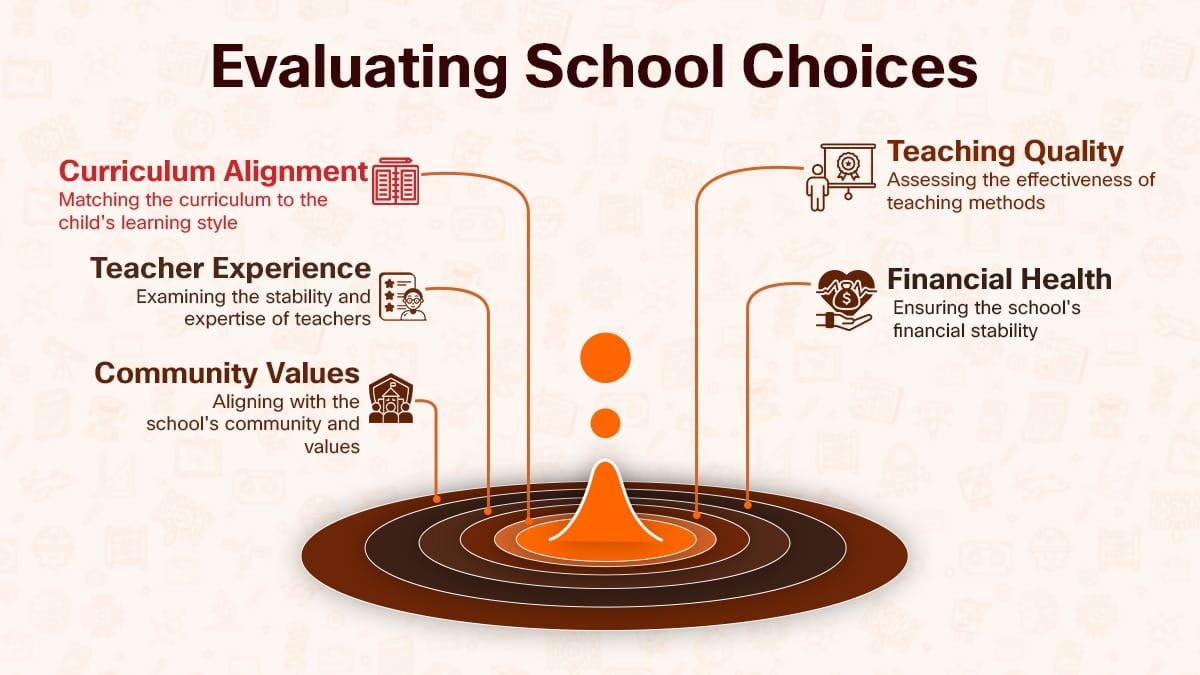
Parents should look beyond just the curriculum name. The quality of the teaching is what truly matters for student success.
Plan Your Child's Educational Pathway
Think about your long-term goals. If you want your child to complete the full IB Diploma for university, a PYP school offers a smooth path.
The transition from PYP to the IB Middle Years Programme is well-known and effective. If you need more flexibility to move between countries or school systems, the IPC might be a better choice.
Match the Curriculum to Your Child's Learning Style
Consider how your child learns best. The IPC has a clear, structured approach with engaging themes that can be great for some children.
The PYP offers more freedom and is perfect for naturally curious kids who enjoy asking questions and thinking deeply. Neither program is designed for students who need a lot of extra help with basic reading and math skills.
Check the Quality of Implementation
A curriculum is only as good as how it is taught. You can learn about the implementation quality by visiting the school.
However, Alifa Education Services can help you get school information by visiting the school.
When you visiting a school, we look closely at the classrooms and ask the questions below,
- Are students actively involved in learning and asking questions?
- Can the teachers explain how learning is connected across subjects?
We make sure the school truly invests in teacher training and is not just using the curriculum name for marketing asking the questions above.
Look at Teacher Experience and Turnover
High teacher turnover can hurt a school's quality, especially for the PYP, which requires deep expertise.
We ask the school about its teachers during the visit to your preferred schools for you.
- What percentage have completed official IB or IPC training?
- How long have the main teachers been at the school?
Consistent, experienced teachers are a sign of a stable and high-quality program.
Consider the School's Financial Health and Culture
A school's financial stability is important. A school that is struggling financially may cut back on important things like teacher training or resources. This can harm the quality of any curriculum.
Also, think about the school's community.
Do the other families share your values? Ask where graduates go for high school and how well-prepared they are.
IPC vs IB-PYP Curriculum in China – Which one to Choose?
Choosing between the IPC and IB-PYP in China can be very tough. This guide helps you make the best choice.
Choose IPC, if:
- You want flexibility to move between different school systems.
- Your budget is a key factor in your decision.
- A strong primary education is your main priority now.
Choose IB-PYP, if:
- You want a clear path to the IB Diploma.
- Global brand recognition and university acceptance are most important.
- Your family is committed to the full IB journey.
Conclusion
Choosing the right school means looking past the marketing. You need to see how the curriculum is truly taught. But what if you cannot visit in person, observe classes, or talk to families yourself?
Alifa Education Services can be your eyes on the ground. Our team visits the school for you. We provide a detailed and honest report on the teaching quality and school culture. This gives you the real insights you need to make a confident decision for your child's future.
Related Articles
 John Wong
 Emmanuel Usang
 Emmanuel Usang
 John Wong


Member comments